Reviewed · THIRD REICH & COLD WAR TOURS
Berlin: Cold War History and Berlin Wall Guided Walking Tour
Berlin’s Wall still talks, if you listen. This Cold War history walking tour uses real street-level landmarks to explain how a divided city worked, and how people found ways to survive it. You start by Brandenburg Gate, then follow the story toward the Wall’s most famous chapters.
I especially love two things: you get to see the Berlin Wall in surviving fragments, not just photos, and you hear human escape stories alongside the politics. It feels meaningful because the guide connects decisions made in power offices to what it meant for ordinary lives.
One possible drawback: you’ll be outside for much of the 3 hours, and Berlin traffic noise can cut into the quiet moments. If you are sensitive to cold or sound, dress for the weather and pick a spot where you can hear.
In This Review
- Key points at a glance
- Cold War Lessons in the Shadow of Brandenburg Gate
- From West Berlin to the Wall, a 200-Meter Reality Check
- Topography of Terror and Potsdamer Platz: Where Regimes Left Scars
- Checkpoint Charlie: The Most Famous Crossing Up Close
- Berlin Wall Memorial: Why the Wall Still Matters After the Fall
- Stories Carried by Real People, Guided by Strong Tellers
- Practical Tips for a 3-Hour Walk That Stays Understandable
- Is It Worth $31? Value for a Guided Cold War Course
- Should You Book This Berlin Cold War Walking Tour?
- FAQ
- How long is the Berlin Cold War history and Berlin Wall guided walking tour?
- Where does the tour start and where do I meet the guide?
- What are the main stops on the route?
- Do you see the Berlin Wall during the tour?
- Is Checkpoint Charlie included?
- What is the Berlin Wall Memorial time like?
- What languages are the live guides offered in?
- Is the tour wheelchair accessible?
- What should I bring for the tour?
- Is free cancellation available?
- Is there a reserve now, pay later option?
Key points at a glance
- A local historian’s Cold War storyline, focused on what led to division and why it lasted
- Checkpoint Charlie and the Berlin Wall Memorial in one walking route
- A specific 200-meter stretch of former wall along Niederkirchnerstrasse
- Topography of Terror and Potsdamer Platz to show how conflict shaped Berlin
- German and English live guidance, with time for your questions
- Wheelchair accessible walking format
Cold War Lessons in the Shadow of Brandenburg Gate
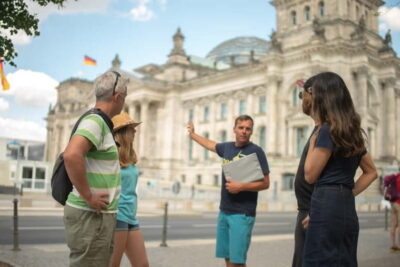
The tour starts at Ebertstraße 24, meeting your guide outside Hopfingerbräu right by Brandenburg Gate. That location matters. It is one of the most recognizable symbols in Berlin, and here it becomes a way to talk about what came before division, what came after the Second World War, and why the Cold War hardened so quickly.
You’ll walk at a steady pace through central Berlin, with the guide setting expectations as you go. The emphasis stays on how Berlin transformed from a postwar city under pressure into a frontline of the Cold War. That framing is one of the reasons this tour works so well for first-timers. You do not just memorize dates. You learn how the political situation created daily rules for where people could go, what they could say, and what they risked.
If you want a quick win for your trip, this is it. In a few hours, you get a map of themes that unlock a lot of other Berlin sites later. You’ll also understand why the wall was not only concrete and metal, but also surveillance, fear, and escape attempts.
More History Tours in Berlin
- Berlin: Natural History Museum Entrance Ticket
★ 4.6 · 3,382 reviews - Berlin: 3-Hour World Heritage Cruise to Potsdam
★ 4.5 · 1,569 reviews - Berlin: History of the Third Reich Guided Walking Tour
★ 4.7 · 791 reviews
From West Berlin to the Wall, a 200-Meter Reality Check
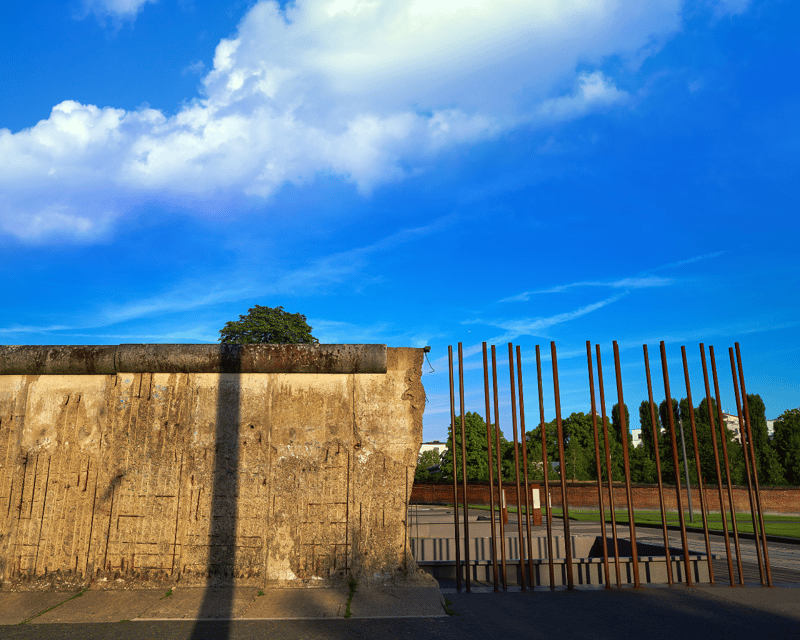
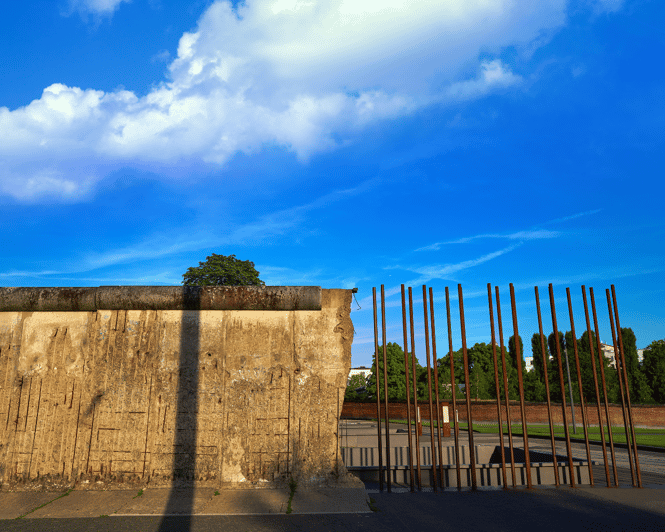
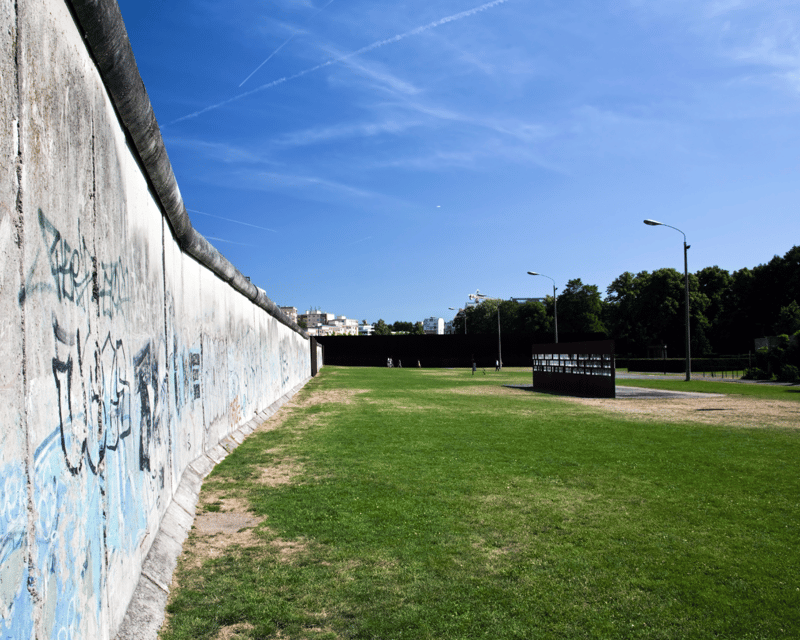
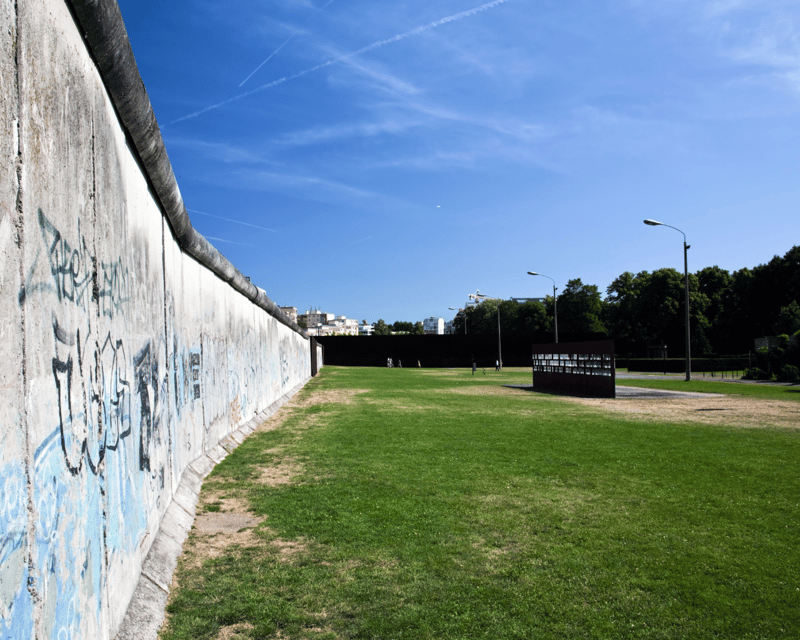
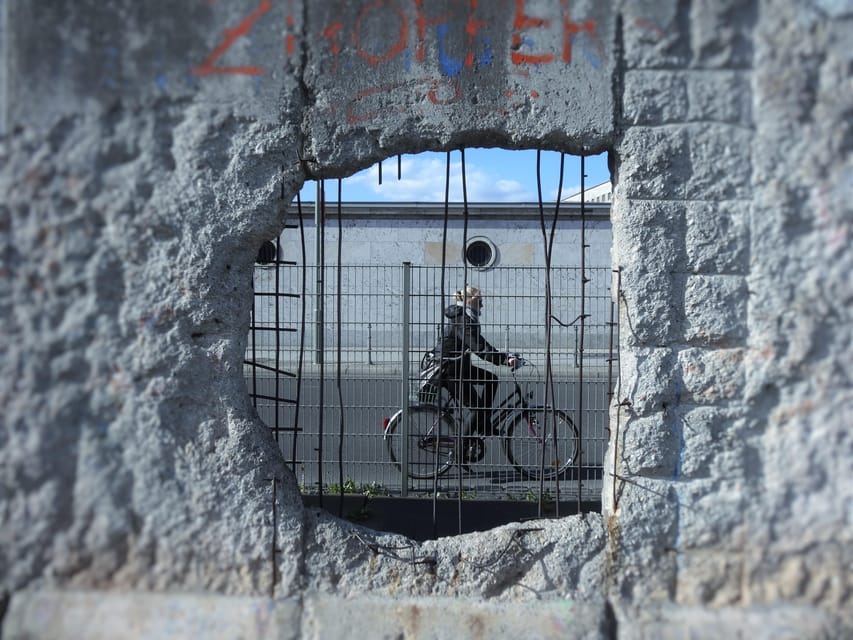
After starting by Brandenburg Gate, the tour turns toward the Berlin Wall story. You will spend about 25 minutes at the Wall-related portion during the walk, and you will see real remnants of division as you move. One highlight is a 200-meter stretch of the former wall along Niederkirchnerstrasse. Seeing a defined segment like that is powerful because you can measure it with your own eyes. It is not an abstract concept anymore.
You might also notice how the guide points out structural details and surrounding context. Even when the wall itself is gone, the urban layout still suggests where boundaries used to be. That is where the tour earns its keep. It helps you read the city like a document, not like a postcard.
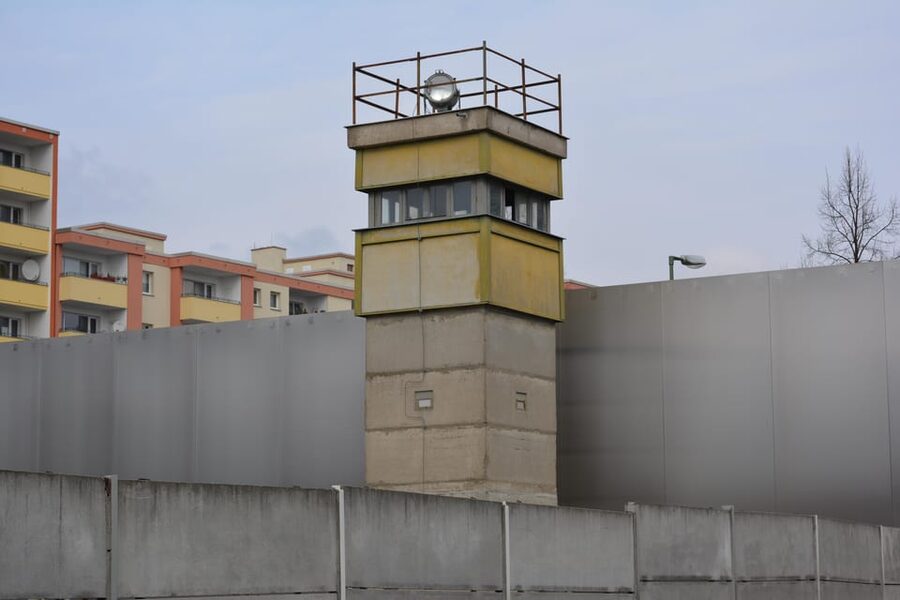
This part of the experience also includes stories tied to the DDR era, including a former DDR watchtower. The guide uses these landmarks to explain how the East German state enforced control and why the wall became a central tool of that enforcement. You come away understanding the wall as a system, not just a barrier.
And yes, the mood can turn serious fast. The point is not to scare you. It is to show why people’s choices were so constrained and why so many tried to escape anyway.
Topography of Terror and Potsdamer Platz: Where Regimes Left Scars
Next comes Topography of Terror, a stop of about 15 minutes. This is a key location for understanding how the Nazi period set the stage for what followed. Even if you only spend a short time here, the guided framing makes it feel connected rather than random. Berlin has many monuments. The guide helps you place them in the larger timeline so you can see cause and effect.
After that, you’ll move to Potsdamer Platz for another short, about 15-minute stop. Potsdamer Platz can look like just another central-city hub if you only glance at it. But with Cold War context, it becomes more interesting. The guide uses the spot to help you visualize Berlin as a divided metropolis, where borders shaped movement, development, and everyday life.
This is also a nice pacing break. You get walking time plus quick context stops, so you do not feel stuck at one location for too long. If you are traveling with limited time in Berlin but want substance, this structure is a smart way to cover more ground.
Checkpoint Charlie: The Most Famous Crossing Up Close
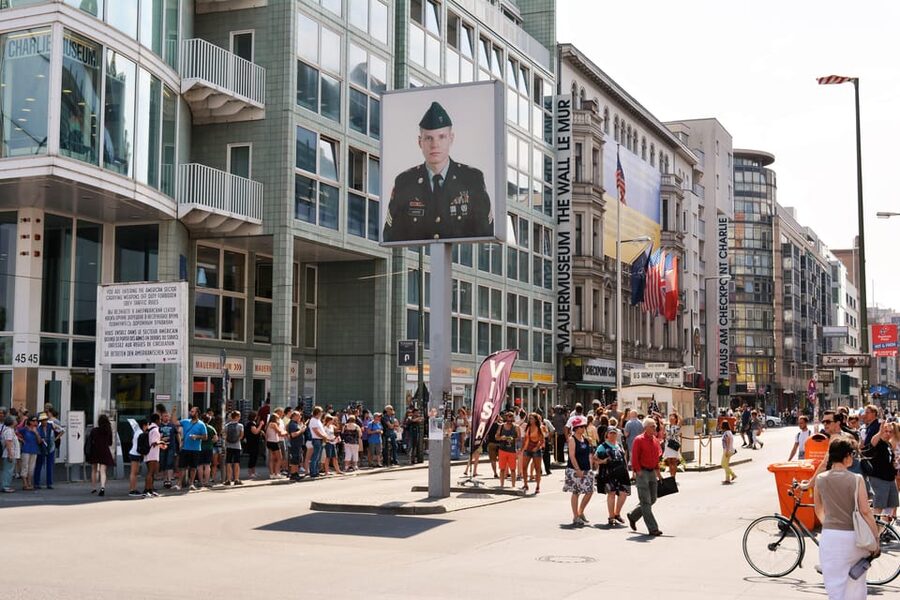
Then the tour reaches Checkpoint Charlie, with a guided visit of about 25 minutes. This is the stop most people recognize from films and photos, but the tour does not treat it like a theme-park. It uses the crossing as a way to talk about borders, procedure, and the tension of East-West encounters.
What you’ll likely appreciate here is the balance. The guide doesn’t only focus on spectacle. You learn what made checkpoint life tense, how officials and ordinary people interacted, and why the crossing symbolized something bigger than geography. It represented the Cold War itself, in a place that you could walk to and understand quickly.
The guide also weaves in the human dimension, including bravery and escape attempts tied to the wider Berlin Wall era. In many tours, those stories get reduced to a dramatic anecdote. Here, they are used to explain how systems worked and how people responded.
You can also use this time to ask questions. The guide takes them in stride, including practical ones like how East and West Berlin differed in daily life. If you came curious but not sure what to ask, this is a good moment to start.
More Third Reich & Cold War Tours in Berlin
- Berlin: Third Reich and Cold War 2 Hour Walking Tour
★ 4.9 · 6,830 reviews - Berlin: Berlin Story Bunker Entry Ticket
★ 4.6 · 6,759 reviews - Berlin’s Best: 2 Hour Walking Tour Third Reich and the Cold War
★ 5.0 · 5,486 reviews - Third Reich Berlin: Hitler and WWII Walking Tour
★ 5.0 · 3,301 reviews
Berlin Wall Memorial: Why the Wall Still Matters After the Fall
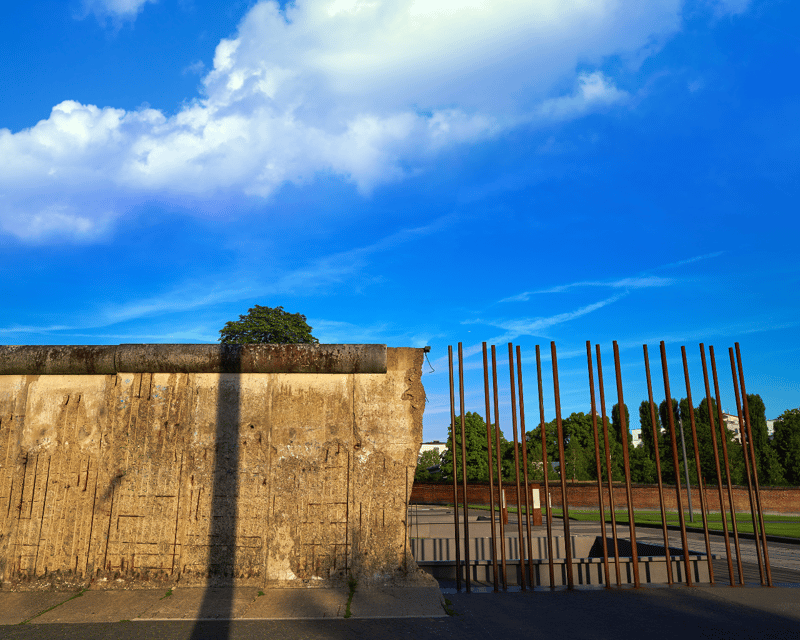
After Checkpoint Charlie, the route leads to the Berlin Wall Memorial, where you spend about 75 minutes on a guided visit. That long segment signals what the tour is really built around: helping you understand the cost of division.
The memorial commemorates the division of the city and the lives lost because of it. This is the point where the emotional weight becomes part of the learning. The guide’s approach matters here. Instead of only listing events, the stories connect the architecture of control with the reality of consequences.
You’ll likely leave this segment with a clearer sense of why the wall was constructed in the first place, and what events contributed to its eventual fall. The guide typically works through the uncomfortable alliance between the Soviets and Western Allies after the Second World War, showing how that relationship broke down and how the Cold War hardened into physical barriers.
This is also where the tour feels most useful for planning your next steps in Berlin. After you’ve stood at the memorial and heard the explanations, you can better interpret other wall-related sites and museums you might visit later. You’ll know what to look for and what questions to carry with you.
Stories Carried by Real People, Guided by Strong Tellers
A huge part of the success here is the guiding style. Across the experiences people describe, the most praised aspect is how the guide turns history into stories you can actually follow. Names that come up include Eugen, Paul, Cieran, and Cairan. What stands out is not just the facts, but the way they connect political context to individual choices.
Some guides bring visuals into the story, including photos tied to personal experiences with the Wall. Others answer questions with tact and kindness. That matters because Cold War history can get heavy fast. You want a guide who can handle curiosity without turning the tone cold.
I also like the pacing choices. Even when the stops are short, the guide gives you enough background to make the next location meaningful. For example, by the time you reach Checkpoint Charlie, you are not starting from zero. You already understand the purpose of borders and control.
One small caution from real-life conditions: Berlin streets can be loud. People mention traffic noise can interfere with listening. If you want to hear every word, stand where you are not forced to keep turning your head, and do not assume the guide will always have a perfect acoustic bubble.
Practical Tips for a 3-Hour Walk That Stays Understandable
This tour is listed as a 3-hour walking tour, so your body matters as much as your curiosity. Bring comfortable shoes. Plan for weather-appropriate clothing, since part of the experience is out in the city air.
Here’s how to get the best experience out of that 3 hours:
- Dress for the day, not for the forecast, and layer up if it is winter cold.
- If you feel sensitive to noise, try to be near the group center so you can follow the guide’s voice.
- Keep your camera ready, but also give yourself moments to look without filming. The memorial time benefits from quiet attention.
The route also includes a mix of landmark types, from major icons to more solemn commemorative sites. That variety helps you stay mentally engaged. It also means you will see both the dramatic and the restrained side of Berlin history, instead of only one tone.
If you are on a tight Berlin schedule, this tour is a good anchor activity. It gives you context that makes many other visits easier to understand. If you have a slower schedule, it still works well because you can later return to a specific site and read it with new eyes.
Is It Worth $31? Value for a Guided Cold War Course
At $31 per person for a 3-hour guided walking tour, you are paying for a few things that matter more than “attractions”:
- A local historian who connects sites into one story
- Multiple major Cold War landmarks clustered in one outing
- Enough time at the Berlin Wall Memorial to do more than skim
This price also compares well against the cost of doing these stops on your own without guidance. You could walk the route independently, but you would miss the connective tissue that explains why each location matters. That is what you are buying here: the explanation.
And because the tour is live and offered in English and German, it is easier to match your needs while still getting the full walking experience. That flexibility is a real value point if you are traveling with mixed-language comfort levels.
Should You Book This Berlin Cold War Walking Tour?
Book it if you want Berlin’s Cold War story in one focused, walkable package. This is a strong choice if you care about human outcomes, not just political headlines, and if you want to connect Checkpoint Charlie to the Wall Memorial in a way that actually makes sense.
Skip or reconsider if you want a light, purely visual sightseeing day. This tour is built around a serious historical period, and the emotional tone is part of the design. Also, if you have mobility limits beyond what a walking tour can accommodate, you might want to think carefully.
If you do book, I’d aim to wear your most comfortable walking shoes and bring a layer for the outside time. You will get a route that turns central Berlin into a readable timeline, with the Wall and its consequences as the main thread.
FAQ
How long is the Berlin Cold War history and Berlin Wall guided walking tour?
The tour lasts 3 hours.
Where does the tour start and where do I meet the guide?
Meet your guide outside Hopfingerbräu next to the Brandenburg Gate. The starting location is listed as Ebertstraße 24.
What are the main stops on the route?
You visit Brandenburg Gate, a Berlin Wall section, Topography of Terror, Potsdamer Platz, Checkpoint Charlie, and the Berlin Wall Memorial.
Do you see the Berlin Wall during the tour?
Yes. The experience includes seeing a 200-meter stretch of the former wall along Niederkirchnerstrasse.
Is Checkpoint Charlie included?
Yes. Checkpoint Charlie is included with a guided stop.
What is the Berlin Wall Memorial time like?
The Berlin Wall Memorial includes a guided segment of about 75 minutes.
What languages are the live guides offered in?
Live guides are available in German and English.
Is the tour wheelchair accessible?
Yes, the tour is wheelchair accessible.
What should I bring for the tour?
Bring comfortable shoes and weather-appropriate clothing.
Is free cancellation available?
Yes. You can cancel up to 24 hours in advance for a full refund.
Is there a reserve now, pay later option?
Yes. You can reserve now and pay later.
More Wartime and Cold War History Walks in Berlin
- Skip-the-Line: Berlin Wall Museum at Checkpoint Charlie
★ 4.1 · 2,041 reviews - Cold War, Berlin Wall, Spies and the East Side Gallery
★ 5.0 · 1,024 reviews - Berlin Third Reich Sites: Half-Day Walking Tour
★ 5.0 · 835 reviews - Berlin: Guided Bike Tour of The Wall and Third Reich
★ 4.8 · 511 reviews
More Walking Tours in Berlin
- Discover Berlin Half-Day Walking Tour
★ 5.0 · 9,624 reviews - Berlin: Discover Berlin Walking Tour
★ 4.9 · 5,998 reviews - Berlin: Hidden Backyards Guided Walking Tour
★ 4.8 · 5,360 reviews - Berlin: Third Reich, Hitler, and WWII Walking Tour
★ 4.9 · 1,757 reviews
Newest Berlin reviews on the site
- Jetbike Berlin fun bike beer bike★ 5.0 · 3 reviews
- Karl-Marx-Allee Walking Tour: Berlin’s Socialist History★ 5.0 · 5 reviews
- Homeless on chic streets: city tour in Berlin from personal experience★ 4.6 · 3 reviews
- Berlin: Sachsenhausen Concentration Camp Guided Tour★ 4.9 · 42 reviews
- Historyof the Trans, Queer & Gay communities of Berlin tour★ 4.8 · 17 reviews
- Historic Berlin Pubs & History Tour★ 4.9 · 73 reviews
- Berlin: City Center Walking Tour★ 4.7 · 45 reviews
- Half-Day Berlin Highlights Segway Expedition★ 4.5 · 61 reviews
Third Reich & Cold War Tours, compared.


Berlin’s Best: 2 Hour Walking Tour Third Reich and the Cold War
Read our review →
Third Reich Berlin: Hitler and WWII Walking Tour
Read our review →
Skip-the-Line: Berlin Wall Museum at Checkpoint Charlie
Read our review →