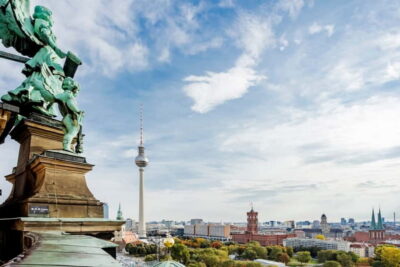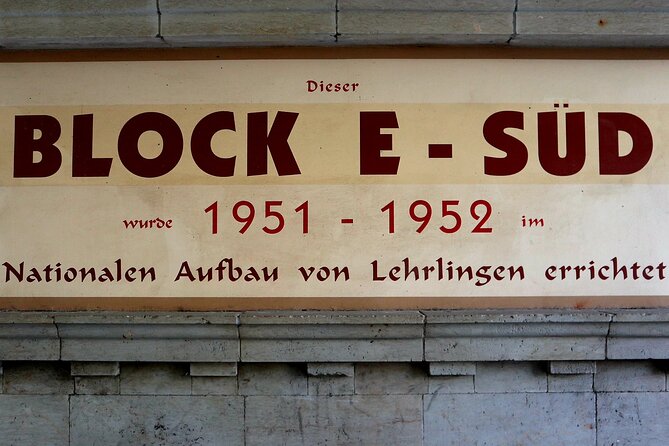
Reviewed · BERLIN TOURS
Karl-Marx-Allee Tour: Life and Architecture in East Berlin
Karl-Marx-Allee teaches fast, with every building. On this 2-hour East Berlin walking tour in English, I love how you connect the look of socialist design to the people and power behind it. You move along the boulevard’s big ideas, from early 1950s rebuilding plans to the moments that nearly broke East Germany.
Two things stand out. Martina’s storytelling is detailed, organized, and funny, and she brings a personal, lived-in perspective that makes the era feel less like a textbook. I also like the focus on architecture you can actually see, not just dates and slogans, so you leave with a clearer sense of why each block and tower was built.
One consideration: this stretch of Berlin is tightly linked to propaganda, Soviet symbolism, and political repression. If you want a carefree stroll, this may feel heavy at times, even though the guide keeps it accessible.
In This Review
- Key things to know before you go
- Starting at Frankfurter Tor, the plan for a socialist street
- Laubenganghäuser and the dreamlike modernism of Hans Scharoun
- Hochhaus an der Weberwiese, luxury turned into a billboard
- From 17 June 1953 to today: the uprising memorial
- Café Sibylle and the Joseph Stalin symbol you notice late
- Karl-Marx-Bustendenkmal and how ideology shaped daily life
- Strausberger Platz, Hermann Henselmann, and the boulevard after reunification
- Is the Karl-Marx-Allee tour worth your time? Price, pace, and fit
- Should you book this Karl-Marx-Allee walking tour?
- FAQ
- How long is the Karl-Marx-Allee walking tour?
- What is the price per person?
- Is the tour offered in English, and how big is the group?
- Where do I meet the guide, and where does the tour end?
- Do I need admission tickets for the stops?
- What if the weather is bad?
- What is the cancellation policy?
Key things to know before you go
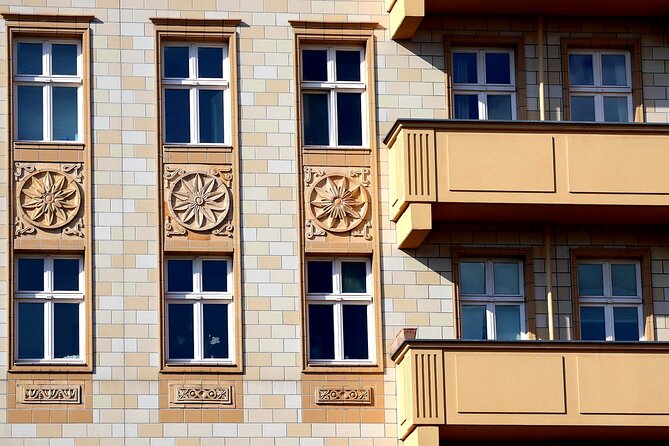
- Small group, max 15 means more time for questions and slower, clearer explanations.
- English mobile-ticket keeps things simple once you arrive, and you get confirmation at booking.
- Two hours is a smart time-box for East Berlin, especially if you are also seeing the usual highlights.
- Stops are marked as ticket-free, so you can spend your attention on the buildings instead of ticket lines.
- Good weather matters since it is a walking tour outdoors.
- Architecture + politics pairing is the whole point, including a June 17, 1953 uprising site and Stalin-era references.
Starting at Frankfurter Tor, the plan for a socialist street
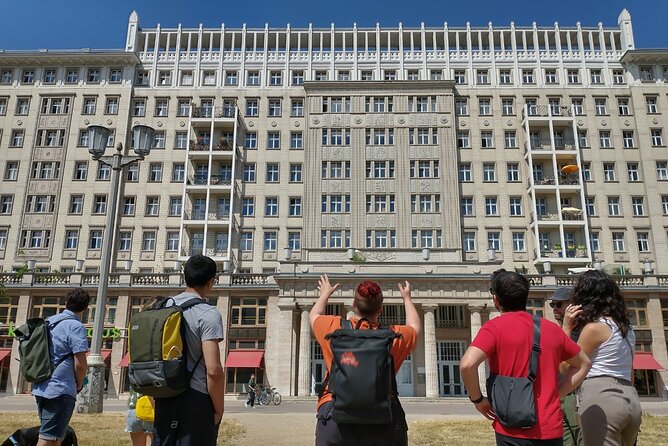
The tour begins at U Frankfurter Tor (10243 Berlin), right where you can quickly feel you are in East Berlin’s main design stage set. Your first stop is Frankfurter Tor, with its strong symmetry and tower forms that look almost ceremonial. The guide explains how the early 1950s plans for what was meant to be Germany’s first socialist street took shape, along with the national rebuilding effort that mobilized thousands of volunteers.
What I like here is the setup. You get a baseline for how East German planners wanted this boulevard to function as proof that socialism could rebuild lives and cities, fast and at scale. Even if you have seen similar grand boulevards elsewhere, this one has a distinct logic: buildings were not just housing or offices, they were meant to communicate a political future.
Pay attention to the “why” behind the symmetry. The guide points out how design choices were tied to ideology, not just aesthetics. That framing follows you down the street, so later stops feel connected rather than random.
A few more Berlin walks and trips to compare
- Berlin: Reichstag, Dome and Government District Guided Tour
★ 4.7 · 18,288 reviews - Berlin: 1-Hour City Tour by Boat with Guaranteed Seating
★ 4.3 · 16,993 reviews - Berlin: TV Tower Standard Entrance Ticket
★ 4.4 · 15,883 reviews
Laubenganghäuser and the dreamlike modernism of Hans Scharoun
Next you head to Laubenganghäuser, an area known for early post-WWII modernist architecture. The architect highlighted here is Hans Scharoun, and the tour’s key theme at this stop is the tension between utopian city ideas and what the East German regime would allow.
In plain terms: you learn that some early plans were born from the ashes of destroyed Berlin, with bold thinking about how people could live better. Then you hear how those utopian concepts were pushed aside as the new regime tightened its grip on what counted as the right kind of future.
This stop is shorter (about 15 minutes), but it matters because it changes your mental lens. Instead of seeing East Berlin as one style only, you start noticing layers, compromises, and interruptions. If you are the kind of traveler who loves architecture details you usually miss, this is where the tour starts rewarding that habit.
Hochhaus an der Weberwiese, luxury turned into a billboard
At Hochhaus an der Weberwiese, you see a building that acted as a prototype for the broader socialist boulevard plan. The tour ties this one to Hermann Henselmann’s style and explains how the building project worked as more than construction. It was also a propaganda tool, and it drew attention from Western architects.
The reason this stop hits is simple: the building offered its first tenants unprecedented luxury. That detail is easy to overlook when you are focused on ideology, but it makes the story more complicated in a useful way. You get the sense that the system wanted to sell itself not only with speeches, but with everyday comfort you could experience.
Expect about 20 minutes here. The guide uses the building’s success and visibility to show how the boulevard became a magnet, not a sealed-off world. If you have ever wondered how ideological projects still interact with global trends, this stop gives you a concrete example.
From 17 June 1953 to today: the uprising memorial
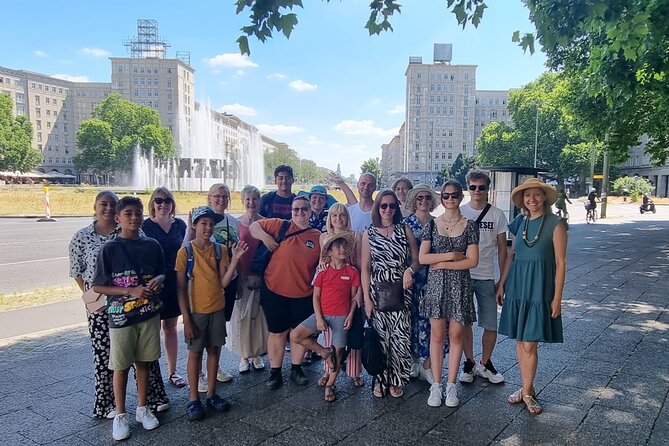
Then you move to the Gedenkstätte Arbeiteraufstand 17 Juni 1953, the site connected to the workers’ uprising in June 1953. This is one of the emotional high points of the walk because it covers a moment when mass unrest almost toppled the socialist government in East Germany.
The tour also notes the presence of a controversial monument dedicated to the uprising. That matters because monuments are not just commemorations. They are interpretations of history, built by whoever had the power to decide what should be remembered and how.
Allow about 20 minutes for this stop. I like that the guide does not treat it like a separate “dark episode.” Instead, you understand it as part of the same story as the grand architecture. The boulevard said socialism was stable and successful, while this uprising showed how fragile that claim could be.
If you are traveling with anyone who prefers lighter sightseeing, this stop is where you decide together how deeply you want to process the topic. The guide keeps it clear, but it is still serious.
Same city, a different way to spend the afternoon:
- Berlin: Boat Tour Along the River Spree
★ 4.4 · 11,252 reviews - Discover Berlin Half-Day Walking Tour
★ 5.0 · 9,624 reviews - Berlin: Government District around the Reichstag Guided Tour
★ 4.7 · 8,447 reviews - Berlin: Reichstag, Plenary Chamber, Cupola & Government Tour
★ 4.6 · 8,422 reviews
Café Sibylle and the Joseph Stalin symbol you notice late
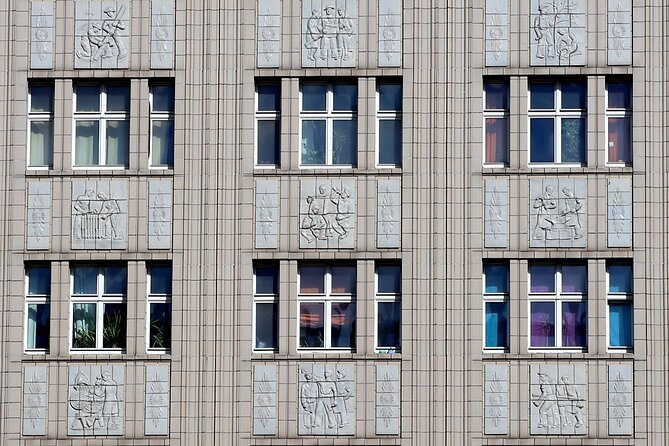
At Café Sibylle, the tour shifts from buildings-as-statements to spaces where people actually socialized. The connection here is Joseph Stalin, since the tour explains how the café was linked to the statue of Stalin that stood nearby until 1961.
This is one of those stops where you realize how much political messaging can hide in everyday life. A café sounds neutral, even charming, but in this part of Berlin it sits inside an environment shaped by Soviet authority. The guide helps you spot the symbolic layer so you do not walk past it unaware.
Expect about 15 minutes. I like this stop because it balances the heaviness of the uprising memorial. It also teaches a practical skill: when you are in political cities, your eyes need to watch for what is literally placed nearby, not only what is written on walls.
Karl-Marx-Bustendenkmal and how ideology shaped daily life
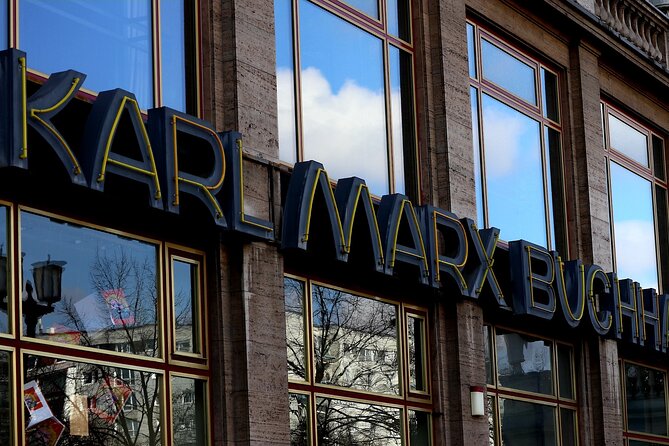
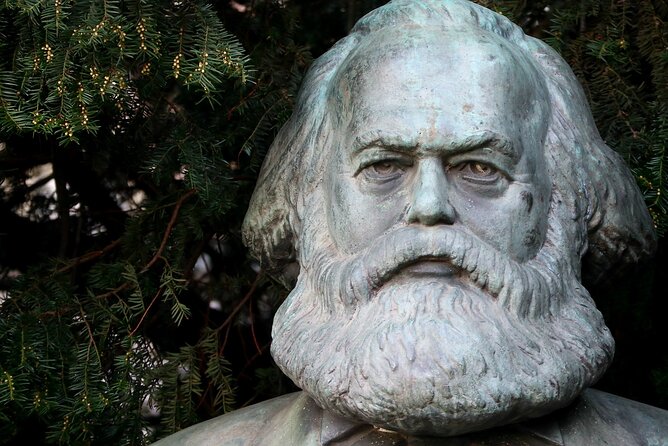
Next comes the Karl-marx-bustendenkmal, focused on Karl Marx as the author of the Communist Manifesto. This stop is about more than identifying a figure. It connects socialist ideology to how people lived, worked, and understood the world around them in East Berlin.
The tour’s strength here is that it ties ideas to street-level reality. You hear how political doctrine becomes part of the common language of daily life, through names, symbols, and the meanings assigned to public spaces.
Plan for about 15 minutes at this stop. If you are only casually interested in Marx or Soviet history, you may still find this section useful because it translates ideology into the built environment. If you are already curious about political systems, it helps you connect the “big theory” to the visible everyday cues.
Strausberger Platz, Hermann Henselmann, and the boulevard after reunification
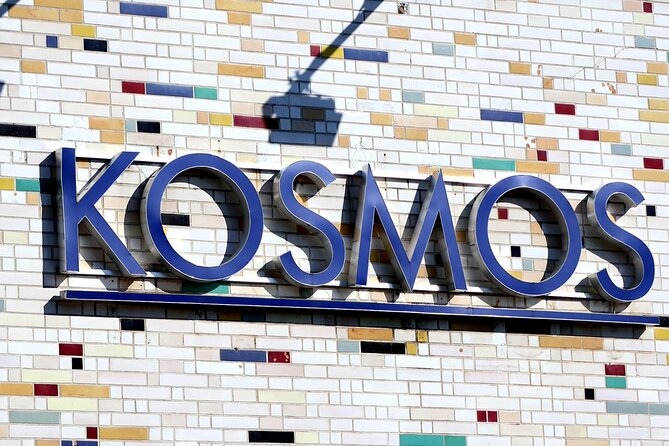
The walk finishes at Strausberger Platz, ending on the eastern side of the roundabout. The tour notes it is about a 10 minute walk from Alexanderplatz, which is handy if you want an easy transition back into the wider city sightseeing.
This last stop gives you another splendid example tied to Hermann Henselmann’s approach, and it includes what changed after the Fall of the Berlin Wall. The guide brings the story to the present, so you are not left staring at buildings with no idea what happened next.
Expect about 15 minutes here. I like endings like this because they respect your time. You get closure, plus you leave with a question in mind: how do these grand designs survive when the ideology behind them no longer controls the city?
Is the Karl-Marx-Allee tour worth your time? Price, pace, and fit
Let’s talk value. At $30.01 per person for about 2 hours, you are paying for an expert guide, a tight route, and a story that connects architecture to politics. Since the stops are marked as ticket-free, you are mostly spending your time on the guide’s explanations rather than adding extra costs.
The pace is built for travelers with limited time. You hit seven focused stops without lingering too long at any one location, which is perfect if you want a structured way to understand this area quickly. The group size maxes at 15, and that matters more than it sounds. You get clearer answers and you can ask follow-up questions without shouting over a crowd.
Also, this is offered in English, and you get a mobile ticket, plus it is near public transportation. If you like your tours calm and organized, this one has the right feel. In particular, the guide team behind the walk is known for strong preparation, good humor, and a knack for making complicated history easier to follow.
Who should book? This fits best if you care about East Berlin’s architecture, Soviet-era influence, and how ideology leaves physical traces. It is also a great pick if you are the kind of traveler who wants to understand what you see, not just take photos. If you prefer purely decorative sightseeing, you might find the political parts heavy, but they are integral to the boulevard’s meaning.
Should you book this Karl-Marx-Allee walking tour?
Yes, book it if you want to read Karl-Marx-Allee like a story. The route is compact, the guide approach is organized and engaging, and you get key buildings explained in a way that makes the era easier to grasp. For me, the best payoff is the connection between design choices and the political goals behind them, plus the way the tour ends with what the boulevard looks like now.
If you want a quick, shallow overview of East Berlin, you could do it alone. But if you want your architecture questions answered and your context filled in, this is a strong value use of a morning or afternoon.
FAQ
How long is the Karl-Marx-Allee walking tour?
It lasts about 2 hours.
What is the price per person?
The price is $30.01 per person.
Is the tour offered in English, and how big is the group?
Yes, it is offered in English. The group size is capped at a maximum of 15 travelers.
Where do I meet the guide, and where does the tour end?
You start at U Frankfurter Tor (10243 Berlin). The tour ends at Strausberger Pl at the eastern side of the Strausberger Platz roundabout, about a 10 minute walk from Alexanderplatz.
Do I need admission tickets for the stops?
The listed stops are marked as free admission.
What if the weather is bad?
The tour requires good weather. If it is canceled due to poor weather, you will be offered a different date or a full refund.
What is the cancellation policy?
You can cancel for a full refund up to 24 hours in advance. If you cancel less than 24 hours before the start time, the amount paid is not refunded.
Newest Berlin reviews on the site
- Your ticket to The Wall Museum Berlin★ 3.0 · 60 reviews
- Rickshaw Tours Berlin – Groups of up to 16 people with several rickshaws★ 4.0 · 97 reviews
- Love and War in Berlin: Self-Guided Story Puzzle Walk★ 5.0 · 7 reviews
- Warnemuende Shore Excursion: Berlin Private Sightseeing Tour from Rostock★ 5.0 · 4 reviews
- eSIM for Germany and 34 European Countries★ 4.5 · 16 reviews
- Walking on the Wall: 3-Hour Tour in Berlin★ 4.5 · 34 reviews
- Warnemuende Shore Excursion: Private Berlin Tour★ 4.5 · 27 reviews
- Berlin Food & Cultural Tour: Must-Try German & Berliner Classics★ 5.0 · 51 reviews
Berlin Tours, compared.
Reichstag, Dome and Government District Guided Tour
Read our review →
1-Hour City Tour by Boat with Guaranteed Seating
Read our review →
Government District around the Reichstag Guided Tour
Read our review →
Reichstag, Plenary Chamber, Cupola & Government Tour
Read our review →