
Reviewed · SELF-GUIDED TOURS
Love and War in Berlin: Self-Guided Story Puzzle Walk
Berlin tells its story, one riddle at a time. This self-guided walk turns major Berlin sights into a hands-on puzzle trail, with you choosing your own pace and taking breaks when you want. I love that you get a clear, chronological feel for WWII-era memory while still moving through real neighborhoods.
The second thing I like is the mix of iconic central landmarks with heavier stops, including the area connected to Hitler’s former war bunker. One possible drawback to keep in mind: some puzzle clues can feel picky, and seasonal crowds like Christmas markets can make parts of the route a little more annoying than expected.
In This Review
- Key things I’d highlight before you go
- A Berlin puzzle walk built for your pace, not a strict schedule
- Price and time value: a one-hour route with big thematic payoff
- Starting at Alexanderplatz: Urania World Clock and getting your bearings fast
- Rathaus at 1860s street level: Renaissance details to spot up close
- Neptunbrunnen at 1891: myth, design, and a breather stop
- Marx-Engels-Forum and Lustgarten: contrasting 20th-century messages in the same area
- Marx-Engels-Forum
- Lustgarten
- Neue Wache: architecture that turns military memory into a memorial
- Bebelplatz book burnings: a short walk with heavy gravity
- Gendarmenmarkt and Konzerthaus area: beauty, then politics in the same block
- Hamburg’s state representation in Berlin: politics that happens in plain sight
- Memorial to the Murdered Jews of Europe: Eisenman’s design and why the last stretch matters
- How the puzzles work, and how to solve them without frustration
- Who this puzzle walk is best for
- Should you book Love and War in Berlin puzzle walk?
- FAQ
- How long does the Love and War in Berlin self-guided puzzle walk take?
- Can I start at any time during the day?
- Do I need an internet connection to play?
- Is this a guided tour with a person?
- Where do I start and where does it end?
- How much does it cost?
- Can I cancel for a full refund?
- Is it suitable for most people and can I bring a service animal?
Key things I’d highlight before you go
- WWII memory with a real city-walk rhythm, not a stuffy museum sprint
- Offline puzzle play, so you do not need data to solve the story challenges
- Major landmarks in the Mitte core, clustered so the walk stays manageable
- Freedom to pause, then re-start without stress
- Private, no-people-contact format, which helps you avoid crowds
A Berlin puzzle walk built for your pace, not a strict schedule
This is a self-guided story game that runs like a walk, not a lecture. You start at Alexanderplatz and move through central Berlin using a mobile ticket and puzzle prompts. The big win here is control: you can start when you like during the day, slow down, stop for coffee, and resume later without feeling like you are falling behind.
The format also makes a difference emotionally. WWII sites can feel heavy and abstract when you just read a sign and move on. Here, you are nudged to look carefully, notice details on buildings and monuments, and connect the clues to the broader story. That helps the history stick without turning your trip into homework.
Price is refreshingly low for what you get: $6 per person for about one hour of city wandering. Even better, the game is designed so you do not need a physical guide standing over you. If you like freedom and you enjoy figuring things out, the value is strong.
One more practical note: the experience is available every day and plays offline, which is ideal in a city where mobile data can be pricey or spotty.
More Walking Tours in Berlin
- Discover Berlin Half-Day Walking Tour
★ 5.0 · 9,624 reviews - Berlin: Third Reich and Cold War 2 Hour Walking Tour
★ 4.9 · 6,830 reviews - Berlin: Discover Berlin Walking Tour
★ 4.9 · 5,998 reviews
Price and time value: a one-hour route with big thematic payoff
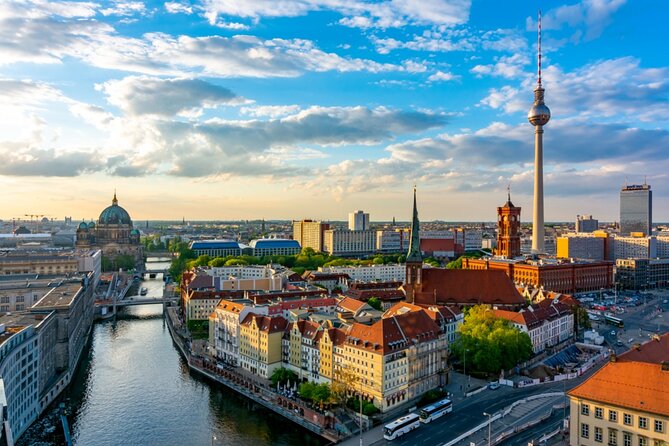
At about 1 hour, you are not signing up for a half-day ordeal. That matters because the Mitte core can be busy, and walking tours can turn into marathon footwork. This route stays compact enough that you can keep your energy, even if you are also doing other Berlin plans the same day.
For $6, you are paying mostly for two things:
- The puzzle structure that tells you where to look and what to notice
- The self-guided design that lets you avoid crowds and keep moving at your pace
If you are traveling on a budget, this is a smart way to get WWII context without paying museum ticket bundles. If you hate puzzles or only want passive sightseeing, you might find the “look, find, answer” style slows you down. Otherwise, it is a good bargain.
Starting at Alexanderplatz: Urania World Clock and getting your bearings fast
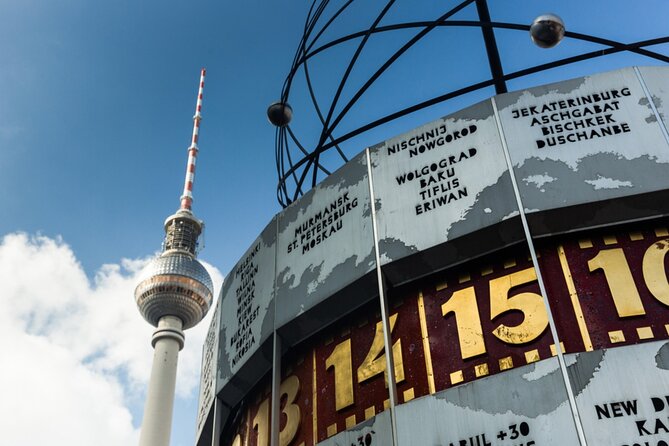
You begin near Alexanderplatz, at Alexanderpl. 1, 10178 Berlin. The first major stop is the Urania World Clock, also called the World Clock. It sits in the public square of Alexanderplatz, on a turret-like structure that reads as both practical and symbolic: time for everyday life, measured across the world.
Why this stop works well for a story game: it forces you to look around your surroundings instead of just marching forward. You hunt for a clue tied to the clock’s markings, then you use the answer to move to the next location. It is a clever warm-up that gets you “in game mode” immediately.
Also, Alexanderplatz is a major transit hub, so if you want to connect this walk with other Berlin sights, it is easy to build into your day. You can also start at different hours, since the experience runs from early morning until evening.
Rathaus at 1860s street level: Renaissance details to spot up close
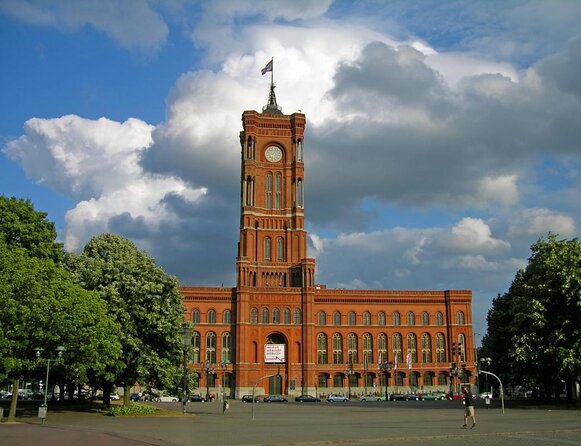
Next you reach the Rathaus in the same general center area. This building was constructed between 1861 and 1869, designed in the style of Northern Italy High Renaissance by Hermann Friedrich Waesemann. What you might notice right away is how the architecture looks “imported” rather than purely local. The building was modeled on the Old Town Hall of Thorn, which is today in Poland (Toruń). Even the tower echoes architecture you may recognize from elsewhere in Europe, with a reference point in the cathedral tower of Notre-Dame de Laon in France.
In a standard sightseeing approach, Rathaus can turn into “another big government building.” In this puzzle format, you are pushed to look for a specific answer hidden in details. That makes the building feel less like a backdrop and more like part of the city’s political evolution, which becomes important as you move into more explicitly WWII-related sites later.
Same city, a different way to spend the afternoon:
- Berlin: Reichstag, Dome and Government District Guided Tour
★ 4.7 · 18,288 reviews - Berlin: 1-Hour City Tour by Boat with Guaranteed Seating
★ 4.3 · 16,993 reviews - Berlin: TV Tower Standard Entrance Ticket
★ 4.4 · 15,883 reviews - Berlin: Boat Tour Along the River Spree
★ 4.4 · 11,252 reviews
Neptunbrunnen at 1891: myth, design, and a breather stop
Then you hit Neptunbrunnen, the Neptune Fountain. It dates to 1891 and was designed by Reinhold Begas. At the center is Neptune, the Roman god associated with the sea.
This stop is a useful pacing break. While the later sites carry heavy themes, a fountain stop gives your eyes and brain a reset. It is also timed for an easy pause, and the stop is listed with free admission.
In a puzzle walk, these lighter, more “visual” stops matter. They prevent the whole experience from feeling like a constant emotional climb. You get a little aesthetic pleasure, then you move on.
Marx-Engels-Forum and Lustgarten: contrasting 20th-century messages in the same area
After the fountain, the route continues into the heart of Mitte with two park areas that help widen the context.
Marx-Engels-Forum
The Marx-Engels-Forum is named for Karl Marx and Friedrich Engels, authors of The Communist Manifesto (1848). The park was created by the authorities of the former German Democratic Republic (GDR) in 1986.
This matters for your understanding because WWII memory in Berlin is not only about Nazi-era crimes. It is also about what later governments chose to emphasize, commemorate, or reinterpret. This is one of those “you feel the layers” stops where the city shows you that ideology also builds public spaces.
Lustgarten
Next comes the Lustgarten on Museum Island. Historically, it was part of the former Berlin City Palace, and in different eras the garden served as parade ground and a space for mass rallies, before settling into its role as a public park.
A big reason I like placing this stop here: the Lustgarten helps you connect the dots between architecture, public spectacle, and political power. When you stand in the open space, it is easier to imagine how crowds and ceremonies could be organized in the same visible “stage” of central Berlin.
Even though the game keeps you moving, these stops slow you down in a good way. You will likely pause longer than you intended just to take in the scale of the spaces.
Neue Wache: architecture that turns military memory into a memorial
The game then brings you to Neue Wache on Unter den Linden. Built between 1816 and 1818 based on plans by Karl Friedrich Schinkel, it started as a guardhouse for the Royal Palace and later became a memorial tied to the Liberation Wars. Architecturally, it is considered a major work of Prussian Neoclassical architecture.
This is one of the emotional pivot points in the walk. Even if you do not know the finer details of the Liberation Wars, you can feel the building’s “weight” through its form and placement on one of Berlin’s most prominent boulevards. In a puzzle format, the game nudges you to look around for a specific answer, which helps ground you in the site itself rather than drifting into vague thoughts.
If you prefer memorials where you can sit and reflect without prompts, you might find the puzzle element slightly interrupts the quiet. That said, the design of this memorial stop is exactly the kind of place where careful looking deepens your respect rather than distracts you.
Bebelplatz book burnings: a short walk with heavy gravity
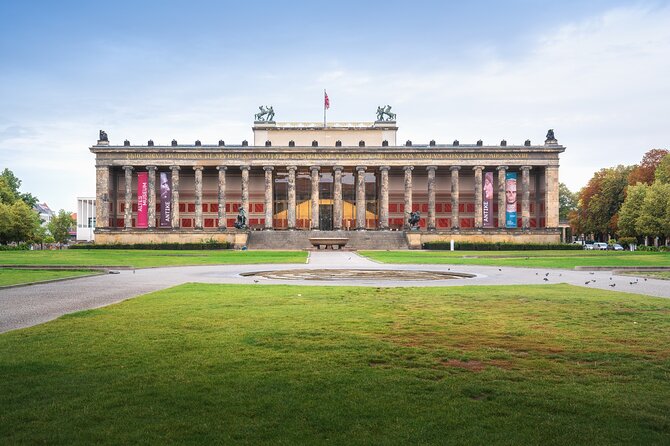
Next you reach Bebelplatz, known as the site of one of the infamous Nazi book burning ceremonies on 10 May 1933. These ceremonies happened in the evening and occurred in many German university cities. The event at the center is described as being initiated and hosted by the nationalist German Student Association, which the description frames as “stealing a march” on other student groups connected to National Socialism.
This is the stop where the “Love and War” concept becomes more than a clever title. You are watching how power can target culture, language, and thought. The puzzle here again forces you to stop, scan, and locate the clue that advances you to the next part of the walk.
The stop is also listed with free admission, which helps you keep your day focused on the experience rather than logistics.
Gendarmenmarkt and Konzerthaus area: beauty, then politics in the same block
After Bebelplatz, you head to Gendarmenmarkt. The square’s name comes from the “Gens d’armes” cuirassier regiment. Their stables were demolished by Friedrich II. Between the churches, a new theatre was built, and today you may know the area for the Konzerthaus Berlin.
This is a smart placement because it shows the duality of city life: places can be architecturally elegant and still sit near sites of political violence and suppression. In other words, Berlin keeps the past physically close.
The puzzle again keeps you moving by pointing your attention to facts you can verify on site, likely from the square’s buildings and signage. With a time allotment listed and free admission, it is a manageable stop that lets you refocus after the emotional intensity of Bebelplatz.
Hamburg’s state representation in Berlin: politics that happens in plain sight
The route then shifts to a more modern political setting: the state representation of the Free and Hanseatic City of Hamburg in Berlin. You see a building on Jägerstraße, and the description emphasizes how it hosts a steady stream of events and meetings, with over 500 events and encounters each year.
The phrasing here paints everyday politics in motion, from dignitaries to discussions on current events. For you, this stop is a reminder that Berlin is not only a memorial city. It is still a working capital, with government operations that keep unfolding long after the WWII stories have faded from daily life.
In a puzzle walk, this kind of stop can feel surprising because it is not as emotionally “obvious” as a memorial. But it is valuable. It places the past next to the present, in a way that feels practical rather than staged.
Memorial to the Murdered Jews of Europe: Eisenman’s design and why the last stretch matters
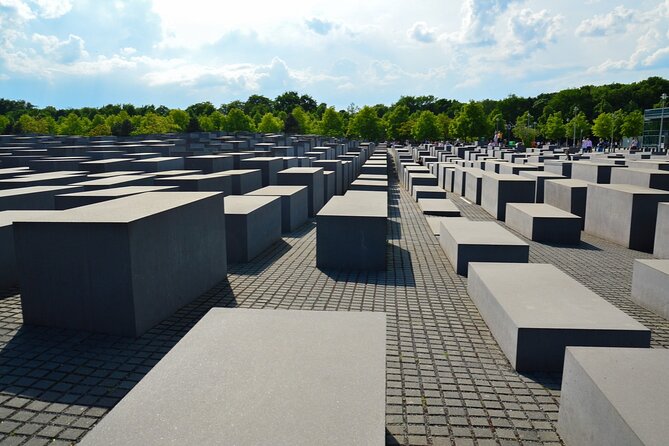
The final major site is the Memorial to the Murdered Jews of Europe. In 1999, after lengthy debates, the German parliament decided to establish a central memorial site. The competition was won by New York architect Peter Eisenman, and the memorial was ceremonially opened in 2005.
This is the point where pacing becomes personal. You may want the puzzle element to guide you in, because it gives structure to your attention. Or you may want to slow down and just stand, taking in the space before you finish.
Either way, the game’s end here gives the walk a shape. You start at a public square focused on time and global comparison, then progress through city institutions, ideology-shaped spaces, and finally a memorial built to ensure memory stays public and visible.
The ending point is listed as Cora-Berliner-Straße 1, 10117 Berlin.
How the puzzles work, and how to solve them without frustration
This walk is a story puzzle game. You do not just wander and read. You stop, look around for a clue tied to the location, and then use the answer to progress. It is also built so you can play offline, so you can focus on the streets instead of constantly checking your connection.
Here is what helps you enjoy the puzzle side:
- Plan on a slower-than-normal sightseeing pace at the first two stops, since you are learning the style of clue-finding
- If a question feels unclear, use a step back approach. Look for the most obvious “detail targets” first, then widen your scan
- Keep an eye on the route flow. This walk is designed as a sequence through central Berlin, so going off-plan usually costs time
One caution from real experience: at certain times of year, the route may cross areas affected by seasonal markets, which can mean you will need to make a few detours to stay on the path. If you are going during a big holiday market season, I suggest leaving yourself extra time and a calm mindset.
Who this puzzle walk is best for
This experience fits you best if you like:
- Self-guided wandering with a clear structure
- History that you encounter through looking closely at real places
- A low-cost activity that uses an hour well, especially if you are also doing museums or guided tours
You might not love it if:
- You want a classic guided tour lecture style
- You dislike puzzle challenges or you feel stressed by “find the answer” prompts
- You want mostly indoors stops, since this is centered on a walk through the open Mitte core
The format is also a good match for people who prefer avoiding crowds. It is private and described as no human contact, which can feel freeing in a city where tour groups can sometimes feel tightly packed.
Should you book Love and War in Berlin puzzle walk?
I think it is worth booking if you want a small-price, high-structure way to understand Berlin’s WWII-era memory in the city center. The combination of major landmarks, a puzzle trail that makes you look closely, and the ability to pause and resume turns this into a flexible “do it your way” day plan.
If your travel style is mostly passive sightseeing, or you hate solving riddles, you may feel the prompts slow you down. But if you enjoy figuring things out and you like walking through meaningful places at your own tempo, this is a strong use of one hour in Berlin.
You start at Alexanderplatz, end near Cora-Berliner-Straße, and you can fit it into almost any schedule during the day. For $6, that is a lot of attention and a lot of context packed into the Mitte core.
FAQ
How long does the Love and War in Berlin self-guided puzzle walk take?
It’s listed as about 1 hour.
Can I start at any time during the day?
Yes. The experience is described as starting at any hour, and the opening hours shown run Monday to Sunday from 5:00 AM to 9:00 PM.
Do I need an internet connection to play?
No. You can play offline, so you do not need an internet connection to solve the city game.
Is this a guided tour with a person?
No. It’s a private self-guided activity, and there is no physical tour guide included.
Where do I start and where does it end?
Start is listed at Alexanderpl. 1, 10178 Berlin. The end point is Cora-Berliner-Straße 1, 10117 Berlin.
How much does it cost?
The price is $6.00 per person.
Can I cancel for a full refund?
Yes, free cancellation is offered. You can cancel up to 24 hours in advance for a full refund. If you cancel less than 24 hours before the start time, you won’t get a refund.
Is it suitable for most people and can I bring a service animal?
It says most travelers can participate, and service animals are allowed.
Newest Berlin reviews on the site
- Your ticket to The Wall Museum Berlin★ 3.0 · 60 reviews
- Rickshaw Tours Berlin – Groups of up to 16 people with several rickshaws★ 4.0 · 97 reviews
- Warnemuende Shore Excursion: Berlin Private Sightseeing Tour from Rostock★ 5.0 · 4 reviews
- eSIM for Germany and 34 European Countries★ 4.5 · 16 reviews
- Walking on the Wall: 3-Hour Tour in Berlin★ 4.5 · 34 reviews
- Karl-Marx-Allee Tour: Life and Architecture in East Berlin★ 5.0 · 19 reviews
- Warnemuende Shore Excursion: Private Berlin Tour★ 4.5 · 27 reviews
- Berlin Food & Cultural Tour: Must-Try German & Berliner Classics★ 5.0 · 51 reviews
Self-Guided Tours, compared.
Neuschwanstein Castle Skip-the-Line Ticket with Audio Guide
Read our review →
Solar Powered Sunset Catamaran Cruise & Audio Guide
Read our review →
Neuschwanstein Castle Express Ticket and Audio Guide
Read our review →
Neuschwanstein Castle Ticket With Audio Guided Tour
Read our review →
Spicy’s Gewürzmuseum Entry Ticket and Audio Guide
Read our review →
Browse the lists this tour appears in