
Reviewed · WALKING TOURS
Discover Berlin Half-Day Walking Tour
Berlin changes twice on this walk. This half-day tour strings together the Prussian and Imperial eras, the Nazi period, and the Cold War, then lands in today’s rebuilt city center. I especially like the way Unter den Linden turns into a history timeline in real space, and I also value the Topography of Terror stop where you can look at the excavated cellars. One possible drawback is that this route tackles painful subjects, and you will be moving for hours.
You meet at Neue Promenade 3 and follow a guide through major landmarks around Mitte and the museum island area, with stories that connect the dots across four different political worlds. It’s $24.19 per person for about 3 hours 30 minutes, in English, with a group capped at 25 and a mobile ticket.
In This Review
- Key Things I’d Highlight Before You Go
- A Half-Day Berlin Reset Through Prussia, Nazis, and the Cold War
- Meeting at Neue Promenade 3 and Getting Oriented Fast
- Hackescher Markt and James Simon Park, the Tour’s Opening Scene
- Museum Island and the Domes Around It, Where Art Meets Power
- Stadtschloss, Lustgarten, and Bridges, Reading the City’s Center
- Neue Wache, Bebelplatz, and the Memorial Logic of Berlin
- Unter den Linden Opera to St Hedwig, a Boulevard With Consequences
- Pariser Platz, Holocaust Memorial, and the Places Where Hitler’s Shadow Held
- Brandenburg Gate to the Reichstag, Germany’s Turning Point Staircase
- Fuhrerbunker, 1953 Uprising Space, and the Aftermath of Control
- Berlin Wall Memorial, Checkpoint Charlie, and the Cold War Walk
- Topography of Terror, the Gestapo and SS Headquarters, and Those Excavated Cellars
- Ending in Mitte and How to Use This Tour for Your Next Choices
- Price and Pacing, Is $24.19 Worth It?
- Who Should Book This Tour, and Who Might Want a Different Style
- Should You Book This Berlin Walking History Tour?
- FAQ
- How long is the Discover Berlin Half-Day Walking Tour?
- How much does the tour cost?
- Where do I meet the guide?
- Is the tour offered in English?
- What is included in the price?
- Are food and drinks included?
- How big is the group?
- Is there a mobile ticket?
- Is free cancellation available?
- Are service animals allowed?
Key Things I’d Highlight Before You Go
- Four eras in one route: Prussian and Imperial power, then Nazi terror, then Cold War division, then the rebuild.
- Big sights, tight context: Brandenburg Gate, the Reichstag, Holocaust Memorial, and Checkpoint Charlie explained in sequence.
- Real memorial sites, not just photos: Bebelplatz book-burning memorial and Holocaust Memorial included.
- Cold War on foot: you walk parts of the Berlin Wall line and hear why 1989 mattered.
- Topography of Terror stops the storytelling cold: the former Gestapo and SS HQ and the excavated cellars.
A Half-Day Berlin Reset Through Prussia, Nazis, and the Cold War
Berlin can feel like a stack of eras built on top of each other. This tour is designed to help you read that stack. Instead of hopping randomly between famous spots, you follow a guided story from the city’s earlier power centers, through the violence of the 20th century, and into the reminders of what came after.
The practical win is how quickly your brain starts to organize what you see. You’ll connect monuments that look like standalone landmarks from a map into a single narrative. That matters because many of Berlin’s most famous sites are intentionally difficult to understand unless someone gives you the thread.
And yes, the tour includes some heavy stops. It’s not a light sightseeing walk, but it is respectful and framed to help you understand why these places exist in public space today.
More Walking Tours in Berlin
- Berlin: Third Reich and Cold War 2 Hour Walking Tour
★ 4.9 · 6,830 reviews - Berlin: Discover Berlin Walking Tour
★ 4.9 · 5,998 reviews - Berlin’s Best: 2 Hour Walking Tour Third Reich and the Cold War
★ 5.0 · 5,486 reviews
Meeting at Neue Promenade 3 and Getting Oriented Fast
You start at Neue Promenade 3 (10178 Berlin). That location is central enough that you can plan your day without feeling like you need a travel day before the tour begins. Since the tour ends in a different location, you should also think of this as a morning or early afternoon anchor, not something you build around a strict return-to-your-hotel plan.
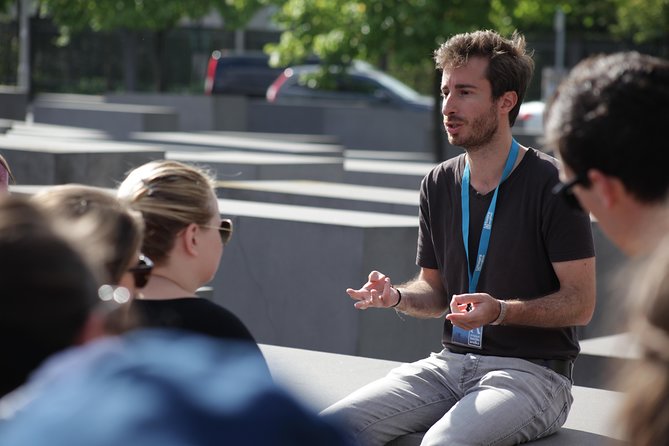
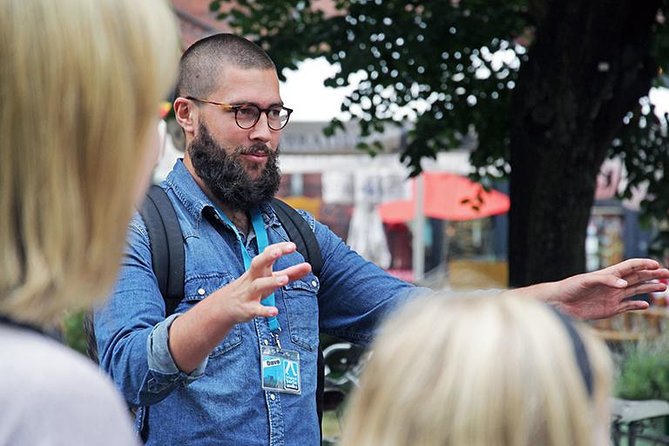
The tour is offered in English, and it’s guided by a professional host. The group size cap of 25 is important. In big-city walking tours, you either get personal attention or you get lost in the shuffle. Here, the setup supports a pace where you can ask questions when something doesn’t click.
Also, it uses a mobile ticket, so you avoid printing or scrambling through confirmations while you’re outside in the wind. Small thing, but Berlin weather is not subtle.
Hackescher Markt and James Simon Park, the Tour’s Opening Scene
The first quick stops set the tone. You begin at Hackescher Markt, where the guide explains the history of the site and helps you notice what’s around you instead of treating the area like a shortcut. Then you move to James Simon Park, another small stop that works like a bridge from everyday Berlin to the city’s bigger historical themes.
These early minutes matter more than they sound. If you start understanding how the guide will connect places, you’ll get more from every later landmark. By the time you reach the grand monuments, your mental map is already in place.
Museum Island and the Domes Around It, Where Art Meets Power
One of the tour’s strongest ideas is that it keeps history close to culture. You pass through the Museum Island zone and make multiple stops linked to the museum complex: Neues Museum, Pergamonmuseum, and Altes Museum. Even when you’re not going inside, these stops help you see how Berlin built its public identity around learning, collecting, and display.
You’ll also pause at Stiftung Neue Synagoge Berlin – Centrum Judaicum. That’s a reminder that the story of Berlin is not only about governments and armies. It’s also about communities and the way cultural life returns after rupture.
Nearby, the tour includes Berliner Fernsehturm and Berliner Dom. The payoff here is clarity. When you’re standing in the middle of a skyline, it’s hard to understand what’s older and what’s newer. The guide helps you sort that out with context tied to the city’s political shifts.
And around this zone, you get the Einstein link. The tour pauses at the Berlin State Library, once the workplace of Albert Einstein. It’s a simple stop that adds weight. Berlin isn’t only a stage for political drama. It also produced scientists, thinkers, and ideas that shaped the world.
Same city, a different way to spend the afternoon:
- Berlin: Reichstag, Dome and Government District Guided Tour
★ 4.7 · 18,288 reviews - Berlin: 1-Hour City Tour by Boat with Guaranteed Seating
★ 4.3 · 16,993 reviews - Berlin: TV Tower Standard Entrance Ticket
★ 4.4 · 15,883 reviews - Berlin: Boat Tour Along the River Spree
★ 4.4 · 11,252 reviews
Stadtschloss, Lustgarten, and Bridges, Reading the City’s Center
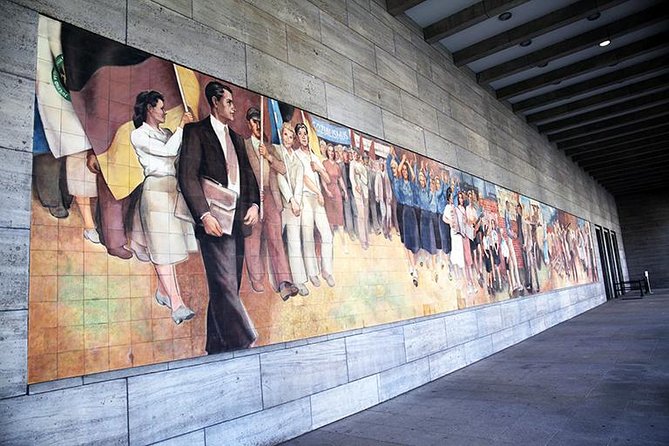
From the museum area, the tour moves into the heart of the city center with a string of symbolic spaces. You’ll stop for context at Stadtschloss Berlin, then near Rotes Rathaus, and down through the older-looking pockets like Nikolaiviertel. The route also touches Lustgarten and Schlossbrucke, so you’re not just looking at buildings, you’re seeing how they sit in a planned urban layout.
This is a smart part of the walk for first-time visitors. Berlin’s center can feel like a mix of styles and time periods. When you pair those stops with guided explanations, you start noticing why the streets and squares were designed the way they were.
You’ll also make a stop at Deutsches Historisches Museum, which helps you connect what you’re seeing outdoors with the idea of institutions that preserve national memory. Even if you don’t enter the museum, it’s a useful cue: Berlin treats history as something you visit, not something you read once and forget.
Neue Wache, Bebelplatz, and the Memorial Logic of Berlin
Then the tone shifts. You pause at Neue Wache, a memorial site, and you continue toward Bebelplatz. This is where Berlin’s memorial approach becomes very specific. Places like these aren’t meant to be comfy.
At Bebelplatz, you’ll also see the Book Burning Memorial. The story tied to this square is the 1933 Nazi-era book burnings, when cultural life and critical thought were targeted. It’s a tough subject, but standing at the actual memorial makes it feel less like a textbook fact and more like a message the city is still carrying.
These stops do two things for you:
1) They show how the Nazi era left physical marks in public space.
2) They explain how Berlin chose to remember those marks rather than hide them.
Unter den Linden Opera to St Hedwig, a Boulevard With Consequences
One reason this tour works is the walking itself. You travel along Unter den Linden, the boulevard linking major points in the city. The guide connects how it grew in prominence as Berlin pushed its borders westward, and you see why it became a stage for power and pageantry.
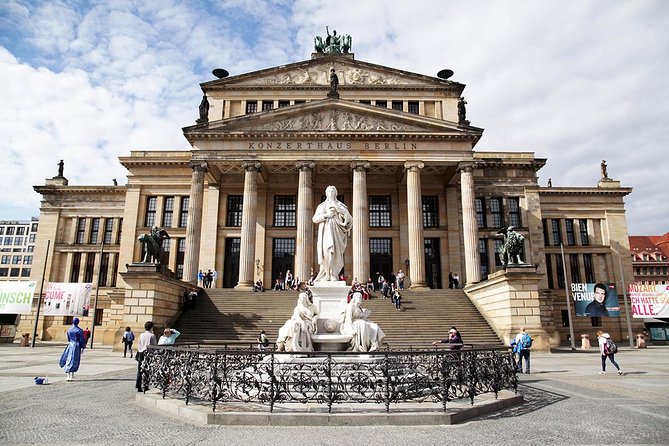
Along that stretch you’ll pause at Staatsoper Unter Den Linden. You’ll also stop near Cathedral of St. Hedwig – Domgemeinde St. Hedwig and Humboldt University. Those choices matter. They show how the boulevard is not only political. It’s also educational, artistic, and religious, which makes the Nazi and Cold War stories you hear later land harder in context.
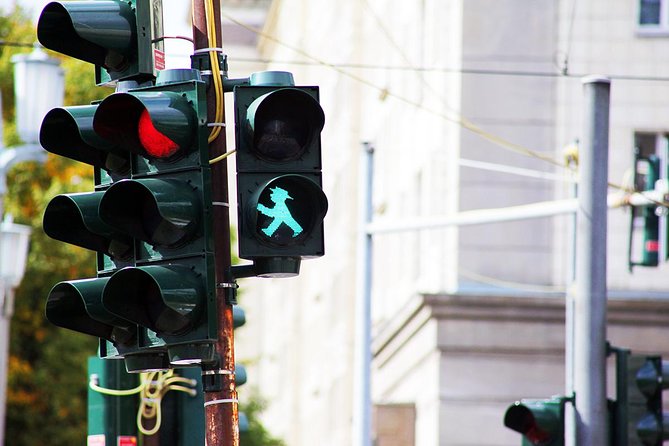
There’s even a quick stop at Ampelmann Shop. It’s a small pivot from grand history, and that’s useful. It reminds you that Berlin also remembers itself through everyday design details. You get a breather without losing the thread.
Pariser Platz, Holocaust Memorial, and the Places Where Hitler’s Shadow Held
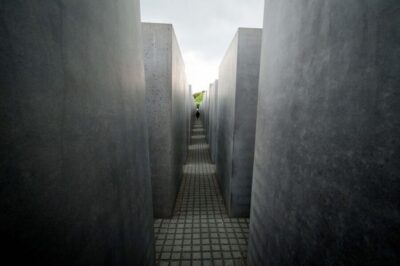
Next comes Pariser Platz, where the guide explains key historic points tied to Nazi rule. The tour notes this area as the location of Hitler’s bunker, alongside the presence of the Holocaust Memorial nearby: the memorial to the murdered Jews of Europe.
This is one of the most important stretches on the walk. You’re looking at space that is simultaneously political and commemorative. The Holocaust Memorial stop includes time for you to take it in, not just move past it.
The useful part is the guide’s framing. It helps you understand why Berlin places these kinds of memories in central, visible locations instead of pushing them to the edges.
Brandenburg Gate to the Reichstag, Germany’s Turning Point Staircase
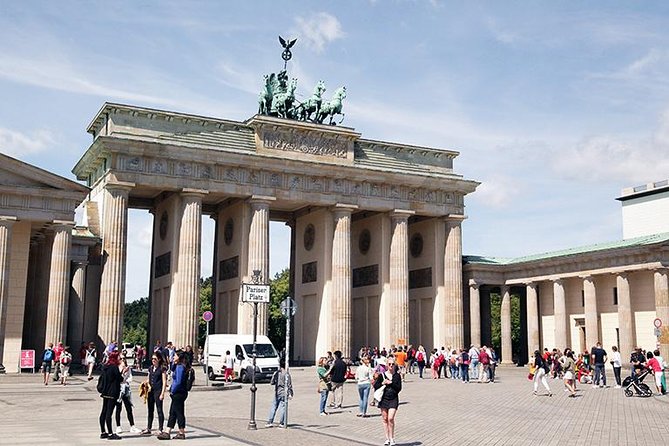
You move toward Brandenburg Gate, the gateway monument that has seen everything from imperial pageantry to postwar division. The guide explains what it meant historically and how it fits into the larger story of Berlin’s changing governments.
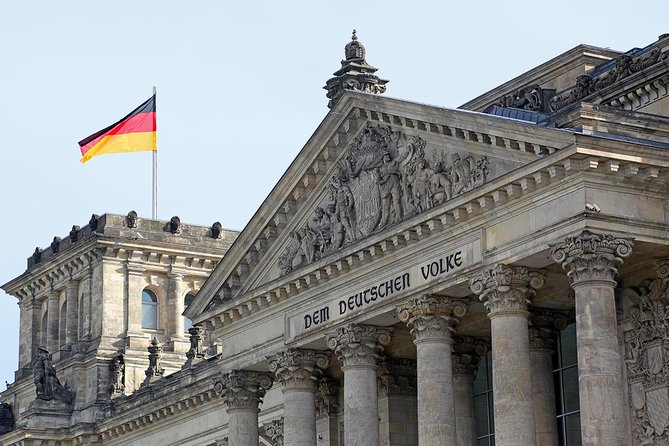
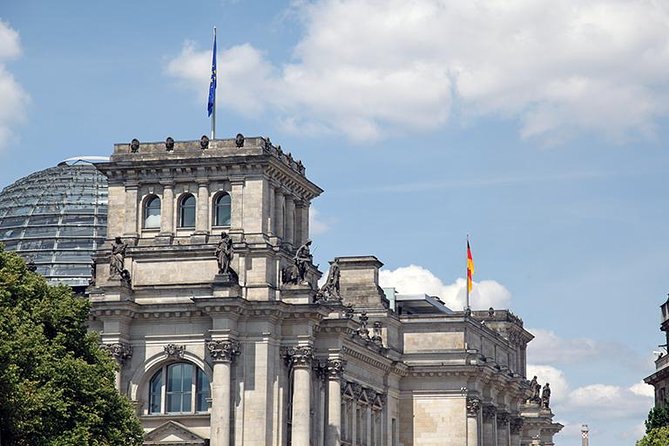
Nearby you also pause at the Reichstag Building, home of Germany’s parliament. Even a short stop here can change your perspective. You stop thinking of it as just a photo spot and start seeing it as a symbol that Germany keeps reinventing.
Then you continue to Victory Column. It’s a reminder of earlier times when monuments celebrated triumph and national strength. On this tour, it’s not just a structure. It becomes a contrast point against the darker chapters you’re walking toward next.
Fuhrerbunker, 1953 Uprising Space, and the Aftermath of Control
The route includes more specific reminders of the Nazi and immediate postwar era, even if you’re only pausing for brief moments. You’ll stop at Fuhrerbunker, the Hitler bunker location. You’ll also see Platz des Volksaufstandes von 1953, tied to the 1953 uprising, and Aviation Ministery of Berlin, another site the guide uses to connect political control to specific places.
These aren’t feel-good stops. But they help you understand how Berlin’s history isn’t abstract. It’s written into street corners, government buildings, and the spaces where people tried to resist.
If you’re the type of traveler who likes cause and effect, this part clicks. It’s also a good reminder that Berlin’s modern identity came after extreme breaks.
Berlin Wall Memorial, Checkpoint Charlie, and the Cold War Walk
Now you get the Cold War on foot. You’ll visit the Memorial of the Berlin Wall and hear details about the wall’s role as the boundary between East and West. You also hear about its downfall in 1989, which is a turning point the city itself still echoes today.
After that, you reach Checkpoint Charlie, including the guide’s explanation of the path of the “death strip.” That phrase matters because it describes how real the danger was for people trapped by the division. The stop is not only about the checkpoint building. It’s about what it represented for those trying to cross.
You also pause at Topography of Terror after this zone. That sequencing is smart because the checkpoint connects daily reality, while Topography of Terror connects the machinery behind the terror.
Topography of Terror, the Gestapo and SS Headquarters, and Those Excavated Cellars
Topography of Terror is the emotional anchor of the tour. The guide explains that the museum is located at the former Gestapo and SS Headquarters, and you spend time thinking about why the city chose to confront these past events rather than bury them.
One of the most haunting elements you’re guided to see is the excavated cellars. The tour describes them as a place tied to political prisoners being tortured and killed. Even if you only glance down and move on with the group, the impact is there.
This is also where a good guide makes a big difference. On walks like this, you want someone who keeps the story factual, respectful, and clear, without turning it into a lecture you can tune out. If you get a guide who tells the story with care, this stop will stay with you for a long time.
Ending in Mitte and How to Use This Tour for Your Next Choices
Because the tour ends in a different location, I think of it as a one-stop orientation plus a history scaffold. You’re done after about 3 hours 30 minutes, but your knowledge base is built. That makes it easier to decide what to see more deeply afterward.
This is especially useful if you want to return later to the places that hit you hardest. Some people love the architecture and want museum time. Some people focus on memorials. Some people want more Cold War sites. The tour gives you a map and context so your second visit is smarter.
Also, the tour is designed for people who might otherwise miss context on their own. When you’re walking fast in a city like Berlin, it’s easy to collect photos without building understanding.
Price and Pacing, Is $24.19 Worth It?
At $24.19 per person for around 3.5 hours, you’re paying for guide time and narrative structure more than for ticketed museum experiences. Since many of the stops are exterior or brief, the value is in what gets explained while you walk.
Is it a bargain? For most first-time visitors, yes. You get major landmarks across the city center, and you get a guided explanation that links Prussian power, Nazi terror, and Cold War division into a single through-line.
What about pacing? The tour is packed with stops, but the time at each spot is relatively short, often just a few minutes. That can feel efficient, and it works if you like motion. If you want slow museum browsing, you’ll need to plan extra time elsewhere. The tour is built for seeing and understanding, not for sitting down for hours.
Who Should Book This Tour, and Who Might Want a Different Style
This experience is best for:
- First-time visitors who want to learn Berlin fast but not shallow.
- People who like guided history without reading walls of text on their own.
- Travelers who enjoy walking between landmarks and getting context on the way.
You might want to choose something else if:
- You strongly prefer lighter themes or shorter walks.
- You want a lot of inside museum time. This walk includes many key spots, but it is not built as a museum marathon.
On the plus side, it’s in English, with service animals allowed, and it runs near public transportation. That makes it easier to fit into a real itinerary.
Should You Book This Berlin Walking History Tour?
If you want a fast, guided way to understand why Berlin looks the way it does, book it. This walk is built around the city’s turning points, and the guide role is central, not optional. You will come away with better “why does this matter” instincts for Brandenburg Gate, the Reichstag, the Holocaust Memorial, Checkpoint Charlie, and Topography of Terror.
If you’re traveling with limited time, this is a strong early anchor. And if you like your sightseeing with structure, it gives you exactly that, even when the subject matter gets difficult.
FAQ
How long is the Discover Berlin Half-Day Walking Tour?
It lasts about 3 hours 30 minutes.
How much does the tour cost?
The price is $24.19 per person.
Where do I meet the guide?
You meet at Neue Promenade 3, 10178 Berlin, Germany.
Is the tour offered in English?
Yes, it is offered in English.
What is included in the price?
A professional guide is included.
Are food and drinks included?
No. Food and drinks are not included unless specified.
How big is the group?
The tour has a maximum of 25 travelers.
Is there a mobile ticket?
Yes, it uses a mobile ticket.
Is free cancellation available?
Yes. You can cancel up to 24 hours in advance for a full refund.
Are service animals allowed?
Yes, service animals are allowed.
Newest Berlin reviews on the site
- Jetbike Berlin fun bike beer bike★ 5.0 · 3 reviews
- Karl-Marx-Allee Walking Tour: Berlin’s Socialist History★ 5.0 · 5 reviews
- Homeless on chic streets: city tour in Berlin from personal experience★ 4.6 · 3 reviews
- Berlin: Sachsenhausen Concentration Camp Guided Tour★ 4.9 · 42 reviews
- Historyof the Trans, Queer & Gay communities of Berlin tour★ 4.8 · 17 reviews
- Historic Berlin Pubs & History Tour★ 4.9 · 73 reviews
- Berlin: City Center Walking Tour★ 4.7 · 45 reviews
- Half-Day Berlin Highlights Segway Expedition★ 4.5 · 61 reviews
Walking Tours, compared.

Berlin’s Best: 2 Hour Walking Tour Third Reich and the Cold War
Read our review →
Third Reich Berlin: Hitler and WWII Walking Tour
Read our review →
Browse the lists this tour appears in