
Reviewed · THIRD REICH & COLD WAR TOURS
Berlin’s Best: 2 Hour Walking Tour Third Reich and the Cold War
Two hours, three eras, zero excuses to rush. This tour strings together Nazi Germany and Cold War Berlin on foot, with big-photo stops like Brandenburg Gate and Checkpoint Charlie, plus commentary that keeps it understandable. I love the on-foot route that reaches places bus tours often miss, and I also like the pacing, since you get context without feeling buried. One heads-up: the storylines are heavy, so plan for serious stops like the Holocaust Memorial and the Führerbunker site.
The other thing I really liked is how the guide ties the sites into a single thread, from the Reichstag fire era to the Berlin Wall years. Many stops you stand at are marked as admission free, which makes the walk feel like a high-value history fix. If you want a calm, strictly sightseeing tour, you might find this one emotionally intense.
You’ll meet at the Brandenburg Gate area, on the Pariser Platz side, and look for the guide with the pink umbrella about 15 minutes early. It runs about 2 hours, in English only, and keeps group size to a maximum of 30.
In This Review
- Key Things You’ll Notice on This Third Reich and Cold War Walk
- Starting at Brandenburg Gate, Reunified Germany’s Big Symbol
- Reichstag Building and the 1933 Reichstag Fire Story
- Soviet Memorial Tiergarten, WWII Hardware You Can See Up Close
- Victory Column and Speer’s Germania Plan in Plain Terms
- The Holocaust Memorial, Walking Through a Dedicated Space
- Standing Above the Führerbunker Site, Ending the War with Context
- Hermann Göring’s Air Force Ministry Site and the Birth of the GDR
- Topography of Terror, Where SS and Gestapo Began Their Operations
- Niederkirchnerstraße and a Berlin Wall Remnant, Escape Stories at Street Level
- Checkpoint Charlie, Soviet vs USA Standoff and the Wall Coming Down
- Price and Value: $24.07 for a Guided 2-Hour History Sprint
- The Guide Factor: Clear Answers, Respectful Tone, and Real Context
- Logistics That Affect Your Comfort (What to Plan Before You Go)
- Who This Tour Is Best For
- Should You Book This Berlin Third Reich and Cold War Walking Tour?
Key Things You’ll Notice on This Third Reich and Cold War Walk
A tight 2-hour loop through Berlin’s most consequential 20th-century sites
On-foot access to street-level history, including a Berlin Wall remnant
A guide-led story, where each location connects to the next turning point
Stops that are listed as admission ticket free, so you can focus on learning
A respectful balance of seriousness and human-scale explanation at grim sites
Popular ending point at Checkpoint Charlie, tied directly to reunification
Starting at Brandenburg Gate, Reunified Germany’s Big Symbol
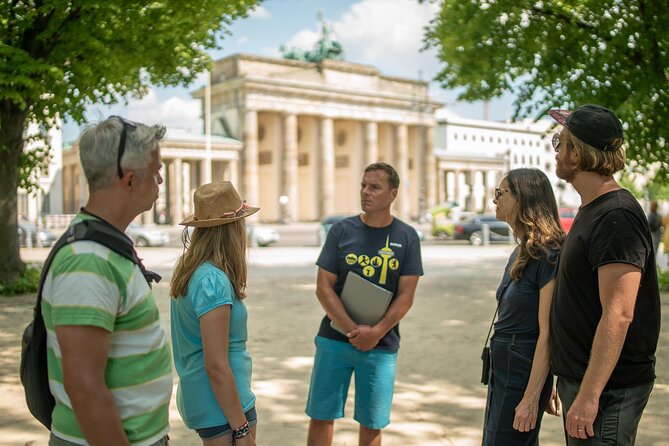
The walk kicks off at Brandenburg Gate on Pariser Platz. The guide explains why this monument became a symbol of reunified Germany, not just a historic landmark. It’s a useful first stop because it frames what you’re about to see next, Berlin’s 20th-century rupture and return.
You’re not only looking at stone and columns. You’re standing at a hinge point in the story, which helps you connect everything later, especially the Cold War showdown sites at the far end.
A small practical tip: arrive on time, because everyone needs to get oriented before you start walking. If you arrive late, you risk missing the framing talk that makes the rest click.
More Third Reich & Cold War Tours in Berlin
- Berlin: Third Reich and Cold War 2 Hour Walking Tour
★ 4.9 · 6,830 reviews - Berlin: Berlin Story Bunker Entry Ticket
★ 4.6 · 6,759 reviews - Third Reich Berlin: Hitler and WWII Walking Tour
★ 5.0 · 3,301 reviews
Reichstag Building and the 1933 Reichstag Fire Story
Next comes the Reichstag Building, Berlin’s house of parliament and a place wrapped in modern German history. The guide zeroes in on how the building reflects more than politics, it reflects the last 100 years of German change. You also hear about the Reichstag fire in 1933 and how Hitler used the building during his dictatorship.
This stop matters because it gives you the why behind the physical location. Instead of treating Nazi-era sites like isolated monuments, you see how power played out in real institutions.
Time here is short, so if you like to read every plaque, you’ll need to choose. I’d focus on the guide’s explanation first, then decide if you want a quick look around at the end.
Soviet Memorial Tiergarten, WWII Hardware You Can See Up Close
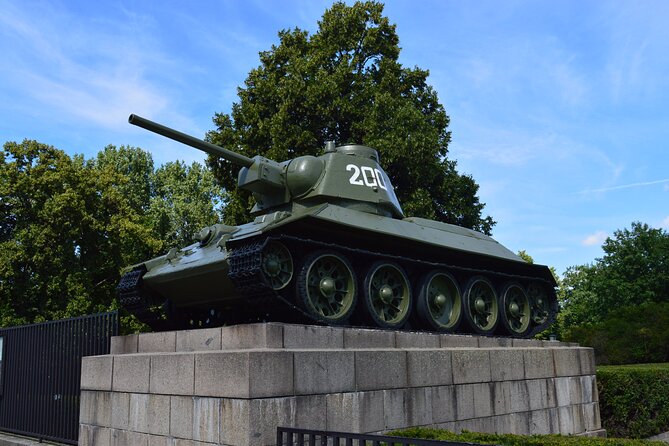
In Tiergarten, you visit a Soviet war memorial featuring WWII equipment, including Soviet T34/76 tanks and field artillery. Seeing the objects in person adds weight to the Cold War story, because it links postwar politics back to what war left behind.
This stop is also a reminder that Berlin’s conflict wasn’t only ideological. It was physical, brutal, and it left permanent traces in the city.
The only real drawback is that this is a quick photo-and-explain moment. If you want long lingering time, plan to save that for another day. This tour’s strength is how much it covers in 2 hours.
Victory Column and Speer’s Germania Plan in Plain Terms
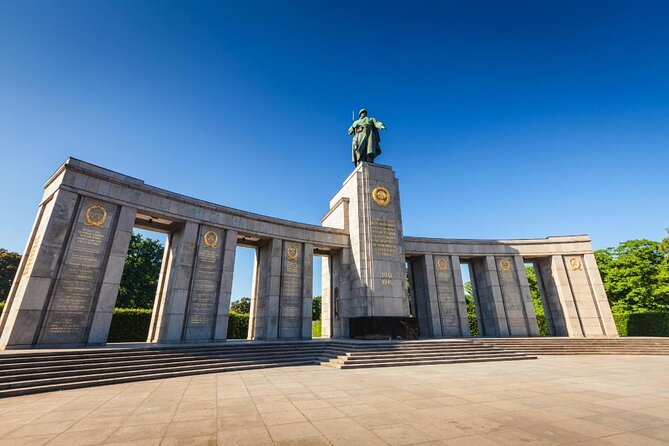
Then you’ll reach the Victory Column area, and the guide explains why Albert Speer moved it from its original location to the new site. You’ll also hear about Speer’s plans for a transformed capital city called Germania, which would have been the name for Berlin if the Nazis had won World War II.
This stop is interesting because it’s about design and power. The tour doesn’t treat architecture as neutral. Instead, it frames monumental projects as political messaging, a way to sell an ideology through the city itself.
One consideration: this part can feel abstract if you’re not into planning or symbolism. If you do enjoy how regimes shape public space, this is one of the more fascinating moments.
More Walking Tours in Berlin
- Discover Berlin Half-Day Walking Tour
★ 5.0 · 9,624 reviews - Berlin: Discover Berlin Walking Tour
★ 4.9 · 5,998 reviews - Berlin: Hidden Backyards Guided Walking Tour
★ 4.8 · 5,360 reviews - Berlin: Third Reich, Hitler, and WWII Walking Tour
★ 4.9 · 1,757 reviews
The Holocaust Memorial, Walking Through a Dedicated Space
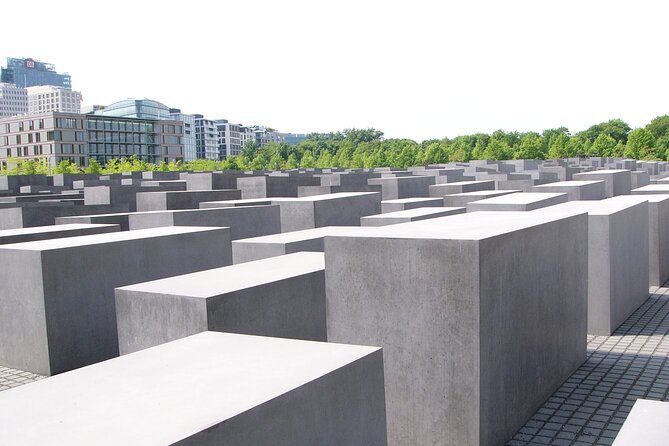
The tour next moves to the Holocaust Memorial, the Memorial to the Murdered Jews of Europe. You walk through this immense memorial, guided by context that keeps the focus where it belongs.
This is one of the stops where you’ll feel the emotional contrast against the larger political narrative. It’s also where a good guide really matters, because you need sensitivity, not spectacle.
If you prefer to process slowly, take a minute before moving on. The walk is short between sites, so you’ll want to pace yourself inside the memorial space.
Standing Above the Führerbunker Site, Ending the War with Context
After the Holocaust Memorial, you go to the Fuhrerbunker area. From there, the guide explains the last days of World War II and Hitler’s suicide in the bunker on April 30, 1945. The tour also covers how Germans come to terms with this destructive past today.
This stop can be unsettling, but it’s also important. It turns a bunker location into a timeline, a final chapter of the regime, not a morbid tourist photo moment.
A practical note: you may be looking mostly at a location, not an intact bunker you can walk through. That’s normal here, and the guide’s narration is what brings it into focus.
Hermann Göring’s Air Force Ministry Site and the Birth of the GDR
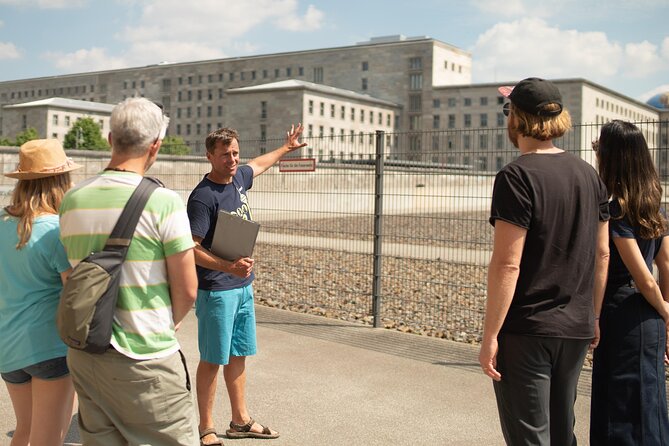
Next is the Aviation Ministry of Berlin area, explained through its link to the Nazi regime and later East German history. You walk the length of Hermann Goering’s Air Force ministry, and the guide connects this spot to the place where East Germany (GDR) was proclaimed in 1949.
That connection is the value of this tour’s structure. It shows how one era’s infrastructure can become the next era’s power base. The site becomes a bridge between Third Reich planning and Cold War realignment.
This is a shorter stop, but it’s the kind of moment that makes you look at Berlin differently. Instead of seeing buildings as fixed backdrops, you start seeing them as reused political tools.
Topography of Terror, Where SS and Gestapo Began Their Operations
Then you’ll visit the Topography of Terror site. Today, it houses the Topography of Terror exhibition, and you learn that the area was headquarters for Nazi institutions including the SS, Gestapo, and SD. The guide links this place to the crimes those organizations perpetrated during World War II.
This stop is valuable because it doesn’t only point at evil in general terms. It names the groups and ties them to their real-world administrative role.
If you’re the type who likes to read slowly, you might find 15 minutes tight. But as a guided orientation and a respectful first visit, it sets you up to return later on your own if you want more time.
Niederkirchnerstraße and a Berlin Wall Remnant, Escape Stories at Street Level
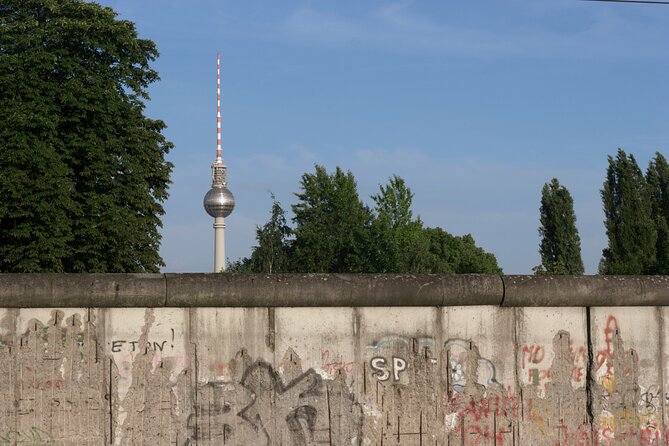
At Niederkirchnerstraße, you see a huge piece of the Berlin Wall. The guide tells stories of people escaping over the Wall and what happened to those who tried but did not make it. You also hear how life differed on both sides of the Wall, East Berlin and West Berlin.
This is where the tour becomes very real. You’re not imagining the Wall from a museum. You’re walking alongside a physical section and hearing how it affected ordinary choices and risks.
One consideration: this stop is emotionally charged. If your group is loud, you can still keep your own tone respectful by lowering your volume and listening closely.
Checkpoint Charlie, Soviet vs USA Standoff and the Wall Coming Down
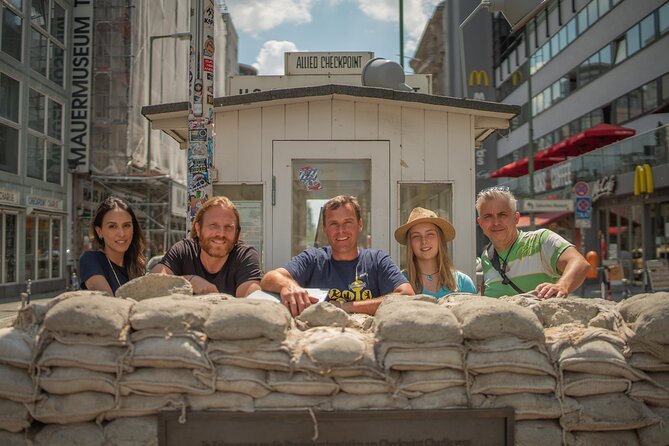
The tour ends at Checkpoint Charlie, the most famous checkpoint through the Berlin Wall. You hear about the Soviet vs USA tank standoff on this street in 1961, then you connect that tension to how the Berlin Wall came down on the night of November 9, 1989. The final wrap brings you to reunification, and the guide shares how reunification has played out over the last 30-plus years.
This ending works because it ties everything together. The earlier stops show how power was built, used, and resisted. Checkpoint Charlie is where you see the Cold War showdown in a place people still recognize today.
If you’re planning your next activity, this is a smart finish point. The area is central and walkable, and you can keep exploring on your own after you get the historical frame.
Price and Value: $24.07 for a Guided 2-Hour History Sprint
At $24.07 per person for about 2 hours, you’re paying for a guided route that hits a cluster of major sites in one concentrated outing. That can be excellent value if you’re short on time, because you get a human narrative that connects multiple locations instead of hopping between them randomly.
You’re also getting practical advantages built into the experience: a mobile ticket, English-only guiding, and a group capped at 30. Those details matter because they reduce friction. The meeting setup and the pink umbrella help you find the guide quickly, and the time limits mean you get a tight structure rather than a long, wandering day.
The only value warning is your expectations. If you want a deep museum experience at every stop, a 2-hour walking tour won’t replace that. But if you want a fast, grounded orientation to Berlin’s 20th-century story, it’s a solid deal.
The Guide Factor: Clear Answers, Respectful Tone, and Real Context
The guides are a major part of why this works well. In the feedback I took note of, people praised guides for keeping the tour lively without turning grim history into a comedy show.
Some guides highlighted by name include Glen, Ben, Maggie, Rebecca, Tom, Joachim, Peter F, Simon, Paul, Mikey, Georgia, James, Mikhail, and Eyan. What they seemed to share in common is a willingness to answer questions, a sense of timing, and the ability to connect sites to the present.
I especially like the way some guides use visual context, such as old pictures or historical images at certain stops. It helps you understand what you’re looking at right now, because you’re standing in the modern version of a place that once held very different reality.
If you’re the type who likes to ask questions, this tour style tends to fit you well. If you don’t speak up, you still get the structure through the guide’s explanation.
Logistics That Affect Your Comfort (What to Plan Before You Go)
This is a walking tour, so your comfort controls how much you get out of it. It runs about 2 hours, and you’ll be on your feet from Brandenburg Gate to Checkpoint Charlie.
In colder months, I’d dress like you’ll be outside for real. One of the most practical bits of advice people echoed was to wrap up warm, wear sensible shoes, and come prepared. Berlin weather can be a mood killer if you dress for a mild forecast.
Also, meet 15 minutes before start time in front of the Tourist Information office at the Brandenburg Gate, Pariser Platz side, and look for the guide holding the pink umbrella. That small detail saves you stress and keeps the group moving.
Who This Tour Is Best For
This one is ideal if you want a clear arc through Third Reich Germany and the Cold War without getting lost in details. It’s also a strong choice if you enjoy street-level history and want to see how Berlin’s layout reflects political shifts.
It fits families, too, as long as everyone can handle serious topics. A few families mentioned that the guide made space for questions, including for teens and kids, and kept the tone respectful while still engaging.
If you’re short on time and you want a guided orientation before deeper independent exploring, this is a great starting point. If you want a slow-paced museum-heavy day, you may want to pair this with one dedicated museum afterward rather than replacing museums entirely.
Should You Book This Berlin Third Reich and Cold War Walking Tour?
Book it if you want a 2-hour, guided way to connect major Berlin sites into a single story, starting at Brandenburg Gate and ending at Checkpoint Charlie. The route is compact, the guiding is designed to be understandable in English, and many stops are marked as admission ticket free when you arrive.
Skip it or adjust your expectations if you need long, quiet time inside museums, or if you’re sensitive to heavy subject matter. This is history with consequences, and the tour includes the Holocaust Memorial and the Führerbunker site.
If you do book, treat it like a history orientation you can build on. After the walk, you’ll know what to return to, what to read more about, and what questions you want answered next.
More Wartime and Cold War History Walks in Berlin
- Skip-the-Line: Berlin Wall Museum at Checkpoint Charlie
★ 4.1 · 2,041 reviews - Cold War, Berlin Wall, Spies and the East Side Gallery
★ 5.0 · 1,024 reviews - Berlin Third Reich Sites: Half-Day Walking Tour
★ 5.0 · 835 reviews - Berlin: History of the Third Reich Guided Walking Tour
★ 4.7 · 791 reviews
Newest Berlin reviews on the site
- Jetbike Berlin fun bike beer bike★ 5.0 · 3 reviews
- Karl-Marx-Allee Walking Tour: Berlin’s Socialist History★ 5.0 · 5 reviews
- Homeless on chic streets: city tour in Berlin from personal experience★ 4.6 · 3 reviews
- Berlin: Sachsenhausen Concentration Camp Guided Tour★ 4.9 · 42 reviews
- Historyof the Trans, Queer & Gay communities of Berlin tour★ 4.8 · 17 reviews
- Historic Berlin Pubs & History Tour★ 4.9 · 73 reviews
- Berlin: City Center Walking Tour★ 4.7 · 45 reviews
- Half-Day Berlin Highlights Segway Expedition★ 4.5 · 61 reviews
Third Reich & Cold War Tours, compared.

Third Reich Berlin: Hitler and WWII Walking Tour
Read our review →
Skip-the-Line: Berlin Wall Museum at Checkpoint Charlie
Read our review →
Walking Tour of Former Nazi Party Rally Grounds
Read our review →Browse the lists this tour appears in