
Reviewed · THIRD REICH & COLD WAR TOURS
Third Reich Berlin: Hitler and WWII Walking Tour
Berlin history hits hard on foot. This 3-hour Third Reich Berlin tour strings together the people and places behind the last fight of World War II. I like that the route is tight and story-driven, with Hitler and WWII landmarks you would easily miss on your own, plus memorials that keep the focus where it belongs. One drawback to plan for: it covers very dark subject matter, and you will be walking most of the way.
I also love the guide style this tour seems to deliver, clear explanations with room for questions. Guides like Maria, RU, Canadian Chris, Tom, and Paul show up often in the feedback, and the consistent theme is friendly, organized storytelling even when the topic is brutal. If you want a casual, light stroll, this is not that. It is a focused history walk with real stops tied to real decisions.
In This Review
- Key Highlights That Make This Tour Worth Your Time
- Entering The Final Days: What This Tour Actually Feels Like
- Where You Start, Where You End, and Why the Route Works
- Friedrichstrasse Area to the First Nazi Power Nodes
- The Hard Centers: Hitler’s Bunker, Goebbels HQ, and the Wilhelmstrasse Government Belt
- Reichstag: Where Democracy Gets Crushed, Then Falls Symbolically
- Memorial Work That Must Be Seen: Trains to Life, Holocaust Memorial, Soviet Tiergarten
- Brandenburg Gate and the Nazi Use of Public Space
- Akademie der Künste: Arts, Power, and Albert Speer’s Architectural Influence
- Topography of Terror: The SS and Gestapo Headquarters Footprint
- What to Expect From the Guide: Clear, Serious, and Question-Friendly
- Comfort, Timing, and Walking Distance Tips (Save Your Legs)
- Price and Value: Why $24.07 Can Be a Smart Half-Day
- Who Should Book This Tour (and Who Might Prefer Something Else)
- Should You Book This Third Reich Berlin Walking Tour?
- FAQ
- How long is the Third Reich Berlin walking tour?
- How much does the tour cost?
- Where do I meet and where does the tour end?
- What stops are included on the route?
- Is admission included for all sites?
- What is included in the price?
- What is not included?
- What language is the tour offered in?
- Can I bring service animals?
- What should I do on the day of the tour?
Key Highlights That Make This Tour Worth Your Time
- Hitler bunker site and the layout of the final Nazi command center area
- Goebbels propaganda and Luftwaffe power centers tied to how the regime controlled messages and war
- Reichstag and the 1933 fire connection, then the symbolic Soviet flag in 1945
- Holocaust memorial stops that make the human cost impossible to ignore
- Trains to Life, Trains to Death memorial for deportations from Berlin
- Topography of Terror and the SS and Gestapo headquarters footprint
Entering The Final Days: What This Tour Actually Feels Like
This is one of those tours where Berlin stops being scenery and starts being a crime scene, a command post, and a battlefield at the same time. You move through areas tied to Nazi rule, then into the memorial zones built to remember what happened. It is not sightseeing in the usual sense, it is learning with your feet.
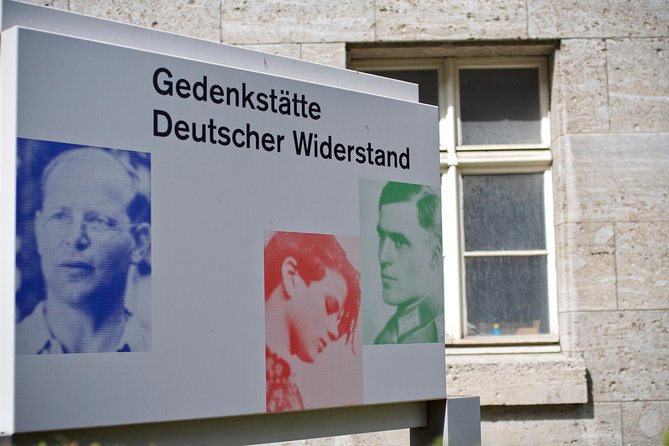
The best part is how the tour links big events to specific personalities and institutions. You hear about resistance leaders like Henning von Tresckow, Hans Oster, and Claus von Stauffenberg, while also learning what the regime promised, built, and destroyed. You also get the wartime logic behind policies like Lebensraum, explained in the way that helps you understand how ideology became action.
You will also notice the guide keeps returning to the same idea: dictatorship is not just speeches. It is paperwork, propaganda offices, police and intelligence networks, and daily life under fear. That is the kind of context that makes Berlin’s streets feel less confusing.
More Third Reich & Cold War Tours in Berlin
- Berlin: Third Reich and Cold War 2 Hour Walking Tour
★ 4.9 · 6,830 reviews - Berlin: Berlin Story Bunker Entry Ticket
★ 4.6 · 6,759 reviews - Berlin’s Best: 2 Hour Walking Tour Third Reich and the Cold War
★ 5.0 · 5,486 reviews
Where You Start, Where You End, and Why the Route Works
The tour meets at Reichstagufer 17, 10117 Berlin, and ends near Topography of Terror at Niederkirchnerstraße 8, 10963 Berlin. It is timed as a half-day style outing, about 3 hours, and it is designed so you finish close to a major tourist hub near Checkpoint Charlie.
It matters that the ending point is Topography of Terror, because it turns the final stretch into a direct look at how terror was enforced. If you are the type who likes your history in a clear arc, this routing helps. You start with key Nazi power geography, then you move into memorials, then you land on the institutions of repression.
The walk is also not a hop-on, hop-off bus route. You should expect real walking between sites, and the cold can make that feel longer. Based on the common practical feedback people share, plan on comfortable shoes and layers.
Friedrichstrasse Area to the First Nazi Power Nodes
Early on, you get an orientation that sets up the rest of the story around Berlin’s central sites. Friedrichstrasse Station is a key starting reference point in the route, and from there the guide frames the places connected to Nazi leadership and war planning.
From the first major cluster of stops, you are pointed toward Wilhelmstrasse, a corridor often described as a home base for Nazi decision-making. You are not just shown buildings, you are told what kinds of decisions were made there and how they fed the persecution machine.
This is a good place to pay attention to how the guide ties everyday life to policy. The tour mentions air raids and life under dictatorship as part of the context, so you do not only learn who had power, you also learn what people endured.
The Hard Centers: Hitler’s Bunker, Goebbels HQ, and the Wilhelmstrasse Government Belt
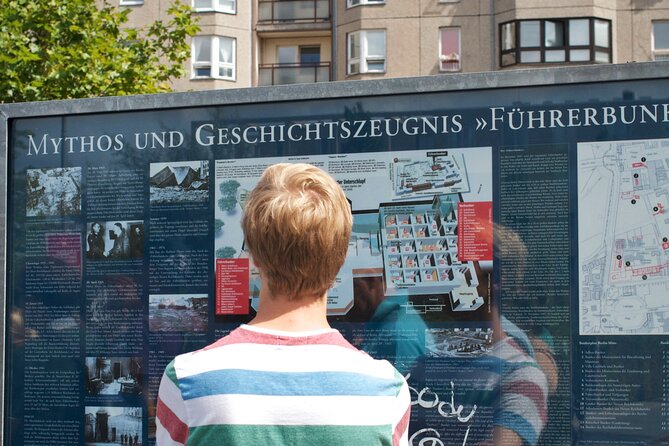
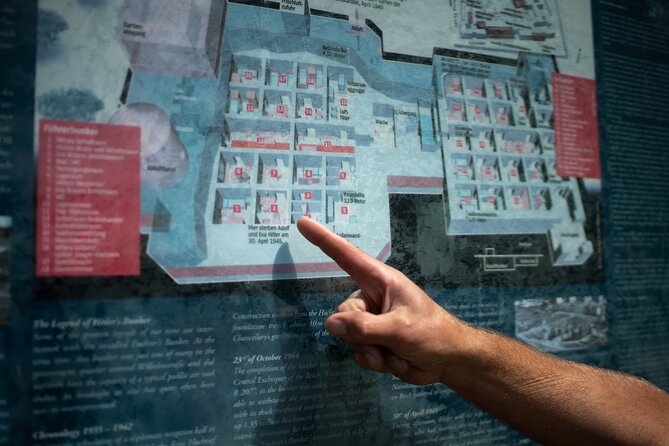
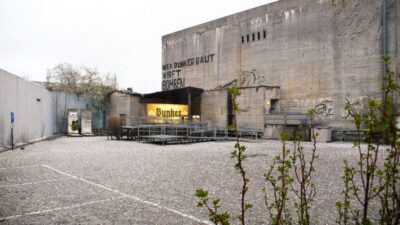
One of the most talked-about pieces of this route is seeing the area tied to Hitler’s bunker. The tour stops above the location of where he spent his last days, near the area of Hitler’s old Reich Chancellery built by Albert Speer. Even without going underground, the framing helps you picture how close the command center was to the city’s endgame.
Next, you head into the world of propaganda and war administration. You will visit the Ministry of Propaganda and hear about Joseph Goebbels and his role in shaping speeches and messaging for the regime. The guide also includes the Reichsluftfahrtministerium, the former Air Ministry on Niederkirchnerstraße, which connects Göring’s power as head of the Luftwaffe to how the war was run.
Here is why this matters: it is easy to think of WWII as tanks and planes only. This tour makes it clear the Nazis also fought with narratives, fear, and institutional control. The architecture and offices you pass reflect that.
More Walking Tours in Berlin
- Discover Berlin Half-Day Walking Tour
★ 5.0 · 9,624 reviews - Berlin: Discover Berlin Walking Tour
★ 4.9 · 5,998 reviews - Berlin: Hidden Backyards Guided Walking Tour
★ 4.8 · 5,360 reviews - Berlin: Third Reich, Hitler, and WWII Walking Tour
★ 4.9 · 1,757 reviews
Reichstag: Where Democracy Gets Crushed, Then Falls Symbolically
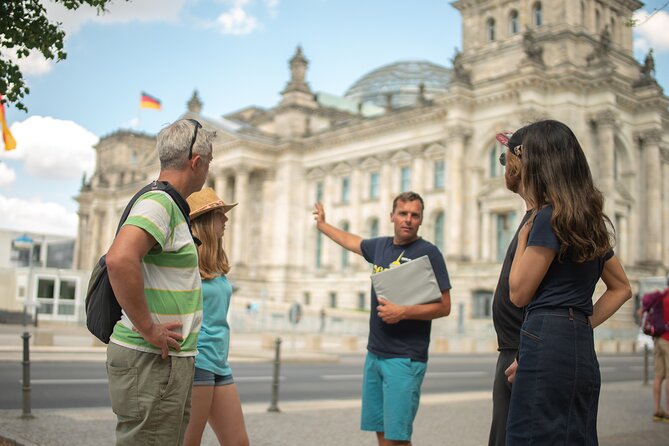
The Reichstag is a key stop, and it is handled with a clear two-part message. First, the tour explains how the 1933 Reichstag fire became a pretext for the Nazis to consolidate power, suspend civil liberties, and dismantle democracy. Then it shifts to 1945, when the Soviet flag was raised over the building after intense fighting in Berlin.
This is one of the most meaningful transitions on the walk. You can stand in a spot that served as a political stage under dictatorship, then understand it as a symbol of collapse and defeat. It helps that you also learn what the Nazis used it for, so you do not just see a landmark, you understand its role in the story.
Practical note: the stop description lists the Reichstag building admission ticket as not included. So if you want to go inside, you may need to plan for that separately.
Memorial Work That Must Be Seen: Trains to Life, Holocaust Memorial, Soviet Tiergarten
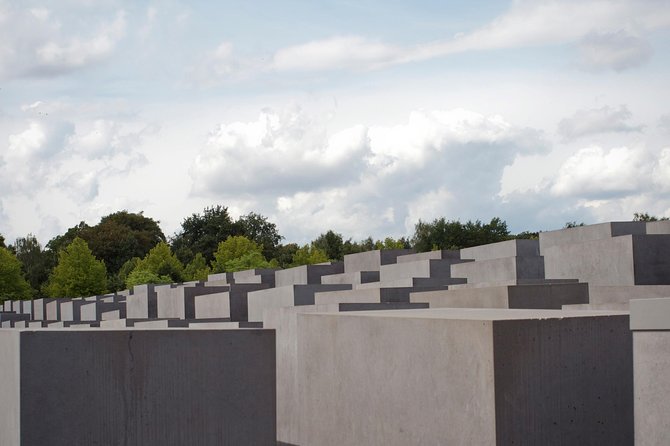
There are three memorial moments in the route that hit differently because they cover different kinds of loss.
The Trains to Life, Trains to Death memorial focuses on the deportation of Jews from Berlin to concentration camps, emphasizing the forced removal from homes and the cruelty of the transport system. The point is not abstract. It is tied to a machinery that used trains, schedules, and bureaucracy as weapons.
Then you reach the Memorial to the Murdered Jews of Europe, the field of 2,711 concrete slabs that creates disorientation as you walk through the space. It is designed to make reflection physical. You cannot rush it.
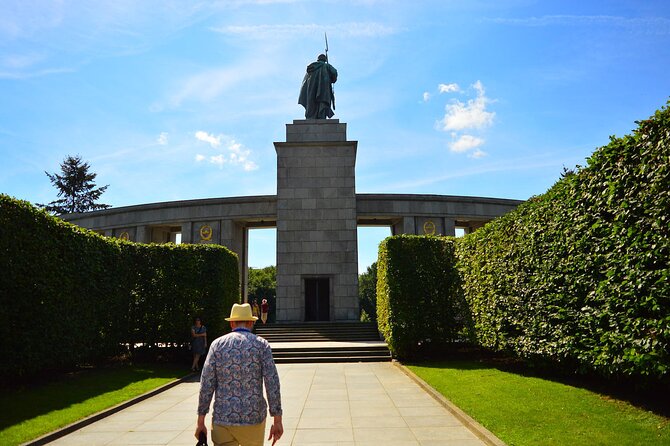
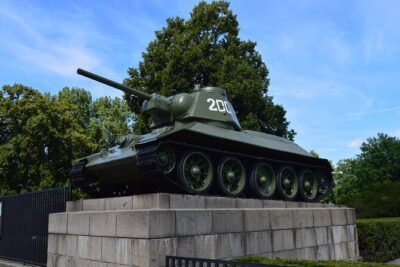
Finally, the Soviet War Memorial in Tiergarten is a solemn tribute to the Red Army soldiers who died in the Battle of Berlin. The statue of a Soviet soldier holding a flag, positioned over fallen Nazi soldiers, is a blunt visual of how the war ended. It also frames the human cost in the same way other memorials do, with the focus on lives lost.
Brandenburg Gate and the Nazi Use of Public Space
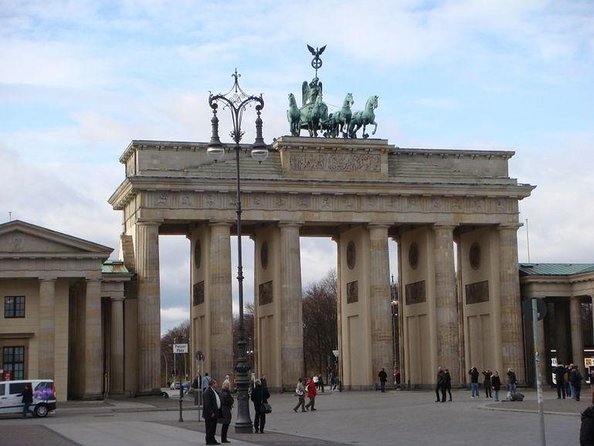
You also stop at the Brandenburg Gate, where the story is about how power performs in public. The tour notes that during the Nazi era the gate became a backdrop for rallies and propaganda, even decorated with swastikas.
What I like about including this kind of stop is that it shows how ideology spreads through symbols. You can see the same street-level space in modern times, but the tour gives you the historical lens to understand why it mattered then.
Akademie der Künste: Arts, Power, and Albert Speer’s Architectural Influence
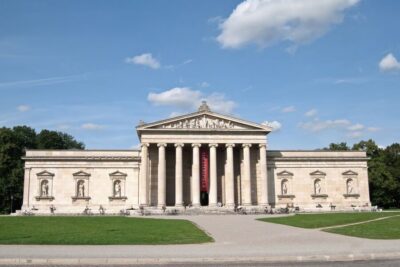
Another interesting stop is the Akademie der Künste. The connection is not random. Albert Speer, Hitler’s chief architect and Minister of Armaments, influenced the architectural vision associated with the Third Reich, especially monumental neoclassical design meant to project authority.
The tour frames this as part of Berlin’s complicated reckoning after the war, where institutions had to confront ties to the Nazi period. Even if you are not an architecture fan, this helps you understand that cultural institutions can be pulled into politics, and style can be used for control.
Topography of Terror: The SS and Gestapo Headquarters Footprint
The tour ends at Topography of Terror area, and it is a fitting final landing. This museum and memorial is on the site of former SS and Gestapo headquarters, and it focuses on how these organizations enforced repression and persecution, including the Holocaust.
If you want your understanding to feel solid, this is where the story clicks into systems. Earlier stops show people and power centers. Here, you learn how the terror infrastructure worked and why it was so effective at carrying out Nazi policy.
You also get photographs, documents, and accounts in the museum context, which is useful if you like seeing how information and testimony shape understanding.
What to Expect From the Guide: Clear, Serious, and Question-Friendly
A big part of why this tour scores so high is the guide approach. Many named guides in the feedback, like Maria, RU, Canadian Chris, Tom, Paul, Tina, Ben, Ciarán, Pete F, Carlos, Emma, Callam, Xavier, Jamie G, Hannah, and Thomas, are repeatedly described as friendly and able to explain complex topics in a way you can follow.
The most useful pattern in that feedback is how they handle pacing and the emotional weight. You get context without feeling lost, and you can ask questions when something does not add up. One very practical tip you will hear repeatedly is to dress for weather since a lot of the experience is outdoors.
This matters because Berlin weather can turn a 3-hour walk into a numb-feet project. If you show up prepared, you can spend your energy on the story, not on shivering.
Comfort, Timing, and Walking Distance Tips (Save Your Legs)
This is a walking tour, about 3 hours, and the route includes multiple major sites without long breaks. In common practical advice, people mention being ready for brisk walking between points of interest, roughly around 5,000 steps.
So pack like it is a real walk day. Comfortable shoes are the big one. Dress in layers for Berlin’s cold, especially if you visit in winter. If you have a slow walking pace, you might want to check whether 3 hours works for you, since there is no mention of rides or stops for long sits.
Price and Value: Why $24.07 Can Be a Smart Half-Day
At $24.07 per person for about 3 hours, this is not just paying for walking shoes and street names. You are paying for an expert to connect the dots between institutions, leaders, ideology, and the final collapse in 1945.
The value is strongest if you care about context. Without a guide, Berlin is impressive but easy to misread. With a guide, those same places become a map of decisions and consequences.
Also, most stops list admission as free, with the Reichstag building specifically noted as not included. That makes the cost easier to manage once you decide whether you want to add Reichstag interior time.
Who Should Book This Tour (and Who Might Prefer Something Else)
This tour is ideal if you are a history buff, especially WWII and Berlin in 1945. It is also a strong choice if you like your history grounded in geography, not only dates.
If you prefer light commentary, or you get overwhelmed by heavy topics, you may want to skip it. This route covers propaganda, persecution, deportations, and mass murder memorials, and the tone is meant to be respectful and serious.
For families, it can work well when the teen or parent is genuinely interested in history. Just go in with the expectation that it is not kid-friendly in content, even if the guide can keep explanations clear.
Should You Book This Third Reich Berlin Walking Tour?
Yes, if you want a structured way to understand how Nazi power operated in real places, and how the story ends in Berlin’s final days. The combination of Hitler’s bunker area, Goebbels and propaganda nodes, the Reichstag symbolism, and major memorial sites makes this more than a highlight list.
I would book it when you have limited time in Berlin and you want your half-day to feel like a coherent lesson. If the topic feels too heavy, or you are not up for a real walking pace, then you might be happier with a shorter, more general tour.
FAQ
How long is the Third Reich Berlin walking tour?
It runs for about 3 hours.
How much does the tour cost?
The price is listed as $24.07 per person.
Where do I meet and where does the tour end?
You meet at Reichstagufer 17, 10117 Berlin, Germany, and the tour ends near Topography of Terror at Niederkirchnerstraße 8, 10963 Berlin, Germany.
What stops are included on the route?
The itinerary includes stops such as Friedrichstrasse Station, Trains to Life Trains to Death, the Reichstag, Soviet Memorial Tiergarten, Brandenburg Gate, Akademie der Künste, the Holocaust Memorial, Fuhrerbunker, Wilhelmstrasse, Niederkirchnerstraße, and Topography of Terror.
Is admission included for all sites?
Admission ticket pricing is listed as free for most stops, but the Reichstag building is marked as not included.
What is included in the price?
The tour includes a local expert guide and the 3-hour walking tour.
What is not included?
Hotel pickup and drop-off are not included.
What language is the tour offered in?
The tour is offered in English.
Can I bring service animals?
Service animals are allowed.
What should I do on the day of the tour?
Arrive at the meeting point 15 minutes before the tour starts.
More Wartime and Cold War History Walks in Berlin
- Skip-the-Line: Berlin Wall Museum at Checkpoint Charlie
★ 4.1 · 2,041 reviews - Cold War, Berlin Wall, Spies and the East Side Gallery
★ 5.0 · 1,024 reviews - Berlin Third Reich Sites: Half-Day Walking Tour
★ 5.0 · 835 reviews - Berlin: History of the Third Reich Guided Walking Tour
★ 4.7 · 791 reviews
Newest Berlin reviews on the site
- Karl-Marx-Allee Walking Tour: Berlin’s Socialist History★ 5.0 · 5 reviews
- Jetbike Berlin fun bike beer bike★ 5.0 · 3 reviews
- Homeless on chic streets: city tour in Berlin from personal experience★ 4.6 · 3 reviews
- Berlin: Sachsenhausen Concentration Camp Guided Tour★ 4.9 · 42 reviews
- Historyof the Trans, Queer & Gay communities of Berlin tour★ 4.8 · 17 reviews
- Historic Berlin Pubs & History Tour★ 4.9 · 73 reviews
- Berlin: City Center Walking Tour★ 4.7 · 45 reviews
- Half-Day Berlin Highlights Segway Expedition★ 4.5 · 61 reviews
Third Reich & Cold War Tours, compared.

Berlin’s Best: 2 Hour Walking Tour Third Reich and the Cold War
Read our review →
Skip-the-Line: Berlin Wall Museum at Checkpoint Charlie
Read our review →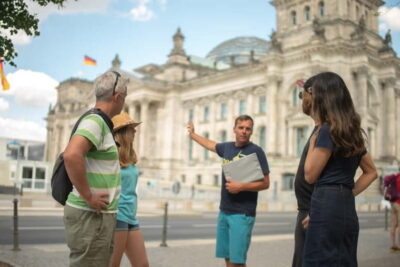
Walking Tour of Former Nazi Party Rally Grounds
Read our review →Browse the lists this tour appears in