
Reviewed · WALKING TOURS
Berlin: Hidden Backyards Guided Walking Tour
Berlin has courtyards most people never notice. On this walk in Mitte, you trade big sights for back alleys and inner courtyards, including the story of Jewish Berlin around the New Synagogue. It is the kind of route where Berlin starts to feel like a lived-in city, not a postcard.
I love the stop at Haus Schwarzenberg, where art studios and street art sit behind a quiet inner yard. I also love Heckmann-Höfe, the leafy, color-walled courtyard that feels like a break from the street outside. One possible drawback: if you need English, double-check the language for your exact departure, because some schedules have been reported as German-only.
In This Review
- Key points before you go
- Berlin courtyards: the fast way to see the real Mitte
- Meeting at BUTLERS Hackescher Markt and starting with the right mindset
- Haus Schwarzenberg: when an old structure becomes a studio neighborhood
- Hackesche Höfe and Rosenhöfe: passageways that feel like tiny cities
- Sophienkirche and Auguststraße: the Jewish-quarter timeline in walking form
- Heckmann-Höfe: sit-down Berlin, not just look-around Berlin
- Spandauer Vorstadt: why this neighborhood story is worth your time
- Guides on this route: what the best ones do differently
- Price, timing, and what to pack for a 2-hour courtyard walk
- Where you end up, and how to keep the momentum afterward
- Should you book this Berlin Hidden Backyards tour?
- FAQ
- Where is the meeting point?
- How long is the tour?
- What does it cost?
- What languages are available?
- Does the tour run in bad weather?
- Is the tour wheelchair accessible?
- Are food or drinks included?
- What is the cancellation policy?
Key points before you go
- Spandauer Vorstadt on foot: A neighborhood story told through passageways, courtyards, and architectural change
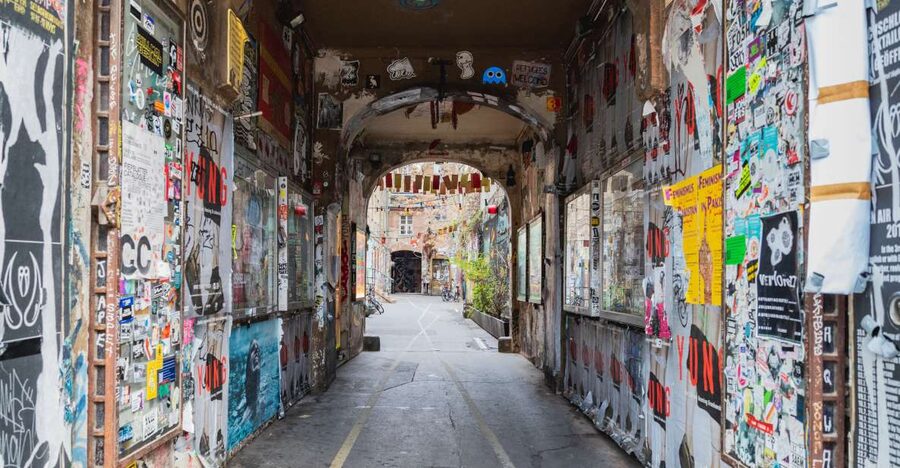
- Haus Schwarzenberg inner courtyard: Art studios and street art inside a relic of earlier Berlin
- A courtyard-hopper route: Hackesche Höfe, Rosenhöfe, Sophienkirche area, Auguststraße, then Heckmann-Höfe
- Jewish Berlin context near the New Synagogue: How the district shifted into a center of Jewish life
- Guide energy matters: Standout narrators named in feedback include Nick, Nicolas, Susanne, Lydia, Alex, and Minit
- Rain-or-shine walk: You’ll want a jacket even in mild weather
Berlin courtyards: the fast way to see the real Mitte
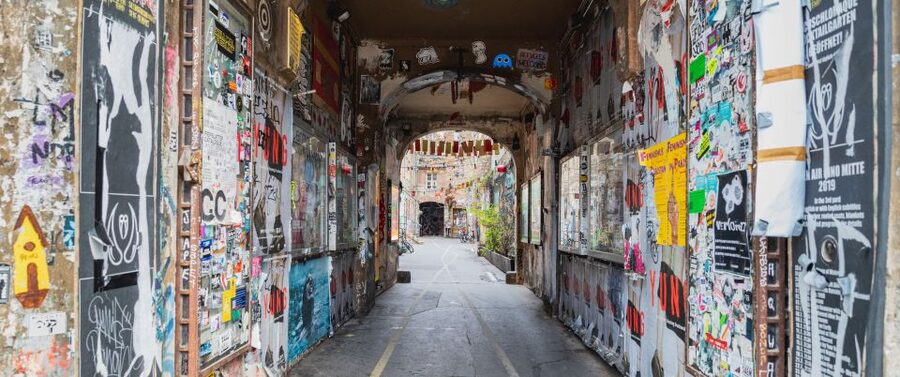
If you only stick to the main streets in Berlin-Mitte, you miss the city’s secret grammar: walls, doorways, and courtyards. This tour is built around that idea. In about two hours, you move through spaces that show how Berliners live, work, create, and hang out in the middle of a dense city.
You start with the Spandauer Vorstadt, a district that grew into a major part of Jewish Berlin around the New Synagogue. Then the walk keeps going into the present, where creative studios, small community corners, and everyday social spaces take over those old structures. The theme is simple, but satisfying: the city changes, while the buildings keep talking.
The best part is the pace. Courtyards force you to slow down. You look up, you notice details, and you hear why those places developed the way they did.
More Walking Tours in Berlin
- Discover Berlin Half-Day Walking Tour
★ 5.0 · 9,624 reviews - Berlin: Third Reich and Cold War 2 Hour Walking Tour
★ 4.9 · 6,830 reviews - Berlin: Discover Berlin Walking Tour
★ 4.9 · 5,998 reviews
Meeting at BUTLERS Hackescher Markt and starting with the right mindset
You meet at BUTLERS Berlin Hackescher Markt 4, right in the area where it is easy to feel like you are already in motion. This is not a slow “meet-and-greet.” It is a practical city walk where you get your bearings fast and then start moving.
Two things I think you should do right away, even before you memorize any history:
- Wear shoes you can trust on uneven pavement and narrow lanes. Courtyard routes tend to involve small transitions.
- Bring a rain layer. The tour runs rain or shine, so plan for wet sidewalks and damp stone.
Once the group is together, your guide sets up the neighborhood story in a way that makes the courtyards feel connected, not random. That matters, because the route includes places you might otherwise pass without noticing.
Haus Schwarzenberg: when an old structure becomes a studio neighborhood
One of the tour’s anchor stops is Haus Schwarzenberg. From the street, you get a hint of what is coming, but the real show starts when you enter the inner yard. This courtyard is described as a relic of an earlier era that is now full of art studios and creative spaces.
I like stops like this because they show Berlin’s talent for reuse. Buildings do not become museums. They become workspaces. People keep using them. You can actually imagine your own afternoon in there, not just admire the architecture from a safe distance.
On the walls and in the yard, you’ll see street art and historic building features that have had multiple functions over the years. That is the key to understanding Berlin courtyards. They are not empty “pretty spaces.” They are practical interiors that evolved as the city changed.
If you are into architecture, you’ll get a clear sense of how courtyard design shapes daily life. If you are more into stories, your guide should connect what you see to the wider district history, including how communities formed and transformed.
Hackesche Höfe and Rosenhöfe: passageways that feel like tiny cities
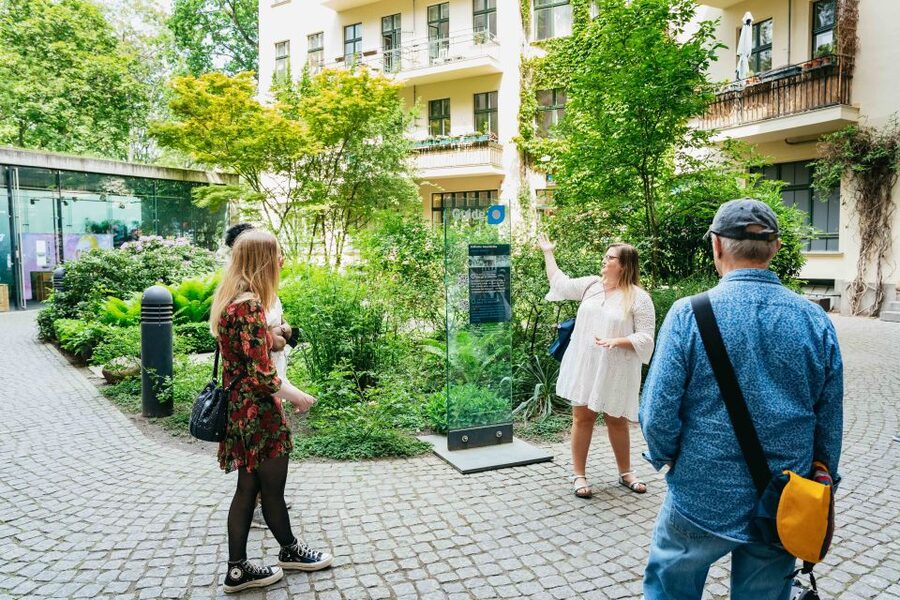
After Haus Schwarzenberg, the walk turns into a courtyard-and-passage sequence, including Hackesche Höfe and Rosenhöfe. These are the kind of Berlin places where you realize the street is just the outer shell. Inside, there is a whole world of thresholds.
This part of the tour is valuable for one simple reason: it trains your eyes. You start noticing how courtyards manage light, how buildings edge each other, and how small connectors route foot traffic without making the street feel overcrowded.
A guide can also explain why these spaces became popular over time. The “why” is what most self-guided wandering misses. On a guided walk, you get the context for what might look like random design choices, street after street.
The only caution I’ll give here is emotional, not logistical. Courtyard hopping can make you want to take a photo every 30 seconds. Try to step back and listen first, then shoot. The story often lands right where you are standing.
Same city, a different way to spend the afternoon:
- Berlin: Reichstag, Dome and Government District Guided Tour
★ 4.7 · 18,288 reviews - Berlin: 1-Hour City Tour by Boat with Guaranteed Seating
★ 4.3 · 16,993 reviews - Berlin: TV Tower Standard Entrance Ticket
★ 4.4 · 15,883 reviews - Berlin: Boat Tour Along the River Spree
★ 4.4 · 11,252 reviews
Sophienkirche and Auguststraße: the Jewish-quarter timeline in walking form
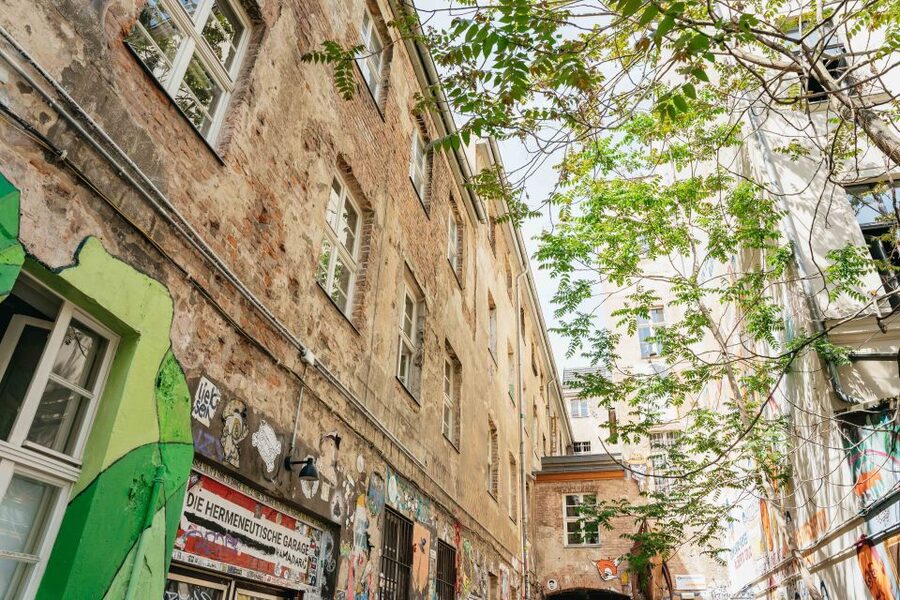
The tour spends time around the district’s Jewish identity, and the overall focus is the Jewish neighborhood around the New Synagogue. Even when your walk is not literally inside a synagogue, you get the timeline through the neighborhood’s layout and development.
You also pass through points that help frame the story, including Sophienkirche and Auguststraße. Think of this section as your “architecture plus meaning” chapter. These areas help explain why the Spandauer Vorstadt mattered and how the quarter changed direction as decades went by.
What makes this section click is how the courtyards and side streets relate to community life. In Berlin, social history is often embedded in plain sight. A courtyard can suggest how people gathered, worked, or found privacy away from the main street.
One anecdote that shows up in guide storytelling, based on feedback I paid attention to, is the kind of human-scale detail that turns the neighborhood story from dates into people. You might hear things like local religious leadership milestones, and the guide’s job is to connect those stories back to the physical spaces you see.
If you are visiting Berlin for the big monuments, this section adds the missing ingredient. It shows how a city neighborhood can be both ordinary and historically significant at the same time.
Heckmann-Höfe: sit-down Berlin, not just look-around Berlin
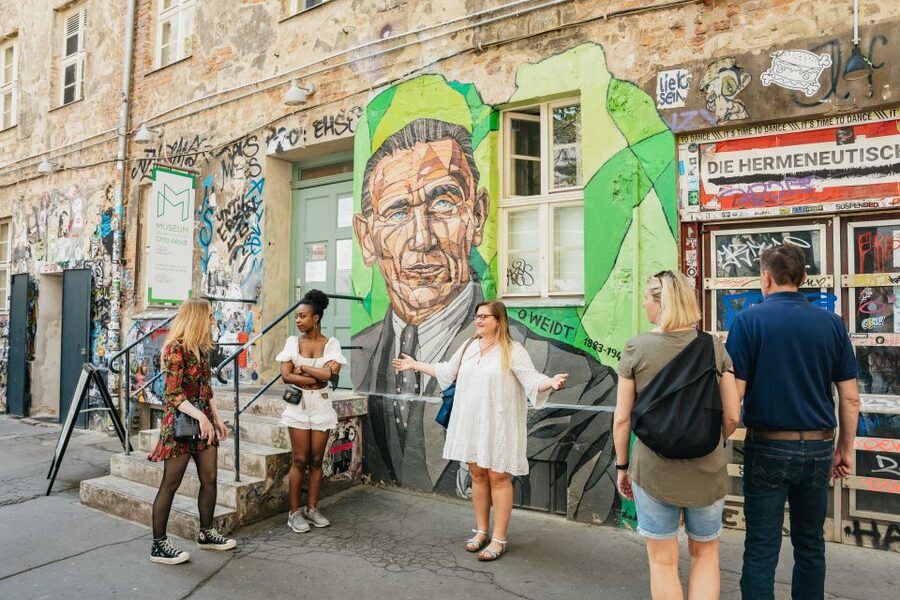
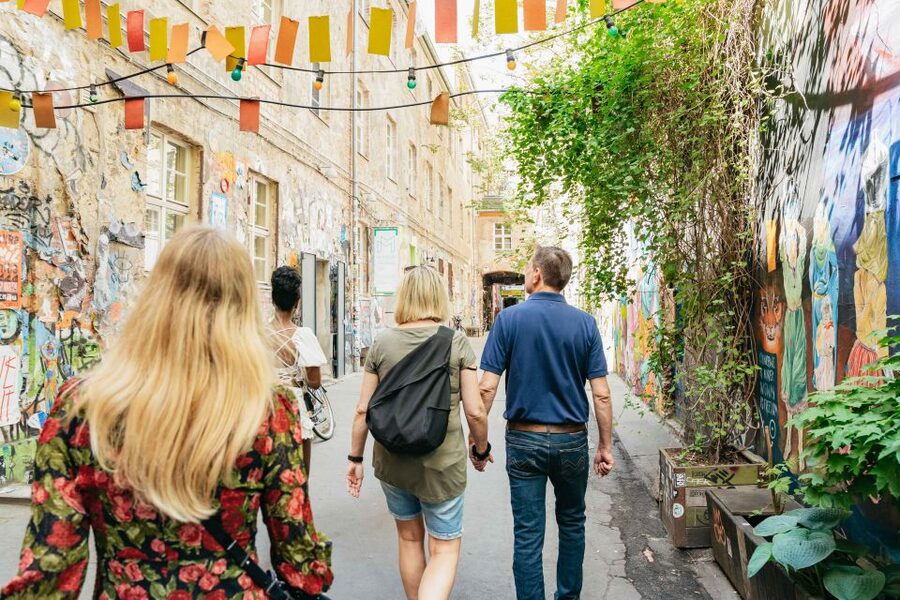
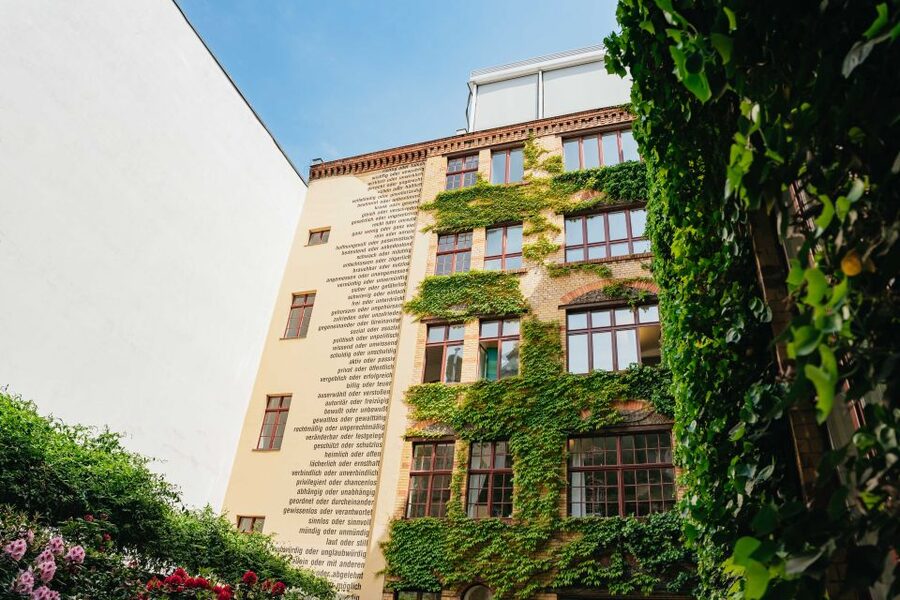
Then comes Heckmann-Höfe, one of the tour’s most relaxing moments. This is described as an oasis courtyard, with trees and ivy-lined building edges. It is also known for its colorful courtyard feel and for being a popular hangout.
This stop is important because it gives your brain a breather. After courtyards full of art and architectural history, Heckmann-Höfe lets you experience the space the way locals might. You notice the shade. You notice the way the courtyard walls shape sound. You notice that Berlin can be calm, even when the streets are not.
It is also the perfect “payoff stop.” By the time you reach Heckmann-Höfe, you have heard enough context that the courtyard stops being just pretty. It becomes part of the story of how the area turned into a trendy, creative, international-feeling neighborhood.
If you go in the wrong mood, you might rush it. If you go with open eyes, this courtyard can feel like the best two hours you spend in Berlin-Mitte.
Spandauer Vorstadt: why this neighborhood story is worth your time

The most satisfying part of the tour is the way it frames the Spandauer Vorstadt. You are not just collecting photos of courtyards. You are learning how this quarter developed and how it transformed into a center of Jewish life.
That matters because Berlin’s story is layered. Neighborhood identities have shifted, populations changed, and buildings absorbed new uses. The courtyards you visit are like time capsules that can still function as living spaces.
Your guide should connect:
- the district’s earlier development
- the Jewish community’s central role around the New Synagogue
- how the area later developed a creative pull, visible in places like Haus Schwarzenberg and the studio-like feel of inner yards
- how courtyards became social rooms as well as functional spaces
If you like tours that explain more than the surface, you’ll appreciate this structure. One common theme from guide feedback is that they can go from architecture to socio-cultural change without losing people. That is hard to do on a walking schedule, and you can feel when a guide is genuinely comfortable with the material.
Guides on this route: what the best ones do differently
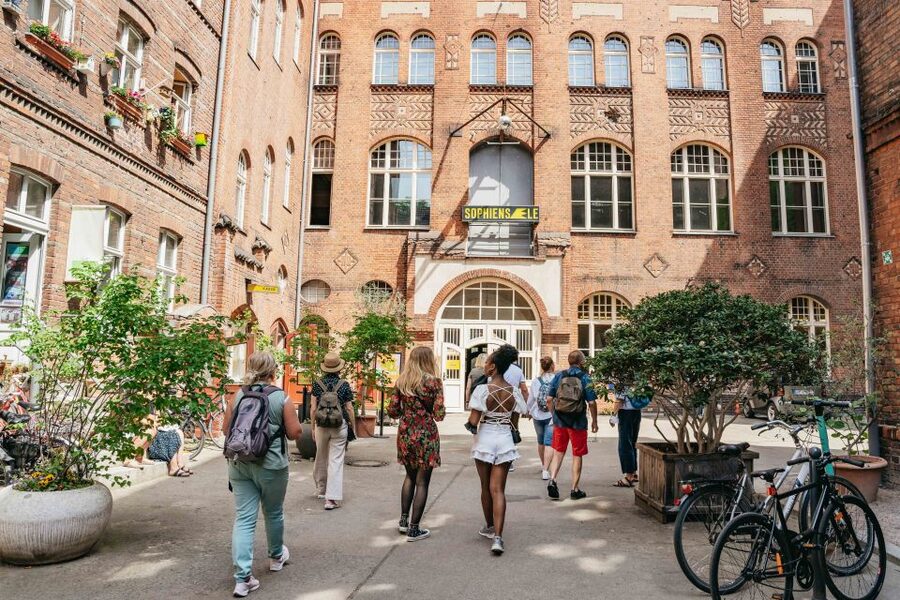
This kind of tour lives or dies on the guide. The most praised feedback I saw consistently mentions guides who are friendly and seriously informed, with a style that feels conversational rather than lecturing.
Names that come up often include Nick, Nicolas, Susanne, Lydia, Alex, and Minit. That gives you a hint about the experience you can expect: a guide who can narrate with energy and pace, and explain why courtyards look the way they do.
A few patterns stand out in that feedback style:
- The stories feel personal, as if the guide is talking like a friend rather than reading notes.
- The pace is comfortable for an easy-walking route.
- You do not leave with only facts, you leave with a better sense of how Berlin neighborhoods work.
If you’re the type who loves architecture details, you should feel set up for that. If you care more about human stories, your guide’s job is to connect those people stories back to the physical spaces you are walking through. When it works, courtyards become evidence.
Price, timing, and what to pack for a 2-hour courtyard walk
At $23 per person for two hours, this tour is good value for a few reasons. First, you are paying for a guided interpretation of spaces that most people miss. Courtyards are not well signposted. A guide is basically your shortcut to understanding what you are seeing.
Second, it is a compact length. You get a concentrated neighborhood experience without turning the day into a full production. Two hours also means you can pair this with other Mitte plans.
Your main practical limitations are simple:
- No food or drinks are included, so plan accordingly if you arrive hungry.
- The tour runs rain or shine, so pack a light waterproof layer.
- You will be walking, mostly outdoors, so dress for Berlin weather.
Wheelchair accessibility is listed as available, which is a plus if you need that option. Still, you should expect a walking route with inner-city sidewalks and courtyard entrances.
If you want the most out of it, I’d treat this as a context-builder tour. After it, you will recognize Berlin’s inner-yard culture on your own.
Where you end up, and how to keep the momentum afterward
The tour finishes with a drop-off at Oranienburger Straße, with two drop-off locations listed along that street. That is helpful because you end near another busy corridor, so you can easily connect to your next plan.
If you still have energy, I’d use the remaining time to explore one more nearby courtyard area on your own. The walk will teach you what to notice, so self-guided exploring becomes easier right after the tour.
And if you are tired, that is fine too. The whole route is designed around breaks in the form of courtyards. You should feel like you got a lot of atmosphere without exhausting yourself.
Should you book this Berlin Hidden Backyards tour?
Book it if you want Berlin that feels lived-in. You’ll love this if you care about neighborhood history, courtyard architecture, and the way a district can change while still using the same spaces. It is especially ideal after you have already seen a few “headline” sights and you want the quieter layers.
Consider a different option if you need guaranteed English for your exact departure, because while English is offered, some schedules have been reported as German-only. Also, if you want a tour with a built-in café break and food included, you will need to plan that separately.
For most visitors doing a first or second trip to Berlin-Mitte, this is a smart buy. For $23, you get a guided walk that turns overlooked places into a coherent story.
FAQ
Where is the meeting point?
Meet your guide in front of the BUTLERS shop at Hackescher Markt 4.
How long is the tour?
The tour lasts 2 hours.
What does it cost?
The price is $23 per person.
What languages are available?
The live tour guide is available in English and German.
Does the tour run in bad weather?
Yes. The tour takes place rain or shine.
Is the tour wheelchair accessible?
Yes, wheelchair accessibility is listed as available.
Are food or drinks included?
No. Food or drinks are not included.
What is the cancellation policy?
You can cancel up to 24 hours in advance for a full refund. There is also a reserve now, pay later option.
Newest Berlin reviews on the site
- Jetbike Berlin fun bike beer bike★ 5.0 · 3 reviews
- Karl-Marx-Allee Walking Tour: Berlin’s Socialist History★ 5.0 · 5 reviews
- Homeless on chic streets: city tour in Berlin from personal experience★ 4.6 · 3 reviews
- Berlin: Sachsenhausen Concentration Camp Guided Tour★ 4.9 · 42 reviews
- Historyof the Trans, Queer & Gay communities of Berlin tour★ 4.8 · 17 reviews
- Historic Berlin Pubs & History Tour★ 4.9 · 73 reviews
- Berlin: City Center Walking Tour★ 4.7 · 45 reviews
- Half-Day Berlin Highlights Segway Expedition★ 4.5 · 61 reviews
Walking Tours, compared.



Berlin’s Best: 2 Hour Walking Tour Third Reich and the Cold War
Read our review →
Third Reich Berlin: Hitler and WWII Walking Tour
Read our review →
Browse the lists this tour appears in