
Reviewed · THIRD REICH & COLD WAR TOURS
Nuremberg: Walking Tour of Former Nazi Party Rally Grounds
Nuremberg can hit hard, fast. This 2-hour guided walk through the former Nazi Party Rally Grounds helps you connect propaganda, architecture, and mass staging in one clear route, from the Great Road axis to the Zeppelin Field. I especially like how guides use historic photos to show what these spaces looked like when they were new, and how they explain the sites with names you might hear like Frank, Anita, Kai, and Sylvia. One catch, the grounds cover a lot of ground on foot, so you’ll want comfy shoes.
If you’re sensitive to heavy topics, go in with a little emotional padding. The tour doesn’t just point at buildings, it discusses the Nazi Party’s crimes and propaganda and touches the broader concentration camp system. Also consider timing, in some seasons the walk can run into lower light near the end at Zeppelin Field.
In This Review
- Key highlights you’ll care about
- Why the former rally grounds feel different than a normal museum
- Meeting point near the Dokumentationszentrum: start with context, not shock
- From Kongresshalle to the early Nazi architectural statements
- Große Straße and the Great Road axis: movement as a political tool
- Zeppelin Field: where the open space does the heavy lifting
- Congress Hall ruins at about 40 meters: why size was part of the message
- The difficult part, crimes and propaganda, handled with structure
- Zeppelin Tribune and the 200,000-person concept
- Practical realities: walking pace, timing, and what to bring
- Who this tour suits best
- Should you book this Nazi rally grounds walking tour?
- FAQ
- How long is the walking tour?
- Where do I meet the guide?
- What languages are available?
- Is food or drinks included?
- Does the tour run in rain?
- Is this tour suitable for mobility impairments?
- Can I cancel for a refund, and do I have to pay upfront?
Key highlights you’ll care about
- Great Road (north-south axis): see how movement and sightlines were engineered for spectacle
- Zeppelin Field: get context for how rallies were staged to overwhelm individuals
- Congress Hall ruins (about 40 meters tall): understand scale without needing a museum
- Photo-guided explanations: visuals help you picture vanished structures
- Zeppelin Tribune capacity up to 200,000: your brain does the math for crowd size
- Ongoing debates about using the site: you’ll hear that the story is still being argued
Why the former rally grounds feel different than a normal museum
This isn’t a chatty history walk about dates and uniforms. The Nazi Party Rally Grounds in Nuremberg were built to make politics feel physical. When you stand on the same axes and open plazas the regime used, the design choices start to make a grim kind of sense.
I like that the tour doesn’t treat the architecture as neutral stone. It explains how the buildings and open space worked together, how staging mattered, and how people were herded into a specific experience of power. You’ll also get the uncomfortable balance: propaganda was the public face, and the crimes behind it are part of the same system.
There’s also a practical reason the tour works well. A lot of visitors see these sites as ruins from the outside. With a guide, you learn what to look for, what the lines in the ground were doing, and why those huge structures were built when and how they were.
More Third Reich & Cold War Tours in Nuremberg
- Nuremberg: Historischer Kunstbunker WWII Art Bunker Tour
★ 4.8 · 921 reviews - Nuremberg Old Town and Nazi Party Rally Grounds Walking Tour in English
★ 4.5 · 504 reviews - Nuremberg Old Town and Nazi Rally Grounds Walking Tour
★ 4.7 · 377 reviews
Meeting point near the Dokumentationszentrum: start with context, not shock
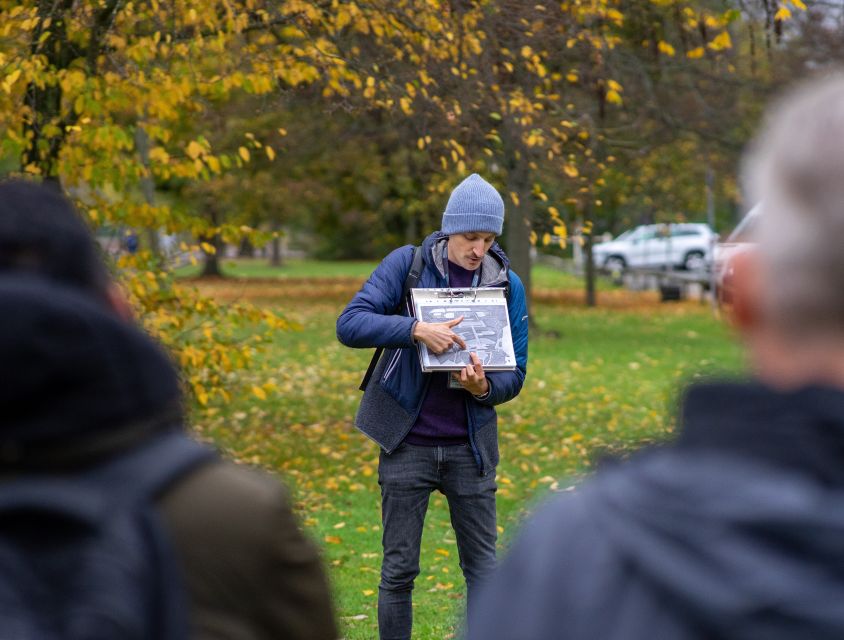
You’ll meet your guide next to the entrance stairs at the Dokumentationszentrum Reichsparteitagsgelände (Bayernstraße 110). The guide will be holding a picture folder and wearing a name tag for Geschichte Für Alle e.V., so it’s usually easy to spot the group.
Starting at the Documentation Center is smart. It sets a frame before you step into the open spaces where the architecture can feel overwhelming on its own. Since the tour is live guided in English and German, you can follow closely without guessing what you’re looking at.
Also, it’s worth knowing the tour takes place rain or shine. The walking time is short enough for most fit travelers, but wet weather changes how enjoyable it feels. Bring a rain layer and plan for slick pavement.
From Kongresshalle to the early Nazi architectural statements
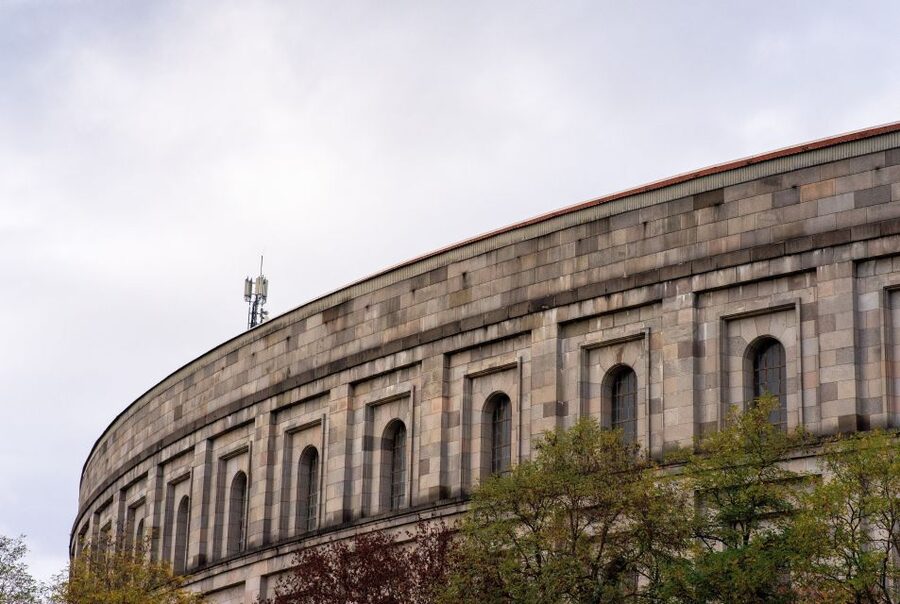
One of the first big anchors you’ll hit is Kongresshalle. This is where you start to grasp the claim behind the buildings: the regime didn’t just want control of politics, it wanted a new kind of public space that would feel permanent.
The tour’s approach here is simple and effective. You aren’t stuck reading placards while trying to picture the missing parts. Instead, your guide points out what these spaces were designed to do, then uses visuals to help you see how the rally grounds operated as a whole.
You’ll also hear how this area ties into the evolution of National Socialist public life. The sites are described as the home of the first National Socialist architecture in Germany, so even when you focus on ruins, the tour keeps the storyline moving forward.
Große Straße and the Great Road axis: movement as a political tool
After you get your bearings, the route follows Große Straße, often described as the Great Road. The key idea is the north-south axis that leads toward the Zeppelin Field. This is the kind of design choice you can feel once you’re walking it, even if you’re not an architectural expert.
I like how the guide connects the geometry to the psychology. Long sightlines, controlled approaches, and open space don’t just make events easier to film. They shape what people expect to see and how they move as a crowd. That matters because Nazi rallies relied on mass participation and synchronized public emotion, not private reflection.
You’ll learn the function and effect of the architecture, including how it supported staging. In other words, it’s not only what they built, it’s how they used the space to choreograph experience.
More Walking Tours in Nuremberg
- Nuremberg: Old Town Guided Walking Tour
★ 4.6 · 2,416 reviews - Nuremberg: 60 minute Express Walk with a Local
★ 4.2 · 3 reviews - Best of Nuremberg: Private Walking Tour with a Local
★ 3.8 · 3 reviews
Zeppelin Field: where the open space does the heavy lifting
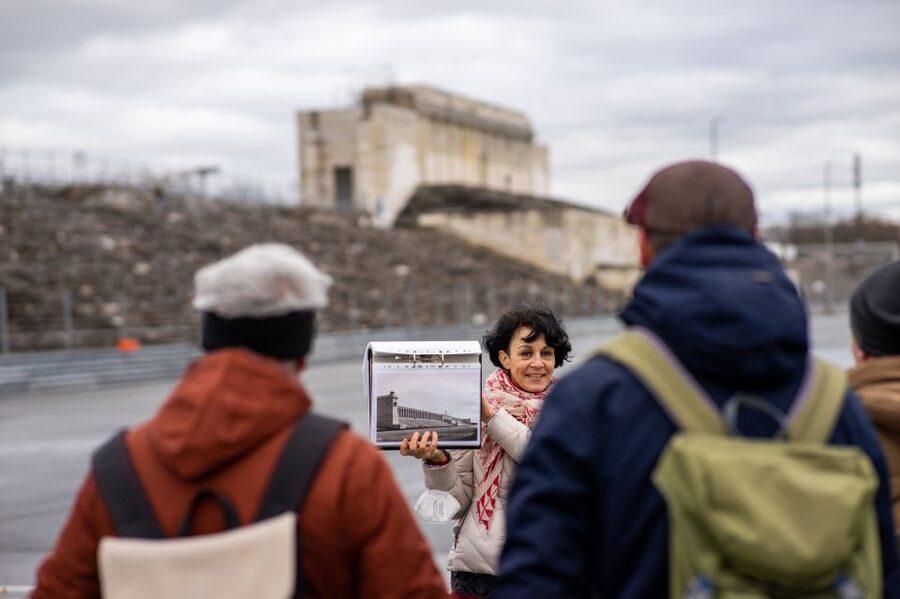
The highlight stop is Zeppelinfeld, the Zeppelin Field. This is where the scale starts to register in your body, not just your mind. The grounds are big, and your guide helps you translate that size into what it meant for rallies.
One of the strongest things you’ll get here is a sense of purpose behind the remains. The tour is built to explain the use of the grounds, not just the design. You’ll connect the field to speeches, ceremonies, and crowd placement, and you’ll see how the same space could feel both grand and intimidating depending on what you know.
If you’re a fan of political history, you’ll enjoy how the guide talks about the staging mechanics: how rallies were built to feel inevitable and unified. If you’re more of a casual sightseer, you’ll still get enough context to understand why the Nazis invested in these huge spaces instead of smaller, more ordinary public buildings.
Congress Hall ruins at about 40 meters: why size was part of the message
The tour specifically highlights the ruins of the Congress Hall, noting the scale with a height of roughly 40 meters. That number matters because it tells you this was never meant to be subtle.
Standing near what remains, you can see why monumental building was central to propaganda. The goal was to imply strength and permanence, and that the regime would last. Even without the missing portions, the remaining mass shows how they tried to dwarf ordinary people.
I also like that the guide connects scale to effect. It isn’t just, Look how big it is. It’s, Look how big it is, and then think about what that would do to a crowd during a staged event.
The difficult part, crimes and propaganda, handled with structure
This tour doesn’t treat World War II history like a background topic. You’ll hear about the National Socialist Party’s crimes and propaganda rallies, and you’ll get context about the other side of the concentration camp system.
That’s emotionally heavy content, so it helps that the guide keeps it structured. The tour includes discussion of basic features of the National Socialist view of history and explains how mass-scale propaganda shows worked at rallies. The framing is designed to help you understand the machinery, not just collect shock value.
You’ll also learn that the site isn’t just historical property. There’s mention of current discussion about the use of the grounds. That’s important, because how a society handles painful places is part of the story too.
Zeppelin Tribune and the 200,000-person concept
The tour finishes with a visit to the Zeppelin Tribune, designed to hold up to 200,000 people. That number is easy to toss around, but on site it becomes a mental image of crowd behavior, sound, and control.
This final segment is where everything you learned about staging clicks. Earlier you followed axes and sightlines. Now you see the kind of setting the Nazis wanted: a place where the regime could address an enormous body of people in a choreographed environment.
If you’re a photo person, you’ll probably keep shooting here. Even when structures are gone, the shapes of movement and the open planning help you photograph the event-as-design idea.
Practical realities: walking pace, timing, and what to bring
This is a 2-hour guided walking tour. The walking segments are broken up, and the itinerary includes short on-foot transfers between key stops. Still, it’s not a sit-down museum experience, and the grounds can feel exposed.
Based on how the tour is set up, I’d plan like this:
- Wear comfortable shoes you can trust on uneven surfaces.
- Bring layers, because rain or wind can change the feel fast.
- If you’re visiting in winter, plan for potentially dim light at the end since you finish in the open at Zeppelin Field.
The guide uses a picture folder, and that’s a big deal. Visuals help you fill in what’s missing. Still, it’s not a substitute for good footwear and attention. Keep your eyes up, listen for what to notice, and give yourself permission to feel unsettled.
One more practical note: the tour is not suitable for people with mobility impairments, so you should consider an alternative if accessibility is an issue.
Who this tour suits best
You’ll get the most from this guided walk if you want more than surface-level sightseeing. It’s a strong fit for people who like political history, want to understand how propaganda works, and are interested in how architecture can be weaponized.
It’s also a good match if you’re traveling with limited time in Nuremberg. For $15, you get a structured route that hits the big named sites, including Great Road, Zeppelin Field, Congress Hall ruins, and the Zeppelin Tribune.
If you’re seeking a light, casual stroll, you might find the subject matter intense. But if you can handle hard history, the guide’s balance of explanation and context makes it worth your time.
Should you book this Nazi rally grounds walking tour?
Yes, you should book it if you want context. This tour is built around a guided explanation of how the space was used, not just what’s left behind. The combination of route planning, photo support, and discussion of both propaganda and crimes makes it a solid value at $15 for 2 hours.
Don’t book it if you’re looking for a purely scenic walk, or if long open-air walking is a problem for you. Also, go in ready for heavy topics. The payoff is understanding, and understanding can be uncomfortable.
If you like tours that teach you what to look for, and you’re okay with a careful but direct conversation about Nazi staging and its human consequences, this is one of the most focused ways to make the rally grounds meaningful.
FAQ
How long is the walking tour?
The tour lasts 2 hours.
Where do I meet the guide?
Meet the guide next to the entrance stairs to the Dokumentationszentrum Reichsparteitagsgelände at Bayernstraße 110. The guide will be holding a picture folder and wearing a name tag.
What languages are available?
The live tour guide offers German and English.
Is food or drinks included?
No, food and drinks are not included.
Does the tour run in rain?
Yes, the tour takes place rain or shine.
Is this tour suitable for mobility impairments?
No, it is not suitable for people with mobility impairments.
Can I cancel for a refund, and do I have to pay upfront?
You can cancel up to 24 hours in advance for a full refund, and you can reserve now and pay later to keep your plans flexible.
More Wartime and Cold War History Walks in Nuremberg
- Nuremberg Third Reich Tour in Spanish
★ 5.0 · 355 reviews - Nuremberg World War 2 and Beer Tasting Tour
★ 4.5 · 28 reviews - Berlin: Third Reich and Cold War 2 Hour Walking Tour
★ 4.9 · 6,830 reviews - Berlin: Berlin Story Bunker Entry Ticket
★ 4.6 · 6,759 reviews
Newest Nuremberg reviews on the site
- Nuremberg: 60 minute Express Walk with a Local★ 4.2 · 3 reviews
- Deutsches Museum Nürnberg – das Zukunftsmuseum★ 4.5 · 18 reviews
- Best of Nuremberg: Private Walking Tour with a Local★ 3.8 · 3 reviews
- Fünf Seidla Steig ® Beer Hike Food Experience Private Tour (departs Nuremberg)★ 5.0 · 10 reviews
- Nuremberg World War 2 and Beer Tasting Tour★ 4.5 · 28 reviews
- Nuremberg: Castle and Old Town Tour – including admission tickets and red beer tasting★ 4.9 · 28 reviews
- Nuremberg: Private 1.5-Hour Tour with Beer Tasting★ 4.6 · 111 reviews
- Nuremberg: The Old Town in Evening Light – IN GERMAN★ 4.7 · 353 reviews
Third Reich & Cold War Tours, compared.

Berlin’s Best: 2 Hour Walking Tour Third Reich and the Cold War
Read our review →
Third Reich Berlin: Hitler and WWII Walking Tour
Read our review →
Skip-the-Line: Berlin Wall Museum at Checkpoint Charlie
Read our review →
Browse the lists this tour appears in