
Reviewed · THIRD REICH & COLD WAR TOURS
Cold War, Berlin Wall, Spies and the East Side Gallery
Cold War Berlin hits different when you walk it. This 3 hour guided tour threads Berlin’s division through concrete, fear, and escape attempts, starting around the Tränenpalast and ending with the East Side Gallery. I especially like the way you get both the big setting and the small human details, with Karl-Marx-Allee thrown in for context rather than as a random photo stop. One consideration: you’ll move between sites using public transport, so you’ll want the required AB day pass ready.
I also appreciate the structure here, because it layers the story in the order your eyes naturally move across the city. You start with what it felt like to be processed at the border, then you widen out to the political theater of the GDR, and finally you come back to the Wall itself and what happened after it fell. The walking pace is manageable, but bring comfortable shoes and expect it to run in whatever weather you get.
In This Review
- Key things you’ll remember from this Cold War walking tour
- Cold War Berlin in 3 Hours, Wall Footprints and Spy Stories
- Meeting Friedrichstraße, finding the yellow umbrella, and handling the AB day pass
- Tränenpalast (Palace of Tears) and what border bureaucracy felt like
- Alexanderplatz, where GDR life played out in public
- Karl-Marx-Allee, socialism by design and propaganda you can measure
- Friedrichshain walking time, spies and informants in the city fabric
- Berlin Wall and the death strip area, the logic of control
- East Side Gallery, when concrete becomes public art
- Price and value at about $18 for a 3-hour, multi-site walk
- Guides you might meet, and why storytelling matters here
- What to bring, what to wear, and how to get the best photos
- Who this tour is for, and who might want a different fit
- Should you book this Cold War, Berlin Wall, Spies and the East Side Gallery tour?
Key things you’ll remember from this Cold War walking tour
- Tränenpalast (Palace of Tears), a border site where family endings and beginnings happened every day
- Spies, informants, and escape attempts explained through real locations you can stand on
- Karl-Marx-Allee for the propaganda-in-architecture angle, not just a landmark stroll
- Alexanderplatz to feel where everyday GDR life played out in public
- The Berlin Wall and death strip area, with the logic of control made visible
- East Side Gallery showing how the Wall became public art
Cold War Berlin in 3 Hours, Wall Footprints and Spy Stories
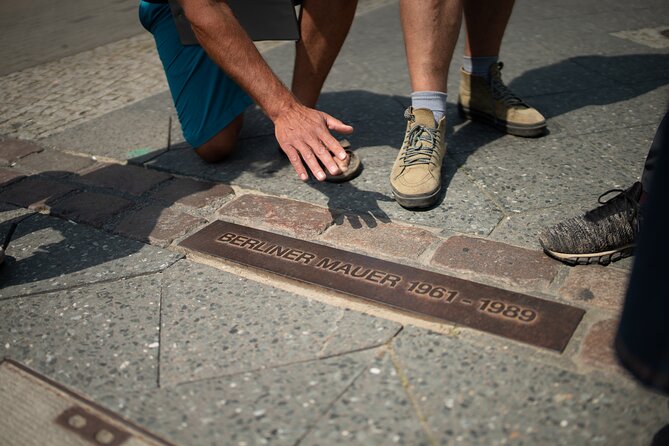
This tour is built around one idea: the Berlin Wall was not only a wall. It was a system. You’ll spend your time on places where the rules of the East were enforced, where families were separated, and where people still tried to get out anyway.
What you’ll notice fast is how the story changes depending on where you stand. Some stops feel like political theater, with grand streets and ideology baked into the scale. Other stops feel raw, because the space was designed to restrict movement and punish the wrong kind of hope.
You’re also not stuck in one mood. Even the East Side Gallery, which is upbeat and colorful at first glance, lands differently after you’ve heard what used to sit behind those same lines.
More Museum Tours in Berlin
- Berlin: Natural History Museum Entrance Ticket
★ 4.6 · 3,382 reviews - Berlin: Museum Island Multiple Museum Entry Ticket
★ 4.4 · 2,861 reviews - Skip-the-Line: Berlin Wall Museum at Checkpoint Charlie
★ 4.1 · 2,041 reviews
Meeting Friedrichstraße, finding the yellow umbrella, and handling the AB day pass
Plan your timing around the meeting point. You meet your guide outside Friedrichstraße station, on the square beside Tränenpalast (Palace of Tears). Look for a guide with a yellow name badge and a yellow umbrella.
If you choose optional pickup, you wait in your hotel lobby about 5 minutes before pickup. After you’re dropped off, you meet the guide in front of the Tourist Information at the Brandenburg Gate, Pariser Platz 1, 10117 Berlin.
One practical must-know: you need an AB public transport day pass to travel between sites during the tour. The pass can be purchased on the day with help from the on-site staff, so you do not need to stress about buying it weeks in advance.
Tränenpalast (Palace of Tears) and what border bureaucracy felt like
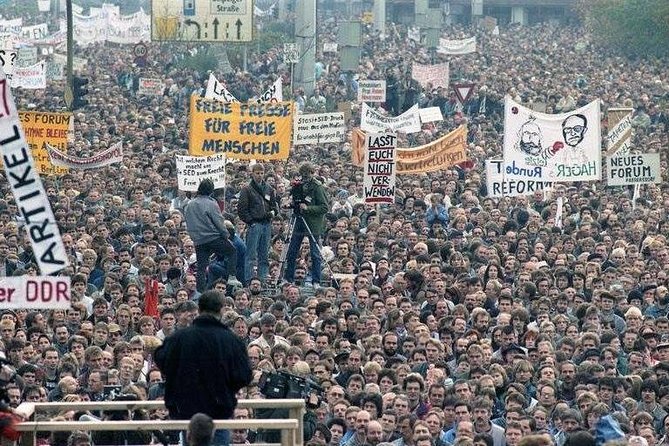
Tränenpalast, the Palace of Tears, is short on time but big on meaning. You’ll have about 20 minutes here, which is enough to orient yourself and hear how the place worked in practice.
Even if you only know the Wall from movies, border processing was its own kind of pressure. It wasn’t just crossing a boundary, it was living inside an atmosphere where departures and arrivals were managed, watched, and often emotionally brutal for families.
The guide’s job is to translate that emotion into clear geography. You’ll learn where people were separated, where the shock of not seeing someone again could hit, and why this site became a symbol long after the Cold War ended.
Alexanderplatz, where GDR life played out in public
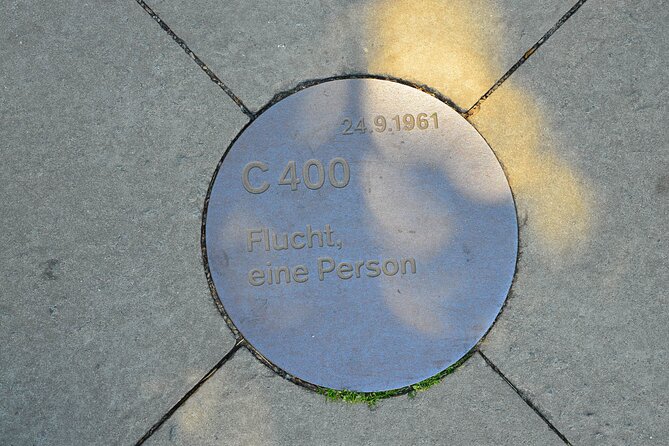
Next up is Alexanderplatz, with a guided stop and about 20 minutes on the ground. This is where you shift from the border and secret-police mindset into a more everyday Berlin rhythm.
Alexanderplatz helps you understand that the GDR was not only concrete barriers and surveillance. It was also workdays, commutes, public life, and architecture built to project order.
In your walk, listen for what the guide points out about city planning. The goal is not to treat Alexanderplatz as just a famous square, but to see how public space shaped what people felt they were allowed to do.
More Third Reich & Cold War Tours in Berlin
- Berlin: Third Reich and Cold War 2 Hour Walking Tour
★ 4.9 · 6,830 reviews - Berlin: Berlin Story Bunker Entry Ticket
★ 4.6 · 6,759 reviews - Berlin’s Best: 2 Hour Walking Tour Third Reich and the Cold War
★ 5.0 · 5,486 reviews - Third Reich Berlin: Hitler and WWII Walking Tour
★ 5.0 · 3,301 reviews
Karl-Marx-Allee, socialism by design and propaganda you can measure
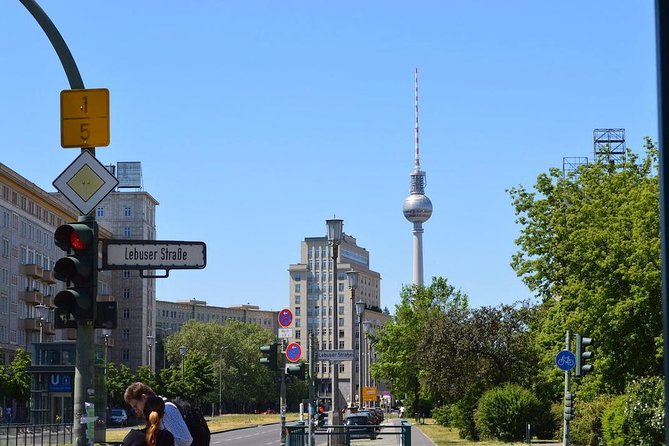
Karl-Marx-Allee is one of the most memorable segments of the tour, and for good reason. You’ll get a guided walk through it with about 20 minutes spent here.
This wide boulevard is where the Cold War becomes physical. The grandeur is not accidental. The scale, the symmetry, and the monument-style architecture were meant to project power and permanence, the idea that the system would endure.
Here’s what I like about including this stop: it gives you a contrast. Later, you’ll stand near the Wall and the death strip logic, and the difference between open display and controlled movement becomes obvious.
If you’re the type who likes to connect politics to everyday life, this is the section that turns ideology into something you can actually see.
Friedrichshain walking time, spies and informants in the city fabric
After Karl-Marx-Allee you move toward Friedrichshain, with about 20 minutes of guided time. Expect a mix of explanation and walking, the kind where the guide helps you picture what street-level control looked like.
This is where spy stories stop being abstract. The Cold War was full of informants, surveillance, and fear, and the tour’s approach is to link that atmosphere to the urban layout around you. You’re not just hearing names and agencies, you’re learning how ordinary people got caught in a system that watched for escape and dissent.
The best moments here are when the guide connects the street to behavior: where someone might hesitate, where movement could be observed, and why staying put sometimes felt like safety.
Berlin Wall and the death strip area, the logic of control
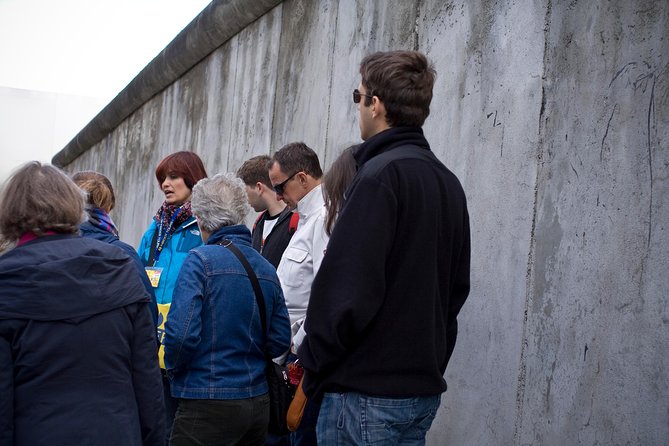
This is the tour core: a guided stop at the Berlin Wall with about 16 minutes on site. It’s not a long time, but it’s tightly focused.
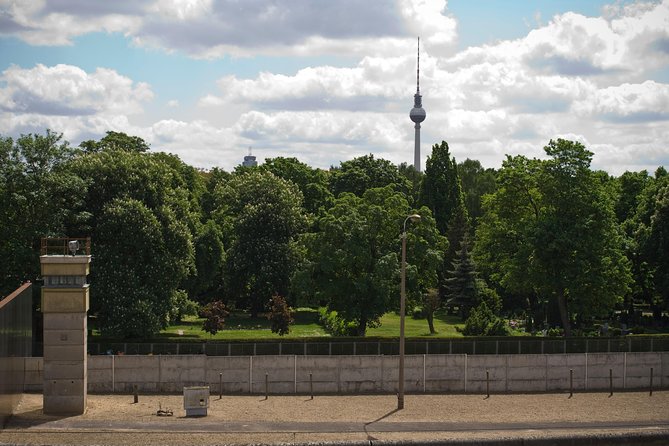
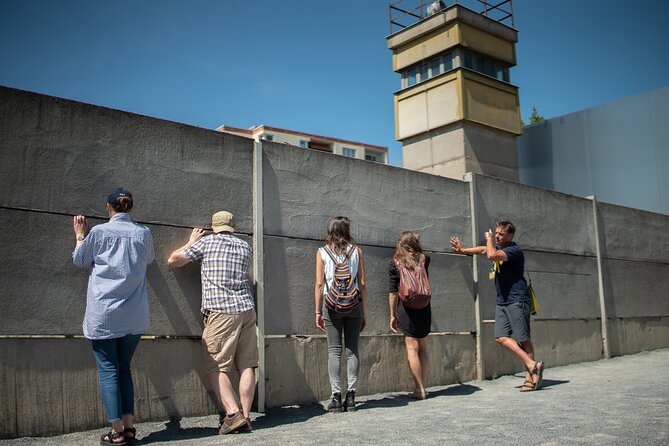
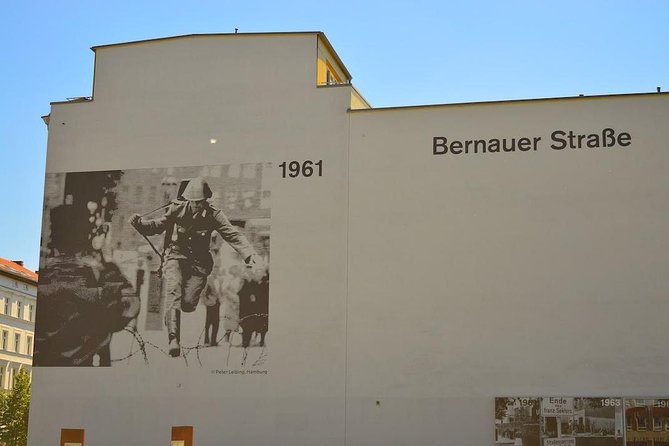
You’ll see the Berlin Wall and the original death strip area. That wording matters because it’s not just a historical phrase, it’s a description of how the space was engineered to stop escapes and punish anyone who tried.
If you’ve seen the Wall only as a monument, this section corrects that. The guide’s focus is on what the barriers meant for movement, visibility, and risk. You’ll come away understanding the Wall as a system designed to make escape attempts hard, dangerous, and unlikely.
Take your camera, but also take a moment to look without photographing. The place works best when you let your eyes pick up the lines of control.
East Side Gallery, when concrete becomes public art
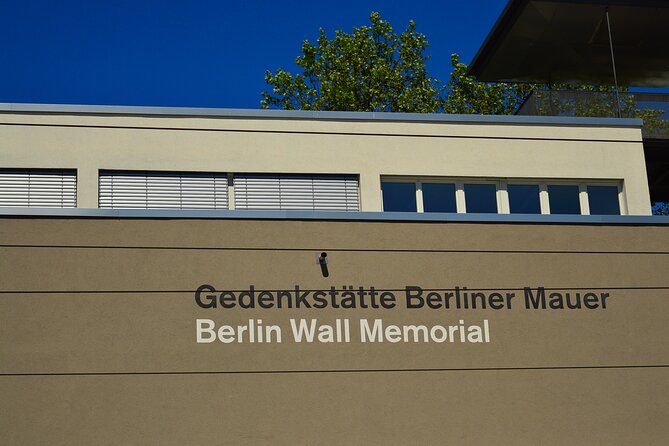
You’ll finish at the East Side Gallery, with around 20 minutes guided. This is the part that can look like a street art festival at first glance, but the context changes everything.
You walk along the former Wall where graffiti and murals transformed a symbol of oppression into an open-air gallery. The art does not erase the violence of what it replaced, it reframes it. You’re walking a timeline where the same surface moved from barrier to statement.
This stop is also a good emotional release after the heavier sites. The story doesn’t get lighter, but it gets human again. Instead of fear and surveillance, you’re seeing memory turned into expression.
If you like your history with a pulse, you’ll appreciate that the final stop leaves you with something to talk about beyond dates and political blocs.
Price and value at about $18 for a 3-hour, multi-site walk
At around $18 per person for 3 hours, this tour is priced like a budget-friendly history outing, not a premium private museum day. The value comes from two things you usually do not get together in Berlin: multiple high-impact locations and a guide who can stitch the story into something you can follow.
You should factor in what’s not included. Food and drink are not part of the price, and the public transport day pass is required but not included. Still, you are paying for guided time across several key sites, not just standing around at one monument.
In practical terms, this is the kind of tour that helps you decide what to revisit on your own after you’ve got the map in your head.
Guides you might meet, and why storytelling matters here
The quality of this tour heavily depends on the guide’s storytelling. Names that have shown up with consistent praise include Paul, Jamie g, Maria, Xavier, Klaus, and Nickolai, plus Glen and Tina.
Across those guides, the common thread is narrative clarity: bringing Cold War events to life in a way that connects to what you see outside. Several guides are also described as responding to questions well, which matters because Berlin’s Cold War story has a lot of moving parts, and people naturally want specifics.
If your goal is to understand not just what happened, but how it felt to live under the system, that guide skill is the main value add.
What to bring, what to wear, and how to get the best photos
You’ll do real walking, so plan for it. Bring comfortable shoes, a camera if you want pictures, and weather-appropriate clothing.
The tour proceeds regardless of weather, so don’t bet your day on sunshine. If rain shows up, you’ll still keep moving and still hear the story.
Also note what’s not allowed: alcohol and drugs. It’s a straightforward rule, but it helps keep the focus on the sites and the conversation.
Who this tour is for, and who might want a different fit
I’d aim you toward this tour if you want a structured, guided route through Cold War Berlin that covers both the Wall and the city around it. It’s also a smart choice if you start the day knowing little, because the guide’s explanations are built to connect events to locations.
You might choose something else if you want lots of time inside museums or if you’re hoping for a long, slow Wall walk with minimal transit. This tour is about movement and story sequencing, not a full day at one exhibit.
If you’re short on time but want the Wall story plus GDR everyday context, this fits the bill.
Should you book this Cold War, Berlin Wall, Spies and the East Side Gallery tour?
Book it if you want the Wall explained through places, not just facts. This is a good deal for the amount of ground you cover in 3 hours, and the route works because it moves from border emotion to city-scale ideology and then back to the Wall itself.
Skip it only if you dislike walking, hate public transport changes, or need a highly museum-heavy itinerary. Since an AB day pass is required to travel between sites, also make sure you’re comfortable with that small logistical step.
If your aim is to leave Berlin with a clearer understanding of how surveillance, architecture, and escape attempts shaped daily life, this tour is a practical way to do it fast and with strong guide support.
More Museums in Berlin
- Berlin: Interactive DeJa Vu Museum Entrance Ticket
★ 4.1 · 1,338 reviews - Berlin: East Side Gallery Spree Cruise in a Solar Catamaran
★ 4.1 · 1,086 reviews - Berlin WelcomeCard: Museum Island & Public Transport
★ 4.3 · 999 reviews - From Berlin: Sachsenhausen Concentration Camp Museum Tour
★ 4.8 · 514 reviews
More Wartime and Cold War History Walks in Berlin
- Berlin: Third Reich, Hitler, and WWII Walking Tour
★ 4.9 · 1,757 reviews - Cold War, Berlin Wall, Spies and the East Side Gallery
★ 5.0 · 1,024 reviews - Berlin Third Reich Sites: Half-Day Walking Tour
★ 5.0 · 835 reviews - Berlin: History of the Third Reich Guided Walking Tour
★ 4.7 · 791 reviews
Newest Berlin reviews on the site
- Jetbike Berlin fun bike beer bike★ 5.0 · 3 reviews
- Karl-Marx-Allee Walking Tour: Berlin’s Socialist History★ 5.0 · 5 reviews
- Homeless on chic streets: city tour in Berlin from personal experience★ 4.6 · 3 reviews
- Berlin: Sachsenhausen Concentration Camp Guided Tour★ 4.9 · 42 reviews
- Historyof the Trans, Queer & Gay communities of Berlin tour★ 4.8 · 17 reviews
- Historic Berlin Pubs & History Tour★ 4.9 · 73 reviews
- Berlin: City Center Walking Tour★ 4.7 · 45 reviews
- Half-Day Berlin Highlights Segway Expedition★ 4.5 · 61 reviews
Third Reich & Cold War Tours, compared.

Berlin’s Best: 2 Hour Walking Tour Third Reich and the Cold War
Read our review →
Third Reich Berlin: Hitler and WWII Walking Tour
Read our review →
Skip-the-Line: Berlin Wall Museum at Checkpoint Charlie
Read our review →
Browse the lists this tour appears in