

Reviewed · THIRD REICH & COLD WAR TOURS
Berlin: Stasi Museum Private Guided Tour with Entry Ticket
Stasi files have a way of sticking with you. This private tour takes you straight into the former headquarters of East Germany’s secret police, where propaganda and daily life were tightly linked to surveillance. You get skip-the-line entry and an expert guide who explains how control worked, not just what it looked like.
I especially like two things: first, the museum setting in the original Stasi HQ building, which makes the whole system feel real. Second, the tour’s pacing, focused on the people behind the policies, from how informants were recruited to what citizens had to fear.
The main drawback is price. At $257 per person, this is not a budget stop, so it helps if you’re genuinely curious about Cold War politics and want guided context rather than a quick self-guided browse.
In This Review
- Key highlights to know before you go
- From Alexanderplatz to Stasi HQ, the Cold War starts before you arrive
- Skip-the-line entry at Forschungs- und Gedenkstätte Normannenstraße
- Inside the building: ministerial offices and the feeling of power
- Spy technology, bugs, and hidden cameras you can actually see
- How informants were recruited, and why fear became normal
- Private guiding that actually answers your questions
- What 3 hours feels like in the real world
- Price and value: what you’re really paying for at $257
- Who should book this Stasi Museum private tour
- Should you book this Stasi Museum private tour?
- FAQ
- Where do I meet the guide for the Stasi Museum private tour?
- How long is the tour?
- Does this include tickets and skip-the-line entry?
- Is this tour for the Stasi Museum or the Hohenschönhausen prison memorial?
- What languages are offered?
- Is the experience wheelchair accessible and private?
Key highlights to know before you go
- Skip-the-line entry with a pre-booked time slot: you save waiting time, but you must show up on schedule.
- Alexanderplatz to the museum by public transport: you avoid the friction of getting there on your own, since the site sits outside central areas.
- Original surveillance tech on display: you’ll see period tools like bugs and hidden cameras.
- Erich Mielke’s office and red briefcase: a striking moment that ties paperwork to power.
- Private, language-matched commentary: you can ask questions and keep the story clear in your native language.
From Alexanderplatz to Stasi HQ, the Cold War starts before you arrive
Your tour day opens at Alexanderplatz, the big central square where one of the most important 1989 demonstrations in the GDR’s history took place. Even if you’ve read about the fall of the Wall, it helps to start here, in the public space where ordinary people eventually forced change. It frames the Stasi Museum tour as something tied to real streets and real pressure, not just an isolated collection of artifacts.
Then you head toward the museum using public transport. This matters more than you might think. The Stasi Museum (Forschungs- und Gedenkstätte Normannenstraße) is outside the tight core of attractions, so you won’t waste time figuring out routes or worrying about transfers. The tour includes two-way public transport tickets, which makes the day feel smooth.
On the ride, your guide sets the tone: what the GDR claimed versus what life felt like. That contrast pays off later when you’re standing in offices built for monitoring and control.
More Museum Tours in Berlin
- Berlin: Natural History Museum Entrance Ticket
★ 4.6 · 3,382 reviews - Berlin: Museum Island Multiple Museum Entry Ticket
★ 4.4 · 2,861 reviews - Skip-the-Line: Berlin Wall Museum at Checkpoint Charlie
★ 4.1 · 2,041 reviews
Skip-the-line entry at Forschungs- und Gedenkstätte Normannenstraße
The Stasi Museum is housed in the original building connected to East Germany’s Ministry for State Security. That is one reason the experience hits harder than a generic museum visit. You are not just looking at replicas or behind-glass explanations, you’re moving through spaces that were part of the machine.
You also get skip-the-line tickets. In practice, this means your entry time is pre-booked. The tradeoff is simple: arrive at the meeting point on time and stick to the schedule. If you show up late, you can’t expect the same kind of flexibility you’d have with walk-up entry.
A key detail to keep straight: this museum is not the former Stasi prison memorial in Berlin-Hohenschönhausen. Both relate to Stasi history, but they’re different places and different kinds of storytelling. This tour focuses on the Stasi system as it was run from headquarters, including the working environment of surveillance.
Inside the building: ministerial offices and the feeling of power
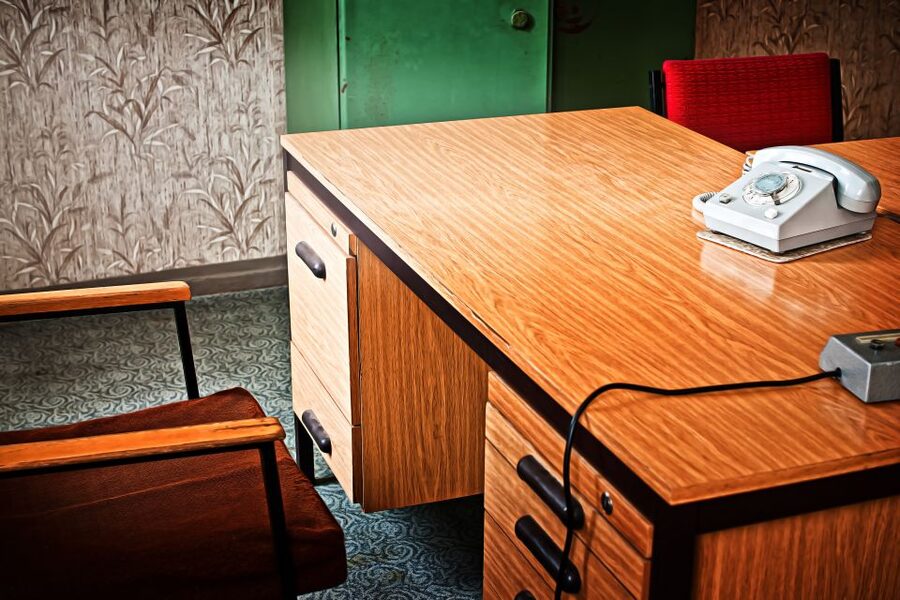
Once you’re inside, the tour turns from background to mechanics. You’ll spend time in the ministerial offices and the operational spaces tied to the Stasi HQ. This is where the Cold War becomes less abstract. You see how institutions of the state were used to watch citizens, file reports, and pressure lives without needing to storm your door every day.
The guide’s commentary is what makes this section work. It’s not only about naming departments. It’s about explaining the logic behind them: why surveillance was treated as normal governance, and why the system required routine paperwork and constant information flow.
One of the most memorable moments is the office of Erich Mielke. His red briefcase is displayed there, and it symbolizes the personal layer of authority that sat on top of the bureaucracy. It’s a small object in the grand scale of history, but it helps you understand how sensitive information was managed.
Spy technology, bugs, and hidden cameras you can actually see
The tour doesn’t just discuss surveillance in theory. You’ll get to see original spying technology used by the Stasi secret police, including bugs and hidden cameras. Seeing period devices is powerful because it connects the idea of control to real engineering and real tactics.
This is also a good section for asking questions. When you’re looking at old equipment, you naturally wonder about feasibility and methods. A strong guide can connect the tech to everyday outcomes, like how monitoring created fear, how messages were intercepted or reported, and how the system relied on citizens changing behavior without needing constant physical intimidation.
Even if you consider yourself a casual Cold War fan, the presence of these items helps you understand something important: the Stasi wasn’t only about ideology. It was also about information collection, pattern building, and quietly shaping what people dared to say.
More Third Reich & Cold War Tours in Berlin
- Berlin: Third Reich and Cold War 2 Hour Walking Tour
★ 4.9 · 6,830 reviews - Berlin: Berlin Story Bunker Entry Ticket
★ 4.6 · 6,759 reviews - Berlin’s Best: 2 Hour Walking Tour Third Reich and the Cold War
★ 5.0 · 5,486 reviews - Third Reich Berlin: Hitler and WWII Walking Tour
★ 5.0 · 3,301 reviews
How informants were recruited, and why fear became normal
If you want one concept to walk away with, it’s this: the Stasi system didn’t only operate through Stasi officers. It depended on informants and on the social web around citizens.
On this tour, you learn how informants were recruited and how citizens were spied on and controlled. The key is not to treat it like a thriller plot. You’re shown the administrative and human side of surveillance, where trust could be broken, reputations could be damaged, and compliance could be forced without open violence.
The Cold War context matters here. The GDR presented itself as stable and justified. But inside that political story sat a dictatorship that used monitoring as a tool of governance. When you combine politics, propaganda, and daily life, you get a clearer picture of what people were up against, including the way fear was sustained.
This section can feel heavy. But that heaviness is part of the value. You’re not watching history from far away. You’re understanding how control was built into daily life.
Private guiding that actually answers your questions
This is a private group tour, and that changes the whole vibe. Instead of following a crowd through the museum, you get an expert guide who can adjust explanations to your pace. It’s especially helpful in a place like this, where the history can get complicated fast.
Languages offered are English and German, and the guide is a licensed professional. The tour emphasizes expert commentary in your native language, so the message lands clearly rather than through vague summaries.
I also like that the guidance can be flexible. One of the strongest signals from past participants is that guides can sometimes handle more than one language within the group. For example, an English booking still worked alongside Danish when needed, and that kind of extra support can make a big difference when you’re dealing with sensitive topics and nuanced vocabulary. Another detail from prior bookings is that some guides are memorable enough that people would happily book them again, including a guide named Silvia.
What 3 hours feels like in the real world
A 3-hour duration sounds straightforward, but in practice it’s the right length for this museum. You get enough time to connect the building, the offices, and the tech displays to a coherent story. You also avoid the situation where you’re rushed through the moments that need slower attention, like Mielke’s office or the surveillance technology.
The schedule is also designed to handle the museum’s location. Because the museum is outside central areas, the included transport tickets help you avoid the common Berlin problem: you end up spending your energy on logistics instead of the experience.
The tour starts at Alexanderplatz and then you take public transport. Expect that the ride and the walkthrough are both part of the learning. The guide uses the transit time for context, then uses the museum time to show how the system worked in real spaces.
Price and value: what you’re really paying for at $257
At $257 per person, this is a premium outing. A self-guided visit is cheaper, of course, but the question is what you gain by paying more.
Here’s what the price includes that can make it feel fair:
- Skip-the-line entry with a pre-booked entry time slot
- A licensed guide with expert commentary on division and surveillance
- Private group format, so you’re not stuck with a generic pace
- Round-trip public transport tickets to cover the museum’s location outside the center
More importantly, you’re paying for interpretation. Stasi history can turn into a blur of names and dates if you’re reading panels without context. A good guide connects the dots: politics, propaganda, institutions, and daily life. That helps you leave with understanding, not just images.
One practical caution: if you go in expecting a lightweight “see some spy stuff” tour, you may feel the cost more sharply. If you’re the kind of person who wants to understand how a dictatorship organized information and how ordinary life got shaped by that, the guided format is where the value shows.
Who should book this Stasi Museum private tour
You’ll likely love this if:
- You enjoy Cold War history and want the GDR explained through systems, not slogans
- You care about how surveillance shaped everyday behavior
- You prefer a private, question-friendly format
- You want to see original surveillance equipment in context, rather than as isolated objects
You might skip it or look for an alternative if:
- You’re mainly after broad overviews and don’t want to spend 3 hours on a heavy, political topic
- You’re on a tight budget and can’t justify a guide plus skip-the-line entry
Should you book this Stasi Museum private tour?
I’d book it if you want more than a walk through rooms. This tour is built around the fact that the Stasi HQ building, the offices, the tech displays, and the explanations all reinforce each other. If you’re going to spend time here, spend it with a guide who can connect the propaganda and the machinery of control.
If you’re on the fence because of price, do a quick honesty check. Ask yourself whether you want guided interpretation. If yes, the included skip-the-line entry, transport tickets, and private format make the cost easier to justify. If no, you may be better served by a self-guided museum visit at your own pace.
FAQ
Where do I meet the guide for the Stasi Museum private tour?
Meet your guide in front of the DM drugstore at Alexanderplatz, 1, 10178 Berlin.
How long is the tour?
The duration is 3 hours.
Does this include tickets and skip-the-line entry?
Yes. The tour includes skip-the-line tickets to the Stasi Museum with a pre-booked entry time slot.
Is this tour for the Stasi Museum or the Hohenschönhausen prison memorial?
This tour includes the Stasi Museum (Forschungs- und Gedenkstätte Normannenstraße). It is a different site than the former Stasi prison memorial in Berlin-Hohenschönhausen.
What languages are offered?
The live tour guide is available in English and German.
Is the experience wheelchair accessible and private?
The tour is wheelchair accessible and the format is a private group.
More Museums in Berlin
- Berlin: Interactive DeJa Vu Museum Entrance Ticket
★ 4.1 · 1,338 reviews - Berlin: East Side Gallery Spree Cruise in a Solar Catamaran
★ 4.1 · 1,086 reviews - Berlin WelcomeCard: Museum Island & Public Transport
★ 4.3 · 999 reviews - From Berlin: Sachsenhausen Concentration Camp Museum Tour
★ 4.8 · 514 reviews
More Wartime and Cold War History Walks in Berlin
- Berlin: Third Reich, Hitler, and WWII Walking Tour
★ 4.9 · 1,757 reviews - Cold War, Berlin Wall, Spies and the East Side Gallery
★ 5.0 · 1,024 reviews - Berlin Third Reich Sites: Half-Day Walking Tour
★ 5.0 · 835 reviews - Berlin: History of the Third Reich Guided Walking Tour
★ 4.7 · 791 reviews
Newest Berlin reviews on the site
- Jetbike Berlin fun bike beer bike★ 5.0 · 3 reviews
- Karl-Marx-Allee Walking Tour: Berlin’s Socialist History★ 5.0 · 5 reviews
- Homeless on chic streets: city tour in Berlin from personal experience★ 4.6 · 3 reviews
- Berlin: Sachsenhausen Concentration Camp Guided Tour★ 4.9 · 42 reviews
- Historyof the Trans, Queer & Gay communities of Berlin tour★ 4.8 · 17 reviews
- Historic Berlin Pubs & History Tour★ 4.9 · 73 reviews
- Berlin: City Center Walking Tour★ 4.7 · 45 reviews
- Half-Day Berlin Highlights Segway Expedition★ 4.5 · 61 reviews
Third Reich & Cold War Tours, compared.


Berlin’s Best: 2 Hour Walking Tour Third Reich and the Cold War
Read our review →
Third Reich Berlin: Hitler and WWII Walking Tour
Read our review →
Skip-the-Line: Berlin Wall Museum at Checkpoint Charlie
Read our review →
Browse the lists this tour appears in