
Reviewed · THIRD REICH & COLD WAR TOURS
Berlin: Jewish Walking Tour including World War II
Berlin can be heavy, but this walk hits the heart. I especially like how you move from everyday Jewish life in Mitte to the sharp break of World War II memory, and I also love how the guide connects famous names to places you can actually stand on. One consideration: expect a serious tone and a fair amount of walking on uneven sidewalks, so wear shoes you trust.
You’ll meet Tal in front of Starbucks at Hackescher Markt and follow a route designed around Jewish institutions, synagogues, and memorials. The tour runs about 3.5 to 4 hours, and it includes entry tickets to the Otto Weidt Museum and the old cemetery on most days, depending on closures. Tal’s background goes beyond personal interest too, including academic work related to how medical staff at Berlin’s Charité handled the hospital’s past in the 1930s and 1940s.
In This Review
- Key Highlights Worth Planning For
- Entering The Story: Why Mitte Matters for Jewish Berlin
- Meet Tal, Your Guide, and Why Her Approach Works
- Hackescher Markt to Eastern European Refuge: The Beginning of the Berlin Arc
- Women’s Protest Memorials and the Reality of WWII in the City
- Otto Weidt Workshop for the Blind: Courage, Logistics, and Choices
- Old Jewish Cemetery and the First Roots of the Community
- Synagogue Sites: From the Old Synagogue to the New Synagogue Era
- The Move West, the Arrival of the Ostjuden, and Community Friction
- Otto Weidt, Cemeteries, and Synagogues: How the Route Builds Emotional Balance
- Price and Value: Is $318 Worth It?
- Practical Tips: Shoes, Head Coverings, and How to Pace Yourself
- Optional Extensions for Deeper WWII Focus
- Who Should Book This Tour
- Should You Book This Jewish Walking Tour?
- FAQ
- How long is the Berlin Jewish Walking Tour including World War II?
- Where does the tour start and where does it end?
- What’s included in the price?
- What sites will I see during the walk?
- Are the tickets included for Centrum Judaicum?
- Is the tour suitable for wheelchair users?
Key Highlights Worth Planning For
- Hackescher Markt as a starting point for understanding why Jewish community institutions clustered there in Berlin
- Moses Mendelssohn and the early Jewish community, including his burial at the old cemetery you’ll visit
- Holocaust-era rescue through Otto Weidt, with museum entry included on eligible days
- Women’s protest memorials from 1943, helping you read the city as evidence, not just scenery
- Synagogue sites and the arc from golden era to devastation, including the view of the New Synagogue area
- Customization options, so you can add stops like Kindertransport and deportation memorials if you want deeper WWII focus
Entering The Story: Why Mitte Matters for Jewish Berlin
This tour is built around one key idea: Berlin’s Jewish story did not unfold in a vacuum. It grew in neighborhoods, around institutions, schools, cemeteries, and places of worship, and you feel that structure as you walk.
Mitte is your “map” for the whole narrative. The route starts at Hackescher Markt, a central spot tied to how many community institutions and daily life clustered in the city. That matters because it keeps the history grounded. Instead of only hearing dates and numbers, you’re walking the same urban geography where communities organized, argued, prayed, taught, and survived.
And yes, it is tragic. But it is also specific. You learn about the community’s peaks, its fall during World War II, and what the city’s Jewish life looks like today. That mix is why this tour feels more useful than a museum-only visit.
More Third Reich & Cold War Tours in Berlin
- Berlin: Third Reich and Cold War 2 Hour Walking Tour
★ 4.9 · 6,830 reviews - Berlin: Berlin Story Bunker Entry Ticket
★ 4.6 · 6,759 reviews - Berlin’s Best: 2 Hour Walking Tour Third Reich and the Cold War
★ 5.0 · 5,486 reviews
Meet Tal, Your Guide, and Why Her Approach Works
Tal is a certified Berlin guide through the Berlin Guides Association, and that shows in how the tour flows. She doesn’t just “point at” landmarks. She gives you context that makes each site easier to understand, whether you’re coming with basic knowledge or zero.
What I’d call her best skill is turning big themes into personal stories and real-world consequences. The story includes the Jewish community’s re-establishment in the late 17th century and the era associated with Moses Mendelssohn, but she also talks about internal splits within the community and the social tensions around immigration waves. She explains things like community friction tied to changes in religious practice, including the introduction of the organ, and the way German Jews sometimes felt embarrassment when Eastern European Jews arrived. Those details help you understand that history was not only tragedy. It also included conflict, adaptation, and complicated human feelings.
You’ll also hear about the move west in Berlin and the arrival of the “Ostjuden,” Eastern European Jews who came seeking refuge from pogroms. The goal is not to reduce people to labels. The goal is to help you see how Berlin changed because people changed it.
One more reason I like her style: she brings professional research experience connected to Berlin’s institutional history in the 1930s and 1940s, not just broad storytelling. When history gets dark, that kind of grounding keeps it from becoming vague.
Hackescher Markt to Eastern European Refuge: The Beginning of the Berlin Arc
Your walk starts in front of Starbucks at Hackescher Markt. It’s a smart meeting point because it’s central and it gives you quick access to transit before you begin. From there, you move into the story of why Berlin became a magnet for Jewish life.
Hackescher Markt isn’t just a convenient square. It’s tied to how the city hosted many Jewish community institutions, and it helps explain why, later on, it also becomes a kind of stage for the arrival of Eastern European Jews. You’ll learn how pogroms pushed people to seek safety, and how that safety created new community dynamics in Berlin.
A useful way to think about this portion: you are learning “how Berlin worked” for Jewish residents, not just “what happened.” You’ll connect the dots between community clustering, institutions in Mitte, and later changes during the 20th century.
Also, the tour includes short guided stops, not marathon lectures. Expect a steady rhythm of walking, brief context, then standing in front of the next place and taking it in.
Women’s Protest Memorials and the Reality of WWII in the City
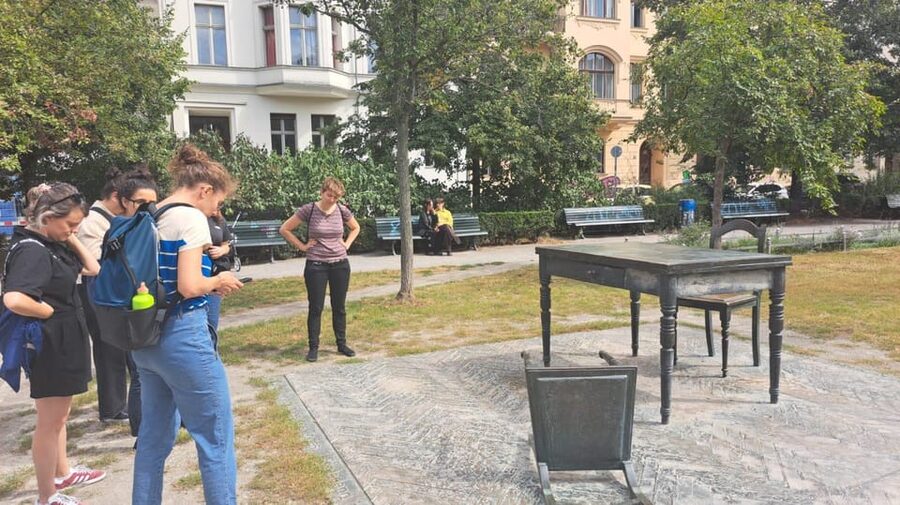
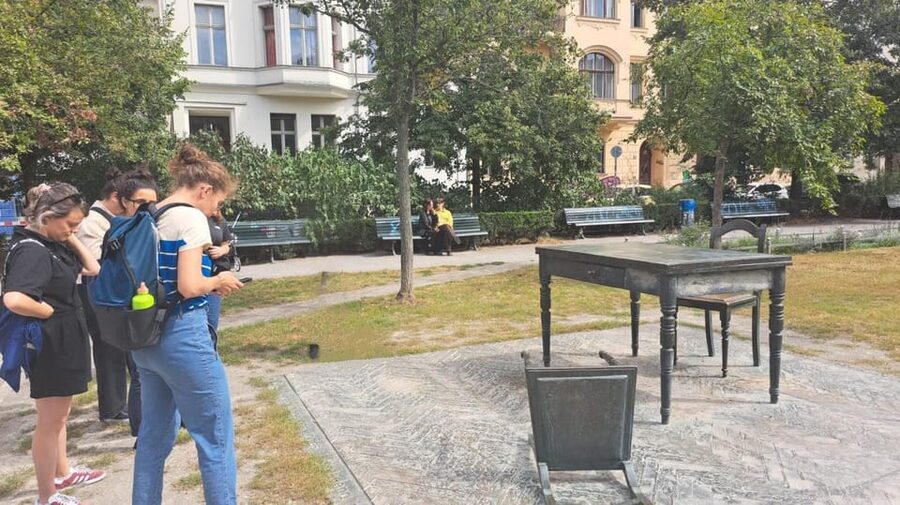
At one point on the route, you stop at the memorial tied to the women’s protest of 1943. The area is known as the Block of Women stop, and the point is direct: this was not an abstract catastrophe. People resisted, demanded, and suffered within the machinery of occupation and persecution.
This is one of those parts where the urban setting does something powerful. The city doesn’t feel like a “special history room.” It feels like the same streets you’ve been walking on since you arrived. That is unsettling, and it’s also what makes it meaningful.
If you tend to get overwhelmed by heavy history, you’ll want to pace yourself here. Bring water, take a slow breath before the guide explains the next layer, and don’t rush photos. It is okay to pause and just look.
More Walking Tours in Berlin
- Discover Berlin Half-Day Walking Tour
★ 5.0 · 9,624 reviews - Berlin: Discover Berlin Walking Tour
★ 4.9 · 5,998 reviews - Berlin: Hidden Backyards Guided Walking Tour
★ 4.8 · 5,360 reviews - Third Reich Berlin: Hitler and WWII Walking Tour
★ 5.0 · 3,301 reviews
Otto Weidt Workshop for the Blind: Courage, Logistics, and Choices
One of the tour’s most uplifting stops is the Otto Weidt Workshop for the Blind. You’ll visit the museum and you get an entry ticket as part of the tour, assuming it is not closed and the timing works for the day you go.
The story of Otto Weidt is inspiring for a specific reason: it focuses on how someone used practical choices to save lives. You are not only hearing about resistance as a grand concept. You’re seeing it as work, planning, and the risks of helping people when the environment is dangerous.
In Berlin, these stories are especially important because they counterbalance the idea that nothing could be done. They show how people acted in real time, with real constraints. If you want a tour that includes both horror and human agency, this is where you feel it most.
Old Jewish Cemetery and the First Roots of the Community
The tour then leads you to the old Jewish cemetery, the first cemetery connected to the early community. This is a deeply moving stop, and it carries extra weight because you’re told that Moses Mendelssohn is buried here.
A cemetery is not a “quick photo” stop. You’ll want to treat it as a site of reading. Look closely, slow down, and let the guide’s context give you something to hold onto. The advantage of doing it on a walking tour rather than alone is timing. Tal can explain how this burial ground fits into the broader re-establishment of Jewish life in Berlin in the late 17th century, rather than leaving you with isolated stones.
One practical note: entry to the old cemetery is included except on Jewish holidays and Saturdays. If you’re planning around those dates, you might find you need to confirm what is possible for your specific day.
Synagogue Sites: From the Old Synagogue to the New Synagogue Era
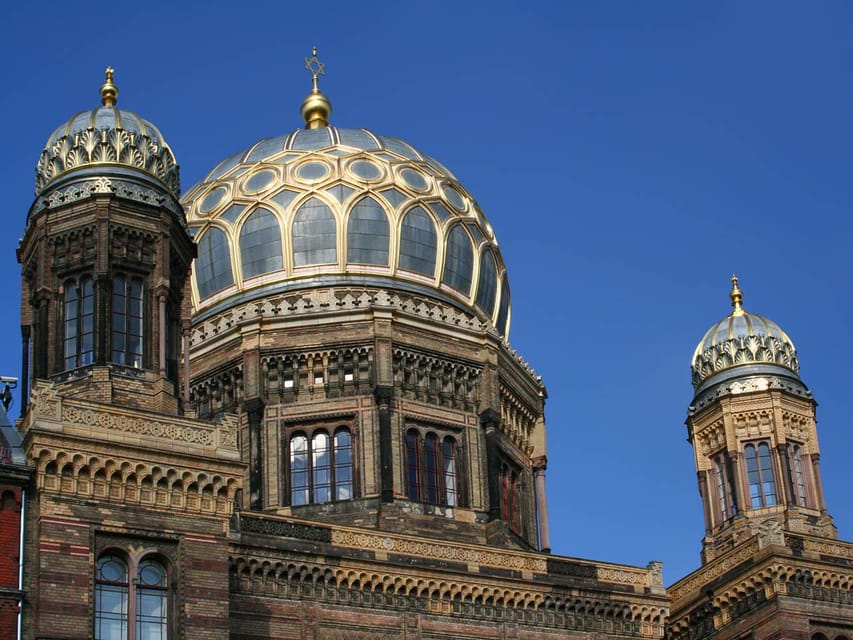
As you continue through Mitte, you see synagogue-related sites, including the old synagogue and the New Synagogue Berlin Jewish Centre area. The new synagogue portion is described as something you view from the outside, but it still matters because it marks the so-called golden era of Berlin’s Jewish community as well as the tragic fall that followed.
This part of the tour helps you understand a pattern that keeps repeating across European history: a community can build, prosper, and create cultural identity, and then lose it in a span of brutal years.
If you’re the kind of person who likes architecture, you’ll enjoy standing in front of the New Synagogue area and letting the contrast do its work. If you’re more into social history, you’ll still get value because you hear about institutions like schools and community structures that shaped daily life.
The route also mentions institutions such as the Mendelssohn School and a girls’ school. Even if you don’t get a full museum-style explanation at each building, it gives you a concrete sense of what the community invested in.
The Move West, the Arrival of the Ostjuden, and Community Friction
A big theme in this tour is how Berlin’s Jewish community changed across time, including the move to the west of the city. You’ll hear about the arrival of the Ostjuden, Eastern European Jews who came seeking refuge from pogroms, and how that migration changed Berlin.
You’ll also hear about social tension within the community, including embarrassment among German Jews when Eastern European Jews arrived, and friction connected to religious practice. That kind of detail is useful because it keeps the story honest. Jewish Berlin was not one uniform identity. It was a network of different experiences, traditions, and opinions, all interacting inside a single city.
I like that this isn’t treated as background noise. It becomes part of the explanation for how institutions functioned and how community life evolved.
Otto Weidt, Cemeteries, and Synagogues: How the Route Builds Emotional Balance
The stop selection is not random. The itinerary keeps switching between three types of learning:
- Public places like squares and institutions in Mitte, so you understand where life was organized.
- Memory sites like memorials and cemeteries, so you understand the human cost.
- Choice-based rescue stories like Otto Weidt, so you understand agency even in extreme conditions.
That structure helps you hold both sides of the Berlin Jewish story at the same time. It also keeps the tour from feeling like a single, straight line into despair.
Price and Value: Is $318 Worth It?
At $318 per person for about 3.5 hours, this is not a cheap walk. But you’re paying for more than someone leading you around. You get a certified guide, a private group format, and included entry tickets to two important sites: the Otto Weidt Museum and the old cemetery (with day-based exclusions).
For me, the best value comes from pairing entry access with contextual storytelling. Otto Weidt would be harder to do well on your own unless you already know the story and the museum schedule. The old cemetery also benefits from guided context, especially for understanding how Moses Mendelssohn connects to the early community’s re-establishment in the late 17th century.
Also, the tour is customizable. If you want to add specific sites, you are not stuck with a fixed script. That can be a big value boost if your priorities are tightly focused, like Kindertransport, deportation memorials, or specific cemeteries.
If you’re traveling on a tight budget, you might consider whether you’re okay paying for a shorter, ticketed, guide-led experience. But if you want the guide’s interpretation to stitch the places into one story, this pricing makes more sense.
Practical Tips: Shoes, Head Coverings, and How to Pace Yourself
This tour is physical enough that your comfort matters. Bring comfortable walking shoes, water, and check the weather forecast since you’ll be outside for much of the time.
You may also want a hat and a head covering or kippah. The tour notes these items as what to bring, and it is a respectful idea for synagogue-related areas and cemetery visits.
Rules are straightforward: no smoking, and no flash photography. For me, that’s a good sign. It usually means the sites are treated thoughtfully, not as a photo contest.
Finally, give yourself mental pacing. This is a WWII-including history tour, so plan one calmer block afterward. Your brain will need time to file what you saw.
Optional Extensions for Deeper WWII Focus
If you want to go further, the tour offers optional extensions. These are helpful if you’re especially interested in the late-war and deportation timeline.
Possible add-ons include:
- Schönhauser Allee Cemetery, tied to famous members from the community’s golden era
- Kindertransport Memorial at Friedrichstraße Station
- Grunewald Deportation Memorial, commemorating the deportation of Berlin’s Jews
These additions can help you turn the tour into a longer, more comprehensive Berlin Jewish WWII narrative. If you’re not sure which extension matches your interests, the customization option is there for a reason.
Who Should Book This Tour
This tour is a strong fit if you want:
- A walkable, place-based way to learn Jewish Berlin history, not just a lecture
- A guide who can handle both celebratory “golden era” context and WWII tragedy without losing clarity
- An itinerary focused on institutions in Mitte, including cemeteries and synagogue-related sites
- A tour that allows adjustments based on your priorities
It’s less ideal if you need step-free accessibility. The info you’re given includes a “wheelchair accessible” note, but it also states it is not suitable for wheelchair users and people with mobility impairments. Because that conflicts, you should confirm details with Tal or the operator before you book if mobility is a concern.
Should You Book This Jewish Walking Tour?
I think you should book this tour if you want a smart, guided way to understand how Jewish life in Berlin shifted from early community roots through the golden era, then into Holocaust memory, and finally into what you can still see today. Tal’s passion and storytelling style are exactly the kind of guide help that makes historical sites feel connected rather than random stops.
It might not be your best choice if you want a light, casual overview or if you cannot handle a mostly serious WWII-focused narrative. But if you’re open to an honest Berlin history walk, this one offers strong value through ticketed access, certified guidance, and a route that keeps you grounded in real places.
If you do book, I’d plan to wear your most comfortable shoes, carry water, and give yourself room to slow down at the cemetery and memorial stops. This city rewards attention, and this tour is designed for it.
FAQ
How long is the Berlin Jewish Walking Tour including World War II?
The tour lasts about 3.5 to 4 hours, depending on the pace and the exact route on the day.
Where does the tour start and where does it end?
You meet in front of Starbucks for the start. The itinerary lists the finish at the Memorial Jewish Cemetery, and the activity description also says the experience ends back at the meeting point, so double-check your confirmation for the exact end location.
What’s included in the price?
You get a guided walking tour, your guide, entry tickets to the Otto Weidt Museum (except when closed), and entry ticket to the old cemetery (except on Jewish holidays and on Saturdays). Meals and drinks are not included.
What sites will I see during the walk?
You’ll cover Hackescher Markt, the women’s protest memorial stop (Block of Women), the Otto Weidt Workshop for the Blind, the Old Jewish Cemetery, the old synagogue site, and the New Synagogue Berlin Jewish Centre area from the outside, plus additional community institutions in Mitte.
Are the tickets included for Centrum Judaicum?
No. Centrum Judaicum is listed as a separate ticket, and entry to it is not included.
Is the tour suitable for wheelchair users?
The information includes a wheelchair accessible note, but it also states it is not suitable for wheelchair users and people with mobility impairments. If mobility is a concern, confirm directly with the provider before booking.
More Wartime and Cold War History Walks in Berlin
- Skip-the-Line: Berlin Wall Museum at Checkpoint Charlie
★ 4.1 · 2,041 reviews - Berlin: Third Reich, Hitler, and WWII Walking Tour
★ 4.9 · 1,757 reviews - Cold War, Berlin Wall, Spies and the East Side Gallery
★ 5.0 · 1,024 reviews - Berlin Third Reich Sites: Half-Day Walking Tour
★ 5.0 · 835 reviews
Newest Berlin reviews on the site
- Jetbike Berlin fun bike beer bike★ 5.0 · 3 reviews
- Karl-Marx-Allee Walking Tour: Berlin’s Socialist History★ 5.0 · 5 reviews
- Homeless on chic streets: city tour in Berlin from personal experience★ 4.6 · 3 reviews
- Berlin: Sachsenhausen Concentration Camp Guided Tour★ 4.9 · 42 reviews
- Historyof the Trans, Queer & Gay communities of Berlin tour★ 4.8 · 17 reviews
- Historic Berlin Pubs & History Tour★ 4.9 · 73 reviews
- Berlin: City Center Walking Tour★ 4.7 · 45 reviews
- Half-Day Berlin Highlights Segway Expedition★ 4.5 · 61 reviews
Third Reich & Cold War Tours, compared.

Berlin’s Best: 2 Hour Walking Tour Third Reich and the Cold War
Read our review →
Third Reich Berlin: Hitler and WWII Walking Tour
Read our review →
Skip-the-Line: Berlin Wall Museum at Checkpoint Charlie
Read our review →
Browse the lists this tour appears in