
Reviewed · WALKING TOURS
Trier: Private Guided Walking Tour
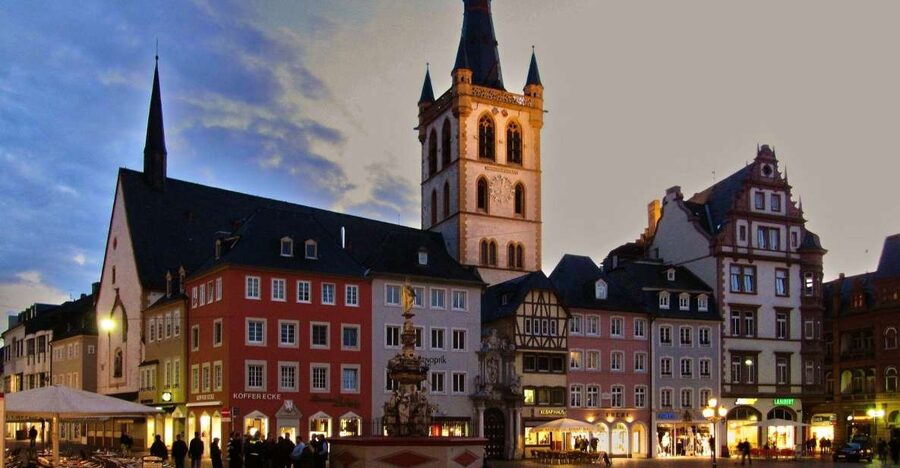
Trier can feel like a history book that learned how to walk. This private guided walking tour threads together Roman Trier, UNESCO sights, and the birthtown of Karl Marx at a pace that actually works on foot.
I like the way the tour points you at the big anchors first, then fills in why they matter. Porta Nigra gets clear explanations, and the subterranean labyrinth adds that wow-factor because you see history layered under the street level, not just in museums.
One thing to consider: it is a two-hour overview, so you should expect a guided narrative more than a slow Q and A. A review also flagged that pace and clarity can vary, so if you want lots of back-and-forth, come with specific questions ready.
In This Review
- Key highlights worth your attention
- Trier in two hours: what makes this walk click
- Meeting by the Black Gate, then shifting into Roman mode
- Porta Nigra: how the name and the structure tell the same story
- Konstantin-Basilika and Trier Cathedral: big stone, clear context
- House of the Three Magi and Karl Marx: stories that add contrast
- Underground Trier: the subterranean labyrinth and why it changes everything
- Half-timbered lanes and Moselle vineyards: where the UNESCO story turns human
- Private guide format: how it improves value and makes the tour easier
- Price and value: $280 per group for up to 15 people
- Weather, pace, and asking questions: what to plan for
- Should you book this Trier private walking tour?
- FAQ
- Where does the tour start?
- How long is the Trier private guided walking tour?
- Is this tour private?
- What languages are available?
- Are entrance fees included?
- Can I book flexibly?
Key highlights worth your attention
- Porta Nigra: you will hear how the name connects to the city
- Konstantin-Basilika: stop for the world scale of the remaining Roman structure
- Trier Cathedral: the tour frames it as Germany’s oldest cathedral
- House of the Three Magi: stories that make the building feel alive
- Underground passages: hidden history you only get if someone shows you where to look
- Private guide time: your group stays together, with room for small on-the-spot tweaks
Trier in two hours: what makes this walk click
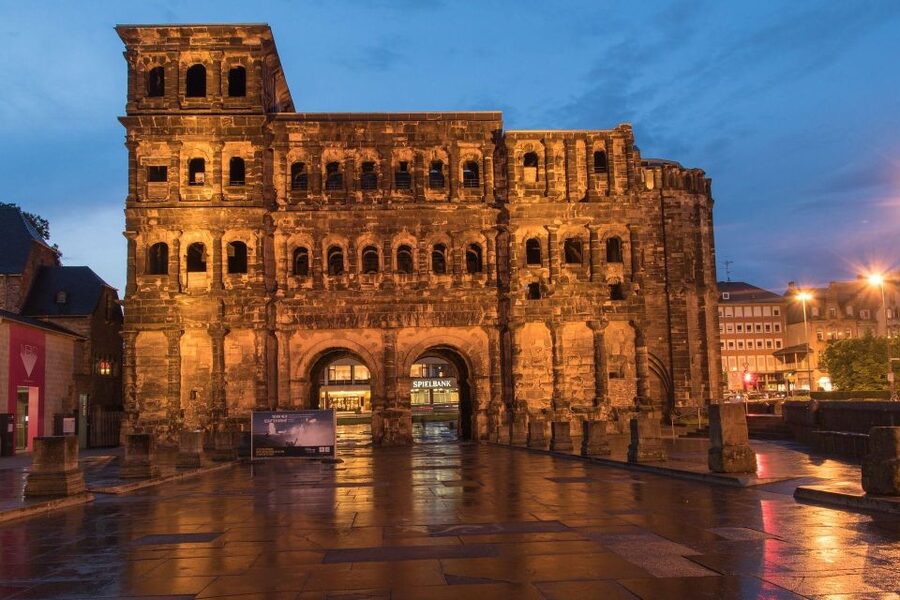
Trier is Germany’s oldest town, and this tour leans hard into that identity. Roman Trier is obvious the moment you spot the monumental pieces, but the charm arrives right after, with half-timbered houses and the vineyards along the Moselle. The effect is practical, not just scenic. You learn how a city can be Roman in stone and still feel lived-in today.
You will also see why Trier gets the nickname second Rome. The tour connects the dots between UNESCO World Heritage sites and the kind of power that once ran through this area. That matters because it stops the sights from feeling like random stops on a photo list.
And yes, Trier is also Karl Marx country. You do not just hear the name. The guide explains why the birthtown connection belongs in the same walking loop as the Roman monuments. It keeps the tour from turning into pure archaeology, or pure modern trivia.
The two-hour length is a sweet spot. It is long enough to do real walking and hit the main anchors, but short enough that you are not stuck indoors or rushing to fit in one more thing before dinner.
More Walking Tours in Trier
- Trier: Guided City Walk with Wine Tasting
★ 4.8 · 979 reviews - Trier: Guided Old Town Highlights and History Walking Tour
★ 4.7 · 687 reviews - Trier: City Walking Tour
★ 4.2 · 31 reviews
Meeting by the Black Gate, then shifting into Roman mode
You start in front of the Black Gate, at Porta-Nigra-Platz, Trier. That opening move is smart. The Black Gate is not a background landmark. It is a statement piece that instantly sets Trier’s Roman tone.
From the first minutes, you will be learning how to read the city. A good guide helps you notice details you would normally skip, like how the monument fits the urban layout and why it mattered when it was new. The guide also handles the story behind the name Porta Nigra, including its origin.
If you are the type who likes to get your bearings fast, this helps. You are not wandering first and guessing later. You start at the center of the Roman storyline, then the tour expands outward.
Practical note: this is a walking tour, so wear shoes that work on uneven pavement. Trier’s historic core can be cobbled in places, and you will want your feet, not your ankles, to do the work.
Porta Nigra: how the name and the structure tell the same story
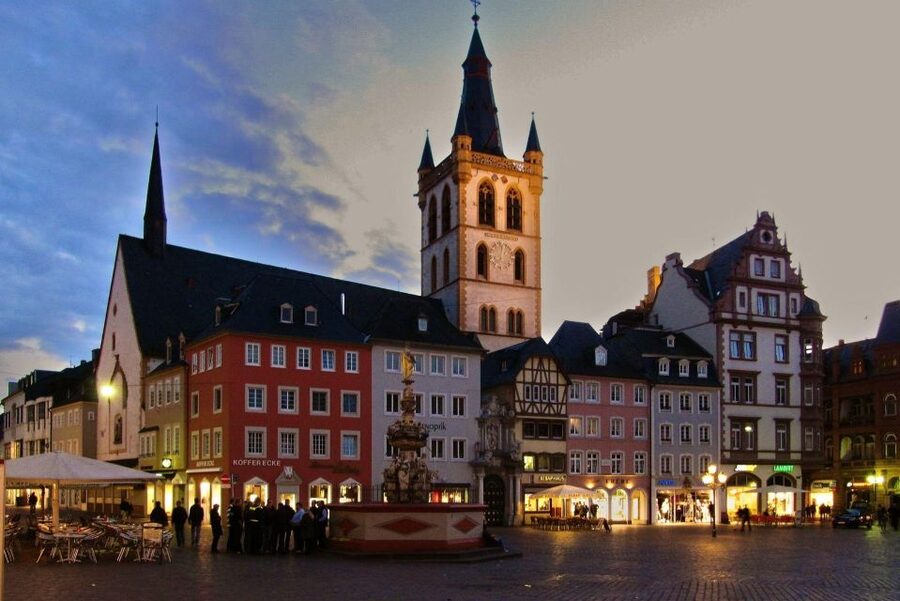
Porta Nigra is the kind of attraction that can become either awe-inspiring or confusing, depending on how it is explained. Here, the guide focuses on both.
What you should expect:
You will see the gate up close and learn about what it represents for Trier as Germany’s oldest town with Roman roots. More importantly, you will hear about the name origin. That sounds small, but name origins often reveal how locals and later generations understood a site.
Why this matters for you:
If you know the meaning behind the name, your brain starts organizing the rest of the monuments. You stop treating everything like a separate item and start seeing a connected city plan. That makes the later stops, like the cathedral and the underground areas, feel like chapters in one story.
Konstantin-Basilika and Trier Cathedral: big stone, clear context
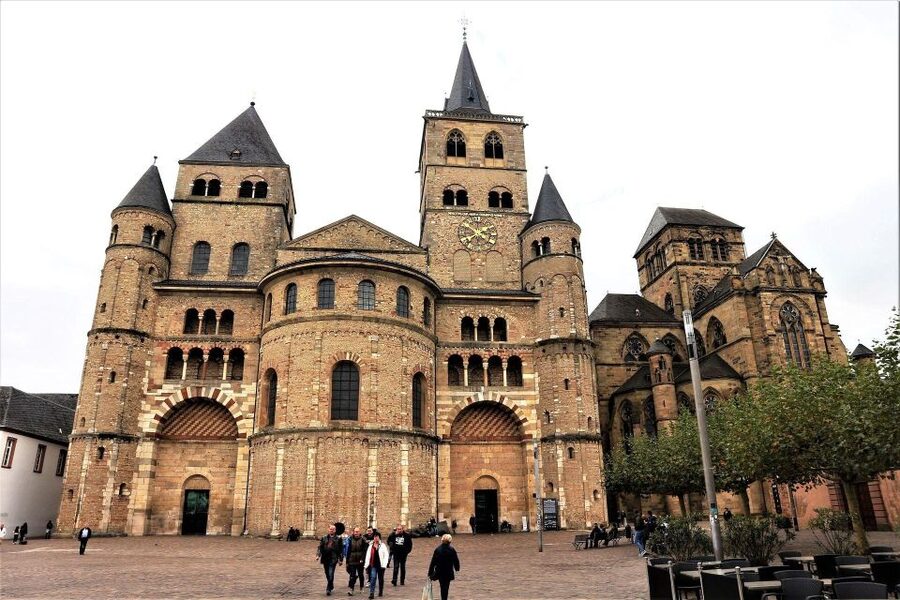
After Porta Nigra, the tour brings you to two heavyweight hitters: the Konstantin-Basilika and Trier Cathedral.
The Konstantin-Basilika is described as the world’s largest remaining Roman structure. That phrase is impressive, but what makes the stop valuable is how the guide uses it. A monument that large can feel distant. The guide helps you interpret it as part of how Trier operated in Roman times, not just as a surviving shell.
Then comes Trier Cathedral, framed as the oldest German cathedral. This is a key switch in tone. Roman power in massive stone leads into later religious and civic importance. You will get the narrative glue that connects these layers in a way that makes sense on foot.
Why I think this pairing works:
Both stops deal with what authority looks like in architecture. You get to compare Roman scale versus later cathedral presence, and you learn how Trier’s identity kept shifting without disappearing.
If you are visiting mainly for UNESCO sites, this is also efficient. These two stops anchor the UNESCO story quickly, so the later, more human-feeling streets do not feel disconnected.
Same city, a different way to spend the afternoon:
- Trier: Discovery Tour – Germany’s Oldest Wine Cellar
★ 4.7 · 218 reviews - Trier: Solve the Mystery of the Merchant’s Gold!
★ 4.2 · 61 reviews - Adventure tour: The Devil in Trier
★ 4.8 · 42 reviews - Luxembourg to Trier: Tour of Germany’s Oldest City.
★ 4.6 · 9 reviews
House of the Three Magi and Karl Marx: stories that add contrast
This tour does not only aim at stones. It also aims at people and ideas.
You will visit the House of the Three Magi, and the guide shares stories tied to it. Buildings like this work best when you hear the meaning behind them, not just where they are. The guide’s job here is to make the place feel like it belongs in Trier’s longer timeline, not like a random façade.
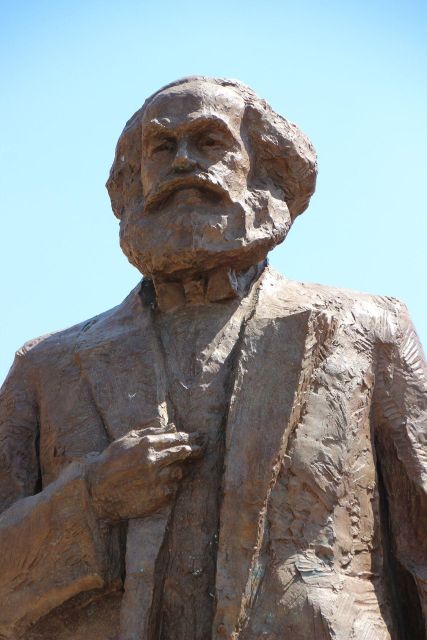
Then there is Karl Marx. The tour explicitly includes the birthplace connection. That matters because Marx is one of those global names people drop into conversations without understanding the local setting. A good guide keeps it grounded in Trier, so you leave with a sense of why the city produces such influence.
One small detail you should keep in mind:
A couple of reviews praised guide performance for making the tour feel personal. One review specifically called out Susanne for being easy to talk with and making the experience feel more human. If your group gets a guide with that style, you will likely enjoy the contrast between Roman monuments and Marx-era context even more.
Underground Trier: the subterranean labyrinth and why it changes everything
The most memorable swing on this tour is the part under your feet: the subterranean labyrinth. Even if you are not a hard-core history person, underground history has a built-in effect. It feels real. It feels hidden in the literal sense.
What you should expect:
The guide helps you unravel the hidden history connected to these underground passages. Instead of just showing you an entrance, the explanation ties the underground spaces to the city’s earlier life.
Why it is worth paying attention to:
Street level monuments can look fixed and complete. Underground spaces tell you the opposite. Cities adapt. People add, remove, and repurpose. Learning that under-ground layer makes the whole walking experience click. You start to see Trier as a place that keeps reworking itself over centuries.
Comfort tip:
Since this part is underground, bring the same mindset you would for a short indoor visit. Dress in layers. Even if Trier is mild above ground, underground areas can feel cooler.
Half-timbered lanes and Moselle vineyards: where the UNESCO story turns human
After the Roman and cathedral stops, the tour turns more atmospheric. You will walk past charming half-timbered houses and see how the Moselle vineyards line the area.
This is not filler. It is how you understand Trier as a living town. UNESCO status can sometimes make cities feel frozen in time. The vineyard view and street-level charm reset the mood so Trier feels like it has a current rhythm, not only an ancient one.
I also like how this section helps you with photos, but in a useful way. You get a sense of direction and neighborhood character, not just one pretty corner.
If you are traveling in a season when the vineyards look especially strong, you will likely enjoy this part even more. But even in off-season, you still get the “why Trier feels like Trier” effect.
Private guide format: how it improves value and makes the tour easier
This is a private group tour, with a local professional guide who stays with your group only. That has real benefits.
First, you get pacing that matches your group. In a two-hour format, that matters. You do not want a guide who accelerates to finish on time while you are still trying to understand the first monument.
Second, the private setup gives you a practical chance at customization on the spot. If your group is more interested in Marx than Roman architecture, or you want more explanation around the cathedral, you can ask. The tour is designed to allow some flexibility with your guide.
You also get language support in English or German. If you care about accuracy, picking a language your group is comfortable with can make the difference between “nice tour” and “I actually learned something.”
One more value point:
A review highlighted that the length and activity were perfect for that group. That lines up with how private format usually works well. The guide can keep you moving without turning the experience into a rushed checklist.
Price and value: $280 per group for up to 15 people
The price is $280 per group, up to 15 people, and the tour lasts 2 hours. The value depends on your group size.
- If it is just two people, you are paying for a true private guide, so the per-person cost will feel high.
- If you have a small group of friends or family who share the cost, it becomes easier to justify.
- If you can fill closer to the upper limit, the cost per person drops a lot, and this becomes one of the best ways to get expert context quickly.
There is also an honesty angle. One negative review pointed out that Trier offers daily walking tours from the city center for around 15 euros per person. That is a reminder that cheaper group options exist if budget is your top priority. This tour works best when you want a guide dedicated to your group and a tighter, more guided path through major highlights.
So here is how I’d decide:
If you want the city’s Roman layers plus Marx and underground history explained in a single, efficient walk, private time is usually worth it. If you are happy to skim and self-navigate, you can likely do it for less.
Weather, pace, and asking questions: what to plan for
Trier is a walking city, so weather always matters. One review mentioned that even with sustained rain, the guide presented the city with good mood and know-how. That is a good sign. It suggests the guide can keep the experience moving even when conditions are not ideal.
That said, another review complained about speed and unclear speaking, and even said the guide could not answer some questions. This is a real consideration for anyone who likes deeper discussion.
How you can protect your experience:
Come with a few targeted questions. For example, ask about the name origin of Porta Nigra, what makes the Konstantin-Basilika so significant, or how the underground spaces connect to everyday city life in earlier times. If you show interest, a strong guide will often meet you there.
Also, for a two-hour tour, do not expect every answer to be long. You are buying a guided overview with expert framing, not a lecture that runs past your energy level.
Should you book this Trier private walking tour?
If you want a guided walk that hits the essentials of Trier, this is a strong choice. You get Porta Nigra, the Konstantin-Basilika, Trier Cathedral, House of the Three Magi, Karl Marx context, and the subterranean labyrinth, plus the streets and vineyards that keep it from feeling like an archaeology raid.
Book it if:
- You like UNESCO cities but want help understanding what you are seeing.
- You prefer private guide time with a small group.
- You want a one-and-done two-hour route that still feels meaningful.
Skip or reconsider if:
- Your group is on a tight budget and you are fine with independent walking.
- You need a slow pace and lots of open discussion. In a short tour, you may not get long back-and-forth answers.
FAQ
Where does the tour start?
Meet in front of the Black Gate (Porta-Nigra-Platz), 54290 Trier, Germany.
How long is the Trier private guided walking tour?
The tour runs for 2 hours.
Is this tour private?
Yes. It is a private group tour with a local professional guide who will be with your group only.
What languages are available?
The live guide is available in English and German.
Are entrance fees included?
Entrance fees are not included.
Can I book flexibly?
You can reserve now and pay later, and there is free cancellation up to 24 hours in advance for a full refund.
Newest Trier reviews on the site
- Luxembourg to Trier: Tour of Germany’s Oldest City.★ 4.6 · 9 reviews
- Adventure tour: The Devil in Trier★ 4.8 · 42 reviews
- Trier: City Walking Tour★ 4.2 · 31 reviews
- Trier: Discovery Tour – Germany’s Oldest Wine Cellar★ 4.7 · 218 reviews
- Trier: Solve the Mystery of the Merchant’s Gold!★ 4.2 · 61 reviews
- Trier: Guided Old Town Highlights and History Walking Tour★ 4.7 · 687 reviews
- Trier: Guided City Walk with Wine Tasting★ 4.8 · 979 reviews
Walking Tours, compared.

Berlin’s Best: 2 Hour Walking Tour Third Reich and the Cold War
Read our review →
Third Reich Berlin: Hitler and WWII Walking Tour
Read our review →Browse the lists this tour appears in