
Reviewed · CITY TOURS
Trier: City Walking Tour
Trier packs centuries into a short walk. This 1.5-hour center tour strings together Roman, medieval, and baroque Trier sights around four UNESCO buildings, explained by official Trier Guides.
I like how the route starts at the city’s big Roman landmark, Porta Nigra, then moves through the Middle Ages to later splendor at the Electoral Palace area. I also really enjoy the way the guide tells the human side of power, including the bishop-versus-citizens conflict over imperial immediacy, with stories that get delightfully specific (yes, knights, monkeys, and church towers show up in the telling).
One possible drawback: the pace is tight. If you love long photo stops or want to linger inside churches, you’ll need extra free time after the tour.
In This Review
- Key tour takeaways
- Entering Trier with a plan that actually works
- Where you meet, what the timing feels like, and how to prepare
- Porta Nigra: the Roman gate that sets Trier’s tone
- Dreikönigenhaus, Judengasse, and the Middle Ages power struggle at street level
- Hauptmarkt and Trier’s cathedral zone: where civic and sacred meaning meet
- Church of Our Lady and the basilica context: religious Trier beyond the cathedral
- Aula Palatina and the Electoral Palace drop-off: baroque power after Roman beginnings
- Price and time value: is $18 worth 1.5 hours?
- What makes the guide experience feel strong
- Pace, practicalities, and how to get the most out of it
- Who should book this Trier UNESCO walking tour
- Should you book this Trier walking tour?
Key tour takeaways
- Four UNESCO sites without the guesswork in one compact walk
- Porta Nigra to the Electoral Palace area gives you a clean story arc
- Strong guide performance with clear details you can remember
- English and German live guiding for comfortable learning
- Wheelchair accessible with a straightforward meeting point
Entering Trier with a plan that actually works
Trier is often described as Germany’s oldest city, and this walking tour is a smart way to see why. You get a curated highlights loop that stays in the center, so you are not burning time figuring out transit or stitching together separate tickets.
The tour is officially run by Trier Tourismus und Marketing GmbH, and it meets right in front of the Tourist Information. That matters more than it sounds, because showing up near a fixed, obvious landmark makes the first 10 minutes feel easy instead of stressful.
It lasts about 1.5 hours. So you get real context on multiple eras, but the experience still fits a tight sightseeing day.
More Walking Tours in Trier
- Trier: Guided City Walk with Wine Tasting
★ 4.8 · 979 reviews - Trier: Guided Old Town Highlights and History Walking Tour
★ 4.7 · 687 reviews - Trier: Private Guided Walking Tour
★ 4.2 · 32 reviews
Where you meet, what the timing feels like, and how to prepare
You’ll start at Trier Tourismus und Marketing GmbH, directly in front of the Tourist Information. Plan to arrive a few minutes early so you can settle in before the guide starts the walk.
You can pick English or German with the live guide. If you are deciding based on comfort level, I’d choose the language you speak best, even if you have some basics in the other one, because the tour is built on spoken storytelling.
The route also ends with drop-offs around the Kurfürstliches Palais and the Palastgarten. That is useful because it lets you continue your day in the same area rather than backtracking.
Porta Nigra: the Roman gate that sets Trier’s tone
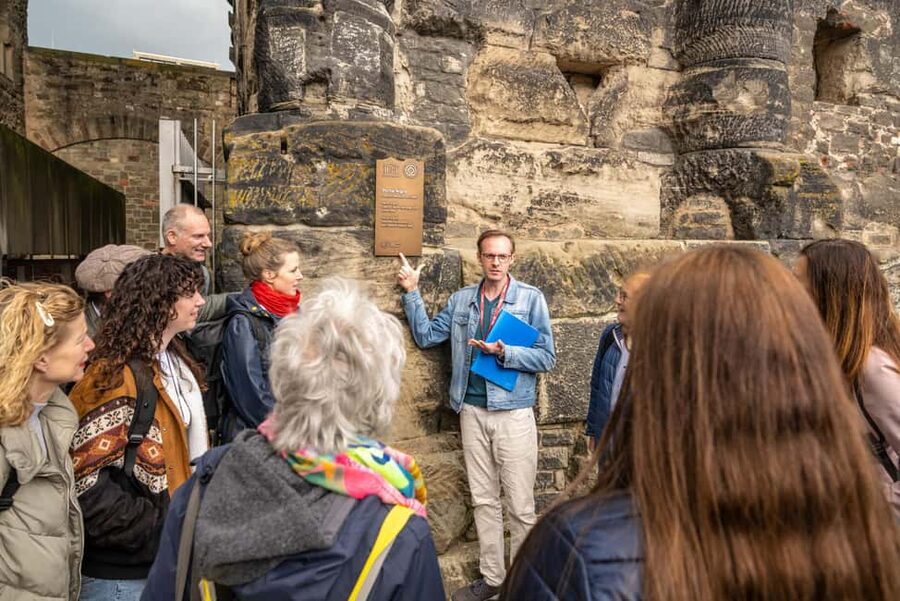
The tour kicks off at Porta Nigra, Trier’s most famous Roman structure. Think of it as the city’s opening chapter, because everything else you see later makes more sense once you’ve stood by the ancient gate.
A good guide keeps this from turning into a simple photo stop. Here, Porta Nigra is used as a launch point into Roman life and why Trier mattered in the Roman world. Even if you are not a hardcore Roman-empire person, this is the kind of start that gives you a mental map fast.
The best part for you is that you get context early. When the tour later shifts into medieval power games and religious significance, you’ll feel the continuity instead of jumping between unrelated attractions.
Dreikönigenhaus, Judengasse, and the Middle Ages power struggle at street level
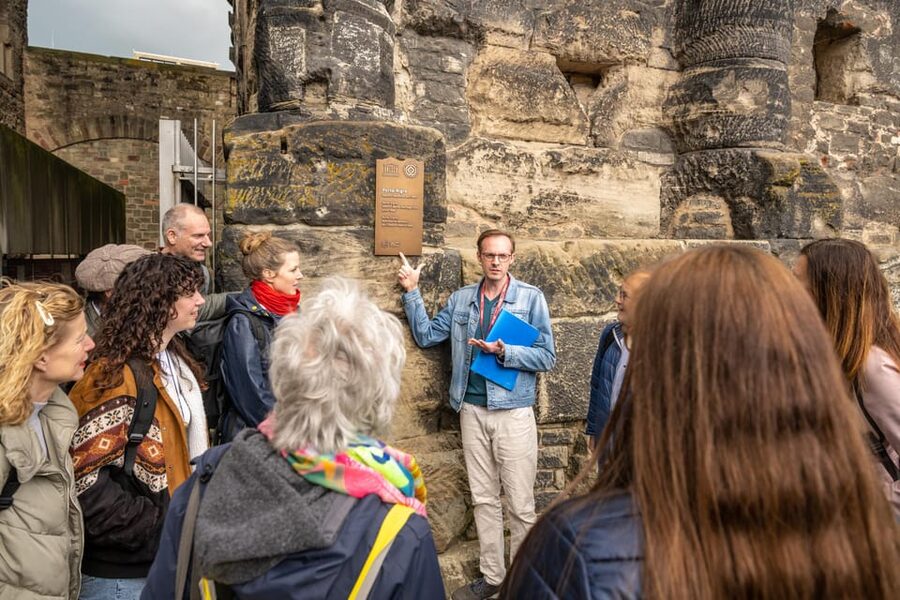
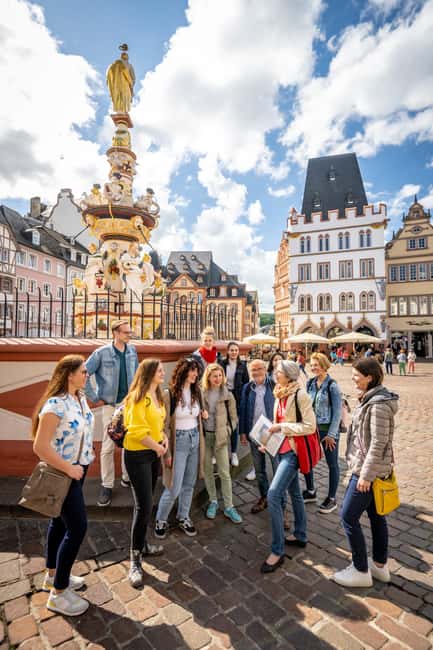
After Porta Nigra, the walk moves into the heart of the city’s older streets and landmark corners. You’ll pass places tied to the Middle Ages, including the Dreikönigenhaus, the Judengasse, and the Hauptmarkt.
This is where I like the guide’s approach most. The tour does not just list monuments. It explains how people lived and how they tried to protect themselves. The description points out that fortified citizens used architectural tricks to safeguard what mattered to them, and you can understand the logic even if you do not memorize dates.
Then you get a story that feels more human than academic. The tour talks about St Peter as the city’s patron, and it highlights conflict between the bishop and self-confident citizens for imperial immediacy. You also hear a playful version of that clash, with mentions of knights, monkeys, and church towers used to bring the tension to life.
Is that historically precise in every detail? Not everything in storytelling is meant as a strict timeline. But the overall value is strong: you learn what the conflict was about and why buildings and institutions were involved.
Same city, a different way to spend the afternoon:
- Trier: Discovery Tour – Germany’s Oldest Wine Cellar
★ 4.7 · 218 reviews - Trier: Solve the Mystery of the Merchant’s Gold!
★ 4.2 · 61 reviews - Adventure tour: The Devil in Trier
★ 4.8 · 42 reviews - Luxembourg to Trier: Tour of Germany’s Oldest City.
★ 4.6 · 9 reviews
Hauptmarkt and Trier’s cathedral zone: where civic and sacred meaning meet
The walk brings you through the Hauptmarkt area, which acts like a center-of-gravity stop. Market squares in old European cities usually did more than trade goods. They were places where power, announcements, and everyday life met.
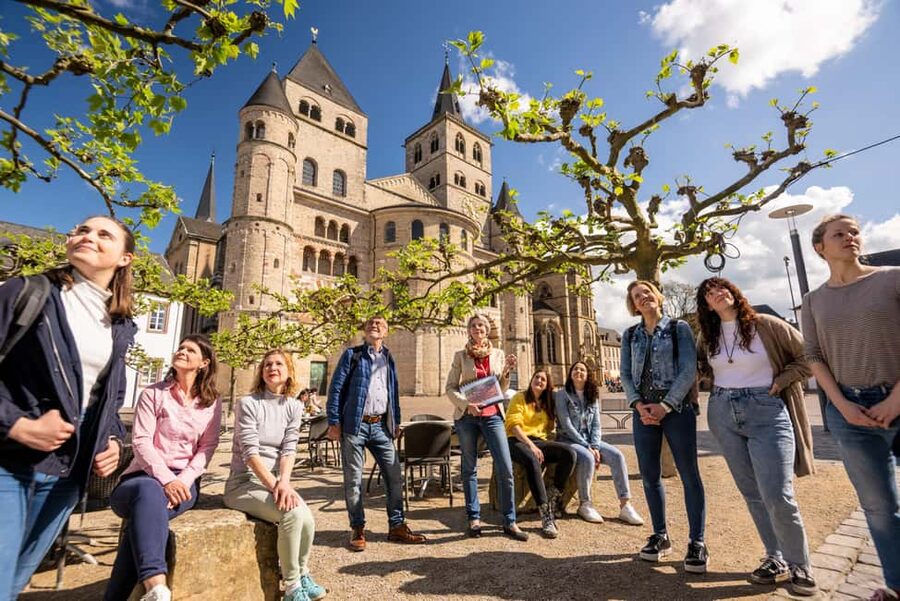
From there, the tour reaches Trier Cathedral, one of the big highlights. This is not a stop you want to speed through, because the guide’s explanations help you notice relationships between the space and the ideas behind it.
You’ll also spend time around the cathedral courtyard area, which is important for how you experience the cathedral precinct. Courtyards give you breathing room to look at the setting rather than only staring at a single facade.
If you are the type who likes to learn while you walk, this section is a strong payoff. It turns the cathedral from a standalone photo into part of a larger civic and religious system.
Church of Our Lady and the basilica context: religious Trier beyond the cathedral
The tour also includes passage by the Church of Our Lady and the basilica element tied to Trier’s UNESCO core. This matters because a “cathedral-only” mindset misses what made Trier’s religious life complicated and influential.
You’ll be guided through the area with the explanation that these landmarks are part of the UNESCO World Heritage grouping for the Roman monuments, cathedral, and Church of Our Lady in Trier. That framing helps you understand why these buildings are protected as more than individual sights.
A practical tip for this part: if you want photos, use them as bookmarks. Look up first, then take the picture, then move on. The area rewards attention to structure and placement, not just frontal views.
Aula Palatina and the Electoral Palace drop-off: baroque power after Roman beginnings
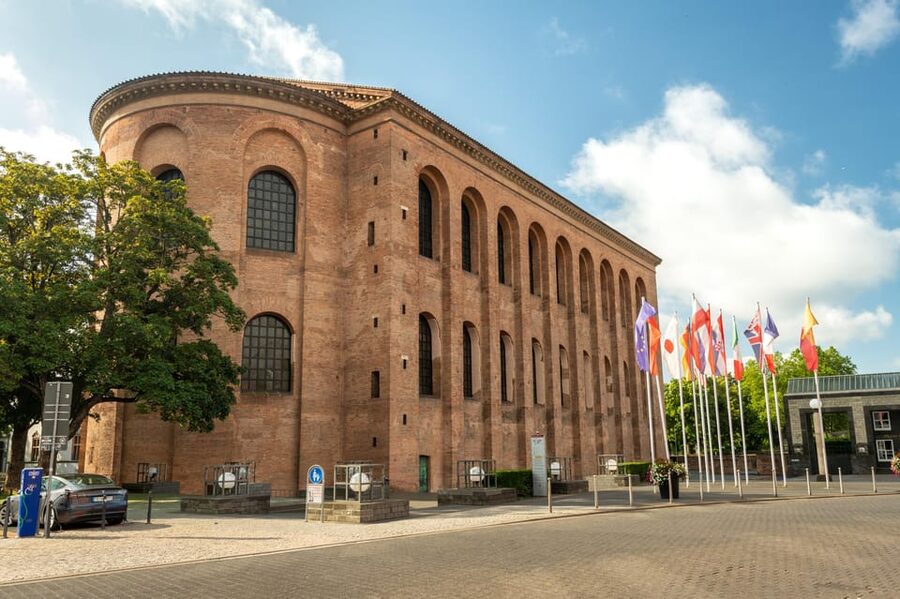
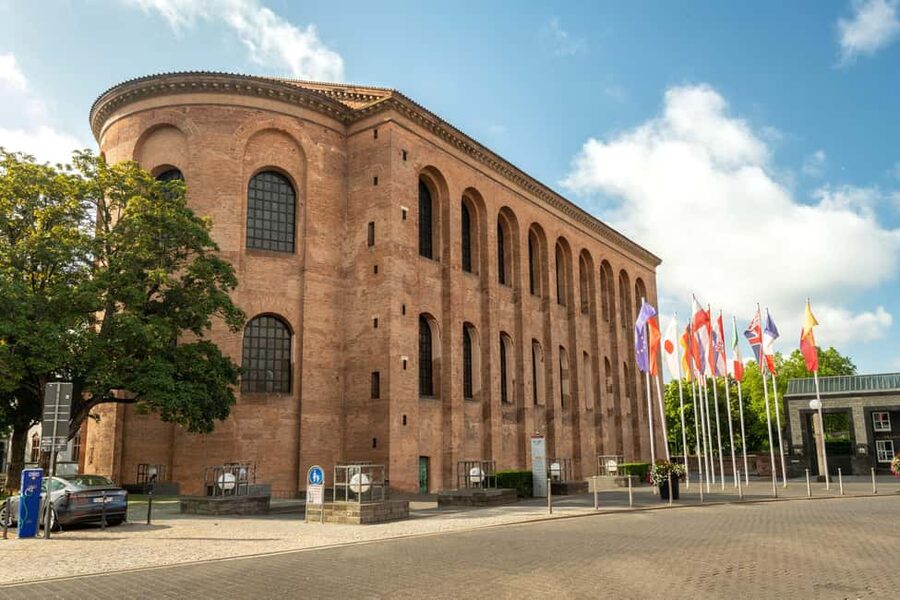
The itinerary heads toward the Aula Palatina, Trier’s big later-era UNESCO stop tied to the Electoral Palace complex. If you want the “wow” factor after the Roman gate and medieval street stories, this section delivers.
You’ll also hear about the baroque splendour of modern times, which is how the tour description frames the Electoral Palace area. Even if you do not instantly recognize baroque design terms, the guide helps you see what changes and why the city’s look evolved over time.
The Aula Palatina is a key reason the tour works. It bridges the centuries so you do not feel like you’re walking through disconnected time periods. You get a sense of continuity from Roman Trier to later power, church authority, and architectural expression.
At the end, you’ll be dropped off around the Kurfürstliches Palais and the Palastgarten. That’s a helpful wrap-up, because you can keep exploring the palace gardens area on your own without feeling like you are stranded.
Price and time value: is $18 worth 1.5 hours?
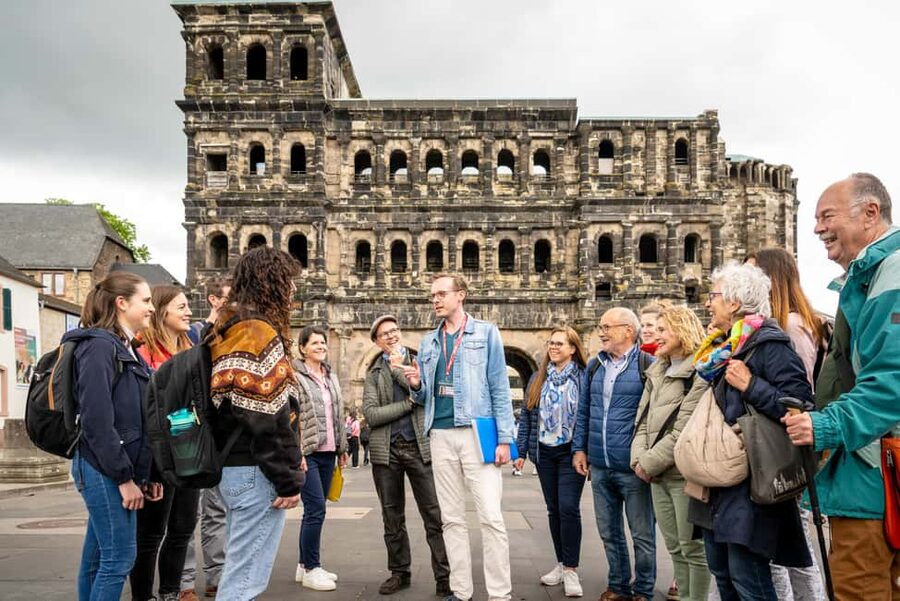
At about $18 per person for 1.5 hours, this tour fits the value sweet spot for Trier. You are paying for a live guide, plus visits to four UNESCO monuments. That combination is what makes the price feel fair.
If you tried to do this as separate “self-guided stops,” you would still need a lot of context to understand why each building matters. Here, the guide strings those meanings together while you walk, which saves you energy and decision-making.
The tour also runs in English and German. That is a big deal for value because it makes the learning element usable, not stuck behind a language barrier.
One more value point: the route stays compact. That matters when you only have a short time in town. You get a lot of Trier identity in one go.
What makes the guide experience feel strong
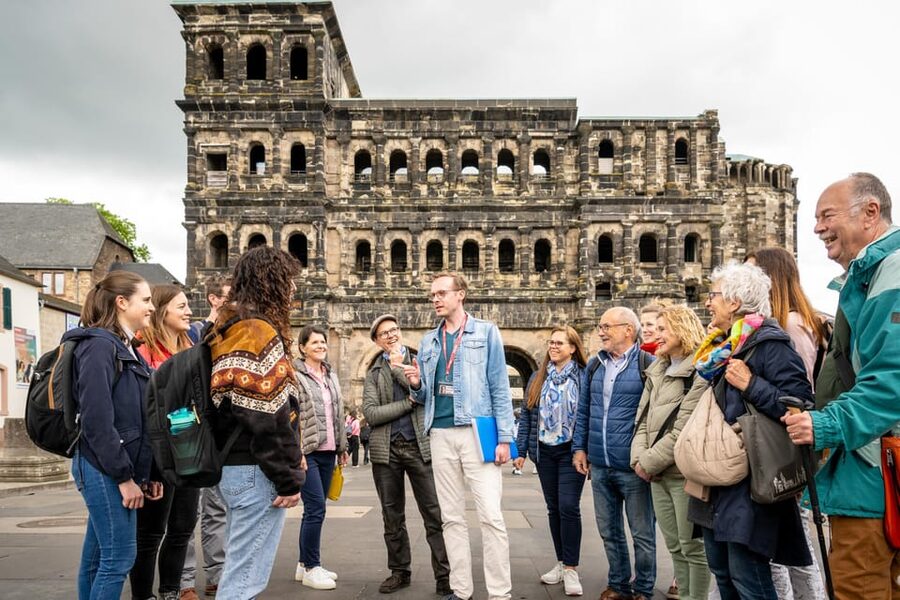
The most praised aspect you’ll likely notice in the overall experience is the guide quality. People tend to highlight friendliness, a clear and engaging style, and lots of interesting information that is easy to remember.
You can also feel the difference between a guide who reads facts and a guide who knows how to deliver them. This tour’s storytelling uses specific places like Dreikönigenhaus and Judengasse, then connects them to broader themes like patron saints, civic conflict, and changing power.
If you like learning in motion, this is a format that works. You will not sit through long lectures. You get the meaning while you are standing where the history happened.
Pace, practicalities, and how to get the most out of it
Because it lasts only 1.5 hours, you should treat it like a highlights reel with real interpretation. That means you get great orientation, then you follow up later on your own if you want deeper stops.
Wear comfortable walking shoes. Trier’s center is historic, and you want your feet to feel good so you can look up at details instead of watching the ground the whole time.
Also, keep your phone handy for quick reference photos, but leave your attention for the guide’s explanation. The tour works best when you listen, then look, then move.
The good news is that it’s listed as wheelchair accessible, and the meeting point is straightforward. So you can focus on enjoying the walk rather than stressing about how to start.
Who should book this Trier UNESCO walking tour
This tour is ideal if you want a first-time, center-focused Trier experience. It is especially good for history lovers who like stories, but it also works for casual sightseers who want their time to feel well spent.
I’d also recommend it if you have limited time. In a short visit, seeing Porta Nigra, Trier Cathedral, the Church of Our Lady area, and the Aula Palatina in one guided loop helps you understand Trier’s character faster than doing separate stops.
And if you travel with mixed interests, this tour is a decent compromise. Roman architecture fans get a major Roman anchor. People who like religious art get the cathedral zone and Church of Our Lady context. Plus, anyone interested in how cities change over time gets the Roman to baroque arc.
Should you book this Trier walking tour?
Yes, if your goal is to understand Trier quickly and walk away with a clear mental picture. The route hits the big UNESCO names, and the guide approach is what turns those names into something you actually grasp.
Skip it or plan differently if you need lots of free time to linger at each monument. The tour is efficient, so you’ll want to add your own extra sightseeing stops afterward if you crave slow, inside-the-building time.
Overall, for $18 and four UNESCO monuments in about 1.5 hours, this is one of the easiest ways to see Trier’s key eras in a single, well-organized walk.
Newest Trier reviews on the site
- Luxembourg to Trier: Tour of Germany’s Oldest City.★ 4.6 · 9 reviews
- Adventure tour: The Devil in Trier★ 4.8 · 42 reviews
- Trier: Private Guided Walking Tour★ 4.2 · 32 reviews
- Trier: Discovery Tour – Germany’s Oldest Wine Cellar★ 4.7 · 218 reviews
- Trier: Solve the Mystery of the Merchant’s Gold!★ 4.2 · 61 reviews
- Trier: Guided Old Town Highlights and History Walking Tour★ 4.7 · 687 reviews
- Trier: Guided City Walk with Wine Tasting★ 4.8 · 979 reviews
City Tours, compared.
1-Hour City Tour by Boat with Guaranteed Seating
Read our review →
City History Canal Sightseeing Tour on a Motorboat
Read our review →
Browse the lists this tour appears in