Reviewed · WALKING TOURS
Schwerin: Private Guided Walking Tour
Schwerin feels like a fairytale with receipts. This private guided walking tour is a tight, 90-minute hit of Schwerin’s old streets and storylines, capped by the romantic Schwerin Palace sitting on an island in Lake Schwerin.
I particularly like the way the guide connects dates and buildings, from the city’s early medieval roots to the big European shocks that shaped it. The second thing I love is that it is truly private, with a local professional guide who stays with your group only and can adjust to what you care about.
One consideration: the meeting point can be confusing at the castle entrance, since there are different entry points and some may not be open depending on the day. Also, entrance fees are not included, so if you want to go inside, plan for that extra cost.
In This Review
- Key highlights at a glance
- Schwerin in 90 Minutes: A Short Walk With Long Reach
- Meeting Point by Schwerin Castle: Where to Stand and What to Watch
- Schwerin Castle First: The Tone-Setter for the Whole Town
- Schwerin Palace on an Island in Lake Schwerin: The Photo Moment With Meaning
- From Early Medieval Roots to City Status in 1160
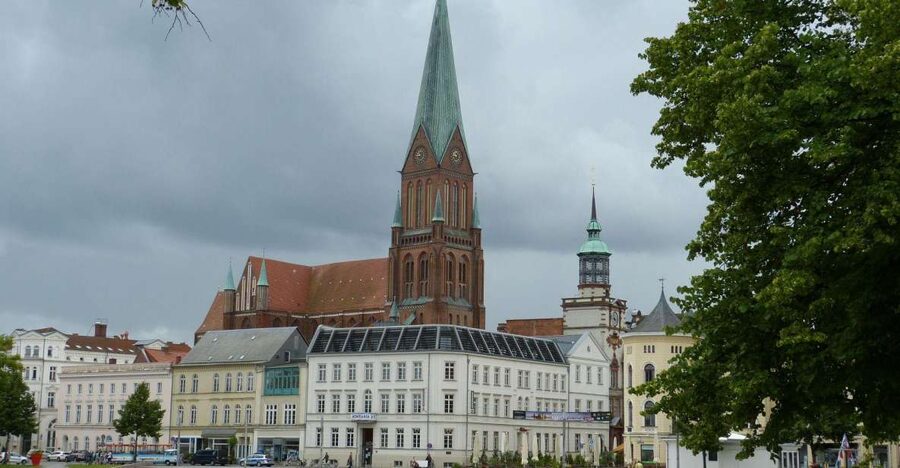
- Schwerin Cathedral: Medieval Pilgrimage and a Legend About Christ’s Blood
- Protestant Revolution, Thirty Years’ War: When History Gets Heavy
- Napoleon and German Unification: Why Schwerin’s Story Keeps Moving
- World War II Damage You Can Spot, and Why the Old Town Still Works
- Your Guide Makes or Breaks It: Jürgen and Theresa as Examples
- Price and Value: When $280 Per Group Makes Sense
- Who Should Book This Private Schwerin Walk
- Should You Book This Schwerin Private Guided Walking Tour?
- FAQ
- How long is the Schwerin private guided walking tour?
- How much does the tour cost?
- Is this a private tour or a shared tour?
- What languages is the guide available in?
- What is included in the tour price?
- Are entrance fees included?
- Where do we meet the guide?
- Can I cancel for a refund?
- Is reserve now, pay later available?
- What should I plan for if I want more than a walk?
Key highlights at a glance
- One local guide for your group only, so questions and detours work without slowing anyone down
- Schwerin Palace on Lake Schwerin, the famous romantic silhouette that earned a nickname often compared to Neuschwanstein
- Old-town focus, with Schwerin Cathedral at the historic center of the Middle Ages
- Big history explained simply, from the Protestant revolution and the Thirty Years’ War to Napoleon and German Unification
- A visit built for real time, 90 minutes that still cover the city’s main eras without turning into a museum marathon
Schwerin in 90 Minutes: A Short Walk With Long Reach
Schwerin is one of those northern German towns that feels calm, but never empty. It sits among seven lakes, and it is the smallest land capital in Germany. That geography matters here, because the lake views are not scenery filler. They are part of why the city built the kind of palace it built.
In just 90 minutes, you get the basics you would otherwise piece together on your own: where the city grew from, what defined its medieval importance, and why later European events left fingerprints in the streets. It is the right length for a stop on a day trip, or as the history layer before dinner.
The private format is a practical advantage. If you want more time on palace exteriors and photos, you can ask. If you prefer theology and medieval pilgrimages, you can steer the walk that way. With a small group, your guide can keep things moving without rushing.
More walking tours in Germany:
- Discover Berlin Half-Day Walking Tour
★ 5.0 · 9,624 reviews - Berlin: Third Reich and Cold War 2 Hour Walking Tour
★ 4.9 · 6,830 reviews - Munich: Third Reich & WWII Walking Tour
★ 4.6 · 6,181 reviews
Meeting Point by Schwerin Castle: Where to Stand and What to Watch
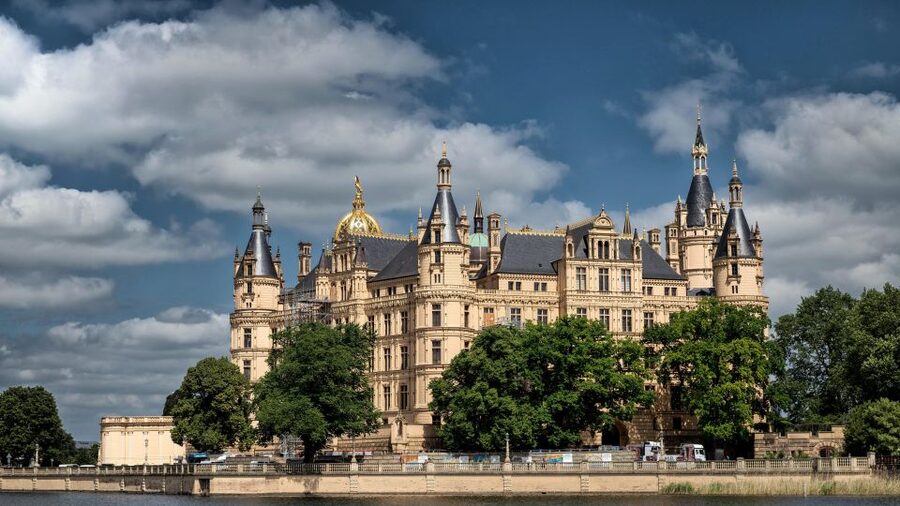
You meet in front of Schwerin Castle, Lennéstraße 1, 19053 Schwerin. Sounds simple. It can be, until you are standing there trying to decide which door or courtyard is the right one.
I suggest you arrive a few minutes early and take a quick look for signs that point toward the castle or the inner courtyard area. One common snag is that people get directed to an entrance that is not the one you actually need, especially on weekdays when some courtyard access may be limited. If that happens, you are not doing anything wrong. Just pause, ask, and get confirmation of the exact point where the guide expects your group to gather.
This is also a good time to mention your interests. If you plan a night walk later, you can tell your guide so they do not repeat the same themes.
Schwerin Castle First: The Tone-Setter for the Whole Town
Even when your feet are moving quickly, your eyes need a reference point. Starting at Schwerin Castle gives you that anchor.
From here, the tour frames Schwerin in layers. You are not just looking at pretty buildings. You are learning what the castle and palace symbolism meant for different eras, and why the city kept reinventing its identity. Schwerin’s story runs from early medieval settlement strength to later courtly romance, then into political and military upheaval.
If you are the type who likes to understand why a town looks the way it does, this opening works. The guide typically connects what you see right now to what the city was becoming back then. That makes the rest of the walk feel more organized, not random.
Schwerin Palace on an Island in Lake Schwerin: The Photo Moment With Meaning
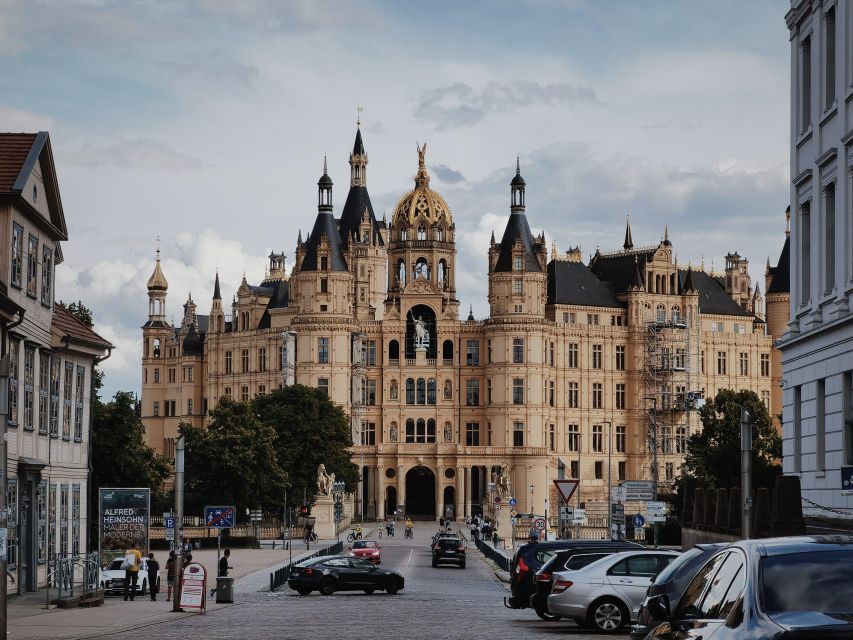
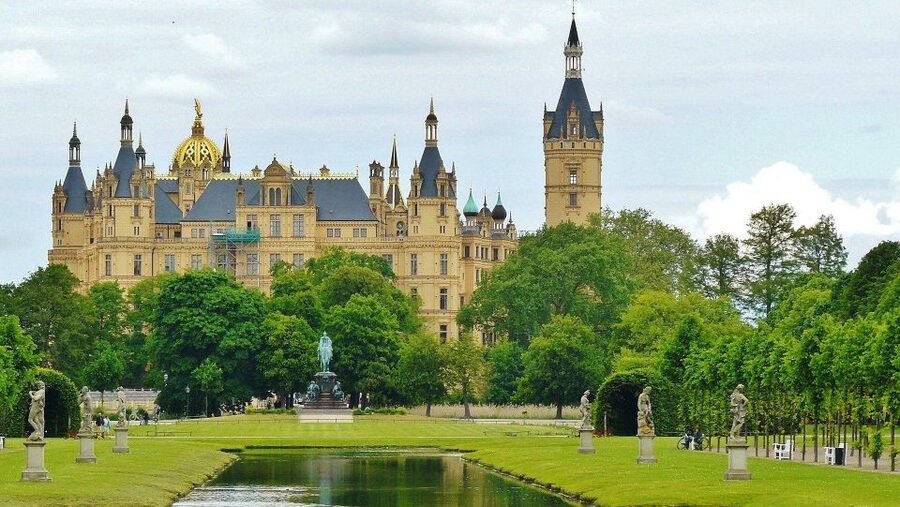
Schwerin Palace is the tour’s emotional centerpiece. It sits atop an island in Lake Schwerin, and it is often compared as the Neuschwanstein of the North. You do not need to love royal architecture to appreciate why people get drawn in. It is the kind of palace that looks like it belongs to a storybook, but you still get the historical explanation to keep it grounded.
On this tour, you learn to see the palace setting as part of the message. The island location is not accidental. It turns the palace into a landmark you approach visually as much as geographically. Lake reflections and long views make the palace feel bigger than its immediate surroundings.
One practical note: entrance fees are not included. If you want to step inside palace areas, plan on paying separately. If your goal is mainly the exterior views and the historical story behind them, you can still get a lot out of the time without adding ticket costs.
A few more Germany walks and trips to compare
- Berlin: Private Reichstag and Glass Dome Tour
★ 4.8 · 2,226 reviews - Berlin Private Complete History All Day Walking Tour
★ 5.0 · 474 reviews - Munich Private Tour with a Local – Highlights & Hidden Gems
★ 5.0 · 469 reviews - Private Walking Tour Berlin Third Reich Hitler and World War II
★ 5.0 · 360 reviews
From Early Medieval Roots to City Status in 1160
The tour does not treat Schwerin as a blur of old stones. It gives you a timeline you can remember.
You start with the city’s early existence, dating back to the 10th century, and you learn it has existed since at least 1018. Then you get the key civic milestone: Schwerin was recognized as a city in 1160. Those facts matter because they explain why the city’s center formed where it did, and why later eras built onto an already established core.
When a guide lays out the timeline this clearly, you walk differently. Instead of asking, What is this building? you start asking, What era are we in right now? That is how you get more out of a short tour.
This is also a good time to ask questions if you are trying to place Schwerin within broader German history. The guide’s explanations typically tie the local story into the larger European currents that changed who held power and what citizens valued.
Schwerin Cathedral: Medieval Pilgrimage and a Legend About Christ’s Blood
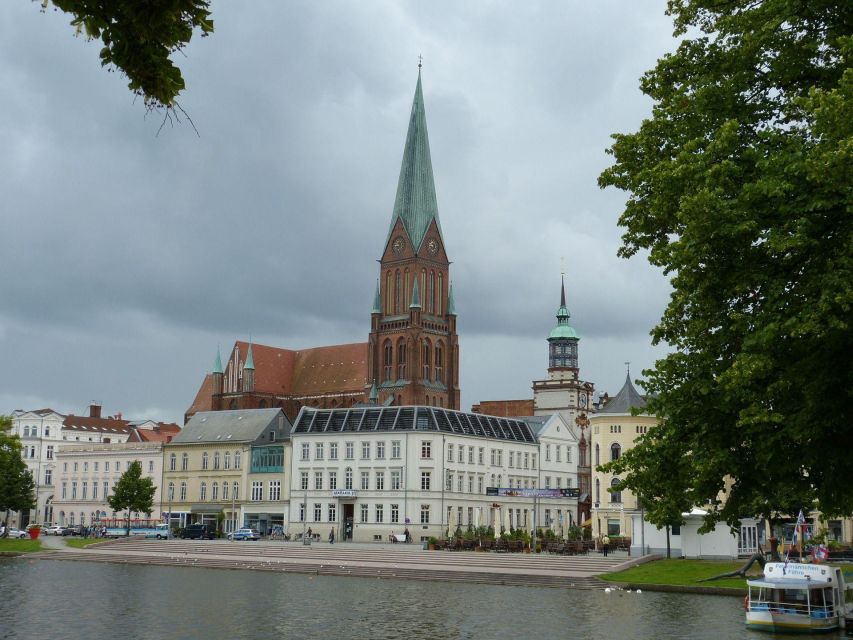
If you love medieval Europe, this stop is a must. In the Middle Ages, the center point of Schwerin was Schwerin Cathedral, and it was famous across Europe for a reputed relic: a drop of Christ’s blood.
Even if you do not get swept up in the religious tradition, you should appreciate the cultural impact. Relics pulled pilgrims, money, and attention into a city. That is why a cathedral like this can shape a whole urban layout. The guide’s job is to connect the legend to the practical result: Schwerin mattered to visitors, not just locals.
In a 90-minute walking tour, you will not suddenly become an expert in medieval theology. But you can absolutely come away with the sense of why the cathedral is the city’s historic gravity point. That helps every photo you take afterward make sense.
Protestant Revolution, Thirty Years’ War: When History Gets Heavy
Schwerin did not stay in the medieval lane. The tour brings you through major historical turning points, including the Protestant revolution and the Thirty Years’ War.
These eras often feel distant when you read about them, because the names float above real places. A local guide makes them concrete by explaining what kinds of changes those events triggered, and how they influenced civic life and power structures.
The best part of learning this on foot is pacing. You hear the political and religious shifts, then you walk past buildings that reflect the long aftermath. Your brain starts linking cause and effect instead of treating history like a list.
If you want to keep things lighter, you can still ask the guide to focus on how the city adapted. You are not forced into grim detail. But if you are a history person, this is where the tour earns its time.
Napoleon and German Unification: Why Schwerin’s Story Keeps Moving
The tour also covers Schwerin’s role during the Napoleonic era and the Unification of Germany period. These are big headline moments in European history, and the key value here is not memorizing dates. It is understanding that Schwerin was not living in a bubble.
You get the sense that the city’s story continued to evolve as borders, institutions, and identities shifted. That is the reason a walking tour beats a quick read: you physically move through the same spaces that carried those changes forward, even if the exact events happened decades apart.
For me, this section turns the walk from scenic to satisfying. It answers the question, Why should I care about a small city like Schwerin? Because the city’s story is tied into the same forces that reshaped much larger regions.
World War II Damage You Can Spot, and Why the Old Town Still Works
Schwerin’s old town is described as largely intact, with only minor damage during World War II. On the ground, that means the city still feels like a coherent place, not a patchwork of unrelated reconstructions.
That matters if you care about walking with your eyes open. You can actually read the city. Streets, corners, and the overall rhythm give you a stronger sense of continuity.
If you want to use the tour as a primer before exploring on your own, this is a great setup. You will notice patterns more easily when the city has not been completely erased.
Your Guide Makes or Breaks It: Jürgen and Theresa as Examples
The guiding is where this experience earns its top ratings. Two names come up often in English and German speaking experiences with this tour: Jürgen and Theresa.
Jürgen, for instance, is praised for making key information clear and interesting without turning the walk into a lecture. One standout detail is that he adjusted based on your plans. If you already have a night watchman tour on your schedule, he can avoid repeating topics and instead focus on different corners of the city. In one case, that included extra access and local stops such as a shop called Wildmetzger and an older structure referred to as the oldest house.
Theresa is described as super, with an approach that keeps the city feeling lively while still staying grounded in facts. Another theme across guide feedback is that the tour can be informative even when the group includes people who know the town already. That is a high bar, and it suggests the guide is not just reciting obvious talking points.
Bottom line: this tour is at its best when you talk with your guide. If you bring even one interest, like medieval relics, royal architecture, or major wars, you will usually get a smarter walk than a fixed script.
Price and Value: When $280 Per Group Makes Sense
The price is $280 per group, for groups of up to 15 people, with a 90-minute duration.
Here is the practical value math. If you fill the group to 15 people, you are effectively paying about $19 per person. If you are a smaller party, it costs more per head, but you still get something you cannot easily buy in a public tour format: one-on-one attention for your priorities, and the flexibility to customize as you go.
Is it cheap? No. Is it fair for a private guide for an hour and a half in a compact, high-interest city? Often yes. Especially if you are traveling with family, friends, or a mixed group where people have different interests. This tour structure reduces the usual tradeoff of doing a group tour where you all get the same stops.
Also remember: entrance fees are not included. That affects total value if you plan to go inside castles or museums.
Who Should Book This Private Schwerin Walk
I think this tour fits best if you want a guided story through the essentials, without spending a whole day in transit. It also works well if you:
- Like your history connected to real places, not just names on a sign
- Want a short tour that still covers big eras, medieval to Napoleonic to Unification
- Prefer a private pace, with room for questions and small changes
If you already know Schwerin well and only want museum interiors, you might feel the time is short. But if you want a structured overview with a guide who can tailor the focus, this is a strong use of time.
Should You Book This Schwerin Private Guided Walking Tour?
If you want the best of Schwerin Palace and Schwerin Cathedral, plus the historical “why” behind them, I would book it. The private group setup and the chance to customize on the spot are the main reasons it works, especially if your group includes people with different interests.
I would hesitate only if you are aiming for lots of ticketed interior time, because entrance fees are not included and the tour is still just 90 minutes. If your goal is to see and understand the city rather than collect stamps, this is a smart buy.
If you book, do one simple thing: tell the guide what you care about and what you are doing later that day. It tends to make the whole walk feel like it was planned for you, not poured into a template.
FAQ
How long is the Schwerin private guided walking tour?
The tour lasts 90 minutes.
How much does the tour cost?
It costs $280 per group, up to 15 people.
Is this a private tour or a shared tour?
It is a private group tour, meaning you have a local professional guide with your group only.
What languages is the guide available in?
The live tour guide is available in English and German.
What is included in the tour price?
The tour includes a local professional guide who stays with your group only, plus possible customizing on the spot with your local guide.
Are entrance fees included?
No. Entrance fees are not included.
Where do we meet the guide?
You meet in front of Schwerin Castle at Lennéstraße 1, 19053 Schwerin.
Can I cancel for a refund?
Yes. You can cancel up to 24 hours in advance for a full refund.
Is reserve now, pay later available?
Yes. You can reserve your spot and pay nothing today.
What should I plan for if I want more than a walk?
Since entrance fees are not included and the tour is 90 minutes, you should plan to pay any entry costs separately if you want to go inside buildings during your visit.
Newest Germany reviews on the site
- Munich – the essential walking tour★ 5.0 · 30 reviews
- Munich Beer and Bavarian Bites Small-Group Tour★ 5.0 · 167 reviews
- Munich to Prague – Private Transfer with 2 hours of Sightseeing★ 5.0 · 6 reviews
- 800 Years of History: A Munich GPS Audio Tour★ 4.5 · 12 reviews
- Munich in the 3rd Reich and WW2 private walking tour★ 5.0 · 148 reviews
- Munich Christmas Market Small Group Tour with Gingerbread Heart★ 4.0 · 9 reviews
- Munich Food Tour with Full Meal & Drinks by Do Eat Better★ 5.0 · 59 reviews
- Munich Scavenger Hunt and Sights Self-Guided Tour★ 4.5 · 8 reviews
Walking Tours, compared.

Berlin’s Best: 2 Hour Walking Tour Third Reich and the Cold War
Read our review →