
Reviewed · THIRD REICH & COLD WAR TOURS
Munich in the 3rd Reich and WW2 private walking tour
Munich gets dark fast. This private walking tour connects World War I fallout to key Nazi-era places, so the story makes sense street by street. I really like the private format, because my group gets a guide’s full attention and the pacing stays human, not rushed.
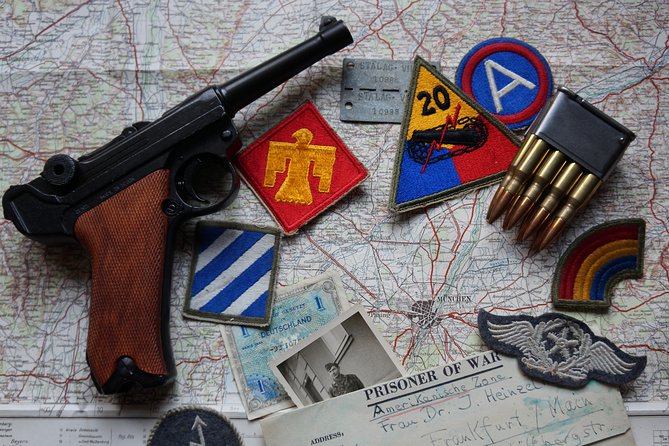
My other favorite part is the visual approach. Guides use photos, memorabilia, and even small performances to make locations and slogans click in your head. The main drawback to consider is simple: it is outdoors, all weather, with moderate walking for about 3.5 to 4.5 hours.
Private 1-group focus with your guide adjusting to your questions and time limits
A clear time line, from the Treaty of Versailles through 1945, not random stops
Photos and props that help you picture what you would otherwise miss on the street
A guided beer hall break is typical, with options if you prefer a cafe stop
All-weather planning, so wear real shoes and dress for cold rain or snow
In This Review
- A private 3.5 to 4.5 hour Munich history walk that stays personal
- Where you meet, where you finish, and how to plan your day
- The Versailles-to-1919 setup: why the tour starts before the Nazis
- Nazi origins in the streets: Beer Hall Putsch and the mechanics of power
- Kristallnacht and the roots of the Holocaust: heavy history, explained carefully
- The SS birthplace and Nazi headquarters: understanding institutions, not just villains
- Allied bombing, the war’s pressure on daily life, and the fall in 1945
- Beer hall break without the tourist trap: pacing, drinks, and options
- Walking comfort and winter reality: shoes matter more than you think
- What you really get for the $423.44 group price
- Which guides style fits you: Taff, Kevin, Joanne, and the “question friendly” approach
- Who should book this, and who should think twice
- Should you book the Munich 3rd Reich and WWII private walking tour?
- FAQ
- How long is the private walking tour in Munich?
- How much does the tour cost and how many people are in a group?
- What language is the tour offered in?
- Where do we meet and where does the tour end?
- Does the tour include a break, and are drinks provided?
- Is the tour mainly walking, and what should I wear?
- What is the cancellation policy?
A private 3.5 to 4.5 hour Munich history walk that stays personal
This is the kind of tour that works when you want more than facts. You want links. You want causes and consequences. You want to stand in the city and understand how ideas gained power in a very real place.
Because it is private, the guide can match your pace and your interest. If you want the rise of Hitler explained step by step, they can go there. If you care more about institutions, you can push the conversation that way. Guides have also been praised for being able to adapt routes when weather gets rough or when time is shorter than expected.
You are also paying for a simple thing that adds up fast in Europe: time with a real specialist. In a group tour, you often spend half the day trying to hear over other people. Here, you can ask follow-ups without feeling like you are slowing everyone down. That is especially useful for heavy topics, because good explanations need room for questions.
Where you meet, where you finish, and how to plan your day
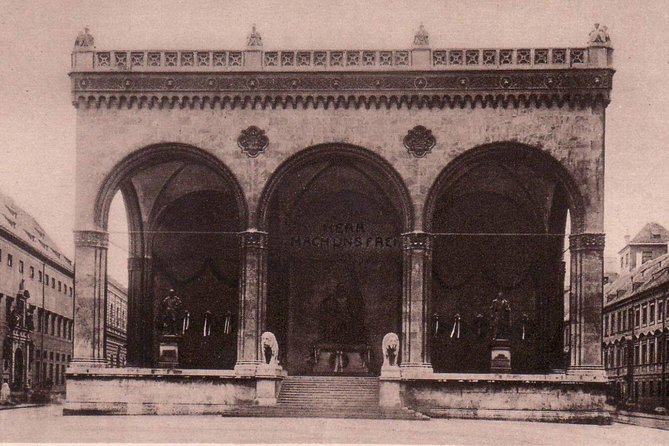
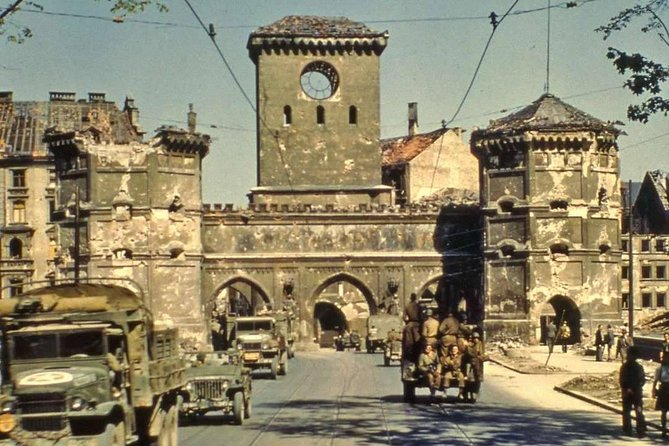
The tour starts at Isar Gate (Tal 50, 80331 München) and ends at Odeonsplatz (Odeonspl. 3, 80539 München). Odeonsplatz is a big plaza near the Residenz palace, and it is only a few minutes from Marienplatz. That end point is helpful because it drops you back into central Munich, where you can keep exploring right after.
There can also be pick up from Hauptbahnhof (main train station) or Marienplatz, so if you are using public transit, you should be able to fit this into your schedule without a major detour. For most people, the easiest plan is to build your day so you have something flexible after the tour. You will likely want time to process what you learned, and also grab a snack or coffee nearby.
It is a mobile ticket tour, and confirmation arrives within 48 hours of booking, based on availability. That means you can usually lock it in without guessing too hard about start time details.
More Third Reich & Cold War Tours in Munich
- Munich: Third Reich & WWII Walking Tour
★ 4.6 · 6,181 reviews - Third Reich Walking Tour Munich
★ 4.5 · 4,291 reviews - Munich: Birthplace of the Third Reich Guided Walking Tour
★ 4.6 · 771 reviews
The Versailles-to-1919 setup: why the tour starts before the Nazis
The tour does not pretend Nazism appeared out of nowhere. It starts with the Great War and the Treaty of Versailles. That matters because you get the background pressure, the humiliation, and the political chaos that followed. In other words, you learn the conditions that helped extremist parties gain support.
Munich was traumatized after World War I, and the city became fertile ground for political extremism during a period of instability. The Nazi Party eventually emerged under Adolf Hitler, and the guide will connect that shift to specific moments and symbols you can understand while walking.
If you only want WWII battle history, this may feel like a heavier lead-in. If you want the real story, it is a big plus. The guide’s job is to make sure you see the path from postwar anger to organized propaganda and power.
Nazi origins in the streets: Beer Hall Putsch and the mechanics of power
Once the tour moves into the Nazi era, it covers the origins of the Nazi Party, the infamous Beer Hall Putsch, and how the movement shaped itself to gain control. This is where the walking part pays off. Even if the city looks calm today, the guide points out the meaning of what you are standing near, so you can connect cause and effect.
The Beer Hall Putsch is one of those events that many people have heard of in name only. Here, it is treated as a turning point in how the Nazis learned to fight for attention, build loyalty, and turn street politics into national politics. You should expect context, plus explanations of why the event mattered after it failed.
A good guide will also show you how propaganda worked on ordinary people. That is not just a lecture. It is usually woven through what you see, and how the story links to later acts.
Kristallnacht and the roots of the Holocaust: heavy history, explained carefully
The tour includes Crystal Night (Kristallnacht) and the origins of the Holocaust. This is not light material. You should go in with the expectation that the guide will explain events in a serious, structured way.
What makes this part valuable is that it is not just dates. It is the idea that violence did not arrive as a surprise. It was prepared, encouraged, and normalized step by step. The guide’s pacing and your ability to ask questions can help you make sense of the scale and the intent.
If you are touring with teens, this is also where listening skills matter. A private guide can slow down, clarify terms, and check that your group is following. That is a big reason people often recommend this tour for families who want deeper context than a quick museum visit.
More Walking Tours in Munich
- Munich: Old Town & Viktualienmarkt City Walk in German
★ 4.7 · 2,304 reviews - Munich: Night Watchman Walking Tour
★ 4.7 · 2,092 reviews - Munich Ghosts and Spirits Evening Walking Tour
★ 5.0 · 1,900 reviews - Munich Old Town Walking Tour
★ 4.5 · 1,287 reviews
The SS birthplace and Nazi headquarters: understanding institutions, not just villains
The tour also covers the birthplace of the SS and the Nazi Party Headquarters, plus the signing of the Munich Pact. These stops are about institutions. People often focus on leaders, but systems are what carry out ideology.
Knowing what you are looking at changes how the story lands. The guide ties institutions to the movement’s growth, and then links that growth to what happened during the war years.
The Munich Pact section is especially useful because it shows how Europe tried to avoid conflict, and how political decisions fed into the next phase. Again, this is the kind of context that makes WWII feel like a sequence rather than a random tragedy.
Allied bombing, the war’s pressure on daily life, and the fall in 1945
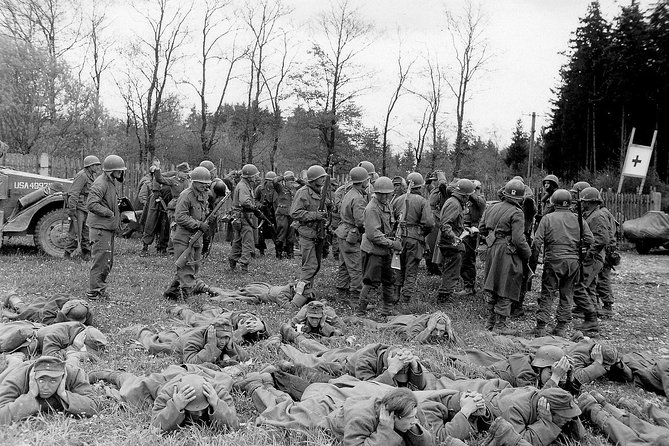
No WWII tour in Munich would be complete without the Allied bombing campaign and how the city fell to US forces in 1945. This part helps you understand that history was not just made in speeches or headquarters. It was made through decisions that shaped cities, civilians, and survival.
You are walking through a city that still carries layers. The guide helps you see how wartime pressure changed Munich, and how the final collapse fits into the broader war timeline.
This final stretch often lands differently for people. Earlier sections may feel like politics. Later sections feel like consequence.
Beer hall break without the tourist trap: pacing, drinks, and options
The tour generally stops for a break in a beer hall associated with this history. Refreshments are not included, and the point is usually to give you a rest without breaking the story.
If you would rather take a break in a cafe instead, tell the guide. That flexibility is worth noting. It means you can keep the tour feeling comfortable instead of forcing your group into one setting.
If you want a local beer or a warm drink, this is a good moment to plan for it. It is also a practical time to check your feet, reset your attention, and then move on while the narrative stays fresh.
Walking comfort and winter reality: shoes matter more than you think
This is a walking tour, with no car or bus used to visit sites. The walking is described as moderate, but it lasts the whole half day. You will also be outside in real weather.
The tour operates in all weather conditions, so dress appropriately. In winter, that means warm layers, a hat, and footwear with grip. One review praised how a guide stayed on time even during extremely challenging weather and adapted when needed. You should still plan for the real possibility that cold or wet conditions will slow most people down.
My practical tip: treat this as a walking day, not a sightseeing stroll. If your shoes are only okay for flat pavement, you may regret it.
What you really get for the $423.44 group price
The price is $423.44 per group, for up to 6 people. That is not cheap, but it can be good value when you look at what private tours actually cost in Munich.
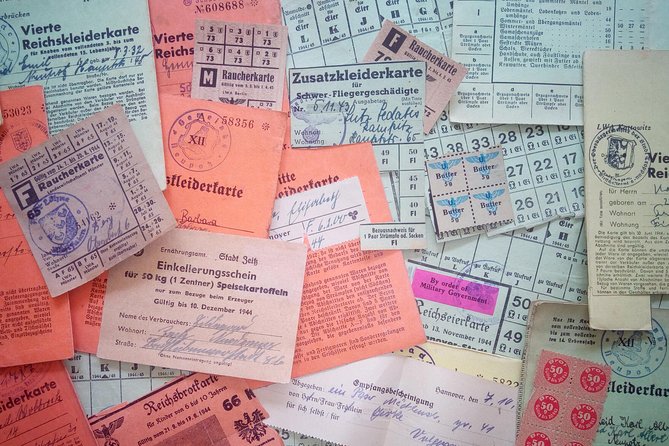
Here is the math that usually helps: if you have a group of 4 to 6, your per-person cost drops a lot, and you get something you cannot replicate with a standard audio guide. With private guiding, you can ask questions, request emphasis, and get clarifications when the history gets complex. Reviews repeatedly mention that guides were prepared with photos and memorabilia, and that they went beyond a standard script.
You are also paying for structure. The tour covers a specific set of topics, from Versailles to 1945, in a way that turns the city into a narrative. If you care about understanding how extremism grows, and you want context tied to places, this format is the right tool.
Which guides style fits you: Taff, Kevin, Joanne, and the “question friendly” approach
Different guides bring slightly different energy, but the common thread is that they treat the city like a classroom. Names that have shown up include Taff (also mentioned with the name Simon), Kevin, and Joanne.
A repeated highlight is that guides use pictures to support historical sites and stories. Another highlight is that guides are engaging, even with performances at parts of the story, which can help if your group learns better through action or memory hooks. People also mentioned that guides were funny at times, while still honest about the subject.
If your family includes kids or teens, this tour can work well because a private guide can keep attention from slipping. One review mentioned a guide being great with an 11-year-old son, and that the guide answered questions and kept the group interested.
Who should book this, and who should think twice
Book this if you are a history fan and you want the story of WWII Munich explained in order, with context that starts before the Nazis. This is also a good choice if you prefer learning on your feet, because the guide connects the narrative to real places.
You should also consider it if you like tours where you can steer. The tour is private, and guides have shown they can adapt based on curiosity and even on limited time.
Think twice if:
- You hate walking for 3.5 to 4.5 hours outdoors.
- You are looking for a light, casual afternoon. The tour covers Kristallnacht and the origins of the Holocaust, so expect serious content.
- You do not want political and institutional history, since the tour includes Nazi Party origins, SS beginnings, the Nazi Party Headquarters, and key political events.
Should you book the Munich 3rd Reich and WWII private walking tour?
If your goal is understanding, not just photos, I think this is a smart book. The biggest strength is the combination of private guidance and a clear historical chain from WWI fallout to 1945, with visual support that makes the material easier to grasp.
It is also a tour where your questions matter. If you show curiosity, the guide can likely go beyond the basics and keep the pacing right for your group.
So, should you book? If you can handle moderate walking and you are ready for heavy WWII history explained clearly, this is one of the best ways to spend a half day in Munich. If you want something lighter, or you need a strictly relaxing sightseeing plan, you might want a different kind of tour.
FAQ
How long is the private walking tour in Munich?
The tour runs about 3 hours 30 minutes to 4 hours 30 minutes (approx.).
How much does the tour cost and how many people are in a group?
The price is $423.44 per group, with a group size up to 6 people.
What language is the tour offered in?
The tour is offered in English.
Where do we meet and where does the tour end?
Start is at Isar Gate, Tal 50, 80331 München. End is at Odeonsplatz, Odeonspl. 3, 80539 München. Odeonsplatz is near the Residenz palace and a few minutes from Marienplatz.
Does the tour include a break, and are drinks provided?
The tour generally stops for a break in a beer hall associated with this history. Refreshments are not included. If you prefer a cafe break instead, tell your guide.
Is the tour mainly walking, and what should I wear?
Yes, it is a walking tour with moderate walking and no car or bus used. The tour runs in all weather conditions, so wear suitable footwear and dress for the conditions.
What is the cancellation policy?
You can cancel for free up to 24 hours in advance for a full refund. If you cancel less than 24 hours before the start time, the amount you paid will not be refunded.
More Wartime and Cold War History Walks in Munich
- Munich World War II Sites Including Dachau Concentration Camp
★ 4.5 · 570 reviews - Munich City Walking Tour, includes Third Reich & Viktualienmarkt
★ 5.0 · 458 reviews - Third Reich & WWII Walking Tour
★ 4.5 · 417 reviews - Munich 3-Hour Segway Tour: Nazi Munich & Royal Architecture
★ 4.9 · 194 reviews
Newest Munich reviews on the site
- Munich Beer and Bavarian Bites Small-Group Tour★ 5.0 · 167 reviews
- Munich to Prague – Private Transfer with 2 hours of Sightseeing★ 5.0 · 6 reviews
- Munich – the essential walking tour★ 5.0 · 30 reviews
- 800 Years of History: A Munich GPS Audio Tour★ 4.5 · 12 reviews
- Munich Food Tour with Full Meal & Drinks by Do Eat Better★ 5.0 · 59 reviews
- Munich Scavenger Hunt and Sights Self-Guided Tour★ 4.5 · 8 reviews
- Munich Christmas Market Small Group Tour with Gingerbread Heart★ 4.0 · 9 reviews
- Munich Residenz Palace, Museum and Treasury Private Tour★ 5.0 · 6 reviews
Third Reich & Cold War Tours, compared.

Berlin’s Best: 2 Hour Walking Tour Third Reich and the Cold War
Read our review →
Third Reich Berlin: Hitler and WWII Walking Tour
Read our review →
Skip-the-Line: Berlin Wall Museum at Checkpoint Charlie
Read our review →
Browse the lists this tour appears in