Reviewed · CONCENTRATION CAMP MEMORIAL TOURS
Munich WWII and Dachau Concentration Camp Private Tour with Licensed Guide
Nazi history, routed through real streets. This private 9.5 hour day pairs a licensed guide with chauffeur-driven comfort, so you spend less time figuring out transit and more time understanding what you are seeing.
Two big wins for me are the door-to-door pickup (you meet the van at your hotel or address) and the way the tour is guided all the way through Munich and then into Dachau, not just a quick glance.
The only drawback to flag is emotional weight. Dachau is intense, and the route through Nazi-era sites in Munich can feel heavy, even if you are comfortable with history.
In This Review
- Key Highlights If You Want the Best Version of This Day
- Price and Value: What This Private Tour Costs, and Why
- Pickup in Munich: The Day Starts Easy, Not Stressful
- The Munich Route: From Marienplatz to the Hofbräuhaus
- The White Rose, University Memory, and Schwabing’s Nazi Connections
- Nazi-Era Buildings You Can Still See: Altstadt-Lehel, Haus der Kunst, and More
- Hitler’s Munich, Eva Braun, and the Social Engineering Stops
- Party Headquarters, Power Centers, and the NS Documentation Center Area
- Dachau Concentration Camp Memorial Site: How Long to Plan and What to Expect
- How to Make This Day Work for You (Without Losing Your Mind)
- Who This Tour Fits Best
- Should You Book This Munich and Dachau Private Tour?
- FAQ
- How long is the tour?
- What time does pickup happen in Munich?
- Is this tour private?
- Are tickets or admissions included?
- What does the price include, and what does it not include?
- Is the Dachau memorial visit suitable for children?
Key Highlights If You Want the Best Version of This Day
- Chauffeur-driven private transport in a new VW or Mercedes minivan, with a small coach for larger groups
- Licensed guidance in both Munich and Dachau, so the story stays coherent, not stop-and-go guessing
- A structured Munich loop that hits the city center, key party locations, and places tied to Hitler and the White Rose
- Time built into Dachau for a realistic visit length of about 1.5 to 2.5 hours
- Practical comfort details like mineral water included and a reminder that some paths are rough pebbles at Dachau
- A guide name you can spot in feedback, Max, noted for helping people see everything they came for
Price and Value: What This Private Tour Costs, and Why
At $804.18 per person for a 9 hours 30 minutes day, this is not a budget option. It is priced like a true private experience because you get the essentials that can be painful to DIY: a licensed guide who can connect places across Munich, plus door-to-door pickup in a new VW or Mercedes with a chauffeur.
What you are paying for is also time discipline. The day has many stops, but it is designed so you are not stuck waiting for trains, hunting for addresses, or trying to match your own notes to street locations while your brain is already overloaded with history. Most stops are marked as free admission, which helps control costs once you are on the ground. Lunch is the one common extra you will have to handle yourself.
If you are traveling as a pair or a small group, the private transport matters even more. In a packed group tour, you can end up hearing only half the story. Here, the format is private: your group is the only one on the minivan or coach.
More Concentration Camp Memorial Tours in Munich
- Dachau Concentration Camp Memorial Site Tour from Munich by Train
★ 4.5 · 5,637 reviews - From Munich: Dachau Memorial Site Day Tour
★ 4.8 · 2,723 reviews - From Munich: Dachau Memorial Site Half-Day Trip
★ 4.7 · 2,526 reviews
Pickup in Munich: The Day Starts Easy, Not Stressful
Pickup is at 8:00 a.m., 9:00 a.m., or 9:30 a.m. from your hotel or address in Munich. The operator also says you can request another pickup time, and you can even arrange pickup outside Munich, like MUC airport, for possible additional costs.
That sounds like logistics, but it affects your whole day. When your morning starts with a chauffeur and a vehicle that is already waiting, you can arrive at Marienplatz without wasting energy. And since the route includes the Munich center plus wider outskirts (including Dachau later), you will feel the benefit of centralized transportation.
The Munich Route: From Marienplatz to the Hofbräuhaus
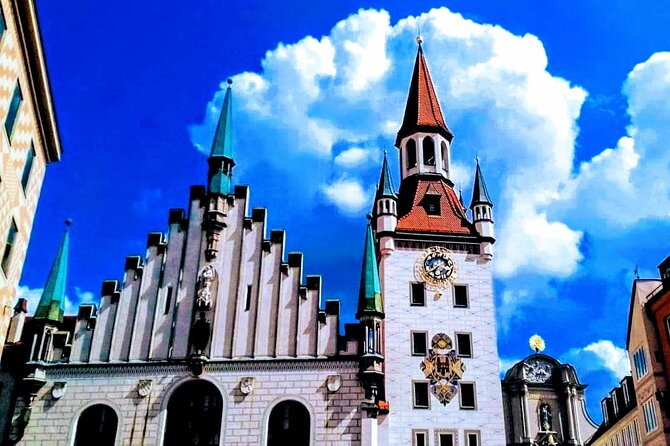
This tour opens at Marienplatz, Munich’s long-time civic core. Your guide drives you in, then you get about an hour of old town context. Marienplatz has shifted names over time, including Schrannenplatz until 1852, and the guide uses that perspective to show how public squares were adapted to Nazi messaging. Even the neo-Gothic town hall gets attention, including the detail that swastika flags were added when traffic increased, and an extra-wide passage was installed.
Next, you move into the visual language of the era through church stops. Frauenkirche is a late Gothic anchor, built at the end of the 15th century in just 20 years. The point here is not worship, it is how Allied bombings destroyed parts of Munich and how reconstruction changed what you see today. The same idea continues at St. Michael, where the tour points to the second largest barrel vault in the world, built about a century later in Mannerist style, again with bombing and reconstruction in mind.
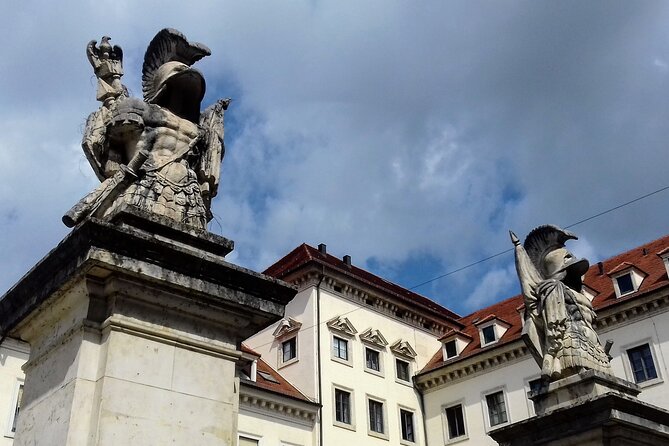
Then you head to the Residenz München. This is one of the tour stops that can feel strangely cinematic because the setting is so grand. In 1933, SS Brigade Leader Christian Weber set up residence inside one of Europe’s largest city palaces. You tour the building complex from the outside, with its seven inner courtyards, and your guide links different stylistic epochs to what the Nazi power structure wanted viewers to feel. The guide also mentions the importance of the lions at the side entrances, including a detail about the traditional act of petting one (or more).
A quick breather follows at Viscardigasse, a tiny street with a name mystery. The guide explains why it was called Drückebergergäßchen, a fun reminder that everyday Munich still has stories under the surface.
From there, you arrive at one of the most politically charged “viewpoints” in the route: Feldherrnhalle on Ludwigstrasse. You see the southern point du vue and connect it to the Hitler putsch in 1923, which ended violently at this location. There’s also a historical reminder about the Schwabinger Tor city gate, which stood nearby until about 200 years ago, and then the van continues you onward.
Short and symbolic comes next at Platz der Opfer des Nationalsozialismus. It was created in 1985 on the site of the destroyed Schiller memorial, and an eternal flame burns there as a symbolic marker of freedom. After the heavier architecture and political locations, this kind of stop matters because it gives you a reference point for what came after.
The White Rose, University Memory, and Schwabing’s Nazi Connections
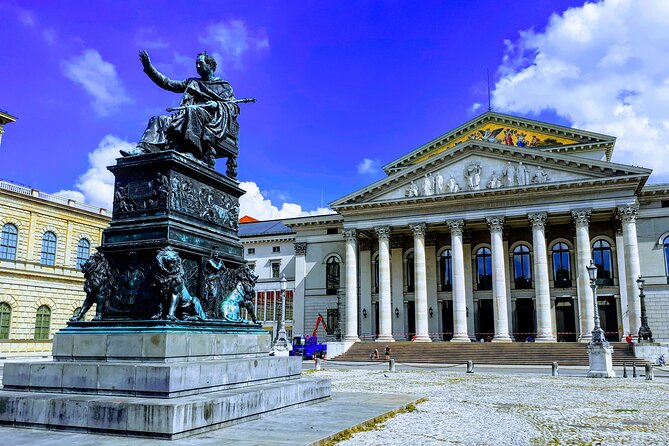
Now the tour moves into the intellectual and resistance side of the story through Ludwig Maximilian University. The university moved from Ingolstadt to Munich in 1826, and it is tied here to the White Rose resistance group, including Hans and Sophie Scholl, Christoph Probst, Alexander Schmorell, and Willi Graf, plus Professor Kurt Huber. The tour notes that caretakers were murdered in 1943, and you get a guided visit to the memorial area with your guide.
This is the moment where the tour’s tone shifts from Nazi symbols and power spaces toward people who refused. Even if you know the names already, a guided connection between locations and the resistance framework helps your brain organize what you are learning.
Next stop: Schwabing. The tour looks at how Hitler moved through Munich’s social and media spaces. It references the still-existing Osteria Italiana, plus where publications tied to National Socialism were located, including the editorial house Völkischer Beobachter and Heinrich Hoffmann. Verlag National Socialist Pictures. A particularly human detail gets mentioned too: in 1929, Hitler met Eva Braun at the Photohaus Hoffmann location.
Then you roll into one of Munich’s most famous places to eat and drink: Staatliches Hofbräuhaus. The tour focuses on how Hitler and entourage were especially fond of meeting here, including a niche on the first floor. The tour also suggests a hearty lunch option, not included in the tour price, with seating choices like the ground floor (Schwemme) or the inner courtyard if weather cooperates. Even if you do not eat, this stop is worth it for seeing how ordinary daily Munich life sits beside the story.
More Third Reich & Cold War Tours in Munich
- Munich: Third Reich & WWII Walking Tour
★ 4.6 · 6,181 reviews - Third Reich Walking Tour Munich
★ 4.5 · 4,291 reviews - Munich: Birthplace of the Third Reich Guided Walking Tour
★ 4.6 · 771 reviews - Munich World War II Sites Including Dachau Concentration Camp
★ 4.5 · 570 reviews
Nazi-Era Buildings You Can Still See: Altstadt-Lehel, Haus der Kunst, and More
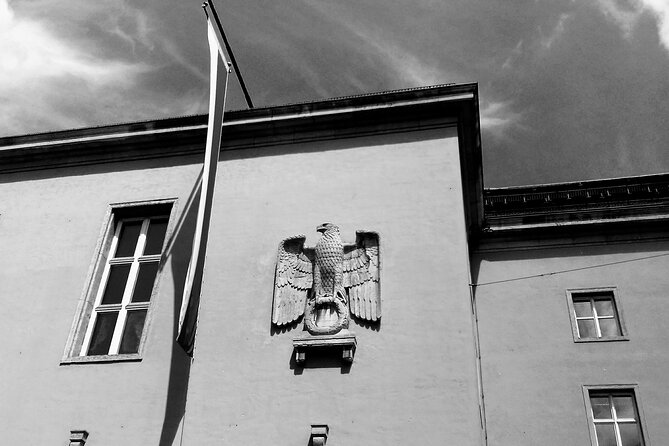
After Hofbräuhaus, you continue with more architecture-driven stops.
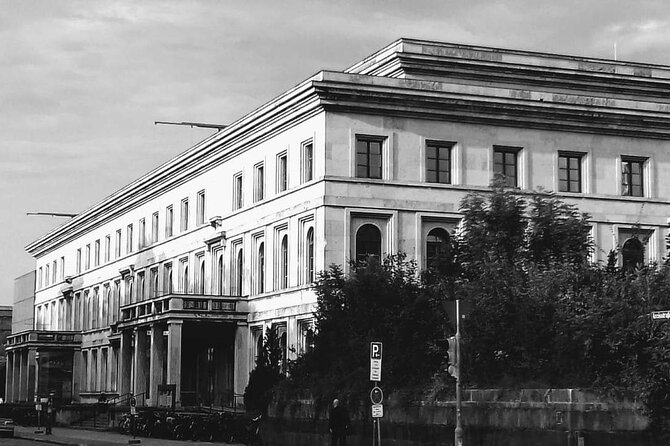
In Altstadt-Lehel, you see a monumental building erected in 1937 by Hermann Göring’s Reich Aviation Ministry for the Luftgaukommando V. The tour points out tangible Nazi-era details like swastikas on window grilles and steel helmets on house walls. This is one of those stops where a guide matters because the eye can skim past symbols without understanding their significance.
Next is Haus der Kunst, described as the first representative Nazi building in Munich, jokingly called Weißwurst-Allee because of the long row of bright granite columns. In Hitler’s time it was called the House of German Art, and you view works of artists conforming to the Nazi regime, plus Nazi decor that remains visible today.
Then comes a sudden emotional palate cleanser: Eisbachwelle. This is near the Nazi sites, but it is a totally different kind of Munich. You watch famous Eisbach surfers riding an artificially generated standing wave. The tour frames it as a chance to forget some of the horror for a minute, even if the contrast can feel odd at first. It also helps you pace your attention during a day packed with heavy content.
Hitler’s Munich, Eva Braun, and the Social Engineering Stops
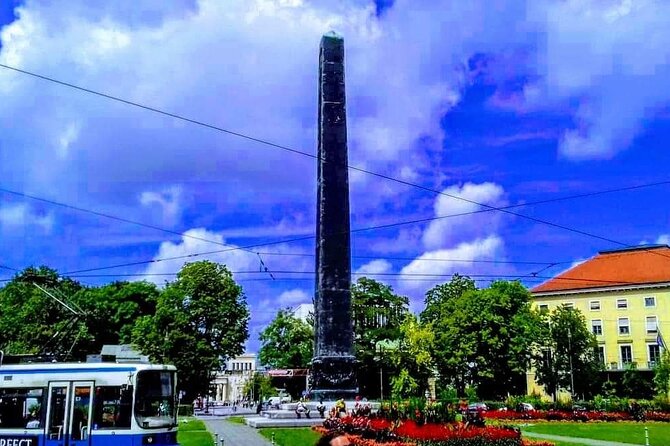
From here, the itinerary turns more residential and planning-focused.
At Bogenhausen, you visit outside the former home of Adolf Hitler in Munich’s noblest district. The tour notes that in 1929 he moved into a luxurious 317 sqm apartment with nine rooms, and today that building is used as a police station, viewable only from the outside. Nearby, the tour also references the property where Eva Braun lived in a villa starting in 1936, and says that villa was later demolished. These details matter because they show how personal life and political rule intersected in space.
Next you head to Prinzregentenstraße, a boulevard connected to Prince Regent Luitpold and an eerie example of Nazi upper-class planning. The stop describes an apartment building with flanking air raid shelters built as a model, and notes that it was the only one of its type to be completed due to World War II.
Then you shift to the social-engineering layer at Ramersdorf. Here you see a model settlement built in 1934, where almost 200 settlement houses with their own gardens were constructed for German national comrades. It is now a listed building, which gives it protection and makes it visible to future generations. This stop is a good reality check: persecution and propaganda are not only posters and speeches, they also show up in how a society plans neighborhoods.
The route keeps pressing toward consequences at Stadelheimer Straße. In 1943, the White Rose members Hans and Sophie Scholl, Christoph Probst, Alexander Schmorell, Willi Graf, and Professor Kurt Huber were guillotined in the penal institution there. The tour notes their graves are located in a nearby cemetery in the Perlacher Forest. It is brief, but it is direct, and your guide’s pacing matters.
Party Headquarters, Power Centers, and the NS Documentation Center Area
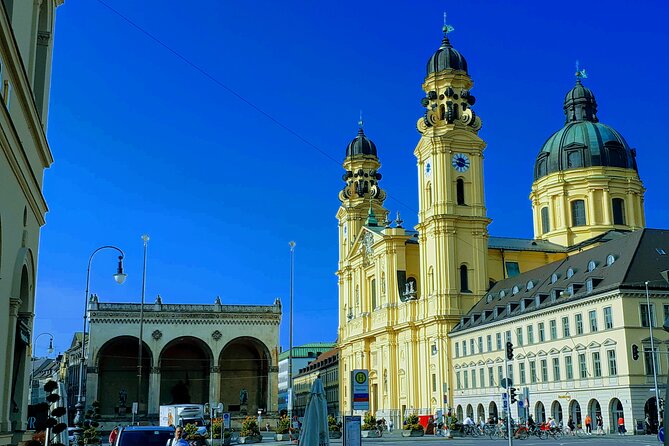
Now you reach the part of Munich that many people recognize from photographs: the party center area.
At Königsplatz, the tour describes the historical area between Karolinenplatz and Königsplatz as becoming the NSDAP party center, with administrative buildings and the Führerbau. The detail that almost all Nazi buildings survived bombing attacks is important because it explains why so much still exists in recognizable form. You also visit the NS Documentation Center, which opened in 2015 and is built on the site of the destroyed Brown House.
Then you move to Karolinenplatz, where the tour notes that exactly 100 years later, the center of power was built around an obelisk ordered by King Ludwig I in 1833. This stop helps you connect time periods and show how power spaces can be redesigned while still using older city anchors.
Finally, you end the Munich portion at Maxvorstadt. The tour highlights a now renovated apartment house where Adolf Hitler shared a shabby room with Austrian Rudolf Häusler after moving from Vienna as an unsuccessful postcard painter in May 1913. It also points out the location of a mausoleum planned by Hitler himself, plus an adjoining Hall of the Party. The tour frames this with a detail about why Hitler was motivated, including a reference to his reverent visit to Napoleon’s sarcophagus in the Invalides in 1940. That connection is useful because it shows how Nazi symbolism tried to borrow from older empires, not invent everything from scratch.
Dachau Concentration Camp Memorial Site: How Long to Plan and What to Expect
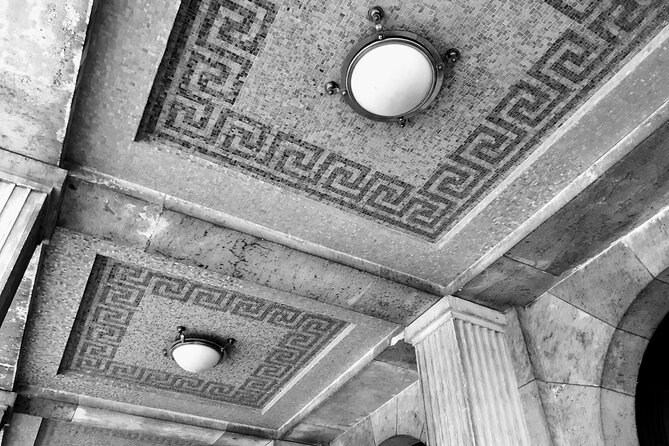
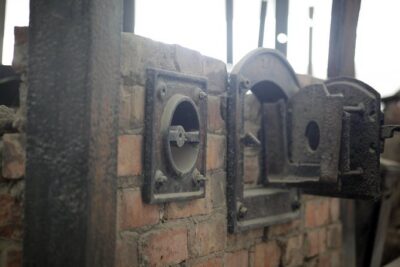
The day’s emotional turning point is Dachau Concentration Camp Memorial Site.
The tour says a visit with your licensed guide will go far beyond what you might expect, because of what the site represents. During Dachau’s 12-year existence, the tour states over 200,000 people were imprisoned and 41,500 were murdered. It also notes Dachau opened just 6 weeks after Hitler was appointed Chancellor. Those numbers land hard, and in a guided format, they usually land with context, not just repetition.
You also get a pre-tour look at luxurious villas on the former SS grounds. This detail is crucial. It forces you to hold two images at once, power and suffering, comfort and captivity, and understand that the system was built with proximity, not far away.
The tour gives realistic timing: average length of stay at the memorial is about 1.5 to 2.5 hours. Some footpaths are described as coarse pebbles, so suitable footwear matters. That is not a minor point. If your feet hurt, you will rush, and Dachau is not a place you want to rush.
Dachau is also not recommended for people under 12 years old, according to the tour guidance.
How to Make This Day Work for You (Without Losing Your Mind)
This tour runs long, and it covers heavy ground. To make it manageable, focus on the practical stuff.
First, wear comfortable footwear with good grip. Dachau’s pebbles are specifically mentioned, and Munich involves walking and short stops. Second, plan for your own lunch since lunch is not included. The Hofbräuhaus stop includes a recommendation, but you can choose what fits your needs.
Third, bring weather-ready layers. The schedule includes outside viewpoints and churches, and you might have to wait for brief transitions between stops.
Finally, give your brain a permission slip. A day like this is information-heavy. It is normal for your attention to feel scattered after repeated symbols, architecture, and memorial language. The Eisbach surfing stop in the middle of the route is there for a reason, a short chance to reset while you are still in the same city.
Who This Tour Fits Best
This private Munich WWII and Dachau tour fits best if you want:
- A licensed guide to connect Nazi power, public spaces, and resistance into one coherent story
- A high-coverage itinerary without spending your time hopping between transit lines
- A transport setup that starts with hotel pickup and keeps you moving across Munich and then outward to Dachau
It might not be ideal if you want a casual sightseeing day. This is serious. It is structured. You will spend the day looking at what humans did to each other, and you should be ready for that.
Should You Book This Munich and Dachau Private Tour?
If you are willing to pay for a smooth, guided day and you want structure instead of guesswork, I think this is a strong choice. The combination of private pickup, licensed guidance, and a guided Dachau memorial visit makes it easier to see the right places in the right order and understand why they matter.
I would book it when you know you want both halves of the story: Munich’s public sites and Dachau’s memorial reality. If you prefer lighter, purely scenic sightseeing, you might find the day too heavy. But if you want clarity, efficiency, and a guide who keeps the details organized, this one is built for that goal.
FAQ
How long is the tour?
The tour duration is approximately 9 hours 30 minutes.
What time does pickup happen in Munich?
Pickup is offered at 8:00 a.m., 9:00 a.m., or 9:30 a.m., and you can also request another time.
Is this tour private?
Yes. It is a private tour, and only your group participates.
Are tickets or admissions included?
The tour info says admission tickets are free for the listed stops, and the Dachau memorial is included as a visit with your licensed guide.
What does the price include, and what does it not include?
Included: private transport in a new VW or Mercedes minivan (or small coach for larger groups), licensed guide for Munich and Dachau, the Dachau guided visit, mineral water, and no hidden costs. Not included: lunch and tips.
Is the Dachau memorial visit suitable for children?
The tour guidance says Dachau is not recommended for people under 12 years of age.
More Wartime and Cold War History Walks in Munich
- Munich City Walking Tour, includes Third Reich & Viktualienmarkt
★ 5.0 · 458 reviews - Third Reich & WWII Walking Tour
★ 4.5 · 417 reviews - Munich 3-Hour Segway Tour: Nazi Munich & Royal Architecture
★ 4.9 · 194 reviews - Dachau Concentration Camp Memorial Site And Third Reich Day Tour From Munich
★ 5.0 · 185 reviews
More Memorial Site Visits from Munich
- From Munich: Dachau Memorial Site Full-Day Tour
★ 4.9 · 1,406 reviews - Dachau Concentration Camp Memorial Tour with Train from Munich
★ 4.5 · 955 reviews - Early-Start Dachau Memorial Half-Day Tour from Munich
★ 5.0 · 942 reviews - Guided Dachau Concentration Camp Memorial Site Tour with Train from Munich
★ 5.0 · 920 reviews
Newest Munich reviews on the site
- Munich – the essential walking tour★ 5.0 · 30 reviews
- Munich Beer and Bavarian Bites Small-Group Tour★ 5.0 · 167 reviews
- Munich to Prague – Private Transfer with 2 hours of Sightseeing★ 5.0 · 6 reviews
- 800 Years of History: A Munich GPS Audio Tour★ 4.5 · 12 reviews
- Munich in the 3rd Reich and WW2 private walking tour★ 5.0 · 148 reviews
- Munich Christmas Market Small Group Tour with Gingerbread Heart★ 4.0 · 9 reviews
- Munich Food Tour with Full Meal & Drinks by Do Eat Better★ 5.0 · 59 reviews
- Munich Scavenger Hunt and Sights Self-Guided Tour★ 4.5 · 8 reviews
Concentration Camp Memorial Tours, compared.
Sachsenhausen Concentration Camp Tour in English
Read our review →
Dachau Concentration Camp Memorial Site Tour from Munich by Train
Read our review →
Sachsenhausen Concentration Camp Memorial Tour
Read our review →
Sachsenhausen Concentration Camp Bus Tour in English from Berlin
Read our review →Sachsenhausen Concentration Camp Tour in English
Read our review →