
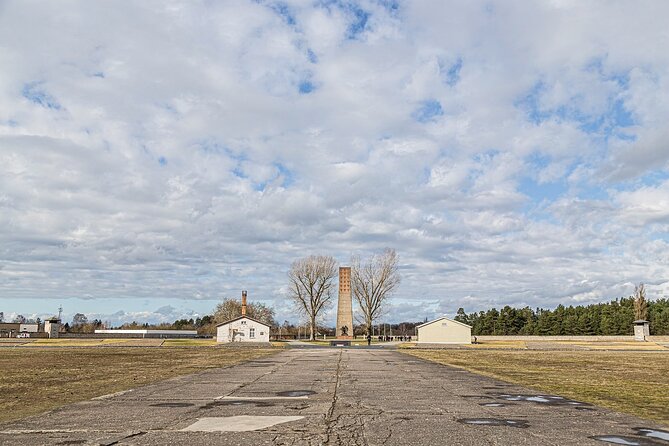
Reviewed · CONCENTRATION CAMP MEMORIAL TOURS
Berlin: Sachsenhausen Concentration Camp Memorial Tour
Dark facts, guided with care, in one focused trip. This is a Sachsenhausen Memorial outing from Berlin that connects the dots behind Nazi imprisonment, starting with a train ride from Alexanderplatz and ending at key sites like Tower A, the barracks, and Station Z. I especially like how the tour keeps the tone respectful while still making the history feel clear, and I like that you get a guided route through the memorial’s monuments instead of wandering alone. One consideration: it is not suitable for wheelchair users or people with mobility impairments, and there is a lot of walking on uneven ground.
A good part of the value is the guide, because the experience lives or dies on explanation. Names like Walid, Richard, Peter, Amelia, Hugo, and Filipe come up again and again for being organized, engaging, and careful with the subject. If you like your facts with context, you’ll get that here, plus small help such as making sure everyone boards the right train back to Berlin.
Timing is also realistic. The full outing runs about 5 hours, with a structured visit to the memorial and the option to return together or stay longer. You do need an ABC zone train ticket in advance, and winter can make the outdoor portions feel long, so plan for comfortable footwear and something to snack on.
In This Review
- Key highlights I’d plan around
- Alexanderplatz to Sachsenhausen, with the guide doing the heavy lifting
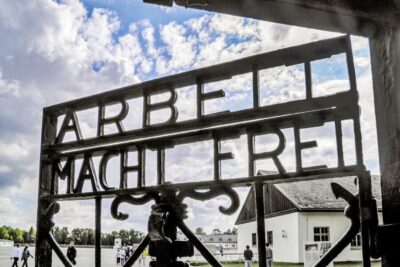
- Tower A and the Arbeit macht Frei area, where the camp’s message starts
- Barracks 38 and 39, cramped imprisonment shown through everyday reality
- Infirmary, morgue, and medical abuse, violence with a scientific mask
- Station Z executions and the Soviet memorial built in 1961
- Pacing for a 5-hour memorial day, plus how to stay comfortable
- Value check: is $21 worth it for this kind of guided memorial trip?
- Who should book this Sachsenhausen tour from Berlin?
- Should you book this Sachsenhausen Memorial Tour?
- FAQ
- Where do I meet the guide in Berlin?
- Do I need to buy train tickets in advance?
- Is the entrance fee included in the price?
- How long is the tour and what happens at the end?
- Which parts of the memorial will we visit?
- Is the tour accessible for wheelchair users or people with mobility impairments?
- What languages are available for the live guide?
- Can I cancel or pay later?
Key highlights I’d plan around
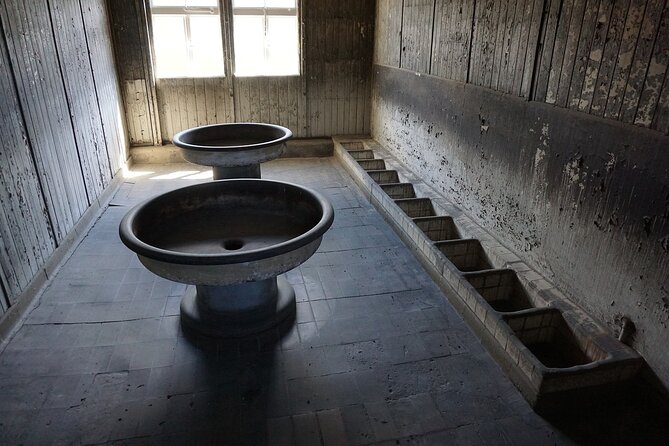
- Alexanderplatz meeting and guided train ride: you start with context, not confusion.
- Tower A and the Arbeit macht Frei entrance area: the tour begins at the symbolic main entry point.
- Barracks 38 and 39, plus punishment cells: you get both daily-life details and the system of discipline.
- Infirmary and morgue sites: you see how violence extended beyond forced labor.
- Station Z and the Soviet memorial (1961): the story continues after 1945, not just during the Nazi era.
- Separate entrance and “skip the line” entry: more time spent where it matters.
Alexanderplatz to Sachsenhausen, with the guide doing the heavy lifting
Your day starts at Alexanderplatz, where the guide meets the group next to the World Time Clock. The guide wears a Buendía accreditation, so you know you’re in the right place. I like that you are not left to figure out transfers on your own. Even though the journey is straightforward by public transport, having a guide from Berlin makes the whole day feel like one coherent plan.
Before you go, make sure you have an ABC zone train ticket. The memorial trip is not included in the tour price, and the activity specifically requires that ticket. You can buy it from station machines or online via the Berliner Verkehrsbetriebe website, so you can sort it out without stressing day-of.
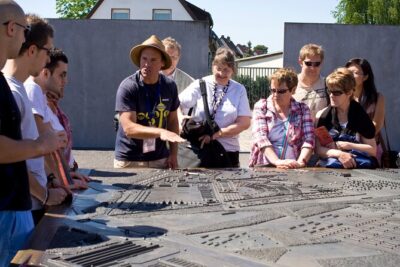
Once you’re traveling, the guide gives background on the camp’s origins, purpose, and its role as a model camp within the Nazi concentration camp system. That matters because Sachsenhausen can feel like a maze if you only see buildings and monuments. When you understand what the Nazis were trying to build, you start noticing the pattern: control, forced routine, punishment, and propaganda.
Language options are a practical win here. The live guide is available in Spanish, English, German, French, and Italian, which makes it easier for mixed groups to stay together and understand the key points.
One more detail worth thinking about: the tour includes a separate entrance so you can skip the line. That’s not just convenience. When the subject is heavy, you want your time at the site to be about the memorial itself, not waiting outside.
More Concentration Camp Memorial Tours in Berlin
- Berlin: Sachsenhausen Concentration Camp Tour in English
★ 5.0 · 5,711 reviews - Sachsenhausen Concentration Camp Bus Tour in English from Berlin
★ 5.0 · 1,962 reviews - Berlin: Sachsenhausen Concentration Camp Tour in English
★ 4.8 · 1,889 reviews
Tower A and the Arbeit macht Frei area, where the camp’s message starts
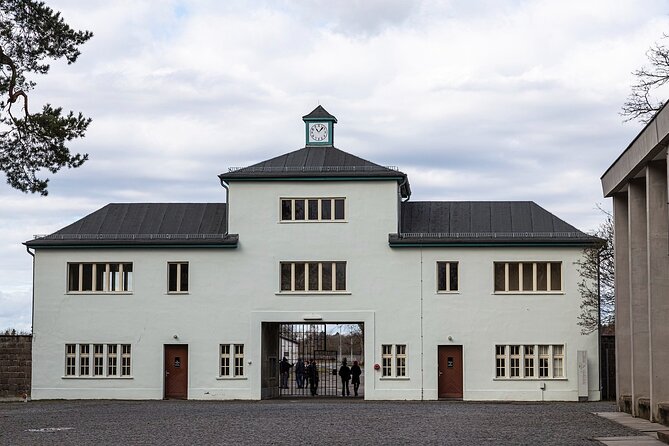
The visit begins at Tower A and the main entrance area with the famous Arbeit macht Frei sign. This is not just a photo stop. It’s where the tour frames the camp as an institution, not a random set of buildings.
What you’ll notice is how the symbolism works. Arbeit macht Frei, famously used at other camps too, was part of Nazi deception and psychological control. A good guided explanation keeps the meaning from becoming trivia, and this tour is built to connect that symbolism to what happened next: the prisoners’ lack of safety, the brutality built into daily routine, and the way the system dehumanized people.
If you are worried about the tone being too cold or too academic, pay attention to how the guide moves through the area. The guides mentioned in traveler accounts often manage a careful balance: clear facts, a serious tone, and respectful handling of victims’ suffering. That balance is important here, because the point is learning, not shock.
Barracks 38 and 39, cramped imprisonment shown through everyday reality
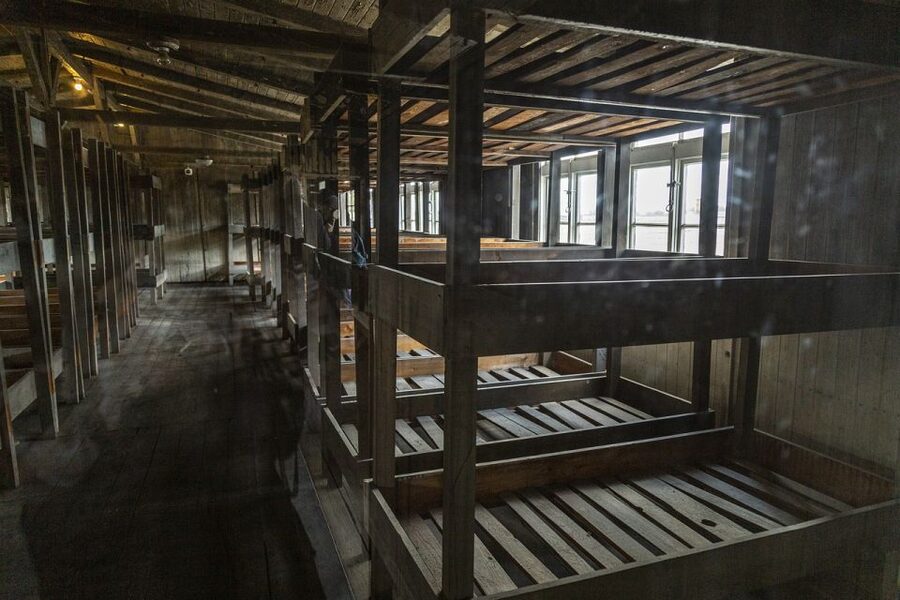
Next you’ll head to Barracks 38 and 39, where Jewish prisoners were held in extremely cramped conditions. The tour focuses on what the prisoners experienced, not just what the Nazis built.
A standout stop is Barracks 38, which now serves as a museum. It showcases aspects of daily life, so you can grasp what confinement actually meant on the ground: space limits, basic routines, and the constant pressure of being watched and controlled. I like this approach because it helps your brain shift from names and dates to lived reality.
Barracks 39 is part of the same story, and it’s most powerful when you have the tour guide to connect the architecture to the intent. Without explanation, barracks can turn into generic rooms. With explanation, you understand why these spaces were designed the way they were.
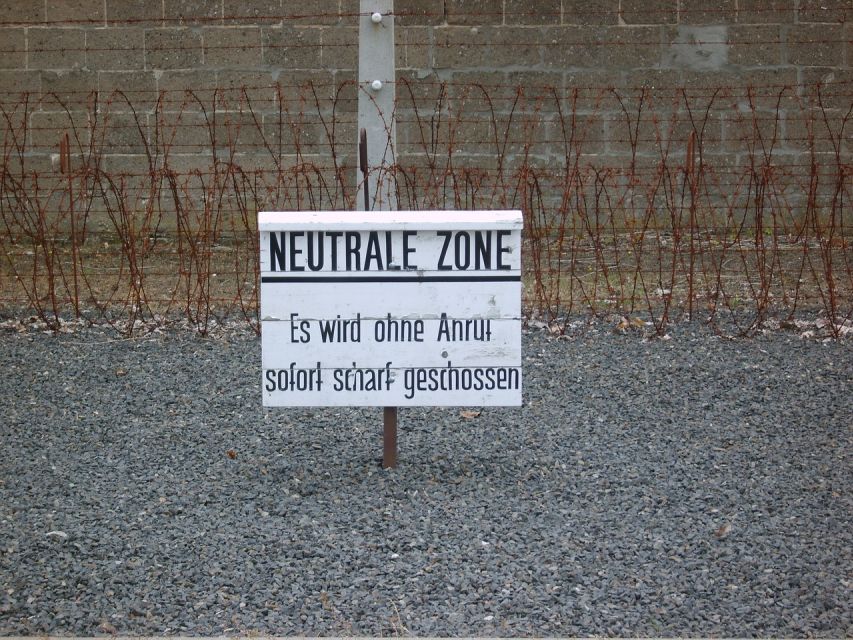
Then you also visit the original punishment cells used to detain prisoners for minor offenses. That detail is crucial. It shows how the camp ran on fear and constant punishment, where even small violations could trigger brutal consequences. You’ll likely find this stop one of the hardest, because it takes the idea of discipline from theory to a physical place.
Infirmary, morgue, and medical abuse, violence with a scientific mask
The tour includes insights into cruel medical experiments conducted in the infirmary and morgue. This is one of those sections where the wording and tone matter a lot, because the topic is horrifying and also historically important.
The value for you is that you get context for how the camp system extended beyond labor and confinement. Medical abuse was part of the machinery of persecution, and seeing those places through guided explanation helps you understand the chilling logic Nazis used to justify harm.
I’d also pay attention to how the guide frames accountability and historical impact. The best guides in this kind of setting focus on what happened, why it was allowed within the Nazi system, and what it teaches us about misuse of power.
If you want the day to feel like more than a list of sites, this section helps. It connects earlier stops, where prisoners faced daily control, to later stops where you see the camp’s violence escalates into extermination mechanisms.
More memorial site visits from Berlin:
- Sachsenhausen Concentration Camp Memorial Tour (Max. 15 Guests)
★ 5.0 · 1,516 reviews - Berlin: English Bus Tour to Sachsenhausen Concentration Camp
★ 4.9 · 1,380 reviews - Berlin: Sachsenhausen Concentration Camp and Potsdam Tour
★ 4.6 · 1,334 reviews - Sachsenhausen concentration camp.
★ 5.0 · 1,189 reviews
Station Z executions and the Soviet memorial built in 1961
Toward the later part of the visit, you’ll reach Station Z, where many executions took place. This isn’t presented as scenery. It’s a stop that anchors the camp’s deadliest function.
From a learning perspective, Station Z matters because it changes your understanding of the camp from a place of confinement to a place built to remove people. If you’ve been thinking in terms of forced labor, this stop forces a clearer view of the final outcome for many prisoners.
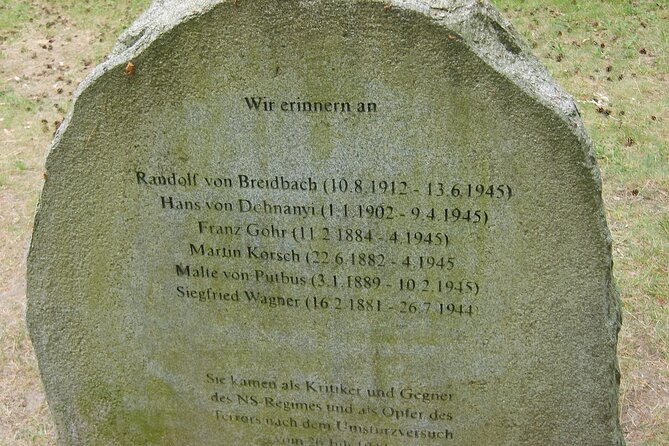
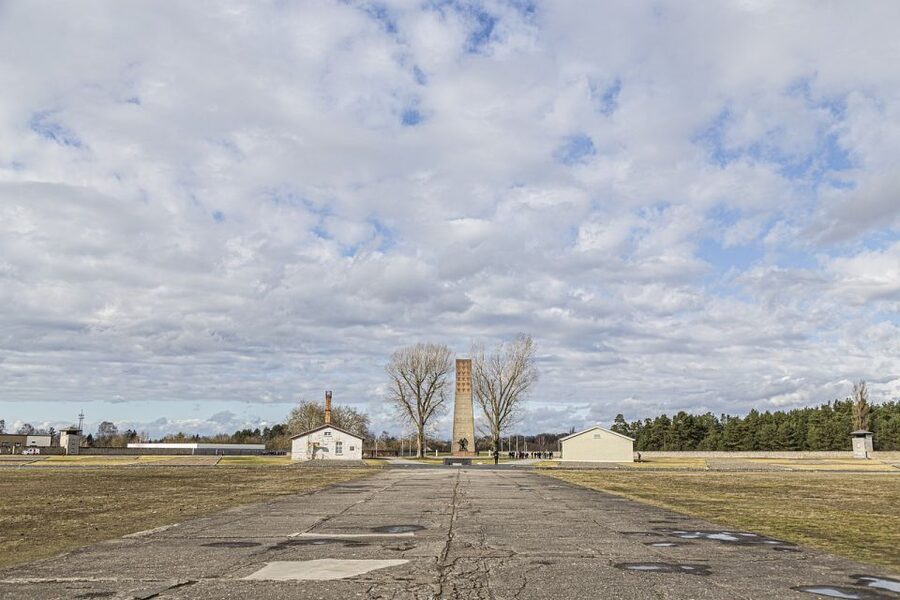
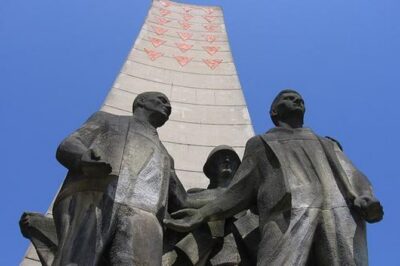
After that, you’ll visit the Soviet memorial built in 1961. This part is easy to overlook if you think the story ends in 1945, but it doesn’t. The memorial reflects the camp’s role after World War II, and it gives you a visual reminder that these sites kept meaning long after liberation.
The monuments at Sachsenhausen placed at different times for different ideologies is one of the most important learning themes of the day. You start to see how memory is shaped, and why the memorial keeps layers of interpretation visible. That’s part of why the tour includes guidance through the memorial’s different installations, rather than only walking to the biggest landmarks.
Pacing for a 5-hour memorial day, plus how to stay comfortable
This is a 5-hour tour, and that time includes both the Berlin transit and a concentrated visit to the main camp areas. That pacing is helpful because it prevents the day from turning into an all-day slog, but it also means you should expect a brisk schedule, especially during colder months.
Wear comfortable shoes. The ground around memorial sites is not designed for neat, museum-floor walking, and you’ll be on your feet for long stretches. Bring snacks too, because you don’t want your energy to crash halfway through a day that asks a lot emotionally.
One practical tip that comes up from real schedules: take the restroom opportunity when you’re given the chance. On a winter day, you might be outside more than you expect, so small timing breaks help.
You also get choice at the end. You can return to Berlin by train with your guide’s help, or you can stay longer to explore the memorial at your own pace. I like that option because Sachsenhausen can hit you in waves. After the guided route, you may want a slower pass through the parts that stuck hardest, or you may want to re-check a monument and absorb what you learned.
Value check: is $21 worth it for this kind of guided memorial trip?
At about $21 per person, this tour can feel like a bargain, especially because it includes both the professional guide and entrance fee (3€ included). The big thing you’re paying for is interpretation. At places like Sachsenhausen, the difference between reading a sign and understanding what it means can be huge.
You should also think about what isn’t included. Train tickets are not included, so you’ll still budget for the ABC zone ticket. Still, even with that added cost, the guided structure is what turns the trip into an education, not just transportation.
I’d treat this as strong value if you want:
- a single clear route through major sites like Tower A, Barracks 38 and 39, punishment cells, Station Z, and the Soviet memorial
- a guide who keeps the tone respectful while making the history understandable
- help staying organized on trains and stops in a city you might not know
It’s also worth noting that several guides highlighted in traveler accounts were repeatedly praised for being organized and responsive to questions. If you like asking why something was built, why it was positioned that way, or how the camp evolved, a licensed guide can save you hours of guessing.
Who should book this Sachsenhausen tour from Berlin?
This tour makes the most sense if you:
- want a guided, structured visit to a major WWII memorial site
- care about historical context, not just visual highlights
- prefer getting a licensed guide from Berlin rather than sorting everything out alone
It is not a fit for wheelchair users or people with mobility impairments, since the tour is not designed around accessibility needs.
If you are sensitive to distressing topics, go prepared. This is a concentration camp memorial, and the subject matter is heavy. The benefit of a guided route is that you’re not walking through it alone, and the guide is there to hold the line on respect and clarity.
Should you book this Sachsenhausen Memorial Tour?
I’d book it if you want a focused, guided path through the camp’s most important stops, with explanation that connects symbolism, imprisonment, punishment, and postwar memory. The combination of Tower A, Barracks 38 and 39, punishment cells, medical abuse sites, Station Z, and the Soviet memorial gives you a complete arc of what Sachsenhausen was used for.
If you like to travel with a plan and you appreciate a guide who can handle tough questions without losing respect, this is a smart choice. The only real dealbreaker is physical accessibility. Otherwise, for most visitors coming from Berlin, the price-to-time ratio feels fair, and the skip-the-line entry helps you spend more time where it counts.
FAQ
Where do I meet the guide in Berlin?
You meet next to the World Time Clock at Alexanderplatz. The guide will be wearing their Buendía accreditation.
Do I need to buy train tickets in advance?
Yes. Train tickets are not included. You need to purchase an ABC zone train ticket before the activity, and you can buy it at ticket machines in stations or online on the Berliner Verkehrsbetriebe website.
Is the entrance fee included in the price?
Yes. The tour price includes the entrance fee to the Sachsenhausen Concentration Camp Memorial (3€ included).
How long is the tour and what happens at the end?
The duration is 5 hours. At the end, you can choose to return to Berlin by train with the guide’s help, or stay longer to explore the memorial at your own pace.
Which parts of the memorial will we visit?
You’ll start at Tower A and the main entrance area, then visit Barracks 38 and 39, punishment cells, the infirmary and morgue related to medical experiments, the former prisoner kitchen (now a museum), Station Z, and the Soviet memorial built in 1961.
Is the tour accessible for wheelchair users or people with mobility impairments?
No. The tour is not suitable for people with mobility impairments or wheelchair users.
What languages are available for the live guide?
The live tour guide is available in Spanish, English, German, French, and Italian.
Can I cancel or pay later?
Yes. You can cancel up to 24 hours in advance for a full refund. You can also reserve now and pay later.
Newest Berlin reviews on the site
- Jetbike Berlin fun bike beer bike★ 5.0 · 3 reviews
- Karl-Marx-Allee Walking Tour: Berlin’s Socialist History★ 5.0 · 5 reviews
- Homeless on chic streets: city tour in Berlin from personal experience★ 4.6 · 3 reviews
- Berlin: Sachsenhausen Concentration Camp Guided Tour★ 4.9 · 42 reviews
- Historyof the Trans, Queer & Gay communities of Berlin tour★ 4.8 · 17 reviews
- Historic Berlin Pubs & History Tour★ 4.9 · 73 reviews
- Berlin: City Center Walking Tour★ 4.7 · 45 reviews
- Half-Day Berlin Highlights Segway Expedition★ 4.5 · 61 reviews
Concentration Camp Memorial Tours, compared.
Sachsenhausen Concentration Camp Tour in English
Read our review →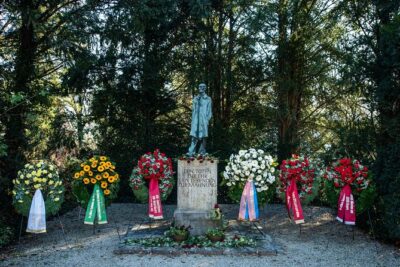
Dachau Concentration Camp Memorial Site Tour from Munich by Train
Read our review →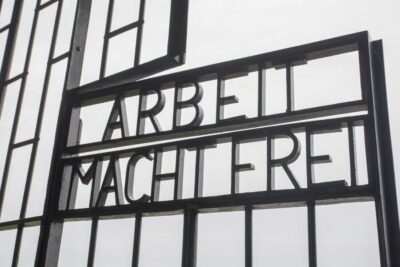
Sachsenhausen Concentration Camp Bus Tour in English from Berlin
Read our review →Sachsenhausen Concentration Camp Tour in English
Read our review →
Sachsenhausen Concentration Camp Memorial Tour (Max. 15 Guests)
Read our review →
Browse the lists this tour appears in