
Reviewed · THIRD REICH & COLD WAR TOURS
Munich City Walking Tour, includes Third Reich & Viktualienmarkt
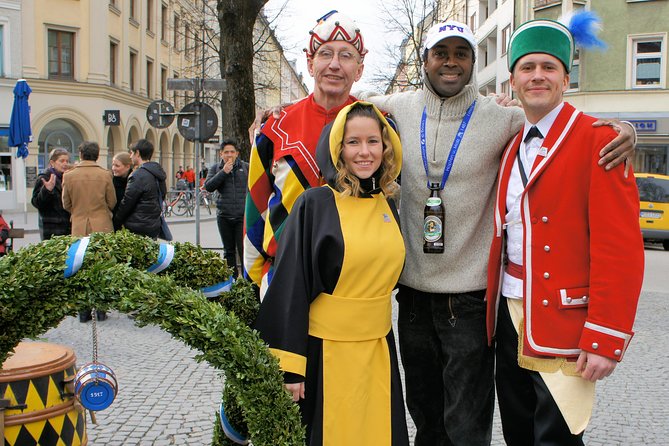
Munich looks famous from the outside, but the story clicks on foot. This walk strings together major sights, a few surprises, and practical advice so you can move around the city with confidence. I especially like how the guide mixes big landmarks with real Munich habits, from beer-hall culture to market snacks at Viktualienmarkt. The small group size also keeps things manageable.
Two things I really value here are the free entry sites and the focused “how to live in Munich” guidance. Most stops include ticket-free access, so you are not constantly calculating extra costs. And the guide is clearly the main draw, sharing tips for getting around and making smart choices once you are on your own.
One possible drawback: you will spend a lot of time outdoors, and in cold or snowy weather that can mean longer standing while the guide talks. If you dislike that style, bring layers and a warm hat, and plan to pace yourself at each stop.
In This Review
- Key things to know before you go
- Starting on Schützenstr 11, ending near Odeonsplatz
- Third Reich context, plus practical Munich navigation tips
- Frauenkirche and the Devil’s Footstep stop
- German Hunting and Fishing Museum: stuffed wildlife and the Wolpertinger
- Beer hall landmark at Staatliches Hofbräuhaus, then medieval Isartor
- Marienplatz and the New Town Hall Glockenspiel moment
- Max-Joseph-Platz and the theater-residenz zone
- Maximilianeum: palatial student origins to state parliament
- Platzl charm, St. Michael’s Renaissance-Baroque mix, and a royal crypt
- Alter Peter views, Wolfsbrunnen fairy-tale metalwork, and Karlsplatz Stachus
- Odeonsplatz landmarks, and finishing where you can keep exploring
- Viktualienmarkt lunch break: Bavarian snacks in a historic market
- Price and value for a 3h15 small-group walk
- Who should book this tour, and who might skip it
- Should you book this Munich walk?
- FAQ
- How long is the Munich City Walking Tour?
- How much does the tour cost?
- Is the tour offered in English?
- What is the maximum group size?
- Where does the tour start?
- Where does the tour end?
- Is Viktualienmarkt included, and is there a lunch break?
- Are admission tickets required for the stops?
- Is free cancellation available?
- Are service animals allowed?
Key things to know before you go
- A tight route with major landmarks packed into about 3 hours 15 minutes
- Free admission at each scheduled stop, so your budget stays predictable
- Third Reich context included, taught in a sensitive, informative way
- A mid-tour food break at Viktualienmarkt, with freshly made Bavarian options
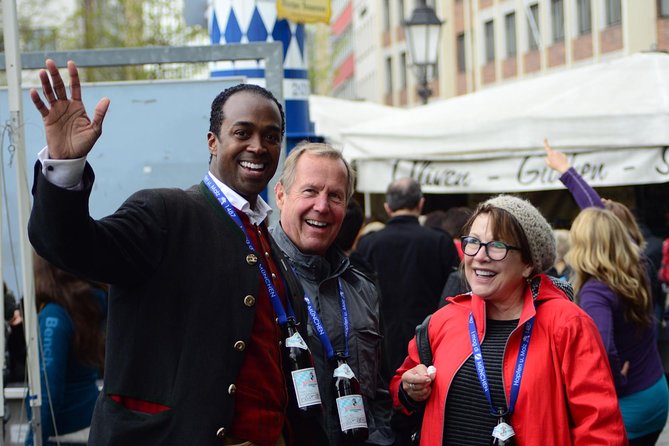
- Max 20 travelers, which helps questions and keeps the group together
- Plenty of iconic photo spots, from Marienplatz to the Glockenspiel area
Starting on Schützenstr 11, ending near Odeonsplatz
This is a classic “set out in the center and work your way through” walking tour, starting at Schützenstr 11 (80335 München) and finishing at Odeonsplatz (Odeonspl. 3, 80539 München). That end point matters, because Odeonsplatz is one of those Munich anchors where you can easily continue to other sights, cafés, or transit routes afterward.
The group stays small, up to 20 people, which helps when you are trying to hear explanations and keep your bearings. Duration is about 3 hours 15 minutes, so you get a serious sampler without it feeling like an all-day ordeal.
What I like most is that it is structured for orientation. You walk through the old center, see the places that shape the city, then finish where you can keep exploring.
More Third Reich & Cold War Tours in Munich
- Munich: Third Reich & WWII Walking Tour
★ 4.6 · 6,181 reviews - Third Reich Walking Tour Munich
★ 4.5 · 4,291 reviews - Munich: Birthplace of the Third Reich Guided Walking Tour
★ 4.6 · 771 reviews
Third Reich context, plus practical Munich navigation tips
One standout theme from the experience is the way the guide adds context, including Third Reich history, in a sensitive and informative way. You do not just get dates and names. You also get the bigger-picture lens that helps Munich make sense, especially when you notice how buildings, squares, and monuments signal power and ideology.
At the same time, this tour is not history-only. You also get guidance on how to navigate the city efficiently, plus tips that can help you plan what to do next. In other words, it is a way to get your bearings fast, then make better choices with the rest of your trip.
I also appreciate the added context about Bavaria and Germany in the present, which helps the past feel connected instead of frozen in time.
Frauenkirche and the Devil’s Footstep stop
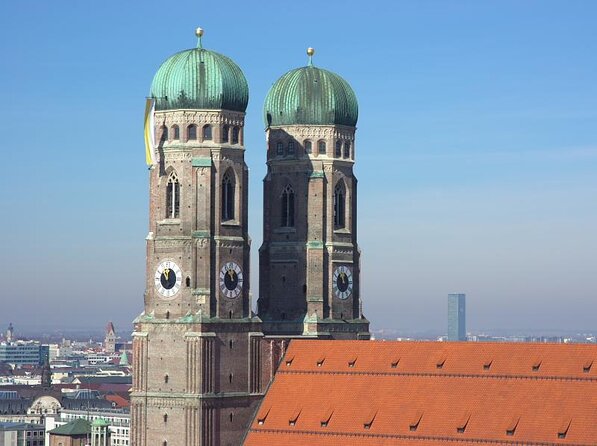
Your first big landmark is the Frauenkirche, Munich’s famous twin-towered cathedral. It was built in the 15th century and serves as the seat of the Archbishop of Munich and Freising. You get about 10 minutes here, which is enough time to see the scale of the interior and spot the “signature” details.
Two things to watch for:
- The legendary Devil’s Footstep detail, which visitors often track down because it gives you a story you can actually remember.
- The historic crypt, which adds depth without turning the stop into a half-day project.
If you only have time for one church interior in central Munich, this is a strong early candidate. The timing is also smart, because it sets the tone before the tour shifts into smaller, more quirky stops.
German Hunting and Fishing Museum: stuffed wildlife and the Wolpertinger
Next comes an unexpectedly fun stop, the German Hunting and Fishing Museum. It is housed in a former Augustinian church and covers about 3,000 square meters of exhibits.
This is one of those places where the theme sounds narrow until you are inside. You will see stuffed wildlife, antique weapons, and stories tied to German hunting and fishing traditions. The star element is the Wolpertinger, those legendary Bavarian creatures that turn the museum from “serious artifacts” into something more playful and memorable.
Practical note: because this museum is built into a church, it can feel like you are stepping into multiple atmospheres at once. If you enjoy oddball cultural history, this stop is a highlight.
More Walking Tours in Munich
- Munich: Old Town & Viktualienmarkt City Walk in German
★ 4.7 · 2,304 reviews - Munich: Night Watchman Walking Tour
★ 4.7 · 2,092 reviews - Munich Ghosts and Spirits Evening Walking Tour
★ 5.0 · 1,900 reviews - Munich Old Town Walking Tour
★ 4.5 · 1,287 reviews
Beer hall landmark at Staatliches Hofbräuhaus, then medieval Isartor

Then you hit the Staatliches Hofbräuhaus area, Munich’s legendary beer-hall landmark with roots going back to 1589. It started as a royal brewery and now mixes home-brewed Bavarian beer, hearty food, and traditional live music.
You get about 10 minutes here, so think of this as “sense the place” time rather than a long sit-down meal. Still, it is a meaningful stop, because the beer hall culture is one of the ways Munich expresses itself daily.
After that, you move to Isartor, one of Munich’s last medieval city gates built in 1337. It has a central tower and historic frescoes, and it also houses the Valentin-Karlstadt Museum, dedicated to Bavarian comedian Karl Valentin.
If you want a quick cultural contrast, this pairing works well: Hofbräuhaus for drinking-and-social tradition, Isartor for comedy and medieval street history.
Marienplatz and the New Town Hall Glockenspiel moment
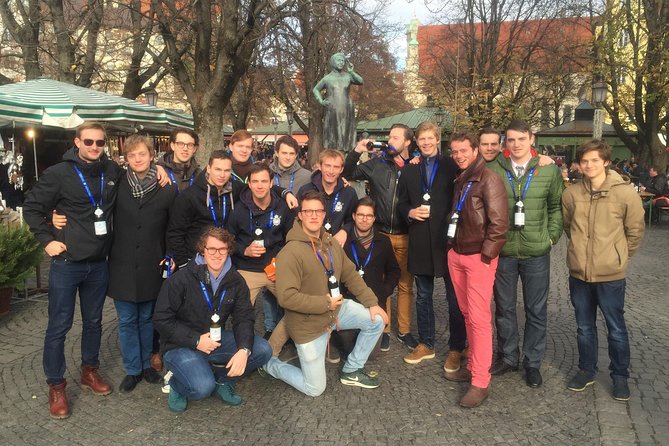
At the heart of it all is Marienplatz, Munich’s central square since 1158. You get about 25 minutes here, which is longer than most stops. That extra time is useful because this is where you can slow down, look around, and connect what you learned earlier with what you see now.
Marienplatz is anchored by the New Town Hall and its famous Glockenspiel. You can also admire the Mariensäule, and you will be close to shopping streets if you want to browse afterward.
The main drawback is the same one everywhere in a major square: crowds. This stop is still worth it, because it is one of the best “Munich feels like Munich” locations in the city center.
Max-Joseph-Platz and the theater-residenz zone
Next is Max-Joseph-Platz, a grand square with big cultural pull. It sits near the National Theatre and the Munich Residenz, and it is named after King Maximilian Joseph.
You will see the neoclassical architecture and a statue honoring the king. This is also a good place to take a breath between tighter, more “stop-and-go” moments.
If you like architecture, plan to stand still for a minute and look outward. Squares like this are designed for walking in broad sightlines, and that is part of what makes them feel ceremonial.
Maximilianeum: palatial student origins to state parliament
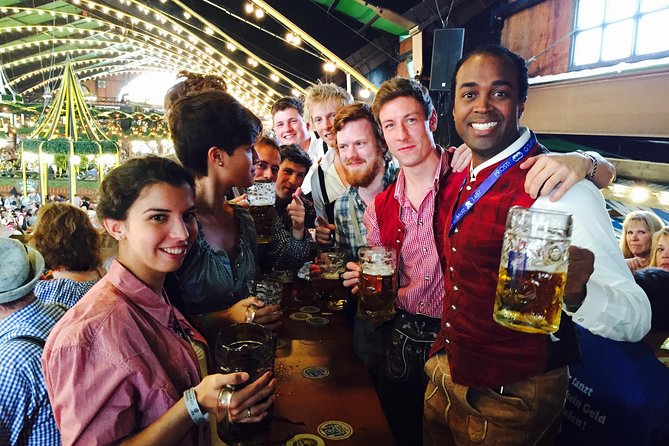
Your route then reaches the Maximilianeum, a palatial building perched above the Isar River. It was founded in 1852 by King Maximilian II to support gifted students, and since 1949 it has housed the Bavarian State Parliament.
Even with only a short stop, the key value is the story in the building’s purpose. You see how a place can shift from education-focused prestige to governing authority, without losing its monumental presence.
If you like “how power uses space,” this is one of the more interesting stops on the list.
Platzl charm, St. Michael’s Renaissance-Baroque mix, and a royal crypt
Then the tour gets more atmospheric with Platzl, a charming square in Munich’s historic center known for traditional Bavarian vibes. It connects you to the older drinking-and-dining quarter and also points you toward historic buildings like the Orlandohaus.
From there you go to St. Michael München, Munich’s largest Renaissance church built in the late 16th century. It served as a center for the Jesuit order, and inside you can see a vast barrel-vaulted ceiling with early Baroque influences. You also get access to the royal crypt, which is a real “why Munich matters” moment.
What to expect here: the architecture is dramatic, but the stop is still brief. So focus on the overall interior effect first, then decide if you want to linger around the crypt area.
Alter Peter views, Wolfsbrunnen fairy-tale metalwork, and Karlsplatz Stachus
Next you hit St. Peter’s Church, Munich’s oldest parish church, nicknamed Alter Peter. It dates back to the 12th century and is known for its 91-meter tower, though the stop time is short. Inside, you get a blend of Gothic, Baroque, and Rococo elements, including the striking high altar.
Then comes a different kind of Munich detail: Wolfsbrunnen, an Art Nouveau fountain built in 1904. It includes bronze figures tied to Little Red Riding Hood and a wolf, commissioned by the Wolf family to commemorate their name. It is the sort of quirky street-art-meets-folklore piece that makes a walk feel personal.
After that, you arrive at Karlsplatz (locally called Stachus). It is a famous square built after the medieval city walls were demolished. You can see the historic Karlstor gate, plus a fountain in summer and an ice rink in winter.
This cluster is ideal if you like variety in your photos: views from a historic church, a fairy-tale fountain, then a central square designed for public life.
Odeonsplatz landmarks, and finishing where you can keep exploring
The tour reaches Odeonsplatz, one of central Munich’s grand squares designed in the early 19th century. It includes the Theatine Church, the Feldherrnhalle, and the Residenz. This area also marks the start of Ludwigstraße, so you end near an easy transition point for more sightseeing.
Because your official end location is listed as Odeonsplatz, you can treat this as your “tour anchor.” From here, it is simpler to branch out based on what you still want to see, whether that is more grand buildings or a relaxed meal in the surrounding streets.
Viktualienmarkt lunch break: Bavarian snacks in a historic market
Now for the part many people plan around: Viktualienmarkt. This open-air market has been a vibrant hub since the early 19th century, with roots in farmers markets, and it is packed with fresh produce and Bavarian delicacies. You get about 30 minutes here, including the mid-tour break.
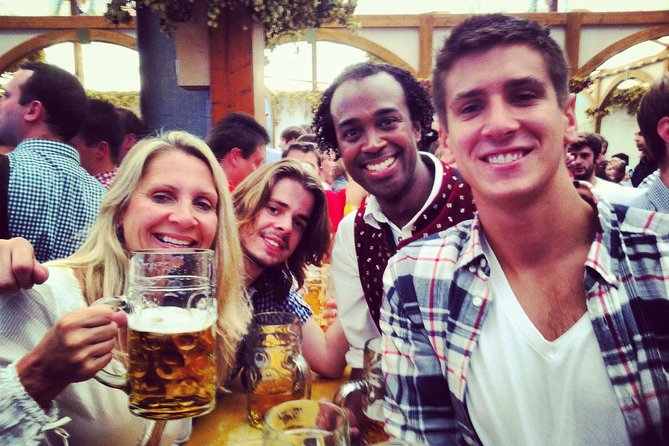
The focus is food that feels local. The sample lunch options include a Bavarian bratswurst (spicy, cheese, or regular) or a combo like Bavarian potato salad and a pretzel. You also get Bavarian beer as part of the menu, plus a reusable beer bottle holder option.
A useful detail for picky eaters or health-conscious travelers: the selections described for the lunch break do not include artificial flavors, colors, preservatives, additives, fillers, or GMOs. That is a good sign if you want to snack without feeling like you are eating an industrial product.
If you drink beer, take note of the pacing. You are still in walking mode afterward, so treat the lunch break as a reset, not an all-summer beer marathon.
Price and value for a 3h15 small-group walk
The price is $31.78 per person for about 3 hours 15 minutes, offered in English. That sounds simple, but the value comes from what is included.
You are paying for a guided tour, and the scheduled stops list free admission. That matters because it reduces surprise costs that pile up quickly when you add churches, museums, and city attractions one-by-one. The tour is also limited to 20 people, which makes it easier to ask questions.
What is not included is the lunch/snacks during the market stop. You pause for freshly made Bavarian food at Viktualienmarkt, and you should budget extra if you want the bratwurst and beer options described. Think of it as “the tour plus a planned food break,” not a fully all-inclusive meal package.
Also, this tour tends to sell out or book up around a month and a half in advance on average. If you are traveling during a busy season, it is smart to reserve early so you get a time slot that matches your arrival day.
Who should book this tour, and who might skip it
This fits best if you want three things at once:
- A quick, practical intro to central Munich
- A guided route that hits major landmarks and a few unusual stops
- Food and beer culture built into the timeline, not tacked on at the end
It is also a great first-day choice, especially if you like to plan your next hours with a clear mental map of where things are.
If you do not like long outdoor pauses, this might feel colder than you expect. The negative feedback you might hear tends to center on standing outside during explanations. You can reduce that discomfort with smart clothing and by leaning into the short stops, not fighting the schedule.
Families can also work here, because you can keep kids engaged when the stories are tied to visuals like the Glockenspiel, medieval gates, and the wolf-and-Red-Riding-Hood fountain.
Should you book this Munich walk?
I think you should book this tour if your goal is a fast, guided overview that helps you explore Munich like a resident. The mix of free stops, sensible pacing, and a planned market lunch break gives you both context and comfort.
Skip it only if you know you dislike outdoor standing and you want more time inside museums or fewer scheduled stops. In that case, you might prefer a slower, indoor-heavy option.
If you book, do one smart thing: bring warm layers, keep close when the group stops for food or beer, and use the guide’s navigation tips to plan the rest of your trip right after.
FAQ
How long is the Munich City Walking Tour?
The tour runs for about 3 hours 15 minutes.
How much does the tour cost?
The price is $31.78 per person.
Is the tour offered in English?
Yes, it is offered in English.
What is the maximum group size?
The tour has a maximum of 20 travelers.
Where does the tour start?
The meeting point is Schützenstr 11, 80335 München, Germany.
Where does the tour end?
The tour ends at Odeonsplatz, Odeonspl. 3, 80539 München, Germany.
Is Viktualienmarkt included, and is there a lunch break?
Yes. There is a mid-tour break at Viktualienmarkt for freshly made Bavarian lunch/snacks.
Are admission tickets required for the stops?
The tour details list admission ticket free for the scheduled stops.
Is free cancellation available?
Yes, you can cancel for a full refund up to 24 hours in advance.
Are service animals allowed?
Yes, service animals are allowed.
More Wartime and Cold War History Walks in Munich
- Munich World War II Sites Including Dachau Concentration Camp
★ 4.5 · 570 reviews - Third Reich & WWII Walking Tour
★ 4.5 · 417 reviews - Munich 3-Hour Segway Tour: Nazi Munich & Royal Architecture
★ 4.9 · 194 reviews - Munich and Nazi History Combination Day Tour Small Group
★ 5.0 · 32 reviews
Newest Munich reviews on the site
- Klassik im Museum★ 5.0 · 6 reviews
- Hidden Architectural Gems of Munich (Max. 16 guests)★ 4.9 · 52 reviews
- From Munich: Herrenchiemsee Palace and Boat Trip Day-Tour★ 4.8 · 129 reviews
- Munich: Half-Day Skip-the-Line Neuschwanstein Castle Tour★ 4.6 · 110 reviews
- Glockenbachviertel culinary – the food tour★ 4.6 · 5 reviews
- From Munich: To Neuschwanstein Castle, Linderhof, Oberammerg★ 4.7 · 8 reviews
- From Munich: Dachau Memorial Site Tour in Spanish★ 4.9 · 300 reviews
- From Munich: Trip to Neuschwanstein & Linderhof in Spanish★ 4.8 · 282 reviews
Third Reich & Cold War Tours, compared.

Berlin’s Best: 2 Hour Walking Tour Third Reich and the Cold War
Read our review →
Third Reich Berlin: Hitler and WWII Walking Tour
Read our review →
Skip-the-Line: Berlin Wall Museum at Checkpoint Charlie
Read our review →
Browse the lists this tour appears in