
Reviewed · THIRD REICH & COLD WAR TOURS
Munich: Third Reich and World War II Private Guided Tour
Munich has a way of looking beautiful while hiding hard truths. This private guided walk through the Third Reich period connects famous landmarks to the people and decisions behind them. You’ll start in the Old Town where propaganda and power were staged, then move street by street through the story of Nazi momentum.
What I like most is the focus on specific places you can actually stand in front of, like Hofbräuhaus am Platzl and the route linked to the Beer Hall Putsch. I also appreciate that you’re guided through not just rise and rule, but the consequences, including resistance and remembrance moments.
One consideration: this is a heavy subject. If you’re not in the mood for uncomfortable history, or you prefer only light cultural sightseeing, this tour may feel emotionally intense.
In This Review
- Key things to know before you go
- Munich’s Nazi-era story is mapped to the streets
- Marienplatz and Neues Rathaus: where public life met political power
- Hofbräuhaus am Platzl and the 1920 origin story
- The Beer Hall Putsch route: Feldherrnhalle and Odeonsplatz
- Remembering victims and seeing resistance, not just rulers
- Führerbau and the Munich Agreement in 1938
- The 4.5-hour option: NS Documentation Center and what it adds
- Walking time, pacing, and what $311 buys you
- Who this tour is best for, and who should think twice
- Should you book this Munich Third Reich and WWII private tour?
- FAQ
- How long is the tour?
- Where do I meet the guide?
- Is the tour private?
- What languages are available?
- What will I see on the 3-hour walking tour?
- What is added in the 4.5-hour option?
- Is the tour wheelchair accessible?
- What is the cancellation policy?
- Can I reserve without paying now?
Key things to know before you go
- Marienplatz as the propaganda stage, where Nazi-linked events shaped public life in Munich
- Hofbräuhaus am Platzl and the 1920 speech, a turning point tied to the origin story of the Nazi movement
- The Beer Hall Putsch route, stopping at Feldherrnhalle and Odeonsplatz to understand the failed power grab
- Führerbau and the Munich Agreement, connecting the city to key diplomatic history in 1938
- Königsplatz rallies and book burning, showing how ideology spread through mass events
- The White Rose Group and resistance reminders, so you see that opposition existed, not just Nazi control
Munich’s Nazi-era story is mapped to the streets
If you want Munich history that feels real, this is the kind that forces you to slow down and look. The tour turns the Old Town into a readable map of the Third Reich period, with your guide explaining how power was built, challenged, and ultimately destroyed. You start at Marienplatz, a square that mattered for public events, including propaganda gatherings.
From there, the walk follows a clear historical logic: origin, rise, major attempted takeover, consolidation, then war, destruction, and the postwar picture. That matters because it helps you connect buildings and street corners to decisions and actions, instead of treating them as random “famous stops.”
The vibe is also built around questions. The guide frames the role of Munich and its citizens in the rise and fall of National Socialism, including resistance. That can be unsettling, but it’s also where the value lives. You come away with better context for what you’re seeing, not just a list of names.
More Third Reich & Cold War Tours in Munich
- Munich: Third Reich & WWII Walking Tour
★ 4.6 · 6,181 reviews - Third Reich Walking Tour Munich
★ 4.5 · 4,291 reviews - Munich: Birthplace of the Third Reich Guided Walking Tour
★ 4.6 · 771 reviews
Marienplatz and Neues Rathaus: where public life met political power
Your tour begins in the heart of Munich’s Old Town at Marienplatz, meeting your guide in front of BEYOND by Geisel on Marienplatz 22, 80331 Munich, opposite St Peter. This is a good starting point because Marienplatz is easy to orient around, and it’s historically central.
One of the strongest early cues is the mention of the New Town Hall (Neues Rathaus) and its reconstructed presence after the WWII bombings. Even if you’ve seen photos of wartime Munich, standing near a rebuilt landmark helps you grasp how much the city was physically changed. It’s not abstract history. It’s architecture shaped by destruction.
As you listen, Munich starts to look different. Squares that now feel like a normal place to meet friends become part of the larger story of how people were influenced and mobilized. That shift is the point. You’re learning to read the city the way someone in 1930s Munich might have experienced it.
Hofbräuhaus am Platzl and the 1920 origin story
A major stop is Hofbräuhaus am Platzl, the beer hall where Adolf Hitler made a speech in 1920, connected to the founding of the National Socialist German Workers’ Party. This matters because beer halls are not just “historical settings.” They were places where ideas could be performed, spread, and turned into movement momentum.
Your guide ties the building to the origin story, so you’re not just hearing names. You’re learning how a political party grew out of a moment and a location, then learned how to use public gatherings. When you look at a site like Hofbräuhaus after hearing that context, it stops being a sightseeing stop and starts acting like a chapter page.
And this is where the private format earns its keep. Even though the time is fixed, a private guide can respond to your pace and questions better than a large group tour. If you like to ask follow-ups, you’ll likely get more out of it.
The Beer Hall Putsch route: Feldherrnhalle and Odeonsplatz
Next, you follow the route tied to the Beer Hall Putsch, moving toward Feldherrnhalle and Odeonsplatz. This part of the walk is useful because it turns a failed coup attempt into something you can visualize in the space of a neighborhood walk.
Your guide explains the attempt to storm the Bavarian Defense Ministry, and that thread is linked to why Hitler wrote his political manifesto, Mein Kampf (My Struggle). Even if you’ve heard the name before, connecting a street-level action to a later propaganda text makes the history feel more connected and less like separate trivia.
You also get context for how Nazi supporters and resistance groups existed side by side. That balance is important. It’s tempting for tours to treat Nazi-era history as a straight line from power to punishment. This one frames it as conflict in real time, with people choosing different paths.
More wartime and Cold War history walks in Munich:
- Munich World War II Sites Including Dachau Concentration Camp
★ 4.5 · 570 reviews - Munich City Walking Tour, includes Third Reich & Viktualienmarkt
★ 5.0 · 458 reviews - Third Reich & WWII Walking Tour
★ 4.5 · 417 reviews - Munich 3-Hour Segway Tour: Nazi Munich & Royal Architecture
★ 4.9 · 194 reviews
Remembering victims and seeing resistance, not just rulers
As the tour moves toward remembrance spaces, it becomes harder and more meaningful. You visit a Monument to the Victims of National Socialism, a reminder that this story is not only about political events. It is also about human loss and the long shadow of what the regime did.
You also hear about resistance in Munich, including the White Rose Group, led by five university students. That detail helps you balance the narrative. You’re not only learning how the Nazi system operated. You’re learning that opposition and moral resistance took real forms, even when it was dangerous.
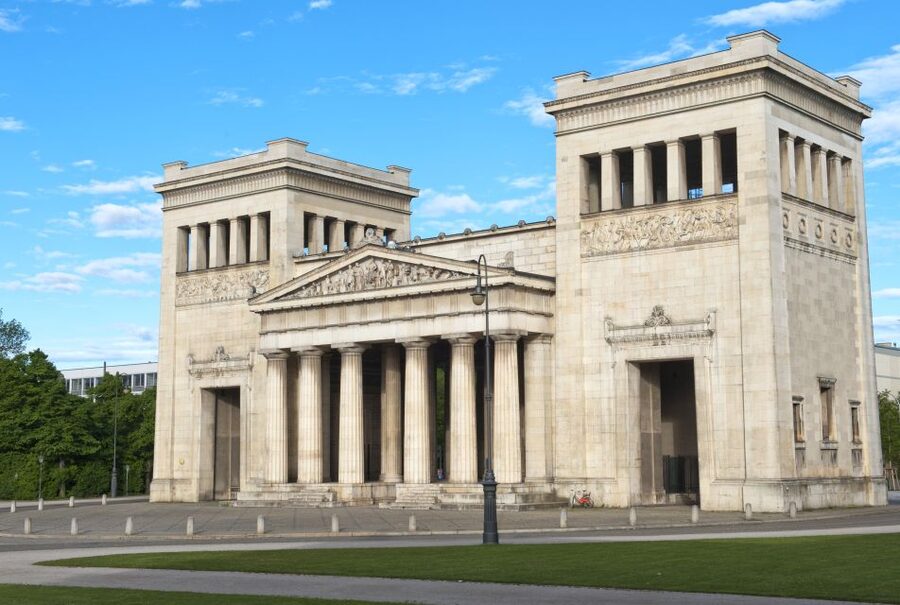
Then comes Königsplatz, where the Nazi Party held mass rallies and where book burning took place. This site is a powerful classroom. It shows how ideology was performed socially, and how control over information was treated as a public spectacle.
If you prefer history that includes both perpetrators and those who resisted, this portion will likely feel especially strong. It gives you a fuller picture of how communities functioned under pressure.
Führerbau and the Munich Agreement in 1938
One of the most talked-about buildings in the narrative is Führerbau, the former office building connected to the Nazi Party. It’s highlighted because Chamberlain and Hitler signed the Munich Agreement there in 1938.
This stop is valuable because it connects street-level movement and mass events to high-level diplomacy. The agreement is often described in textbooks as a political moment. Seeing how it is tied to the physical site helps you understand how seriousness and image-making lived in the same spaces.
Your guide places Führerbau among other former Nazi Party office buildings, so you’re not just hearing about one dramatic meeting. You’re seeing a complex of power that helped normalize the regime’s authority in everyday city life.
The 4.5-hour option: NS Documentation Center and what it adds
If you choose the 4.5-hour option, you also visit the NS Documentation Center for the History of National Socialism in Munich with your guide. This is the part that tends to reward travelers who want more than street history.
The documentation center includes photographs, documents, and texts, plus film projections and media stations. That mix matters because it tackles the subject from multiple angles. You’re not limited to the guide’s storytelling. You can also process information through exhibits designed to show origin, rise, war, and postwar periods in Munich.
Your guide helps you interpret what you’re seeing, including causes and consequences of National Socialism and WWII. This is especially helpful because the subject is complex. A museum can be dense, but a good guide turns the noise into meaning.
If your goal is to understand the Nazi movement beyond the most famous names and events, this extra time is usually the smart choice.
Walking time, pacing, and what $311 buys you
The standard option is 3 hours (270 minutes). The longer option is 4.5 hours with the documentation center stop.
At $311 per person, you’re paying for two things: a private format and a guide who has to connect multiple sites into a coherent WWII narrative. For Munich, that can be good value if you care about context. A group tour can reduce cost, but you lose the flexibility to ask the tough questions the tour is built to handle.
This price also fits the reality that you’re seeing more than a couple of photo spots. You’re covering a set route tied to major historical turning points: the 1920 speech context at Hofbräuhaus, the Beer Hall Putsch path through Feldherrnhalle and Odeonsplatz, resistance reminders like the White Rose Group, and the remembrance locations at Königsplatz and the victims monument. That density is why the time feels focused rather than padded.
Practical note: bring comfortable shoes. This is a walking tour in Munich’s Old Town, and you’ll want your legs to be fresh when you reach the most reflective stops.
Who this tour is best for, and who should think twice
This tour fits you if you want Munich to make sense historically, not just visually. It’s especially good for people interested in how political power spreads, how propaganda works in real spaces, and how resistance shows up even when it is outnumbered.
It also suits travelers who appreciate a guided explanation at each site, rather than reading placards at your own pace. The private group format helps you keep up with the story and ask questions as you go.
You might want to think twice if you’re looking for light entertainment, or if you prefer modern-day Munich neighborhoods only. This tour is intentionally built around the darkest parts of the city’s 20th century story.
Should you book this Munich Third Reich and WWII private tour?
I’d book it if your trip includes even a little room for hard history and you want it anchored to real Munich locations. The route makes the timeline easier to hold in your head, and the inclusion of both Nazi-era power sites and remembrance or resistance elements gives you a more honest view.
Pick the 4.5-hour NS Documentation Center option if you want supporting exhibits, documents, and media that turn street history into something you can review afterward. It’s the best way to go from “I saw the places” to “I understand the system and its consequences.”
If you want a clear, guided, private learning experience that uses Munich’s Old Town as its classroom, this is a strong choice.
FAQ
How long is the tour?
There are two options: a 3-hour walking tour, and a 4.5-hour option that includes the NS Documentation Center.
Where do I meet the guide?
Meet your guide in front of hotel BEYOND by Geisel, Marienplatz 22, 80331 Munich, opposite St Peter. The hotel is only a meeting point.
Is the tour private?
Yes. This activity is listed as a private group.
What languages are available?
The live guide is available in English, German, French, Italian, and Spanish.
What will I see on the 3-hour walking tour?
You will cover key Third Reich and WWII-era linked sites in Munich, starting at Marienplatz, including stops such as Hofbräuhaus am Platzl, locations connected to the Beer Hall Putsch route, and sites connected to Nazi Party buildings and remembrance.
What is added in the 4.5-hour option?
The 4.5-hour option includes a visit to the NS Documentation Center for the History of National Socialism, with exhibits and media stations.
Is the tour wheelchair accessible?
Yes, the tour is listed as wheelchair accessible.
What is the cancellation policy?
You can cancel up to 24 hours in advance for a full refund.
Can I reserve without paying now?
Yes, it offers reserve now & pay later, so you can book your spot without paying today.
Newest Munich reviews on the site
- Munich – the essential walking tour★ 5.0 · 30 reviews
- Munich Beer and Bavarian Bites Small-Group Tour★ 5.0 · 167 reviews
- Munich to Prague – Private Transfer with 2 hours of Sightseeing★ 5.0 · 6 reviews
- 800 Years of History: A Munich GPS Audio Tour★ 4.5 · 12 reviews
- Munich in the 3rd Reich and WW2 private walking tour★ 5.0 · 148 reviews
- Munich Food Tour with Full Meal & Drinks by Do Eat Better★ 5.0 · 59 reviews
- Munich Scavenger Hunt and Sights Self-Guided Tour★ 4.5 · 8 reviews
- Munich Christmas Market Small Group Tour with Gingerbread Heart★ 4.0 · 9 reviews
Third Reich & Cold War Tours, compared.

Berlin’s Best: 2 Hour Walking Tour Third Reich and the Cold War
Read our review →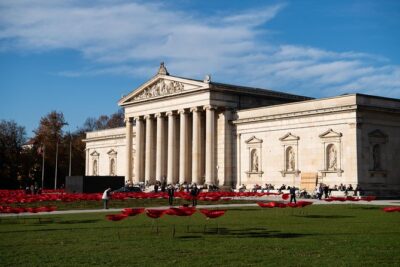
Third Reich Berlin: Hitler and WWII Walking Tour
Read our review →
Skip-the-Line: Berlin Wall Museum at Checkpoint Charlie
Read our review →
Browse the lists this tour appears in