Reviewed · WALKING TOURS
Lüneburg Private Guided Walking Tour
Salt money runs through Lüneburg’s streets. In this private guided walking tour, you get a fast hit of medieval charm plus the story of Lüneburg’s white gold. I like the town’s crooked wooden houses and the way the guide connects them to salt wealth, and I especially like the focus on big landmarks like the Town Hall going back to 1230. One thing to watch: at $294 per group (up to 15), it can feel pricey if you’re only booking for a couple people.
You meet in front of St. Johannis Cathedral at Bei der St. Johanniskirche 2, 21335 Lüneburg, then follow your local guide through the western Old Town on foot. The tour runs 90 minutes and stays flexible because you can customize it on the spot with your guide. English and German are available, which is handy if you have mixed language needs in your group.
The main payoff here is how well this size of town fits a short walk: you can see medieval structures, Hanseatic influence, and Brick Gothic details without turning it into a long slog. Still, if you’re expecting lots of museum time or paid-entry interiors, note that entrance fees are not included.
In This Review
- Key highlights you’ll actually feel on this walk
- Why Lüneburg, a Salt City, Works So Well On Foot
- Getting Started At St. Johannis Cathedral (And Using Your Guide Smartly)
- Western Old Town Houses: Cracks, Curves, And Why Salt Matters
- How Lüneburg’s Salt Story Built a Trade Superpower
- Brick Gothic And The Hanseatic Townscape You Can Read With Your Eyes
- The Town Hall With Roots Dating Back to 1230
- Heinrich Heine’s Heinrich-Heine-Haus: A 15th-Century Patrician Building
- Price And Value For A 90-Minute Private Group
- What To Expect Day-Of: Timing, Pace, And How To Get More From 90 Minutes
- Who This Tour Fits Best (And Who Might Skip It)
- Should You Book This Lüneburg Private Walking Tour?
- FAQ
- How long is the Lüneburg Private Guided Walking Tour?
- Is this a private group tour?
- What is the meeting point for the tour?
- What languages are available for the live guide?
- How much does the tour cost?
- Are entrance fees included?
- Can I cancel for a full refund?
- Can I reserve without paying right away?
- Can the tour be customized?
Key highlights you’ll actually feel on this walk
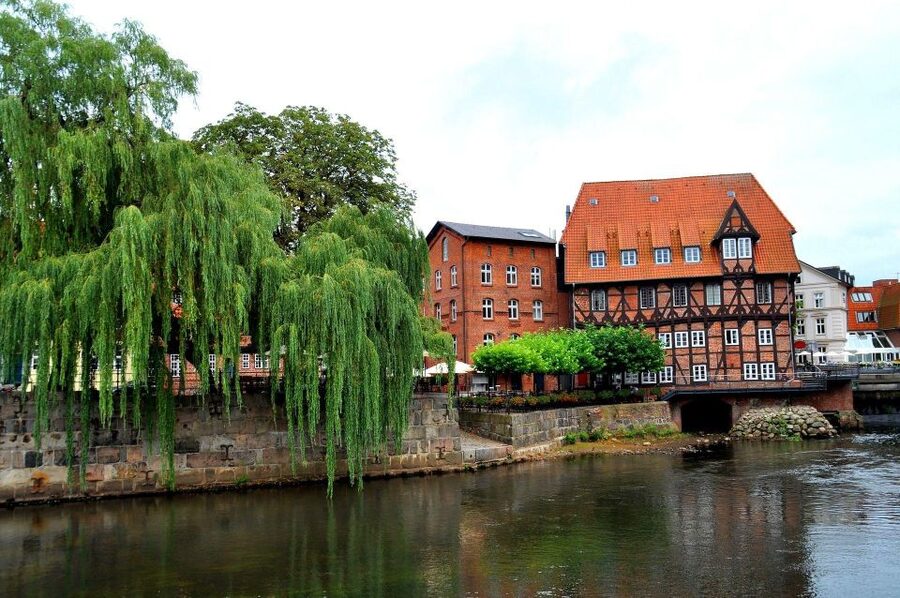
- Salt-funded architecture: crooked, cracked houses get explained through the town’s salt story
- Hanseatic Town power: how Lüneburg grew thanks to trade and defense through the Hanseatic League
- Brick Gothic route: you get a guided look at what makes this style so Northern German
- Town Hall history from 1230: a major medieval landmark with deep roots
- Heinrich Heine at Heinrich-Heine-Haus: a 15th-century patrician building tied to a famous son
- Private group pacing: your guide stays with your group only, with optional on-the-spot adjustments
Why Lüneburg, a Salt City, Works So Well On Foot
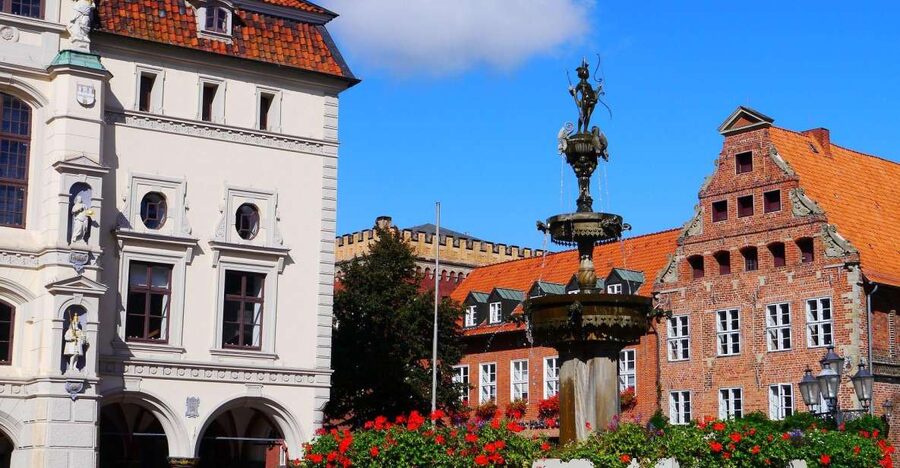
Lüneburg is one of those Northern Germany towns where history is not behind glass. It sits in the street plan, on the façades, and in the way the town grew around commerce. You’re walking through a place that is over 1000 years old, and it still feels genuinely lived-in, not staged.
Salt is the reason. This town’s wealth came from salt production, sometimes called white gold, and that money shaped everything from buildings to status. When your guide ties salt to the architecture you’re seeing, the crooked houses stop being just pretty oddities and start making sense.
Another reason the walking pace works: Lüneburg’s Old Town has just enough medieval density to keep you interested for 90 minutes. You get the contrast too, with medieval structures side by side with the student pub energy you tend to find in a town of about 70,000.
More walking tours in Germany:
- Discover Berlin Half-Day Walking Tour
★ 5.0 · 9,624 reviews - Berlin: Third Reich and Cold War 2 Hour Walking Tour
★ 4.9 · 6,830 reviews - Munich: Third Reich & WWII Walking Tour
★ 4.6 · 6,181 reviews
Getting Started At St. Johannis Cathedral (And Using Your Guide Smartly)
Your start point is easy to find: in front of St. Johannis Cathedral, Bei der St. Johanniskirche 2, 21335 Lüneburg. If you arrive a few minutes early, you’ll have time to orient yourself before the group moves.
This is a private group tour, so your local professional guide stays with you only. That matters in a short 90-minute format, because it lets you ask quick questions and keep the flow. It also helps if you want to tailor the focus on the spot, since customization is specifically possible with your guide.
English and German are both offered. If you’re booking as a mixed-language group, having bilingual options can reduce the chance that you lose parts of the story while waiting for translations.
A practical note: because entrance fees are not included, plan to enjoy what’s outside and what your guide can cover on the street. If you’re the type who loves interiors, you can still use this tour to decide what to revisit later with paid access.
Western Old Town Houses: Cracks, Curves, And Why Salt Matters
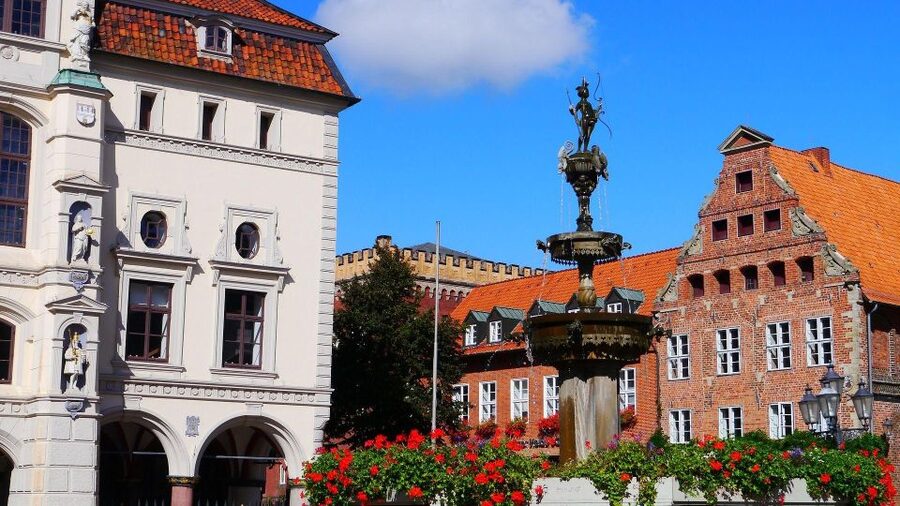
The western Old Town is where the town’s medieval look hits hardest. You’ll notice crooked, cracked houses, with wooden structures that stretch back to the Middle Ages and glimpses of Renaissance opulence. It’s the kind of street scene that looks like it came from an old movie, which is exactly why Lüneburg has served as a film setting.
Here’s what I find most useful: the guide connects those odd shapes to the town’s salt wealth. Salt production and the long history of building and rebuilding can leave traces in the structures over time, including warped lines and aging façades. Even if you never see the full technical details, you come away understanding why the buildings look the way they do.
This is also a great segment for photos, but don’t just shoot. Slow down for a moment and look at the materials and junctions between buildings. In a short tour, that kind of attention turns the walk from sightseeing into recognition, meaning you can remember specific corners after you leave.
How Lüneburg’s Salt Story Built a Trade Superpower
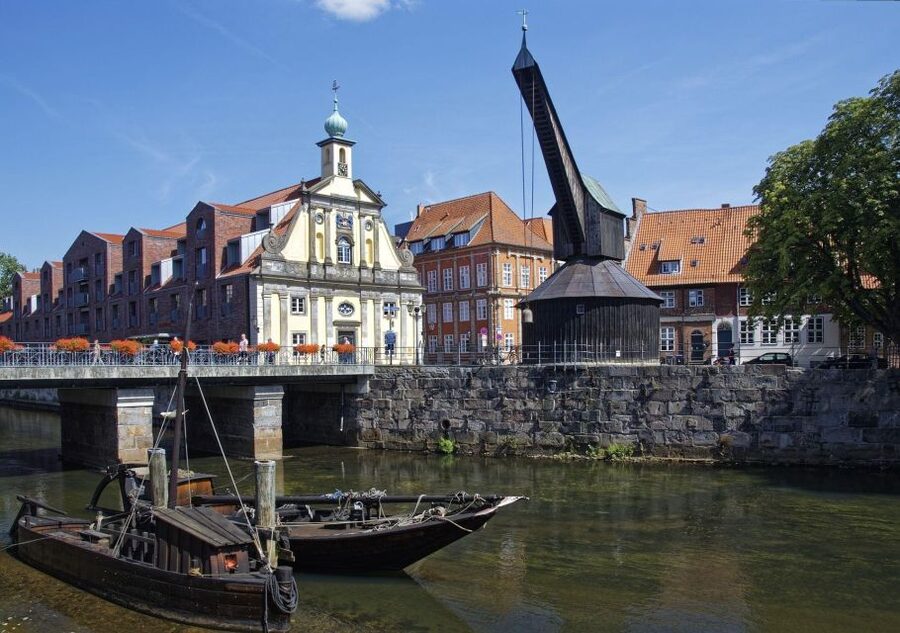
Salt wasn’t a small side business here. It drove the town’s growth, and it helped Lüneburg become part of the Hanseatic League, a commercial and defensive confederation of merchant guilds and market towns. That’s a mouthful, but your guide should make it plain: this is why the town mattered beyond local markets.
When you understand salt as the engine, the Hanseatic connection clicks. Wealth from salt meant merchants had leverage, connections, and resources. Over time, that shows up in the civic pride of major buildings and the way the town developed as an important node in Northern Europe trade.
You’ll also hear about Heinrich Heine, a 19th-century German writer and journalist and a famous son of Lüneburg. That personal-history thread is valuable because it gives you more than economics and architecture. It reminds you that the town’s identity is not just medieval, it’s also modern German culture.
A few more Germany walks and trips to compare
- Berlin: Private Reichstag and Glass Dome Tour
★ 4.8 · 2,226 reviews - Berlin Private Complete History All Day Walking Tour
★ 5.0 · 474 reviews - Munich Private Tour with a Local – Highlights & Hidden Gems
★ 5.0 · 469 reviews - Private Walking Tour Berlin Third Reich Hitler and World War II
★ 5.0 · 360 reviews
Brick Gothic And The Hanseatic Townscape You Can Read With Your Eyes
Lüneburg sits within the wider European Route of Brick Gothic, and the tour gives you a guided way to notice what that style means. Brick Gothic is not just a look, it’s a regional response to materials and building traditions in Northern Europe. When the guide points out details like shape, rhythm, and form, the architecture starts speaking a language you can see.
This part of the tour is where I’d recommend keeping your expectations realistic. You’re not trying to memorize every architectural term in 90 minutes. Instead, aim to walk away with a mental picture: how brick becomes structure, how medieval design aims for height and presence, and how that fits the Hanseatic world of merchants and institutions.
You also get the feeling that Lüneburg is old enough to show wear, not just old enough to look polished. That matters because it gives you a more honest sense of how these towns actually evolved, rather than only seeing them in postcard form.
The Town Hall With Roots Dating Back to 1230
One of the standout mentions on this tour is Lüneburg’s Town Hall, dating back to 1230. That’s not a minor footnote. In a Hanseatic town, the civic buildings are where power shows up in stone and brick, and a Town Hall from the early 1200s signals how early Lüneburg’s institutions were taking shape.
In practical terms, this stop is about context. You’ll connect salt wealth to governance and public life. Merchant towns needed order, rules, and representation, and major buildings like the Town Hall were the visible center of that.
If you’re the type who likes to understand how trade turns into politics, this is the moment. The guide’s job is to connect the dots so you do not just recognize a historic façade, you understand why the town would invest in something like this.
Heinrich Heine’s Heinrich-Heine-Haus: A 15th-Century Patrician Building
Another highlight is Heinrich-Heine-Haus, tied to Heinrich Heine, one of Lüneburg’s famous sons. The building is described as a 15th-century patrician building. Today, it houses state departments and an apartment for writers subsidized by the German state.
Even if you never step inside, that combination of historical function and modern use is a smart kind of continuity. Patrician buildings belonged to the town’s leading families and helped define status, which fits neatly with Lüneburg’s merchant wealth and Hanseatic connections.
This stop works well because it shifts the focus from economics back to people and ideas. You leave with a sense that Lüneburg didn’t just prosper and fade. It kept shaping German culture long after the medieval salt boom was no longer the only story.
Price And Value For A 90-Minute Private Group
The price is $294 per group, for groups up to 15 people, and the duration is 90 minutes. For a private walk, that pricing can be a good deal if you have several people in your group sharing the cost.
Value comes down to two things:
- Your group size: With more people, the per-person cost drops fast. With just a couple, it stays high.
- What you want to learn: This is a narrative tour built around salt heritage, Hanseatic role, Brick Gothic architecture, and major landmarks like the Town Hall from 1230 and Heinrich-Heine-Haus.
One booking rating was on the lower side specifically for price and value fit. That tells me you should be honest about your priorities. If you mainly want casual wandering with no guided context, this may feel like a lot for a short time. If you want the story behind the crooked houses, the Hanseatic League, and the specific landmarks, it’s easier to see why the guide charge makes sense.
Also remember: entrance fees are not included. That’s normal for a street-focused walking tour, but it helps you avoid surprise spending if you assumed paid entries would be handled.
What To Expect Day-Of: Timing, Pace, And How To Get More From 90 Minutes
This tour is designed to fit into 90 minutes, which means a brisk but not rushed walking pace. Your guide is local and stays with your group only, so you should feel like you’re walking with a person, not just following a script.
I’d plan your day so you have time afterward for a slower return. In 90 minutes, you’ll learn the big story and recognize key buildings. But your best memories often come from a second pass, when you’re not trying to track explanations and can simply enjoy the street details.
Bring comfortable shoes. Lüneburg’s charm is in the old streets and the medieval feel of the western Old Town, and that usually means cobbles or uneven surfaces. Also bring a jacket if the weather is changeable. Northern Germany can swing quickly, and long sits are not part of the plan.
If you care about architecture, this tour is a strong match because it gives you a guided lens for Brick Gothic. If you care more about writers and culture, the Heinrich Heine stop gives you a human angle instead of only trade and buildings.
Who This Tour Fits Best (And Who Might Skip It)
I’d point this tour toward people who:
- love medieval towns but want the story behind what they see
- want a guided look at Hanseatic and salt heritage connections without a half-day commitment
- prefer private pacing and the ability to ask questions in real time
- appreciate architecture and civic landmarks, especially the Town Hall dating to 1230
You might skip it if:
- you mainly want to enter museums and paid sites during your time
- you don’t care about architecture or historical context and just want atmosphere
- you’re booking solo or as a duo and price sensitivity matters a lot
If you’re a family, it can still work, but keep in mind it is focused on history and architecture, not a kid-specific experience described in the provided details. If your group includes people with mixed interests, asking your guide on the spot to balance the salt story with the architectural stops can help.
Should You Book This Lüneburg Private Walking Tour?
Book it if you want a tight, well-timed guided walk that explains why Lüneburg looks the way it does and why it mattered in Northern Europe trade. The combination of salt wealth, Hanseatic influence, Brick Gothic architecture, the Town Hall from 1230, and Heinrich-Heine-Haus is exactly the kind of story-driven sightseeing that makes a short tour feel worth it.
Think twice on price if you’re only booking for a small group and you mainly want casual sightseeing. In that case, you may prefer more independent exploring. But if you want context and a guide to point out what to notice, this is the sort of private walk that pays off fast, especially in a town this compact.
FAQ
How long is the Lüneburg Private Guided Walking Tour?
The tour duration is 90 minutes.
Is this a private group tour?
Yes, it is a private group experience.
What is the meeting point for the tour?
You meet in front of St. Johannis Cathedral, Bei der St. Johanniskirche 2, 21335 Lüneburg.
What languages are available for the live guide?
The live guide is available in English and German.
How much does the tour cost?
It costs $294 per group, for up to 15 people.
Are entrance fees included?
No, entrance fees are not included.
Can I cancel for a full refund?
You can cancel up to 24 hours in advance for a full refund.
Can I reserve without paying right away?
Yes, you can reserve now and pay later.
Can the tour be customized?
Yes, there is possible customizing on the tour with your local guide on the spot.
Newest Germany reviews on the site
- Munich – the essential walking tour★ 5.0 · 30 reviews
- Munich Beer and Bavarian Bites Small-Group Tour★ 5.0 · 167 reviews
- Munich to Prague – Private Transfer with 2 hours of Sightseeing★ 5.0 · 6 reviews
- Munich in the 3rd Reich and WW2 private walking tour★ 5.0 · 148 reviews
- 800 Years of History: A Munich GPS Audio Tour★ 4.5 · 12 reviews
- Munich Food Tour with Full Meal & Drinks by Do Eat Better★ 5.0 · 59 reviews
- Munich Scavenger Hunt and Sights Self-Guided Tour★ 4.5 · 8 reviews
- Munich Christmas Market Small Group Tour with Gingerbread Heart★ 4.0 · 9 reviews
Walking Tours, compared.



Berlin’s Best: 2 Hour Walking Tour Third Reich and the Cold War
Read our review →