
Reviewed · THIRD REICH & COLD WAR TOURS
Hitler to Stalin – WWII & Cold War Tour (Small Group)
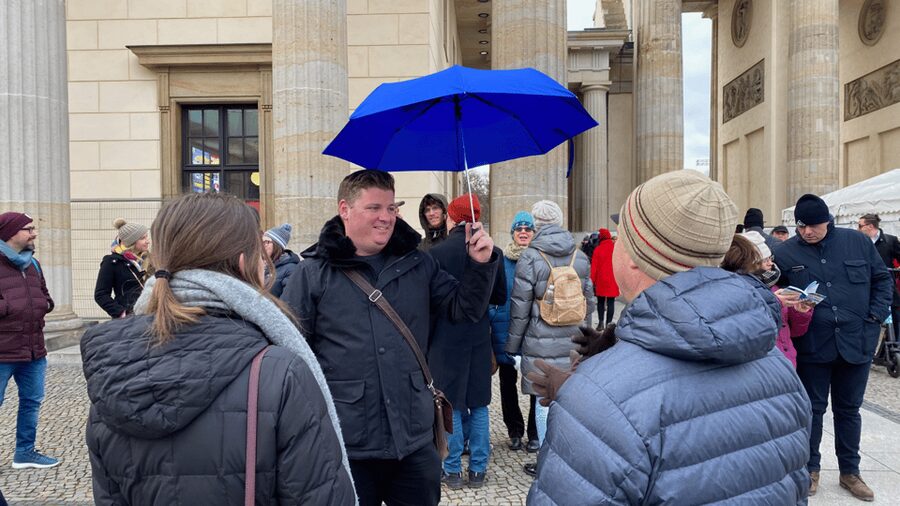
Berlin’s darkest years are on your feet. In a small-group, 2 hour 30 minute walk led by passionate historians, you trace the arc from WWII power to Cold War pressure, and you do it right on the streets where the decisions were made. I especially like the way the tour connects big landmarks like Brandenburg Gate and Checkpoint Charlie to the emotional weight of the era, and I love that guide Mark uses pictures to compare what those places looked like during war and what you see today. One possible drawback, be ready for heavy subject matter, and the stops move fairly fast, so you will not linger for long at each site.
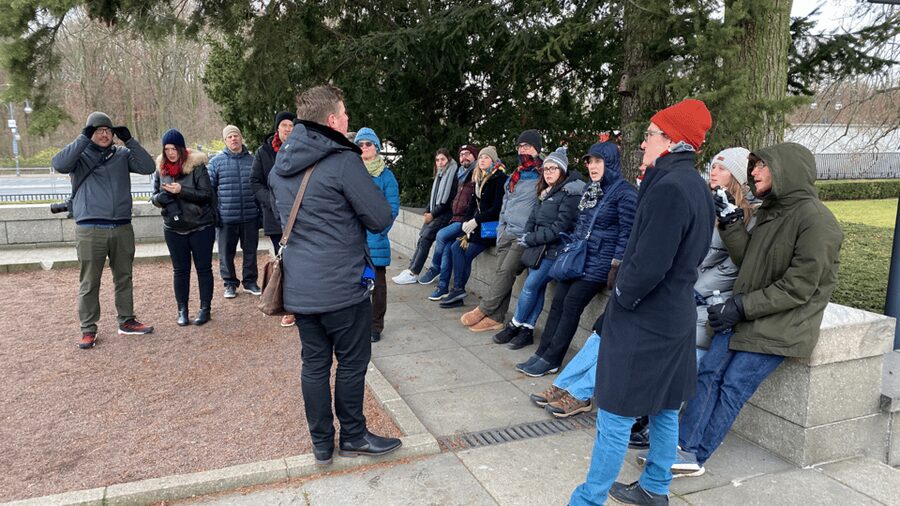
This is built for focus, not crowding. The group tops out at 15 people, you get a mobile ticket, and you start at Pariser Platz and finish at Checkpoint Charlie, so you can treat it like a clean line through central Berlin. Weather matters, so bring a light layer and plan to wear comfy shoes, because you are walking a lot in a short time.
The real payoff is that the story keeps shifting. You go from symbols of unity to parliament scars, from Soviet memorial grief to the Holocaust Memorial’s disorienting design, then on to the Cold War sites that still feel tense. If you like asking questions, you should have a good time, because Mark and the group format are set up for dialogue.
In This Review
- Key things to know before you go
- Brandenburg Gate and the Reichstag: starting with power, then scars
- Soviet grief to Holocaust remembrance: two kinds of memorials, one citywide wound
- Cold War signals you can still read today, from tanks to borders
- Checkpoint Charlie: when the Cold War becomes a place name
- Pacing, walking time, and how to get the most from 2 hours 30
- Value check: what $23 buys in Berlin’s heavyweight history
- Who should book this tour, and who may want a different style
- Should you book Hitler to Stalin: WWII & Cold War?
- FAQ
- How long is the Hitler to Stalin tour in Berlin?
- Where does the tour start and where does it end?
- Is there an admission fee for the stops?
- What is the group size limit?
- Is a mobile ticket used?
- What if the weather is bad?
Key things to know before you go
- Small group pacing: Up to 15 travelers keeps the walk personal and helps you ask questions.
- Mark’s visual storytelling: Pictures help you picture what changed between then and now.
- All major stops, tight route: Brandenburg Gate, Reichstag, Soviet Memorial, Holocaust Memorial, Führerbunker area, June 17 memorial, Berlin Wall Memorial, Checkpoint Charlie.
- Short stays, big context: Most stops are around 10 to 20 minutes, so come ready with your main questions.
- Emotion is part of the experience: The Holocaust Memorial’s uneven concrete slabs are designed to make you feel something, not just read facts.
- Mobile ticket for an easy start: You do not need to hunt for paper tickets on the day.
Brandenburg Gate and the Reichstag: starting with power, then scars
The tour begins at Pariser Platz by Brandenburg Gate, a structure built in the 18th century by Frederick William II. You will hear how it started life as a city gate and how its location, at the crossroads near Ebertstrae and Unter den Linden, made it a natural stage for major events over time. Today, the gate is treated as a symbol of European unity and peace, which makes it a smart opener. It sets up the contrast you will feel later, when peace stops being guaranteed and borders become real physical things.
From there, you move to the Reichstag building, where Germany’s Bundestag meets today. The story here is built on rupture: opened in 1894 for the Imperial Diet, destroyed by fire in 1933, badly damaged after WWII, and then fully restored in 1999. Even if you only know the basic names of WWII and the German Empire, the tour’s way of connecting the building’s timeline to the political shifts makes the walls feel like a document. You are looking at architecture that has been hit, broken, and rebuilt on schedule, which is a blunt reminder of how quickly systems can change.
A practical note: this section is mostly about orientation and framing. If you want to ask questions early, do it here, before the walk turns heavier.
More Third Reich & Cold War Tours in Berlin
- Berlin: Third Reich and Cold War 2 Hour Walking Tour
★ 4.9 · 6,830 reviews - Berlin: Berlin Story Bunker Entry Ticket
★ 4.6 · 6,759 reviews - Berlin’s Best: 2 Hour Walking Tour Third Reich and the Cold War
★ 5.0 · 5,486 reviews
Soviet grief to Holocaust remembrance: two kinds of memorials, one citywide wound
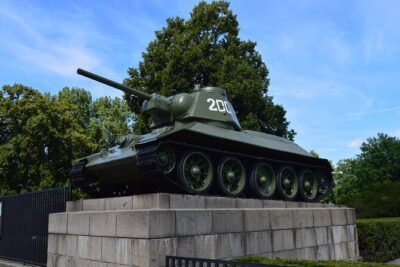
Next up is the Soviet War Memorial in the Groer Tiergarten, erected in 1945 to commemorate Soviet Armed Forces soldiers who died in the Battle of Berlin. The tour’s approach makes the point that memorials are not neutral. They are messages, built at a specific time for a specific purpose. Standing in Berlin with this monument in front of you, you get a sense of how each side of WWII wanted to mark its own sacrifices.
Then you reach the Memorial to the Murdered Jews of Europe, the one designed by architect Peter Eisenman in 1999. The details matter here because they explain the experience you are about to have. The memorial uses over 2711 concrete slabs on a site measuring 19,000 square meters. The slabs create an uneven floor, which can make you feel uncertainty or even a kind of dizzy disorientation. The design is intentionally abstract, so you are encouraged to confront the topic in your own personal way rather than follow a single, literal path.
This is one of the most highly praised parts of the overall tour format, because it helps you do more than read. The guide’s storytelling plus the design lets you slow down without being told to slow down. It is also why I think the tour is best for people who are willing to feel uncomfortable for a moment. If you want history without emotions, this stop will likely frustrate you.
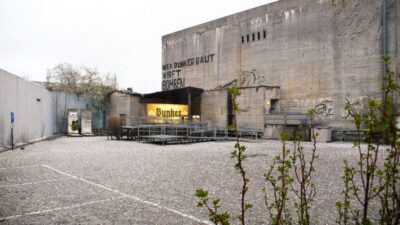
After that comes the Führerbunker area, the WWII air-raid shelter that was the last part of Hitler’s headquarters. The tour gives you the timeline: Hitler took over on January 16, 1945, and he married Eva Braun on April 29, 1945, less than 40 hours before their suicide. You are also told about what happened to the surrounding command buildings, with the old Chancellery buildings leveled by the Soviets and new ones built afterward. The underground complex stayed mostly undisturbed until 1988.
Even though this segment is brief, it hits hard because the facts are so close to the end of the war. If you are the kind of person who likes to understand how quickly power contracts, this stop delivers that feeling fast.
Cold War signals you can still read today, from tanks to borders
Once you move from WWII sites to Cold War sites, Berlin starts to feel different under your feet. The tour includes a stop at the embassy of the Democratic People’ Republic of Korea in Berlin, located in the district Glinkastrae 5 in Mitte. Even though the visit time here is short, it functions like a living reminder that Cold War divisions did not just disappear when the wall came down. The building’s presence keeps the political story visible in the present.
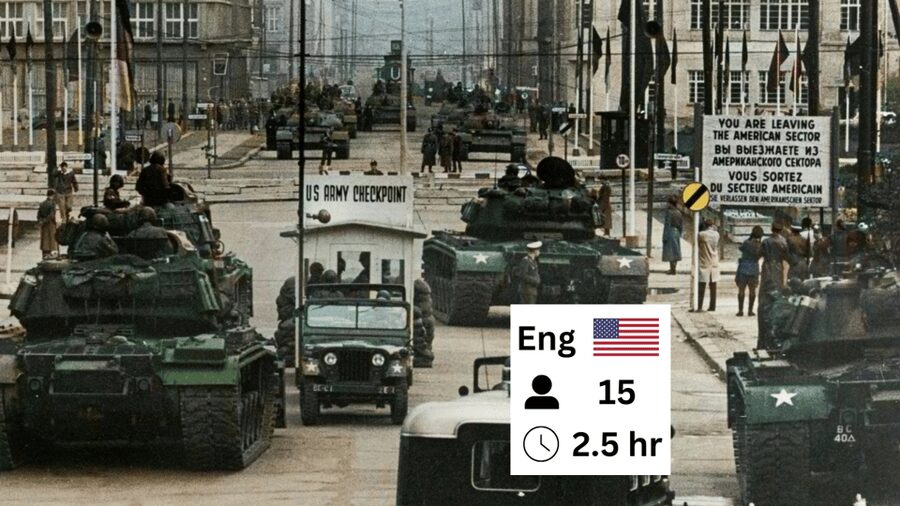
Then you reach the Denkmal zur Erinnerung an den Aufstand des 17. Juni 1953, a memorial to the uprising that was the first major challenge to the communist regime after the war. The tour explains how the Soviet Union suppressed it using tanks and how roughly 15,000 people were arrested afterward. This stop is valuable because it shifts the spotlight from governments and wars to citizens reacting to rule. It helps you see the Cold War as something ordinary people had to live through, not just leaders discussing policy in rooms far away.
After that, you get the Memorial of the Berlin Wall, which exists specifically to commemorate the division of Berlin and the deaths that occurred there. This is a key emotional pivot. Early stops are heavy for obvious WWII reasons. The wall memorial brings in the daily reality of a divided city, where the border is not just a line on a map but something that can cost lives.
The time you spend here is not long, but it is enough to connect what you learned earlier about Berlin’s WWII disruption to the way the city was split afterward. That connection is what turns the wall from a tourist photo spot into a real historical turning point.
Checkpoint Charlie: when the Cold War becomes a place name
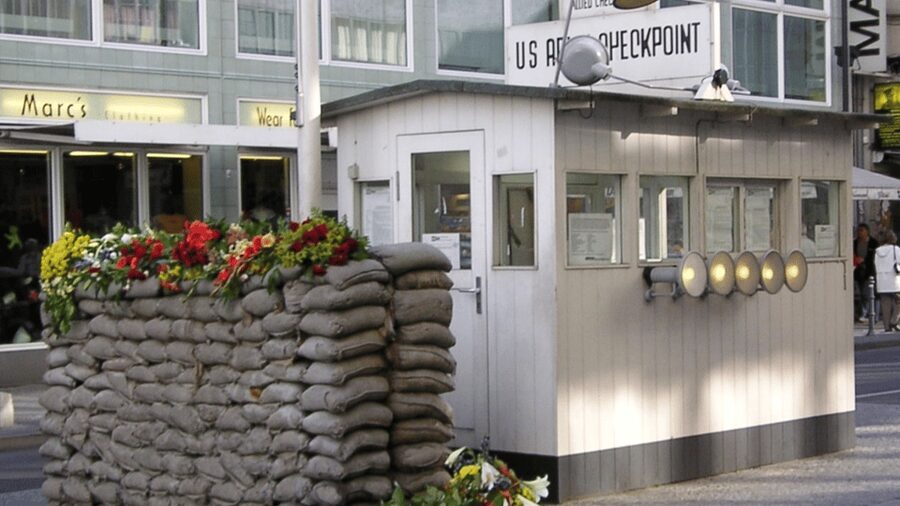
The last major stop is Checkpoint Charlie at Friedrichstraße 43 to 45. The tour frames it as the most famous place where the Berlin Wall separated East and West Berlin during the Cold War period from 1947 to 1991. You also get the naming detail: Western Allies called it Checkpoint Charlie, also referred to as Checkpoint C.
This matters more than you might think. Place names often get treated like landmarks that happened long ago. The tour’s job is to make the label feel like a moment in time, tied to a specific political arrangement, and tied to an interface point where people, rules, and power actually met. When you finish here, you also understand why the tour ends at a place that became famous quickly, because it was a real-life checkpoint, not a metaphor.
If you want to wrap your head around it all, this final segment is the best place to ask your last set of questions. You can compare what you felt at the wall memorial to what you see at Checkpoint Charlie, and you can connect the dots between how Berliners experienced division day to day.
More wartime and Cold War history walks in Berlin:
- Third Reich Berlin: Hitler and WWII Walking Tour
★ 5.0 · 3,301 reviews - Skip-the-Line: Berlin Wall Museum at Checkpoint Charlie
★ 4.1 · 2,041 reviews - Berlin: Third Reich, Hitler, and WWII Walking Tour
★ 4.9 · 1,757 reviews - Cold War, Berlin Wall, Spies and the East Side Gallery
★ 5.0 · 1,024 reviews
Pacing, walking time, and how to get the most from 2 hours 30
The tour runs about 2 hours 30 minutes and includes nine stops. That time distribution means you will get just enough at each location to understand why it matters, not enough to become an expert on every detail. That is not a flaw, it is the model. It is a guided sampler, then you decide where you want to go back on your own.
Most stops are 10 to 20 minutes, including brief segments at Brandenburg Gate, the Reichstag building, the Soviet Memorial, and the Holocaust Memorial. Holocaust and Führerbunker time are both around 15 minutes, and Checkpoint Charlie is 20 minutes. In other words, the heavier stops get meaningful attention, but you still need to keep moving.
Here is what I would do to make it better: come with a short list of questions, 3 to 5 max. Ask about what changed between WWII and the Cold War at each key site, and ask how the guide thinks the city’s story should be understood. The reviews you will read about Mark point to one thing that really helps, he is enthusiastic and he can answer questions, plus he uses pictures to show how the look of a place changes over time.
Also, build in a bit of emotional patience. The memorial sites ask you to process discomfort, not just information. If you get overwhelmed easily, you can step to the side at the Holocaust Memorial for a minute, but you will likely want the full walk for the larger context.
Value check: what $23 buys in Berlin’s heavyweight history
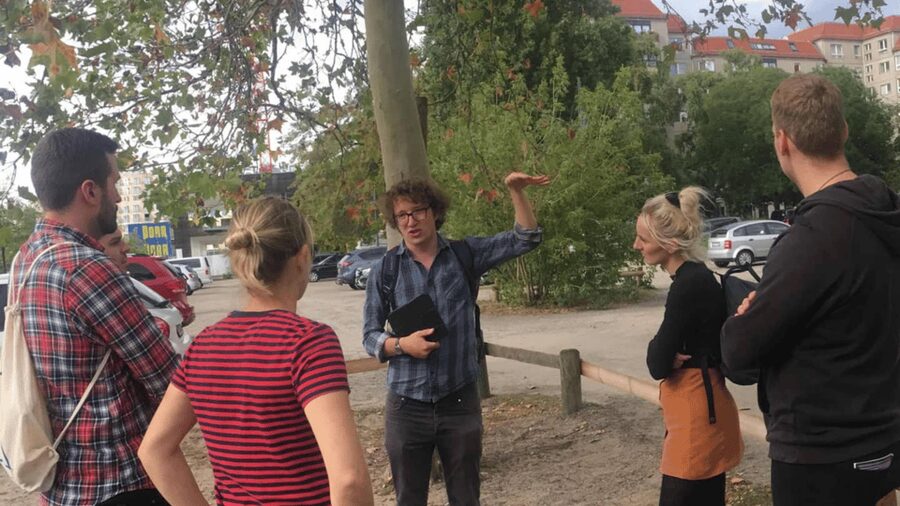
At $23 for about 2.5 hours, you are paying for more than a route. You are paying for interpretation, which is the hard part in Berlin. The city has endless plaques, but most tourists do not know which dates connect to which events. Here, each stop gets a narrative link.
The other value booster is that the tour is timed around major landmarks that do not list paid admission in the tour outline. Brandenburg Gate, Reichstag building, Soviet Memorial, Holocaust Memorial, and Checkpoint Charlie are all presented with admission ticket free in the provided stop notes. That means your money goes to the guide and the small-group format, not to separate entry fees at each site.
The small group limit of 15 is also part of the value. Large tours turn into a shuffle. Smaller groups, especially with a guide like Mark who answers questions, tend to feel more like a conversation than a lecture.
If you are short on time in Berlin and want the WWII to Cold War story in one straight line, this is good value. If you have days to roam independently, you might prefer building your own route, but you would lose the tight connections and the emotional framing that the guide provides.
Who should book this tour, and who may want a different style
This experience fits best if you want guided context for Berlin’s hardest chapters. Most people can participate, it is near public transportation, and service animals are allowed. It is also a good pick if you like walking tours that stay focused and do not wander.
It is less ideal if you want long stays inside museums or you hate walking in weather that is less than ideal, since the tour requires good weather. Also, because the route touches WWII and the Holocaust Memorial, it is emotionally intense. You do not have to be a history superfan, but you should be ready for seriousness.
If you enjoy visuals, this is especially worth it. The guide use of pictures to show what things looked like during the war versus now is one of the strongest themes from the experience. That kind of comparison can make Berlin feel less like a set of buildings and more like a timeline you can stand inside.
Should you book Hitler to Stalin: WWII & Cold War?
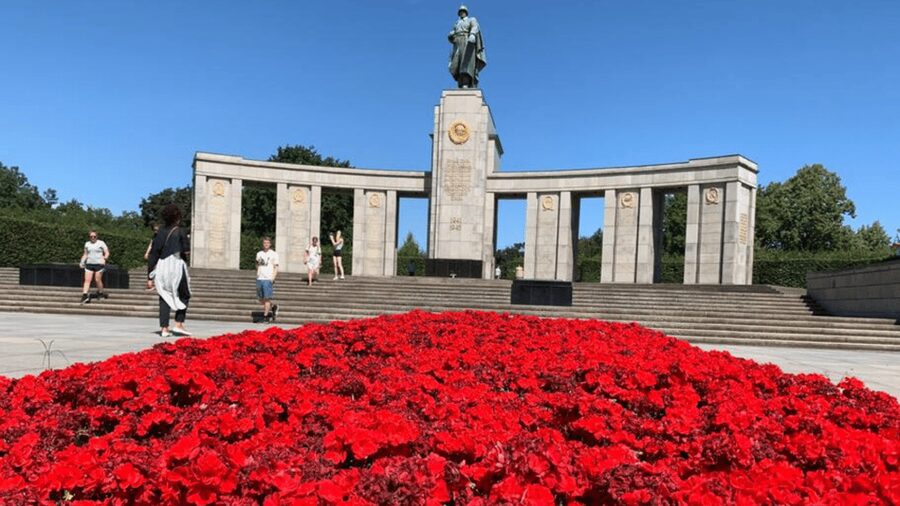
I think you should book it if you want a focused, small-group walk that connects the key landmarks from WWII through Cold War division to reunification’s lead-up story. You get a short but structured visit to the major “you can’t skip this” sites, plus a guide who is enthusiastic and willing to answer questions, and whose pictures help you see change, not just facts.
Skip it if you want a slow, museum-heavy day or if you find memorial spaces too intense for a short time window. For everyone else, the value is strong, the pacing is efficient, and the ending at Checkpoint Charlie ties the whole story together in one clear geographic finish.
FAQ
How long is the Hitler to Stalin tour in Berlin?
The tour is about 2 hours 30 minutes.
Where does the tour start and where does it end?
It starts at Pariser Platz, 10117 Berlin, Germany near Brandenburg Gate, and ends at Friedrichstraße 43 to 45, 10117 Berlin at Checkpoint Charlie.
Is there an admission fee for the stops?
The stop notes list admission ticket free for the sites included.
What is the group size limit?
The tour has a maximum of 15 travelers.
Is a mobile ticket used?
Yes, this experience includes a mobile ticket.
What if the weather is bad?
The tour requires good weather. If it is canceled due to poor weather, you will be offered a different date or a full refund.
Newest Berlin reviews on the site
- Day trip through multicultural city landscapes & photo highlights★ 5.0 · 5 reviews
- Berlin in one day – day tour with an expert guide★ 5.0 · 14 reviews
- Berlin on Your Own – Deluxe Round Trip from Warnemünde Port★ 4.5 · 5 reviews
- Berlin sightseeing boat tour on the Spree★ 4.0 · 93 reviews
- Berlin by Night Private Tour – All Must-See Sites Magically Lit Up at Night★ 4.0 · 5 reviews
- Berlin & Sachsenhausen Concentration Camp Tour from Warnemünde and Rostock Port★ 4.5 · 60 reviews
- Berlin & The Third Reich Private Guided Tour★ 5.0 · 3 reviews
- Berlin and Car Culture Tour★ 4.5 · 8 reviews
Third Reich & Cold War Tours, compared.

Berlin’s Best: 2 Hour Walking Tour Third Reich and the Cold War
Read our review →
Third Reich Berlin: Hitler and WWII Walking Tour
Read our review →
Skip-the-Line: Berlin Wall Museum at Checkpoint Charlie
Read our review →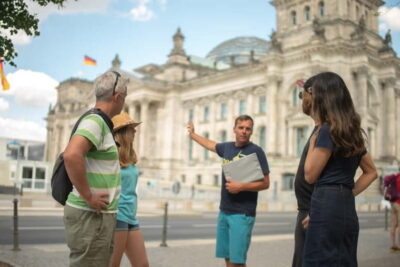
Browse the lists this tour appears in