
Reviewed · CRUISES & BOAT TOURS
Berlin sightseeing boat tour on the Spree
A lazy hour on Berlin’s river beats walking in the rain. You get classic landmark views from the Spree plus a comfortable, seated ride through Mitte. It is also a smart way to start mapping the city, with stops that line up with the most photogenic architecture.
I particularly like the calm, seated sightseeing angle, because you can actually relax while still seeing major hits like Museum Island and the Reichstag area. I also appreciate the onboard touchpoints like a bar for drinks and a toilet on board. One thing to consider is that the audio is recorded and routed by GPS, so timing and volume can vary and the English track may come a little late at some points.
In This Review
- Quick hits before you board
- Entering Berlin via the Spree: the feel of this 1-hour ride
- Getting on and finding your seat at Alte Börse
- Museum Island and Berlin Cathedral at the Lustgarten: what to watch for
- Humboldt Forum inside the Berlin Palace: modern culture by old walls
- Mühlendammschleuse: Berlin’s founding waterway logic
- Nikolaiviertel: the oldest core, rebuilt into a story
- The Berlin TV Tower at 368 meters: a landmark you can anchor on
- Museum Island’s five museums and UNESCO status: how to read the big cluster
- Reichstag and the Bundestag glass dome: seeing power from water level
- Berlin Hauptbahnhof: modern transport muscle on the Spree
- Federal Chancellery and the Spreebogen setting
- House of World Cultures on the Spree: contemporary art, historic shell
- Audio in German and English via GPS: the real make-or-break factor
- Seats, photos, and onboard comfort on a seated city cruise
- Price and value: why about $26 can work well here
- Should you book the Berlin Spree sightseeing boat tour?
- FAQ
- How long is the boat trip?
- Is there English narration?
- How much does it cost?
- Are snacks included?
- Is there a toilet on board?
- Where do I meet the tour?
- Can I cancel for a full refund?
Quick hits before you board
- Spree viewpoints, not just roadside photos, so the skyline looks different from the water
- English included, delivered via recorded narration that’s GPS triggered
- Comfort-first seating, including covered space below deck on some departures
- Main landmarks in one loop, good for a first day when you want orientation fast
- Bar and drinks available, plus some trips note snacks like pretzels
- Audio can be picky, especially if you are focused on catching the English timing
Entering Berlin via the Spree: the feel of this 1-hour ride
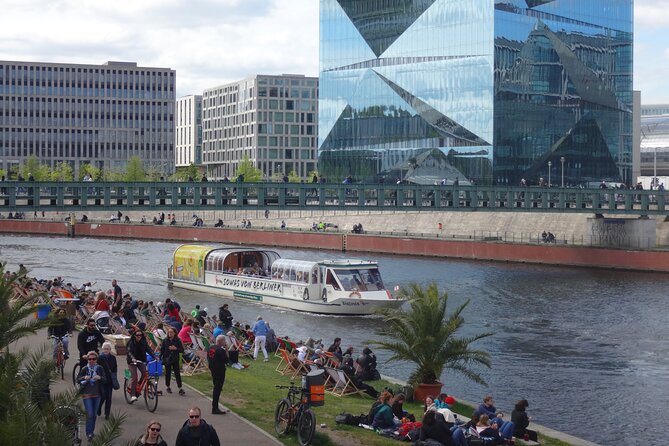
This is a straightforward Berlin sightseeing boat tour on the Spree, running about 1 hour. That length matters. A short cruise gives you maximum payoff without turning your day into a logistics puzzle, especially if you are balancing museums, transit, and meals.
You sit while Berlin glides by. That sounds basic, but it is a real advantage when you want the city view without the legs. I also like that you get a mix of eras along the route, from preserved-looking old-town corners to bold government and modern architecture.
The meeting point is Anlegestelle Alte Börse / BWSG Berliner Wassersport und Service GmbH, Burgstraße 27, right in the Mitte area. The tour ends back at the same place, so you do not have to plan your next move around a different pier.
More Boat Tours in Berlin
- Berlin: 1-Hour City Tour by Boat with Guaranteed Seating
★ 4.3 · 16,993 reviews - Berlin: Boat Tour Along the River Spree
★ 4.4 · 11,252 reviews - Berlin: 1-Hour Boat Tour with Bilingual Guide (Ger/Eng)
★ 4.7 · 4,800 reviews
Getting on and finding your seat at Alte Börse
This tour runs as a private activity, meaning only your group participates. Still, boats can feel close if departures are busy, so seat choice is not just comfort, it affects how much you enjoy the audio.
Here is what helps:
- If your priority is photos, try to choose a seat near the perimeter and aim for good light.
- If you want clearer audio, sit where you can best hear the onboard speaker system, and avoid getting pushed too far away by a noisy cluster behind you.
On at least some departures, there is covered seating below deck, and people have noted route information shown on TVs. If the weather looks iffy, that is the kind of detail that turns a good trip into a great one.
Museum Island and Berlin Cathedral at the Lustgarten: what to watch for
Early in the route, the boat frames the Berlin Cathedral at the Lustgarten, the Oberpfarr- und Domkirche zu Berlin. It is a Protestant church built between 1894 and 1905 in a Neo-Renaissance and Neo-Baroque style. The cathedral is also tied to dynastic burials, which gives it more weight than it might seem like from a distance.
From the water, the cathedral’s scale feels more dramatic. The Lustgarten waterfront approach also makes it easier to understand how Museum Island sits in the river’s geography, not just as a museum district you walk through.
Possible snag: the audio is recorded and triggered as the boat passes. If the English track feels delayed, you might want to listen for the landmark cues on German first, even if English is your goal. One reviewer noted that English descriptions sometimes arrive after the boat has already passed the site.
Humboldt Forum inside the Berlin Palace: modern culture by old walls
Next up is the Humboldt Forum in the Berlin Palace. The narration frames it as a universal museum, and it is tied to collections like the Ethnological Museum and the Museum of Asian Art. It also supports other events, exhibitions, and guided tours in the building.
From the Spree, this is a good stop to watch how the building’s form catches light. Even if you do not plan to go inside, seeing it from the river helps you picture it as part of the Palace complex rather than a single façade.
Consideration: because this is an onboard audio experience, you will get less detail than you would on a live walking guide. If you are the type who likes to zoom in on plaques and names, budget time later in Berlin for museum visits or a separate guided tour.
More boat trips from Berlin:
- Berlin: 3.25-Hour Spree & Landwehrkanal Boat Tour
★ 4.6 · 4,311 reviews - Berlin: Hop-On Hop-Off Sightseeing Bus with Boat Options
★ 4.3 · 4,012 reviews - Berlin: 1-Hour City Sightseeing Cruise
★ 4.4 · 2,210 reviews - Berlin: 2.5-Hour East Side Boat Cruise with Commentary
★ 4.4 · 2,016 reviews
Mühlendammschleuse: Berlin’s founding waterway logic
Then you hit the Mühlendammschleuse, the lock in Mitte east of Mühlendamm on the Fischerinsel. This stop is practical history: the narration explains it sits on the Spree-Oder waterway, and historically it connects the towns of Berlin and Cölln, the foundation point for the city of Berlin.
The lock itself was put into operation in 1942, and it overcomes a drop of 1.51 meters. Whether or not you see the lock action up close from your seat, hearing the “why here” story makes this stretch feel more meaningful than a scenery-only moment.
A small tip: if you care about understanding the city’s layout, locks and river engineering are perfect places to focus. They explain why Berlin’s growth followed the water.
Nikolaiviertel: the oldest core, rebuilt into a story
As the boat continues, you reach Nikolaiviertel, described as the oldest settlement area in Berlin. Much of it was destroyed in World War II, then rebuilt in 1980 to 1987 by architect Günter Stahn for the East Berlin magistrate around the city’s 750th anniversary.
What you are likely to see from the river is an ensemble around the Nikolaikirche, with a mix of historic-looking town houses and prefabricated buildings that follow an almost medieval floor plan. Even from the water, this area reads like a curated time capsule, created to recreate a look and feel after the war.
Drawback to note: you may not get a slow, photo-friendly moment the way you would with a stop-and-stroll walking segment. If your goal is deep architectural inspection, plan for quick, composed photos and let the audio provide the interpretive context.
The Berlin TV Tower at 368 meters: a landmark you can anchor on
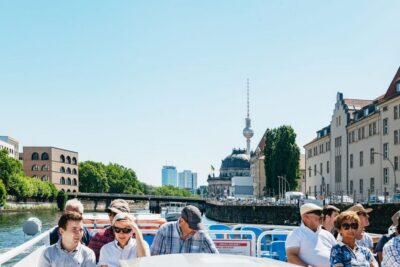
Next, you get a major skyline anchor, the Berlin television tower at 368 meters. It is the tallest building in Germany and the fifth tallest television tower in Europe. Completed in 1969, it was once the second highest television tower in the world and it still draws huge visitor numbers.
This is the kind of stop that works well on a boat tour because a tall tower becomes a moving reference point. Even if the narration timing is imperfect, you can keep the tower in frame and still follow the route’s geography.
Photography tip: pick seats that keep your camera supported and minimize glare. A sunny day helps a lot, and a perimeter seat gives you better angles when the boat passes parallel to the shore.
Museum Island’s five museums and UNESCO status: how to read the big cluster
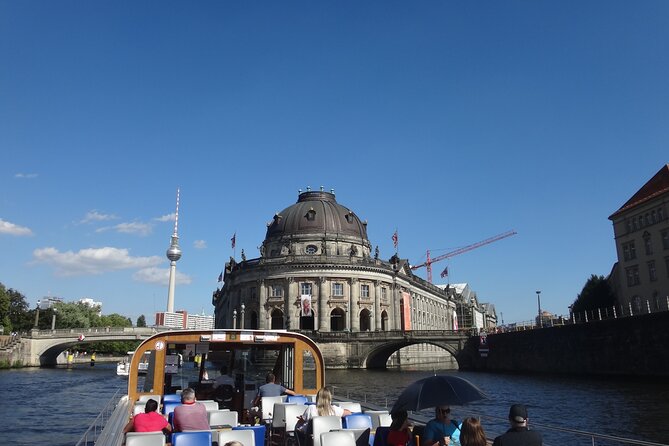
Now you get the heart of Mitte’s museum gravity: Museum Island. The UNESCO angle is part of the narration, with the ensemble included on the World Heritage List in 1999. The tour frames it as five museums built between 1830 and 1930 on behalf of the Prussian kings, with plans by multiple architects.
The narration highlights the five components:
- Old Museum
- New Museum
- Old National Gallery
- Bode Museum
- Pergamon Museum
It also notes the James Simon Gallery opened as a visitor center on July 12, 2019. Even if you do not go inside, this is a useful “map in your head” moment, because it ties the visible museum façades to the names you will hear everywhere.
How this helps you as a traveler: if you are planning a museum day later, this cruise gives you the river-side orientation. You start to understand which side you should approach from and why.
Reichstag and the Bundestag glass dome: seeing power from water level
The boat then brings you to the Reichstag building, home to the German Bundestag since 1999. The narration covers the long arc, including that it was originally built between 1884 and 1894 in Neo-Renaissance style by Paul Wallot, and later restored after major damage from a fire in 1933 and World War II.
The most recognizable feature is the glass dome over the plenary hall, designed during the Foster renovation era. From the river, you get a more grounded sense of the building’s place in the cityscape, and you see how the parliament area sits as a deliberate zone around Platz der Republik.
Photo realism note: you may not get the exact same view as you would from the walking paths around the square, but boats give you a slightly more “wide” sense of spacing and approach streets.
Audio timing heads-up: several reviews complained that the English explanations sometimes kick in after the site has passed. If you care about the dome story, do not wait for English only, because you might miss the moment.
Berlin Hauptbahnhof: modern transport muscle on the Spree
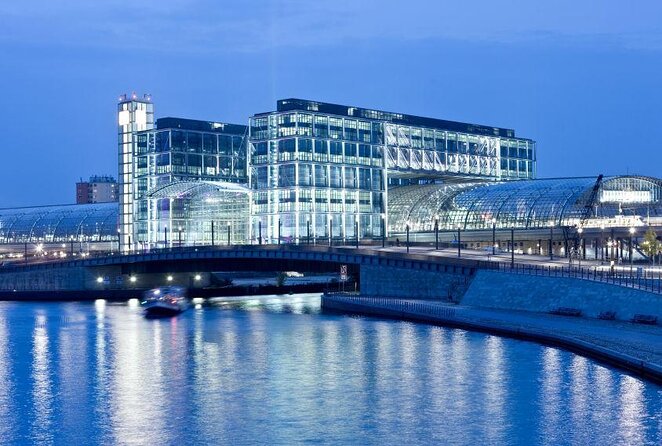
Next is Berlin Hauptbahnhof, described as the most important passenger station in Berlin and the largest tower station in Europe. The details matter here, because it sounds like pure tech info until you see it alongside the river.
The narration says it handles around 330,000 travelers and visitors daily, with about 1300 trains stopping there every day. It is a crossing station with 14 platform tracks. The building is designed by architect Meinhard von Gerkan, and it ties into the north-south railway tunnel concept described as the “mushroom concept” with the new north-south line operational since May 28, 2006.
Why you should pay attention: this stop helps you see Berlin as a city that moves fast, not only one that remembers. You get government architecture and then you get the living machine of rail transport, all in the same river corridor.
Federal Chancellery and the Spreebogen setting
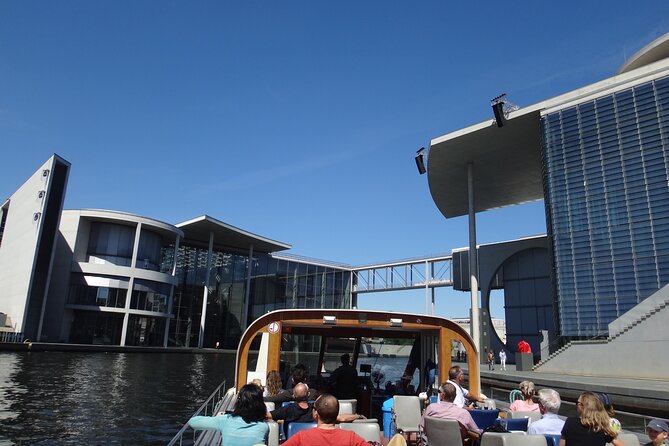
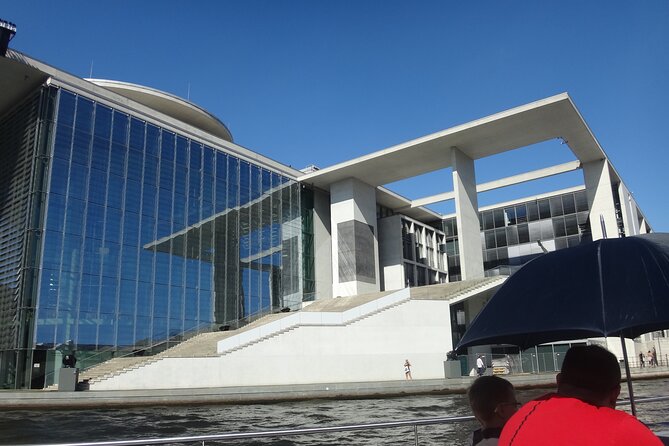
From here, the route points toward the Federal Chancellery, the headquarters that supports the German Federal Chancellor. The narration says the new building in Berlin’s Spreebogen has served since 2001, designed by Axel Schultes, and it opens toward a central square across from Paul-Löbe-Haus.
The boat framing makes this area feel like part of a planned government district rather than a random cluster of offices. It is also separated from the Reichstag by Platz der Republik, which you can understand better from the river’s viewpoint.
Practical note: the Chancellery can be visually harder to “read” from a distance than the Reichstag dome. If you struggle to identify it, that is normal. Use the audio as a guided pointer, not as a substitute for a later walking detour.
House of World Cultures on the Spree: contemporary art, historic shell
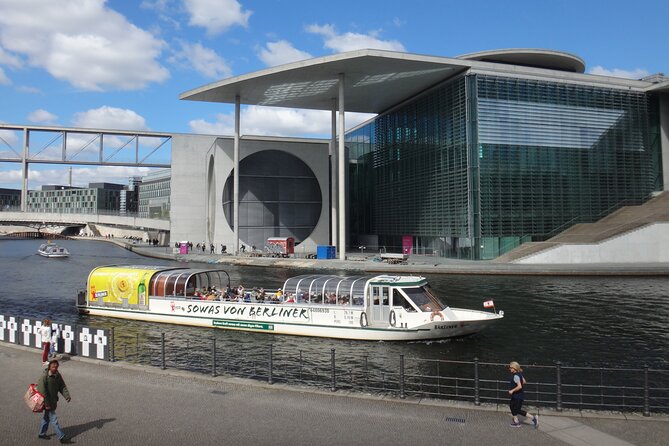
Finally, you reach the House of World Cultures (HKW), an exhibition space for international contemporary art and current discussions, with a focus mentioned as non-European cultures and societies. The narration ties it to the former congress hall on the Spree, and it describes the building as an icon of architectural modernism with the nickname Pregnant Oyster based on its shape.
This is one of the more interesting “Berlin today” stops on the route, because it connects the river corridor to cultural programming rather than only monuments.
If you are building an itinerary: HKW is a good candidate to check later, because a boat tour gives you the setting, and then the museum can give you the details.
Audio in German and English via GPS: the real make-or-break factor
The tour’s biggest strength is also its biggest variable: the narration. It is recorded in both German and English and delivered through onboard speakers, with playback controlled by GPS as the boat passes landmarks.
What I’d do to get the best experience:
- If English is your priority, be ready for occasional timing lag. The English track may begin after you have already passed the site if the GPS trigger runs a bit late.
- Keep an ear on the German audio cues if you want to catch names and context even when the English portion feels delayed.
- If the volume seems low, consider asking the crew for help during the ride. Some passengers report struggling to hear the English track clearly in certain conditions.
One helpful detail: there is mention of an optional audio guide you can use individually for your language. That can solve the “whole-boat audio is too hard to hear” problem, especially if you get stuck in a noisy spot.
Seats, photos, and onboard comfort on a seated city cruise
This is not a standing tour. You sit, and that changes everything about your pace. You can keep your camera out longer. You can watch light shift on glass and stone. You can also take it easy if you have been on your feet all morning.
What helps for comfort:
- Choose seats with a view that matches your photo goals, perimeter seats can work well.
- If you are sensitive to noise, pick your spot carefully, because some reviews describe difficulty hearing commentary when other passengers are loud.
- If weather turns, the covered seating below deck noted on some departures is worth aiming for.
Food and drink: the tour explicitly does not include snacks, but the onboard bar and drinks for purchase are repeatedly mentioned. Drinks have been described as reasonably priced, and one review specifically noted pretzels fresh on board.
Bathrooms: the presence of a toilet on board is listed. Still, one review said bathrooms were not operational on their trip but they were warned ahead of time. So just go in with the mindset that water operations can sometimes be imperfect.
Price and value: why about $26 can work well here
At $26.36 per person for about one hour, this is priced like a true “do one thing well” city introduction. The value is not in deep lectures, it is in condensed orientation plus comfort.
Here is what you get for the money:
- Major landmark coverage along the Spree in one ride
- Seated, low-effort sightseeing
- English audio included
- A bar option so you are not forced into a separate drink plan right away
Who this value makes sense for:
- First-time visitors who want a quick city map without committing to a long museum day
- Travelers who get tired from walking but still want iconic Berlin views
- Anyone who wants photos from a different angle than streets and squares
When it might not be the best buy:
- If you strongly rely on perfect English timing for every landmark, you might feel frustrated when the English narration comes after the boat passes.
- If you expect a live guide adapting to your questions, this is audio narration, not a conversation tour.
Should you book the Berlin Spree sightseeing boat tour?
Book it if you want a comfortable Berlin orientation that fits into a busy day. I’d especially recommend it early in your trip, since it helps you recognize where places sit along the river before you commit to walking between them later.
Skip or at least be flexible if English audio timing matters more than anything. This tour can be fantastic on a good day, but a few consistent reviews point out that GPS-triggered narration can run late and volume can be hard to hear depending on where you sit.
If you do book, my best advice is simple: sit where you can hear, and use the cruise as the big picture. Then follow up on the spots that tug your interest with a focused museum visit or a walking tour where you can linger.
FAQ
How long is the boat trip?
The boat trip is about 1 hour.
Is there English narration?
Yes. The experience is offered with English.
How much does it cost?
The price listed is $26.36 per person.
Are snacks included?
Snacks are not included.
Is there a toilet on board?
Yes, there is a toilet on board.
Where do I meet the tour?
You meet at Anlegestelle Alte Börse / BWSG Berliner Wassersport und Service GmbH, Burgstraße 27, 10178 Berlin, Germany, and the tour ends back at the meeting point.
Can I cancel for a full refund?
Yes. You can cancel up to 24 hours in advance for a full refund.
Newest Berlin reviews on the site
- Day trip through multicultural city landscapes & photo highlights★ 5.0 · 5 reviews
- Berlin in one day – day tour with an expert guide★ 5.0 · 14 reviews
- Berlin on Your Own – Deluxe Round Trip from Warnemünde Port★ 4.5 · 5 reviews
- Berlin by Night Private Tour – All Must-See Sites Magically Lit Up at Night★ 4.0 · 5 reviews
- Berlin & Sachsenhausen Concentration Camp Tour from Warnemünde and Rostock Port★ 4.5 · 60 reviews
- Berlin and Car Culture Tour★ 4.5 · 8 reviews
- Berlin & The Third Reich Private Guided Tour★ 5.0 · 3 reviews
- The Beauty of Berlin by Bike: Private Tour★ 5.0 · 59 reviews
Cruises & Boat Tours, compared.
1-Hour City Tour by Boat with Guaranteed Seating
Read our review →
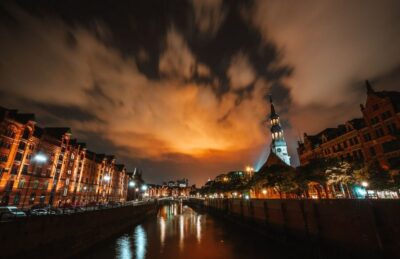
1.5-Hour Harbor and Speicherstadt Day Cruise
Read our review →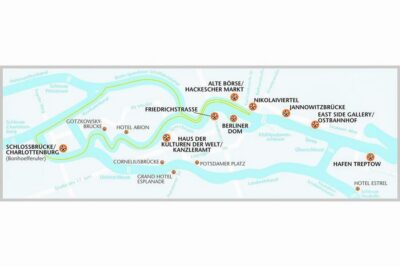
River Main Sightseeing Cruise with Commentary
Read our review →Browse the lists this tour appears in