
Reviewed · THIRD REICH & COLD WAR TOURS
Berlin & The Third Reich Private Guided Tour
Berlin has darker chapters in plain sight. This private guided walk turns major Berlin landmarks into a clear timeline of how the Third Reich rose, ruled, and fell. I like that it is private, so the guide can pace the story to your questions, not a big-group schedule.
Two things I really like are the stop-by-stop route and the way it connects locations to cause and effect. You start at Pariser Platz and the Brandenburg Gate area, then move through the Reichstag, the Holocaust Memorial, and the stark location tied to Hitler’s final days. You also end up at Potsdamer Platz and Checkpoint Charlie, so you see how Berlin’s trauma kept shaping politics long after 1945.
One drawback to consider: this tour is emotionally heavy. Even with a great guide, you are walking through places tied to genocide, dictatorship, and war, so it is not the right fit if you want a light, casual sightseeing day.
In This Review
- Key Things You’ll Remember From This Berlin Third Reich Tour
- Why a Third Reich Walking Tour Makes Sense in Berlin
- Price and Value for a Private Group Up to 15
- Start at Brandenburg Gate: Easy Meeting, Easy Orientation
- Stop 1: Pariser Platz, Where Berlin Shows Its Face
- Stop 2: Reichstag Building and the Reichstag Fire Link to Total Control
- Stop 3: Brandenburg Gate, From Imperial Symbol to Wall-Era Divide
- Stop 4: The Holocaust Memorial, A Place That Makes You Slow Down
- Stop 5: Fuhrerbunker, Hitler’s Final Days in a Today-Exists Form
- Stop 6: Potsdamer Platz, From WWII Destruction to Modern Berlin
- Stop 7: Checkpoint Charlie and the Cold War Line
- The Guides Make the Difference, and the Pacing Is the Secret
- How the 4-Hour Route Fits Together (So You Don’t Feel Lost)
- Who Should Book This Private Berlin Third Reich Tour
- Should You Book This Berlin & The Third Reich Private Guided Tour?
- FAQ
- How long is the Berlin & The Third Reich private guided tour?
- What is the price, and how many people can be in a group?
- Where does the tour start and end?
- Is pickup available, and will I get a mobile ticket?
- Do I need to pay admission fees at the stops?
- What happens if I cancel?
Key Things You’ll Remember From This Berlin Third Reich Tour
- A clear story arc from Hitler’s rise through the war years to the postwar era
- Major sites in one walk, including the Holocaust Memorial and the Reichstag fire link
- Free entry at each stop, so you are not fighting ticket lines or museum timing
- Private group up to 15, good for couples, families, and small friend groups
- Guides named Walid, Campbell, and Gregor stand out for strong explanations and pacing
Why a Third Reich Walking Tour Makes Sense in Berlin
Berlin is the rare European city where you can stand in front of famous landmarks and still feel how recent so much of the conflict is. The buildings are still there. The scars are still there. And the geography still matters.
That is what makes this tour work. Instead of treating history like a chapter in a book, you see how power was built in real places, and how later generations kept living with it. You will hear the story of how it began, how it was sustained, and how it was conquered in 1945, all while your feet keep you oriented in the city.
This is also a practical kind of education. Berlin can be confusing if you are bouncing between museums. A guided route helps you connect dots fast, so you do not leave with a pile of facts, but with an actual understanding of how events moved.
More Third Reich & Cold War Tours in Berlin
- Berlin: Third Reich and Cold War 2 Hour Walking Tour
★ 4.9 · 6,830 reviews - Berlin: Berlin Story Bunker Entry Ticket
★ 4.6 · 6,759 reviews - Berlin’s Best: 2 Hour Walking Tour Third Reich and the Cold War
★ 5.0 · 5,486 reviews
Price and Value for a Private Group Up to 15
The price is $329.92 per group for up to 15 people, and the tour runs about 4 hours. That pricing setup can be surprisingly cost-effective if you are traveling with others, because you are paying for the guide as a group, not per person.
Here is the simple math:
- With 15 people, your rough per-person cost is about $22.
- With 6 people, it is about $55 each.
- With 2 people, it is about $165 each.
So I would think about your group size. If you are a couple, it might feel like a premium. If you are a small crew, it can feel like a bargain compared to paying separately for multiple tickets and guided sessions.
Another value point: the stops are free for admission. That matters because it keeps the tour focused on talking and walking, not ticket logistics.
Start at Brandenburg Gate: Easy Meeting, Easy Orientation
The tour starts at Pariser Platz, 10117 Berlin, at the Brandenburg Gate area, and ends back at the same meeting point. Pickup is offered, and the route is near public transportation, which is helpful in a city where walking is great, but not always the whole plan.
You are also getting a mobile ticket, so you are not scrambling with printouts. Service animals are allowed, which can make a difference for some travelers.
Timing note: it is about 4 hours, and the stops are short at most locations. That means you should plan on a lively pace, with your guide pausing long enough for context but not turning the day into a museum marathon.
Stop 1: Pariser Platz, Where Berlin Shows Its Face
You begin at Pariser Platz, one of Berlin’s most prestigious squares, at the end of Unter den Linden, and right near the Brandenburg Gate. Even if you have seen photos of it, standing there gives you scale. It helps you understand that political theater happens in public spaces, not hidden rooms.
Why it matters for the Third Reich story: the tour uses this area to set the stage. It is about power in view, and how leaders used Berlin’s most visible places to build legitimacy and control attention.
What to watch for: look at how open and formal the square feels. Your guide can use that contrast to explain how authoritarian messaging often relies on grand, public settings.
More wartime and Cold War history walks in Berlin:
- Third Reich Berlin: Hitler and WWII Walking Tour
★ 5.0 · 3,301 reviews - Skip-the-Line: Berlin Wall Museum at Checkpoint Charlie
★ 4.1 · 2,041 reviews - Berlin: Third Reich, Hitler, and WWII Walking Tour
★ 4.9 · 1,757 reviews - Cold War, Berlin Wall, Spies and the East Side Gallery
★ 5.0 · 1,024 reviews
Stop 2: Reichstag Building and the Reichstag Fire Link to Total Control
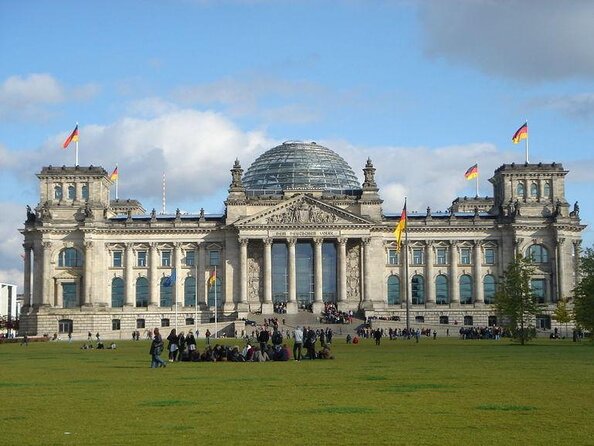
Next comes the Reichstag Building, Germany’s House of Parliament. This site is famous for the fire that enabled Hitler to take total control, and it is also a place tied to the Battle of Berlin, fought between the Germans and the Soviets.
Then you see the modern feature on top, the glass cupola designed by British architect Sir Norman Foster. Even if you are not going inside, it visually connects past and present, which is exactly what a Berlin history tour should do.
Why this stop is worth the time: the Reichstag gives you a snapshot of how political systems can be changed fast when fear and chaos are weaponized. The point is not just that something terrible happened, but how it shifted governance into something far darker.
A practical consideration: this is a busy landmark area. If you dislike crowds, you might feel a bit of jostling just from the location itself.
Stop 3: Brandenburg Gate, From Imperial Symbol to Wall-Era Divide
Brandenburg Gate is one of 18 former city gates, and it survived everything from Napoleon to WWII. Then it spent almost 30 years trapped in the middle of the Berlin Wall, turning into a symbol of division. After reunification, it became a symbol of a reunited Germany.
This stop is powerful because your guide can show you how a single structure can shift meaning depending on the political moment. The stones and arches do not change, but the story does.
What you will likely notice: the gate reads like an obvious photo spot, but the tour treats it like a political timeline. By the time you reach the gate, you already know enough to see why it kept being used as a statement.
If you want one takeaway from this stop, it is this: Berlin’s landmarks are not just scenery, they are messages that different regimes tried to own.
Stop 4: The Holocaust Memorial, A Place That Makes You Slow Down
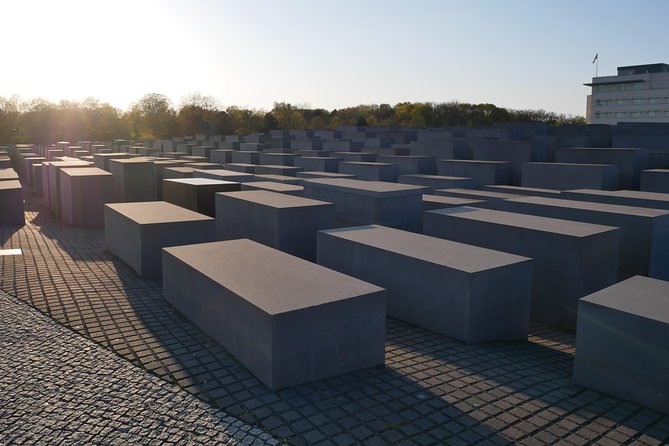
Then you reach the Holocaust Memorial, the Memorial to the Murdered Jews of Europe. This massive site is covered with stone stelae and is the central Germany memorial to the Jewish victims of the Holocaust.
The value here is simple: it brings you from the political machinery of dictatorship into the human reality of genocide. The tour does not treat it as a checklist item. It gives it time, because this is not a quick photo stop kind of place.
What to do as you walk: let the space set the pace. You will get context, but you should also give yourself permission to be quiet for a minute. Even a strong guide cannot replace what you feel when you are surrounded by that scale.
One consideration: if you are short on emotional bandwidth that day, plan your other activities carefully. This is the kind of stop you might want to think about afterward, not rush past.
Stop 5: Fuhrerbunker, Hitler’s Final Days in a Today-Exists Form
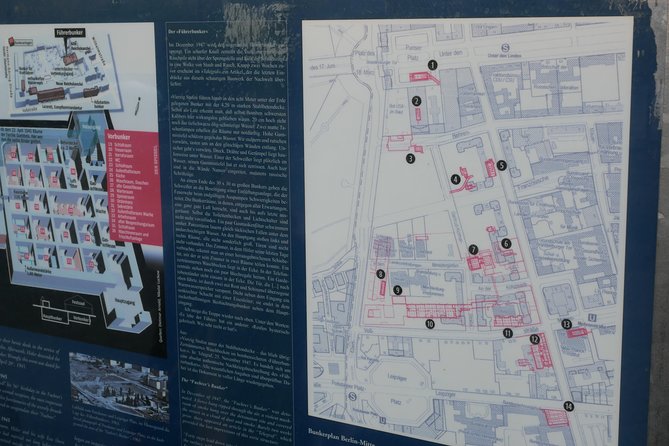
Next is the Fuhrerbunker area. Today it is a parking lot with a simple sign, but this is the location where Hitler spent his final days. The story includes his marriage and his suicide during the final days of WWII in Europe.
This stop can hit hard because it shows how history can become ordinary space. A parking lot is not what you expect when you hear the name Fuhrerbunker. That contrast is part of what the tour is trying to make clear.
Why it matters for understanding: authoritarian power often ends with violence, and the fall is not abstract. It happens in specific places, and those places then get repurposed, sometimes quickly. Your guide ties the emotional weight to geography, not just dates on a page.
Practical tip: you will be standing in an active real-world setting. Wear comfortable shoes, and be ready for a brief but serious pause.
Stop 6: Potsdamer Platz, From WWII Destruction to Modern Berlin
Potsdamer Platz is next. In the 1920s, it was one of Europe’s busiest traffic intersections. WWII destroyed it almost completely, and then it was rebuilt as Berlin’s most modern precinct during the 1990s and early 2000s.
This stop is useful because it shows the city after catastrophe, not just during it. Berlin rebuilt fast, and the rebuilt city tells you something about priorities and identity, even decades later.
What your guide can help you do here: connect the rebuilt streets to what came before. The point is not to romanticize the present, but to understand how a city moves forward while still carrying the memory of what happened.
One drawback to consider: Potsdamer Platz is modern and busy. If you want a quiet walk, it can feel louder and more commercial than earlier stops.
Stop 7: Checkpoint Charlie and the Cold War Line
You finish at Checkpoint Charlie, the famous frontline and Allied checkpoint manned by the Americans and Soviets during the Cold War.
This ending matters because it explains what happened after the Third Reich, in the very streets where borders and power were still being negotiated. Berlin became a city of checkpoints, and the tour uses that to show continuity, not closure.
Why this stop is a good wrap: it brings you into the post-1945 era and helps you understand how the same city kept shaping political conflict long after the war ended in Europe.
Practical note: this is a landmark area that people like to photograph, so you can expect some crowds, even if your tour time is smooth.
The Guides Make the Difference, and the Pacing Is the Secret
What really shines in the tour experiences is the way the guides pace the story. In the experiences shared by different groups, names like Walid, Campbell, and Gregor show up as strong guides, with an emphasis on explaining and keeping the walk comfortable. One of the best patterns I noticed in how people describe these tours is that stops stay focused on key locations, with enough breaks to keep the information digestible.
To get the most out of your own walk, go in with a couple of questions ready:
- How did propaganda and street-level conflict help the Nazis gain control?
- What do these locations suggest about how ordinary people experienced power?
- How does Berlin’s architecture affect the way you understand the timeline?
If you ask those kinds of questions, you will likely get more than a facts-only tour. You will get a structured way to interpret Berlin on your own for the rest of your trip.
How the 4-Hour Route Fits Together (So You Don’t Feel Lost)
This is a short, focused tour. The stops are spaced across central Berlin, and each one is tied to a different phase of the story. You are basically walking through a set of turning points:
- A prestigious starting point near Brandenburg Gate
- The Reichstag linked to seizure of total control and wartime damage
- The Brandenburg Gate as a symbol that changed meaning through the wall years
- The Holocaust Memorial for the human consequences
- The Fuhrerbunker location for the end phase of WWII in Europe
- Potsdamer Platz for destruction and rebuilding
- Checkpoint Charlie for the Cold War shift
That structure is what keeps you from leaving with disconnected landmarks. If you want to see Berlin later on your own, you will have an internal map now, not just random stops.
Who Should Book This Private Berlin Third Reich Tour
This tour is a great fit if you want:
- A guided walk through Berlin landmarks tied directly to WWII-era power and its aftermath
- A private experience without having to manage museum schedules
- A route where admission is free at each stop
- A clear narrative, not just dates and names
You might want to choose a different plan if:
- You want a carefree sightseeing day with minimal emotional weight
- You are uncomfortable with standing in meaningful locations that demand seriousness
- You prefer long museum time over short, story-driven stops
If you are visiting Berlin for the first time, this can also work as a foundation day. It gives you context, so your later self-guided exploring makes more sense.
Should You Book This Berlin & The Third Reich Private Guided Tour?
If your goal is understanding Berlin through the lens of the Third Reich and its aftermath, I think this is a solid choice. The value looks especially good for small groups because you get a private guide for about four hours, with free entry at each stop and a route that hits the big, important locations.
Just be honest with yourself about pacing and emotion. This is not a casual history walk, it is a structured confrontation with dictatorship, war, and genocide. If that is what you came to Berlin for, book it. If you are seeking something lighter, you might want a different kind of city tour that day.
FAQ
How long is the Berlin & The Third Reich private guided tour?
It lasts about 4 hours.
What is the price, and how many people can be in a group?
The price is $329.92 per group, and the group size can be up to 15 people.
Where does the tour start and end?
It starts at Pariser Platz, 10117 Berlin, Germany by Brandenburg Gate, and it ends back at the same meeting point.
Is pickup available, and will I get a mobile ticket?
Pickup is offered, and you receive a mobile ticket.
Do I need to pay admission fees at the stops?
Admission is listed as free for each stop on the route.
What happens if I cancel?
This experience is non-refundable and cannot be changed for any reason.
Newest Berlin reviews on the site
- Day trip through multicultural city landscapes & photo highlights★ 5.0 · 5 reviews
- Berlin in one day – day tour with an expert guide★ 5.0 · 14 reviews
- Berlin on Your Own – Deluxe Round Trip from Warnemünde Port★ 4.5 · 5 reviews
- Berlin sightseeing boat tour on the Spree★ 4.0 · 93 reviews
- Berlin by Night Private Tour – All Must-See Sites Magically Lit Up at Night★ 4.0 · 5 reviews
- Berlin & Sachsenhausen Concentration Camp Tour from Warnemünde and Rostock Port★ 4.5 · 60 reviews
- Berlin and Car Culture Tour★ 4.5 · 8 reviews
- The Beauty of Berlin by Bike: Private Tour★ 5.0 · 59 reviews
Third Reich & Cold War Tours, compared.

Berlin’s Best: 2 Hour Walking Tour Third Reich and the Cold War
Read our review →
Third Reich Berlin: Hitler and WWII Walking Tour
Read our review →
Skip-the-Line: Berlin Wall Museum at Checkpoint Charlie
Read our review →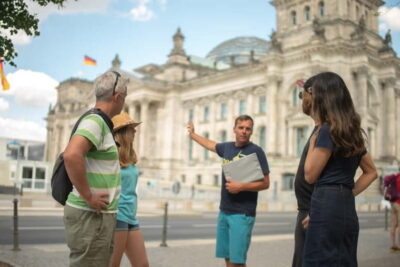
Browse the lists this tour appears in