
Reviewed · THIRD REICH & COLD WAR TOURS
Berlin: Guided Bike tour of the Berlin Wall and Third Reich
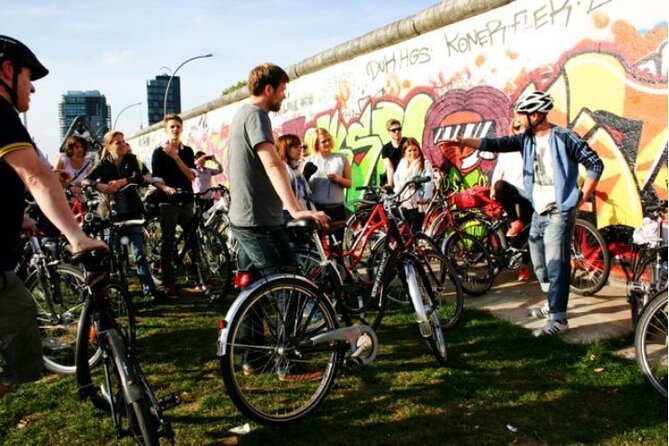
Berlin history feels close when you pedal.
This tour pairs comfortable bikes and helmets with a local guide who steers you to key memory sites without turning it into a hurried checkpoint crawl. I also like that it’s family-friendly, so kids can take in heavy history at a pace that still feels human. One drawback to plan for, though: many stops are short, so if you want to linger, bring a list of places you will revisit on your own.
You’ll cover the city efficiently while your guide explains how Berlin got cut in two, what the wall changed in daily life, and how Nazi power connects to what came before and after. The tour is run in all weather, so it’s best when you show up dressed for the day, not dressed for the photo.
In This Review
- Key things that make this bike tour worth your time
- Berlin Wall and Third Reich by bike, not by bus
- Price and what you actually get for it
- Meeting point, timing, and how to prepare to ride well
- Nikolaiviertel, the “old town” start, and why it sets the mood
- From the synagogue story to deportation memory
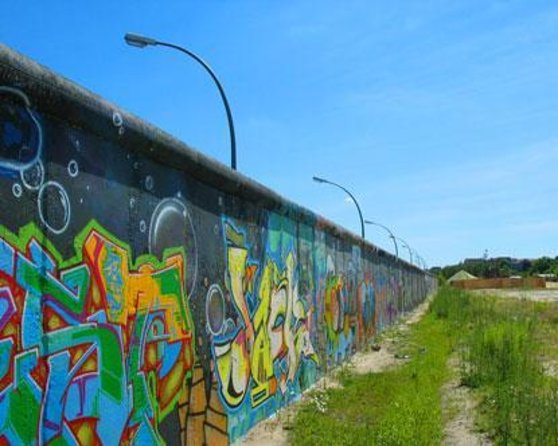
- Where the Wall still feels alive: the Berlin Wall memorial stop
- Mauerpark: from division to free expression
- Humboldthain Flak Tower: Nazi architecture plus a real viewpoint
- Günter Litfin Memorial: the Wall’s violence in one preserved structure
- Invalidenfriedhof: cemeteries, escape stories, and the Wall as a divider
- Spreebogenpark and the Reichstag area: Hitler’s plans meet Germany’s institutions
- Holocaust Memorial area: why size, placement, and design matter
- Fuhrerbunker, today a parking lot, and why the guide’s explanations matter
- Checkpoint Charlie, English-only in this tour version
- Guides make the difference: the names I’d watch for
- A fair word about what you might want more time for
- Who should book this bike tour (and who should skip it)
- Should you book this Berlin Wall and Third Reich bike tour?
- FAQ
- How long is the Berlin Wall and Third Reich bike tour?
- How much does the tour cost?
- What language is the tour offered in?
- What is included with the tour?
- Is the tour family-friendly?
- Are food and drinks included?
- Does the tour run in bad weather?
- Where do we meet and where does it end?
Key things that make this bike tour worth your time
- Bike plus helmet included so you can focus on the ride, not logistics.
- Local stories alongside the memorials, including the kind of detail that makes the wall feel real.
- A short list of major sites, plus lesser-seen stops, so you come away with more than just the headline monuments.
- Family-friendly format, with options for infant seats if requested.
- Free Berlin route concept, meaning guides can adjust the route while keeping the topic and major themes intact.
- Heavy sites handled outdoors, with time to think and questions along the way.
Berlin Wall and Third Reich by bike, not by bus
On a bike tour like this, Berlin’s history comes at you in the order it actually happened in the city. That matters. You see the places where people tried to live through surveillance, fear, and division, and you ride between them without losing time to traffic bottlenecks.
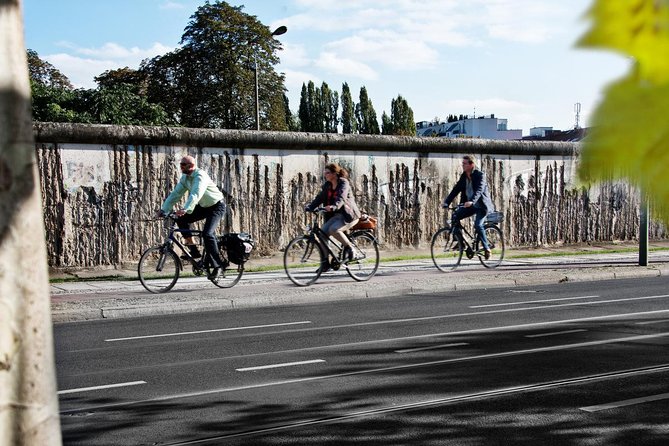
I like the pacing because it balances moving and stopping. You get to experience parks, viewpoints, and open-air memorial areas, not just stand in front of plaques. And since the city is fairly flat, the ride tends to feel manageable for most people when they take it slow and trust the guide’s instructions.
The tone is also important. This is not a lecture in a room. It’s a guided conversation while you roll past sites tied to the Berlin Wall, Nazi power, and the aftermath, with plenty of room for questions and interpretation. Several guides named in past tours stand out for mixing facts with real human perspective, like Paul, Theo, Juliette, Simon, and Simone.
More Bike Tours in Berlin
- Berlin: Sights and Highlights Bike Tour with a Local Guide
★ 4.8 · 2,698 reviews - Berlin Highlights 3-Hour Bike Tour
★ 5.0 · 948 reviews - Berlin City Bike Tour with Beer Garden Stop
★ 5.0 · 917 reviews
Price and what you actually get for it
The cost is $42.34 per person for about 3 hours, and you do not get charged extra for the big-ticket items. The bike and helmet are included, and your guide is a professional. Many of the stops you visit are free to view or enter on your own, which keeps the tour from turning into a money add-on at every location.
For me, the real value is the combination of three things you usually have to piece together separately in Berlin:
- local navigation through the city on a bike,
- interpretive context for the Wall and Nazi-era sites,
- and practical time efficiency that lets you see a lot without cramming your day.
Also, the tour is capped at a maximum of 15 people, with typical groups starting at 4. In practice, that size tends to feel controlled enough that you can hear your guide and stay together. A common advantage of small groups is that you get clearer guidance on where to park your bike and when to pay attention.
Meeting point, timing, and how to prepare to ride well
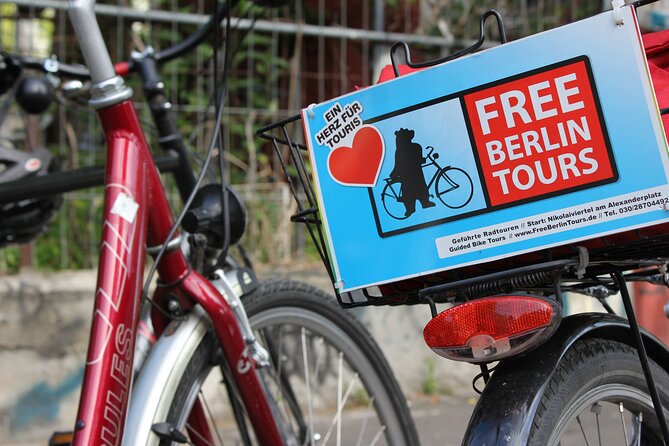
You meet at Free Berlin Bike Tours and Rental, Poststraße 11, 10178 Berlin, and you ride until you end back at the same place. That means you do not have to plan a second transport puzzle at the end of your tour.
This activity runs in all weather, so I’d treat it like a real outdoor plan, not a fair-weather stroll. Wear layers, bring water, and if it’s wet, keep your expectations realistic. Berlin bike lanes and city traffic can be a bit intense, especially at intersections.
One practical tip: look out for how your guide handles group safety. In past tours, guides have given clear instructions, waited for people at red lights, and guided the route to make the ride less stressful. You’ll enjoy the experience more if you arrive ready to follow those cues, rather than trying to ride independently.
Finally, confirm what language option you booked. The tour can run in English, and it matters for one major stop.
Nikolaiviertel, the “old town” start, and why it sets the mood
You begin at Nikolaiviertel, which the guide frames as Berlin’s true old-town core. The way this stop is introduced matters because it forces you to think about time differently. If Berlin’s older layers survived, what does that say about what got destroyed, rebuilt, or erased?
It’s a good warm-up because it’s close to your start and quick to absorb while you’re still getting settled on the bike. If you’re the type who likes big context early, this helps anchor the rest of the tour. If you prefer facts fast, your guide will likely tie the area’s age to Berlin’s twentieth-century shocks right away.
More Third Reich & Cold War Tours in Berlin
- Berlin: Third Reich and Cold War 2 Hour Walking Tour
★ 4.9 · 6,830 reviews - Berlin: Berlin Story Bunker Entry Ticket
★ 4.6 · 6,759 reviews - Berlin’s Best: 2 Hour Walking Tour Third Reich and the Cold War
★ 5.0 · 5,486 reviews - Third Reich Berlin: Hitler and WWII Walking Tour
★ 5.0 · 3,301 reviews
From the synagogue story to deportation memory
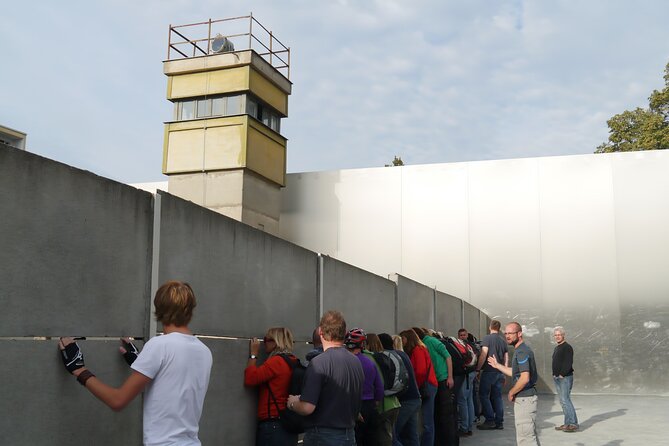
Next you head to Stiftung Neue Synagoge Berlin, Centrum Judaicum. This stop is about civil courage, told through the story of how a police officer saved the building during the night of broken glass. Even if you know the headline of that event, hearing it connected to a specific building gives it weight.
Then you pass a less expected memorial area: a GDR-era memorial for victims of deportation and the Holocaust, and the guide also explains how it contrasts sharply with the more famous memorial landscape near Brandenburg Gate. For me, that contrast is the point. Berlin’s memory is not one uniform style, and seeing the differences helps you understand how politics and time shape what gets remembered and how.
If you’re visiting Berlin for the first time, this part is where you start to realize the city isn’t just “historic sites.” It’s a living map of decisions, denial, survival, and remembrance.
Where the Wall still feels alive: the Berlin Wall memorial stop
A highlight is the Memorial of the Berlin Wall, described as one of the few spots where the wall feels more than symbolic. Here, you can really understand what it meant and did to people in everyday terms. The guide uses it like an educational checkpoint, not just a photo stop.
What makes this work on a bike tour is that you ride between meaning. You do not arrive, stare for a minute, and move on. Your guide connects what you see to how Berliners adapted, and the questions help you process what you’re looking at. It also sets up the later transitions to areas that became free-expression spaces after the wall fell.
Mauerpark: from division to free expression
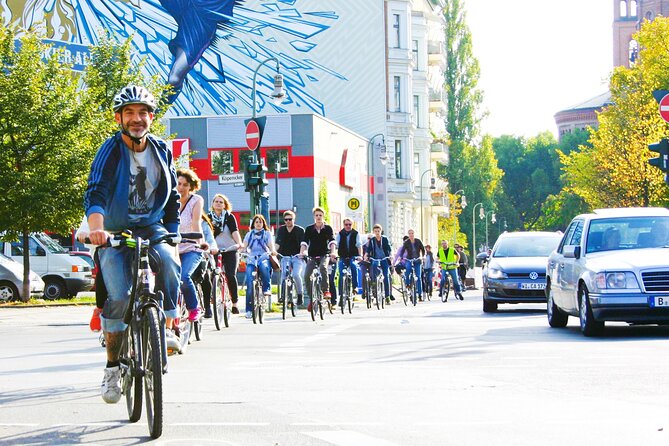
Then you reach Mauerpark, known today for Sunday flea market energy. On this tour, the guide flips the script. Instead of treating it like a trendy market stop, you learn how a city, tortured by the wall for decades, turned a hard boundary into an outlet for public life.
This is one of the most emotionally balanced parts of the ride. It gives you a sense of release without pretending the past disappears. You see how Berlin can repurpose space, and you start to understand why the wall’s legacy is both painful and instructive.
Humboldthain Flak Tower: Nazi architecture plus a real viewpoint
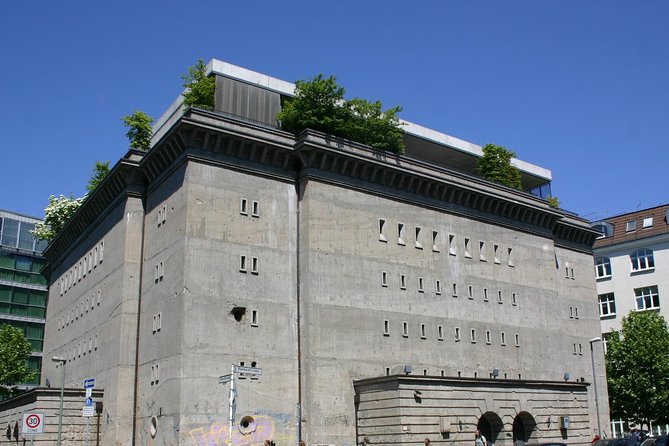
At Humboldthain Flak Tower, you get a change of scenery. The guide explains that it was once a fortress and air-raid shelter, and you also get a panoramic view. This is where the tour brings in Nazi-era architecture and planning ideas in a way that feels grounded rather than abstract.
The top-down perspective is useful because it forces you to connect people and place. You’re not only reading about what happened. You’re looking out at the city and imagining how power, fear, and defense were built into the urban fabric.
Günter Litfin Memorial: the Wall’s violence in one preserved structure
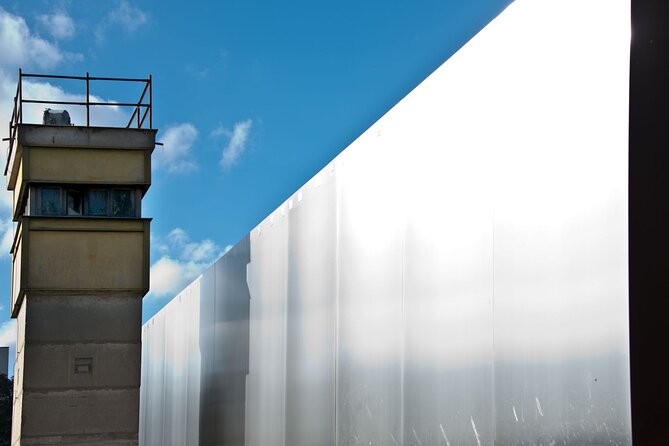
Next is the Gunter Litfin Memorial, featuring a preserved watchtower. The guide ties it to the fact that Günter Litfin was the first person shot at the Wall. That single detail cuts through generalities and makes it personal.
Stops like this are why a bike tour can be more powerful than a quick bus ride. Your guide can slow down just enough for you to absorb the meaning behind the stone and metal.
Invalidenfriedhof: cemeteries, escape stories, and the Wall as a divider
You then move to Invalidenfriedhof, a cemetery cut in the middle by the Wall. The guide also explains it was made for Prussian heroes connected to German military history, and the focus shifts toward escape stories because the cemetery sits near former checkpoints and a canal that acted as a natural border.
If you’ve ever wondered why the Wall could feel like it dominated everything, this is one of the best answers. You see how it wasn’t only a border line. It was a physical force that shaped routes, access, and the timing of hope.
Spreebogenpark and the Reichstag area: Hitler’s plans meet Germany’s institutions
At Spreebogenpark, you get an overview of the governing district of Germany. The guide uses the view to discuss plans by Albert Speer, including the vision for a Great Hall meant to hold 180,000 people. Even if you don’t memorize every detail, the guided explanation helps you see how Nazi ambition used architecture and scale to sell power.
Then you stop at the Reichstag Building area. This is an exterior stop where the guide explains Hitler’s grab of power and Germany’s democratic history. The way Berlin lays these layers next to each other is the story. From the bike, you can see why the Reichstag remains a symbol that never fully stops meaning something.
Holocaust Memorial area: why size, placement, and design matter
The tour continues through memorial areas for the Holocaust, including a stop described as one of three memorials for major victim groups. Then you reach The Holocaust Memorial, Memorial to the Murdered Jews of Europe, framed here as the largest genocide memorial in the world.
One detail the guide emphasizes is that this memorial was created by the ones responsible for the killing. That framing may sound shocking at first, but it pushes you to grapple with how memory, guilt, and responsibility are handled. It’s not just a monument. It’s also a statement about postwar acknowledgment.
This part can feel heavy, and the outdoor format helps. You can absorb at your own pace while still having a guide ready to contextualize and answer questions. In one tour experience, people shared their own interpretations of the memorial, which is often a sign that the guide created space for thoughtful processing.
Fuhrerbunker, today a parking lot, and why the guide’s explanations matter
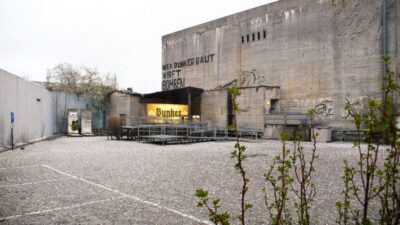
Next is Fuhrerbunker, described as the place where Hitler hid during the last weeks of war and where he eventually committed suicide. Today, what you see is basically a parking lot, which is exactly why this stop is worth doing with a guide.
Without context, it can feel like anticlimax. With context, it becomes a lesson in erasure and how history survives in fragments. The guide explains why the site looks the way it looks now, and that transforms a mundane modern view into a meaningful historical location.
Checkpoint Charlie, English-only in this tour version
You finish at Checkpoint Charlie. One key detail: this is included only in the English version of the tour. It’s presented as the most famous border station of the Cold War, known for being the only shared checkpoint between the USA and USSR, and the guide also discusses the tense moment when the Cold War could have turned into a third world war.
Even if you’ve seen Checkpoint Charlie on postcards, this stop feels different on a bike because you arrive with all the earlier wall context in your head. You’re not only looking at a border marker. You’re connecting two periods of division and power struggle in one city.
Guides make the difference: the names I’d watch for
A big reason this tour lands in high ratings is the storytelling. Different guides bring different voices, but several names show up with strong feedback for clarity and interaction:
- Paul, a West Berlin native, for connecting day-to-day life differences and the wall’s fall to the broader Nazi-to-postwar story.
- Theo and Yonis, for mixing detailed historical perspective with safety-minded bike handling.
- Juliette, for breaking down time on the route so larger groups stay manageable.
- Simon and Simone, for interactive history delivery with personal anecdotes that make the memory sites easier to understand.
- Constantine, for careful route choices through park paths when biking near busier streets might worry you.
If you care about how the tour feels, not just what it covers, this is the part that can swing your experience.
A fair word about what you might want more time for
This tour gives you a strong overview, but it does not function like a slow walk-through where you spend long minutes inside one memorial. Many stops are designed to be short, so you will get the main idea and meaning, but you may still want follow-up time elsewhere.
If you booked expecting a heavy focus on the Third Reich beyond the wall story, you may feel a bit of mismatch. Some versions and some guides emphasize the Berlin Wall first, with Third Reich context layered in rather than replacing wall-focused stops. That’s not automatically bad. It just means it’s worth aligning your expectations before you go.
Who should book this bike tour (and who should skip it)
Book it if you want:
- a guided overview of the Wall, Nazi-era context, and aftermath, without wasting half your day in transit,
- a way to see multiple major outdoor sites efficiently,
- and a tour format that works for kids, with infant seats available on request.
Consider another option if you:
- need lots of quiet time at each memorial and hate short stops,
- prefer a more museum-style experience with deeper indoor exhibits,
- or expect a strict, stop-by-stop checklist every single time.
Because of the free route concept, guides can adjust the exact path while keeping the topic. That flexibility is part of what makes each ride unique, but it can also mean your personal must-see list should be checked against the version you booked.
Should you book this Berlin Wall and Third Reich bike tour?
If your goal is to get oriented quickly and understand how Berlin’s division shaped real life, I’d book it. The combination of bike plus helmet, a small group size, and a guide who connects the dots across memorials and political change is exactly the kind of value that makes tours worth your time.
I’d especially book it if you’re comfortable riding in a city environment and you like learning through place-based storytelling. Pick the English version if Checkpoint Charlie is on your must-see list. And if you know you want more time at one or two specific memorials, treat this tour like the opening chapter, then plan your deeper read afterward on your own.
FAQ
How long is the Berlin Wall and Third Reich bike tour?
It lasts about 3 hours.
How much does the tour cost?
The price is $42.34 per person.
What language is the tour offered in?
The tour is offered in English, and it can also run in German depending on the option selected.
What is included with the tour?
You get the use of a bicycle and a helmet, plus a professional guide.
Is the tour family-friendly?
Yes. Children are welcome, and infant seats can be provided on request. Children must be accompanied by an adult.
Are food and drinks included?
No, food and drinks are not included unless specified.
Does the tour run in bad weather?
Yes, it operates in all weather conditions. Dress appropriately.
Where do we meet and where does it end?
You meet at Free Berlin Bike Tours and Rental, Poststraße 11, 10178 Berlin, and the tour ends back at the same meeting point.
More Cycling Tours in Berlin
- Berlin Highlights: 3-Hour Bike Tour
★ 4.9 · 809 reviews - Berlin Highlights Sightseeing Bike Tour in Small Groups
★ 5.0 · 652 reviews - Berlin: Alternative Bike Tour of Kreuzberg & Friedrichshain
★ 4.7 · 548 reviews - Berlin: Guided Bike Tour of The Wall and Third Reich
★ 4.8 · 511 reviews
More Wartime and Cold War History Walks in Berlin
- Skip-the-Line: Berlin Wall Museum at Checkpoint Charlie
★ 4.1 · 2,041 reviews - Berlin: Third Reich, Hitler, and WWII Walking Tour
★ 4.9 · 1,757 reviews - Cold War, Berlin Wall, Spies and the East Side Gallery
★ 5.0 · 1,024 reviews - Berlin Third Reich Sites: Half-Day Walking Tour
★ 5.0 · 835 reviews
Newest Berlin reviews on the site
- Day trip through multicultural city landscapes & photo highlights★ 5.0 · 5 reviews
- Berlin in one day – day tour with an expert guide★ 5.0 · 14 reviews
- Berlin on Your Own – Deluxe Round Trip from Warnemünde Port★ 4.5 · 5 reviews
- Berlin sightseeing boat tour on the Spree★ 4.0 · 93 reviews
- Berlin by Night Private Tour – All Must-See Sites Magically Lit Up at Night★ 4.0 · 5 reviews
- Berlin & Sachsenhausen Concentration Camp Tour from Warnemünde and Rostock Port★ 4.5 · 60 reviews
- Berlin & The Third Reich Private Guided Tour★ 5.0 · 3 reviews
- Berlin and Car Culture Tour★ 4.5 · 8 reviews
Third Reich & Cold War Tours, compared.
Berlin’s Best: 2 Hour Walking Tour Third Reich and the Cold War
Read our review →
Third Reich Berlin: Hitler and WWII Walking Tour
Read our review →
Skip-the-Line: Berlin Wall Museum at Checkpoint Charlie
Read our review →
Browse the lists this tour appears in