
Reviewed · WALKING TOURS
Small Group Walking Tour of East Berlin with a French Guide
Cold War facts come with footsteps. This 3-hour East Berlin walking tour with a French guide strings together the Wall’s most memorable political landmarks, with stops that make the era feel personal and real.
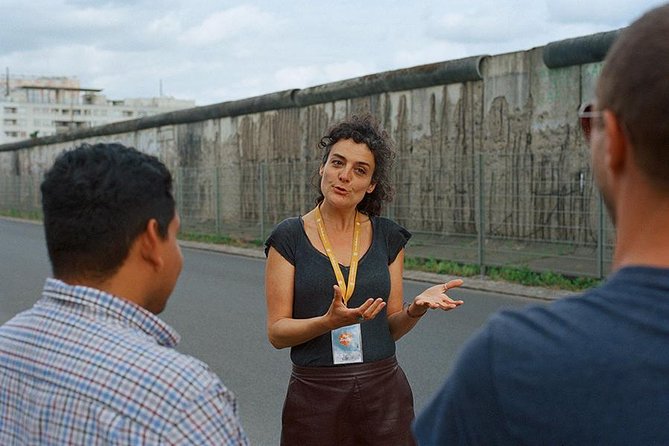
I especially liked the way the tour uses specific places to explain big ideas. Two standouts for me were the focus on the original Berlin Wall Memorial area at Bernauerstrasse, and the stop at the Nordbahnhof ghost station that stayed closed for nearly thirty years after the Wall went up. The explanations can feel clear and energetic, with guide names like Paul and Stéphane praised for being both friendly and pedagogical.
One consideration: the tour is French-language, and it is not door-to-door. You’ll need your own public transportation plan, including a day card for zones AB, and the walking level is listed as moderate.
In This Review
- Key Things You Should Expect
- Entering East Berlin History at Potsdamer Platz
- Nordbahnhof Ghost Station, and the Value of a Silent Place
- Bernauerstrasse Berlin Wall Memorial: Seeing Separation up Close
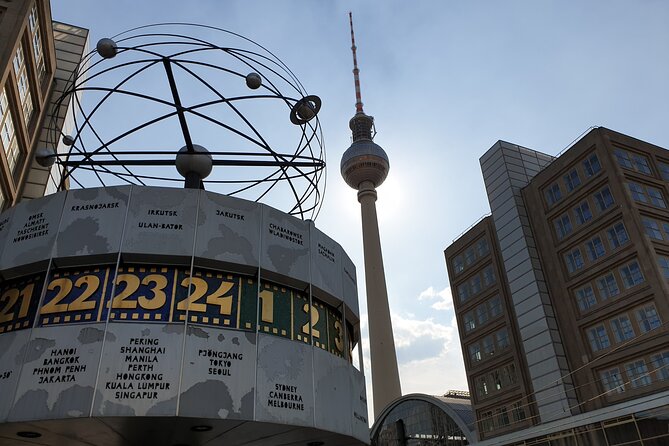
- Alexanderplatz, Socialist Landmarks, and the STASI Thread
- East Side Gallery Finale: Colorful Murals With Deep Context
- The Route Outside the Stops: Karl-Marx-Allee and Key East Berlin Landmarks
- How Much Walking Is It, Really?
- Price and Value: Why This Costs Around $27.91
- The French-Language Factor: How to Prepare
- What Makes the Guide Experience Strong
- Practical Tips for Your Walk
- Should You Book This East Berlin Walking Tour?
- FAQ
- How long is the Small Group Walking Tour of East Berlin?
- What language is the guide?
- What is the price per person?
- Where does the tour start and what time does it begin?
- Where does the tour end?
- How many people are in the group?
- Do I need public transportation for this tour?
- Is food or drinks included?
- Are admission tickets included for the stops?
- Can I cancel for a full refund?
Key Things You Should Expect
- French-speaking guide who ties history directly to what you see on the ground
- Potsdamer Platz meeting point at 10:00 am, then you head toward the former border story
- Nordbahnhof ghost station via S-Bahn, including the idea of places that went silent for decades
- Bernauerstrasse Berlin Wall Memorial at an original section tied to separation and escape attempts
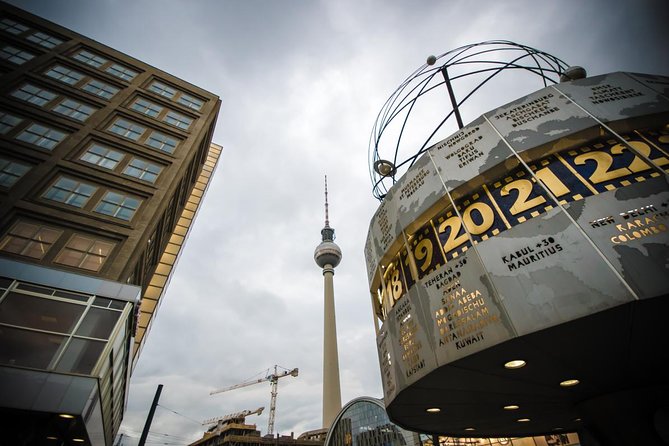
- Alexanderplatz and STASI repression, with peaceful demonstrations linked to the Wall’s collapse
- East Side Gallery finale with 104 murals, including the Brezhnev and Honecker kiss
Entering East Berlin History at Potsdamer Platz
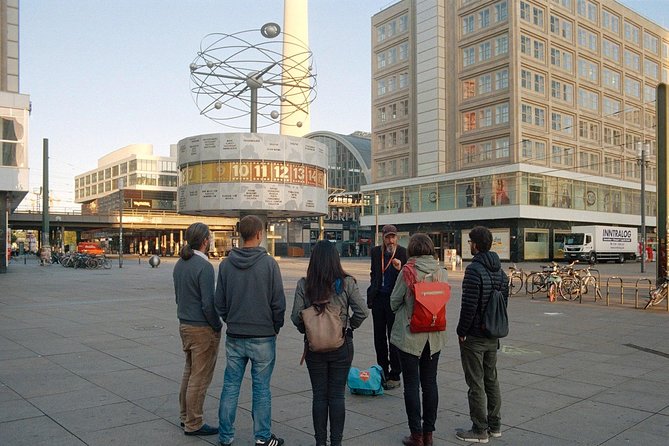
Your morning starts at Potsdamer Platz 10 at 10:00 am. Even before the first major stories begin, this is a good launch point because it sets you up in a part of Berlin where layers of modern city life and Cold War memory sit close together.
The tour is designed as a small-group walk, with a maximum of 25 travelers. That size matters because it keeps your guide nimble with explanations and helps you ask questions without feeling like you’re stuck in a long line.
One practical note: the tour includes a local guide and local taxes, but transportation to and from stops is not included. That means you should plan to use public transit for at least some sections.
More Walking Tours in Berlin
- Discover Berlin Half-Day Walking Tour
★ 5.0 · 9,624 reviews - Berlin: Third Reich and Cold War 2 Hour Walking Tour
★ 4.9 · 6,830 reviews - Berlin: Discover Berlin Walking Tour
★ 4.9 · 5,998 reviews
Nordbahnhof Ghost Station, and the Value of a Silent Place
The first stop centers on the ghost-station story of Nordbahnhof, reached by S-Bahn from the Potsdamer Platz area. This is a powerful opening because it frames the Cold War not as abstract politics, but as infrastructure that changed people’s daily movement.
Nordbahnhof is described as one of the ghost stations that remained closed for nearly thirty years after the Wall’s construction. That time gap is the point. When you’re standing near a place like this, you get a tangible sense of how long separation lasted, and how much normal transit rhythms were disrupted.
This stop also works well if you like learning through contrasts. Your tour begins in a relatively busy part of Berlin, then moves you toward a space that embodies the idea of “blocked off” life.
Bernauerstrasse Berlin Wall Memorial: Seeing Separation up Close
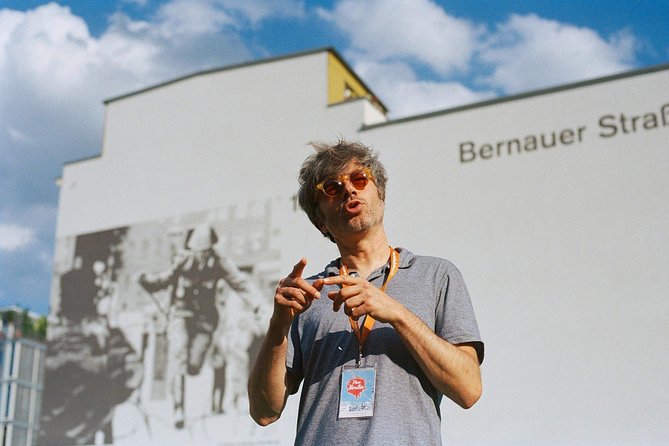
The emotional core of the walk is the Memorial of the Berlin Wall on Bernauerstrasse. The time here is longer than the other stops, about 50 minutes, which tells you this is meant to be more than a photo stop.
At the memorial, you visit an original part of the Wall area tied to the death strip and the idea of no man’s land. That language can sound heavy, but it matches what you’re there to understand. The guide’s job is to connect those terms to real human experiences, including escape attempts and tunnels dug for the purpose.
I appreciate how this part of the tour doesn’t rush past the grim details. If you want Cold War history that feels grounded, this is where the tour earns its credibility. It is also where you’ll likely feel the most impact, because the setting is directly tied to the stories.
Possible drawback here is simple: it’s intense. If you’d rather keep your sightseeing lighter, this stop may feel emotionally strong, but it is also the reason the tour stands out for people who want the truth of the era, not just the highlights.
Alexanderplatz, Socialist Landmarks, and the STASI Thread
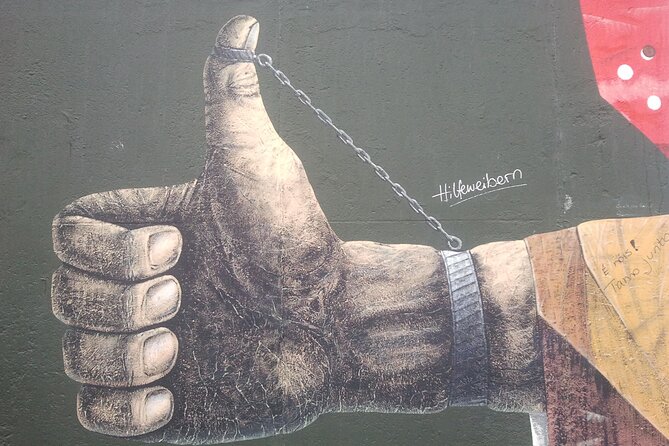
Next comes Alexanderplatz, with a focus on representative buildings of socialist Berlin. This stop is shorter, about 20 minutes, but it carries a big theme: how public life and political control collided.
The tour connects Alexanderplatz to the emotions of thousands who, through peaceful demonstrations, defied STASI political repression. It also links those demonstrations to the “collapse” of the Wall and the disintegration of the Soviet bloc.
What I like about this stop is the way it reframes the Wall story. You are not only looking at structures and borders, you’re also looking at people pushing back in public spaces. The square becomes a stage, not just a location.
If you’re the type of traveler who likes political history, you’ll probably find yourself thinking about how protest energy translates into real, fast change. And if you’re more of a street-walker than a textbook reader, the guide’s “what you see means X” approach helps the context land.
Same city, a different way to spend the afternoon:
- Berlin: Reichstag, Dome and Government District Guided Tour
★ 4.7 · 18,288 reviews - Berlin: 1-Hour City Tour by Boat with Guaranteed Seating
★ 4.3 · 16,993 reviews - Berlin: TV Tower Standard Entrance Ticket
★ 4.4 · 15,883 reviews - Berlin: Boat Tour Along the River Spree
★ 4.4 · 11,252 reviews
East Side Gallery Finale: Colorful Murals With Deep Context
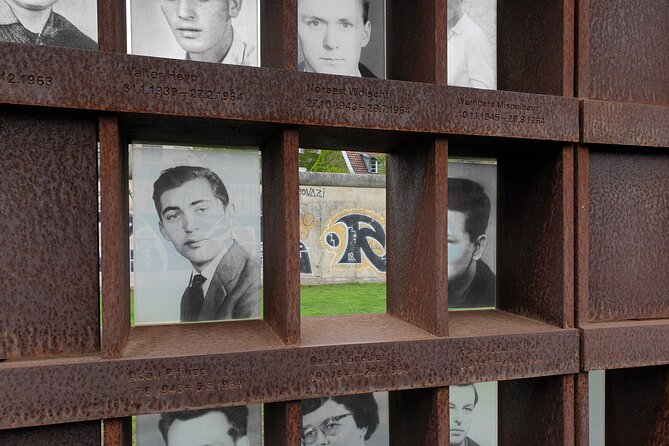
The tour ends with the East Side Gallery, the Wall section famous for its artwork. Here you have about 15 minutes, and the focus is on the 104 murals and the stories they carry.
You’ll see the kind of imagery that makes the Wall feel less like a sealed boundary and more like something people have reworked into memory and meaning. The tour also calls out the now-famous mural moment with the kiss between Brezhnev and Honecker.
This ending is smart because it offers contrast after Bernauerstrasse. You go from a memorial tied to separation and attempted escapes, to a section turned into a public gallery of expressions. That emotional shift can be surprisingly helpful, as long as you remember the guide’s framing.
Value tip for your visit: go in ready to look closely, not only for the big recognizable mural, but for how the 104 murals change in style and message. Even within a short time, you can pick up the idea that this Wall stretch became a canvas for political history and personal commentary.
The Route Outside the Stops: Karl-Marx-Allee and Key East Berlin Landmarks
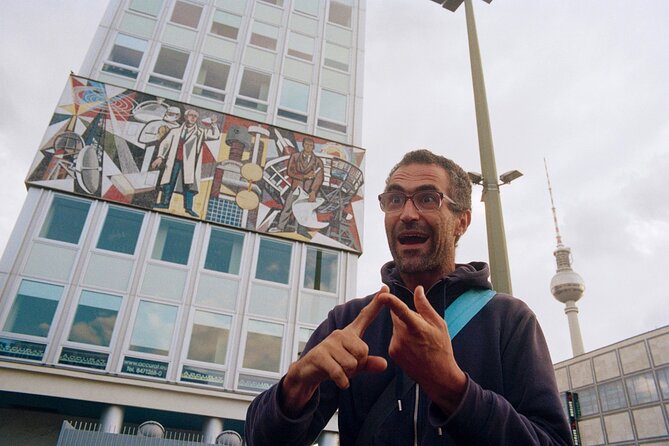
Even though the walk is structured around specific timed stops, the tour overview also promises you’ll discover other important East Berlin landmarks, including Karl-Marx-Allee. You can think of these as “connective tissue” between the major historical anchors.
For me, this is where the tour helps you orient. When you learn the Wall story while also seeing big avenues and central squares, Berlin stops feeling like a collection of isolated monuments. It starts to feel like one long scene.
The highlights also note you’ll get a face-to-face look at the longest still-standing stretch of the Berlin Wall. You should expect the guide to point out what makes that stretch significant in the modern city, not only artistically but as a physical reminder that the Wall is not all gone.
How Much Walking Is It, Really?
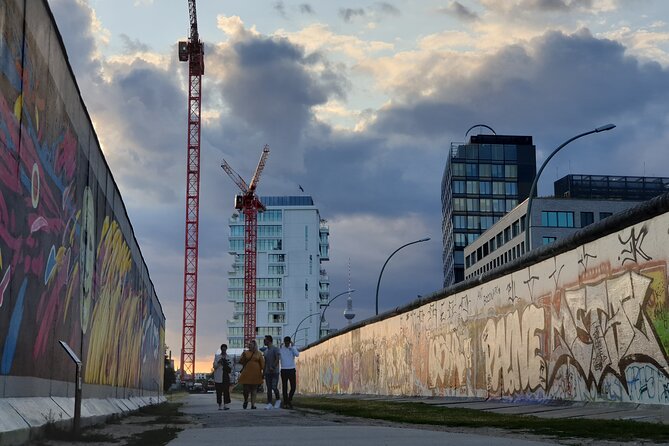
The duration is about 3 hours, and you’ll be on your feet through multiple central areas. The physical fitness requirement is listed as moderate, which usually means you’ll be fine if you can handle a steady city pace, stairs as needed, and time standing during explanations.
Also remember: the tour is not purely “walk from door to door.” You will use S-Bahn at least once, to reach Nordbahnhof. That is helpful if you want less strain, and it also keeps the history tied to real transit routes.
If you’re coming with mobility limits, plan your expectations around the memorial stop and the time spent standing and listening. The tour is designed for clarity, so your best comfort plan is simple: wear supportive shoes and bring water, even though food and drinks are not included.
Price and Value: Why This Costs Around $27.91
At $27.91 per person, this is positioned as an approachable history add-on. The best way to judge value is by what’s included and what’s not.
What’s included is straightforward: a local guide and local taxes. What’s not included is also important: transportation, hotel pickup, food and drinks, and optional tip for the guide.
The smart part is that the major sights on this route are described with free admission tickets at the timed stops. If you’ve ever paid entry fees for multiple sites in Berlin, this format can feel like good value. You’re mostly paying for the guide’s ability to connect each place to the larger Cold War story.
You also get a small-group cap of 25. That matters in practice. In history tours, the guide’s pacing can turn into the difference between “I saw things” and “I understood the story behind the things.”
The French-Language Factor: How to Prepare
The tour is French-language, which is the biggest thing you should plan around. If your French is basic, you might still catch key terms since the stops are visual and the subject is consistent.
A practical approach: bring curiosity more than perfection. Focus on what the guide says about separation, escape attempts, STASI repression, and how demonstrations connect to the Wall’s collapse. Those themes are repeated across stops, so even if your French slips, the story stays coherent.
If you need English explanations, you might want to choose a different tour. This one is built to be guided in French, so don’t assume you’ll get translation that isn’t stated.
What Makes the Guide Experience Strong
The tour’s consistent praise points to one thing: clear, teaching-friendly storytelling. Guide names like Paul and Stéphane show up in feedback as being both friendly and pedagogical.
That matters, because East Berlin Cold War sites can become a blur if the guide just points and moves on. Here, the guide is meant to do the hard part: take complicated political history and translate it into what you can see, then link it to how people lived.
I also like that the route isn’t only about the Wall as a structure. It’s about the effects, including life in Communist East Berlin, and it brings those effects into the stops rather than treating them as background.
Practical Tips for Your Walk
This tour is simple, but a few things can make your day smoother.
- Bring a public transportation day card for zones AB, since transportation to and from attractions is not included.
- Plan for a moderate walking pace over roughly 3 hours.
- Use the mobile ticket on your phone when needed.
- Wear shoes good for long standing at the memorial stop.
- Since food and drinks are not included, grab something before the start if you get hungry early.
And because the tour ends at a bike-share area near nextbike BerlinJelbi Mühlenstraße / Straße der Pariser Kommune, think about what you’ll do after. It’s a useful exit point if you want to continue exploring independently, but it’s not a hotel drop-off.
Should You Book This East Berlin Walking Tour?
I think you should book this if you want Cold War history in a tight package, with a guide who connects the big story to real places. It’s also a good fit if you like memorials and political context, because the route includes Bernauerstrasse, Alexanderplatz, and the East Side Gallery in one flow.
Skip it if French is a deal-breaker for you, or if you prefer your history tours to avoid emotional material. The memorial stop is clearly meant to confront separation and loss, and that won’t be for everyone.
If you can handle a moderate walk and you’re comfortable using public transit on your own, this is a solid value. You’ll leave with a clearer sense of how the Wall shaped movement, control, resistance, and eventually change.
FAQ
How long is the Small Group Walking Tour of East Berlin?
It lasts about 3 hours.
What language is the guide?
The tour is guided in French.
What is the price per person?
The price is $27.91 per person.
Where does the tour start and what time does it begin?
It starts at Potsdamer Platz 10, 10785 Berlin, with a start time of 10:00 am.
Where does the tour end?
It ends at nextbike BerlinJelbi Mühlenstraße / Straße der Pariser Kommune (FHA/MU), 10243 Berlin.
How many people are in the group?
The tour has a maximum of 25 travelers.
Do I need public transportation for this tour?
Yes. Transportation to and from attractions is not included, and you will need a public transportation day card for zones AB.
Is food or drinks included?
No, food and drinks are not included.
Are admission tickets included for the stops?
Admission ticket costs are listed as free for the stops described, and the tour includes a local guide and local taxes.
Can I cancel for a full refund?
Yes. You can cancel up to 24 hours in advance for a full refund.
Newest Berlin reviews on the site
- Your ticket to The Wall Museum Berlin★ 3.0 · 60 reviews
- Rickshaw Tours Berlin – Groups of up to 16 people with several rickshaws★ 4.0 · 97 reviews
- Love and War in Berlin: Self-Guided Story Puzzle Walk★ 5.0 · 7 reviews
- Warnemuende Shore Excursion: Berlin Private Sightseeing Tour from Rostock★ 5.0 · 4 reviews
- eSIM for Germany and 34 European Countries★ 4.5 · 16 reviews
- Walking on the Wall: 3-Hour Tour in Berlin★ 4.5 · 34 reviews
- Karl-Marx-Allee Tour: Life and Architecture in East Berlin★ 5.0 · 19 reviews
- Warnemuende Shore Excursion: Private Berlin Tour★ 4.5 · 27 reviews
Walking Tours, compared.


Berlin’s Best: 2 Hour Walking Tour Third Reich and the Cold War
Read our review →
Third Reich Berlin: Hitler and WWII Walking Tour
Read our review →Browse the lists this tour appears in