
Reviewed · WALKING TOURS
Private walking Tour: Berlin Architecture Tour
Berlin buildings tell two stories at once.
This private architecture tour is built around how Berlin’s politics shaped its skyline, with contrasts between East and West made visible in stone, glass, and planning choices. You start with a hotel lobby meet and greet, then move through major hubs where you can actually see the city’s rebuilding mindset after World War II.
I especially liked two things. First, the private guide can tailor the pace to your interests, so it does not feel like a lecture marching you through stops. Second, the route mixes big-name landmarks with photo-friendly exteriors, from Museum Island’s museum fronts to the Gendarmenmarkt trio and the glass dome view at the Reichstag area.
One drawback to plan for: it is priced at $191.87 per person for a 4-hour format, so it makes the most sense when you want a guided overview that saves you time, not when you only need a quick self-guided stroll.
In This Review
- Key highlights worth marking on your map
- Berlin Architecture as a Cold War Decoder
- Private Guide and Hotel Pickup, With You in Control
- Museum Island and Gendarmenmarkt: Domes, Museums, and Quick Wins
- Philharmonie and Kulturforum: When Architecture Serves the Ear
- Reichstag Glass Dome and Potsdamer Platz Rebirth
- Berliner Dom and Pariser Platz: Baroque Grandeur Meets Embassies
- Kreuzberg and Friedrichshain: Altbau Streets and Wall-Left Memories
- Friedrichstraße and Hackescher Höfe Courtyard Maze
- Should You Book This Berlin Architecture Walk?
- FAQ
- How long is the Berlin Architecture Tour?
- What is the price per person?
- Is this tour private?
- Do you pick up guests from their hotel?
- Is it offered in English?
- Can I choose to go on foot or by bike?
- Are tickets or paid entry included for the stops?
- Is food included?
- Can I cancel for a full refund?
- Are service animals allowed?
Key highlights worth marking on your map
- Private and customizable: tell the guide what you care about, and the schedule can flex.
- East vs West, explained in real buildings: you will connect politics to design, not just name architects.
- Photo-forward stops at major landmarks: Museum Island, Gendarmenmarkt, Philharmonie, and more are built for quick, great angles.
- Kulturforum and the Philharmonie exterior: you get a focused look at one of Berlin’s most recognizable concert hall silhouettes.
- On foot or bike option: choose what fits your energy and routing.
- Hotel pickup and drop-off: you start and end with less time wrangling transit.
Berlin Architecture as a Cold War Decoder
Berlin is one of the few European cities where you can walk into history and see it in the structure around you. This tour leans hard into the divide that followed World War II, so the architecture becomes a sort of map of ideology. You are not only looking at buildings, you are learning why one side favored certain styles and why redevelopment later changed the city’s look.
A big part of the payoff is that the guide ties the buildings to decisions. For example, you see how West Berlin rebuilt cultural prestige in the 1950s and 60s near the Kulturforum, while East Berlin’s housing and planning reflected a different system. Once you make that connection, the skyline stops being random and starts making sense.
The route also keeps things grounded. It is not all grand monuments. Neighborhood stops like Kreuzberg and Friedrichshain add texture, with restored apartment façades and reminders of what remained from the Wall era.
More Walking Tours in Berlin
- Discover Berlin Half-Day Walking Tour
★ 5.0 · 9,624 reviews - Berlin: Third Reich and Cold War 2 Hour Walking Tour
★ 4.9 · 6,830 reviews - Berlin: Discover Berlin Walking Tour
★ 4.9 · 5,998 reviews
Private Guide and Hotel Pickup, With You in Control
This is a private tour, so it is just your group with a professional guide, not a giant bus crowd. That matters in Berlin, where the distances can feel short on the map but long once you factor in crossing points and time at viewpoints.
You meet the guide in a central Berlin hotel lobby, and the tour ends with hotel drop-off. If you are here for a first or second day and want to get oriented without spending half your morning navigating, that end-to-end service is a real value.
The most praised element in the tour’s feedback is guide quality and flexibility. People called out guides like Ariel for smart communication and adjusting time to match what the group wanted, and Sara for offering architectural and design context plus historical details as you walked. Other guides named include Thomas, Daniel, Heiko, and Tarek Ibrahim, with consistent themes of clear explanations, friendly delivery, and a strong sense of what to emphasize.
If you have a special interest, say so up front. The tour is described as customized, so you can steer toward the parts that match your trip style, whether that means more exterior photo stops, more design talk, or a tighter focus on Berlin’s division and reunification story.
Museum Island and Gendarmenmarkt: Domes, Museums, and Quick Wins
You start at Museum Island, one of the best places in Berlin to see how different building eras can sit side by side and still feel intentional. The guide points out the look of each major museum façade so you can connect style to function. Expect a classic set of architectural landmarks to photograph, starting with Altes Museum and its neoclassical formality.
Then you move through the island’s museum lineup, including the monumental classical exterior of Pergamon Museum, the elegant dome look of Bode Museum, and Neues Museum, noted for its restored character after wartime damage. Even when you do not go inside, these exteriors are designed for viewing angles, and a guided stop helps you know what detail to look for instead of just snapping pictures blindly.
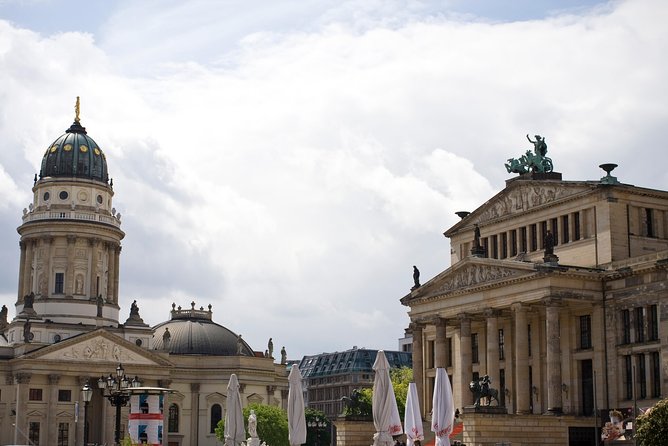
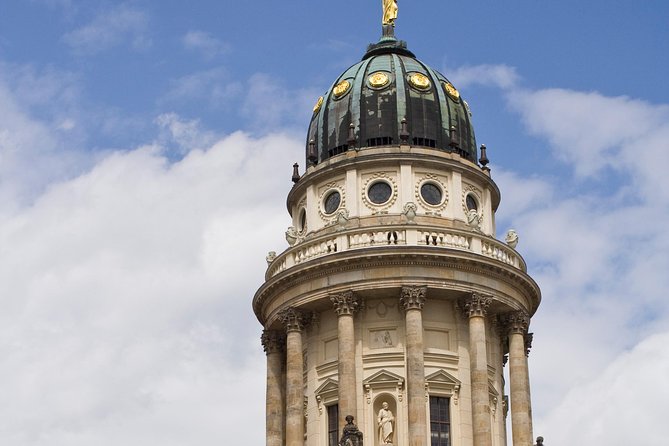
From there, you head to Gendarmenmarkt, a square that works like an architectural stage set. The famous trio is the point: the Deutscher Dom, the Französischer Dom, and Schinkel’s Konzerthaus. Add Friedrich Schiller’s statue in the center, and you have a composition that looks built for photos at almost any time of day.
This stop is also where the tour’s political and cultural lens clicks into place. The buildings are not only beautiful. They reflect how Berlin wanted to project culture and civic pride, and the guide’s explanations give the ensemble meaning beyond its symmetry.
Philharmonie and Kulturforum: When Architecture Serves the Ear
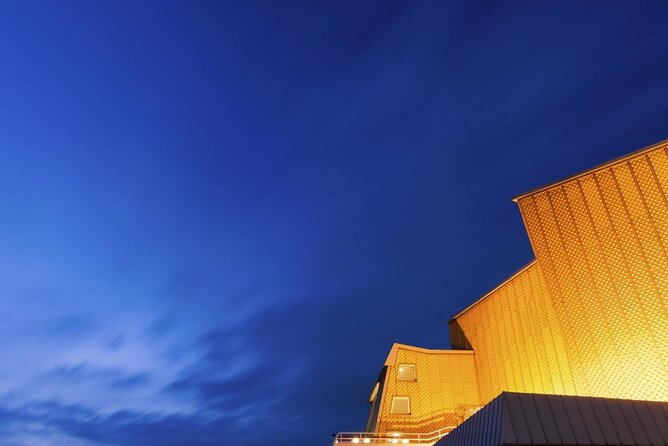
Next up is the Berliner Philharmonie area in the Kulturforum zone. This is one of those Berlin spots where the exterior alone tells you this city likes modern ideas. The building is known for its distinctive, tent-like silhouette and asymmetrical look, which is part of what makes it so photogenic.
The practical bonus here is timing. You get a focused stop with time to stand outside and study the form, and then you move on. If you love design details, you can keep your eyes open for modernist elements and how the surrounding cultural buildings create a coherent zone.
The tour framing also matters: it is not just, Here is a concert hall. It is, Here is how Berlin invested in cultural infrastructure after the Wall era and how architecture became part of that rebuild. You also get the chance for a proper photo moment in front of this well-known cultural landmark, which is often the difference between a blur of stops and a trip that feels organized.
If you are a music lover, even without booking a concert, this architectural stop helps you understand why the Philharmonie is famous. The guide ties the shell design to the way sound is handled inside, so it feels like you are learning why the building looks the way it does.
Same city, a different way to spend the afternoon:
- Berlin: Reichstag, Dome and Government District Guided Tour
★ 4.7 · 18,288 reviews - Berlin: 1-Hour City Tour by Boat with Guaranteed Seating
★ 4.3 · 16,993 reviews - Berlin: TV Tower Standard Entrance Ticket
★ 4.4 · 15,883 reviews - Berlin: Boat Tour Along the River Spree
★ 4.4 · 11,252 reviews
Reichstag Glass Dome and Potsdamer Platz Rebirth
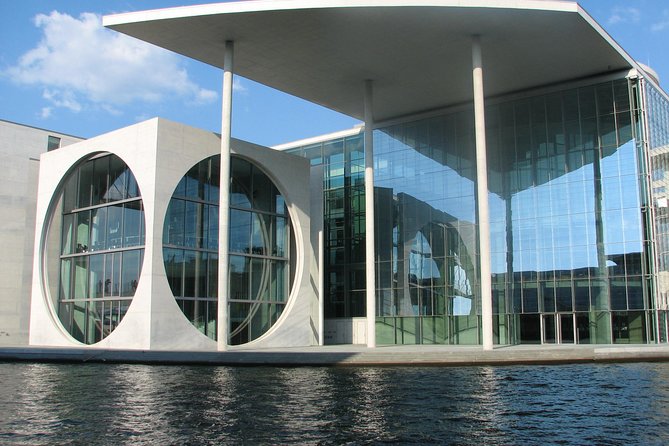
You then walk to the Reichstag Building. The contrast here is the whole story: the older neoclassical façade versus the modern glass dome by Norman Foster added after reunification. That mix is not just an aesthetic trick. It symbolizes a shift from power-as-monument to transparency as a civic idea.
The highlight is the dome concept and what it represents, plus the visual drama of light and reflection in the structure. Even with a short stop, it gives you a strong mental anchor for Berlin’s post-1990 transformation.
After that, you shift to Potsdamer Platz, a site that shows how Berlin rebuilt over a place that was once wrecked and divided. The guide points out how the square became a showcase of contemporary planning and architecture, including the Sony Center with its glass-roof structure and the skyline presence of the DB Tower.
This is a good stop for a simple reason: it shows you that Berlin does not only preserve. It also reinvents. The look can feel commercial, but the architectural lesson is still worth your time because it shows how the city chose a modern identity in the spaces where the Cold War created emptiness.
Berliner Dom and Pariser Platz: Baroque Grandeur Meets Embassies
Berlin’s skyline would be incomplete without the Berliner Dom. This church-culture landmark is described as Baroque and Renaissance Revival, completed in the early 1900s, and it dominates with its large central dome. The key design elements you can spot from outside include the symmetrical façade and the way the dome pulls your eyes upward.
Inside is where the tour notes the drama and ornamentation, with opulent detailing and mosaics that reflect Baroque emphasis. Even on a quick tour format, knowing that context helps you understand why people treat the Dom as a centerpiece, not just another cathedral.
Then you move toward Pariser Platz, where the architecture turns into a political postcard. The square is anchored by the Brandenburg Gate and framed by major institutional buildings. You get the feel of how Berlin can place historical symbolism right next to modern authority buildings.
In this area, the tour points out contrasts including the Hotel Adlon and classic embassy-style buildings alongside the DZ Bank building, designed by Frank Gehry. That Gehry design is known for its fluid, sculptural glass and steel look, and even if you have seen Gehry work elsewhere, the Berlin setting makes the contrast feel extra sharp.
Kreuzberg and Friedrichshain: Altbau Streets and Wall-Left Memories
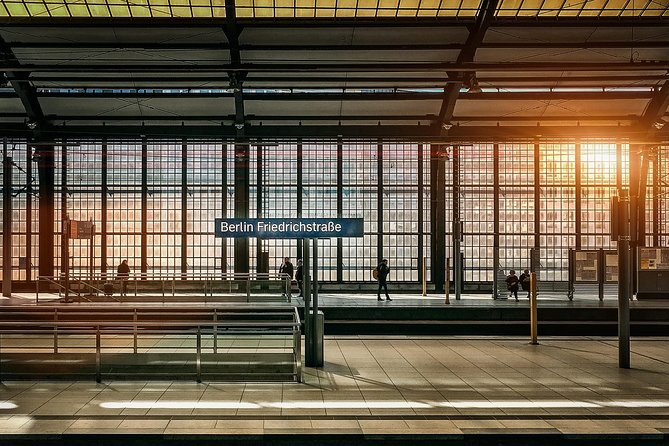
This tour does not stay trapped in the most polished central zones. It also brings you into Kreuzberg and Friedrichshain, which is where you can see Berlin’s architecture in a more lived-in way.
In Kreuzberg, you focus on its mix of old and new. The guide highlights restored 19th-century Altbau apartment buildings with their ornate façades, plus modern conversions like loft-style spaces that reuse older structures. The stop also includes the Oberbaum Bridge, with its red-brick towers and Gothic-inspired arches that are a favorite for photography.
Then you head to Friedrichshain, described as part of former East Berlin. Here the architecture story includes pre-war Altbau buildings with big windows and high ceilings, plus the socialist-era presence and modern developments layered on top. The emotional anchor of this segment is the East Side Gallery, an open-air stretch where murals sit along a remaining section of the Wall.
The value here is perspective. You are not only seeing architecture as style. You are seeing architecture as memory and survival, in a neighborhood context rather than as a museum exhibit.
Friedrichstraße and Hackescher Höfe Courtyard Maze
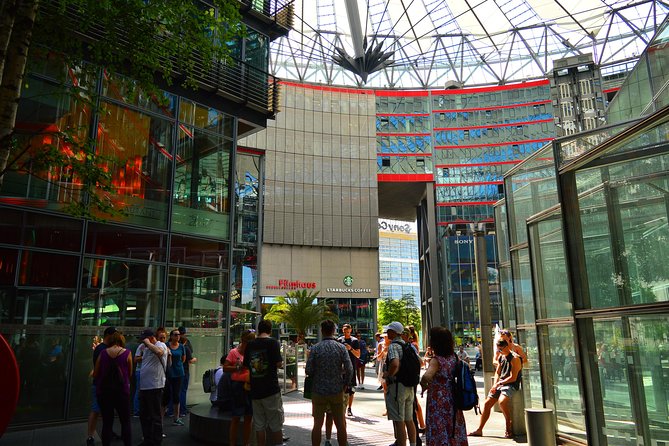
Berlin’s architecture also shows up in everyday streets, and this tour includes time on Friedrichstraße, a major culture and shopping street in central Berlin. The framing is all about eras overlapping. You hear about how the area connects the tradition of the Golden Twenties with what “New Berlin” looks like today, including decorated buildings, offices, coffee shops, and major shopping anchors such as Galeries Lafayette.
This is a good time to reset your brain. After serious monuments and political symbolism, a street stop brings you back to scale. You can notice how architectural details blend into daily life instead of standing alone as a landmark.
Then the tour finishes near Hackescher Markt with Hackescher Höfe, an early 20th-century courtyard complex known for its Art Nouveau design. The guide points out how eight interconnected courtyards create a walkable maze of décor, tiles, and ironwork details. Each courtyard has its own flavor, which makes it feel more like exploration than a line-up of single façades.
If you like architecture that rewards close looking, Hackescher Höfe is a strong final chapter. You can linger on details because courtyards create little photo pockets, and you get a sense of how Berlin uses shared space creatively.
Should You Book This Berlin Architecture Walk?
Book it if you want a guided East-West architecture story that goes beyond surface facts. This is especially smart for first-timers who want to understand how Berlin’s politics shaped design, and for people who like photography and want exterior-heavy stops with strong visual payoff.
Skip it or think twice if you are hoping for a long museum day where you spend hours inside buildings. This is a 4-hour format with short, high-impact stops, so it works best as an overview plus photo time, not as an in-depth ticket-and-hours itinerary.
If you do book, plan to bring your A-game for walking or biking, because the tour packs a lot into a half day. Also, this experience is commonly booked about 48 days in advance, so if your dates are firm, it is wise to reserve early rather than waiting for the last week.
Bottom line: if you want Berlin architecture explained in a way that makes the city feel coherent, and you want a private guide to adjust to your interests, this tour is a solid, high-value way to spend a day.
FAQ
How long is the Berlin Architecture Tour?
It runs for about 4 hours.
What is the price per person?
The price listed is $191.87 per person.
Is this tour private?
Yes. It is private, meaning only your group participates.
Do you pick up guests from their hotel?
Yes. Hotel pickup and hotel drop-off are included, with a meet and greet at the hotel lobby.
Is it offered in English?
Yes, the tour is offered in English.
Can I choose to go on foot or by bike?
Yes, the tour offers a choice of doing it on foot or by bike.
Are tickets or paid entry included for the stops?
The tour details list admission ticket free for the stops shown (for example Museum Island, Gendarmenmarkt, the Berliner Philharmonie, and others on the route).
Is food included?
No. Food and drinks are not included.
Can I cancel for a full refund?
Yes, free cancellation is available. You can cancel up to 24 hours in advance for a full refund.
Are service animals allowed?
Yes, service animals are allowed.
Newest Berlin reviews on the site
- Your ticket to The Wall Museum Berlin★ 3.0 · 60 reviews
- Rickshaw Tours Berlin – Groups of up to 16 people with several rickshaws★ 4.0 · 97 reviews
- Love and War in Berlin: Self-Guided Story Puzzle Walk★ 5.0 · 7 reviews
- Warnemuende Shore Excursion: Berlin Private Sightseeing Tour from Rostock★ 5.0 · 4 reviews
- eSIM for Germany and 34 European Countries★ 4.5 · 16 reviews
- Walking on the Wall: 3-Hour Tour in Berlin★ 4.5 · 34 reviews
- Karl-Marx-Allee Tour: Life and Architecture in East Berlin★ 5.0 · 19 reviews
- Warnemuende Shore Excursion: Private Berlin Tour★ 4.5 · 27 reviews
Walking Tours, compared.

Berlin’s Best: 2 Hour Walking Tour Third Reich and the Cold War
Read our review →
Third Reich Berlin: Hitler and WWII Walking Tour
Read our review →Browse the lists this tour appears in