
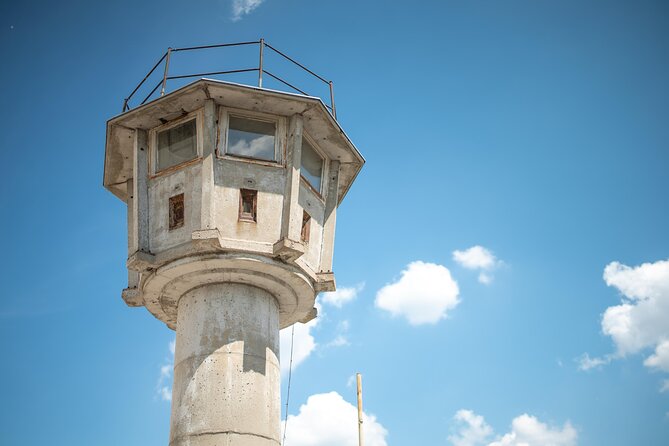
Reviewed · THIRD REICH & COLD WAR TOURS
Private Cold War Berlin: Espionage, Berlin Wall, a Divided City
Cold War Berlin hits different when you walk it. This private tour strings together major Cold War sites, from Wall escape stories to the Stasi surveillance machine, in a focused 3 to 4 hours. I love that it includes hotel pickup and drop-offs, so you spend time looking at history, not figuring out transit. I also like the small, private-group feel, which makes it easier to ask questions and pace your stops.
One thing to consider: it is an active walking route, and you will be on your feet for multiple stops in all weather, so plan for comfortable shoes and layers.
In This Review
- Key Points You Can Plan Around
- Private Cold War Berlin on Foot, Without the Fuss
- Memorial of the Berlin Wall: Bernauer Strasse and Escape Tunnels
- Tränenpalast: The Palace of Tears and the Border Crossings
- East Side Gallery: Murals on a Wall That Used to Divide
- Stasimuseum at Stasi Headquarters: How Surveillance Worked
- Checkpoint Charlie: Cold War Standoffs and Spy Exchanges
- Prenzlauer Berg Corner: NKVD Prison to Stasi Prison
- Alexanderplatz Protest Moment and the End of Division
- Price, Duration, and Value for $191.44 Per Person
- Who This Tour Fits Best (and Who Might Want to Rethink It)
- Practical Tips to Make Your Walk Easier
- Should You Book This Private Cold War Berlin Tour?
Key Points You Can Plan Around
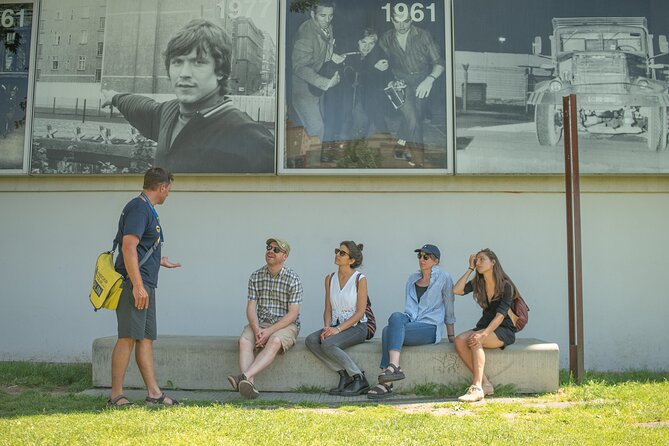
- Hotel pickup and drop-offs are included, which makes this easier than most self-guided Wall days
- Wall escape stories get specific, including Tunnel 57 and Tunnel 29, plus what those attempts meant for families
- Tränenpalast adds the human side, with farewell moments tied to espionage and border crossing pressure
- Stasi Headquarters shows the surveillance methods used by East Germany’s secret police, not just the legend
- East Side Gallery turns a Wall stretch into open-air murals, so you see how Berlin changed after 1989
- Private format means only your group goes with the professional guide, with a pacing that can fit you
Private Cold War Berlin on Foot, Without the Fuss
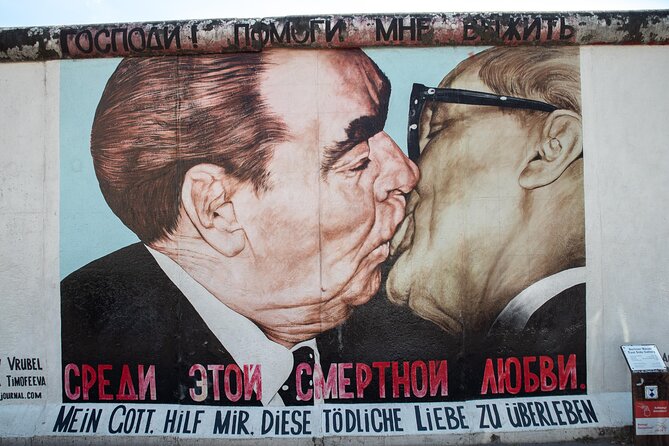
This is a private walking tour designed for active travelers who want a clear hit of Cold War Berlin in a few hours. The big practical win is that the experience includes hotel pickup and hotel drop-off, so your day starts and ends cleanly, with less logistical load.
The other reason this tour works well is structure. You are not bouncing randomly across the city. You move through tightly linked places tied to the Wall, border crossings, espionage, and the networks that controlled everyday life. If Berlin feels like a lot at first, this kind of route helps you get your bearings fast.
One more practical detail worth your attention: it runs in all weather conditions. That means your guide keeps going even when the sky looks angry, so your job is to show up ready. Comfortable shoes matter a lot on this kind of route, especially if you want to actually read what you are seeing instead of rushing through.
More Third Reich & Cold War Tours in Berlin
- Berlin: Third Reich and Cold War 2 Hour Walking Tour
★ 4.9 · 6,830 reviews - Berlin: Berlin Story Bunker Entry Ticket
★ 4.6 · 6,759 reviews - Berlin’s Best: 2 Hour Walking Tour Third Reich and the Cold War
★ 5.0 · 5,486 reviews
Memorial of the Berlin Wall: Bernauer Strasse and Escape Tunnels
You start at the Memorial of the Berlin Wall in Bernauer Strasse. This is one of those places where the history is not behind glass. You see a preserved section of the Wall right alongside the Chapel of Reconciliation, and the space sets a serious tone from the first minutes.
What I like here is that the story goes beyond the Wall as an object. Your guide covers the escape attempts at this site, including Tunnel 57 and Tunnel 29. Tunnel 29 is particularly striking because it famously led 29 people to freedom in 1962. That specificity helps you understand why these tunnels became symbols of resistance and courage.
At about 40 minutes, this stop has enough time to let the emotional weight land. You also hear about individuals who risked everything, and how the Wall affected daily lives. The takeaway you walk away with is simple: the Wall was not just a border, it was a constant pressure on families and communities.
Admission for this stop is free, so there is no extra cost friction built in.
Tränenpalast: The Palace of Tears and the Border Crossings
Next comes Tränenpalast, or Palace of Tears, at Friedrichstrasse. This former border crossing point is remembered for emotional farewells, because East Berliners were saying goodbye to loved ones as they crossed into West Berlin. The building itself carries that tension in a very direct way.
This stop also adds an espionage layer. The Tränenpalast was a hotspot where spies tried to cross between East and West, and the idea of clever tactics to avoid detection makes the setting feel even more intense. It is a different kind of story than the tunnel escapes, but it connects to the same reality: movement was dangerous and information was currency.
Today, the building is a museum that covers the Berlin Wall era, border control practices, and spy networks operating on both sides. The practical value for you is that you leave this stop with a clearer understanding of how control worked, not only what people tried to do to escape it.
Time here is shorter, about 20 minutes, but the subject matter is heavy. You might want to mentally slow down on this one, because it is all about separation and what it cost.
Admission is free for this stop as well.
East Side Gallery: Murals on a Wall That Used to Divide
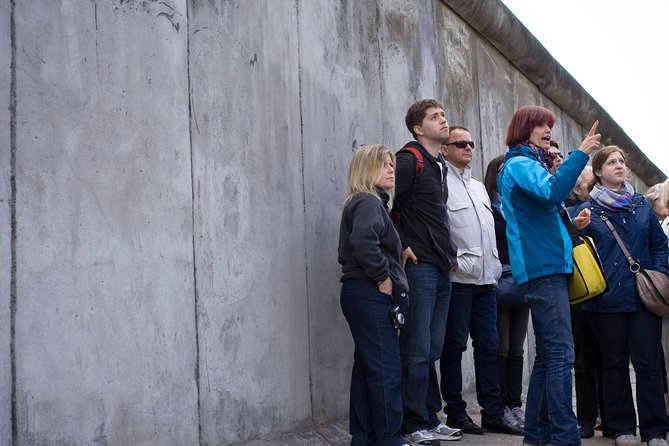
After the darker stops, you head to the East Side Gallery, a 1.3 km stretch of Wall that became an open-air art gallery. This is one of the best contrasts in the route: you see how the same physical barrier can transform into public storytelling after the Wall fell in 1989.
Your guide points out the murals and explains the histories behind them. Artists from around the world painted the open-air works after reunification, turning the Wall’s remaining sections into messages of unity and freedom. The details matter here, because you are not just looking at artwork. You are learning what different messages were trying to say in the aftermath of division.
This stop is listed at about 20 minutes. That is enough time to take in a few key murals and understand the bigger idea, without dragging on when you already have emotionally heavy context from earlier.
Admission is free, which makes this an easy stop to love without worrying about logistics.
More wartime and Cold War history walks in Berlin:
- Third Reich Berlin: Hitler and WWII Walking Tour
★ 5.0 · 3,301 reviews - Skip-the-Line: Berlin Wall Museum at Checkpoint Charlie
★ 4.1 · 2,041 reviews - Berlin: Third Reich, Hitler, and WWII Walking Tour
★ 4.9 · 1,757 reviews - Cold War, Berlin Wall, Spies and the East Side Gallery
★ 5.0 · 1,024 reviews
Stasimuseum at Stasi Headquarters: How Surveillance Worked
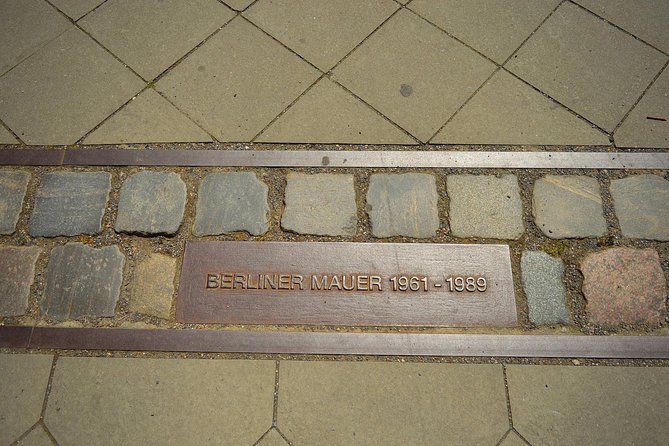
Now for the stop that helps you understand the day-to-day mechanics of control. At the Stasi Headquarters, you see the infrastructure behind East Germany’s secret police system. Even if you have read about the Stasi before, this kind of setting makes the concept feel real.
Your guide walks you through the museum and explains the surveillance methods used. Expect stories and examples related to hidden cameras, wiretapping, and informants, including how everyday citizens could be pulled into the network. The museum also covers the impact on families and individuals, including interrogation and harassment.
For your planning, this is a great stop if you want more than dramatic stories of escapes. You get the other side of the Cold War equation: control and information gathering. The emotional note here is sobering, but it also gives you a fuller picture of why Berlin felt divided even when people were trying to live normal lives.
Time here is about 25 minutes, and it is well matched to the topic. There is a lot to absorb, and a guide helps you connect what you see with what it meant to real people.
Admission is free for this stop too.
Checkpoint Charlie: Cold War Standoffs and Spy Exchanges
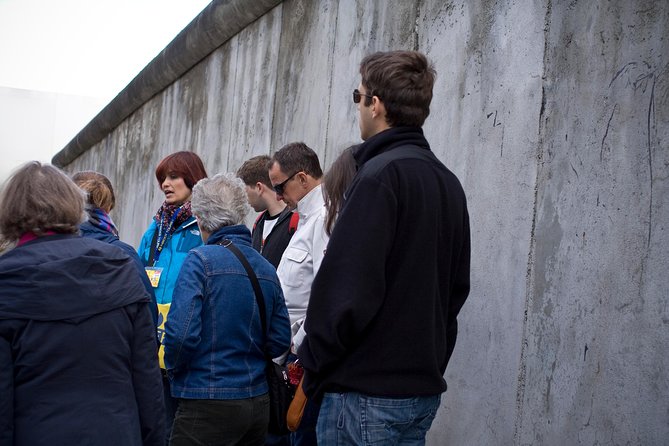
Then you go to Checkpoint Charlie, one of the most iconic Cold War border crossings between East and West Berlin. The site is remembered for tense standoffs between American and Soviet forces, especially during the Berlin Crisis of 1961 when the Wall was erected.
Your guide brings in the drama in a careful way, covering daring escapes and spy exchanges, and explaining why the world felt on edge at moments like this. If you are the kind of traveler who likes the “what happened here” story, this stop will satisfy that curiosity.
It also includes a museum on site with exhibits focused on espionage, escapes, and Cold War history. The practical benefit is that you can glance at the exhibits for extra context without needing a separate museum day.
Time at this stop is around 15 minutes, so I suggest focusing on the big points your guide highlights instead of trying to read everything at once. With only about a quarter hour, you want to be selective.
Admission is free for this stop as well.
Prenzlauer Berg Corner: NKVD Prison to Stasi Prison
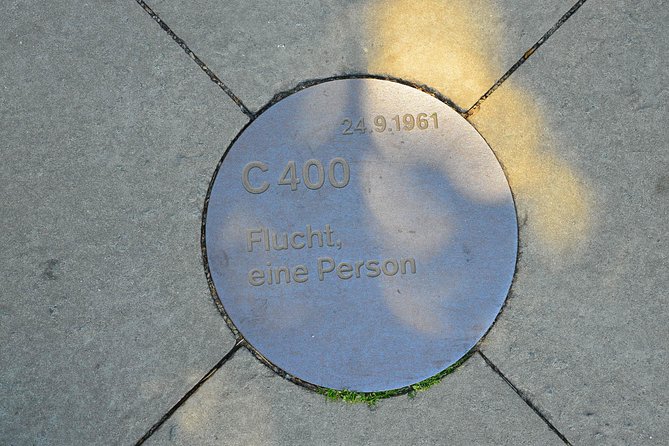
Next is Prenzlauer Berg, where you visit a serious pair of Cold War prisons tied to one location. Your guide focuses on the Fröbelstraße corner, connected to both the former NKVD prison and the Stasi prison.
The details here are important. After WWII, Soviet authorities used the NKVD prison for political prisoners and people suspected of being spies or enemies of the state. Later, when the GDR formed, the prison was taken over by the Stasi, continuing the role of surveillance and repression.
This stop is about 15 minutes, but it hits hard because it shows continuity in a system of fear. You hear about harsh conditions and the methods used by Soviet and East German authorities to control and silence opposition. The subject includes stories of bravery and resistance, which helps balance the heaviness without turning it into a sightseeing stop.
Admission is free for this stop too.
Alexanderplatz Protest Moment and the End of Division
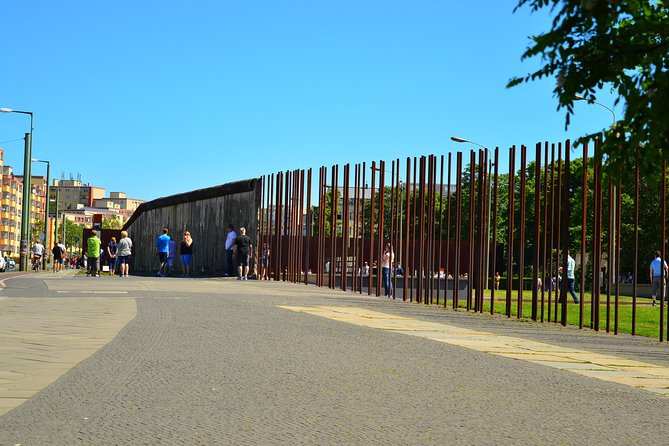
You finish at Alexanderplatz, a Cold War hotspot tied to major moments of protest and power. Your guide connects the area to the November 4, 1989 protest, when over half a million East Berliners gathered to demand change. That moment is one of the key turning points linked to the fall of the Berlin Wall.
You also see landmarks in the area, including the Television Tower (Fernsehturm) and the Red City Hall, connected to GDR leadership. For people who want to understand how political power looked and where it gathered, this stop gives a clearer sense of what the system looked like at scale.
This stop is about 15 minutes. Use that time to let the tour’s story arc land. Earlier stops show pressure, surveillance, and escape attempts. Here, you see resistance moving into public action.
Admission is free for this stop.
Price, Duration, and Value for $191.44 Per Person
The price is $191.44 per person, and the value comes from what is included. You are getting a professional guide, a private experience for your group, and hotel pickup and hotel drop-off. For many Berlin tours, you either pay extra for transit help or you spend time coordinating meet points. This one lowers that stress.
Duration is about 3 to 4 hours, and the pacing is designed around walking between linked sites. That matters because you are not only learning facts. You are building a mental map of how the Cold War shaped the city.
Also worth noting: admission tickets listed for each stop are free. That does not mean there are no museum facts built in. It means you are not paying extra per site while your guide does the connecting work.
One tradeoff, and it ties back to the active nature of this route: there is no food or drinks included. If you are doing this as a first half of a day, plan a simple snack break before or after. If it is your only big daytime plan, consider eating earlier than you usually would.
Who This Tour Fits Best (and Who Might Want to Rethink It)
This tour is best for you if you want a focused Cold War Berlin route with a private guide and you like walking. It is also a strong option for first-time visitors who want the Wall and espionage story without spending the whole day researching.
It can be a good fit even if you already know Berlin history, because the stops combine different angles, Wall escape tunnels, border control emotions, Stasi surveillance systems, and protest energy. That mix helps you connect pieces that are sometimes treated separately.
If you have mobility limitations, the tour being a walking route is still the big consideration. Still, one of the standout notes from experience feedback is that guides can accommodate physical limitations. So, if you need pacing help, it is worth telling your operator what to expect so the guide can adjust.
Practical Tips to Make Your Walk Easier
Here are a few ways to get the most from the route, based on how the tour is set up.
- Wear comfortable walking shoes since the experience is designed as a walking route with multiple stops.
- Bring layers. The tour operates in all weather, so being able to adjust matters.
- Plan for a “history mode” day. This route is emotionally serious, so you will enjoy it more if you do not cram it between loud, rushed plans.
- Use your guide questions. In a private setup, it is a smart move to ask about how different sites connect, Wall escapes versus spy networks versus surveillance.
Should You Book This Private Cold War Berlin Tour?
If you want a clear, guided path through the Wall, border crossings, and Stasi intelligence culture, I think this tour is a strong book. The hotel pickup and drop-offs reduce day friction, the route stays tight around key Cold War sites, and the stop mix gives you both human stories and how-control details.
You should consider a different option if you dislike walking or you are looking for a mostly seated, low-effort day. But if you can handle a few hours on your feet and you want an organized way to understand a divided Berlin, this is the kind of tour that leaves you with a map in your head, not just photos on your phone.
Newest Berlin reviews on the site
- Your ticket to The Wall Museum Berlin★ 3.0 · 60 reviews
- Rickshaw Tours Berlin – Groups of up to 16 people with several rickshaws★ 4.0 · 97 reviews
- Love and War in Berlin: Self-Guided Story Puzzle Walk★ 5.0 · 7 reviews
- Warnemuende Shore Excursion: Berlin Private Sightseeing Tour from Rostock★ 5.0 · 4 reviews
- eSIM for Germany and 34 European Countries★ 4.5 · 16 reviews
- Walking on the Wall: 3-Hour Tour in Berlin★ 4.5 · 34 reviews
- Karl-Marx-Allee Tour: Life and Architecture in East Berlin★ 5.0 · 19 reviews
- Warnemuende Shore Excursion: Private Berlin Tour★ 4.5 · 27 reviews
Third Reich & Cold War Tours, compared.

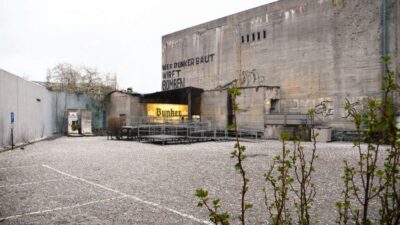
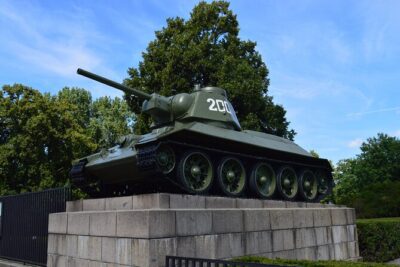
Berlin’s Best: 2 Hour Walking Tour Third Reich and the Cold War
Read our review →
Third Reich Berlin: Hitler and WWII Walking Tour
Read our review →
Skip-the-Line: Berlin Wall Museum at Checkpoint Charlie
Read our review →
Browse the lists this tour appears in