
Reviewed · THIRD REICH & COLD WAR TOURS
PRIVATE BEHIND THE BERLIN WALL and COLD WAR BERLIN TOUR
Berlin feels different when the Cold War is explained up close. This private, English-language walk links the Berlin Wall story to real street corners you can stand on today, with an expert guide doing the connecting. I especially like how the route hits the big hitters in one outing, and how the guide’s storytelling adds human details, not just dates. One thing to consider: it is a lot of walking, and Berlin weather can be cold or wet even when the tour is well-paced.
You get a 4-hour experience with no vehicles used, plus morning or afternoon start times. You also return to the meeting point at Birchys Berlin Tours, which makes planning your day much easier.
In This Review
- Key things that make this tour work
- Entering Cold War Berlin, one street at a time
- Price and value, when free admissions do most of the heavy lifting
- The morning vs. afternoon start: why it can change your experience
- Stop 1: Potsdamer Platz, the Cold War scar turned city comeback
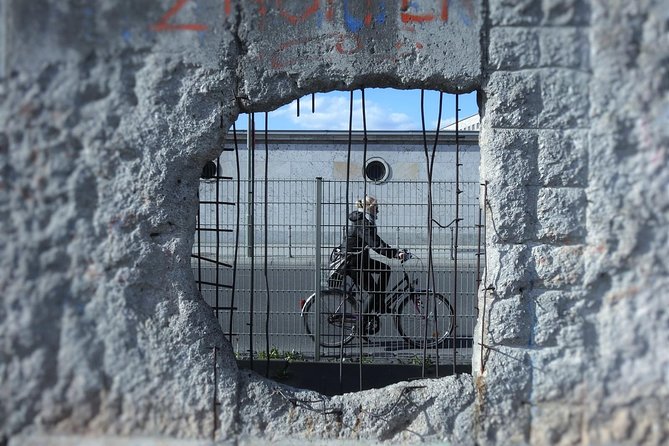
- Stop 2: Topography of Terror and the wall fragment you can point to
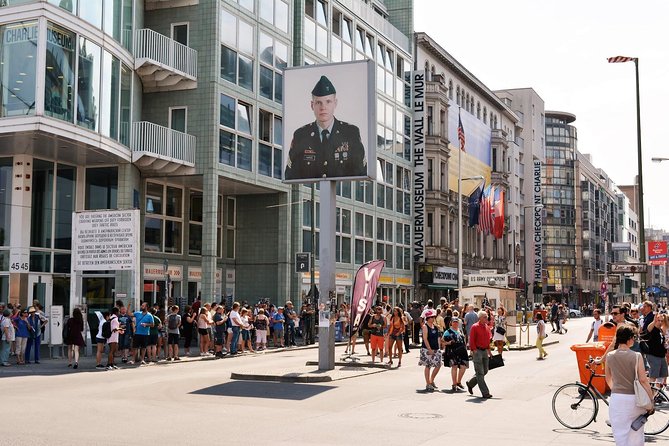
- Stop 3: Checkpoint Charlie, where the border became a stage
- Stop 4: The GDR Watch Tower, a rare survival
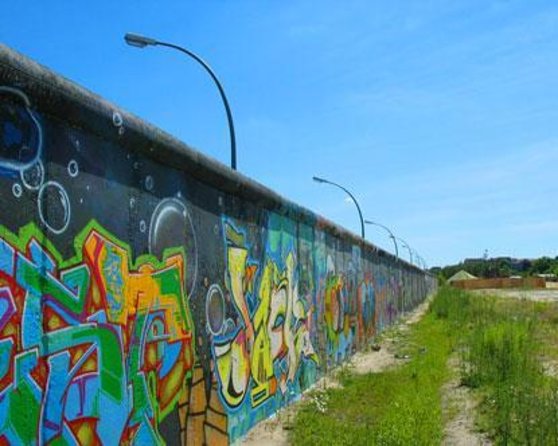
- Stop 5: Memorial of the Berlin Wall, over a kilometer of consequence
- How guides keep the story human, not mechanical
- Walking, transit, and comfort tips for Berlin weather
- Who this tour is best for
- Should you book Private Behind the Berlin Wall and Cold War Berlin?
- FAQ
- Is pickup available?
- How long is the tour?
- Are the sites included with admission fees?
- Is this a walking tour?
- Is the tour private?
- What language is the tour in?
- Can I bring pets?
- What is the cancellation policy?
- Do you use mobile tickets?
Key things that make this tour work
- A tight Cold War route in one half-day that covers Wall sites, border drama, and the postwar city rebuild
- Free admission stops for every listed major site, so your money goes toward the guide and the route
- Private group format so your guide can answer your questions and pace the walk
- Small, memorable segments at each stop, from a preserved watch tower to a full wall cross-section
- Time-savers for visibility and timing, with guides aiming to be at key spots when it makes sense
Entering Cold War Berlin, one street at a time
Cold War Berlin is not just a museum topic. It is built into the city’s streets, borders, and layouts. What makes this tour satisfying is that you are not bouncing between random monuments. You follow a logical path where each location clarifies the next, so the whole story clicks into place.
This is a walking tour, so you get motion and perspective. You feel the distances, you notice how neighborhoods changed, and you see how the Wall and border systems shaped what people could reach. Guides also tend to bring the story down to individuals, which is why the tone can shift quickly from politics to fear to hope.
If you care about the Wall as a physical structure, you will like the mix of surviving wall pieces, border landmarks, and the preserved memorial section. If you prefer the political story, you will also get it, since the tour connects the occupation aftermath to the East-West standoff.
More Third Reich & Cold War Tours in Berlin
- Berlin: Third Reich and Cold War 2 Hour Walking Tour
★ 4.9 · 6,830 reviews - Berlin: Berlin Story Bunker Entry Ticket
★ 4.6 · 6,759 reviews - Berlin’s Best: 2 Hour Walking Tour Third Reich and the Cold War
★ 5.0 · 5,486 reviews
Price and value, when free admissions do most of the heavy lifting
At $173.75 per person for a 4-hour private experience, the value depends on what you usually pay for Berlin guided tours. This one has two money-saving advantages baked in: a licensed guide and free admission at the stops in the route.
Your ticket money mainly covers:
- Expert guiding and route planning
- A structured walk that strings the Cold War narrative together
- Time at the locations that matter most
Because the tour does not use a vehicle, you are also not paying for private transportation. That matters in Berlin, where transit is everywhere, but trips can still add up if a tour relies on taxis or long transfers.
Where the price might feel different is if you are not into walking or you want a shorter, less structured visit. But if you want the Wall story explained clearly, with context and human detail, this is one of the more practical ways to spend a half-day.
The morning vs. afternoon start: why it can change your experience
You can start in the morning or the afternoon, which is more than a scheduling detail. In Berlin, light and crowd levels can be different across the day, and timing changes how the public spaces feel. A good guide also uses timing to help you see key points with less hassle.
In multiple guide styles, the same pattern shows up: they do not treat the tour as a race. They aim to keep you moving, but they also plan stops so you can absorb what you are seeing. That is one reason the tour often feels like a coherent story instead of a checklist.
Stop 1: Potsdamer Platz, the Cold War scar turned city comeback
Potsdamer Platz is one of the clearest examples of how Berlin re-made itself after division. You start by looking at how an area that once felt cut off and tense has turned into a high-rise business and entertainment quarter.
What I like about this first stop is the emotional contrast. Even if you know the Cold War headline version, it still hits differently when you look at the modern skyline and then remember this same ground belonged to the logic of separation. It is a fast introduction, around 15 minutes, and it sets expectations for the rest of the walk: you will keep seeing how borders reshaped the city and then how the city grew again.
A possible drawback here is that Potsdamer Platz can feel busy and modern. If you are expecting instant silence and Wall drama, it might take a few minutes for the guide to put you in the right mindset. But the payoff is that you will understand the transformation rather than just viewing it.
More wartime and Cold War history walks in Berlin:
- Third Reich Berlin: Hitler and WWII Walking Tour
★ 5.0 · 3,301 reviews - Skip-the-Line: Berlin Wall Museum at Checkpoint Charlie
★ 4.1 · 2,041 reviews - Berlin: Third Reich, Hitler, and WWII Walking Tour
★ 4.9 · 1,757 reviews - Cold War, Berlin Wall, Spies and the East Side Gallery
★ 5.0 · 1,024 reviews
Stop 2: Topography of Terror and the wall fragment you can point to
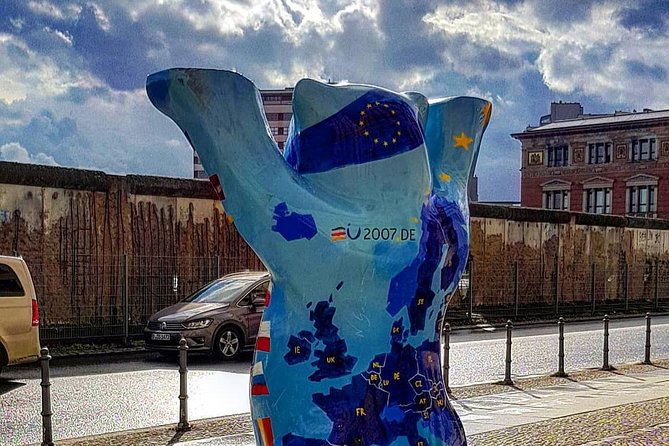
Next is Topography of Terror, where a surviving fragment of the Berlin Wall still sits near Niederkirchnerstraße. This is one of the more powerful “proof points” on the route because it is not only about memory. It is about structure you can actually see in place.
The setting also matters. The area ties into the former Luftwaffe headquarters used during the East German period as the House of Ministries. So you get a sense of how the postwar political machine repurposed buildings and space.
If you are the type of traveler who wants the Wall story to include escape attempts and risk, this stop delivers. The same section is described as a site of one of the incredible escapes into West Berlin. Even when you only spend about 15 minutes here, it tends to linger, because the walls and adjacent buildings feel like they were built for control, not comfort.
What to consider: this stop can be emotionally heavy. It is history connected to fear and state power, so bring a calm pace. If you need breaks, your guide can usually work with your group.
Stop 3: Checkpoint Charlie, where the border became a stage
Checkpoint Charlie is the most famous of Berlin’s crossing points, and it earns its fame. You learn how it became a setting for both failed and successful escape attempts, plus the tense face-off between American and Soviet forces in autumn 1961.
The value of visiting it on a guided route is that the guide does not treat it as a photo backdrop. They connect it to how border control worked as a system. You start to understand that a checkpoint was not just a location. It was a pressure point, where rules, surveillance, and power played out in real time.
You spend about 20 minutes here, which is long enough for the context to land. You can also take a moment to look around and notice how the modern city frames the past. That contrast is part of the impact.
One consideration: this is a well-known tourist area, so it can be busy. The tour format is private, which helps, and a strong guide keeps you focused so you are not just stuck waiting for the right photo.
Stop 4: The GDR Watch Tower, a rare survival
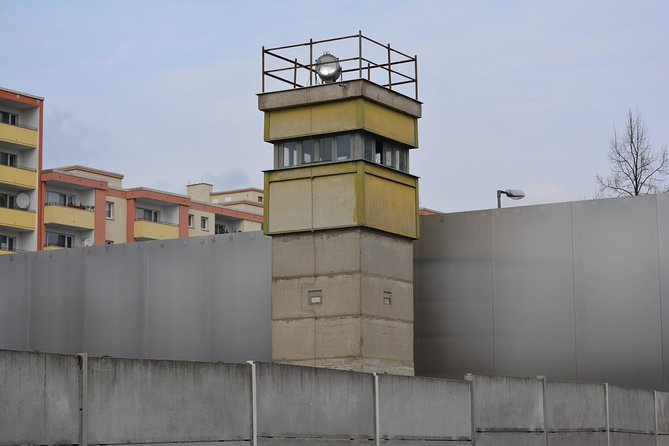
Then you head to the GDR Watch Tower, including the chance to ascend the last of the BT-variant watchtowers that once surrounded West Berlin. The tower’s survival is tied to a private initiative, which makes it feel even more precious.
This stop is short, about 10 minutes, but it can be memorable because height changes your understanding. Even if you do not go up, you will still grasp the concept: watchtowers were part of a visibility and control system. Going up can help you understand what a guard might have seen, and how distance and lines of sight mattered.
What I appreciate here is that it is not only about the Wall itself. It expands to the broader Cold War architecture, where the border system included tools like towers and monitoring posts.
A practical note: if the stairs or the steps are a concern for your group, ask the guide before you commit. This is where a private tour format can help, since pacing and participation can be adjusted.
Stop 5: Memorial of the Berlin Wall, over a kilometer of consequence
The final stop is the Memorial of the Berlin Wall, over 1 kilometer long. This is where the tour earns its emotional weight.
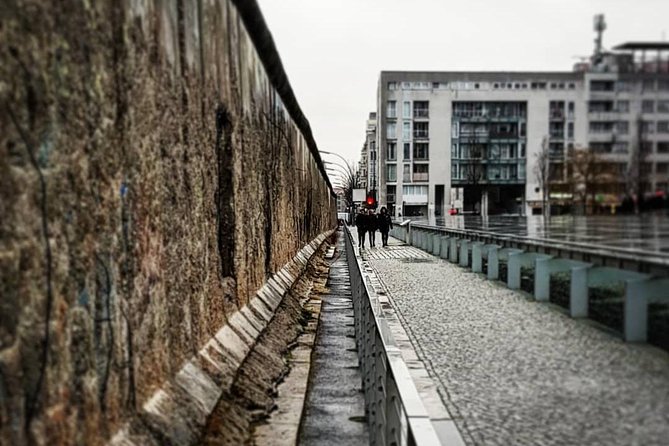
It includes the only preserved complete cross-section of the Berlin Wall and the death-strip in that area. That is the kind of detail that turns a general Wall narrative into something you can understand visually. You are no longer thinking about the Wall as an idea. You see how it was constructed and how the space around it was used.
You spend about 1 hour 20 minutes here, which is exactly what this stop needs. The time lets you read, walk, and absorb without feeling rushed. It also gives you room to stop and ask questions when something clicks, because the guide can explain the why behind what you are seeing.
This is also one of the most important sites for understanding tragic loss alongside incredible escape attempts. The memorial’s power is that it holds both realities at the same time.
If you are sensitive to heavy content, plan your energy. Wear comfortable shoes and consider layering so you can stay focused while the story gets intense.
How guides keep the story human, not mechanical
A big reason this tour gets perfect scores is guide quality and storytelling style. Names that show up in guide examples include Eugene, Reece, Paul, Cairan, Kirin, Beth, Aurel, Simon, Aaron, Steve, Darren, and Francesco. Across those different personalities, the pattern is similar: the guide explains the Cold War setup, then connects it to individual experiences.
One standout approach is using personal or family connections. For example, Cairan’s narration includes pictures taken by his mother during the 70s and 80s, which adds texture that you cannot get from official signage alone. Guides also tend to bring humor in small doses, like Aaron and Steve, without turning the topic into a comedy.
Another practical perk is pacing. Several guide styles build in a rest break. One guide even paused mid-tour at a cafe with banana bread and cinnamon rolls, which is the kind of real-world comfort that keeps a half-day tour from feeling like a slog. Others stop for warming up if the weather is cold or wet, and that matters in Berlin.
You will also usually get flexibility. In one case, Paul offered options when a day’s schedule overlapped with a different monument plan, and he adjusted without making it feel like a hassle.
So if you want more than facts, if you want context plus the human side, this is where the tour shines.
Walking, transit, and comfort tips for Berlin weather
Because the tour uses no private vehicles, your comfort is mostly about shoes and layers. The duration is about 4 hours, and you will cover real distance. Even on a well-paced route, you are on your feet for a long stretch.
Here’s how I’d prepare:
- Wear shoes made for walking, not just sightseeing
- Bring a jacket you can layer, Berlin can get chilly fast
- Pack a small umbrella or rain shell if the forecast looks doubtful
- If stairs might be an issue, flag it early, especially near the watch tower
You might also use public transportation during part of the day depending on the guide’s route choices. That is worth keeping in mind so you are not surprised by an extra transit step, even though there is no private car involved.
Who this tour is best for
This tour is a great match for:
- Cold War history buffs who want the core story in one day
- Travelers who like structured routes with clear context
- People who appreciate human-scale narratives, not only politics
- Families with teens, as long as everyone can handle the walking time and the subject matter
It is less ideal for you if:
- You want a very relaxed, low-walking option
- You prefer purely visual sites without storytelling
- You are looking for a longer, museum-heavy deep education session rather than a half-day overview
That said, even if you are not a hardcore history person, the route can still work because the guide usually explains the why behind each location, and the city itself helps you understand the physical logic of the Wall.
Should you book Private Behind the Berlin Wall and Cold War Berlin?
If you want one efficient outing that connects the Wall, border control, and Berlin’s postwar transformation, I think this is an easy yes.
Book it if:
- You value a licensed guide and want the story told clearly
- You like walking tours that stay active
- You want multiple key sites, Potsdamer Platz to the Berlin Wall Memorial, in a single half-day
- You are okay with weather and expect 3 to 4 hours of movement
Skip it if:
- You cannot handle long walking segments
- You only want a quick look at famous photos and do not want context
- You are strongly sensitive to heavy content, since the memorial and Topography of Terror are serious stops
FAQ
Is pickup available?
Pickup is offered. How it works can depend on your booking, so it is worth confirming when you reserve.
How long is the tour?
The duration is about 4 hours.
Are the sites included with admission fees?
For the listed stops, admission tickets are free.
Is this a walking tour?
Yes. The tour does not use vehicles for transportation, so expect to walk between sites.
Is the tour private?
Yes. It is a private tour or activity, so only your group participates.
What language is the tour in?
The tour is offered in English.
Can I bring pets?
Animals or pets are allowed.
What is the cancellation policy?
You can cancel for free up to 24 hours in advance for a full refund.
Do you use mobile tickets?
Yes, a mobile ticket is included.
Newest Berlin reviews on the site
- Your ticket to The Wall Museum Berlin★ 3.0 · 60 reviews
- Rickshaw Tours Berlin – Groups of up to 16 people with several rickshaws★ 4.0 · 97 reviews
- Love and War in Berlin: Self-Guided Story Puzzle Walk★ 5.0 · 7 reviews
- Warnemuende Shore Excursion: Berlin Private Sightseeing Tour from Rostock★ 5.0 · 4 reviews
- eSIM for Germany and 34 European Countries★ 4.5 · 16 reviews
- Walking on the Wall: 3-Hour Tour in Berlin★ 4.5 · 34 reviews
- Karl-Marx-Allee Tour: Life and Architecture in East Berlin★ 5.0 · 19 reviews
- Warnemuende Shore Excursion: Private Berlin Tour★ 4.5 · 27 reviews
Third Reich & Cold War Tours, compared.


Berlin’s Best: 2 Hour Walking Tour Third Reich and the Cold War
Read our review →
Third Reich Berlin: Hitler and WWII Walking Tour
Read our review →
Skip-the-Line: Berlin Wall Museum at Checkpoint Charlie
Read our review →
Browse the lists this tour appears in