
Reviewed · THIRD REICH & COLD WAR TOURS
Nuremberg: Historischer Kunstbunker WWII Art Bunker Tour
Stroll under Nuremberg, and history gets real fast. This guided visit to the Historischer Kunstbunker lets you walk through WWII tunnels in the Old Town, where art was stashed to survive air raids and the city itself was later rebuilt. Along the way, you connect the dots between bombing destruction, underground protection, and the specific masterpieces that were moved to safety.
I love two things most. First, you get to follow the route through the underground network with a local guide, which makes the space feel navigable instead of spooky and confusing. Second, the tour names real works you may recognize, like the art attributed to Albrecht Dürer and the famous objects that were stored here during the worst of the raids.
One consideration: it is cold and tight down there. People can feel a bit cramped, especially if the group is on the larger side, and you will want warm layers since it is a cellar environment.
In This Review
- Key things to know before you go
- Entering The Historischer Kunstbunker, and why the setting matters
- Meeting in Old Town and getting ready for cold, damp tunnels
- The art rescue story: Dürer, Veit Stoss, and famous works under threat
- How a beer cellar became a bomb shelter for art
- Navigating the tunnels in an hour without getting lost
- Where this tour fits best, and who might love it
- Price and value: why $14 can make sense here
- After the tour: how to keep the story going above ground
- Should you book the Historischer Kunstbunker WWII Art Bunker Tour?
- FAQ
- How long is the Historischer Kunstbunker WWII art bunker tour?
- Where do I meet the guide?
- Is the tour in English, or is it in German?
- What should I bring for the tour?
- Does the tour run in bad weather?
- What is included in the ticket price?
- Is transportation included?
- Is the tour suitable for people with mobility impairments or wheelchair users?
- Is it suitable for claustrophobia?
- What is the cancellation and payment flexibility?
Key things to know before you go
- A one-hour route focused on the art rescue story and how the shelter worked
- Real artworks in context, including the Altarpiece of Veit Stoss, the Frauenkirche automaton clock, and the Codex Manesse
- Cold tunnels, rain or shine, so you need warm clothing even in mild weather
- Guides make the city make sense, with both historic facts and local perspective
- Not for claustrophobia or wheelchairs, since it is an underground tunnel visit
- Old Town timing is easy, so you can tour the bunker and still wander above ground afterward
Entering The Historischer Kunstbunker, and why the setting matters
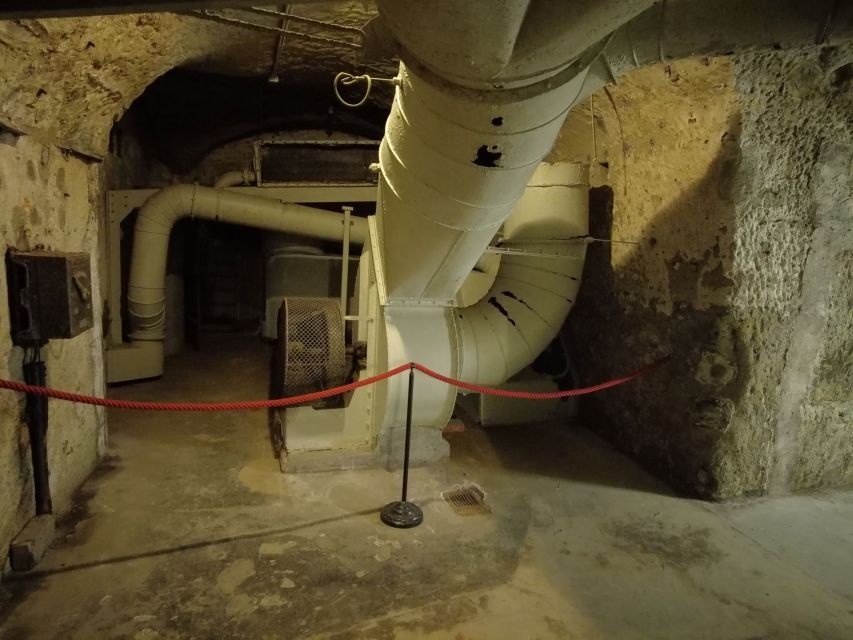
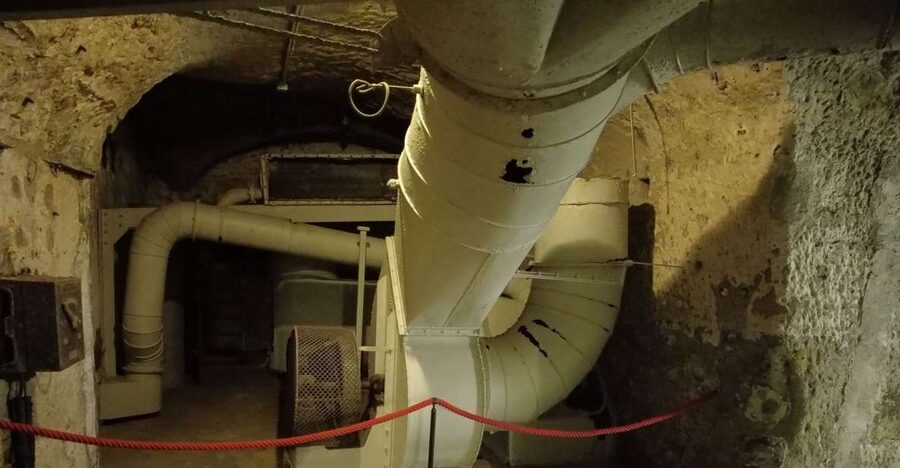
This is not a museum you just look at from a distance. The Historischer Kunstbunker is an underground art shelter, so the experience is built around moving through the space where preservation actually happened. That physical context changes how the WWII story lands, because you feel how limited and practical decisions had to be.
The tour starts at the entrance to the Historischer Kunstbunker Museum in Nuremberg’s Old Town area. From there, you’re led into the underground rooms and tunnel sections, and the guide frames what you are seeing as a real plan, not just a display. You learn how Nuremberg’s medieval center was heavily damaged during WWII, and then how rebuilding followed after the war.
What makes this visit especially interesting is the contrast. Above ground, you see a restored city. Below ground, you see the hard logic of protecting art when the city was at risk of disappearing under bombardment.
More Third Reich & Cold War Tours in Nuremberg
- Nuremberg: Walking Tour of Former Nazi Party Rally Grounds
★ 4.7 · 1,665 reviews - Nuremberg Old Town and Nazi Party Rally Grounds Walking Tour in English
★ 4.5 · 504 reviews - Nuremberg Old Town and Nazi Rally Grounds Walking Tour
★ 4.7 · 377 reviews
Meeting in Old Town and getting ready for cold, damp tunnels
You will want to show up prepared for the temperature difference. Even though the weather above might be comfortable, the cellar setting means you should expect it to be cold during the tour. Reviews specifically mention it can feel around the 10 to 12 C range inside, so warm clothing is not optional, it is the difference between enjoying the tour and rushing to the exit.
The tour runs rain or shine, so you do not get the option to swap it for something else when the weather turns. Bring layers you can move in. You may also find it helps to wear shoes with good traction, since underground walkways can be damp.
Timing is also simple. The total duration is one hour, and that matters because you can usually fit this into a broader day of sightseeing without turning it into a long slog. If you like planning your day around a few anchors, this one works well.
The art rescue story: Dürer, Veit Stoss, and famous works under threat
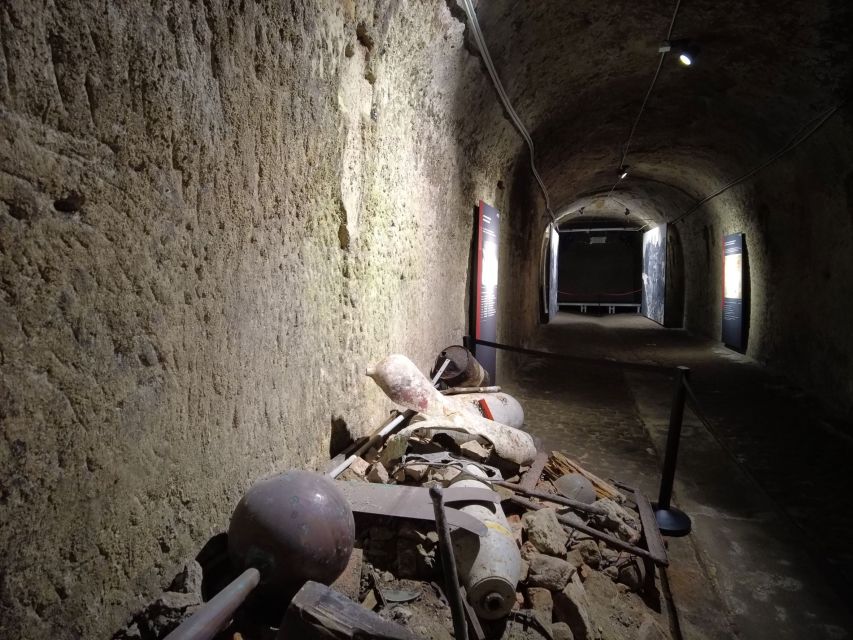
The heart of the tour is the rescue plan, and it is built around concrete examples. The guide points out how priceless works were stored here to protect them during air raids. You are not asked to imagine what might have happened. Instead, you learn which works were moved into shelter conditions and what survived when so much of the medieval Old Town did not.
The highlights include major names and specific objects. You hear about the Altarpiece of Veit Stoss, the automaton clock from the Frauenkirche, the Codex Manesse, and the significance of works associated with Albrecht Dürer. The point is not just that these objects are famous. The point is that they were the reason someone had to plan an underground system quickly and keep it functioning under threat.
This also gives you a more honest view of the era. The Nazis used this space to preserve artworks, and the tour explains that context. It is not a celebration of preservation without moral weight. You come away seeing how cultural value, political power, and wartime urgency collided in a place that physically shaped the survival of art.
If you have any interest in WWII beyond the battlefield, this is where it clicks. You see how the war played out in a city’s cultural life, not just on maps.
How a beer cellar became a bomb shelter for art
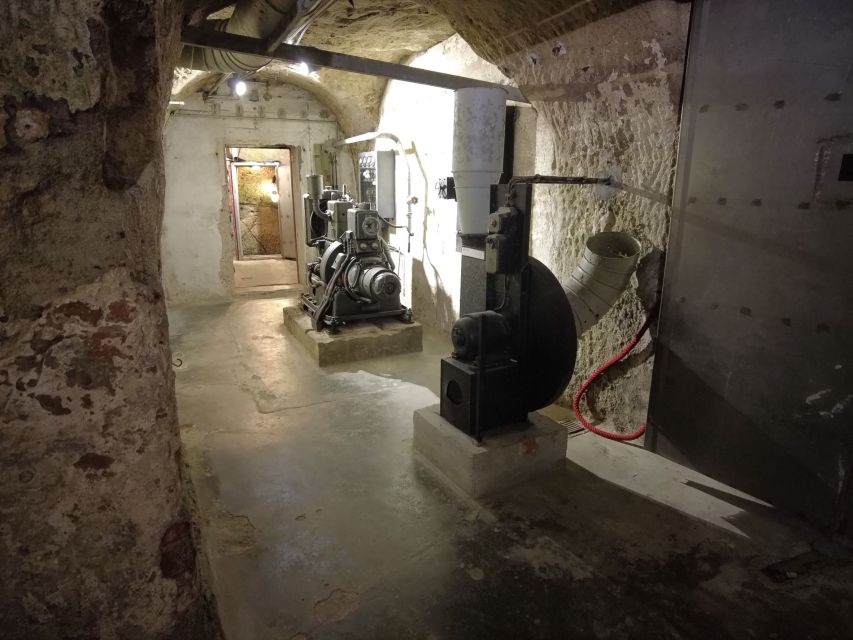
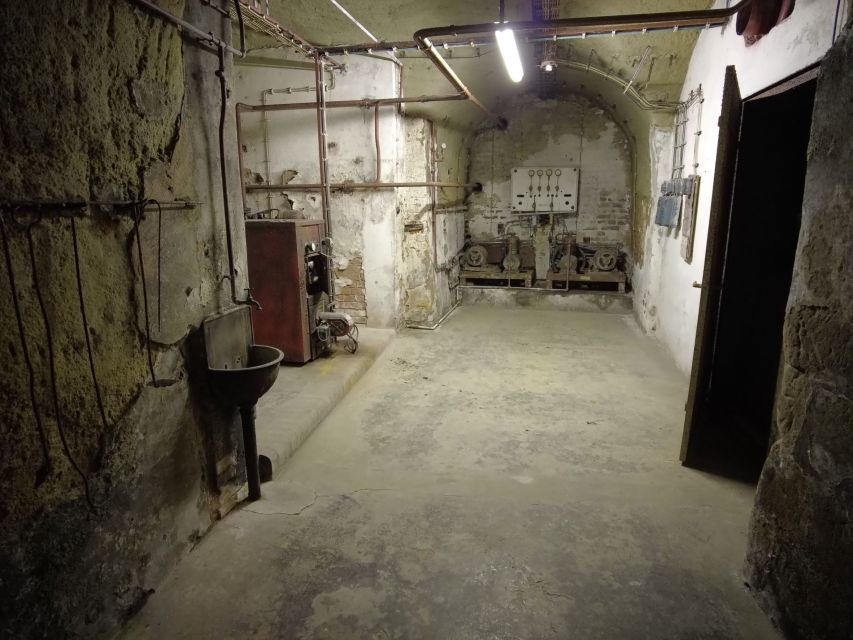
One detail I really appreciate is that the bunker did not start as a WWII solution. The tour explains that the cellar was used to store beer in medieval times before it became part of the art preservation and shelter strategy. That matters because it connects the underground space to the long life of the city.
Nuremberg’s history is not only the WWII years, and this conversion story helps you avoid thinking the city was born in the 1940s. You learn how existing underground architecture could be repurposed when bombings became a reality. The guide walks you through the transformation, and you start to understand how practical choices often define what gets saved.
Then the narrative shifts to destruction and rebuilding. You hear that the war reduced about 90 percent of the medieval Old Town, and later the city was rebuilt. That pairing is important for perspective. The bunker is a survival mechanism from one chapter of the city’s life, while rebuilding represents what came right after.
So the tour gives you a timeline feel: medieval use, wartime repurposing, bombing destruction above ground, and reconstruction afterward. It is a compact story told in a place where those layers overlap.
More wartime and Cold War history walks in Nuremberg:
- Nuremberg Third Reich Tour in Spanish
★ 5.0 · 355 reviews - Nuremberg World War 2 and Beer Tasting Tour
★ 4.5 · 28 reviews - Berlin: Third Reich and Cold War 2 Hour Walking Tour
★ 4.9 · 6,830 reviews - Berlin: Berlin Story Bunker Entry Ticket
★ 4.6 · 6,759 reviews
Navigating the tunnels in an hour without getting lost
This tour is designed to move at a human pace. You follow a local guide through a tunnel network with enough direction to keep you oriented. People with normal confidence in close spaces typically do fine, but it is still an underground route with narrow passages and low comfort compared to museums with wide corridors.
Because it lasts one hour, you get a focused experience rather than a slow exploration. That works in your favor. You leave with the main story and key artifacts, and you can still spend time walking above ground in Nuremberg afterward.
There is also an emotional pacing to how guides often present the material. Guides such as Andrea, Marc, Michael, Jana, Andres, Adrian, Ralf, and Marianne are repeatedly described as engaging and able to connect facts to what it meant for people. Even if your guide style varies by group, the structure is the same: art survival, air raid logic, and Nuremberg’s destruction and rebuilding.
The one caution is space. If the group is larger, it can feel tight. If you do not enjoy close quarters, consider that this is an underground tour where everyone has to move together. Also keep in mind it is not suitable for people with claustrophobia, and it is not suitable for wheelchair users or people with mobility impairments.
Where this tour fits best, and who might love it
I think this tour is a strong match for three kinds of visitors.
First, if you care about WWII history but want something more specific than speeches and battle dates, you will like how the tour centers on art protection. It is history with a tangible focus.
Second, if you like Nuremberg’s Old Town but want to see the parts below the surface, you will enjoy the tunnel perspective. The bunker story makes the restored city above ground feel earned, not just pretty.
Third, if you are traveling with teenagers or adults who get bored in long exhibitions, the one-hour format helps. The route is physical, the guide has a clear narrative, and you are repeatedly grounded in real objects, not vague concepts.
On the other hand, if you dislike underground spaces or feel uneasy in confined areas, skip this. The tour is rain or shine and happens in tunnels, so you cannot get the same experience in a comfortable, airy alternative.
Price and value: why $14 can make sense here
At $14 per person for a one-hour guided tour, the value is mostly about what you get, not the raw cost. You are paying for a guided route through an underground WWII art shelter plus museum entry. That guidance matters because it is easy to miss context on your own when the space is meant to be experienced in sequence.
You are also getting a mix that not every WWII site offers. Many places focus only on destruction. Here, the story includes preservation efforts, specific artworks, and what happened next when rebuilding began. That balance makes it feel more complete without being long.
And because the tour is one hour, the opportunity cost is low. You can pair it with above-ground sights in Nuremberg’s Old Town without losing an entire afternoon.
After the tour: how to keep the story going above ground
Once you’re done underground, you still have time to connect the lessons to what you see outside. Since the tour is in the Old Town area, it is easy to go back out and walk among the streets that survived in rewritten form.
This is also a good time to keep your eyes open. You now know that much of the medieval center was destroyed and that rebuilding followed. That makes the streets, façades, and squares feel less like background scenery and more like the result of choices and recovery.
If you want a casual finish, there are spots around the Old Town where people like to relax with a drink after sightseeing. Reviews mention a pleasant area to hang out afterward, which fits the vibe of this kind of historic stop.
Should you book the Historischer Kunstbunker WWII Art Bunker Tour?
Book it if you want a short, focused, guided WWII experience that ties together art, tunnels, and Nuremberg’s destruction and rebuilding. The specific works mentioned, like the Veit Stoss altarpiece, the Frauenkirche automaton clock, and the Codex Manesse, give the tour real anchors instead of generalities.
Skip it if you do not do well in confined spaces or you need accessible routes, because this is a tunnel tour and the information clearly says it is not suitable for wheelchair users or people with claustrophobia.
If you’re planning one must-do WWII stop in Nuremberg, this is one of the strongest picks because it shows the war through culture and survival decisions, all in a one-hour visit you can actually fit into a day.
FAQ
How long is the Historischer Kunstbunker WWII art bunker tour?
The tour lasts 1 hour.
Where do I meet the guide?
Meet your guide at the entrance of the Historischer Kunstbunker Museum.
Is the tour in English, or is it in German?
The live tour guide is available in English and German.
What should I bring for the tour?
Bring warm clothing, since you will be in a cold cellar/tunnel setting.
Does the tour run in bad weather?
Yes, the tour takes place rain or shine.
What is included in the ticket price?
The ticket includes the Historischer Kunstbunker Museum entry fee and a guide.
Is transportation included?
No. Transportation is not included.
Is the tour suitable for people with mobility impairments or wheelchair users?
No. It is not suitable for people with mobility impairments and not suitable for wheelchair users.
Is it suitable for claustrophobia?
No. It is not suitable for people with claustrophobia.
What is the cancellation and payment flexibility?
You can cancel up to 24 hours in advance for a full refund. You can also reserve now and pay later.
Newest Nuremberg reviews on the site
- Nuremberg: 60 minute Express Walk with a Local★ 4.2 · 3 reviews
- Deutsches Museum Nürnberg – das Zukunftsmuseum★ 4.5 · 18 reviews
- Best of Nuremberg: Private Walking Tour with a Local★ 3.8 · 3 reviews
- Nuremberg: Private 1.5-Hour Tour with Beer Tasting★ 4.6 · 111 reviews
- Fünf Seidla Steig ® Beer Hike Food Experience Private Tour (departs Nuremberg)★ 5.0 · 10 reviews
- Nuremberg World War 2 and Beer Tasting Tour★ 4.5 · 28 reviews
- Nuremberg: Castle and Old Town Tour – including admission tickets and red beer tasting★ 4.9 · 28 reviews
- Nuremberg: The Old Town in Evening Light – IN GERMAN★ 4.7 · 353 reviews
Third Reich & Cold War Tours, compared.

Berlin’s Best: 2 Hour Walking Tour Third Reich and the Cold War
Read our review →
Third Reich Berlin: Hitler and WWII Walking Tour
Read our review →
Skip-the-Line: Berlin Wall Museum at Checkpoint Charlie
Read our review →
Browse the lists this tour appears in