
Reviewed · THIRD REICH & COLD WAR TOURS
Nuremberg Third Reich Tour in Spanish
Nuremberg’s darkest themes, in a calm walk. This Nuremberg Third Reich tour in Spanish connects medieval antisemitism to Nazi propaganda through real places, with a route that ends at the Street of Human Rights. I like the clear stop-by-stop structure that keeps heavy topics readable, and I like how the guide style (often Federico) stays organized and well documented. A possible drawback is that you are outside for much of the walk, so hot afternoons can feel intense, and the tour needs good weather to run.
What makes it practical is the pacing and the fact that you are not stuck buying tickets one by one. Each stop is short, the group is capped at 30 people, and you use a mobile ticket. You start at 3:30 pm from Hauptmarkt, then you finish near the central train area, so it is easy to keep moving after the tour.
In This Review
- Quick highlights
- Why this tour is built around places, not slogans
- Price and value: what $19.70 buys you in real time
- Timing and route: starting at Hauptmarkt and ending by the station
- Stop 1: Frauenkirche and the 1349 pogrom in context
- Stop 2: St. Sebaldus Church, where medieval antisemitism meets National Socialism
- Stop 3: Nuremberg Rathaus and Hitler’s relationship with the city
- Stop 4: Gedenkstätte at the Hauptsynagoge, destruction and Kristallnacht
- Stop 5: Katharinenkirche ruins, battle, liberation, and reconstruction
- Stop 6: St. Lorenz and the Via Crucis tied to a concentration camp
- Stop 7: Nuremberg State Theater and the cultural power of National Socialism
- Stop 8: Charterhouse Gate and the Nuremberg trials
- Stop 9: Street of Human Rights, the rebirth message after WWII
- Who this tour suits best
- Should you book the Nuremberg Third Reich tour in Spanish?
- FAQ
- Is the tour guided in Spanish?
- How long is the Nuremberg Third Reich tour?
- What is the price per person?
- Where does the tour start and what time is it?
- Where does the tour end?
- Do I need to pay admission fees at the stops?
- Is there a group size limit?
- What do I need on my ticket?
- What is included and what is not included?
- Does the tour run in bad weather?
Quick highlights
- A Spanish guide with a tight narrative from Holy Roman Empire symbolism to Nazi use of Nuremberg
- Short stops, focused themes that fit a 3-hour walking format
- Real memorial sites and churches that frame antisemitism across centuries
- Nuremberg trials at Charterhouse Gate without turning the tour into a lecture
- A finish at the rebirth theme of the Street of Human Rights after WWII destruction
Why this tour is built around places, not slogans
Nuremberg has layers. In the Middle Ages it mattered politically, with imperial diets and assemblies tied to the Holy German Roman Empire. Then the Third Reich looked at that prestige and decided to use Nuremberg as a propaganda machine. Hitler treated the city like a continuation of Germanic traditions, and the regime shaped it into the capital of congresses, pushing the idea that the Nazi structure carried on the old German past.
That is why this tour works. Instead of throwing facts at you, it uses the city itself as a timeline. You move from churches and civic buildings to synagogue memorials, then to sites linked with cultural power and postwar justice. By the end, you do not just learn what happened. You see how Nuremberg tried to control meaning, and how the city later chose to speak about human rights.
One more reason I appreciate the approach: it includes the bridge between eras. You are not only told about National Socialism, you are also pointed toward the older antisemitic patterns that helped make Nazi ideology easier to sell. That makes the story harder, but also more understandable.
More Third Reich & Cold War Tours in Nuremberg
- Nuremberg: Walking Tour of Former Nazi Party Rally Grounds
★ 4.7 · 1,665 reviews - Nuremberg: Historischer Kunstbunker WWII Art Bunker Tour
★ 4.8 · 921 reviews - Nuremberg Old Town and Nazi Party Rally Grounds Walking Tour in English
★ 4.5 · 504 reviews
Price and value: what $19.70 buys you in real time
At $19.70 per person, this is one of those “small price, big payoff” city tours. Why? Because you are paying for a guide in Spanish and a structured walking route that strings together multiple major sites in about 3 hours. Most of the stops on this route are listed with free admission tickets, which matters if you are trying to keep your day budget under control.
You also get a mobile ticket, which cuts down on friction. In a place like Nuremberg, where you want to move efficiently between the old town core and memorial sites, that convenience is not glamorous, but it helps you spend your time on the meaning of the places, not on logistics.
Group size matters too. With a maximum of 30 travelers, you are unlikely to feel lost at the back. The tour is short at each stop, so you get a focused explanation, then you move on while your attention is still sharp.
If you are the type who likes to understand why a city looks the way it does, this is a strong value. You are paying for interpretation, not just sightseeing.
Timing and route: starting at Hauptmarkt and ending by the station
The tour starts at 3:30 pm at Hauptmarkt 14 in the old town area. That timing can be helpful because you often get workable light for photos and a cooler walk than some midday options. Still, remember the tour requires good weather, so if the forecast looks grim, it may shift or be refunded.
The route ends near the Street of Human Rights at Kartäusergasse 1, close to the central train station and about a ten-minute walk from the start. That finish location is practical. You can grab dinner, connect to transit, or head back to your hotel without a major detour.
Also, this is a mobile-ticket experience. That means you should keep your phone charged and ready to show the ticket.
If you want to make the day smooth, plan for a bit of walking and bring water. Even when stops are brief, the overall day still has movement across the central city.
Stop 1: Frauenkirche and the 1349 pogrom in context
You begin at the Frauenkirche, and the theme right away is the pogrom of 1349 tied to the Jewish quarter and the city. That is an important opening because it sets up the tour’s main idea: antisemitism did not start in the 1930s. It had earlier roots, and the city’s relationships shaped how those ideas were carried forward.
From a traveler’s perspective, starting with this kind of context helps you decode what you see next. A church is not just a church here. It becomes a marker in a longer story about exclusion, blame, and how communities were targeted.
You typically get about 15 minutes at this stop, so you should expect a focused explanation rather than a deep museum-style visit. The best way to benefit is to listen for the links. Notice how the guide connects the specific event to broader patterns rather than treating it as a one-time tragedy.
A practical note: churches can have changes in temperature compared to the street. If you tend to run cold indoors, bring a layer.
More wartime and Cold War history walks in Nuremberg:
- Nuremberg Old Town and Nazi Rally Grounds Walking Tour
★ 4.7 · 377 reviews - Nuremberg World War 2 and Beer Tasting Tour
★ 4.5 · 28 reviews - Berlin: Third Reich and Cold War 2 Hour Walking Tour
★ 4.9 · 6,830 reviews - Berlin: Berlin Story Bunker Entry Ticket
★ 4.6 · 6,759 reviews
Stop 2: St. Sebaldus Church, where medieval antisemitism meets National Socialism
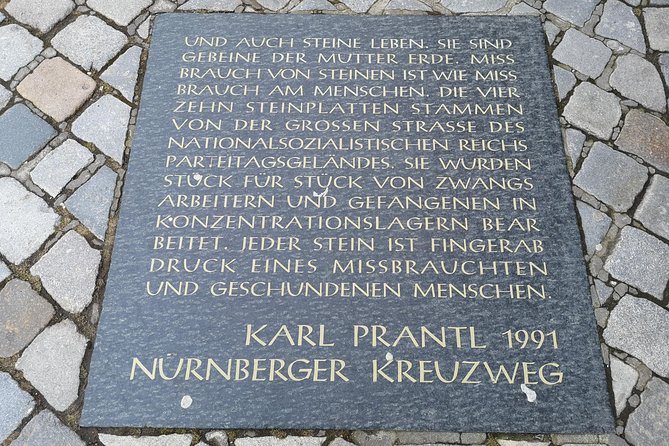
Next up is St. Sebaldus Church, with a theme you can’t ignore: antisemitism from the Middle Ages to National Socialism. The goal is not to turn the church into a villain. It is to show you how long ideas can persist, mutate, and reappear with new political packaging.
This is one of the tour’s strongest “thinking” stops because it forces a comparison across eras. You may walk into a space that looks purely religious, and you leave seeing it as part of a social environment where discrimination could take hold.
Expect about 15 minutes here. That means you will want to keep your attention on the guide’s thread: how the regime later used older prejudices and propaganda methods to create acceptance.
If you are visiting with a history-loving friend, this is a great stop to discuss quietly. You will have a clear question in mind afterward: what allowed these attitudes to survive for so long?
Stop 3: Nuremberg Rathaus and Hitler’s relationship with the city
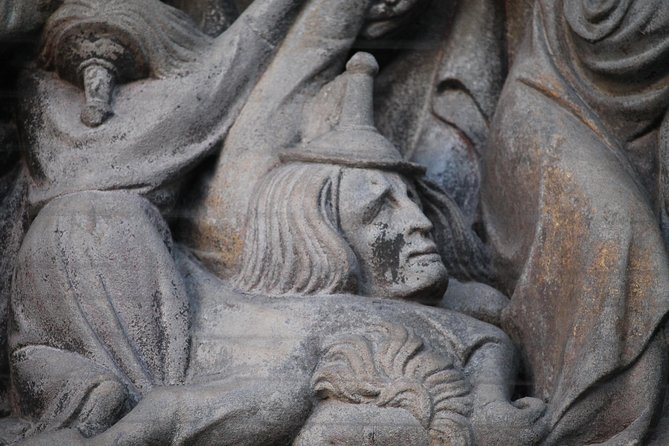
Then you reach the Nurnberger Rathaus for the history of Hitler and the link with Nuremberg. This is where the tour shifts from long-rooted antisemitism to political branding and symbolism.
The tour ties Nuremberg’s importance under the Holy German Roman Empire to the way the Third Reich tried to present itself as a “heir” to that older prestige. Hitler’s idea was that Nuremberg belonged in the Nazi story, not as a relic but as a stage.
This is about about 15 minutes, so it stays tight. The value here is the explanation of why the city mattered to the regime. If you walk around Nuremberg on your own, it is easy to notice buildings and monuments without knowing why the Nazis cared so much. This stop gives you that missing logic.
If you are sensitive to political content, this part may feel intense, but it is also a clear turning point in the tour.
Stop 4: Gedenkstätte at the Hauptsynagoge, destruction and Kristallnacht
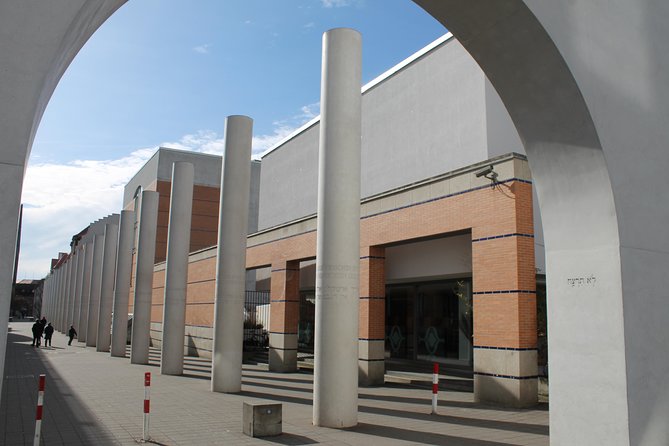
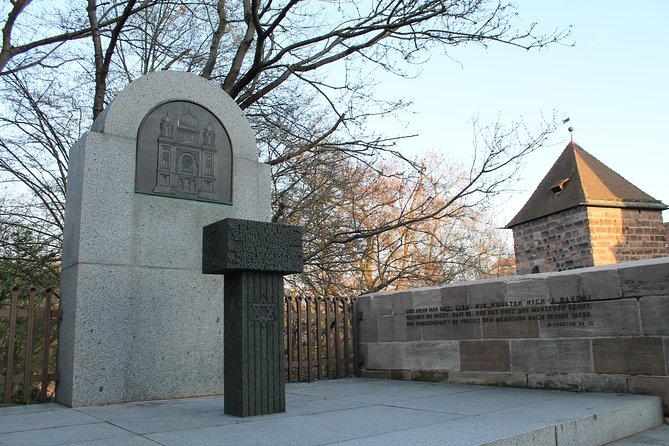
The fourth stop is the Gedenkstatte an der Nurnberger Hauptsynagoge, tied to the main synagogue of Nuremberg and its destruction, including the Night of the Broken Crystals. This is one of the route’s most emotionally heavy moments, and it is also one of the most important.
The tour gives you about 10 minutes here, so you will not be spending hours at the memorial. Instead, you get a guided frame to help the memorial land correctly in your mind. The message is that destruction was planned, public, and ideological, not random.
You will likely find yourself looking differently at what is present and what is missing. Memorials often create a strange feeling: you can see a place, but you cannot see the full life that used to happen there.
My practical advice for this stop is simple: slow down. Even if the group moves on, take a few seconds to read and absorb. Short tours do not give you much time, so every moment counts.
Stop 5: Katharinenkirche ruins, battle, liberation, and reconstruction
After the synagogue memorial, the tour moves to Katharinenkirche, focused on the ruins of the church of Santa Catalina, the battle and liberation of Nuremberg, and the reconstruction of the city. This is a shift in tone, and it is still part of the same narrative.
Nuremberg was not only a target of ideological propaganda. It was also physically broken during WWII. Talking about ruins and reconstruction helps you understand the last part of the tour, where the city turns from ashes into a message about human rights.
This stop is about 10 minutes. You should come in ready to connect details: the idea that destruction changes a city’s appearance, and later rebuilding changes what the city chooses to emphasize.
If you want an easy way to remember this stop, think of it as the transition from Nazi rule to postwar reality. You are starting to see consequences in stone, not just in documents.
Stop 6: St. Lorenz and the Via Crucis tied to a concentration camp
Next is St. Lorenz, where the tour connects the Via Crucis and its relationship with the Nuremberg concentration camp. This is another stop where architecture meets moral history.
The Via Crucis is commonly associated with the Stations of the Cross, but here the tour draws attention to how Nuremberg’s concentration camp reality becomes part of what you see in the city. That can feel uncomfortable, but it is also how public spaces sometimes carry hidden layers.
You get about 10 minutes. With so little time, the most useful approach is to listen for the “why this matters” explanation, not just the name of the site. The tour is essentially asking you to notice how places can be used to frame suffering and power.
If you find yourself tense during this stop, that is normal. This is not meant to be an easy sightseeing day. It is meant to be an understandable one.
Stop 7: Nuremberg State Theater and the cultural power of National Socialism
The seventh stop is the Nuremberg State Theater, with a theme about the opera house and its link with National Socialism. This is a smart inclusion because it shows that propaganda was not only rallies and posters.
Cultural institutions matter. Music, theater, and public performance can shape how a society feels about itself. The tour uses the theater to show how the Nazi regime wanted to influence more than politics. It wanted to influence culture and public identity.
You typically get 10 minutes here. That is enough time for a clear explanation, but not for a full building visit. If you are the type who always wants to peek inside, you might be a bit tempted. Still, the value of this stop is the interpretation.
If you like connecting art and politics, this is likely one of your favorite parts of the walk.
Stop 8: Charterhouse Gate and the Nuremberg trials
Then you move to the Charterhouse Gate, focused on the Nuremberg trials. This is where the story turns toward accountability and the aftermath.
It is powerful to reach this point by foot, after seeing how the city was used and re-used across centuries. When you finally talk about the trials, you are not starting from zero. You already understand the stakes and the ideological machinery that created the crimes.
This stop is about 15 minutes, which is long enough for the guide to explain why these trials mattered in the world after WWII and how Nuremberg became associated with justice.
For many visitors, this is also a moment of clarity. The tour helps you separate what the regime tried to project from what the postwar world had to confront.
Stop 9: Street of Human Rights, the rebirth message after WWII
Your final stop is the Strasse der Menschenrechte, the Street of the Rights of Man. The theme is the rebirth of the ashes of the city of Nuremberg.
This is not a random ending. It is a deliberate closing argument. The tour goes from the city as a propaganda center to the city as a place of destruction, then to the city as a place that tries to talk about human rights publicly.
It wraps things up in about 10 minutes and it also matches the tour’s ending point near the central train station. Practically, you finish where you can easily continue your day.
Emotionally, it helps you land the message without ending abruptly. If you have been carrying heavy information for the whole walk, this last theme offers a way to think about what comes after.
Who this tour suits best
This experience is a strong fit if you want a walking tour that tells a connected story rather than listing dates. It is also a good choice if you appreciate seeing how one city can be reused across time, for power in one era and memory in another.
You will probably like it most if you:
- Prefer guided explanations in Spanish and want that language support
- Enjoy churches and civic buildings as historical documents
- Want to understand why Nuremberg mattered so much to the Third Reich
- Like the idea of a tour that ends with human rights, not only guilt and damage
It is also approachable for most people, since the tour states that most travelers can participate and it is capped at a manageable group size.
If you do not enjoy heavy subject matter, you may find this tour emotionally intense, especially around synagogue destruction and concentration camp connections. In that case, consider whether you want a purely architectural Nuremberg day instead.
Should you book the Nuremberg Third Reich tour in Spanish?
I’d book it if you want a short, structured tour that connects medieval roots, Nazi propaganda, WWII destruction, and postwar justice, all through specific places in Nuremberg. The value is strong for the price, especially since many stops are listed with free admission tickets, and the mobile ticket plus 3-hour format make it practical.
I would not book it if you hate walking outdoors or if you need a light day. The tour depends on good weather, and the themes are serious from start to finish.
If your goal is understanding, not just photos, this is a very solid choice. Start at Hauptmarkt, follow the storyline through the churches, the synagogue memorial, and the trials, and finish with the rights message near the station. It is a clear path through a difficult topic, delivered in a way that stays readable.
FAQ
Is the tour guided in Spanish?
Yes. The tour includes a guide in Spanish.
How long is the Nuremberg Third Reich tour?
It lasts approximately 3 hours.
What is the price per person?
The price is $19.70 per person.
Where does the tour start and what time is it?
It starts at Hauptmarkt 14, 90403 Nürnberg, Germany, at 3:30 pm.
Where does the tour end?
It ends at the Street of Human Rights (Kartäusergasse 1, 90402 Nürnberg), near the central train station and about a ten-minute walk from the start.
Do I need to pay admission fees at the stops?
The tour description lists free admission ticket for the stops included on the route.
Is there a group size limit?
Yes, the tour has a maximum of 30 travelers.
What do I need on my ticket?
You use a mobile ticket.
What is included and what is not included?
Included is the Spanish guide. Soda or pop is not included.
Does the tour run in bad weather?
The experience requires good weather. If it is canceled due to poor weather, you are offered a different date or a full refund.
Newest Nuremberg reviews on the site
- Nuremberg: 60 minute Express Walk with a Local★ 4.2 · 3 reviews
- Deutsches Museum Nürnberg – das Zukunftsmuseum★ 4.5 · 18 reviews
- Best of Nuremberg: Private Walking Tour with a Local★ 3.8 · 3 reviews
- Nuremberg: Private 1.5-Hour Tour with Beer Tasting★ 4.6 · 111 reviews
- Fünf Seidla Steig ® Beer Hike Food Experience Private Tour (departs Nuremberg)★ 5.0 · 10 reviews
- Nuremberg World War 2 and Beer Tasting Tour★ 4.5 · 28 reviews
- Nuremberg: Castle and Old Town Tour – including admission tickets and red beer tasting★ 4.9 · 28 reviews
- Nuremberg: The Old Town in Evening Light – IN GERMAN★ 4.7 · 353 reviews
Third Reich & Cold War Tours, compared.
Berlin’s Best: 2 Hour Walking Tour Third Reich and the Cold War
Read our review →
Third Reich Berlin: Hitler and WWII Walking Tour
Read our review →
Skip-the-Line: Berlin Wall Museum at Checkpoint Charlie
Read our review →
Browse the lists this tour appears in