
Reviewed · THIRD REICH & COLD WAR TOURS
Nazi Berlin and the Jewish Community Tour
A walk through Nazi Berlin can feel like history, but this tour feels like cause and effect. You’ll learn how Hitler’s rise in 1933 turned propaganda into policy, and how the Jewish community was targeted through labor and deportation. I especially like the way it connects big state crimes to specific places, and the stop at Otto Weidt’s workshop and the story of a Righteous Among the Nations. One drawback to plan for is that the subject matter is heavy and emotionally intense.
This is a 3-hour (210 minutes) guided experience that moves around Berlin using public transport, so you get context without feeling stuck at one monument. You’ll also need the AB all-day public transport ticket to make the walking and rides work smoothly. In the best way, it’s not the usual “Hitler landmarks only” route, it’s built around resistance, survival, and how ordinary systems became instruments of persecution.
In This Review
- Key things you will remember
- How Berlin Became the Stage for Nazi Power
- Varian Fry’s Memorial and the Race to Save Lives
- Operation T4: When the SS Planned Mass Harm
- German Resistance Memorial and the Road to May 1945
- From Anhalter Bahnhof Toward the Jewish Quarter
- New Synagogue Berlin, Old Cemeteries, and the Jewish Community Story
- Otto Weidt Workshop for the Blind: Righteous Action in Real Space
- Price, timing, and what $351 gets you
- Practical tips for a heavy but worthwhile Berlin day
- Should you book the Nazi Berlin and the Jewish Community Tour?
- FAQ
- What is the duration of the Nazi Berlin and the Jewish Community tour?
- How much does the tour cost?
- Do I need a public transport ticket?
- How does pickup work?
- What sites will we visit?
- Is the tour wheelchair accessible?
- What languages are available for the guide?
- What should I bring?
- Is there a private group option?
- What is the cancellation policy?
Key things you will remember
- Hitler’s rise in 1933 explained through real places, not just dates on a timeline
- Varian Fry’s escape network, including names like Marc Chagall and Hannah Arendt
- Operation T4’s command-center story, tied to what the Nazis planned for disabled citizens
- German Resistance Memorial and Operation Valkyrie connections, showing who opposed Nazism
- The Jewish Quarter sites, including the oldest cemetery and the New Synagogue with its golden dome
- Otto Weidt Workshop for the Blind, where rescuing Jewish workers happened in practice
How Berlin Became the Stage for Nazi Power
Nazi Berlin is often taught as ideology first, then events. This tour flips the angle toward mechanisms. You’ll see how the Nazis gained traction after 1933, and how that rise depended on systems around the city, including the social and political climate that shaped what people accepted, tolerated, or resisted.
One of the best parts is that you’re not left with vague blame. You’re shown the relationship between Christian Berlin and the Jewish community in the years leading up to catastrophe, and you’ll hear how daily life changed when persecution became policy. It’s the kind of framing that makes the later Holocaust details feel less random and more unavoidable in hindsight.
The tone is serious, and the pacing is designed to keep you oriented. Expect short guided moments, then movement by bus or train, then another concentrated stop. If you prefer “one long museum visit” style, this might feel brisk, but if you like Berlin walking tours that keep you active, it works.
More Third Reich & Cold War Tours in Berlin
- Berlin: Third Reich and Cold War 2 Hour Walking Tour
★ 4.9 · 6,830 reviews - Berlin: Berlin Story Bunker Entry Ticket
★ 4.6 · 6,759 reviews - Berlin’s Best: 2 Hour Walking Tour Third Reich and the Cold War
★ 5.0 · 5,486 reviews
Varian Fry’s Memorial and the Race to Save Lives
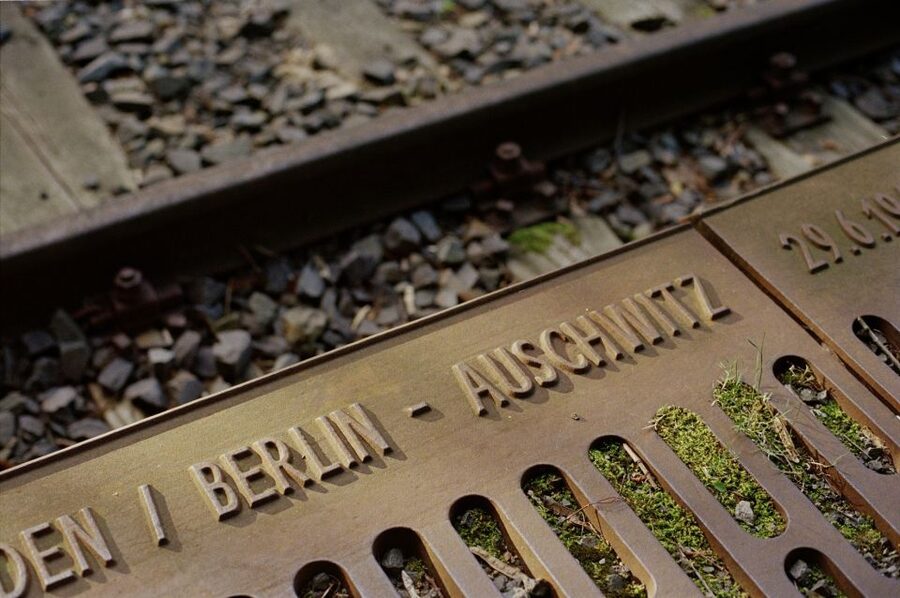
A key stop focuses on Varian Fry, an American journalist who coordinated the escape of over 3,000 persecuted Jews from Nazi-occupied Europe. You’ll also hear how his work connected to major figures, with names mentioned such as painter Marc Chagall, philosopher Hannah Arendt, and writer Heinrich Mann.
What I like about this part is the contrast it creates. After learning how the Nazis planned control and destruction, you get a story about people who tried to break the system. It’s not a “happy ending” moment, but it gives you something practical to hold onto: even in a brutal environment, individuals and networks could still act.
If you’re the type who wants to understand history as human choices, this memorial section will land. It also helps you see that escape efforts were not mythical, they were coordinated and risky.
Operation T4: When the SS Planned Mass Harm
You’ll pause at the command center of Operation T4, where the SS planned extermination and sterilization of tens of thousands of disabled citizens. This is one of the hardest topics on the route, and it’s presented as a concrete plan, not just an abstract evil.
I appreciate that the story is tied to a place in Berlin. When crimes are explained in real location terms, you understand how bureaucracy and command structures operated. It’s also a reminder that Nazi violence wasn’t only aimed at one group, it was driven by a warped “logic” of who was considered disposable.
Practical note: if you’re sensitive to graphic subject matter, go in with that in mind. You’ll still get context, but you should expect emotional weight, not a light historical chat.
German Resistance Memorial and the Road to May 1945
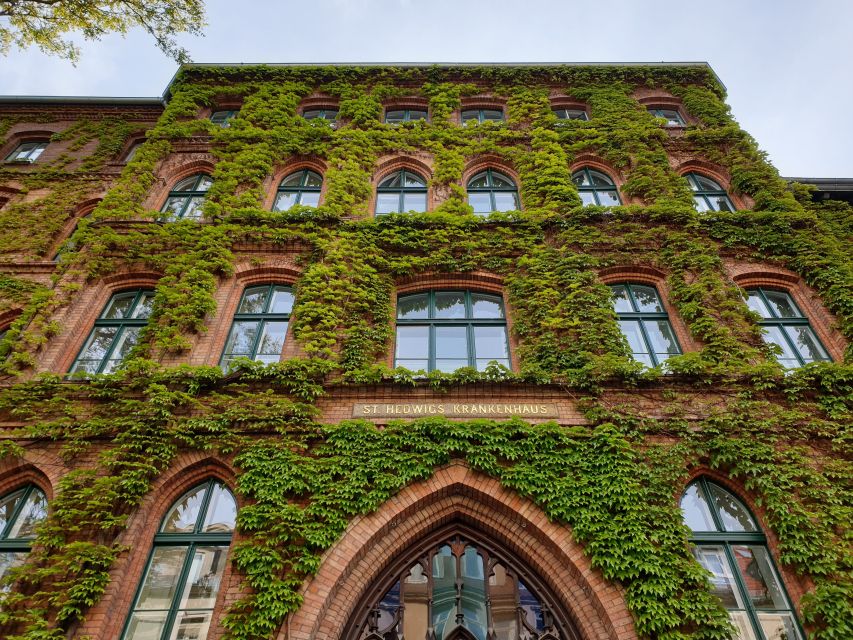
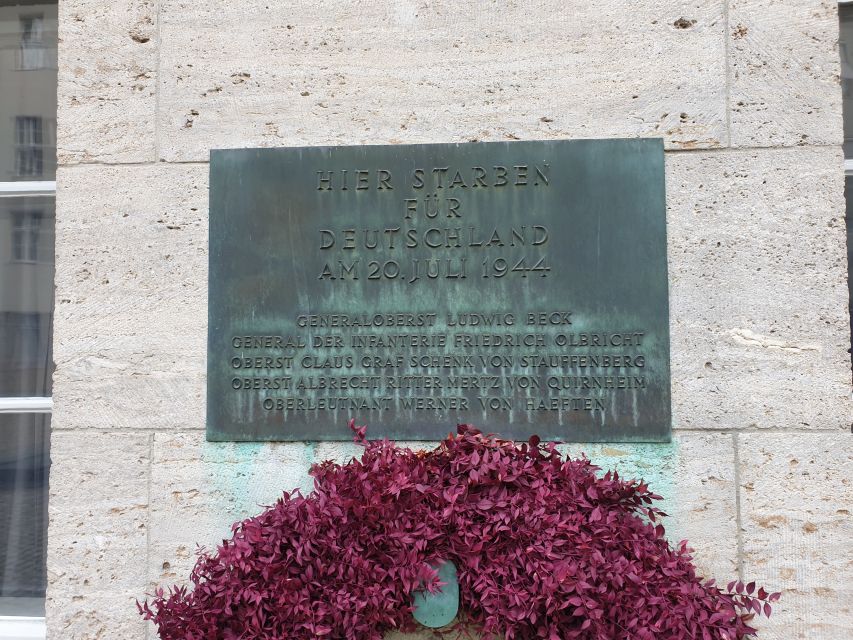
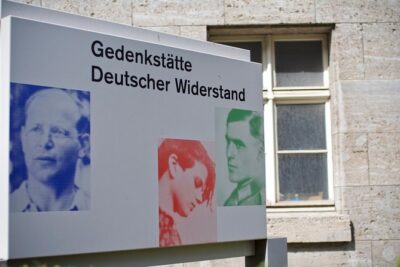
Berlin in 1945 is easy to remember as ruins and surrender. This tour adds another layer, opposition. You’ll visit the Gedenkstaette Deutscher Widerstand, where the history of German resistance is centered, including a connection to Operation Valkyrie as a directed site.
This section matters because resistance can get reduced to movies and slogans. Here, you learn about Germans who opposed and fought against Nazism, and how resistance operated under extreme pressure. You also get a sense of how close the plotting and planning sat to the reality of fear and surveillance.
Along the way, you’ll also pass through areas where buildings still show World War II combat scars. That visual reminder is useful. It helps you remember that history isn’t just in archives, it’s embedded in the city’s physical scars.
More wartime and Cold War history walks in Berlin:
- Third Reich Berlin: Hitler and WWII Walking Tour
★ 5.0 · 3,301 reviews - Skip-the-Line: Berlin Wall Museum at Checkpoint Charlie
★ 4.1 · 2,041 reviews - Berlin: Third Reich, Hitler, and WWII Walking Tour
★ 4.9 · 1,757 reviews - Cold War, Berlin Wall, Spies and the East Side Gallery
★ 5.0 · 1,024 reviews
From Anhalter Bahnhof Toward the Jewish Quarter
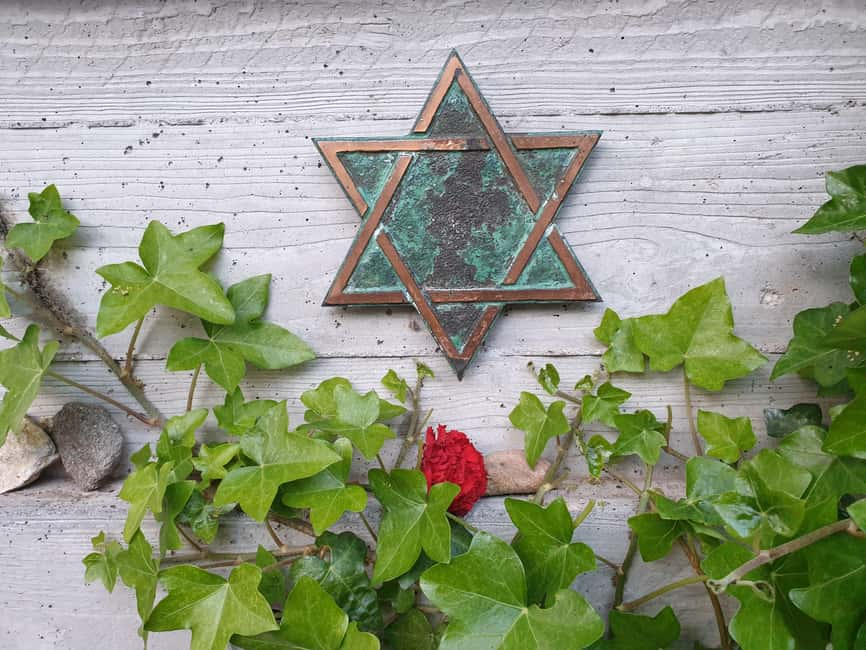
Movement is part of the learning here. After a guided stop at the resistance memorial area, you transfer by bus or coach and then use train service to reach the heart of the Jewish community historical district. The route itself helps you understand how Berlin functioned as a network, not as a set of isolated “important spots.”
You’ll also visit Anhalter Bahnhof, which adds a darker rail-station context to the story of deportation and forced movement. Even if you don’t get a long platform-style explanation, the setting is a strong anchor. Berlin’s stations are not just architecture, they are part of how people were transported, separated, and controlled.
Because this relies on public transit, it’s smart to plan for a smooth AB ticket day. You’ll want to keep things simple so you can focus on the guide’s explanation rather than fighting fare machines mid-tour.
New Synagogue Berlin, Old Cemeteries, and the Jewish Community Story
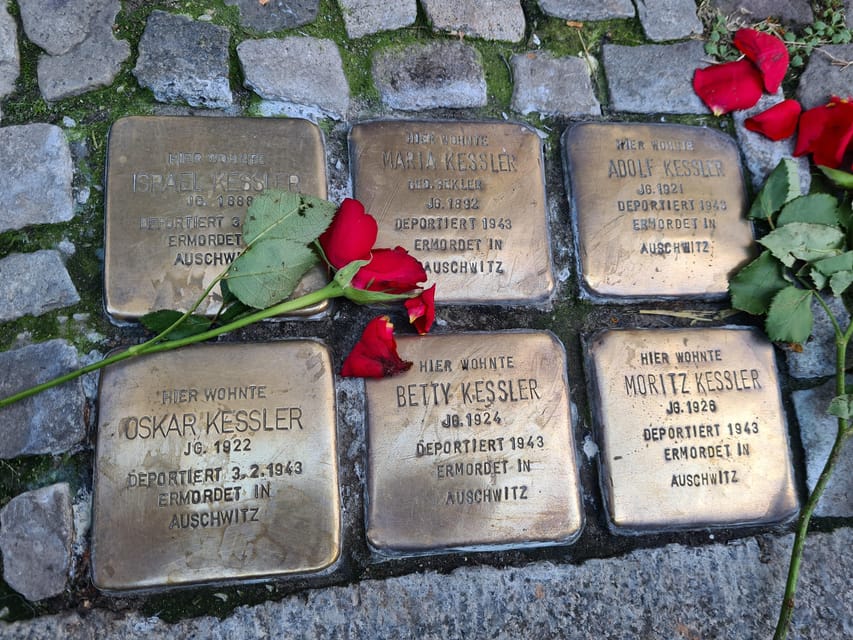
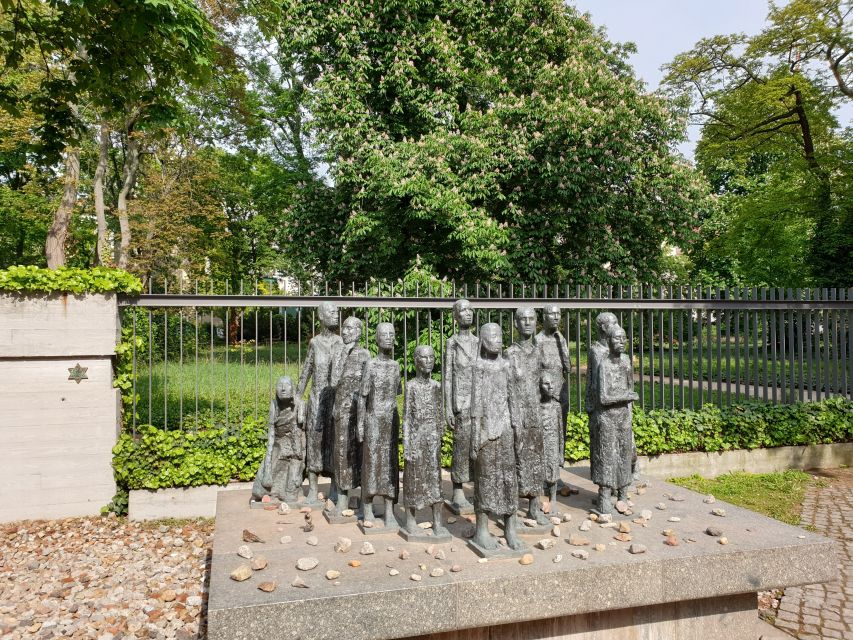
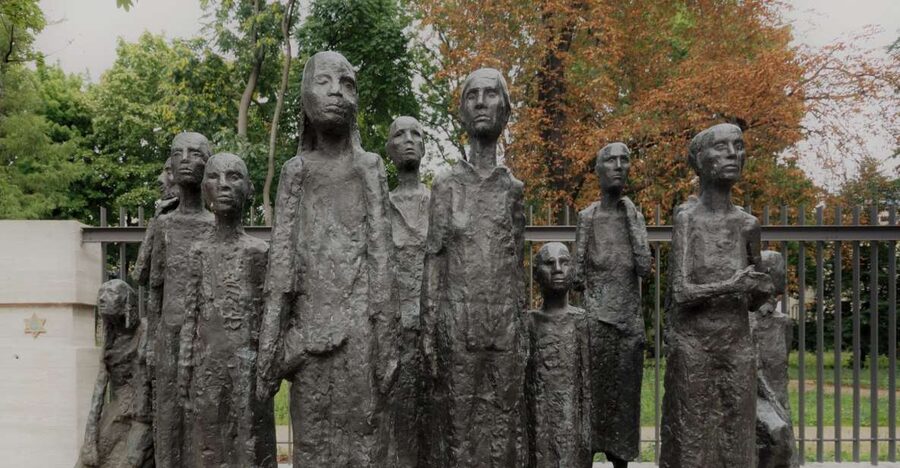
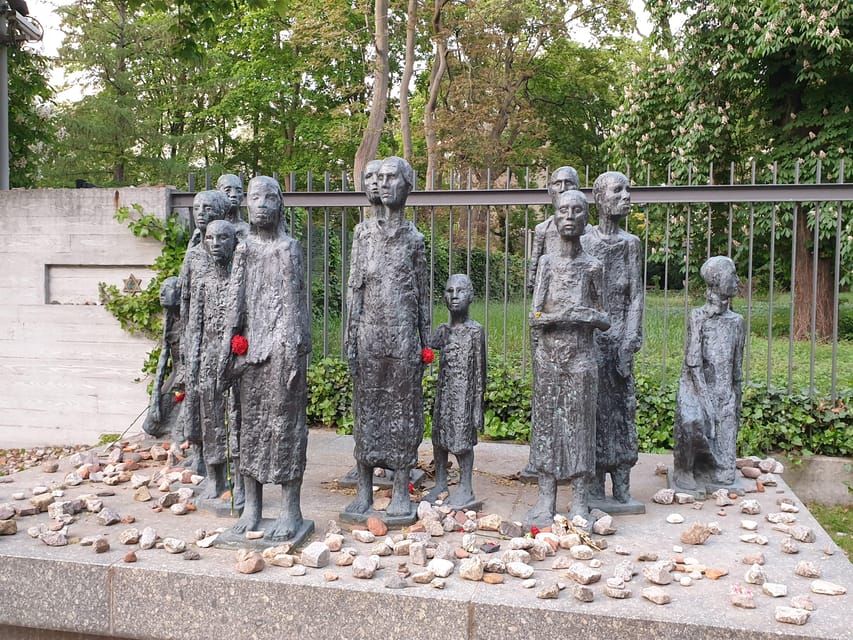
Once you reach the Jewish community district, the tour shifts toward continuity and community, not only tragedy. You’ll see the oldest Jewish cemetery in Berlin, then move on to the New Synagogue Berlin – Jewish Centre, known for its imposing presence and its golden dome.
I like how this section doesn’t just throw you into the 1940s. It places the Jewish community in Berlin within a longer arc, so you understand what was lost and how deeply rooted life had been. That longer view makes the subsequent Nazi policies feel like a rupture, not a sudden mystery.
You’ll also learn about the transition from persecution to systematic harm, including mechanisms of forced labor and deportations during World War II. The guide’s job here is tough, but the structure helps. You get a place with meaning, then a story about what happened there and beyond.
If you’re visiting Berlin for the first time, this stop can also help you get your bearings. It’s one of the most visually striking points on the route, and it turns the tour toward identity, culture, and endurance.
Otto Weidt Workshop for the Blind: Righteous Action in Real Space
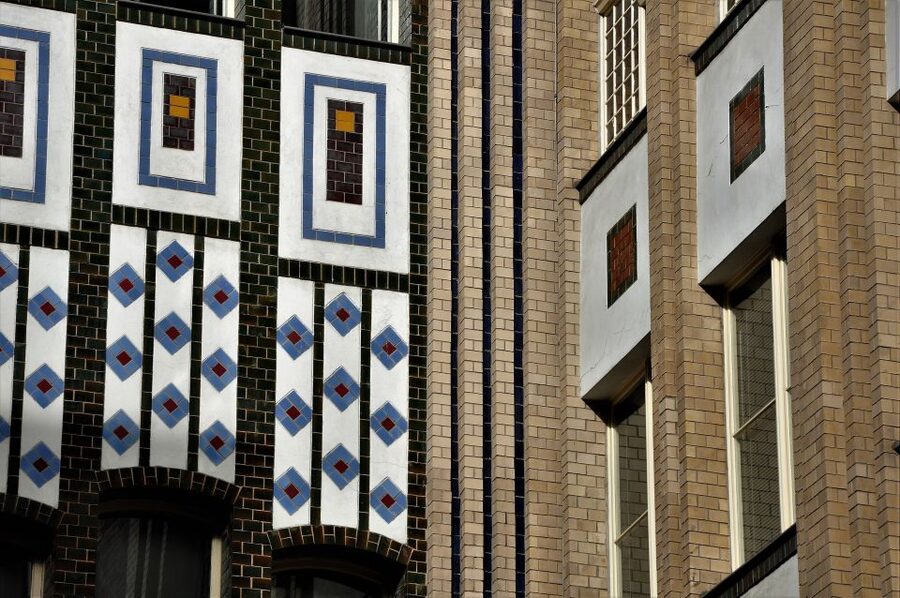
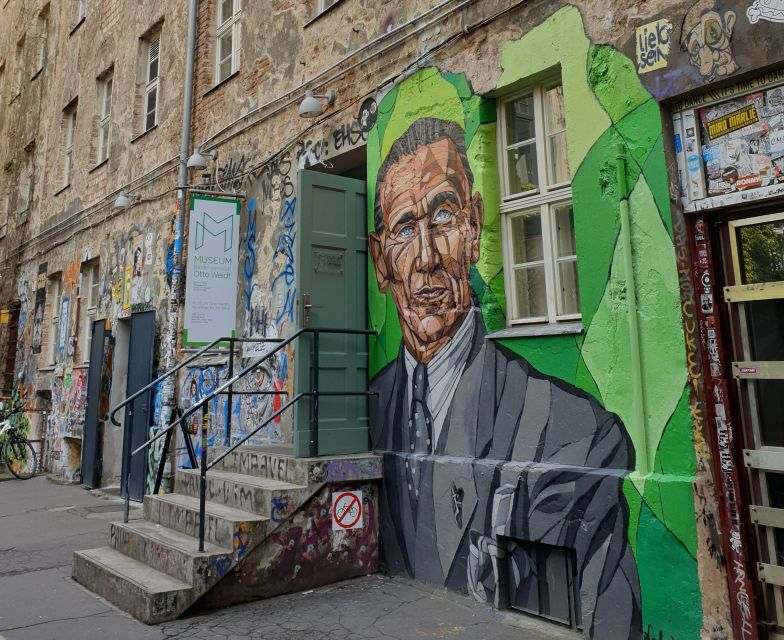
The final big emotional anchor is the Otto Weidt Workshop for the Blind. Here, the focus is on a Righteous Among the Nations and the efforts made to protect Jewish workers from persecution and deportation.
What makes this museum stop powerful is that it frames protection as something that had to be organized and hidden, not just morally inspired. You’ll hear that when danger grew, he found places for some people to hide, including on the premises of what is now the museum.
It’s also a fitting end to the tour’s structure. Earlier you learn about planning and command, then forced movement, then resistance, then the Jewish community’s fate. Ending with a story of protection gives you a form of closure that history lessons don’t always provide.
And yes, you’ll likely feel the mood shift. That’s normal. In a city full of reminders, this one is about what individuals did when systems were designed to crush them.
Price, timing, and what $351 gets you
At $351 per group up to 6, this tour is priced for a small-group experience with a guided narrative across multiple sites. Compared with tours that pack in only one or two main sights, this one gives you more distinct stops over about 3 hours and uses public transport to connect them.
The value is less about ticking boxes and more about interpretation. You’re paying for someone to explain how events connect: the rise after 1933, the SS planning of Operation T4, the resistance threads around Operation Valkyrie, and then the Jewish community sites and the Otto Weidt story.
Two practical things to keep in mind:
- The AB all-day public transport ticket is required, and it isn’t included in the tour price.
- You’ll want comfortable shoes, because you’re moving between memorials and stations even if each guided stop is relatively short.
Language coverage is wide enough to be useful. You can get a live guide in French, Italian, English, Spanish, or German. In particular, guides you might be paired with have been praised for clear explanations and for teaching in a way that keeps the pace moving, even when the topic is tough.
Practical tips for a heavy but worthwhile Berlin day
This tour is wheelchair accessible, which matters for a route that uses public transport and multiple stops. Still, you should be ready for uneven walking and short transitions between sites, so it’s smart to go with energy to spare.
Because the content is intense, I recommend a simple preparation strategy:
- Bring water and a snack if you need one, since you’re out for about 3 hours.
- Keep your phone charged, not for photos, but in case you need maps or to coordinate transit after the tour.
- Come with one or two questions you want answered, for example how the Nazis moved from ideology to policy, or how resistance and rescue work differed.
If you’re traveling with teens or young adults, this tour can work well because it explains concepts clearly rather than only showing monuments. One family story shared a positive reaction from an 18-year-old, which fits the idea that the route can be both serious and understandable.
Finally, give yourself permission to feel unsettled. Berlin can be emotionally loud. A good guide helps you hear the meaning under the noise.
Should you book the Nazi Berlin and the Jewish Community Tour?
Book it if you want a Berlin tour that connects the dots. You’ll leave with a clearer sense of how Nazi power grew after 1933, how persecution worked through institutions, and how resistance and rescue took shape in the real city.
You should think twice if you’re looking for light sightseeing or purely architectural highlights. This is an educational route built around oppression, planning, and survival, and it asks you to process that responsibly.
If your ideal day includes the Jewish community’s key sites, resistance memorials, and a closing visit to the Otto Weidt Workshop, this is a strong fit. It’s also good value for a small group, because the guide time is actually spent explaining, not just moving you from one photo spot to the next.
FAQ
What is the duration of the Nazi Berlin and the Jewish Community tour?
The tour lasts 3 hours, which is also listed as 210 minutes.
How much does the tour cost?
The price is $351 per group up to 6.
Do I need a public transport ticket?
Yes. You need the AB all-day public transport ticket to participate.
How does pickup work?
Pickup is optional. If you choose pickup, you wait in the hotel lobby 10 minutes before your scheduled pickup time. You should contact the provider at least a few days ahead to discuss pickup details.
What sites will we visit?
You’ll visit major Jewish community landmarks such as the New Synagogue Berlin – Jewish Centre and the oldest Jewish cemetery, plus memorial and historical stops including Gedenkstaette Deutscher Widerstand and Otto Weidt Workshop for the Blind, with additional focus on figures and events like Varian Fry and Operation T4.
Is the tour wheelchair accessible?
Yes, it is listed as wheelchair accessible.
What languages are available for the guide?
The live guide is available in French, Italian, English, Spanish, and German.
What should I bring?
Bring comfortable shoes.
Is there a private group option?
Yes, private group is available.
What is the cancellation policy?
You can cancel up to 24 hours in advance for a full refund.
Newest Berlin reviews on the site
- Your ticket to The Wall Museum Berlin★ 3.0 · 60 reviews
- Rickshaw Tours Berlin – Groups of up to 16 people with several rickshaws★ 4.0 · 97 reviews
- Love and War in Berlin: Self-Guided Story Puzzle Walk★ 5.0 · 7 reviews
- Warnemuende Shore Excursion: Berlin Private Sightseeing Tour from Rostock★ 5.0 · 4 reviews
- eSIM for Germany and 34 European Countries★ 4.5 · 16 reviews
- Walking on the Wall: 3-Hour Tour in Berlin★ 4.5 · 34 reviews
- Karl-Marx-Allee Tour: Life and Architecture in East Berlin★ 5.0 · 19 reviews
- Warnemuende Shore Excursion: Private Berlin Tour★ 4.5 · 27 reviews
Third Reich & Cold War Tours, compared.


Berlin’s Best: 2 Hour Walking Tour Third Reich and the Cold War
Read our review →
Third Reich Berlin: Hitler and WWII Walking Tour
Read our review →
Skip-the-Line: Berlin Wall Museum at Checkpoint Charlie
Read our review →
Browse the lists this tour appears in