
Reviewed · WALKING TOURS
Modern Berlin Private Walking Tour: Diverse, Vibrant and Exciting German Capital
Berlin feels different on foot.
This private walk strings together the neighborhoods that define modern Berlin, from reunification-era showpieces to street art that still argues with the past, guided in English with pickup options. Expect a 3 to 4 hour route that’s built for seeing a lot without feeling rushed.
I love how this tour lets you check major areas fast, with stops in Mitte, the East Side Gallery, Prenzlauer Berg, Kreuzberg, and Friedrichshain. I also love the human factor, guides with names like Josh, Maria, Joerg, Stefano, and Juan Montiel are known for adapting to your group’s rhythm and interests, so you are not just hearing facts, you are getting context you can actually use.
One consideration: at $179.84 per person, it is a pricier way to do Berlin for a day, and food and drinks are not included, so plan around that if you get hungry mid-walk.
In This Review
- Key Things You Will Like on This Modern Berlin Walk
- Why a Private Walking Tour Works So Well in Berlin
- Price and Time: Is $179.84 Worth It
- Meeting Point on Reichstagufer and How Pickup Fits In
- Mitte: From Wall-Era Symbol to Berlin’s Core
- East Side Gallery: The Longest Remaining Wall in 1.3 Kilometers
- Prenzlauer Berg: Gentrification You Can Walk Through
- Kreuzberg: Immigrant Streets, Activism, and Creative Chaos
- Friedrichshain: A Neighboring Story With Its Own Volume
- Guide Style: What Makes This Tour Feel Personal
- What to Expect From Each Stop, Timing Included
- Who This Tour Suits Best
- Should You Book This Modern Berlin Private Walking Tour?
- FAQ
- How long is the Modern Berlin Private Walking Tour?
- Is this a private tour?
- What language is the tour offered in?
- Is hotel pickup included?
- Where does the tour start?
- What is included in the tour?
- Are food and drinks included?
- Are there admission fees for the stops?
- Does the tour run in bad weather?
- What is the cancellation policy?
Key Things You Will Like on This Modern Berlin Walk
- A private route that stays flexible to your group, not a fixed herd schedule
- Multiple neighborhoods in one half-day, so you get the city’s real “after reunification” story
- Street level context for what you see at Brandenburg Gate, Museum Island area, and along the Wall
- East Side Gallery murals on the longest remaining wall segment, created in 1990 by artists worldwide
- Neighborhood contrasts you feel right away, from polished courtyards to Turkish food streets and activism zones
Why a Private Walking Tour Works So Well in Berlin
Berlin is enormous, and its history is written in layers. A private walking tour is useful because you can move quickly between neighborhoods, but still stop often enough to make sense of what you are seeing. On a good day, you get that rare combo: city-scale overview plus street-level details.
You will also get a guide who can explain the “why” behind the scenery. Berlin is not just monuments. It is people, policies, migration, commerce, art, and the ongoing debate about identity. With a private format, your guide can slow down when you want, and speed up when you do not.
The tour is designed for most travelers and runs in all weather, so you should dress for wind, rain, and that classic Berlin day where the sky can change its mind.
More Walking Tours in Berlin
- Discover Berlin Half-Day Walking Tour
★ 5.0 · 9,624 reviews - Berlin: Third Reich and Cold War 2 Hour Walking Tour
★ 4.9 · 6,830 reviews - Berlin: Discover Berlin Walking Tour
★ 4.9 · 5,998 reviews
Price and Time: Is $179.84 Worth It
At $179.84 per person for about 3 to 4 hours, this is not a budget group deal. The value is in two places: guide time and efficiency.
First, you are not paying for a long bus transfer or a stop-and-go day. You are paying for a focused walk that hits five distinct areas, each tied to the modern Berlin story: reunification, gentrification, immigration, activism, and public art.
Second, you get hotel pickup options or you can meet centrally. That matters in Berlin, where “central” can still mean 20 minutes of extra transit if you time it wrong. If you are traveling with family, or you simply want smoother logistics, pickup turns the tour into less of a puzzle.
Food and drinks are not included, so if you want a meal day, you will likely do it before or after. If you like light stops and walking between neighborhoods, this format fits well.
Meeting Point on Reichstagufer and How Pickup Fits In
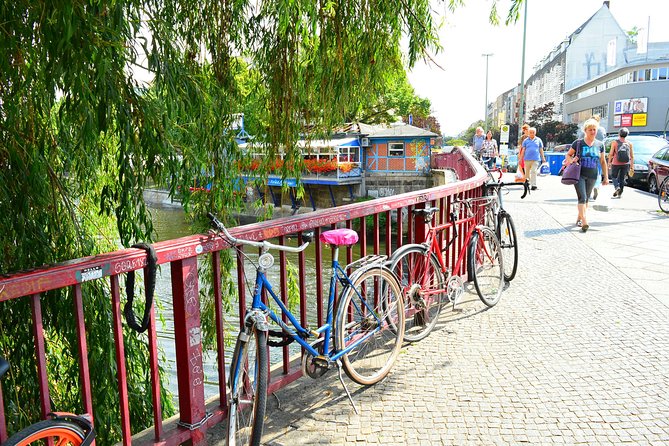
The walk starts at Reichstagufer 17, 10117 Berlin, and it ends back at the meeting point. If you choose pickup, the tour can pick you up from your accommodation, or you can meet somewhere central.
This is practical advice: if you want the easiest start, use pickup. If you are already planning to be near public transportation, meeting centrally can be simpler. Either way, do not underestimate the first 20 minutes, Berlin tours move fast if you are not starting in the right place.
Also note the tour is mobile ticket style. That is helpful if you like keeping everything on your phone instead of hunting for paper.
Mitte: From Wall-Era Symbol to Berlin’s Core
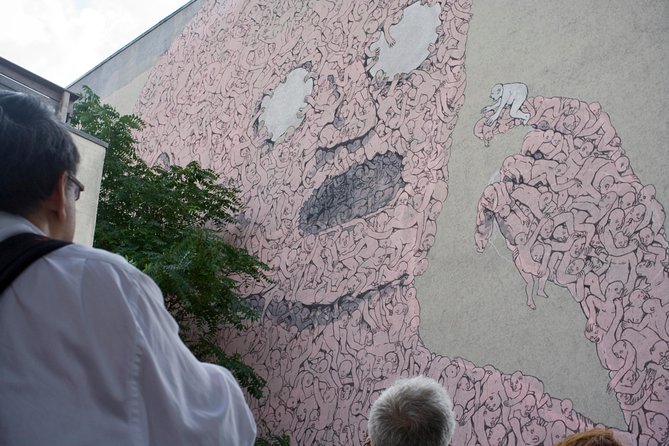
Mitte is where Berlin gets dramatic. It is no longer the city’s dividing line, but it still carries that weight. Here, the story shifts from separation to reinvention, and you can feel it in the mix of iconic landmarks and modern street life.
You will spend about 30 minutes in Mitte, with the area framed around big touchstones like the Brandenburg Gate and the Museum Island zone. That is an advantage for first-time visitors: you see a high-recognition skyline, then your guide can explain how the surrounding streets became part of Berlin’s modern identity after 1990.
What makes Mitte special on this kind of tour is the angle. Instead of only telling you what exists, your guide connects it to what changed. Gentrification is part of the conversation here, along with creative enterprises and startups moving in. You do not just walk through pretty streets, you learn how the city is still negotiating who the city is for.
A possible drawback: Mitte can feel crowded and polished in places, so if you expect a fully gritty experience, you might want your guide to lean more into the side streets and courtyard feel.
Same city, a different way to spend the afternoon:
- Berlin: Reichstag, Dome and Government District Guided Tour
★ 4.7 · 18,288 reviews - Berlin: 1-Hour City Tour by Boat with Guaranteed Seating
★ 4.3 · 16,993 reviews - Berlin: TV Tower Standard Entrance Ticket
★ 4.4 · 15,883 reviews - Berlin: Boat Tour Along the River Spree
★ 4.4 · 11,252 reviews
East Side Gallery: The Longest Remaining Wall in 1.3 Kilometers
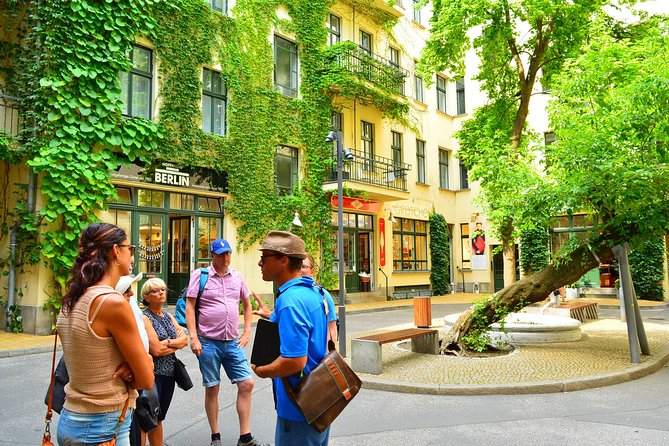
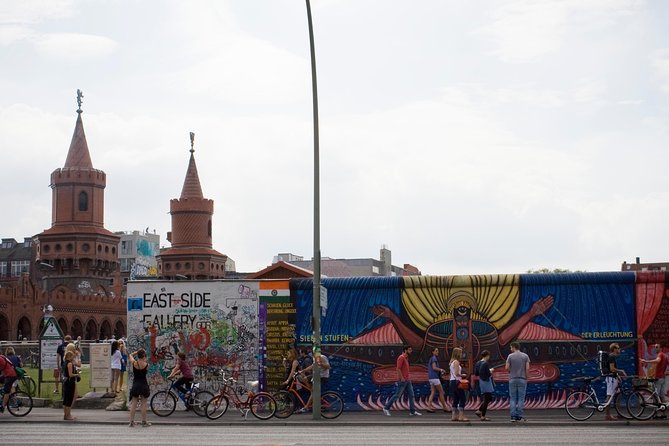
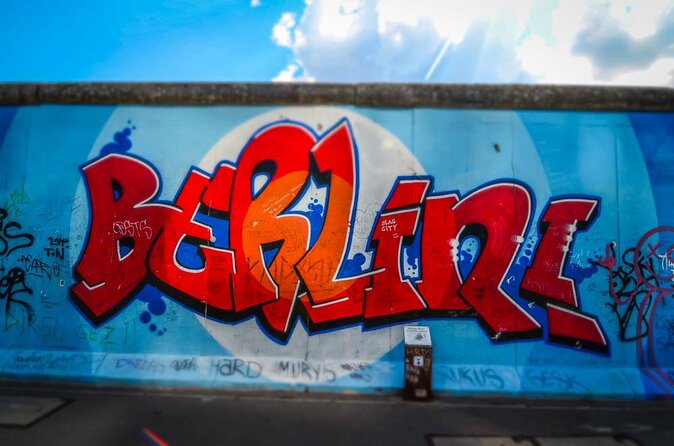
Then you shift from “reunification as concept” to reunification as something you can read in paint. The East Side Gallery is a section of the former Berlin Wall, about 1.3 kilometers long, and it is transformed into an open-air art space.
This is one of the most powerful stops because it is public art with a pulse. Many murals were created in 1990 by artists from around the world, and the themes are straightforward but never simple: freedom, peace, hope, and the pain of division. Your guide can point out how different artists treated the same historical moment.
You will spend about 20 minutes here. That is enough time to get your bearings and see several murals clearly, but it is not enough to read every single one like a museum exhibit. If you are the type who loves stopping at one mural for 15 minutes, tell your guide early so they can adjust the pacing.
Also, the East Side Gallery is open to the elements. In bad weather, you will be glad you dressed for it, because there is no indoor fallback mentioned here.
Prenzlauer Berg: Gentrification You Can Walk Through
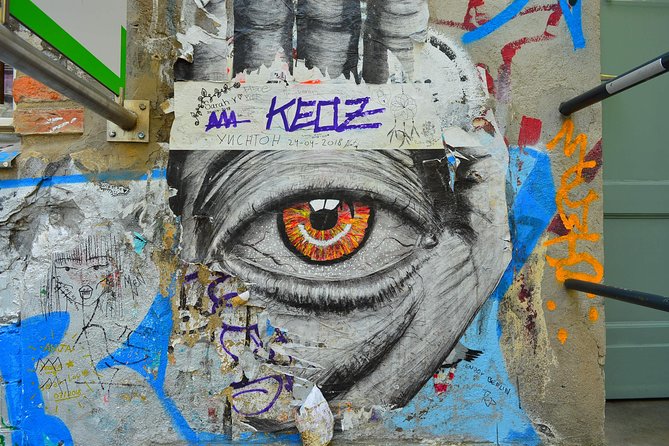
Prenzlauer Berg changed faster than many neighborhoods. In the early years after the Wall came down, it was a bohemian stronghold in East Berlin, fueled by artists and students attracted by affordability and a countercultural atmosphere. After 1990, that energy met restoration and new residents, and gentrification brought chic cafes, boutiques, and trendy restaurants.
On this tour, you get about 40 minutes in Prenzlauer Berg, and the point is contrast. Your guide can show you restored historic buildings side by side with the commercial choices that followed. You end up with a useful takeaway: Berlin’s “creative future” often grows out of areas that used to be cheaper and more chaotic.
The neighborhood can feel polished now. That is not wrong, but it means you should pay attention to what still signals the past. Your guide will likely direct you to lingering traces in local galleries and community spaces, where the old counterculture spirit is still visible even if the streets now look different.
Possible drawback: if you are mainly chasing raw, alternative Berlin, Prenzlauer Berg can feel too polished for your taste. The fix is simple: ask your guide to focus on the juxtapositions, not the prettiest corners.
Kreuzberg: Immigrant Streets, Activism, and Creative Chaos
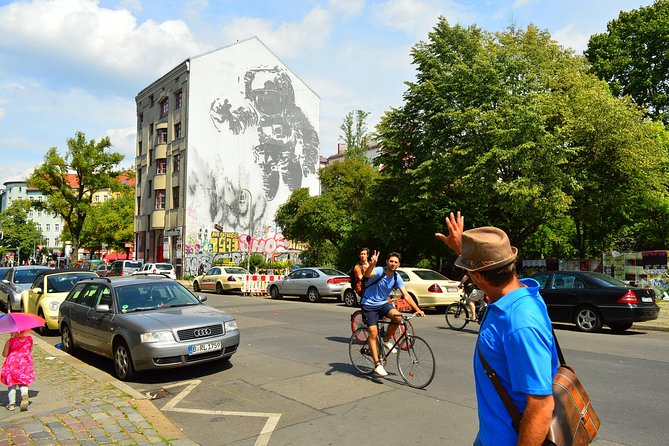
Next is Kreuzberg, about 35 minutes, and this is where Berlin’s independence shows up in daily life. Kreuzberg is known for a rebellious spirit and a long connection to immigrants, artists, and activists. Even as the area evolved over time, it kept a reputation for being a cultural meeting point.
Your walk here comes with the lens of change. Gentrification happened, yes, and you will see industrial spaces and historic buildings turned into trendy cafes, art galleries, and international places to eat. But the tour angle matters: you are not just observing new storefronts. You are learning how multicultural communities shaped the neighborhood’s identity and how street art and festivals keep that energy alive.
One practical note: Kreuzberg can be busy. That is part of the point. Your guide can help you navigate it and still make time for the ideas behind what you see.
There is also a strong food culture thread in this neighborhood. In at least one version of the tour, your guide may add a Turkish-quarter moment, including a stop connected to the story of kebab and Hasir. That kind of side stop is especially fun if you are hungry for Berlin beyond landmarks.
Friedrichshain: A Neighboring Story With Its Own Volume
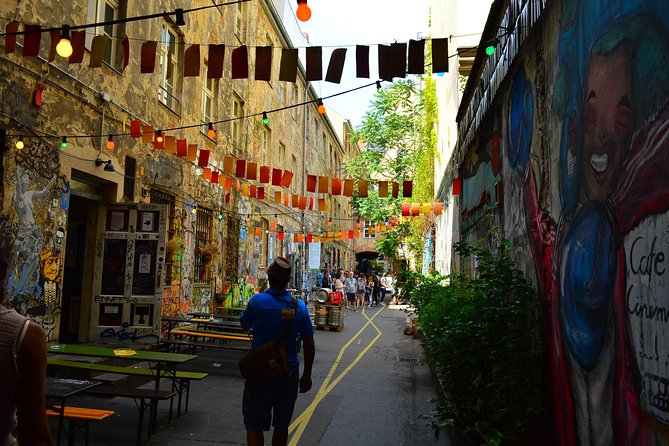
Finally, you finish in Friedrichshain for about 35 minutes. It is closely tied to the broader story of post-1990 reinvention, but it has its own flavor. Your guide can connect Friedrichshain to the activism and creative energy that people associate with the former edge-of-West-Berlin alternatives, while also explaining how the area is changing.
This stop is designed to reinforce what you just learned in Kreuzberg. The neighborhoods feel different as you walk, but the themes overlap: street art, multicultural influence, and an ongoing sense of community. Even as trendy cafes and boutique shops appear, the identity tends to remain louder than the decoration.
Practical advice for this last leg: pace yourself. By this point, you likely covered a lot of ground in a few hours. If you have questions, save your toughest ones for here. It is often where guides have the clearest chance to connect the dots across neighborhoods.
Guide Style: What Makes This Tour Feel Personal
The best part of this experience is not the map. It is the guide. In past tours tied to this format, guides like Joerg were praised for balancing intellectual context with physical pacing, and others like Josh and Maria were noted for clear, personable commentary that keeps kids and adults engaged.
Stefano is another guide name you might hear about. One review-style comment described the tour as a smart alternative when someone had already seen the usual highlights. That tells you something important: a private tour like this can work even if Berlin is not your first stop on the trip, because your guide can steer the conversation toward modern neighborhoods, not only classic icons.
So how do you make the tour work for you? Ask your guide what question you care about most, for example:
- How did reunification reshape daily life?
- Why did gentrification hit these areas?
- How does art function as memory in public spaces?
Then let them answer by walking. That is the value here.
What to Expect From Each Stop, Timing Included
Here is the rhythm you should plan around:
- Mitte (about 30 minutes): reunification-era transformation at the city core, with Brandenburg Gate and the Museum Island area context
- East Side Gallery (about 20 minutes): 1.3 kilometer open-air mural storytelling from 1990 artists
- Prenzlauer Berg (about 40 minutes): former bohemian energy meeting restored buildings and modern commerce
- Kreuzberg (about 35 minutes): multicultural neighborhood identity, activism roots, and gentrification side effects
- Friedrichshain (about 35 minutes): neighboring story continued, with street art and community themes
That totals roughly 3 to 4 hours, depending on walking pace and questions. Admission fees are listed as free for each stop in the experience details, which helps keep the day predictable.
Who This Tour Suits Best
This is a strong choice if you:
- Want modern Berlin neighborhoods, not only monuments
- Like history explained through streets, not just plaques
- Prefer a private format with pickup and a guide who can adjust pacing
- Travel as a couple, with teens, or as a small family group that benefits from conversation and flexibility
If you want a full-day itinerary with sit-down museums and lots of indoor time, this may feel short. But if you want a high-value orientation to modern Berlin, it is a smart half-day move.
Should You Book This Modern Berlin Private Walking Tour?
I would book it if your goal is to understand Berlin after 1990 through neighborhoods you can actually walk. The structure makes sense: Mitte for the core transformation, the East Side Gallery for public memory, then Prenzlauer Berg, Kreuzberg, and Friedrichshain for how people remade the city and argued about what the remake should look like.
Skip it if you are only after classic tourist icons with minimal walking, or if you need food included as part of the ticket. Also, because the price is per person, it becomes more attractive when you value guide time and want to avoid the hassle of piecing together multiple transit connections.
If you do book, do yourself a favor and come with one or two questions about modern Berlin. Then let your guide turn the streets into answers.
FAQ
How long is the Modern Berlin Private Walking Tour?
The tour lasts about 3 to 4 hours.
Is this a private tour?
Yes. It is a private tour, and only your group participates.
What language is the tour offered in?
The tour is offered in English.
Is hotel pickup included?
Hotel pickup is included. The operator can pick you up from your accommodation, or you can meet somewhere central.
Where does the tour start?
The start location is Reichstagufer 17, 10117 Berlin, Germany, and the tour ends back at the meeting point.
What is included in the tour?
It includes a local, professional guide and hotel pickup.
Are food and drinks included?
No. Food and drinks are not included.
Are there admission fees for the stops?
The provided stop details list admission tickets as free for each stop.
Does the tour run in bad weather?
Yes. It operates in all weather conditions, so dress appropriately.
What is the cancellation policy?
You can cancel up to 24 hours in advance for a full refund. If you cancel less than 24 hours before the start time, the amount you paid will not be refunded.
Newest Berlin reviews on the site
- Your ticket to The Wall Museum Berlin★ 3.0 · 60 reviews
- Rickshaw Tours Berlin – Groups of up to 16 people with several rickshaws★ 4.0 · 97 reviews
- Love and War in Berlin: Self-Guided Story Puzzle Walk★ 5.0 · 7 reviews
- Warnemuende Shore Excursion: Berlin Private Sightseeing Tour from Rostock★ 5.0 · 4 reviews
- eSIM for Germany and 34 European Countries★ 4.5 · 16 reviews
- Walking on the Wall: 3-Hour Tour in Berlin★ 4.5 · 34 reviews
- Karl-Marx-Allee Tour: Life and Architecture in East Berlin★ 5.0 · 19 reviews
- Warnemuende Shore Excursion: Private Berlin Tour★ 4.5 · 27 reviews
Walking Tours, compared.
Berlin’s Best: 2 Hour Walking Tour Third Reich and the Cold War
Read our review →
Third Reich Berlin: Hitler and WWII Walking Tour
Read our review →Browse the lists this tour appears in