
Reviewed · WALKING TOURS
Kreuzberg Walking Tour: Immigrants, Artists & Hipsters
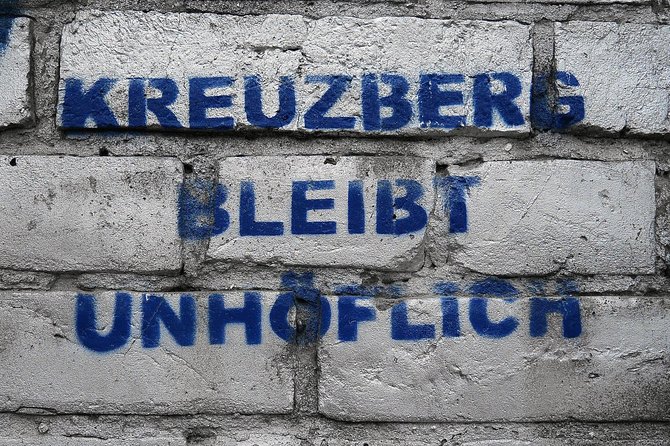
Kreuzberg tells its story in street corners. This 3-hour small-group walk (or bike ride option) threads together Berlin’s Cold War edge and the later after-1989 hangout vibe, all inside one focused district. The pace is human, and the guide uses a pro art-historian lens to connect what you see on the streets with why the neighborhood looks the way it does.
Two things I really like: you travel with a small group (the tour is capped at 6), so questions actually get answered, and you’re not just herded from stop to stop. Second, you get specific, visual stops that matter, from Markthalle 9 to the graffiti and street art that shaped Kreuzberg’s look. I also like that guides such as Peter and Ronan bring real conversational energy, not just a script.
One possible drawback to consider is that this is not a pure “easy stroll” itinerary. You’ll do some walking, there’s an optional bike component (bike rental is extra), and distances between key sites mean you’ll use public transport a few times, plus weather can affect comfort.
In This Review
- Key highlights you’ll actually feel on the ground
- From Oberbaumbrücke to SO36: where the tour finds its pace
- The Cold War to after-1989 story, shown instead of told
- Graffiti, street art, and abandoned space in Kreuzberg’s “why”
- Görlitzer Park and Markthalle 9: art meets everyday life
- Turkish markets and Gözleme: a snack stop that changes the tone
- The riverside development debate: history collides with planning
- Price and logistics: is $153.85 good value?
- Who should book this Kreuzberg tour, and who might not
- Small-group guides matter: Peter and Ronan as the model
- Should you book Kreuzberg Walking Tour: Immigrants, Artists & Hipsters?
- FAQ
- How long is the Kreuzberg walking tour?
- Is it walking only, or can I bike?
- What group size should I expect?
- What language is the tour offered in?
- Where does the tour start?
- Is food included?
- Can I cancel for a full refund?
Key highlights you’ll actually feel on the ground
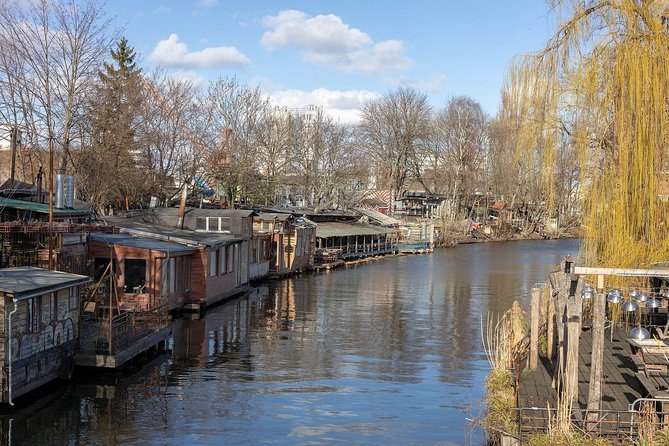
- Oberbaumbrücke first, a gorgeous start that sets the tone for divided Berlin and reunification
- Wall traces and creative reuse, with concrete examples of how abandoned spaces shaped the area
- Graffiti and street art explained, not as decoration, but as communication and identity
- Markthalle 9 (120 years old), a market hall stop you can pair with real snack breaks
- Turkish markets and takeaway culture, including chances to try Gözleme (spinach and cheese)
- A reality-check finale, a discussion of controversial riverside development plans
From Oberbaumbrücke to SO36: where the tour finds its pace
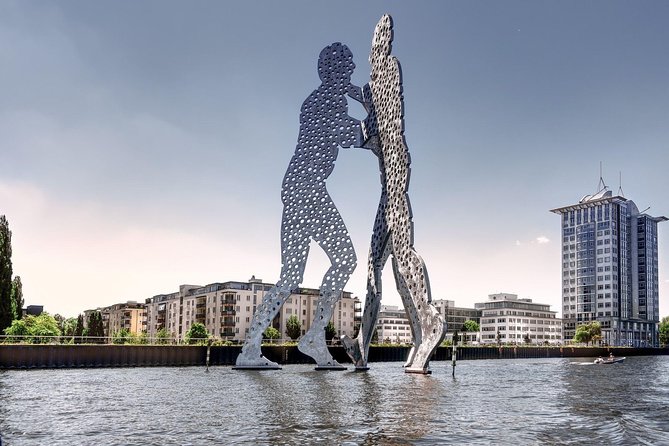
I like how this tour starts with a view, not a lecture. You meet at Schlesische Str. 18 and begin with a stroll over Oberbaumbrücke, one of Berlin’s most striking bridges. It’s a good warm-up for your eyes, because the bridge puts you in the mindset of boundaries, movement, and change. You can do the whole thing on foot, but the tour is also offered as a bike option, which lets the route cover more ground while still staying inside Kreuzberg.
Then you move toward SO36, the area’s loud-and-local shorthand. Your guide points out details around the main landwards, and it’s more than just “this street is lively.” You learn what made parts of Kreuzberg feel cut off in the Cold War era, and why the post-1989 shift drew artists and new communities in waves. Even if you’ve been to Berlin before, this part helps you read the neighborhood like a living document.
The biggest practical win here is pacing. The route includes walking time, plus some public transport between farther stops, so you spend more energy looking at what matters and less energy guessing your way around. If the weather turns, you’ll still keep moving, since the tour is designed with multiple segments in mind rather than banking everything on one long foot walk.
More Walking Tours in Berlin
- Discover Berlin Half-Day Walking Tour
★ 5.0 · 9,624 reviews - Berlin: Third Reich and Cold War 2 Hour Walking Tour
★ 4.9 · 6,830 reviews - Berlin: Discover Berlin Walking Tour
★ 4.9 · 5,998 reviews
The Cold War to after-1989 story, shown instead of told
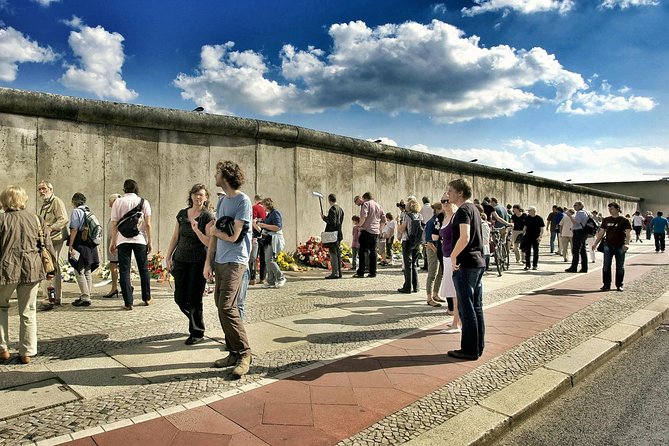
Kreuzberg’s reputation comes from a real timeline, and the tour uses it like a map. You pass or observe remains of the Berlin Wall, which gives the whole neighborhood story a physical anchor. It’s one thing to know the Wall existed, it’s another to stand where the neighborhood’s later culture grew up next to those scars.
Your guide frames the shift from no-go status to a magnet for creativity and nightlife. That matters because Kreuzberg’s arts scene, small businesses, and street-level activism weren’t just a trend that arrived overnight. The tour helps you connect pressures of the past to the styles of the present, like why graffiti is treated here as meaning, not vandalism.
This is also where the guides like Peter and Ronan shine in the reviews: they’re patient with questions and they can turn a single observation into a broader conversation. You might start with a photo stop, and end up discussing how community identity forms when a place gets labeled, fenced off, then later reinvented.
If you like Berlin explanations with real examples, this is a strong fit.
Graffiti, street art, and abandoned space in Kreuzberg’s “why”
This is not a tour that treats graffiti as a background aesthetic. You walk past areas where creative uses of abandoned buildings and plots of land show up, and your guide connects that to why Kreuzberg developed a reputation for experimentation. The message is pretty clear: in Kreuzberg, space has often been negotiated, reimagined, and used by whoever showed up with the will to make it work.
The tour also spotlights why the street art matters. You’re guided to notice how it shapes the neighborhood’s look and feel, how it records local voices, and how it turns walls into messages. It’s a useful skill even after the tour ends, because you’ll start seeing layers in the artwork. Instead of one “cool mural,” you’ll catch the references, the timing, and the way different styles coexist.
A practical note: street art is best enjoyed slowly, but this tour still moves at a guided pace. Bring a camera if you like, but also leave room for looking without shooting. There’s more to the visuals than the immediate image, and the guide helps you slow down at the spots that deserve it.
And if you’re worried about standing around: don’t. The route is designed to keep you in motion while still stopping long enough for context.
Görlitzer Park and Markthalle 9: art meets everyday life
After the heavier historical and creative-use stops, the tour transitions into places that feel like real daily routines. You’ll visit Görlitzer Park, described as graceful, and it plays well as a break. It gives you open-air breathing room between the dense story stops, and it helps you reset before the food and market segment.
Then comes Markthalle 9, a market hall that’s around 120 years old. This is one of those places where you can feel the neighborhood’s mix. Market halls in Berlin aren’t just about shopping. They’re social hubs, and they reflect local supply chains, tastes, and who uses the space.
If you want a useful strategy, think of this stop as two layers: first, the building and its vibe, then the chance to sample what people actually eat. The tour nudges you toward that second layer.
Same city, a different way to spend the afternoon:
- Berlin: Reichstag, Dome and Government District Guided Tour
★ 4.7 · 18,288 reviews - Berlin: 1-Hour City Tour by Boat with Guaranteed Seating
★ 4.3 · 16,993 reviews - Berlin: TV Tower Standard Entrance Ticket
★ 4.4 · 15,883 reviews - Berlin: Boat Tour Along the River Spree
★ 4.4 · 11,252 reviews
Turkish markets and Gözleme: a snack stop that changes the tone
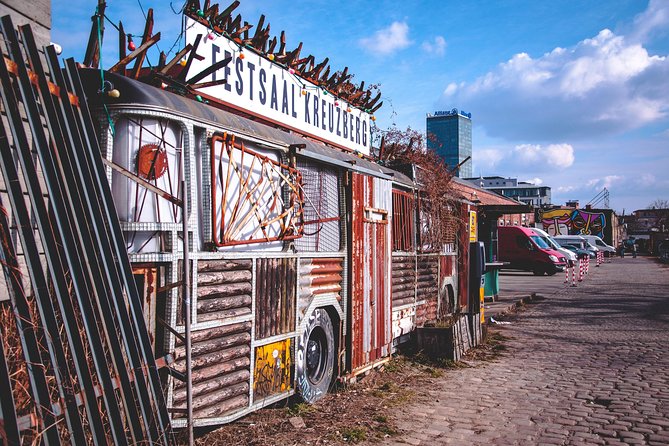
Kreuzberg’s identity shows up fast in its food culture, and the tour handles that in a direct way. You move through the Turkish culture you’ll find in shops and in colorful markets. Expect colors, flowers, spices, and take-away foods that look like they’re made for eating on the move.
Your guide highlights options you might sample, including deep-fried spinach and cheese Gözleme. Even if you choose not to eat, the guidance helps you understand what you’re seeing, like why certain stalls and smells cluster together and how the markets create a sense of daily continuity.
Important money note: food and drinks are not included unless specifically stated. So think of snack sampling as a cost you choose, not a bundled benefit. Still, this segment is where the tour becomes fun fast. It’s less about photos and more about senses, and it’s a great time to ask your guide for recommendations on where to go afterward.
The riverside development debate: history collides with planning

You end with a topic that feels very Berlin, and also very now: controversial riverside development plans. This is a smart finale because it pulls the story forward. You’re not just looking at the past, you’re seeing how the neighborhood’s future is being argued over in public.
You’ll discuss what these plans could mean, and why people care. The goal is not to push one stance. Instead, it gives you a framework for thinking about redevelopment, displacement fears, and what it means when an area becomes more attractive to outsiders. Kreuzberg has been reshaped before, and this is the next round of that kind of change.
In one version of the ending described, the tour finishes near the Friedrichshain-Kreuzberg Museum, which is a handy place to go next if you want an extra historical anchor after your walking and snack time.
Price and logistics: is $153.85 good value?
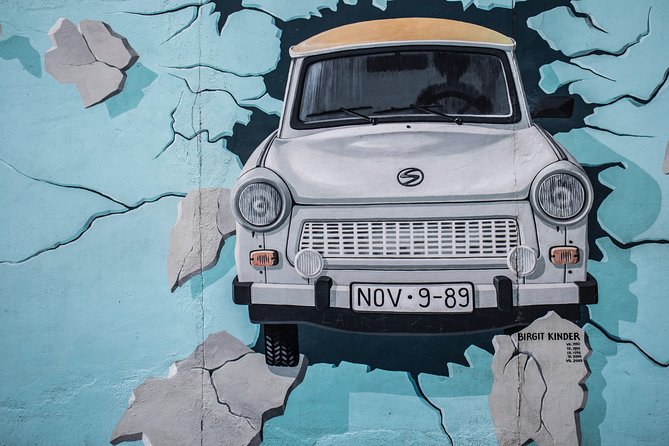
Let’s talk value, because $153.85 is not the price of a casual wander. What justifies it here is the structure: a small-group setup, a professional art historian guide, and a route that uses both walking and bike options to cover the district efficiently in about 3 hours.
You also get a mobile ticket, plus the tour format includes public transport a few times since some sites are too far apart for comfortable walking only. That matters because it keeps the tour from turning into an exhausting endurance test. You can spend your time on Kreuzberg’s details instead of your time figuring out transit.
The main add-on to budget for is the optional bike rental at 10 EUR per person. Food is another likely extra, since food and drinks are not included unless specified. Weather can also influence comfort, so bring something sensible, especially if you plan to walk most of the day.
If you’re the type who likes a guided, structured narrative, this price can feel fair. If you mainly want to self-explore on your own, you might prefer a cheaper option. But if you want context for graffiti, Wall traces, and market culture, paying for a good guide becomes the point, not a mistake.
Who should book this Kreuzberg tour, and who might not
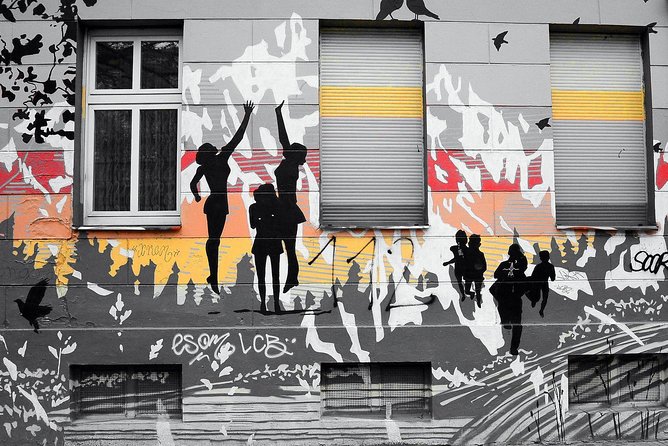
This tour is best for you if you want:
- A focused district-level experience, not a rushed parade through Berlin’s big postcard sights
- A guide who can explain the meaning behind street art and graffiti
- A mix of history, art, food, and current debate, all in a single route
- A small-group format where questions feel welcome
It’s also a good choice if you’ve been to Berlin before but want a fresh angle. Kreuzberg has plenty of visitors, yet it still manages to feel like a different city within the city once you understand its past and present pressures.
You might want to think twice if:
- You hate any transit during tours, since you will use public transport a few times
- You don’t want optional costs, because bike rental and snacks likely cost extra
- You expect a strictly seated, gentle pace. It’s built around walking, with the option of biking for more coverage
Small-group guides matter: Peter and Ronan as the model
The standout across the feedback I saw in the supplied details is how well the guides connect with the group. Peter is described as giving an insider view and also offering a kind of company that makes the time fly. Ronan is described as patient, understanding, and a great conversationalist who answers questions and keeps discussions going in interesting directions.
That’s the practical difference between a normal walking tour and one you remember. You don’t just hear facts. You ask something small, like why a specific wall has certain marks, and you get an explanation that makes the whole neighborhood click.
If you value a guide who can pivot based on your questions, this is a strong bet.
Should you book Kreuzberg Walking Tour: Immigrants, Artists & Hipsters?
I’d book it if you want Kreuzberg for what it is: a place where history leaves marks, artists read the walls, immigrant communities shape day-to-day life, and current planning decisions still stir debate. This tour gives you a clear route, a pro art historian perspective, and stops that feel grounded in real neighborhood rhythms, especially around Markthalle 9 and the Turkish markets.
I’d hesitate only if you’re set on a purely self-paced day, or you need a tour that avoids both public transport segments and extra costs for food and optional bike rental. But for most people who want a meaningful, not-too-long experience, this one makes sense.
FAQ
How long is the Kreuzberg walking tour?
The tour lasts about 3 hours.
Is it walking only, or can I bike?
It can be done on foot, and it is also offered as a bicycle tour. Bike rental is optional and costs 10 EUR per person.
What group size should I expect?
The tour is a small-group experience with a maximum of 6 people. The activity overall has a maximum of 10 travelers.
What language is the tour offered in?
The tour is offered in English.
Where does the tour start?
The meeting point is Schlesische Str. 18, 10997 Berlin, Germany.
Is food included?
Food and drinks are not included unless specified. You will have opportunities for takeaway foods such as Gözleme.
Can I cancel for a full refund?
Yes. You can cancel up to 24 hours in advance for a full refund.
Newest Berlin reviews on the site
- Your ticket to The Wall Museum Berlin★ 3.0 · 60 reviews
- Rickshaw Tours Berlin – Groups of up to 16 people with several rickshaws★ 4.0 · 97 reviews
- Love and War in Berlin: Self-Guided Story Puzzle Walk★ 5.0 · 7 reviews
- Warnemuende Shore Excursion: Berlin Private Sightseeing Tour from Rostock★ 5.0 · 4 reviews
- eSIM for Germany and 34 European Countries★ 4.5 · 16 reviews
- Walking on the Wall: 3-Hour Tour in Berlin★ 4.5 · 34 reviews
- Karl-Marx-Allee Tour: Life and Architecture in East Berlin★ 5.0 · 19 reviews
- Warnemuende Shore Excursion: Private Berlin Tour★ 4.5 · 27 reviews
Walking Tours, compared.

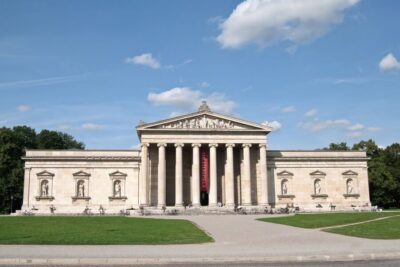
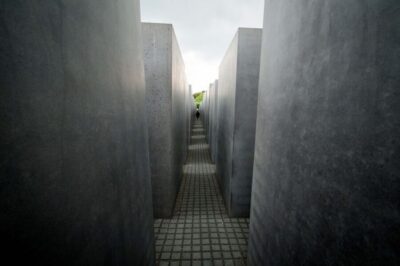
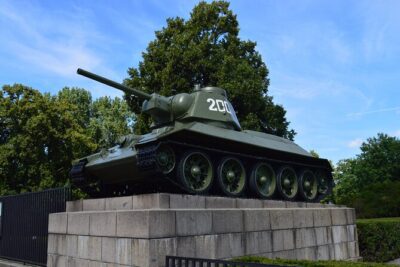
Berlin’s Best: 2 Hour Walking Tour Third Reich and the Cold War
Read our review →
Third Reich Berlin: Hitler and WWII Walking Tour
Read our review →Browse the lists this tour appears in