
Reviewed · THIRD REICH & COLD WAR TOURS
Inside the Third Reich (Private Tour)
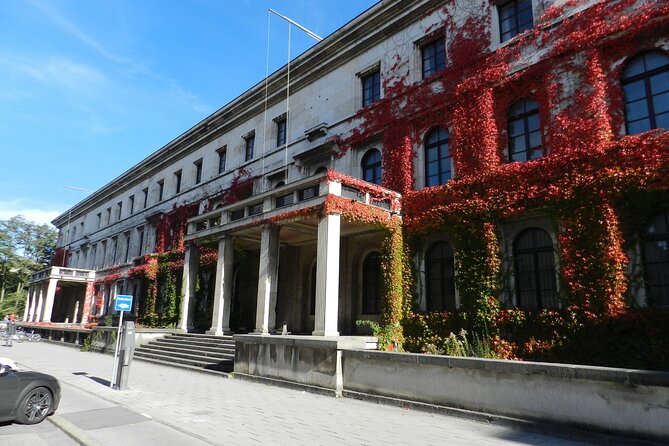
Munich does not hide its past. This private tour connects key Third Reich sites you can walk right past, with commentary that turns streets and buildings into real evidence. I especially like the private format that lets you ask questions as you go, and the way you see war damage in everyday places, not just in a textbook. The main drawback is emotional, because this is Nazi history, and some stops focus on persecution and violence.
Curt Milburn guides with a “professor meets friend” energy, and he uses an iPad with hundreds of films and images. That visual support helps you place what you are seeing in context fast, even if you only know the basic timeline. I also like that the route sticks to central, walkable areas near public transit, so you can fit this into a normal sightseeing day without a major logistics headache.
Before you book, just know the pace is not “museum slow.” It is more like an informed street walk through a lot of heavy material in about 2 to 3 hours, so if you need lots of quiet reflection time, you may want to build in a calmer plan right after.
In This Review
- Key takeaways before you go
- The streets of Munich as evidence, not just backdrops
- Curt Milburn and the iPad that makes history easier to hold onto
- Isartor beer hall area, and the early meetings that mattered
- Platzl, Hitler’s first speech, and the speed of a rise
- Old Town Hall, Kristallnacht, and an assassination attempt site
- Back to Platzl for war damage, and Munich’s forced scars
- Odeonsplatz, the SA purge, and speeches in a public square
- Platz der Opfer des Nationalsozialismus, a memorial with focus
- Glyptothek and rally grounds, with fascist buildings still standing
- Alter Botanischer Garten and the Nazi eagle in public view
- Residenz München, failed putsch, and resistance under pressure
- What $180.72 pays for a private group up to 15
- Timing, walking, and how to plan the rest of your day
- Who should book Inside the Third Reich in Munich
- Should you book this tour?
- FAQ
- How long is the Inside the Third Reich private tour in Munich?
- What is the price, and is it per person?
- Where does the tour start, and where does it end?
- Is the tour private?
- What ticket will I use?
- Do the stops require paid admission?
- Can I cancel for a full refund, and are service animals allowed?
Key takeaways before you go
- Private Q&A all the way through, so you can ask follow-up questions without waiting until the end.
- Curt Milburn’s iPad visuals, with hundreds of films and images to help you see what is not obvious from the street.
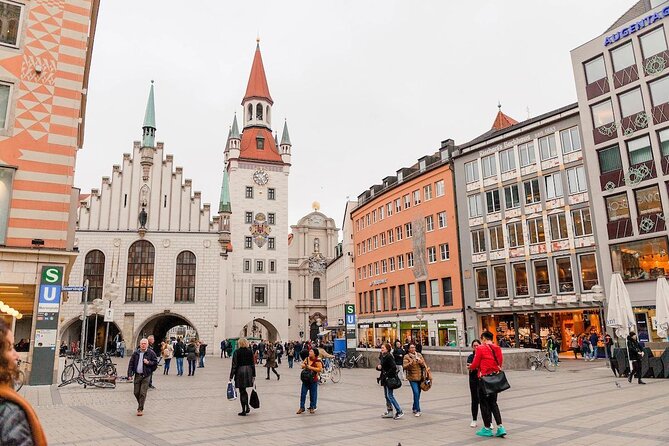
- You’ll notice war damage, including evidence on buildings you might otherwise treat as just old facades.
- The route hits major moments, from early Nazi organizing to memorial sites and places tied to resistance.
- All listed stops are admission ticket free, which keeps the tour value straightforward.
The streets of Munich as evidence, not just backdrops
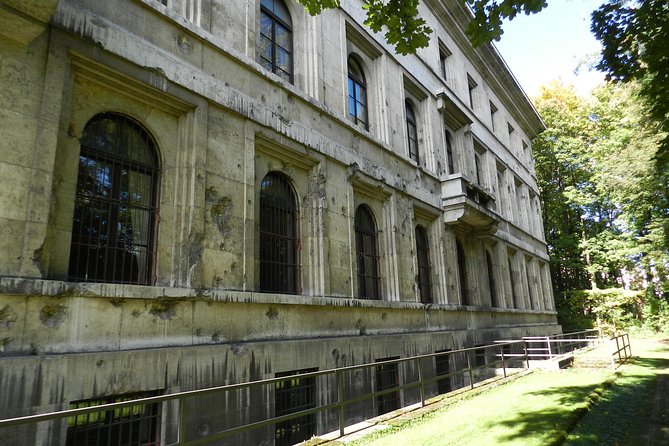
What makes this tour different is the feeling of being on the ground in the same places where ideas, speeches, and decisions played out. You are not just looking at monuments from a distance. You are standing close enough to notice details on facades, squares, and building corners that usually get ignored during a quick walk through the city.
I like that the commentary is built around cause and effect. You start with early Nazi momentum, then you move into sites linked to major turning points, then you end in spaces connected to resistance and failure. That structure helps you connect what you already know from history books to the real geography of Munich.
There is also a practical benefit: you get a guided order of operations for how to look at the city. Munich is beautiful, and that is part of the trap. This tour teaches you to see beauty and cruelty side by side, without turning the walk into a random scavenger hunt.
More Third Reich & Cold War Tours in Munich
- Munich: Third Reich & WWII Walking Tour
★ 4.6 · 6,181 reviews - Third Reich Walking Tour Munich
★ 4.5 · 4,291 reviews - Munich: Birthplace of the Third Reich Guided Walking Tour
★ 4.6 · 771 reviews
Curt Milburn and the iPad that makes history easier to hold onto
Curt Milburn runs the experience, and the vibe is warm but serious. The tour emphasizes discussion, so you are not stuck listening to a lecture where questions are technically possible but awkward. In the reviews, people consistently highlight his ability to handle questions and his talent for turning “key players” into understandable human stories.
What sets this up for first-time visitors is the iPad. Curt puts you in front of visuals, including hundreds of films and images. He also connects the moment you are standing in to broader European history across more than 1000 years, which helps you avoid the common problem where Nazi history becomes a disconnected blob.
If you have limited time in Munich, this format can be a big win. You do not have to chase extra sources between stops. You get images that clarify what you are seeing, then you keep walking while it is fresh.
Isartor beer hall area, and the early meetings that mattered
You start in the old center around Marienplatz 18, and one of the first stops takes you toward Isartor, a place tied to the early days when Hitler met the Nazis. Even if you have read the big-picture story before, this is where it becomes concrete.
At this stop, the value is not that you will see one dramatic object. It is that you learn what to watch for: the street setting, the idea of public visibility, and how early organizing relied on spaces that felt ordinary at the time. This helps you understand how movements take root before they look like unstoppable machines.
One practical tip here: slow down. The tour starts moving quickly, and this early site is a “set the mindset” moment. If you are rushing your photos, you might miss the way Curt explains why that location mattered.
Platzl, Hitler’s first speech, and the speed of a rise
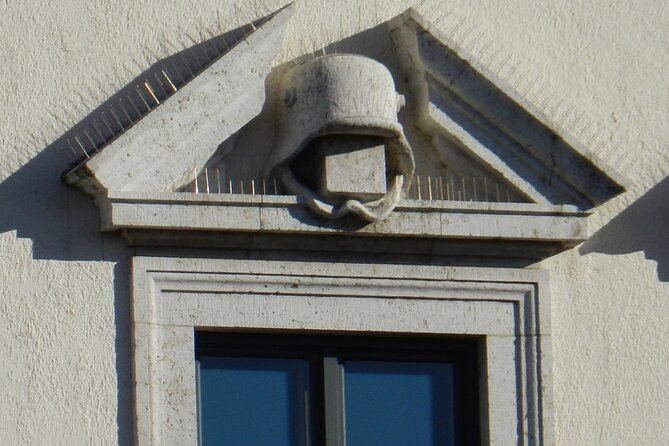
Next you head to Platzl, linked to Hitler’s first speech and his rise to success. This is one of the tour’s key transitions, because it shifts from early contact into public persuasion.
The tour’s storytelling approach works especially well at locations like this. Curt connects the physical surroundings to how a crowd experience builds momentum. You are essentially watching the city become a stage, and the visuals on the iPad help you connect the talk to the broader political weather of the time.
This is also a good moment to ask questions. If you want to understand the psychology behind propaganda or how ordinary people could be pulled in, this is where discussion naturally fits. The format is designed for that.
More wartime and Cold War history walks in Munich:
- Munich World War II Sites Including Dachau Concentration Camp
★ 4.5 · 570 reviews - Munich City Walking Tour, includes Third Reich & Viktualienmarkt
★ 5.0 · 458 reviews - Third Reich & WWII Walking Tour
★ 4.5 · 417 reviews - Munich 3-Hour Segway Tour: Nazi Munich & Royal Architecture
★ 4.9 · 194 reviews
Old Town Hall, Kristallnacht, and an assassination attempt site
From there you reach Old Town Hall, a stop associated with the beginning of Kristallnacht as well as a site tied to an assassination attempt on Hitler’s life. This combination matters, because it frames the period as both systematic persecution and sudden, violent political shock.
What I like about how this is handled is the gravity. You are not just told that something horrible happened. Curt helps you understand what made these moments decisive, and how the public setting makes the impact feel immediate.
Because the themes are intense, plan your mindset before you arrive. If you are the type who gets anxious by dark topics, give yourself permission to slow down during this part. A quick note to yourself can help, something like: I can learn, and I do not have to treat it as entertainment.
Back to Platzl for war damage, and Munich’s forced scars
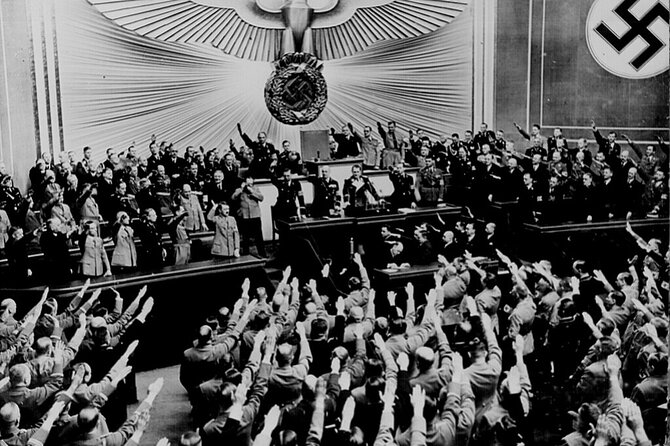
You circle back to Platzl for another perspective, this time focusing on evidence of war damage visible on the buildings. This is the “stop you did not know you needed” part.
It is easy to visit Munich and assume destruction is only a museum story. Here, you learn how to read the aftermath right into the architecture. Curt points out what changed, why it is still there, and how that physical evidence acts like a permanent footnote to historical violence.
For me, this is one of the strongest value elements. The tour adds context to what you would otherwise overlook, which means you get more “seeing” per hour. You finish with a city that feels less generic and more specific.
Odeonsplatz, the SA purge, and speeches in a public square
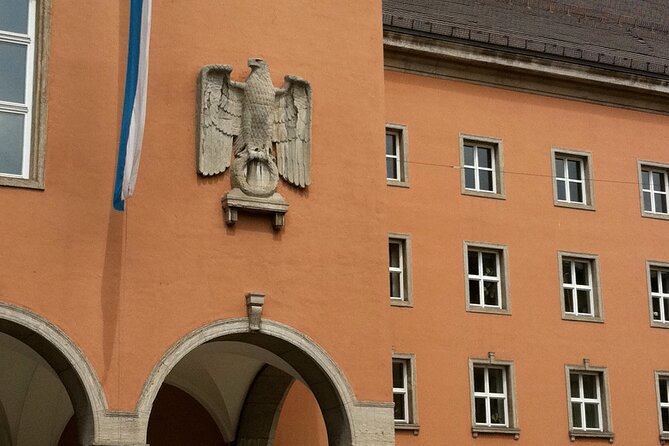
Then you move to Odeonsplatz, connected with Hitler’s purge of the SA and with sites of speeches. This stop is where the story becomes about power consolidation in public space.
Squares are perfect for understanding politics because they show how crowds, authority, and spectacle interact. Curt uses the iPad visuals to help you picture what a speech site would have meant at the time, even when today’s scene looks calmer.
A practical note: squares can get windy and bright. If you are taking photos, consider using your phone for quick shots and rely on the iPad for the deeper context. The photos are nice, but the explanations are the point.
Platz der Opfer des Nationalsozialismus, a memorial with focus
Next you visit Platz der Opfer des Nationalsozialismus, Munich’s memorial to those who died at the hands of the Third Reich. This stop shifts the emotional tone from political mechanics to remembrance.
I appreciate that the tour does not run away from this. Memorials can be the most meaningful part for many people, but they can also feel awkward if a tour rushes through them. Here, Curt builds enough time for you to sit with what the location is communicating.
If you want to connect this stop to the rest of the walk, ask yourself what you have learned so far. This memorial is the human “ledger” for the moments you saw earlier.
Glyptothek and rally grounds, with fascist buildings still standing
Then you head to the Glyptothek, described as tied to Munich’s rally grounds and featuring still standing fascist buildings associated with Hitler. This is where you get a reality check about how the past can literally remain in the skyline.
Seeing structures that are associated with fascist display is uncomfortable in a different way than a museum exhibit. You are confronting the fact that history does not only live behind glass. Curt’s approach helps you interpret the buildings without turning the stop into a shock-only experience.
Use your eyes like the tour asks you to. Look at the scale, the design language, and how public architecture can be used to support political theater. Even if you think you are “not a building person,” you will probably start noticing more than you expected.
Alter Botanischer Garten and the Nazi eagle in public view
At Alter Botanischer Garten, you get a stop centered on the largest Nazi eagle still on public display in Germany, plus evidence of Nazi architecture and art. This is a heavy stop, but it is also one of the most visually specific.
I like that Curt frames it as “evidence you can see.” Instead of treating the eagle as a symbol that lives only in a story, you see it in physical form. The tour helps you understand what it represented and how artistic styling served political messages.
If you are short on time, do not rush this stop. Spend a minute looking, then use Curt’s explanation to decode what you are seeing. It can transform a quick photo into something much more meaningful.
Residenz München, failed putsch, and resistance under pressure
You finish at Residenz München, tied to Hitler’s failed putsch and to stories of resistance to the Nazis during the Third Reich. This ending is important, because it avoids the “only rise, then fall” pattern that can flatten history.
Resistance stories shift the focus toward choices, risks, and outcomes that were not guaranteed. Curt uses this location to show that opposition existed even when the system looked unstoppable.
If you leave Munich after this tour, you carry a stronger sense of causality. You understand not only what the Nazis did, but also how opposition shaped what happened next. That is a big part of why the tour is worth doing, even if you think you already know the basics.
What $180.72 pays for a private group up to 15
The price listed is $180.72 per group, with a group size up to 15. That is not cheap if you are traveling solo, but private tour pricing often makes sense when you are a couple, a family, or a small group.
Here, the value comes from two things. First, all that on-the-ground interpretation at multiple sites would be harder to replicate with a self-guided audio app, especially with the iPad visuals. Second, the private format means you can steer the discussion toward what you care about, instead of accepting a fixed narrative pace.
If you are deciding between a group tour and this private one, think about your style. If you like to ask questions and stop when something catches your attention, you will likely feel the difference in the experience.
Timing, walking, and how to plan the rest of your day
The tour runs about 2 to 3 hours and starts at 10:30 am. Because it is centered around major areas in the city, you can usually pair it with other nearby sights before or after.
The walking is real. It is not a bus tour, so wear comfortable shoes and expect to be standing and listening for stretches. Also, because you cover multiple intense topics, I recommend not cramming back-to-back high-energy activities right after. Give yourself time to reset.
This is also a tour where your best strategy is active listening. If something sounds confusing, ask. If you want a different angle, ask. Curt’s format is built for that back-and-forth.
Who should book Inside the Third Reich in Munich
This is a great fit if you want Munich’s Nazi-era story told in a way that connects to specific sites and visible details. It also works well if you like structured walking, but hate feeling lost or overwhelmed.
You’ll likely enjoy it if:
- you want a private group experience instead of a crowded walk
- you appreciate visual aids and want context tied to what you see
- you are curious about how public speeches, architecture, and public spaces supported Nazi power
You might think twice if you want a light, entertainment-style tour. This route deals with persecution, violence, and memorials, so it is serious by design.
Should you book this tour?
If you want more than a quick history overview and you care about seeing evidence in the actual city, I think this is an excellent booking choice. The iPad support, the private Q&A, and the mix of sites tied to rise, aftermath, and resistance make it feel unusually “complete” for a short walk.
I would book it if your group can handle heavy subject matter and you value guided interpretation over independent exploring. If you prefer your history to be more museum-based, or you need lighter emotional pacing, you might choose a different kind of Munich tour and come back to this topic later.
Either way, Munich will look different after this. You will start noticing the city as a record of choices, not just a pretty backdrop.
FAQ
How long is the Inside the Third Reich private tour in Munich?
It runs about 2 to 3 hours.
What is the price, and is it per person?
The price is $180.72 per group, for up to 15 people.
Where does the tour start, and where does it end?
It starts at Marienplatz 18, 80331 München, Germany, at 10:30 am, and it ends back at the meeting point.
Is the tour private?
Yes. This is a private tour/activity, and only your group participates.
What ticket will I use?
You’ll receive a mobile ticket.
Do the stops require paid admission?
The listed stops are marked as admission ticket free.
Can I cancel for a full refund, and are service animals allowed?
You can cancel for a full refund if you cancel at least 24 hours before the experience’s start time. Service animals are allowed.
Newest Munich reviews on the site
- Private Transfer from Munich to Passau with 2 hours for sightseeing★ 4.5 · 7 reviews
- Private Eagles Nest & WWII Doku Center Tour incl. Tickets & Lunch★ 5.0 · 10 reviews
- Private Neuschwanstein Castle Tour – optional Alpine Coaster★ 5.0 · 10 reviews
- Nuremberg Private Guided Tour from Munich by Rail★ 4.5 · 23 reviews
- Private Day Trip from Munich to Salzburg Old Town with Lunch★ 5.0 · 6 reviews
- Private tour Hallstatt City, Skywalk, and Salt Mine from Munich★ 4.5 · 6 reviews
- Private Tour: Munich Third Reich Walking Tour★ 4.5 · 31 reviews
- Munich private Car & Walking Tour incl. BMW World & River Surfers★ 5.0 · 8 reviews
Third Reich & Cold War Tours, compared.

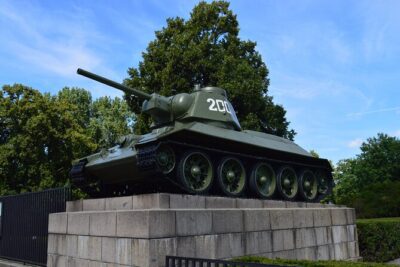
Berlin’s Best: 2 Hour Walking Tour Third Reich and the Cold War
Read our review →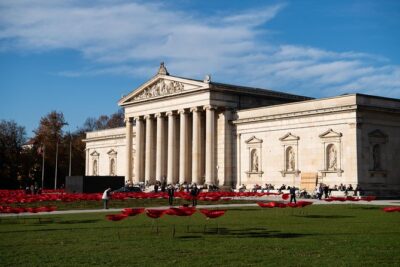
Third Reich Berlin: Hitler and WWII Walking Tour
Read our review →
Skip-the-Line: Berlin Wall Museum at Checkpoint Charlie
Read our review →
Browse the lists this tour appears in