Reviewed · MUNICH TOURS
Nuremberg Private Guided Tour from Munich by Rail
A day in Nuremberg tells two stories at once. This rail-based private outing from Munich pairs a private guide with round-trip train transport, so the day feels smoother and you can spend more time on the key sights instead of transit puzzles.
I especially like the pacing control. With guides such as Jason and Susanna, you get a plan but also room to ask questions, slow down near places that grab you, and pick a lunch spot that fits your mood. One thing to consider: a couple of the most famous stops involve extra entry, and some sites can be closed on certain days, including the Albrecht Dürer House.
In This Review
- Key things I think you’ll notice right away
- Why Nuremberg hits hard as a day trip
- Price and what you’re really paying for
- Logistics that matter: pickup, meeting point, and the train day rhythm
- The guide makes or breaks this kind of day
- Altstadt first: medieval Nuremberg, wall-to-wall atmosphere
- Handwerkerhof, tiny and useful
- Hauptmarkt: the city’s long-running meeting point
- Der Schöne Brunnen: a wishing ring and a golden tower
- Kaiserburg and St. Sebaldus: the older spine of the city
- Kaiserburg: Imperial Castle views and depth
- Albrecht Dürer House: art history in a tight window
- St. Sebaldus Church: patron saint and oldest church
- Nazi-era sites: how to make the visit feel thoughtful, not just grim
- Kongresshalle: the unfinished Nazi Party Congress Hall
- Documentation Center at the Rally Grounds
- Albrecht Dürer, crafts, fountains, and why the small stops count
- Lunch and timing: where the day gives you breathing room
- How much time you’ll really get at each stop
- Who should book this tour
- Common practical questions before you go
- Should you book Nuremberg Private Guided Tour from Munich by Rail?
- FAQ
- How long is the Nuremberg private guided tour from Munich?
- What is the price per person?
- Where do we meet in Munich?
- Is round-trip train transport included?
- Is lunch included?
- Are entrance fees included?
- Is this tour private or shared?
- Can the schedule be adjusted to your interests?
- What if I need to cancel?
- When will I get confirmation after booking?
Key things I think you’ll notice right away
- Private guide, one group only, with your time handled from Munich to Nuremberg and back
- Rail round-trip included, plus hotel pickup or meeting at Munich’s Hauptbahnhof
- Two Nuremberg timelines, medieval landmarks and the Nazi-era sites with context
- Flexible itinerary fit, since you can steer priorities with your guide
- Expect a small add-on cost at certain indoor or ticketed exhibits, like the Documentation Center (€7.50 per person)
Why Nuremberg hits hard as a day trip
Nuremberg is the kind of city that makes you pay attention. In one compact day, you can walk through a medieval walled center, see the Imperial Castle, then shift to the Nazi Party sites and the postwar attempt to document what happened and why it mattered.
What makes this day trip work is the structure. You are not trying to self-plan trains, platforms, and ticket queues while also processing serious history. The private guide approach means you get an adult-level explanation of what you are seeing, not just a list of facts.
And yes, the contrast is intense. The city looks beautiful in places, then turns brutally specific in others. That mix is exactly why Nuremberg is worth your time, even if you only have a day.
A few more Munich walks and trips to compare
- From Munich: Neuschwanstein & Linderhof Castle Full-Day Trip
★ 4.6 · 14,646 reviews - Neuschwanstein & Linderhof Castle-Fairytale Day Tour from Munich
★ 4.5 · 7,275 reviews - Munich: Third Reich & WWII Walking Tour
★ 4.6 · 6,181 reviews
Price and what you’re really paying for
At $474.09 per person for an 8 to 9 hour day, this is not a bargain-basement trip. But it also is not just paying for a ticket to ride a train.
Here is what you are buying:
- Private guide time in Nuremberg (with flexibility to match your interests)
- Hotel pickup and drop-off (or you can meet at the station)
- Round-trip train transport from Munich
When you break it down, the value is strongest if you care about getting context at the right moments. Several guides in the featured experiences are praised for answering lots of questions, and that matters more than you might expect when the subject is WWII and its aftermath.
The other value piece is time. The day is built to keep you moving efficiently, without feeling like you are being marched like luggage. That relaxed-but-efficient pace comes up in multiple accounts, especially with guides like Jason.
Logistics that matter: pickup, meeting point, and the train day rhythm
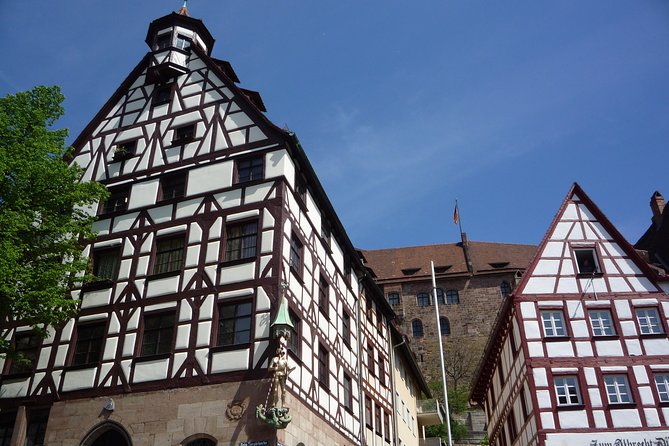
You have two simple ways to start:
- Hotel pickup is offered
- Or you can meet at Munich’s Hauptbahnhof (80335 Munich, Germany)
Either way, the day is built around rail, and the guide handles the hard parts: getting you from Munich onto the correct connections and back again. In multiple accounts, guides are also described as handling the chain of transport smoothly, even when things get weird.
A practical tip: if you are the type who hates running late, aim to be ready early. Even with a well-run plan, you still want a calm buffer so you can enjoy the first walk instead of sprinting for it.
The guide makes or breaks this kind of day
This tour lives and dies by the guide’s storytelling. In the experiences shared, guides like Susanna, Jason, Paul, Nick, Chris, Akim, and Jeff are repeatedly praised for two things:
- Turning landmarks into meaning, not just scenery
- Keeping the pace relaxed while still hitting the key stops
One of my favorite details in these accounts is how often guides bring visuals or structured explanations, and then actually stick around to answer follow-up questions. That is how you avoid the most common mistake in history travel: you see the place, you get a few facts, then the whole thing blurs.
I also like the way some guides treat the day as a conversation. Paul, for example, is described as friendly and even helpful with lunch decisions. Susanna is praised for getting people into a restaurant and for helping with onward trains and local direction, which turns the day into a real trip, not just a checklist.
Same city, a different way to spend the afternoon:
- Dachau Concentration Camp Memorial Site Tour from Munich by Train
★ 4.5 · 5,637 reviews - Neuschwanstein Castle Tour from Munich
★ 4.5 · 5,117 reviews - Third Reich Walking Tour Munich
★ 4.5 · 4,291 reviews - Munich Hop-On Hop-Off Tour: 1-Day or 2-Day Ticket
★ 4.3 · 4,161 reviews
Altstadt first: medieval Nuremberg, wall-to-wall atmosphere
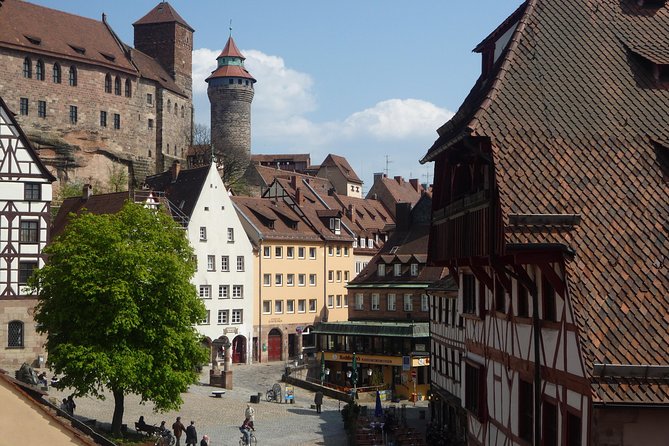
You start in the Altstadt, the walled medieval city center. Even if you are not a medieval-castle person, you will feel the setting change immediately. The streets and sightlines are built for walking, and the walled layout helps you understand why this city mattered for centuries.
The stop is designed to give you a grounding before the heavier parts of the day. You get orientation. You get atmosphere. And you get ready for how Nuremberg’s identity evolved, not just what happened in one era.
Handwerkerhof, tiny and useful
Next is Handwerkerhof, a reproduction of a traditional craftsman’s court with shops and restaurants. It is not the largest stop, but it is a good palate cleanser. You get small-scale views of how old city life might have felt, without turning the whole day into a museum-only marathon.
If you want an early chance to browse or just reset, this is a nice moment.
Hauptmarkt: the city’s long-running meeting point
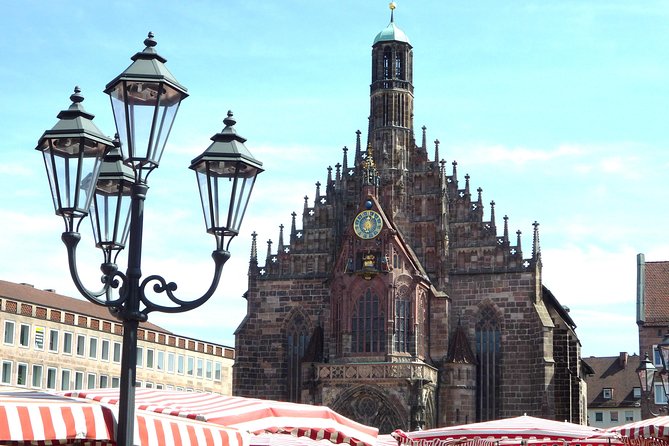
Then you arrive at Hauptmarkt, the main marketplace that has been the center of city life since the 1300s. The value here is timing. Market squares teach you how cities work as social machines, how trade and civic life fed each other, and how history is often layered in the same footprint for hundreds of years.
It also sets you up for lunch later, since you are already oriented to where people naturally gather.
Der Schöne Brunnen: a wishing ring and a golden tower
At Der Schöne Brunnen you get a classic Nuremberg landmark with the golden Gothic tower and the wishing ring of Nuremberg. This is one of those spots where the photo is nice, but the real point is how the city mixes faith, legend, and public space.
It is short, but it leaves an impression because it is playful in a city that later becomes very serious.
Kaiserburg and St. Sebaldus: the older spine of the city
Kaiserburg: Imperial Castle views and depth
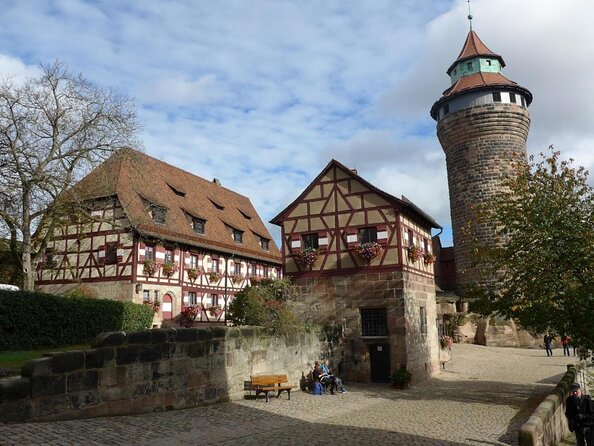
Kaiserburg Nurnberg is the Imperial Castle with roots dating back at least to the year 1050. Even if you do not go deep into every structure, you get something important: long continuity. It is not only a city with WWII history. It is also a city with medieval power and governance.
This stop also works well as a change of pace. Walking up to the castle area slows your tempo without forcing you to sit in a chair.
Albrecht Dürer House: art history in a tight window
You may also pass by Albrecht Dürer House, the original house of the famous Renaissance artist. Entry is not included, and some days can be closed, so do not plan your entire emotional arc around getting inside.
Still, the stop is valuable because Dürer represents another side of Nuremberg: creativity, skill, and reputation that had nothing to do with modern politics.
If the Dürer connection matters a lot to you, ask your guide whether the exterior visit is enough for your interests that day.
St. Sebaldus Church: patron saint and oldest church
Next is St. Sebaldus Church, described as the oldest church in Nuremberg and the city’s patron saint connection. Entry is not included, so you should expect at least some guests will choose not to go inside depending on timing.
What I like about this moment is the way it bridges civic identity and faith. Even if you only spend the set time outside, you will leave with a sense of how long Nuremberg has been shaped by institutions, not just by events.
Nazi-era sites: how to make the visit feel thoughtful, not just grim
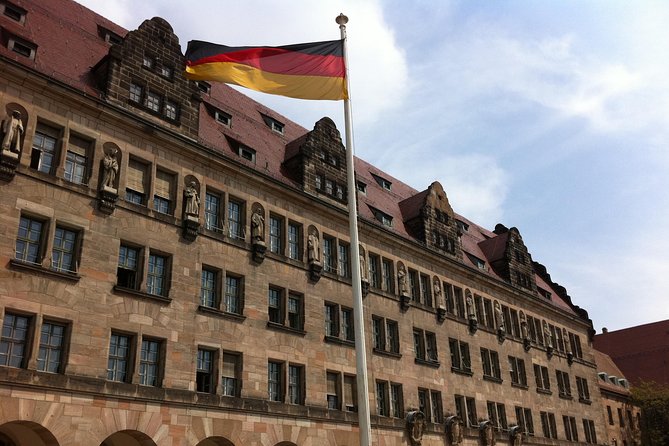
This is the emotional heart of the day. You visit the Nazi Party sites with context, then you spend real time at the Documentation Center.
Kongresshalle: the unfinished Nazi Party Congress Hall
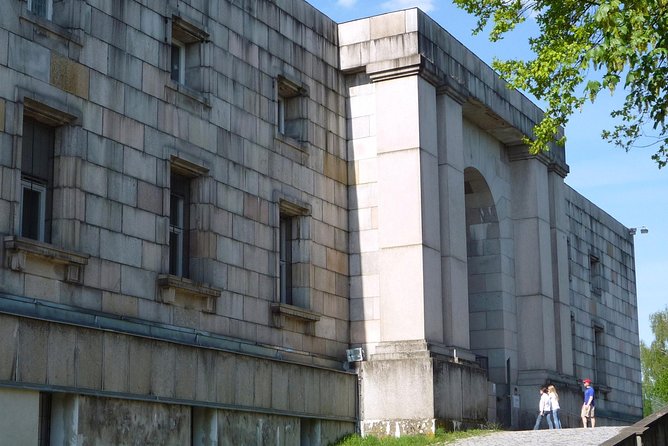
At Kongresshalle Nurnberg, you see the unfinished Congress Hall of the Nazi Party. “Unfinished” is important. It tells you the story is bigger than just ideology. Plans, money, architecture, and spectacle all show up, but you also notice what did not fully get built the way propaganda imagined.
It is a powerful visual lesson if you are ready for it.
Documentation Center at the Rally Grounds
Then comes the Documentation Center Nazi Party Rally Grounds, with about 1 hour on site. Admission is free to join the tour stops, but the Documentation Center entry is not included and is €7.50 per person.
This is the stop where your guide’s tone and structure matter most. You want to understand what the site was used for and how the postwar record attempts to confront it directly. If you are sensitive to intense history, this is where you will likely feel the emotional weight, so it helps that the day is paced with earlier medieval context first.
A practical note from the way the grounds are described in experiences: some parts of the rally grounds have changed uses over time, including being used for sports fields and outdoor events. That can feel odd at first. I suggest treating those contrasts as part of what you are learning, not something that ruins the visit.
Albrecht Dürer, crafts, fountains, and why the small stops count
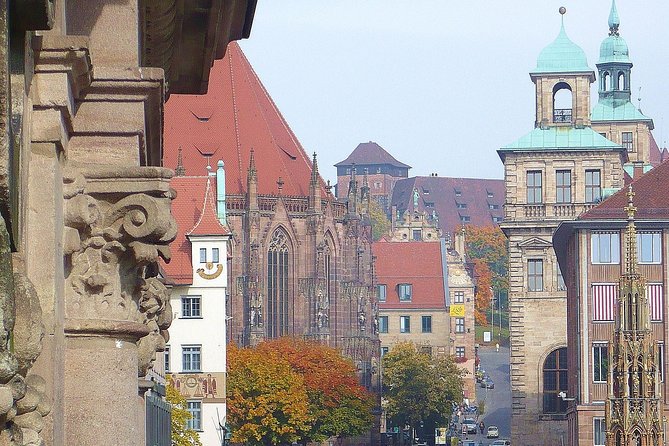
The day is not all heavy history. You also get several quick but meaningful moments that help you see Nuremberg as a living city.
Handwerkerhof gives you a human-scale break. Hauptmarkt and Der Schöne Brunnen show public life and civic art. Those short stops matter because they reduce the risk of history travel turning into only grim facts and numb walking.
In other words, the smaller sights are not filler. They are how your brain resets between topics.
Lunch and timing: where the day gives you breathing room
Food and drinks are not included, so you will choose lunch yourself. The good news is the tour is arranged so you typically have an opening for a meal in a central, walkable area.
If you want the simplest lunch plan, keep your eyes on options near the marketplace and castle area. In guide-style accounts, some guides also help steer you toward a good nearby beer garden or restaurant based on what you feel like eating and how much time you have.
My advice: pick somewhere that lets you sit for 30 to 60 minutes. You will get more out of the second half of the day if you come back from lunch with energy, not autopilot.
How much time you’ll really get at each stop
The day is long enough to feel full, but not so long it becomes chaotic. The walking and sightseeing are paced in segments, often ranging from short landmark stops to one longer site visit at the Documentation Center.
This matters if you hate two common tour traps:
- Rushed indoor time where you miss the meaning
- Overlong free time where you end up wandering and not learning
From the guidance style praised in the accounts, the intent is clear: keep it efficient, keep it relaxed, and protect your ability to ask questions.
Who should book this tour
This is a strong fit if you:
- Want a private day trip with a guide instead of self-guided transit
- Care about understanding WWII-era sites in context
- Like walking through an old town while still getting the big historical chapters
- Travel as a small group, including couples and solo travelers
It also tends to work well for families with adult kids, since you can adjust the pace and attention based on what your group can handle emotionally and intellectually.
If you are extremely museum-focused and want deep indoor time at every stop, you might find some entries are limited by scheduling and by ticket availability. But if your goal is a balanced day that covers the essentials with explanations, this format fits nicely.
Common practical questions before you go
One of the best ways to enjoy a day like this is to prep for the two ticket categories you might run into:
- The Documentation Center entry at the rally grounds is €7.50 per person
- Stops like the Albrecht Dürer House and St. Sebaldus Church have entry that is not included
So bring a little extra cash or a card buffer for admissions you decide to add.
Also, if you have strong preferences for when to spend time, communicate them early. Several guides are described as flexible, and you get the best day when your priorities are clear from the start.
Should you book Nuremberg Private Guided Tour from Munich by Rail?
I think you should book it if you want a day trip that respects your time and your attention span. The big win is the combination of rail transport plus a private guide, which keeps you from turning your day into a logistics test. If the idea of seeing the medieval core and the Nazi-era sites in one coherent story appeals to you, this tour delivers that.
Skip or reconsider if you:
- Want a low-cost, DIY-style day with no entry fees at all
- Are hoping for lots of long indoor time at every stop
- Really dislike emotionally intense history, even with guiding context
If you are unsure, focus on one question: do you want an expert to help connect what you see to what it means? If yes, you will likely find this trip worth the money.
FAQ
How long is the Nuremberg private guided tour from Munich?
It runs about 8 to 9 hours.
What is the price per person?
The price is $474.09 per person.
Where do we meet in Munich?
The meeting point is Munich Hauptbahnhof (80335 Munich, Germany). Hotel pickup is also offered.
Is round-trip train transport included?
Yes, round-trip train transport from Munich is included.
Is lunch included?
No. Food and drinks are not included.
Are entrance fees included?
Some are not. For example, entry for the Documentation Center Nazi Party Rally Grounds (€7.50 per person) is not included, and Albrecht Dürer House and St. Sebaldus Church are listed as not included.
Is this tour private or shared?
It is private. Only your group participates.
Can the schedule be adjusted to your interests?
The tour is described as allowing a custom itinerary with an expert guide, so you can prioritize based on what you want to see.
What if I need to cancel?
You can cancel for a full refund up to 24 hours in advance. Cancellations later than that are not refunded.
When will I get confirmation after booking?
You receive confirmation within 48 hours of booking, subject to availability.
Newest Munich reviews on the site
- Private Transfer from Munich to Passau with 2 hours for sightseeing★ 4.5 · 7 reviews
- Private Eagles Nest & WWII Doku Center Tour incl. Tickets & Lunch★ 5.0 · 10 reviews
- Private Neuschwanstein Castle Tour – optional Alpine Coaster★ 5.0 · 10 reviews
- Inside the Third Reich (Private Tour)★ 5.0 · 26 reviews
- Private Day Trip from Munich to Salzburg Old Town with Lunch★ 5.0 · 6 reviews
- Private tour Hallstatt City, Skywalk, and Salt Mine from Munich★ 4.5 · 6 reviews
- Private Tour: Munich Third Reich Walking Tour★ 4.5 · 31 reviews
- Munich private Car & Walking Tour incl. BMW World & River Surfers★ 5.0 · 8 reviews
Munich Tours, compared.
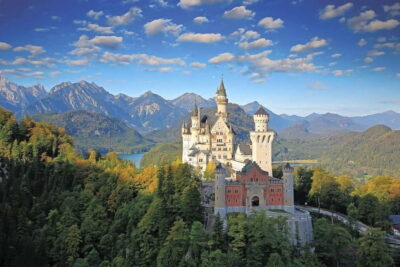
Neuschwanstein & Linderhof Castle Full-Day Trip
Read our review →
Neuschwanstein & Linderhof Castle-Fairytale Day Tour from Munich
Read our review →
Dachau Concentration Camp Memorial Site Tour from Munich by Train
Read our review →
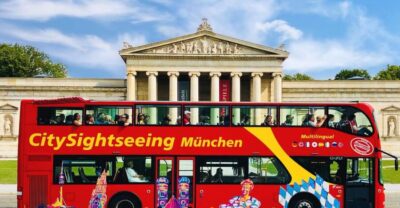
Munich Hop-On Hop-Off Tour: 1-Day or 2-Day Ticket
Read our review →