
Reviewed · THIRD REICH & COLD WAR TOURS
Cold War and Berlin Wall Tour in Italian
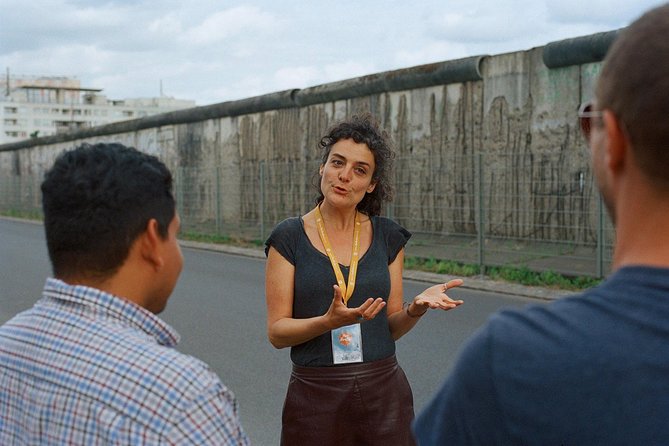
Berlin’s Cold War sites feel closer on foot. This 3.5-hour walk lines up the wall story with key places you can actually see, plus commentary in Italian. I also love that it hits big landmarks like Memorial of the Berlin Wall and the East Side Gallery without wasting your day hopping between far-off spots. One thing to consider: it is a walking route, so plan for comfort and timing, and keep your expectations realistic for outside-only viewing where noted.
You’ll meet your Italian-speaking guide at Potsdamer Platz, then follow a route that connects the Cold War era to the fall of the Berlin Wall. I particularly liked how the guide work stays human, with attention to tragic victim stories and the systems people used to escape. A small drawback is that some stops are brief, so you’ll get the main ideas and a good orientation, not a long, slow visit everywhere.
In This Review
- Key Takeaways
- Why This Italian-Language Berlin Wall Walk Works So Well
- Meeting at Potsdamer Platz: Getting Started Without Stress
- The Flow of a 3 Hours 30 Minutes Walk in One City Loop
- Berlin-Nordbahnhof: Where the Ghost Stations Story Begins
- Memorial of the Berlin Wall: Victims, Wall Logic, and Escape Systems
- Alexanderplatz: GDR Architecture and the Moment That Led Toward 1989
- Berlin TV Tower: Outside Views and GDR Skyline Context
- Karl-Marx-Allee: Stalinist-Era Planning You Can Actually See
- East Side Gallery: The Wall’s Longest Remnant and Its Famous Murals
- Price and Value: Is $27.87 Worth It?
- Who This Tour Suits Best (And Who Might Want to Skip It)
- Should You Book This Cold War and Berlin Wall Tour in Italian?
- FAQ
- What language is the guide?
- How long is the tour?
- Where does the tour start and end?
- Is transportation or hotel pickup included?
- Do I need to bring entrance tickets?
- Can I cancel if my plans change?
Key Takeaways
- Italian guide, real-route pacing: you get guided context instead of guessing what you are looking at.
- Wall story in multiple locations: Memorial, Alexanderplatz, and the East Side Gallery in one walk.
- Short stops, clear purpose: quick orientation at major junctions like Alexanderplatz.
- Outside-only for the TV Tower area: you will see it, not tour inside.
- Max 25 people: small enough to hear the guide and keep the flow moving.
- Free admission at each stop: the tour is built around places that do not require ticket costs.
Why This Italian-Language Berlin Wall Walk Works So Well
If you want Berlin’s Cold War story but you also want to keep your feet moving, this tour hits the sweet spot. You are not left staring at plaques with zero context. Instead, you get a guided walk that connects the wall’s creation to the pressure that helped bring it down.
A big reason I think this tour is a smart choice is the pacing. You cover the Memorial of the Berlin Wall, Alexanderplatz, the GDR-era skyline moments, and then end at the East Side Gallery, all in one organized route. That matters because Berlin is big, and Cold War sites can be scattered. Getting them lined up for you saves a lot of planning stress.
Also, the Italian commentary is a real upgrade. On this route, language affects how much you actually understand. I have seen how a well-prepared guide can turn a grim topic into something you can follow step by step, and the Italian guidance here is a highlight people point to again and again.
More Third Reich & Cold War Tours in Berlin
- Berlin: Third Reich and Cold War 2 Hour Walking Tour
★ 4.9 · 6,830 reviews - Berlin: Berlin Story Bunker Entry Ticket
★ 4.6 · 6,759 reviews - Berlin’s Best: 2 Hour Walking Tour Third Reich and the Cold War
★ 5.0 · 5,486 reviews
Meeting at Potsdamer Platz: Getting Started Without Stress
The tour starts at Potsdamer Platz 10, 10785 Berlin near public transit (S or U-Bahn Potsdamer Platz). The meeting spot is easy to find if you do one thing: look for the blue bicycle by VIVE BERLIN TOURS and the flag with their logo.
The best practical move here is to arrive a few minutes early. Potsdamer Platz is busy, and you do not want to waste time scanning crowds before the walk begins. Once you are with the group, the day is set up to flow, stop by stop.
The tour ends at the East Side Gallery (10243 Berlin). The guide will tell you which public transport to take next, so you are not left with the usual, now what do I do feeling.
The Flow of a 3 Hours 30 Minutes Walk in One City Loop
This experience runs about 3 hours 30 minutes. It is long enough to feel like you did something meaningful, but short enough that you can still plan other Berlin highlights the same day.
Another value point: the tour is capped at 25 travelers. In my view, that size helps the guide keep the group together and helps you actually hear what is being said, especially at quieter moments near memorial areas or along the wall remnants.
Also, it is a mobile ticket tour. That is one less thing to manage. You just need your phone ready when you check in.
One note I always think about with city walks: you will be on your feet. The itinerary has multiple stops, some only around 10 to 15 minutes, so wear comfortable shoes and expect a steady walking pace.
Berlin-Nordbahnhof: Where the Ghost Stations Story Begins
The second stop is Berlin-Nordbahnhof subway station, where the guide talks about the history of ghost stations. That phrase alone tells you this part is about absence and control, not just architecture.
Why it matters: these stations are a physical reminder that the Cold War was not only about borders and walls, it was also about movement, access, and what people were allowed to see or use. When your guide explains the background, the place stops being a random underground station and starts reading like a Cold War document written in concrete.
Practical consideration: since this stop is about 10 minutes, treat it like an orientation moment. If you want to spend extra time here on your own later, you will know what to look for after the guide frames the story.
More wartime and Cold War history walks in Berlin:
- Third Reich Berlin: Hitler and WWII Walking Tour
★ 5.0 · 3,301 reviews - Skip-the-Line: Berlin Wall Museum at Checkpoint Charlie
★ 4.1 · 2,041 reviews - Berlin: Third Reich, Hitler, and WWII Walking Tour
★ 4.9 · 1,757 reviews - Cold War, Berlin Wall, Spies and the East Side Gallery
★ 5.0 · 1,024 reviews
Memorial of the Berlin Wall: Victims, Wall Logic, and Escape Systems
Stop three is the Memorial of the Berlin Wall, a 50-minute segment that is designed for understanding, not just photos. This is where you get the clearest sense of how it was possible to build the wall and what it meant for people trying to live with it.
I like that the tour does not keep things abstract. It specifically includes the tragic stories of victims and also explains the systems used to escape. That combination matters. It gives you both sides of the wall experience: the human cost and the human response.
What to expect here:
- a guided look at the memorial setting
- explanation of how the wall operated in practice
- story-driven context that helps you process the site beyond the obvious
A realistic caution: this is longer than most stops, which is great for learning. But if you are sensitive to heavy topics, give yourself a small mental break before you move on.
Alexanderplatz: GDR Architecture and the Moment That Led Toward 1989
Next up is Alexanderplatz, about 15 minutes. The guide focuses on the German Democratic Republic (GDR) and its typical architecture, and also covers a popular manifestation that took place at Alexanderplatz and helped lead to the fall of the Wall.
This stop works well because it shifts your thinking from the wall as a single physical barrier to the wall as part of a wider political reality. Alexanderplatz is not just a square. With the right explanation, it becomes a stage where people gathered and where public pressure mattered.
In practical terms, 15 minutes is brief, so you should use it to:
- orient yourself in the architecture and layout
- catch the key storyline linking public action to political change
If you want to linger afterwards, you can. But you will get enough here to make the bigger themes stick.
Berlin TV Tower: Outside Views and GDR Skyline Context
At Berlin TV Tower, the tour keeps it simple: outside only. The stop is about 10 minutes.
This is one of those moments where the value is less about an interior visit and more about understanding what the tower represented visually and symbolically during the GDR era, and how it fits into today’s Berlin skyline.
Practical note: since it is outside-only, do not plan this stop as a full attraction visit. If you want to go up, that would be separate from this walking tour.
Karl-Marx-Allee: Stalinist-Era Planning You Can Actually See
Then you walk to Karl-Marx-Allee, roughly 20 minutes. This boulevard is framed by buildings from the Stalinist era, and the guide explains the beginnings of the GDR.
This part is where Berlin’s Cold War story becomes very visible. The architecture is part of the message. The scale, the style, and the planned look help you understand how the GDR wanted to present power and order.
Why the guided context helps: if you look at it without explanation, it can feel like impressive architecture. With the explanation, it turns into an argument about ideology written into city design.
If you enjoy urban form, take advantage of the stop to look up, not only at street level. Your eyes will catch more details, and you will get more from those 20 minutes.
East Side Gallery: The Wall’s Longest Remnant and Its Famous Murals
Finally, you reach the East Side Gallery, about 20 minutes. This is described as the longest part of the Berlin Wall and also the most famous thanks to its murals symbol of freedom.
This ending makes a lot of sense. You begin with the wall’s tragic reality and its purpose, and you end with a section that has become a public canvas. It is one of those contrasts that hits hard because you can see how meaning changes when control changes.
Here is how I suggest you use this last stop:
- take your time reading the idea behind the murals
- focus on what freedom looks like when it replaces coercion
- get a few key photos, but do not treat it like a drive-by
Also, since the tour ends here, you can stay in the area longer if it pulls you in. The guide will still help you figure out transport back.
Price and Value: Is $27.87 Worth It?
At $27.87 per person, this tour is priced like a practical sightseeing add-on, not a premium museum-only day. And in this case, the value comes from how much the route bundles together.
You get:
- an Italian guide (included)
- a focused walk across multiple Cold War related sites
- free admission noted at each stop
- a route that saves you from doing separate research and separate logistics
The time angle is a big part of the value. You are saving hours of figuring out what to see and in what order, because the tour is already sequenced. That matters especially for Cold War history, where it is easy to get lost in names, timelines, and places.
One tradeoff to be aware of: transportation to and from attractions is not included, and there is no hotel pickup or drop-off. You are expected to get yourself to the start point and then handle your own return. Food and drinks also are not included, so bring water and plan a snack break if your body needs it.
For me, the balance lands on yes, especially if you want Cold War context but you do not want to spend your day doing homework.
Who This Tour Suits Best (And Who Might Want to Skip It)
I think this works best for you if:
- you want Cold War storytelling in Italian and you will actually understand it
- you like walking routes with a clear structure and a finish line
- you want the main wall related sights in one day without hopping trains all day
- you appreciate human, story-based history (including the victims and escape attempts)
It might be less ideal if you:
- want long independent time at every site (some stops are intentionally short)
- plan to spend most of your day doing photos only, without listening
- prefer fully guided museum-style pacing where you stay in one place longer
If you are the type who loves to connect the dots across neighborhoods, this route will feel satisfying.
Should You Book This Cold War and Berlin Wall Tour in Italian?
If you want the fastest path to understanding Berlin’s Cold War story, I would book it. The strongest reason is simple: the tour is designed to connect key wall related locations in a logical order, with prepared Italian commentary that makes the places feel meaningful.
I would recommend it in particular if you value direction and context. This is the kind of walk where a great guide helps you “see” what you are looking at, not just pass by it.
Just go in with the right expectations. It is a guided walk with short stops that keep moving, so you will learn the core story without getting stuck in one single location all day.
FAQ
What language is the guide?
The tour includes a guide in Italian.
How long is the tour?
It lasts about 3 hours 30 minutes.
Where does the tour start and end?
It starts at Potsdamer Platz 10, 10785 Berlin and ends at the East Side Gallery (10243 Berlin).
Is transportation or hotel pickup included?
No. Transportation to and from attractions and hotel pickup and drop-off are not included.
Do I need to bring entrance tickets?
The stops list admission ticket free, and the tour includes the guide. You would not plan entrance fees based on the tour information given.
Can I cancel if my plans change?
Yes, you can cancel for a full refund up to 24 hours before the experience start time. Service animals are allowed, and the group is limited to a maximum of 25 travelers.
Newest Berlin reviews on the site
- Your ticket to The Wall Museum Berlin★ 3.0 · 60 reviews
- Rickshaw Tours Berlin – Groups of up to 16 people with several rickshaws★ 4.0 · 97 reviews
- Love and War in Berlin: Self-Guided Story Puzzle Walk★ 5.0 · 7 reviews
- Warnemuende Shore Excursion: Berlin Private Sightseeing Tour from Rostock★ 5.0 · 4 reviews
- eSIM for Germany and 34 European Countries★ 4.5 · 16 reviews
- Walking on the Wall: 3-Hour Tour in Berlin★ 4.5 · 34 reviews
- Karl-Marx-Allee Tour: Life and Architecture in East Berlin★ 5.0 · 19 reviews
- Warnemuende Shore Excursion: Private Berlin Tour★ 4.5 · 27 reviews
Third Reich & Cold War Tours, compared.

Berlin’s Best: 2 Hour Walking Tour Third Reich and the Cold War
Read our review →
Third Reich Berlin: Hitler and WWII Walking Tour
Read our review →
Skip-the-Line: Berlin Wall Museum at Checkpoint Charlie
Read our review →
Browse the lists this tour appears in