
Reviewed · THIRD REICH & COLD WAR TOURS
Berlin Wall: City Tour of Divided Germany
Berlin’s border is still written in the streets. This tour connects the Wall to real daily life, not just monuments, with Friedrichstraße station and the border story threaded through your walk. I especially like how the guide ties each stop to what people faced every day, and how you get hidden places and stories that most quick stops miss.
One thing to plan for: the tour is led in German, so if you want English, you’ll need to think ahead.
In This Review
- Key highlights you should care about
- Entering the story at Tränenpalast, Friedrichstraße station
- Friedrichstraße to the Spree, where power followed the border
- Brandenburg Gate, the symbolic split you can actually see
- From the former death strip to Potsdamer Platz
- The longest remaining stretch of the Wall, then Checkpoint Charlie
- Price and value for a 2-hour divided-city walk
- Who this tour suits best, and who may feel less satisfied
- Should you book this Berlin Wall tour?
- FAQ
- How long is the Berlin Wall city tour?
- What does it cost per person?
- Where do I meet the tour guide?
- What sites are included on the route?
- Is there a live tour guide?
- What language is the tour guide speaking?
- What should I bring?
- Can I cancel and get a refund?
- Is there a pay later option?
Key highlights you should care about
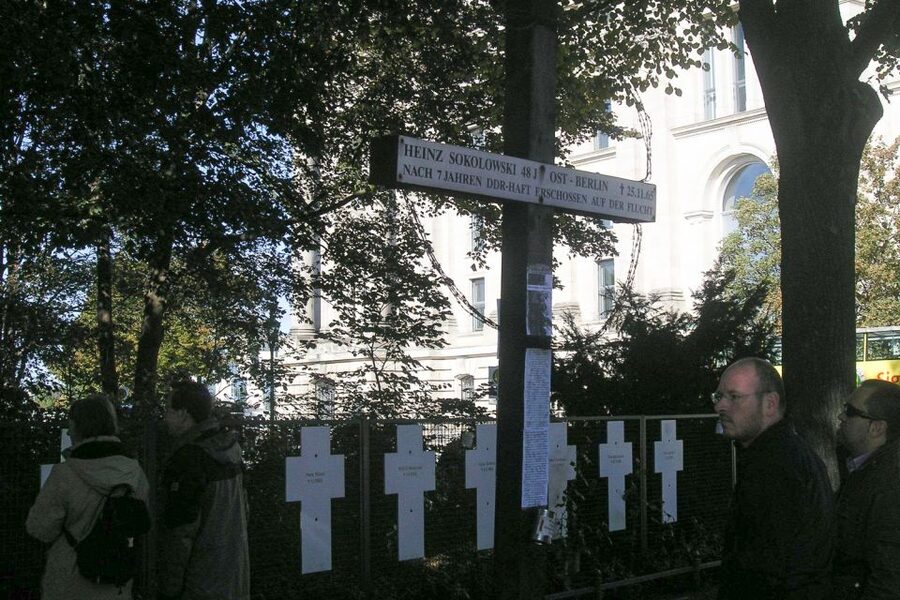
- Friedrichstraße station and the single Cold War border station you can still picture in motion
- Tränenpalast, the Palace of Tears area as your starting point for the emotional tone
- Spree walk to the parliament and government district, where the border influenced major power centers
- Brandenburg Gate and the former border line, including how the Wall shaped the city’s fate
- Checkpoint Charlie and the longest remaining stretch of the Wall, good for anchoring what you learned
Entering the story at Tränenpalast, Friedrichstraße station
Your tour begins at the entrance of Tränenpalast, the Palace of Tears, in front of Friedrichstraße station. The key detail here is that Tränenpalast has only one entrance, so do not waste time circling the building looking for options. This is a smart opening because it frames the Wall as a human situation from the first minute, not an abstract line on a map.
From here, Friedrichstraße station matters more than you might expect. During the Cold War, it was the single border station in Berlin, which means it concentrated movement, tension, and control into one concentrated place. When you stand near the station area, you start to understand how the Wall changed routines: not only where people could go, but how daily decisions had to bend around border rules.
And because this is a city tour, you are not stuck staring at one wall segment. You are building a mental map of division, which makes later stops hit harder. Comfortable shoes help a lot here. Two hours passes quickly when you are walking between layers of the city.
More Third Reich & Cold War Tours in Berlin
- Berlin: Third Reich and Cold War 2 Hour Walking Tour
★ 4.9 · 6,830 reviews - Berlin: Berlin Story Bunker Entry Ticket
★ 4.6 · 6,759 reviews - Berlin’s Best: 2 Hour Walking Tour Third Reich and the Cold War
★ 5.0 · 5,486 reviews
Friedrichstraße to the Spree, where power followed the border
After Friedrichstraße, the route follows the Spree toward the government district and parliament area. This part is valuable because it shows that the border strip was not only about apartments, streets, or everyday transit. It also influenced the places where the state operated.
In practical terms, you’ll be looking for how major buildings sit in relation to the border area. Even if you know the Cold War timeline, it still helps to see how physical geography shaped politics and daily movement. The buildings here were partly situated along the border strip, so the city’s governing heart was not “over there” somewhere remote. It was near the line that divided Germany.
I like this segment because it connects scale. You move from a specific transit chokepoint (Friedrichstraße) into the administrative center of Berlin. You start to feel how a small strip of land could affect decisions made at the top and daily life felt at street level.
One possible drawback: if you prefer tours that rely mainly on indoor stops, this one may feel more outdoor and exposed. Plan for cold weather if you are visiting in winter, and keep an eye on your footing near river paths.
Brandenburg Gate, the symbolic split you can actually see
Then comes Brandenburg Gate, and this is where the Wall becomes instantly recognizable. The border ran here, and the gate is not just a photo landmark. It functions like a punctuation mark in your tour. After seeing the border strip influence transit and government areas, you arrive at a site that made division visible to the entire world.
This is also a good moment for your brain to reorganize what you thought you knew. The Wall is often described in broad strokes, but the gate forces a more grounded question: what does it mean for a city to have its most famous places shaped by separation?
If you’ve only read about the Cold War before, you’ll likely appreciate the way the guide adds the everyday layer again. The idea is not to turn it into a lecture. It is to help you connect symbolism to lived consequences, like who could pass, who could not, and how people adapted.
The tour keeps moving after this, but Brandenburg Gate gives you the emotional anchor. It makes the next stops feel like chapters in the same story.
From the former death strip to Potsdamer Platz
After Brandenburg Gate, you proceed to a Holocaust memorial at the former death strip. This stop deserves a careful pace. Even without extra interpretation, you can feel that the site carries weight beyond the Wall itself. The wording in the route description matters here: this is tied to the former death strip, so you are not just looking at a memorial in isolation. You are learning how the border system turned space into danger.
From there, the tour reaches Potsdamer Platz. This is another essential shift because Potsdamer Platz is the kind of place many people visit for modern reasons. On this route, it becomes a lens for division. The tour explains that the split is particularly visible in the former Tiergarten Triangle, and that’s exactly how it helps you.
What makes Potsdamer Platz special in this context is contrast. You walk into an area many visitors associate with renewal and city life, then you learn how the division left its mark on layout and movement. The result is practical: you start spotting traces of how the Wall shaped urban planning decisions, not just how it affected people emotionally.
I find this segment especially effective for getting past “Wall as a single straight line.” You see division as geography, not scenery.
More wartime and Cold War history walks in Berlin:
- Third Reich Berlin: Hitler and WWII Walking Tour
★ 5.0 · 3,301 reviews - Skip-the-Line: Berlin Wall Museum at Checkpoint Charlie
★ 4.1 · 2,041 reviews - Berlin: Third Reich, Hitler, and WWII Walking Tour
★ 4.9 · 1,757 reviews - Cold War, Berlin Wall, Spies and the East Side Gallery
★ 5.0 · 1,024 reviews
The longest remaining stretch of the Wall, then Checkpoint Charlie
As you continue, you’ll see the longest remaining stretch of the Wall on this route. This is where the tour becomes concrete in a fresh way. Learning about the border’s logic is one thing, but standing near a longer surviving segment helps you understand the scale of the barrier and why it mattered every day.
The physical presence also makes the stories feel more believable. When you can compare the wall’s visible length to the surrounding streets, you start to see why crossing did not just mean “walk through a gate.” It meant confronting the barrier system in a very real way.
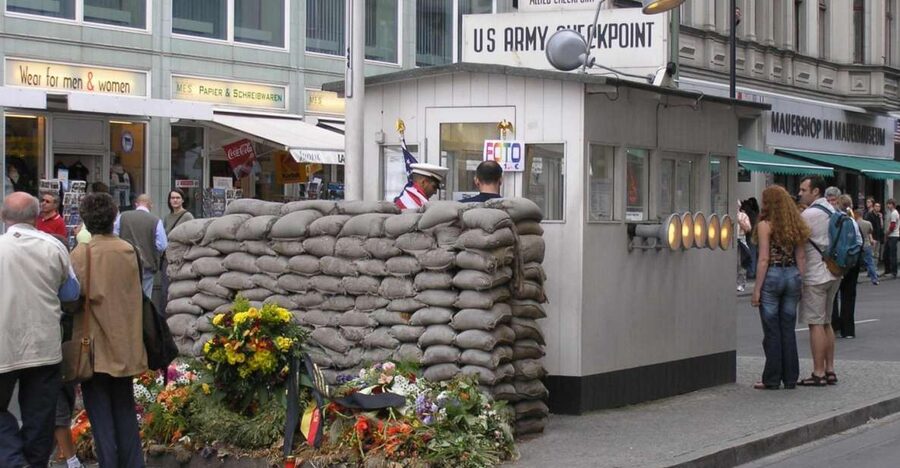
Finally, the tour reaches Checkpoint Charlie. This is the globally famous name, but on this walk it functions as more than a landmark. It’s the place that helps you assemble the whole Cold War picture: the border rules, the concentrated points of crossing, and the city’s split reality.
Checkpoint Charlie is also a helpful wrap-up. When you leave, you have a sequence in your head:
- a transit chokepoint at Friedrichstraße
- border influence stretching toward the government district
- symbolic division at Brandenburg Gate
- danger tied to the former death strip and the Holocaust memorial
- visible splits in the Potsdamer Platz and Tiergarten Triangle area
- remaining wall length that grounds the story
- Checkpoint Charlie as the final shared reference point
Price and value for a 2-hour divided-city walk
At $21 per person for a 2-hour guided tour, the value comes from focus. You’re not paying for a long day of “see everything.” You’re paying for a guided route that connects major sites to the same central theme, how two hostile systems shaped daily life in Berlin.
Two hours is a good length here. It is long enough to move through several meaningful areas, but short enough that you are not tired out before the emotional stops. If you are the kind of traveler who likes short, structured walking days, this fits well.
Also, the tour runs with a live guide in German, which adds value if you can follow the language. People often remember tours by the way the guide tells the story, not just the places visited. In feedback tied to guides like Stephan and Stefan, the consistent praise centers on personal storytelling and a strong, engaging explanation. There are even mentions of tours being extended when the group and guide are moving smoothly, so if you are on a tight schedule, it’s smart to keep some flexibility.
Finally, the ability to reserve and pay later and cancel with a full refund up to 24 hours in advance makes this an easy choice if your plan is still shifting. That flexibility can be the difference between booking confidently and waiting too long.
Who this tour suits best, and who may feel less satisfied
This is a great fit if you want a guided route that helps you understand how the Wall affected daily life, not just where it ran. If you like history with real-world details, this tour keeps returning to daily consequences: how the border system worked, where it concentrated movement, and how the city’s major sites were shaped by the division.
It also suits you if you prefer walking with interpretation. The stops are famous, but the value comes from connecting them in one logical flow, from Friedrichstraße to Brandenburg Gate, then toward Potsdamer Platz, Checkpoint Charlie, and a surviving stretch of wall.
You might want to look for an alternative if:
- you need the tour in a language other than German
- you prefer more time at individual sites rather than a structured route
- you dislike walking outdoors, since the route follows streets and the Spree
Should you book this Berlin Wall tour?
Yes, if your goal is to understand divided Germany through Berlin’s city fabric in a tight, guided 2-hour format. You’ll get the major anchors, Friedrichstraße, Brandenburg Gate, the Holocaust memorial connection to the former death strip, Potsdamer Platz and the Tiergarten Triangle, plus Checkpoint Charlie and a longer surviving Wall section.
I’d book it especially if you want the Wall explained as something that shaped everyday life, where the guide helps you connect places to real human outcomes. Just bring comfortable shoes, plan for outdoor time, and confirm you’re comfortable with a German-language guide. If that works for you, this tour is a smart use of a half-day in Berlin that turns famous landmarks into a clearer story.
FAQ
How long is the Berlin Wall city tour?
The tour lasts 2 hours.
What does it cost per person?
The price is $21 per person.
Where do I meet the tour guide?
Meet at the entrance of Tränenpalast (Palace of Tears) in front of Friedrichstraße station on Reichstagufer, 10117 Berlin. Tränenpalast has only one entrance.
What sites are included on the route?
The tour covers Friedrichstraße station, the route along the Spree to the parliament and government district, Brandenburg Gate, the Holocaust memorial at the former death strip, Potsdamer Platz and the former Tiergarten Triangle area, the longest remaining stretch of the Wall, and Checkpoint Charlie.
Is there a live tour guide?
Yes. It includes a live tour guide.
What language is the tour guide speaking?
The tour guide speaks German.
What should I bring?
Bring comfortable shoes.
Can I cancel and get a refund?
Yes. You can cancel up to 24 hours in advance for a full refund.
Is there a pay later option?
Yes. You can reserve now and pay later to keep your plans flexible.
Newest Berlin reviews on the site
- Jetbike Berlin fun bike beer bike★ 5.0 · 3 reviews
- Karl-Marx-Allee Walking Tour: Berlin’s Socialist History★ 5.0 · 5 reviews
- Homeless on chic streets: city tour in Berlin from personal experience★ 4.6 · 3 reviews
- Berlin: Sachsenhausen Concentration Camp Guided Tour★ 4.9 · 42 reviews
- Historyof the Trans, Queer & Gay communities of Berlin tour★ 4.8 · 17 reviews
- Historic Berlin Pubs & History Tour★ 4.9 · 73 reviews
- Berlin: City Center Walking Tour★ 4.7 · 45 reviews
- Half-Day Berlin Highlights Segway Expedition★ 4.5 · 61 reviews
Third Reich & Cold War Tours, compared.

Berlin’s Best: 2 Hour Walking Tour Third Reich and the Cold War
Read our review →
Third Reich Berlin: Hitler and WWII Walking Tour
Read our review →
Skip-the-Line: Berlin Wall Museum at Checkpoint Charlie
Read our review →
Browse the lists this tour appears in