
Reviewed · WALKING TOURS
Berlin Walking Tour
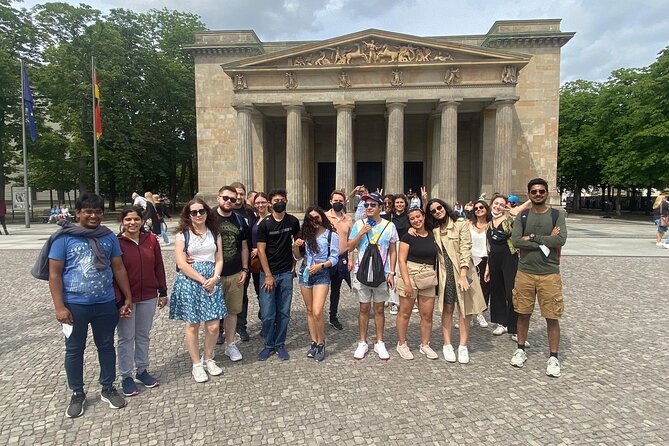
Berlin makes sense at walking speed. This 3-hour route strings together Germany’s big political symbols and Berlin’s darker chapters, from the Reichstag Building to the memorials that changed how the world remembers the 20th century. Stops run about 20 minutes each, and major sights are listed as free-entry.
I especially like the way this walk forces you to see the city as one timeline, not separate attractions. And I also like that you get a live English-speaking guide, with plenty of guides praised for clear delivery and lively storytelling, including names like Ester, Miguel, Ana, and Nora.
One thing to consider is that the experience depends heavily on smooth meet-up and guide execution. A few past bookings described meeting-point confusion or a guide no-show, which can seriously cut into your day, so I’d plan to double-check the meeting details right before you go.
In This Review
- Key takeaways before you go
- Why this Berlin walk is more useful than a checklist
- Meet-up at Generator Berlin Alexanderplatz, and why the start matters
- Reichstag Building: democracy you can read in stone
- Berliner Dom: capital-city meaning in one cathedral stop
- Brandenburg Gate and the Cold War bridge to Checkpoint Charlie
- Berlin Wall Memorial: walking the line between freedom and control
- Holocaust Memorial: why this stop deserves a slower mindset
- Ausstellung Objektschutzregiment der Luftwaffe Friesland: the Cold War details people miss
- Guide style can make or break the day
- How long you actually get at each sight
- Price, value, and the tip question you should clarify
- Who should book this Berlin walking tour
- Should you book this Berlin tour?
- FAQ
- How long is the Berlin Walking Tour?
- What does the tour cost?
- Where does the tour start?
- What language is the tour offered in?
- Is admission free for the stops?
- What is included in the price?
- What is not included?
- How large is the group?
- Is there free cancellation?
Key takeaways before you go
- A tight central route with classic landmarks across East and West Berlin
- Free-entry stops listed for each major site on the route
- 20-minute pacing per stop, good for orientation, not for long lingering
- Small-to-medium group size with a maximum of 50 people
- Cold War specifics you can spot at the Wall and the Soviet-era street elements
- English guides who often mix facts with entertaining anecdotes
Why this Berlin walk is more useful than a checklist
The big payoff of a guided walking tour is what it does to your first day. Berlin is huge in your head, even when you are only moving a few kilometers. This route helps you connect what you see with what it meant, especially when you hit sites like the Reichstag, the Brandenburg Gate, and the Berlin Wall memorial.
At a glance, it looks like a list of famous places. But the value is in the order. You start with the seat of modern German government, slide into the capital-city symbolism of the Berliner Dom, and then move into Cold War geography with the Brandenburg Gate and Checkpoint Charlie. After that, you slow down for memory sites like the Wall memorial and the Holocaust Memorial, then finish with a more unusual Cold War-related exhibition area where you can notice surviving street and guard-tower details.
The pacing is part of the deal. With about 20 minutes per stop, you’ll get enough to understand what you’re looking at, plus a few “why it matters” moments. If you want quiet reflection time, you’ll need to build that on your own after the tour.
More Walking Tours in Berlin
- Discover Berlin Half-Day Walking Tour
★ 5.0 · 9,624 reviews - Berlin: Third Reich and Cold War 2 Hour Walking Tour
★ 4.9 · 6,830 reviews - Berlin: Discover Berlin Walking Tour
★ 4.9 · 5,998 reviews
Meet-up at Generator Berlin Alexanderplatz, and why the start matters
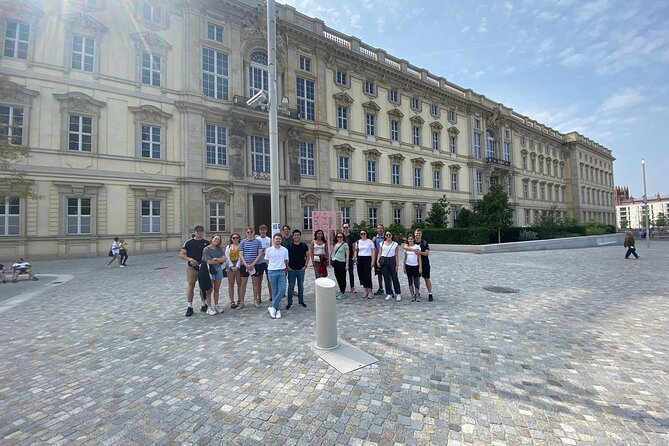
You meet at Generator Berlin Alexanderplatz (Otto-Braun-Straße 65, 10178 Berlin). It’s a solid choice because it’s central and near public transportation, so getting there usually won’t eat half your morning.
Still, this is the one place where you should be extra alert. Some past guests reported meeting-point changes without clear guidance, and a guide no-show can happen with any operator. Your best move is simple: confirm the exact meet-up instructions as close to start time as possible, and arrive early enough to handle any last-minute confusion.
This tour ends back at the meeting point. That’s practical, because you don’t have to figure out how to get back to a hotel area or train station later. It also makes it easier to plan dinner, since you know where you’ll land when the walk is done.
Reichstag Building: democracy you can read in stone
Your first stop is the Reichstag Building, the historic seat of Germany’s parliament (the Bundestag). Even if you don’t go inside for a longer visit, your guide’s job is to help you see why this building carries weight far beyond its architecture.
Expect a short, focused orientation: what the Reichstag represents, why it became such a strong symbol, and how it fits into the larger story of Berlin as a political stage. Since the stop is about 20 minutes and listed as free for admission, it’s designed to give you the basics quickly so you can move on with context.
A drawback to watch for: if you’re the type who loves long building visits, this first stop may feel brief. It’s more about framing your Berlin than about deep museum time. Use the tour for the big picture, then decide afterward whether you want more time at the Reichstag on your own.
Berliner Dom: capital-city meaning in one cathedral stop
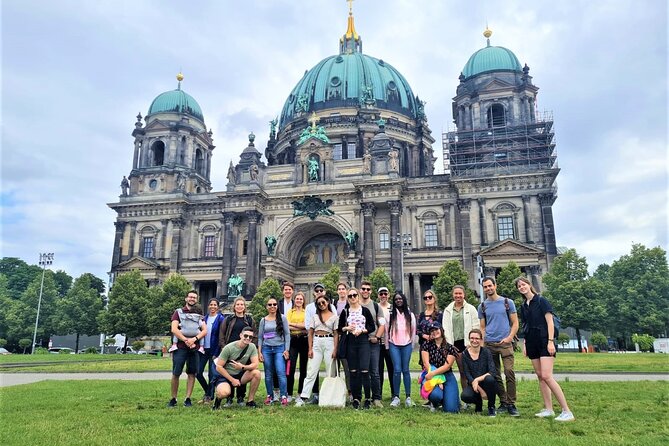
Next you’ll hit the Berliner Dom, and the guide will connect it to the history of the German capital. This is a good pairing with the Reichstag, because both places communicate power, but in very different visual languages. One is political and civic. The other is spiritual and monumental.
This stop is also listed as free admission, with about 20 minutes on the clock. That means you likely won’t get a slow stroll inside with lots of room-to-room detail. Instead, you’ll get a quick “what to look for and why” explanation, then enough time to take photos and orient yourself for the next leg.
If you’re visiting during bad weather, Berliner Dom is one of those stops where the architecture still reads well even if you’re moving fast. Bring your patience, though. In a walking tour format, you’re getting snapshots, not chapters.
Same city, a different way to spend the afternoon:
- Berlin: Reichstag, Dome and Government District Guided Tour
★ 4.7 · 18,288 reviews - Berlin: 1-Hour City Tour by Boat with Guaranteed Seating
★ 4.3 · 16,993 reviews - Berlin: TV Tower Standard Entrance Ticket
★ 4.4 · 15,883 reviews - Berlin: Boat Tour Along the River Spree
★ 4.4 · 11,252 reviews
Brandenburg Gate and the Cold War bridge to Checkpoint Charlie
Then it’s on to the Brandenburg Gate. Your guide should cover the background of this 18th-century neoclassical monument and why it was restored after conflict during the Batavian Revolution. It’s the kind of story that makes the Gate feel less like a postcard and more like a witness to repeated political upheaval.
After the Gate, you’ll go to Checkpoint Charlie, described as the best-known Berlin Wall crossing between East Berlin and West Berlin during the Cold War, named by the Western Allies. This stop often feels like the tour’s “geography moment.” You’ll start to understand how Berlin’s physical layout shaped daily life, not just big history books.
Practical consideration: some people find Checkpoint Charlie too fast when the group is moving quickly. If you want to linger, plan to return later. The tour gives you the why, but you’ll need your own time for the what-if moments, like imagining the crossing flow and what security meant in real terms.
Berlin Wall Memorial: walking the line between freedom and control
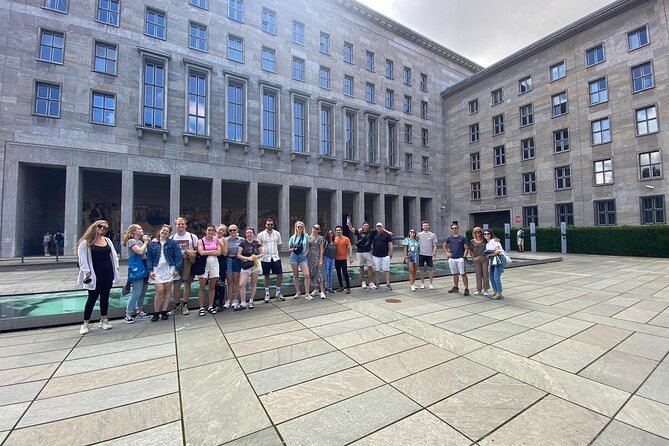
The Memorial of the Berlin Wall is where the emotional weight increases. The Wall separated the city and restricted movement. In the tour framing, it also represents the freedom that was denied to millions during Soviet rule.
What I like about putting this stop after Checkpoint Charlie is that it helps you shift from a dramatic snapshot to the larger reality. Checkpoint Charlie is one point. The Wall memorial is the system.
Expect about 20 minutes. That’s long enough to understand the core story, but not long enough to fully absorb everything if you prefer slow processing. If you’re sensitive to heavy sites, consider bringing a small buffer after the tour to decompress somewhere calm.
Also, dress for real walking. Berlin weather can flip quickly, and this route stays outdoors for much of the day. Comfy shoes matter because you will be moving.
Holocaust Memorial: why this stop deserves a slower mindset
After the Wall, you’ll reach the Holocaust Memorial, listed as the Memorial to the Murdered Jews of Europe. This is not a stop that should feel like a quick photo stop, even though the format is timed.
The guide’s role here should be to frame the significance and connect it to the broader arc of Berlin’s history. The tour also places this within the “from early days to major empires to the darkest hours” narrative, so you’re seeing how a city can be transformed by ideology and then forced to confront what happened.
Here’s my practical advice: give yourself a choice. If the group is moving, you can still follow along while taking a minute to steady your thoughts. If the group allows it, stand back for a short moment. Even in a guided format, you control your pace.
Ausstellung Objektschutzregiment der Luftwaffe Friesland: the Cold War details people miss
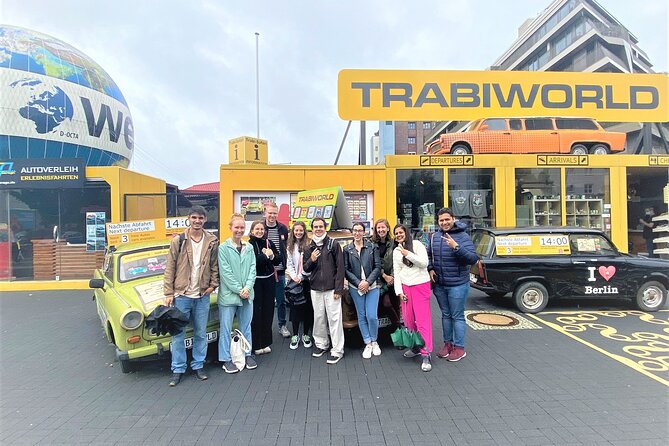
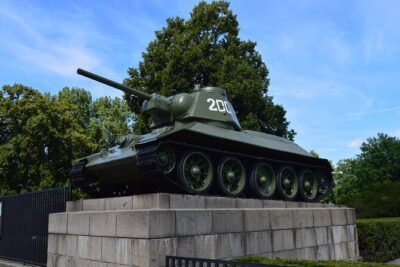
The final major stop is the Ausstellung Objektschutzregiment der Luftwaffe Friesland. This is one of the more interesting route choices because it points you to details many people skip. You’ll see guard towers, “time memorials,” and streetlights connected to the Soviet empire, described as Stalin’s Soviet power, and still present today.
This kind of stop helps you see Berlin beyond the obvious landmarks. It’s a reminder that the Cold War wasn’t just politics. It was infrastructure, lighting, towers, and design decisions that shaped what the city looked like day to day.
If you like spotting the physical remnants of ideology, this is your highlight. If you don’t, it can feel a little technical compared to the louder symbols earlier in the walk. Either way, it’s a strong way to end because it leaves you with something tangible you can point to later.
Guide style can make or break the day
The guide is the engine of this tour. When things go well, guests describe a strong mix of facts and storytelling, clear English, humor, and good pacing. Names that came up in guides praised for personality and delivery include Ester, Adolfo, Katia, Ana, Francesca, Nora, and Miguel. People also liked that some guides actively handled questions and kept the group together.
When things don’t go well, the main issues tend to be execution problems (like meet-up confusion) or pacing that feels too rushed. A guide’s delivery style also matters. If you prefer a fast, facts-forward lecture, a drier approach can feel okay. If you want a lively conversation and lots of anecdotes, you may hope for a more engaging style.
My suggestion: if you get a group that seems too quick through certain sites, ask a question. Simple questions help the guide adjust and give you more value without needing to stop the whole tour.
How long you actually get at each sight
The structure is built around 20 minutes at each major stop, with the full experience running about 3 hours. That makes it ideal for first-time orientation when you have limited time in Berlin.
But Berlin has two kinds of tourists: the ones who want an overview, and the ones who want depth. This tour is for the overview crowd. You’ll likely leave knowing where everything is and why it matters. If you want to go deep, you’ll want to return to selected stops after.
A few practical tips for the timing:
- Bring a light layer, and expect you’ll walk even if you feel like you just got started.
- Use the tour to decide where you want to spend your “real visit” time afterward.
- If you care about photos, give yourself a quick scan for the best angles during the guide’s briefing, not after.
Price, value, and the tip question you should clarify
The tour is listed at $2.90 per person, which is an unusually low price for a timed walking route with an English guide. That signals the value pitch: you are paying for orientation and interpretation, not a long museum pass.
One caution, based on feedback you should take seriously: there have been misunderstandings around whether the tour is truly free in practice and whether extra payment is expected upfront. Some people reported pressure to pay additional euros, while the operator’s stance (in their response) is that the tour is free to join and tipping is optional.
So here’s the most practical approach: assume the guide may encourage tipping, because many walking tours run that way. But also be ready to ask what is required at the start. If your booking says a very low amount, don’t pay anything extra without clarity.
Who should book this Berlin walking tour
Book this if you want a first-day framework. It’s a strong option for couples, solo travelers, and small groups who want to connect Berlin’s landmarks into a coherent story without doing a ton of planning.
It also suits people with moderate physical fitness who can handle steady walking in central Berlin. The tour can be longer than you expect depending on pace, so you’ll want energy for a couple of focused hours outdoors.
Consider skipping or swapping to something else if you hate timed stops. If you need long quiet time at memorials or you want detailed cathedral or building interior time, you might find the 20-minute format frustrating. In that case, use this route as your orientation and then book dedicated time later for the sites that tug hardest.
Should you book this Berlin tour?
Yes, if your goal is quick orientation through Berlin’s most important political and memory landmarks. The combination of Reichstag, Berliner Dom, Brandenburg Gate, Checkpoint Charlie, the Wall memorial, and the Holocaust Memorial gives you a powerful context map fast. The added Cold War detail at the Ausstellung Objektschutzregiment der Luftwaffe Friesland is a smart way to finish with something you can still point to in the real streets.
Book it with two conditions in mind. First, confirm the exact meet-up instructions right before you leave. Second, treat the price as the headline and verify expectations about any extra payments at the start, since misunderstandings have happened.
FAQ
How long is the Berlin Walking Tour?
It runs for about 3 hours.
What does the tour cost?
The price is listed as $2.90 per person.
Where does the tour start?
The tour starts at Generator Berlin Alexanderplatz, Otto-Braun-Straße 65, 10178 Berlin, Germany.
What language is the tour offered in?
The tour is offered in English.
Is admission free for the stops?
Admission is listed as free for the main stops on the route.
What is included in the price?
The walking tour guide is included.
What is not included?
Public transportation is not included if you need it.
How large is the group?
There is a maximum of 50 travelers.
Is there free cancellation?
Yes. You can cancel up to 24 hours in advance for a full refund. If you cancel less than 24 hours before the experience, the amount you paid will not be refunded.
Newest Berlin reviews on the site
- Jetbike Berlin fun bike beer bike★ 5.0 · 3 reviews
- Karl-Marx-Allee Walking Tour: Berlin’s Socialist History★ 5.0 · 5 reviews
- Homeless on chic streets: city tour in Berlin from personal experience★ 4.6 · 3 reviews
- Berlin: Sachsenhausen Concentration Camp Guided Tour★ 4.9 · 42 reviews
- Historyof the Trans, Queer & Gay communities of Berlin tour★ 4.8 · 17 reviews
- Historic Berlin Pubs & History Tour★ 4.9 · 73 reviews
- Berlin: City Center Walking Tour★ 4.7 · 45 reviews
- Half-Day Berlin Highlights Segway Expedition★ 4.5 · 61 reviews
Walking Tours, compared.

Berlin’s Best: 2 Hour Walking Tour Third Reich and the Cold War
Read our review →
Third Reich Berlin: Hitler and WWII Walking Tour
Read our review →Browse the lists this tour appears in