

Reviewed · WALKING TOURS
Berlin: Walking Tour of the Top 10 Sightseeing Attractions
Berlin moves fast on foot. In just 2 hours, this tour strings together the city’s big turning points, from Brandenburg Gate to Museum Island, with a guide who adds humor so facts stick.
What I like most is the tight pacing and how the route connects government buildings, iconic squares, and memorial sites into one story.
Two more things to appreciate: the meeting point is easy to find (Paul-Löbe-Haus, opposite the Federal Chancellery), and the guide keeps you moving with photo breaks built in. A possible drawback is simple, it is about 4 km of walking, and the tour runs in all weather, so you’ll want decent shoes and a plan for rain.
In This Review
- Top 10 Berlin Sights in 2 Hours, the big idea
- Key points that make this tour worth your time
- Entering the route at Paul-Löbe-Haus, where modern Berlin starts
- German Chancellery and the Reichstag, reading power in plain sight
- Brandenburg Gate to Holocaust Memorial, symbols in sequence
- Unter den Linden and the government-district rhythm, where the city tells you the story
- Potsdamer Platz, Gendarmenmarkt, and the architecture you can compare
- Bebelplatz and Berlin Cathedral, memory and faith in the same corridor
- Lustgarten, Museum Island, and the New City Palace viewpoint near the TV Tower
- Finishing at Friedrichsbrücke, a smart exit for onward plans
- How the guide turns dates into something you can remember
- Price and value: what you really get for $82 per person
- Pace, walking distance, and what to bring for comfort
- Should you book this Berlin Top 10 attractions walking tour?
- FAQ
- How long is the Berlin walking tour?
- Where is the meeting point?
- What time does the tour start each day?
- How much walking is involved?
- What sights are included?
- Are the tours available in multiple languages?
- Does the tour run in bad weather?
- Is the tour wheelchair accessible?
- Is the tour structured for photo stops and questions?
Top 10 Berlin Sights in 2 Hours, the big idea
This is built for people who want a clear overview without spending a full day chasing transit and ticket lines. You cover a compact loop through central Berlin, where you can see how empires, wars, and reunification shaped the same streets you walk today.
The route is also smart for first-timers. You start in the modern government district, then pivot into the older ceremonial core, and finish near a major bridge crossing so you can keep exploring after.
Key points that make this tour worth your time
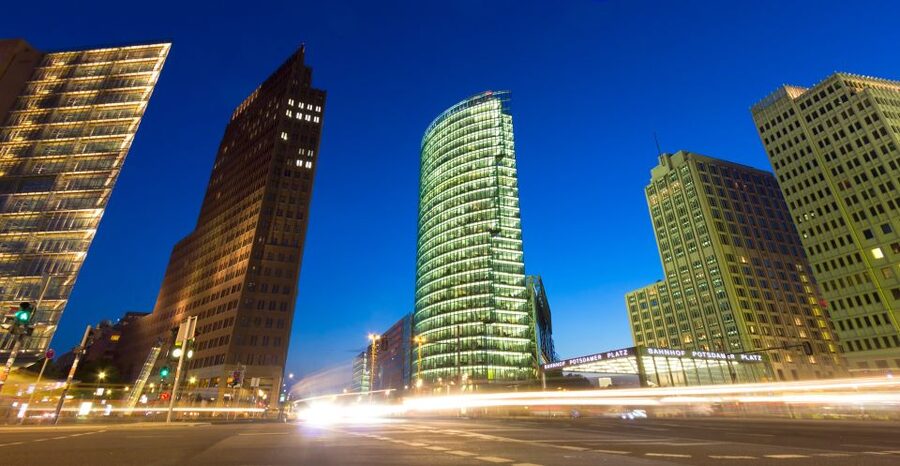
- A tight 2-hour route that focuses on top landmarks rather than long detours
- Photo stops and time for questions, including praise for guides like Max who slow down when needed
- A story-first approach that connects major sites, not just a list of buildings
- All-weather scheduling with about 4 km of walking, so you know what to prepare
- Major squares and institutions like Gendarmenmarkt, Bebelplatz, and Berlin Cathedral are built into the walk
More Walking Tours in Berlin
- Discover Berlin Half-Day Walking Tour
★ 5.0 · 9,624 reviews - Berlin: Third Reich and Cold War 2 Hour Walking Tour
★ 4.9 · 6,830 reviews - Berlin: Discover Berlin Walking Tour
★ 4.9 · 5,998 reviews
Entering the route at Paul-Löbe-Haus, where modern Berlin starts
The tour starts at Paul-Löbe-Haus, right in the heart of Berlin’s government district, across from the Federal Chancellery. That location matters. It puts you in the right mindset for the tour, you’re not starting at a random postcard spot, you’re starting where Germany’s political present is literally on display.
After the quick start, you get a view in the Tiergarten direction before the walk pulls you toward the historic seat of power. It is a nice way to reset your eyes, Berlin can feel chaotic until you understand where the city is choosing to project authority.
German Chancellery and the Reichstag, reading power in plain sight
From the Chancellery area, you move toward the Reichstag, the seat of the German Parliament. This is one of the most valuable transitions on the tour because it frames Berlin’s modern identity against its political past.
Even if you already know basic German history, the guide’s job here is to connect what you see to why it matters. You’ll get stories tied to the Nazi era and the Cold War, plus what changed after the Wall fell, all while you’re still in the same general zone. That is how you avoid the common first-timer problem, seeing landmarks without a timeline.
Practical note: this part of the walk is outdoors and concentrated, so it helps to show up with a camera ready and your questions prepared. The tour is structured to answer them.
Brandenburg Gate to Holocaust Memorial, symbols in sequence
Brandenburg Gate is the obvious headline, but it’s also the best example of why this tour works. You arrive with context, so the gate isn’t just a photo spot. It becomes a checkpoint for how unity, conflict, and international attention have shown up in Berlin.
You also get visual landmarks around the gate area, including the American and French embassies and the Hotel Adlon. In the distance, you can also spot reference points like the Victory Column and the Soviet War Memorial. None of this is random. The walk uses these sightings to help you understand the layering of Berlin’s identity.
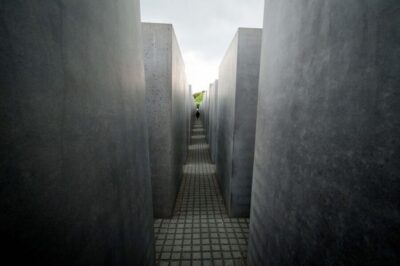
Then the tour moves to the Holocaust Memorial. This stop carries weight, and the guide’s storytelling is key here. You’re not just standing in front of a monument, you’re learning what the site represents in the broader arc the tour is tracing.
Same city, a different way to spend the afternoon:
- Berlin: Reichstag, Dome and Government District Guided Tour
★ 4.7 · 18,288 reviews - Berlin: 1-Hour City Tour by Boat with Guaranteed Seating
★ 4.3 · 16,993 reviews - Berlin: TV Tower Standard Entrance Ticket
★ 4.4 · 15,883 reviews - Berlin: Boat Tour Along the River Spree
★ 4.4 · 11,252 reviews
Unter den Linden and the government-district rhythm, where the city tells you the story
After the gate and memorial, you follow the boulevard Unter den Linden. This part of the tour is about movement and scale. Long lines of sight in Berlin can make buildings feel bigger than they do up close, and that helps you grasp why rulers and institutions loved this kind of axis.
The guide ties the boulevard to emperors and revolutionaries, helping you connect the idea of a grand ceremonial street to the real history that played out along it. It’s not a lecture you fall asleep through. You get quick, memorable explanations, plus the humor angle that helps you keep the timeline straight.
This is also a good place to slow down for photos and to check in with your own pace. The tour is fast-paced, but it isn’t rushed. You get time to take pictures and digest what you’re seeing.
Potsdamer Platz, Gendarmenmarkt, and the architecture you can compare
Next up, you pass by Potsdamer Platz. It’s one of those areas where Berlin feels modern, but the tour uses it as a bridge between eras rather than a separate chapter. That makes it easier to understand why this city keeps rebuilding and rebranding itself in response to major events.
Then comes Gendarmenmarkt, one of Berlin’s most beautiful squares. Here, the tour turns architectural observation into something you can actually use. You see three key structures: the German Cathedral, the French Cathedral, and the Konzerthaus.
What makes this stop special on this particular tour is how it teaches comparison. Instead of telling you one building is important, the guide helps you look at the square as a set. You start noticing how different styles and purposes sit side by side, which makes the square feel less like scenery and more like a designed statement.
Bebelplatz and Berlin Cathedral, memory and faith in the same corridor
Bebelplatz is included with guided storytelling plus free time. The books burned reference is part of the reason this stop hits so hard. It’s one of those places where history is not abstract, it’s tied to censorship and control in a way you can understand even if your German history foundation is thin.
The free time matters. You can stand, process, and take a breath. You don’t have to cram everything into 30 seconds before the next stop starts.
From there you head toward Berlin Cathedral. This is where the tour’s walking approach becomes a real advantage. Cathedral architecture can feel intimidating when you’re alone, but with a guide you’re not guessing why it matters. You’re given the reason and then allowed to look.
Lustgarten, Museum Island, and the New City Palace viewpoint near the TV Tower
Lustgarten is another stop built around explanation plus free time. You’re guided through connections to Prussian history here, which is helpful because many first-timers only think in terms of 20th-century events. This tour nudges you beyond that, showing you that Berlin’s story goes back much further than the twentieth century.
After Lustgarten, you pass by Museum Island. The tour uses it as a milestone, a place where Berlin’s intellectual and cultural identity is on display. You get guided context, then you’re walking onward soon enough that you don’t freeze in place. It’s a good way to cover a lot without feeling like you missed the point.
Late in the walk, you take in views from the direction of the Berlin City Palace, with the TV Tower nearby in the distance, near the Nikolaiviertel area. The key detail you get is the age reference, Berlin dating back to 1237. That date turns the view into more than a skyline moment. It reminds you you’re in a city that has been constantly remade for centuries, not just decades.
Finishing at Friedrichsbrücke, a smart exit for onward plans
The tour ends at Friedrichsbrücke. That’s not just a random ending point. Finishing near a major bridge crossing gives you a practical choice right away. You can continue exploring without feeling trapped back where you started.
If you’re planning a same-day itinerary, this ending location works well because it keeps you close to central routes for the next activity.
How the guide turns dates into something you can remember
The standout praise pattern is consistent: guides spend time on answers, keep things engaging, and allow moments to take in what you’re looking at. In one verified experience, the guide Max was specifically praised for being knowledgeable and for answering questions, while still making space for photos and information.
That may sound like a small detail, but it changes the entire feel of a history tour. A crowded tour can rush you through, forcing you to choose between filming and listening. This one is structured to balance both, and that shows in the feedback.
The humor is also not just decoration. Berlin humor can sound blunt or understated depending on where you’re from. Here, it seems to function like a mental bookmark. When the guide uses humor to break tension in heavier topics, you stay focused instead of mentally switching off.
Price and value: what you really get for $82 per person
At $82 per person for a 2-hour walk, you’re paying for something most DIY walking plans do poorly: a guided narrative that connects sites into a timeline, plus a professional local approach.
Here’s the value angle that matters:
- You get a certified local guide and guided visits to major landmarks, including Brandenburg Gate and Museum Island.
- You get a fixed, transparent price with no hidden costs mentioned.
- The tour includes a structure meant for an efficient overview, plus guidance in English, Spanish, and German.
- It also notes skip the ticket line, which can save time if any site access involves queueing.
Is it expensive compared with a self-guided phone walk? Sure. But if you want a coherent story in 2 hours, with someone answering questions and pointing out what to notice, this price starts to look fair.
Pace, walking distance, and what to bring for comfort
The tour is about 2 hours and includes about 4 km of walking. It’s suitable for all ages and fitness levels, but that wording usually assumes you’re still able to walk continuously for a couple of hours. If you’re prone to getting sore quickly, you’ll want good shoes.
Bring:
- Comfortable walking shoes
- A camera for photo stops
- A water bottle to stay refreshed
It runs in all-weather conditions. That means you should bring a rain layer or umbrella if you use one. You do not want to spend the middle of Unter den Linden thinking about wet socks.
Group size is described as small groups, which is a real quality factor for question time. And you also have the option of private or small-group formats.
Should you book this Berlin Top 10 attractions walking tour?
Book it if you want a sharp overview of Berlin’s key landmarks in a short window, especially your first or second day. It’s also a great fit if you like history explained in sequence, with humor, and you prefer a guided route over piecing together routes on your own.
Skip it, or consider another option, if you already have strong familiarity with German history and you mostly want a slow, open-ended wandering style. This tour is structured, fast-paced, and focused on hitting major points in a tight timeframe.
If you’re traveling with mixed interests, it also helps that the stops include major architecture, memorial sites, and squares like Gendarmenmarkt, not just one theme.
FAQ
How long is the Berlin walking tour?
The tour duration is 2 hours.
Where is the meeting point?
Meet in front of the main entrance of the Paul-Löbe Haus, opposite the Federal Chancellery, Konrad-Adenauer-Straße 1, 10557 Berlin.
What time does the tour start each day?
It runs daily at 10:00 AM and 2:00 PM.
How much walking is involved?
It is approximately 4 km of walking.
What sights are included?
The tour covers major highlights such as Brandenburg Gate, Reichstag, Holocaust Memorial, Potsdamer Platz, Gendarmenmarkt, Bebelplatz, Lustgarten, Berlin Cathedral, Museum Island, and it includes a viewpoint toward the New City Palace and the TV Tower area.
Are the tours available in multiple languages?
Yes, the live guide is available in English, Spanish, and German.
Does the tour run in bad weather?
Yes, tours run in all-weather conditions.
Is the tour wheelchair accessible?
Yes, it is wheelchair accessible.
Is the tour structured for photo stops and questions?
The tour includes photo stops and guided time at landmarks, and it notes guided storytelling with time to take information in.
Newest Berlin reviews on the site
- Jetbike Berlin fun bike beer bike★ 5.0 · 3 reviews
- Karl-Marx-Allee Walking Tour: Berlin’s Socialist History★ 5.0 · 5 reviews
- Homeless on chic streets: city tour in Berlin from personal experience★ 4.6 · 3 reviews
- Berlin: Sachsenhausen Concentration Camp Guided Tour★ 4.9 · 42 reviews
- Historyof the Trans, Queer & Gay communities of Berlin tour★ 4.8 · 17 reviews
- Historic Berlin Pubs & History Tour★ 4.9 · 73 reviews
- Berlin: City Center Walking Tour★ 4.7 · 45 reviews
- Half-Day Berlin Highlights Segway Expedition★ 4.5 · 61 reviews
Walking Tours, compared.


Berlin’s Best: 2 Hour Walking Tour Third Reich and the Cold War
Read our review →
Third Reich Berlin: Hitler and WWII Walking Tour
Read our review →Browse the lists this tour appears in