
Reviewed · WALKING TOURS
Berlin: Sightseeing Walking Tour of the Top 20 Attractions
Berlin hits different when a guide tells it. This 3-hour walking tour strings together Berlin’s biggest landmarks with the stories behind them, from the Brandenburg Gate to the Berlin Wall and Museum Island. You get private guiding with a tone that feels very Berlin, wry humor included.
Two things I really like: the way the guide links major political moments to everyday street life, and the pacing that lets you absorb a lot without feeling like you’re sprinting from sign to sign. You’ll cover major sights like Checkpoint Charlie, Gendarmenmarkt, and Bebelplatz, plus the darker chapters that shaped modern Berlin.
One consideration: it’s still a serious walk. You cover about 6 km in roughly 3 hours, so wear comfortable shoes and be ready for some cold or rain, since the tour runs in all-weather conditions.
In This Review
- Key highlights worth planning around
- A fast way to understand Berlin’s past and present
- Starting at Paul-Löbe-Haus, then entering the government district
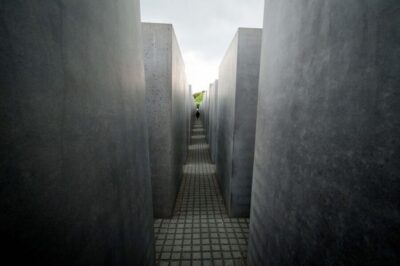
- Brandenburg Gate and the Holocaust Memorial: where emotion meets clarity
- Potsdamer Platz to Checkpoint Charlie: Berlin as a border story
- Martin-Gropius-Bau and Topography of Terror: architecture meets accountability
- Gendarmenmarkt and Bebelplatz: grand squares with painful meaning
- Unter den Linden feel and the Lustgarten area: Berlin’s grand spine
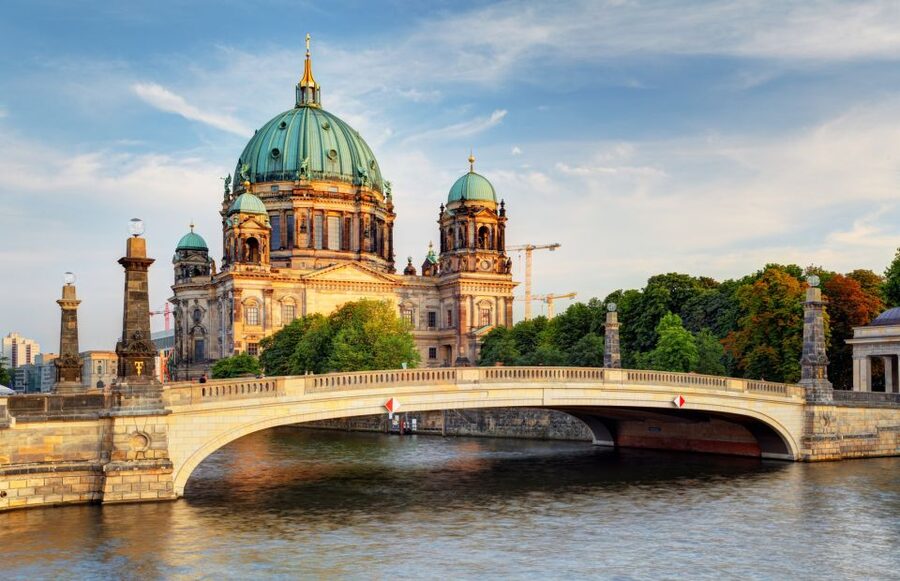
- Berlin Cathedral and Museum Island: what it means to collect a national story
- New City Palace zone and the walk toward Friedrichsbrücke
- What you’re really paying for at about $94 per person
- How long it feels, and how to prepare so it’s enjoyable
- Who should book this Berlin Top 20 walking tour
- Should you book this tour?
- FAQ
- How long is the Berlin walking tour?
- Where does the tour start?
- What time does the tour run?
- About how much walking is involved?
- What languages are offered?
- Is it private or small group?
- Is the tour wheelchair accessible, and does it run in bad weather?
- What are the cancellation and payment options?
Key highlights worth planning around
- Top 20 route in 3 hours, longer and more complete than the usual short list tours
- Nazi and Cold War context, including Checkpoint Charlie and the Topography of Terror site on the former Gestapo headquarters grounds
- A guide-led story with Berlin humor, with multiple guides like Carlos, Carlo, Max, and Antonella showing up in customer feedback
- Classic Berlin sights plus viewpoints for photos, with extra time for photography reported on some days
- Flexible attention to your interests, with time for questions and you choosing what matters most to you
- Finish near Friedrichsbrücke, so you’re not stuck backtracking across the center
A fast way to understand Berlin’s past and present
Berlin is a city you can visit with photos and facts, or you can understand it with stories. This tour leans hard into the second option. In just three hours, you move through the government district, the border-turned-past that was once a real line on a map, and the museum island zone where Berlin displays its identity.
I like that the experience is built around history explained in plain language. You’re not just hearing dates. You’re learning how the city got divided, what life looked like on both sides, and how reunion changed the look and mood of central Berlin. Even better, the guide tone includes that dry Berlin humor, so heavy topics do not feel like a lecture hall.
The other reason this works is simple math: you’re covering about 6 km mostly on foot in a tight time window. That’s enough walking to see a real slice of the city, not just a few monuments. You come away feeling oriented, like you can continue exploring on your own with more confidence.
More Walking Tours in Berlin
- Discover Berlin Half-Day Walking Tour
★ 5.0 · 9,624 reviews - Berlin: Third Reich and Cold War 2 Hour Walking Tour
★ 4.9 · 6,830 reviews - Berlin: Discover Berlin Walking Tour
★ 4.9 · 5,998 reviews
Starting at Paul-Löbe-Haus, then entering the government district
You meet in front of the Paul-Löbe-Haus, opposite the Federal Chancellery on Konrad-Adenauer-Straße 1. It’s a smart starting point because it puts you immediately in the Berlin government zone, where architecture and politics sit inches apart.
From there, the tour walks toward the German Chancellery and the Reichstag area. These stops are valuable for one big reason: they’re not isolated sights. They connect directly to why Berlin feels the way it does today as Germany’s capital. If you’ve ever wondered why Berlin’s center looks both modern and strangely symbolic, this is where the tour gives you the thread to pull.
A small practical note: this part of the day is often where your feet start to notice you’re walking. You’ll benefit from starting with good shoes and a water bottle, especially if your tour date has cool temperatures or wind.
Brandenburg Gate and the Holocaust Memorial: where emotion meets clarity
The tour is designed so the famous postcard sights are not treated like postcard props. The Brandenburg Gate is one of the central anchors, and the guide frames it as part of Berlin’s heart rather than just a photo stop. It’s iconic for a reason, but you’ll also hear the stories that make it feel tied to modern life, not just history behind glass.
Next comes the Holocaust Memorial. This is where the tour’s storytelling style matters. The guide keeps things street-level, so you understand what you’re seeing and why it’s there. You don’t just pass it, either. You have a guided moment, plus some time to absorb your surroundings.
This section is a good reminder that this tour is not only about “what to see,” it’s also about how to look. Once you know what the stops represent, you’ll interpret the streets differently after the tour ends.
Potsdamer Platz to Checkpoint Charlie: Berlin as a border story
Potsdamer Platz is the turning point where the tour starts to feel more cinematic. It’s a location that helps you picture a city that once had fences and rules, not just lanes and traffic lights. The tour uses this area to bridge the feel of modern Berlin with what central Berlin used to represent.
Then comes Checkpoint Charlie. This stop is one of the big reasons people pick the Top 20 style route. You’re not only hearing that the city was divided, you’re also hearing how the border worked as part of daily reality. The guide’s humor is carefully used here too, which helps keep the mood from getting too heavy too fast.
One thing I appreciate about how this section seems to run in practice: some guides clearly make room for photos. In customer feedback, there were mentions of extra time for photography and the tour running a bit longer when the guide expanded on points you could not really skim. That matters. These are the stops you’ll want to remember visually, not just mentally.
Same city, a different way to spend the afternoon:
- Berlin: Reichstag, Dome and Government District Guided Tour
★ 4.7 · 18,288 reviews - Berlin: 1-Hour City Tour by Boat with Guaranteed Seating
★ 4.3 · 16,993 reviews - Berlin: TV Tower Standard Entrance Ticket
★ 4.4 · 15,883 reviews - Berlin: Boat Tour Along the River Spree
★ 4.4 · 11,252 reviews
Martin-Gropius-Bau and Topography of Terror: architecture meets accountability
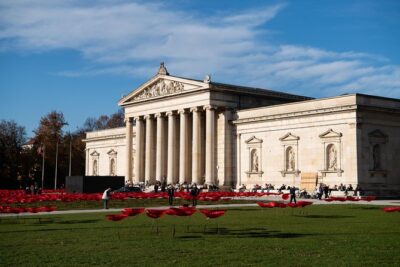
Martin-Gropius-Bau appears on the route, and it helps break up the day visually between major memorial and border sites. It’s also a reminder that Berlin’s story is not only told through monuments. Buildings and public spaces have carried different meanings over time.
The heavier highlight is Topography of Terror. Here the tour connects directly to Nazi-era history and the Cold War background, and it points to the site context: it sits on the grounds of the former Gestapo headquarters. That detail changes the feeling of the walk, because you’re not only learning about what happened somewhere else, you’re learning about what happened here.
This is one of the stops where an expert local guide makes a real difference. Without a guide, you can still visit the area. With a guide, you get the narrative thread that helps the site make emotional and historical sense. If you care about understanding how power worked and how ordinary people were affected, this is the part to pay attention to.
Gendarmenmarkt and Bebelplatz: grand squares with painful meaning
Gendarmenmarkt is the kind of place where the architecture alone can make you stop mid-walk. It’s one of Berlin’s best-known squares, and on this tour it serves a purpose beyond scenery. It’s a “pause and look” moment where the guide contrasts Berlin’s polished public face with the harder stories you’ve already started hearing.
Then you reach Bebelplatz, and the tour shifts from style to substance. The guide focuses on what happened there, including the fact that books were burned. That single detail is powerful because it connects culture, control, and fear in a way you can grasp quickly while standing on a real square.
This pairing works well for your brain. Gendarmenmarkt resets your senses with form and proportion, and Bebelplatz hits you with meaning. You leave with both a mental image and a takeaway you can explain to friends later.
Unter den Linden feel and the Lustgarten area: Berlin’s grand spine
The tour also includes a stroll along the feel of Unter den Linden, Berlin’s classic boulevard. This is one of those practical sightseeing touches that helps you understand the city’s layout. You’re not just collecting spots, you’re learning how the center is connected.
From there, it moves into the Lustgarten area. Lustgarten matters because it’s a hinge between grand public spaces and the next cluster of religious and museum landmarks. If you want your day to feel organized, this part helps.
Berlin Cathedral and Museum Island: what it means to collect a national story
Berlin Cathedral is next, and it’s a visually striking stop. You’ll likely notice how the tour keeps giving you context instead of treating it as just another impressive facade. It’s part of how Berlin presents itself, and understanding that helps you see why people come here not only for photos, but for meaning.
After that, you reach Museum Island, one of the city’s signature museum precincts. This tour includes Museum Island and also visits the Alte Nationalgalerie. Even if you do not go inside every museum, the walk through the area helps you understand why these institutions matter to Berlin’s identity.
There’s real value in having a guide point out what connects the landmarks: how the city uses culture to project continuity and what it tries to say about itself after upheaval. Museum Island can be overwhelming if you arrive on your own with no thread. On this tour, you get a thread.
New City Palace zone and the walk toward Friedrichsbrücke
The tour includes the New City Palace as part of the major landmark set. Even if you are mainly focused on war and division topics, this stop matters because it shows how Berlin rebuilt its center and what it chose to foreground.
Finally, you end at Friedrichsbrücke. That finish point is useful. It’s central enough that you can keep exploring in multiple directions without feeling like you have to retrace every step. For me, that kind of ending matters because it turns your guided block into a launchpad for the rest of your day.
What you’re really paying for at about $94 per person
At $94 per person for a 3-hour walking tour, the value comes from two things you cannot easily recreate on your own in the same time window.
First, you’re paying for a local guide who strings the stops into a story. The itinerary covers about 20 major sights, and it includes both Nazi-era and Cold War history. That kind of narrative work is where guides can turn a list of monuments into something you actually understand.
Second, it’s paying for efficiency. You cover roughly 6 km in a compact route, which helps you see more without wasting time figuring out what belongs together. Add the reported benefits of skipping ticket lines and getting clear photo time at key stops, and it becomes a good choice if you want structure but still want to ask questions.
There’s also the human factor. Multiple reviews mention guides such as Carlos, Carlo, Max, and Antonella delivering friendly, attentive service. The standout theme is that the guides do not just recite facts. They adapt, and they keep the energy up, even when the weather is not cooperating.
How long it feels, and how to prepare so it’s enjoyable
This is a 3-hour experience and it includes guided segments plus short breaks. You should plan for it to feel like a “walk first, sightseeing second” day. In other words, you’ll see lots of landmarks because you’re walking through the city center, not because you’re hopping by vehicle.
So I’d prep like this:
- Bring comfortable walking shoes you’ve already worn in
- Pack a water bottle, especially if you’re walking in warmer months
- Bring your camera. The photo time can be generous at key sites
- Think about what you care about most: Nazi history, Cold War details, architecture, or how Berlin neighborhoods evolved
If it’s raining or windy, the tour runs anyway. That’s not a problem if you dress for it. It can feel tiring because you’re outside for long stretches. The guides tend to keep things moving, and in feedback there were mentions of stopping for a hot drink when weather was rough.
Who should book this Berlin Top 20 walking tour
This tour is a strong fit if you:
- Are visiting Berlin for the first time and want a structured overview fast
- Care about understanding division and reunification, not just sightseeing
- Prefer asking questions in real time instead of reading on your own
- Want a route that goes beyond the usual short top 10 approach
It may not be ideal if you:
- Cannot comfortably walk about 6 km in a few hours
- Want a mostly museum-only day with long indoor breaks
- Are hoping for a low-effort stroll with minimal talking
The best part is the flexibility. You can choose what interests you and the guide can adapt. That makes it easier for mixed groups, like couples with different priorities or friends who want both history and city atmosphere.
Should you book this tour?
I’d book it if your priority is to leave Berlin feeling oriented, informed, and ready to explore the city on your own with a real understanding of what you saw. The Top 20 coverage in 3 hours is the main draw, especially because it doesn’t stop at the obvious highlights. It includes Checkpoint Charlie and Topography of Terror, plus the book burning story at Bebelplatz.
I’d also book it if you value guide style. The reviews repeatedly highlight warm, friendly guiding and excellent explanation, with guides named like Carlos, Carlo, Max, and Antonella coming up in customer feedback. If you get a guide like that, the tour turns into a “wow, I finally get Berlin” day.
If you want, tell me your travel dates and whether you care more about Nazi history, Cold War sites, or architecture, and I’ll suggest what to focus on during the walk.
FAQ
How long is the Berlin walking tour?
The tour lasts about 3 hours.
Where does the tour start?
Meet in front of the main entrance of Paul-Löbe Haus, opposite the Federal Chancellery, Konrad-Adenauer-Straße 1, 10557 Berlin.
What time does the tour run?
It runs daily at 10:00 AM and 2:00 PM.
About how much walking is involved?
You should expect around 6 km of walking.
What languages are offered?
The live guide is available in English, Spanish, and German.
Is it private or small group?
It is offered as private or small groups.
Is the tour wheelchair accessible, and does it run in bad weather?
Yes, it is wheelchair accessible and it runs in all-weather conditions.
What are the cancellation and payment options?
There is free cancellation up to 24 hours in advance for a full refund, and you can reserve and pay later.
Newest Berlin reviews on the site
- Jetbike Berlin fun bike beer bike★ 5.0 · 3 reviews
- Karl-Marx-Allee Walking Tour: Berlin’s Socialist History★ 5.0 · 5 reviews
- Homeless on chic streets: city tour in Berlin from personal experience★ 4.6 · 3 reviews
- Berlin: Sachsenhausen Concentration Camp Guided Tour★ 4.9 · 42 reviews
- Historyof the Trans, Queer & Gay communities of Berlin tour★ 4.8 · 17 reviews
- Historic Berlin Pubs & History Tour★ 4.9 · 73 reviews
- Berlin: City Center Walking Tour★ 4.7 · 45 reviews
- Half-Day Berlin Highlights Segway Expedition★ 4.5 · 61 reviews
Walking Tours, compared.


Berlin’s Best: 2 Hour Walking Tour Third Reich and the Cold War
Read our review →
Third Reich Berlin: Hitler and WWII Walking Tour
Read our review →Browse the lists this tour appears in