
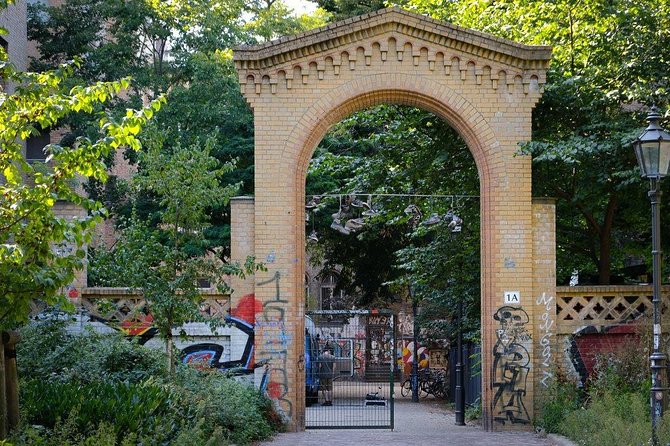
Reviewed · WALKING TOURS
Berlin Off-the-Beaten-Path Walking Tour: Kreuzberg, Mitte and Friedrichshain
Berlin has a side most tours skip. This 4.5-hour walk is where I’d send you for Kreuzberg street life and counterculture storytelling, with real neighborhood texture instead of a checklist. The good part is that you get local flavor in places most visitors never bother to reach, and you come away with solid ideas for what to do next. The only real drawback to plan around is that a lot of the time is outdoors, so you want good shoes and a day that is not brutally cold.
You start at Vapianoam Alex at Rathausstraße 6, right in central Berlin at 12:00 pm, then you work your way through Kreuzberg, Mitte, and Friedrichshain before finishing at Yaam Beach on Stralauer Allee 34. It runs with an English speaking guide only, in a group capped at 20, and it uses a mix of walking plus tram and train legs, so you should be ready with AB public transport tickets (a day pass can make life easier). Guides such as Rhys, Lee, Reese, Antonio, Jake, Jason, and Arnie are repeatedly praised for making the stories feel personal, funny, and grounded in what is still visible on the streets.
In This Review
- Key Highlights You Get on This Neighborhood Walk
- Why Kreuzberg, Mitte, and Friedrichshain Work So Well on Foot
- Meeting Point at Vapiano am Alex, Ending at Yaam Beach
- Kreuzberg First: Turkish Neighborhoods, the Jewish Quarter, and Real Street Changes
- Urban Farms, Guerrilla Gardens, and Alternative Art Without the Lecture Feeling
- Food Culture on the Route: Currywurst, Doner Kebab, and Where You Sit Down
- The Counterculture Timeline: Protests, Baader-Meinhof, Punk, and May 1 Riots
- Friedrichshain Energy: Yaam Beach, Music Communities, and Street Art That Feels Current
- Walking and Transit: Plan Shoes, Warm Layers, and AB Tickets
- Price and Value: Is $30.25 Worth It for 4.5 Hours?
- Who Should Book This Tour, and Who Might Want Something Else?
- Should You Book This Kreuzberg, Mitte, and Friedrichshain Off-the-Beaten-Path Walk?
- FAQ
- How long is the Berlin Off-the-Beaten-Path Walking Tour?
- Where does the tour start and end?
- Is the tour offered in English?
- Do I need public transport tickets?
- Is food included?
- What is included in the price?
- Is cancellation free?
Key Highlights You Get on This Neighborhood Walk
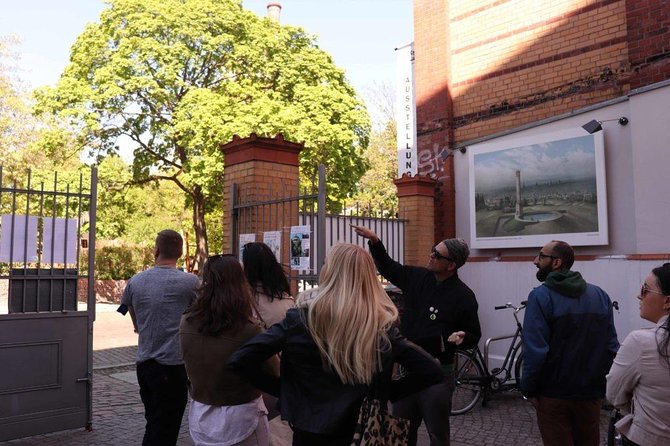
- Insider takes on Kreuzberg, Mitte, and Friedrichshain instead of the standard Berlin circuit
- Turkish community stops plus Berlin’s Jewish quarter in the same walking flow
- Urban farms, guerrilla gardens, and alternative art spots you can point at, not just read about
- Prater Garten, Berlin’s oldest beer garden, as a real-life neighborhood moment
- A timeline of protest and subculture, from student unrest to Baader-Meinhof to punk and May 1 riots
- Street art and music culture, with references to Love Parade and the Yaam Beach scene
Why Kreuzberg, Mitte, and Friedrichshain Work So Well on Foot
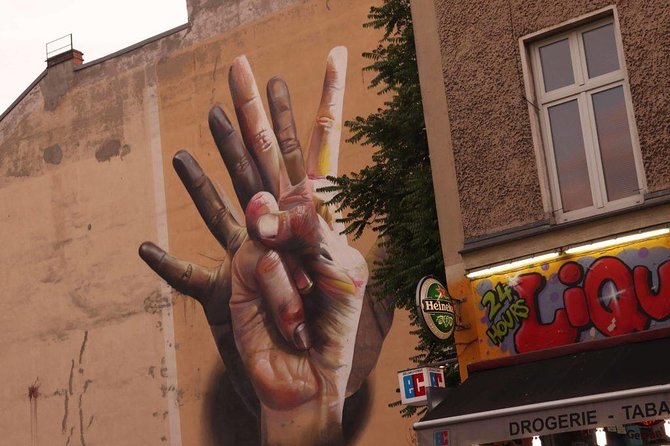
This kind of Berlin tour works because these neighborhoods are not museum rooms. They are living, changing places where history shows up in sidewalks, walls, markets, and the way people actually gather. The walk is built to cover ground efficiently, but it still feels human because the stops are tied to specific parts of daily life, not just monuments.
The best value here is how the guide stitches together three themes you might otherwise experience separately. You see the modern neighborhood mix in areas like Kreuzberg, where you can expect the Turkish community and the Jewish quarter to be part of the same story. You also get the counterculture timeline that shaped Berlin in major waves, especially in the decades after WWII. Finally, you see how creative scenes keep evolving, from street art to music culture connected to events like the Love Parade and the ongoing energy around Yaam Beach.
One thing to expect: the tone is more story-driven than formal. If you enjoy guides who talk with energy, toss in sharp humor, and answer questions freely, you are in the right place. That style shows up across guides mentioned for this tour, including Rhys and Lee, and it is why people often say the walk never drags.
More Walking Tours in Berlin
- Discover Berlin Half-Day Walking Tour
★ 5.0 · 9,624 reviews - Berlin: Third Reich and Cold War 2 Hour Walking Tour
★ 4.9 · 6,830 reviews - Berlin: Discover Berlin Walking Tour
★ 4.9 · 5,998 reviews
Meeting Point at Vapiano am Alex, Ending at Yaam Beach
Logistics matter on a half-day walking tour, and this one is clear about its geography. You meet at Vapianoam Alex at Rathausstraße 6 in central Berlin and you finish at Yaam Beach on Stralauer Allee 34. That finish location is not an afterthought, either. Yaam Beach is part of the tour’s mood shift, from history and street art into a more modern snapshot of Berlin’s arts, music, and community energy.
The group size cap of 20 is a big plus. With a smaller group, it is easier for the guide to keep momentum while still stopping for explanations. You are also less likely to feel like a numbered participant standing at the back.
You should also plan for public transit segments. The tour duration is about 4 hours 30 minutes, but it is not one nonstop march. Expect a mix of walking plus tram and train legs, and plan your day around that rhythm. You’ll want an AB transport ticket because the tour does not include those tickets. If you are riding a lot that day, an AB day pass can be a practical shortcut.
Kreuzberg First: Turkish Neighborhoods, the Jewish Quarter, and Real Street Changes
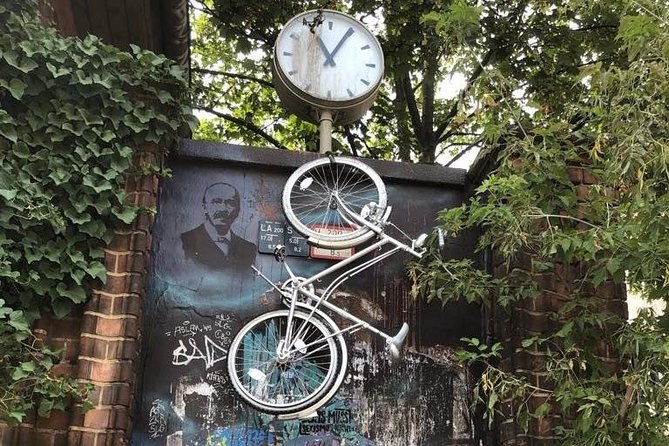
Kreuzberg is the core of what makes this tour special, because it is the kind of area where Berlin’s layers overlap. You get stops connected to the thriving Turkish community and also Berlin’s Jewish quarter, and the point is not just diversity for diversity’s sake. It is how different communities shape commerce, culture, and even how public space feels from block to block.
As you walk, look for the subtle signs that the neighborhood is growing in visibility. That includes the presence of urban farms and guerrilla gardens, plus organic market energy and alternative art spaces. These are the cues that tell you Kreuzberg is not stuck in the past. It is still negotiating what “Berlin” means in everyday life.
There is also a historical angle to how the guide frames the area. Kreuzberg has long been associated with resistance and creative subcultures, and the tour uses that setting to introduce the counterculture story that becomes central later. If you like Berlin history but want it tied to the present, this is the best entry point.
Practical tip: pace yourself early. Kreuzberg streets can keep you looking up and around, and the tour is designed so you do not just stare at buildings. You stop where the stories connect to what you can still see.
Urban Farms, Guerrilla Gardens, and Alternative Art Without the Lecture Feeling
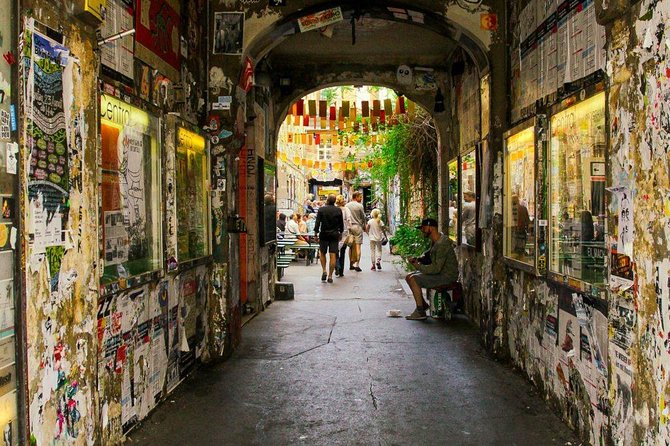
One of the smartest parts of this itinerary is the emphasis on visible, everyday creativity. You are not only learning about Berlin’s alternative culture in theory. You are seeing the kinds of projects people created when official channels did not match their needs.
Urban farms and guerrilla gardens are a good example. Even if you already know the general idea of DIY culture, you will likely appreciate it more when you are standing near the actual results. The same is true for alternative art galleries and organic markets. You get a sense of how creative expression and practical food and community needs overlap.
Street-level art is also part of the experience, and it is treated as more than decoration. When the guide points out what is going on in specific alleyways and wall sections, you start noticing how Berlin uses public surfaces like a conversation. Some of that conversation is political. Some of it is personal. The tour’s job is to help you read those messages without requiring you to be an art historian.
If you are the type who likes to ask questions, this is where it pays off. Guides named in feedback for this tour, like Lee and Reese, are often described as friendly and responsive, which matters when you want context on a specific mural or a neighborhood detail you notice.
Same city, a different way to spend the afternoon:
- Berlin: Reichstag, Dome and Government District Guided Tour
★ 4.7 · 18,288 reviews - Berlin: 1-Hour City Tour by Boat with Guaranteed Seating
★ 4.3 · 16,993 reviews - Berlin: TV Tower Standard Entrance Ticket
★ 4.4 · 15,883 reviews - Berlin: Boat Tour Along the River Spree
★ 4.4 · 11,252 reviews
Food Culture on the Route: Currywurst, Doner Kebab, and Where You Sit Down
Berlin food is part of the culture, and this walk uses it lightly and practically. Currywurst is mentioned as a stop you can try on your own expense. It is a simple, street-level dish that became iconic in Berlin for a reason: it is cheap, fast, and easy to grab while you keep moving. Doner kebab comes up too, specifically as Turkish-style gyros that became popular in Berlin.
The key here is not that you have a full meal planned. The key is that the food references help you understand why Kreuzberg and nearby districts feel the way they do. When you connect food culture to the communities you are walking through, it gets easier to remember what you saw and why it matters.
Then you get a proper sit-down break at Prater Garten, noted as the city’s oldest beer garden. This is a classic Berlin pause point, and it fits the tour’s theme of everyday gathering. Even if you skip beer, it is still useful because it gives you a moment of normal rhythm, people watching, and a chance to warm up if weather is chilly.
Two timing notes to keep in mind:
- The tour includes time for lunch, and the pacing is designed so you are not locked into standing all afternoon.
- Transit legs are built into the total time, so your day does not turn into a surprise marathon.
The Counterculture Timeline: Protests, Baader-Meinhof, Punk, and May 1 Riots
This tour’s history section is not built as a textbook march through decades. It is built as a story that makes sense on the ground, using neighborhood settings where counterculture lived, traveled, and left marks.
You start with the 1960s student protest movement, then move into the 1970s with the rise of the Baader-Meinhof group, and then forward into the 1980s with punk culture and the May 1 riots. That timeline is valuable because it explains why Berlin became a magnet for artists, activists, and people who preferred alternative ways of living and organizing.
Just as important, the guide connects that history to creative scenes. Music and art are treated like forces that shaped identity, not as side quests. When the guide talks about the Love Parade, for example, it is not just name-dropping. It is part of explaining why electronic music and communal events became part of Berlin’s image.
If you have already done a few WWII and Cold War history tours, this one is a good counterbalance. It helps you see what Berlin became after the big events, and how resistance and creativity kept evolving instead of ending when the Wall fell. The goal is for you to walk away with a feel for how people built culture in the spaces they had.
Friedrichshain Energy: Yaam Beach, Music Communities, and Street Art That Feels Current
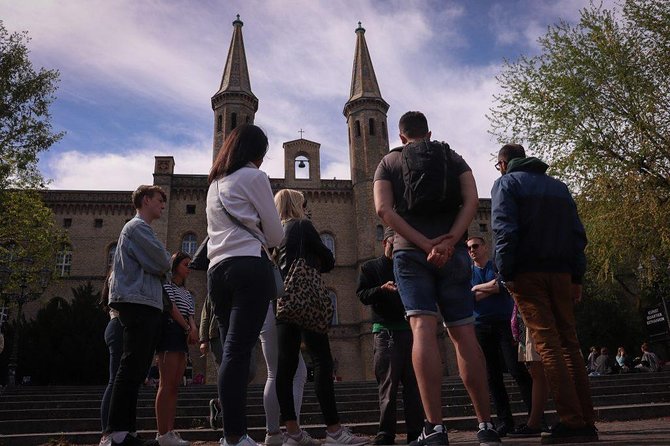
By the later part of the walk, the tone shifts toward arts and present-day scenes, and Friedrichshain is where that shift comes alive. Yaam Beach is the tour finish point, and it is a strong place to end because it represents Berlin’s mix of music, community, and performance culture.
The tour description calls out the reggae, hip-hop, and rasta fans of the Yaam Beach scene, and that detail matters. It tells you the guide is not only focused on historic rebellion. They are also pointing you to the ongoing cultures that still draw people in.
Street art is a major throughline here too. In Berlin, murals and tags are not always about making something pretty. Often they are about messages, ownership, memory, and sometimes protest. When you hear the stories tied to specific walls and alleyways, you start to understand why this city treats public art like part of civic life.
There is also a practical bonus in this closing stretch. Ending at a lively spot like Yaam Beach gives you an easy next step after the tour. You are not stranded at some remote corner with no options. You can stay for a while, grab food, or simply use it as a meeting point for the rest of your evening plans.
Walking and Transit: Plan Shoes, Warm Layers, and AB Tickets
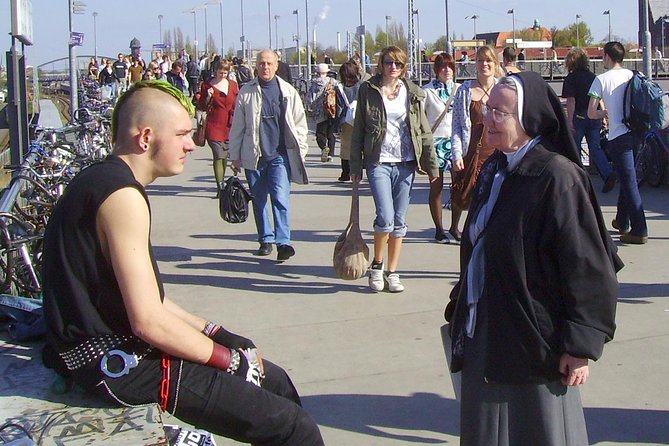
This tour is about a 4.5-hour commitment, and it is not designed to be a slow stroll where you barely move. Wear comfortable walking shoes, because the route covers real neighborhoods and includes outdoor segments. One key piece of advice: book a warm day when you can. When the weather turns, the tour can feel long because you are exposed and on your feet.
Transit is part of the design. You will take a few tram or train legs during the total time, so you are not walking every step. Still, the transport is not included. You need AB transport tickets, and a day pass is recommended if you plan to ride after the tour or before it.
Timing is handled with intent. Several guides are praised for pacing, keeping the tour lively, and using the time well. A lunch break is included, often described as around 20 to 30 minutes, which is exactly what you want on a half-day tour. It keeps energy up and makes the storytelling easier to follow without fatigue.
One small planning caveat based on past group experiences: the ending point can land a bit differently within the Kreuzberg area depending on how the group moves and where the final stops fall. If you have a tight appointment after the tour, give yourself a little buffer.
Price and Value: Is $30.25 Worth It for 4.5 Hours?
At $30.25 per person, this is priced like a budget-friendly Berlin walk, not a premium attraction. The value comes from what you get for that price: an English speaking local guide, a smaller group size (max 20), and a route that connects neighborhoods you might struggle to link together on your own without missing key context.
Here is where the value calculation gets real:
- You are paying for interpretation, not just movement. The counterculture timeline and the neighborhood storytelling make the walk feel like a guided education.
- You are getting stops that do not show up in the most basic Berlin itineraries, such as the alternative art and urban farming elements.
- You also get a built-in structure that covers more ground than you would choose yourself, especially when you factor in transit legs.
Costs you should expect on top of the ticket are transportation and food. AB public transport tickets are required, and lunch and drinks are not included. Currywurst is offered as a try-on-your-own basis, so you should budget a few euros for snacks if you want them. Prater Garten is part of the experience, and you might grab a drink there depending on what is offered on the day.
For most visitors, the best way to see if it is worth it is simple: if you want more than the sanitized highlights, and you enjoy neighborhood texture and street-level context, it is a strong deal.
Who Should Book This Tour, and Who Might Want Something Else?
Book this if you like Berlin that feels lived in. You want Kreuzberg and Friedrichshain, but you do not want to only chase photos. You want history that connects to what people built, argued about, and painted on walls.
This also fits you well if you like a guide who talks with personality and keeps things moving. Past departures highlight guides such as Lee, Reese, Jake, Antonio, Jason, and Arnie for being engaging and story-first, and that is exactly the right tone for this route.
You might want to choose a different option if you hate walking in cold weather or you need a very structured, seat-every-stop type of tour. Since you spend a lot of the time outdoors and you will cover real neighborhoods, you should be comfortable with walking and with the idea of occasional transit segments.
Should You Book This Kreuzberg, Mitte, and Friedrichshain Off-the-Beaten-Path Walk?
Yes, if your goal is Berlin with texture. This tour is one of the better ways to connect the dots between immigrant neighborhood life, creative street art, and the protest energy that shaped the city across decades. The finish at Yaam Beach is a smart landing point, and the Prater Garten stop gives you a classic Berlin pause.
If you are unsure, use this rule: if you want to understand Berlin beyond the big monuments, this is your kind of tour. It is also a good pick if you have done a WWII or Cold War heavy day already, because it shifts attention to what Berlin became through counterculture and everyday creativity.
FAQ
How long is the Berlin Off-the-Beaten-Path Walking Tour?
It lasts about 4 hours 30 minutes.
Where does the tour start and end?
The tour starts at Vapianoam Alex, Rathausstraße 6, 10178 Berlin, and it ends at Yaam Beach, Stralauer Allee 34, 10245 Berlin.
Is the tour offered in English?
Yes, it is offered with an English speaking guide.
Do I need public transport tickets?
Yes. AB transport tickets are required for the tour. A day pass is recommended.
Is food included?
No. Food and drinks are not included. Currywurst is mentioned as an option you would pay for on your own expense.
What is included in the price?
A local guide (English speaking guide only) is included.
Is cancellation free?
Free cancellation is available. You can cancel up to 24 hours in advance for a full refund.
Newest Berlin reviews on the site
- Jetbike Berlin fun bike beer bike★ 5.0 · 3 reviews
- Karl-Marx-Allee Walking Tour: Berlin’s Socialist History★ 5.0 · 5 reviews
- Homeless on chic streets: city tour in Berlin from personal experience★ 4.6 · 3 reviews
- Berlin: Sachsenhausen Concentration Camp Guided Tour★ 4.9 · 42 reviews
- Historyof the Trans, Queer & Gay communities of Berlin tour★ 4.8 · 17 reviews
- Historic Berlin Pubs & History Tour★ 4.9 · 73 reviews
- Berlin: City Center Walking Tour★ 4.7 · 45 reviews
- Half-Day Berlin Highlights Segway Expedition★ 4.5 · 61 reviews
Walking Tours, compared.


Berlin’s Best: 2 Hour Walking Tour Third Reich and the Cold War
Read our review →
Third Reich Berlin: Hitler and WWII Walking Tour
Read our review →Browse the lists this tour appears in