
Reviewed · WALKING TOURS
Berlin : Must-see attractions Walking Tour
Berlin can feel like one long, unfinished classroom. This private walking tour keeps it focused, showing you the big political and cultural landmarks in a tight route with a guide to make the story click. You’ll start in the central Friedrichstraße area, then move street by street through key sites tied to Cold War division and the rise and fall of Nazi Germany. Two things I really like are the private, customizable format, and the way the guide connects what you’re seeing to what it meant then and what it means now.
You also get practical guidance beyond the stop list, like where to spend extra time and what to do next in the city. One thing to keep in mind is that this is a 3-hour tour, so the pace is intentionally efficient, and some stops may feel more about context and orientation than a long, slow museum-style visit.
In This Review
- Key things that make this tour worth your time
- Starting at Meliá Berlin on Friedrichstraße, and why the meeting spot matters
- Berlin Wall: the fastest way to understand division and escape routes
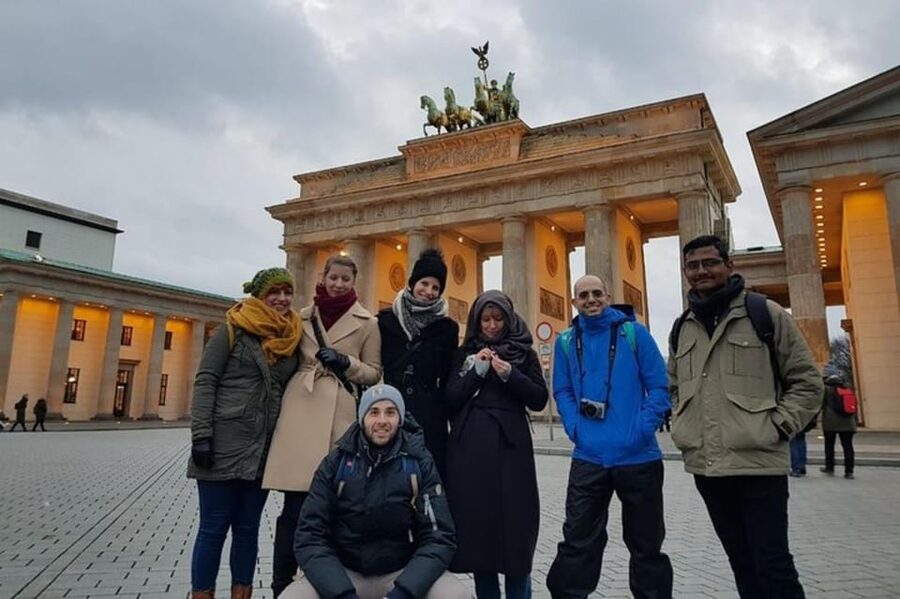
- Brandenburg Gate: more than a postcard, it’s a political symbol
- Reichstag: seeing Germany’s political center through the Nazi-to-modern story
- Checkpoint Charlie: the Cold War explained at street level
- Holocaust Memorial: what to do with the silence and scale
- Customizable private guiding: how to get more than a checklist
- Price and value: why $44 for 3 hours can be a good deal
- What to do before you go, so the 3 hours land better
- Who this private Berlin must-see tour fits best
- Should you book this Berlin: must-see attractions private walking tour?
- FAQ
- How long is the Berlin must-see attractions walking tour?
- Where does the tour meet?
- Is this tour private?
- What sights are included?
- What languages are available for the live guide?
- Is food included in the tour price?
Key things that make this tour worth your time
- Private and customizable so you can ask questions and steer the route within the tour scope
- Berlin Wall and Cold War landmarks explained in plain language, with why they matter today
- Reichstag, Brandenburg Gate, and Checkpoint Charlie grouped for maximum understanding of modern Berlin
- Holocaust Memorial (Memorial to the Murdered Jews of Europe) visited with historical framing, not just sightseeing photos
- Multilingual guides available in English, French, Spanish, Italian, and German
- Efficient city coverage using a mix of walking and public transport (unless your booking option changes it)
Starting at Meliá Berlin on Friedrichstraße, and why the meeting spot matters
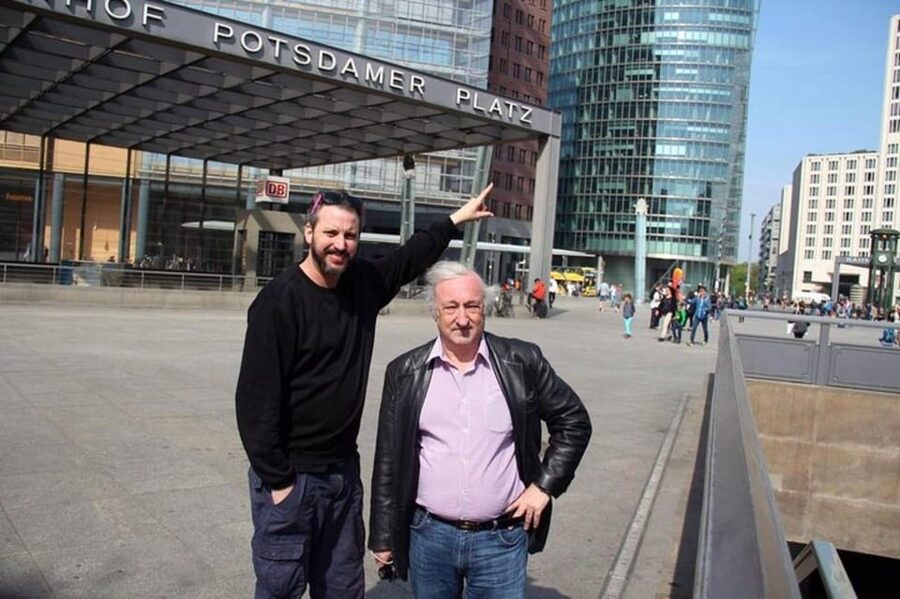
Most Berlin first-timers hit the major sites, then feel lost about what connects them. This tour starts you at Friedrichstraße 103, right in front of the Meliá Berlin. That’s a smart base because it’s central, easy to reach, and it puts you in the part of town where multiple eras overlap in a very practical way.
From there, you’ll move through the core landmarks on a guided route that mixes walking with public transport (unless your booking option changes that). In practice, that matters because you’ll spend more of the 3 hours looking at the places that define Berlin’s 20th century, and less time stuck in transit confusion.
The tour is also private and exclusive, meaning you won’t be squeezed into a big crowd. That tends to change everything: you can ask a question when it’s relevant, not when the group is ready to pause. And if there’s something you’re especially curious about, the guide can adjust the pacing.
More Walking Tours in Berlin
- Discover Berlin Half-Day Walking Tour
★ 5.0 · 9,624 reviews - Berlin: Third Reich and Cold War 2 Hour Walking Tour
★ 4.9 · 6,830 reviews - Berlin: Discover Berlin Walking Tour
★ 4.9 · 5,998 reviews
Berlin Wall: the fastest way to understand division and escape routes
The tour’s first major stop is the Berlin Wall. You’ll learn how it was constructed, what it was used for during the Cold War, and why its fall became such a turning point.
What I like about having a guide here is simple: the Wall is easy to photograph, but it’s harder to interpret without context. Even if you’ve seen images before, it helps to hear how the Wall worked as a system of control, not just a concrete barrier. Your guide can also point out what to notice as you walk, so you’re not only thinking about what happened, but also about the logic behind where power was concentrated.
Practical tip: bring your curiosity. If you want to know what everyday life was like on both sides, ask. If you want to focus on the political timeline, ask that too. This is exactly the kind of stop where a few targeted questions can turn the experience from seeing an object to understanding an era.
Brandenburg Gate: more than a postcard, it’s a political symbol
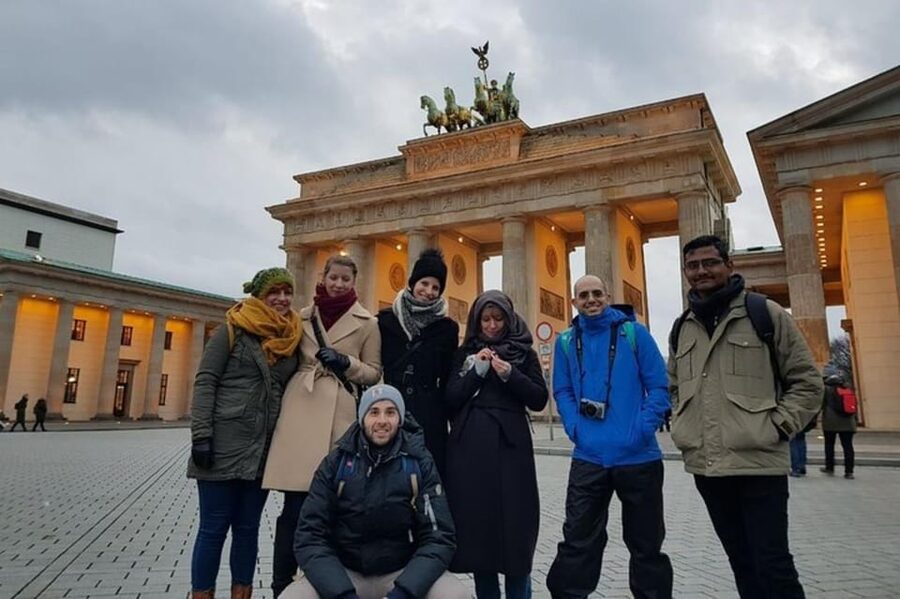
Next up is the Brandenburg Gate, Berlin’s best-known landmark. You’ll hear its history and significance, and it’s framed as a symbol of German unity.
The Gate can feel like a monument that’s been photographed to death, but the story matters. It’s not only about architectural style, it’s also about how Berlin and Germany repeatedly reinvent themselves around moments of political change. A good guide helps you see the Gate as a reference point: a place where different eras left messages behind, sometimes directly, sometimes indirectly.
As you admire the neoclassical architecture, you’ll also get the political meaning of why it stands where it does and why people keep returning to it. That context is what makes the Gate feel alive instead of static.
If you’re the type who likes to connect history to present-day identity, you’ll appreciate this stop. It sets you up for the next site, where Berlin’s political center comes into focus in a more direct way.
Reichstag: seeing Germany’s political center through the Nazi-to-modern story
The itinerary continues to the Reichstag, and this is where the tour starts shifting from Cold War landmarks into Germany’s longer political story.
You’ll learn about Berlin’s role as the capital of the Nazi Third Reich, then about how the city transformed into a modern, active place. That timeline is essential, because without it, the Reichstag can feel like just another impressive government building. With it, the building becomes a symbol of how a country rebuilds institutions after catastrophe.
One practical benefit of a private format here is that you can tailor the emphasis. If you want to focus on how Berlin became a political stage, ask. If you want the postwar rebuilding angle, ask that too. The guide narration is designed to keep moving, but it also gives you room to question and steer.
Tip: don’t try to memorize everything. Use this stop to understand the big arc. You’re not collecting facts for a test. You’re building a mental map of how Berlin became the Berlin you walk through today.
Same city, a different way to spend the afternoon:
- Berlin: Reichstag, Dome and Government District Guided Tour
★ 4.7 · 18,288 reviews - Berlin: 1-Hour City Tour by Boat with Guaranteed Seating
★ 4.3 · 16,993 reviews - Berlin: TV Tower Standard Entrance Ticket
★ 4.4 · 15,883 reviews - Berlin: Boat Tour Along the River Spree
★ 4.4 · 11,252 reviews
Checkpoint Charlie: the Cold War explained at street level
Then you’ll reach Checkpoint Charlie, one of the most recognizable Cold War sites in Berlin. Here, the tour gives you the background that turns a name into an actual story of confrontation, negotiations, and everyday tensions at a border crossing.
Checkpoint Charlie works especially well for a walking tour because it’s not tucked away. It’s part of the city fabric, and that means you can look at it with two minds on: the historical mind and the modern street mind. Your guide helps you connect the two so you understand what made it significant beyond the obvious photo spot.
A good guide also keeps the tone grounded. This tour is designed to stay anchored to meaning, not just spectacle. That’s important because the Cold War era can turn into trivia fast if there’s no framework. With context, you start seeing patterns, like how control, media, and diplomacy all tied together.
Holocaust Memorial: what to do with the silence and scale
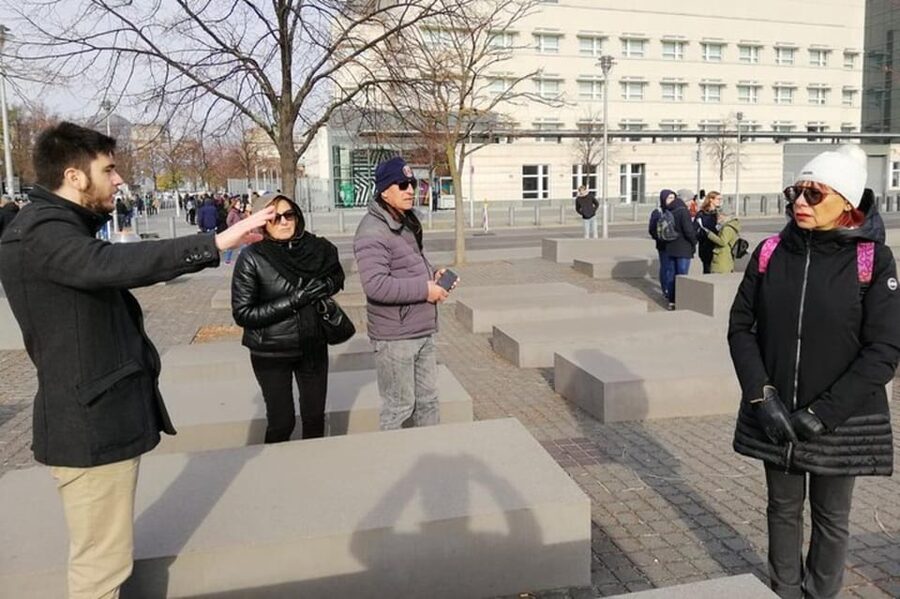
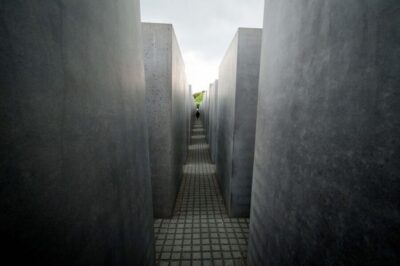
The final major landmark is the Memorial to the Murdered Jews of Europe. This stop is handled with historical framing, tied directly to the reality of what happened and who the memorial represents.
This kind of memorial can be emotionally heavy. The best way a walking tour helps is not by forcing you through a script, but by giving you the historical anchor so you understand the purpose of the site. You’ll hear why it exists and how it’s meant to be experienced, not just looked at.
Practical advice: slow down mentally even if you keep moving physically. You can use this time to ask the guide questions about what the memorial is designed to communicate. If you want to focus on history, ask. If you want to focus on how to approach the space respectfully and thoughtfully, ask that too.
Also, because the tour runs about 3 hours, you’ll likely finish while your attention is still sharp. That’s good for this stop. Long itineraries can blur your focus. Here, you end on a strong, meaningful note without dragging it out.
Customizable private guiding: how to get more than a checklist
The tour’s biggest quality is that it’s private. That sounds like a marketing word until you think about how it changes the experience.
In a private setting:
- You can ask questions when something clicks instead of waiting for the group.
- The guide can adjust explanations, like switching from a political timeline to a human-level perspective.
- You can request more time at a venue if a particular site hooks you.
There’s also evidence that this works in practice. Guides such as Pierre and Bastian have been singled out for friendly, patient teaching and for keeping people on track if plans shift. One example from the tour feedback: when someone arrived a bit late, the guide was ready to help direct them to the meeting point, keeping the experience smooth rather than stressful. Another repeated theme is guides allowing extra time when guests show particular interest, instead of rushing everyone out on schedule.
So if Berlin is your first stop in Germany, or if you want to understand what you’re seeing before you start exploring on your own, this format is a smart choice. It helps you leave with a sense of the city’s logic, not just its highlights.
Price and value: why $44 for 3 hours can be a good deal
At about $44 per person for roughly 3 hours, this tour is priced like a mid-range guided experience. The real question is value: what are you buying?
Here’s what you’re getting for that price level:
- A private, exclusive guide, not a crowded group lecture.
- Coverage of major landmarks you’ll likely want to see anyway: Berlin Wall, Brandenburg Gate, Reichstag, Checkpoint Charlie, and the Holocaust Memorial.
- A guide who can also recommend what else to do, which can save you time and guesswork later.
- Walking plus public transport included, which can reduce the logistics hassle of stitching the route together yourself.
- Help from the provider team to book tickets for the visits you want.
If you’re the kind of traveler who wants to understand Berlin instead of just collect photos, the price makes more sense. Berlin has more than one layer, and the difference between reading placards alone and getting live explanation is huge.
The only downside is that you’re not buying unlimited time. If you want long indoor visits or you prefer very slow pacing, a 3-hour format might feel a bit compressed. But if you want to get your bearings fast and build real context, this is strong value.
What to do before you go, so the 3 hours land better
Even though the guide handles the storytelling, you can boost the payoff with two quick prep steps.
1) Pick your focus
Decide if you care most about the Cold War, the rise and fall of Nazi rule, or how Berlin became the modern city you see today. You can mention your interest during the start of the tour. That helps the guide shape the emphasis.
2) Wear shoes for real walking
This is a walking tour. You’ll be moving between landmark points, and you’ll likely switch between streets and transit. Comfortable walking shoes matter more here than in some sightseeing days.
If you do those two things, the tour becomes less like a rushed highlight reel and more like a curated route through themes.
Who this private Berlin must-see tour fits best
I think this tour is a good match if:
- You want Berlin’s major political landmarks in one focused day.
- You prefer a guide who can answer questions in real time.
- You’re visiting Berlin for a limited number of days and want a strong orientation.
- You like a private format, where you can ask what you actually want to know.
It may be less ideal if:
- You want extended museum time at each location.
- You dislike emotionally heavy stops and prefer a lighter, strictly entertainment-style itinerary.
Because it’s wheelchair accessible, it can also work for mobility needs that require barrier-aware planning, though you should still think about your own pace and comfort level.
Should you book this Berlin: must-see attractions private walking tour?
If you’re trying to understand Berlin, not just see it, I’d book this. The mix of the Berlin Wall, Brandenburg Gate, Reichstag, Checkpoint Charlie, and the Holocaust Memorial hits the major landmarks that shape the city’s identity, and the private setup helps you get answers instead of just information.
Go for it if you want a guide to connect the dots, help you plan what to do next, and keep the 3 hours efficient but still responsive to your interests. Skip it only if you know you want long, slow stops and deep museum time, because this tour is built for a focused, guided overview.
FAQ
How long is the Berlin must-see attractions walking tour?
The tour lasts about 3 hours.
Where does the tour meet?
You meet your guide in front of Meliá Berlin, at Friedrichstraße 103.
Is this tour private?
Yes. It’s described as a private and exclusive tour, meaning you won’t be grouped with other travelers.
What sights are included?
The tour includes guided stops at the Berlin Wall, Brandenburg Gate, Reichstag, Checkpoint Charlie, and the Memorial to the Murdered Jews of Europe.
What languages are available for the live guide?
The live guide is available in English, French, Spanish, Italian, and German.
Is food included in the tour price?
No. Drink or food is not included.
Newest Berlin reviews on the site
- Jetbike Berlin fun bike beer bike★ 5.0 · 3 reviews
- Karl-Marx-Allee Walking Tour: Berlin’s Socialist History★ 5.0 · 5 reviews
- Homeless on chic streets: city tour in Berlin from personal experience★ 4.6 · 3 reviews
- Berlin: Sachsenhausen Concentration Camp Guided Tour★ 4.9 · 42 reviews
- Historyof the Trans, Queer & Gay communities of Berlin tour★ 4.8 · 17 reviews
- Historic Berlin Pubs & History Tour★ 4.9 · 73 reviews
- Berlin: City Center Walking Tour★ 4.7 · 45 reviews
- Half-Day Berlin Highlights Segway Expedition★ 4.5 · 61 reviews
Walking Tours, compared.

Berlin’s Best: 2 Hour Walking Tour Third Reich and the Cold War
Read our review →
Third Reich Berlin: Hitler and WWII Walking Tour
Read our review →Browse the lists this tour appears in