
Reviewed · THIRD REICH & COLD WAR TOURS
Berlin: Muro,Guerra Fría y Museo de la Stasi
Cold War Berlin has a way of getting under your skin. This Spanish-language, 4-hour walk turns big historical ideas into concrete street corners, tunnels, and museum rooms you can actually see. I especially like the way it focuses on Berlin Wall remains and what people did to survive day to day.
Second, I love that you do not just read plaques. You get the Stasi story in a Stasi Museum visit, with a clear explanation of how East Berlin was controlled. One thing to consider first, though: you need to plan for the transport card, since the public transport ticket is not included.
If you like history that feels close to the ground, and you want a guide who can explain the tough parts in real time, this is a strong choice. The tour carries a high rating, 4.9, across 18 reviews, and the comments consistently point to guides who make the subject easier to follow without flattening it.
In This Review
- Key things to know before you go
- Finding Your Group Near the Fernsehturm (Alexanderplatz Setup That Actually Helps)
- Bernauer Strasse and the Wall Remains (Where the City’s Split Became Real)
- The Death Strip and the Logic of Control
- Frankfurter-Allee Avenue: How the Wall Rewired a City
- Ghost Stations on the Underground: When Even Metro Stops Became Political
- Inside the Stasi Museum: From Walls to Methods
- Spanish-Language Guiding That Can Handle a Tough Topic
- Price and Value: Is $41 Worth a 4-Hour Cold War Tour?
- Who This Tour Suits Best (And Who Might Prefer Another Option)
- Should You Book This Berlin Wall, Cold War, and Stasi Tour?
- FAQ
- How long is the Berlin: Muro, Guerra Fría y Museo de la Stasi tour?
- What language is the tour guide?
- Where do I meet the tour?
- Is the Stasi Museum entrance included?
- Do I need public transport tickets for this tour?
- Are food and beverages included?
- Is the tour wheelchair accessible?
- What is the cancellation policy?
- Is reserve now and pay later available?
Key things to know before you go
- You’ll see the Berlin Wall and the Death Strip, including where the barrier’s logic was meant to be brutally obvious.
- Bernauer Strasse Wall Memorial is a main stop, and it helps connect the wall to human choices and consequences.
- Frankfurter-Allee Avenue gives you city-level context for how the wall reshaped movement and daily life.
- Former ghost U-Bahn stations show how even the underground became a border.
- Stasi Museum entrance is included, so you can connect the street story to how the secret police operated.
Finding Your Group Near the Fernsehturm (Alexanderplatz Setup That Actually Helps)
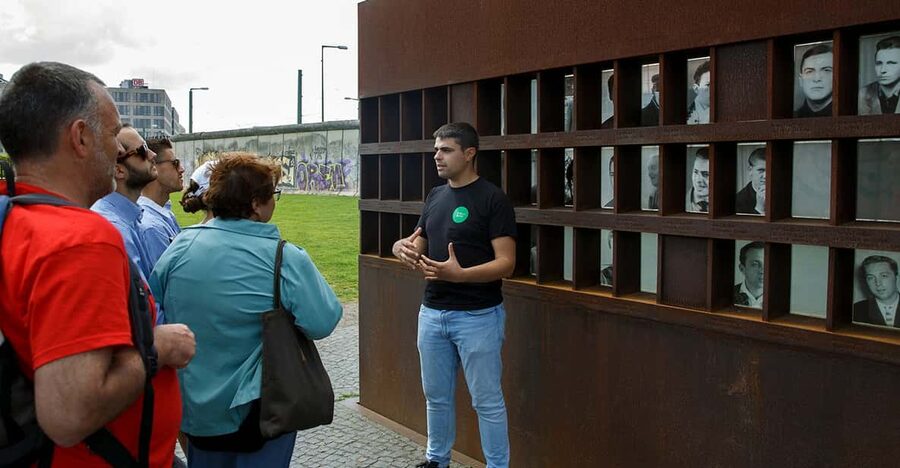
The meeting point is easy to spot once you know what to look for: stand by the only entrance to the Berlin TV Tower, the Fernsehturm, in Alexanderplatz. Your guide will be next to a green flag with the text tours en español, also between the Fernsehturm and Alexanderplatz train station, by the Espresso House.
Why this matters: Alexanderplatz is large, busy, and full of distractions. Starting near a major landmark helps you get your bearings fast, especially if you are meeting a tour group for the first time in Berlin.
This is a 4-hour tour, and that length is a practical sweet spot. You are walking enough to feel the city, but not so long that you spend the entire day in transit. The guide is live and speaks Spanish, and the tour is wheelchair accessible.
If you’re traveling with a friend who wants history but you want logistics to be painless, this setup is a good sign. You can focus on the story instead of playing “where is the group?” for 20 minutes.
More Third Reich & Cold War Tours in Berlin
- Berlin: Third Reich and Cold War 2 Hour Walking Tour
★ 4.9 · 6,830 reviews - Berlin: Berlin Story Bunker Entry Ticket
★ 4.6 · 6,759 reviews - Berlin’s Best: 2 Hour Walking Tour Third Reich and the Cold War
★ 5.0 · 5,486 reviews
Bernauer Strasse and the Wall Remains (Where the City’s Split Became Real)
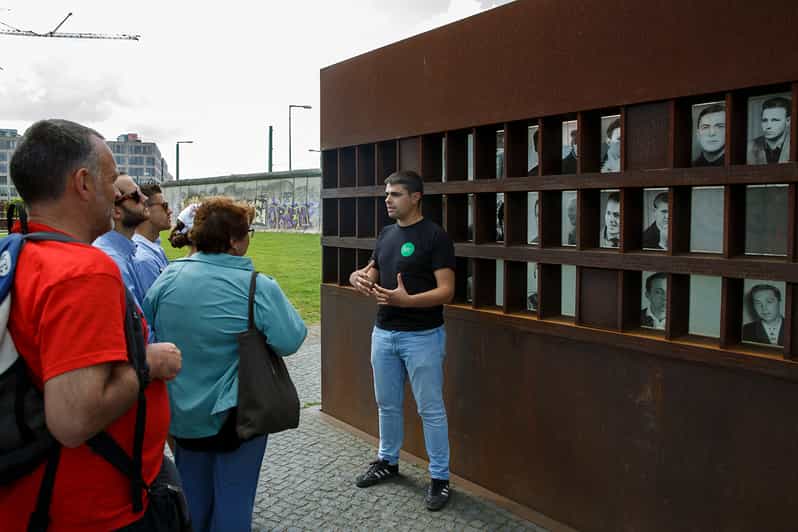
The Bernauer Strasse Wall Memorial is one of the most important stops on any Cold War route through Berlin. Here, the wall is not just a concept. It is a line that explains why families got separated, why routes got cut, and why some attempts to cross came with terrifying odds.
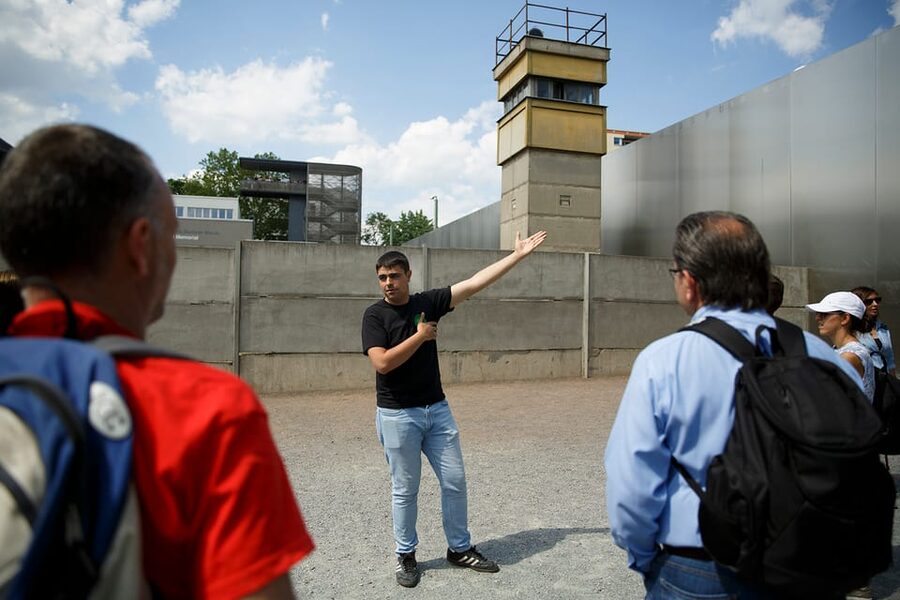
This tour takes you to places that still show the wall’s physical reality. You also get to see what remains of the Berlin Wall and the notorious Death Strip area. That phrase can sound sensational, but on the ground you understand it differently: the space was designed to give watchers a clear view and limited options. The wall was not only a wall, it was a system.
What I like about how a tour like this teaches Bernauer Strasse is the pacing. You start with what’s visible, then the guide ties it to the policies behind it. That approach helps you connect three layers:
- the wall as construction,
- the wall as surveillance,
- the wall as control of movement.
A small consideration: this is not a cheerful topic. If you are sensitive to stories about attempts to escape or state violence, go in with patience. A good guide helps you process it, and this tour’s Spanish guides are repeatedly praised for being detailed and professional about hard subjects.
The Death Strip and the Logic of Control
Seeing the Death Strip matters because it helps you understand why the border was so difficult to cross. Instead of treating escape attempts as isolated dramatic moments, you get the bigger picture: the space was designed to limit visibility for escapees and maximize detection.
In practical terms, I recommend you spend a little extra time looking rather than rushing. When you see the wall remains, slow down for a moment and try to imagine how someone would move through open ground with watchers in place. It is a strange exercise, but it turns history into something you can grasp with your own eyes.
This tour also explains why the wall was built and how people tried to cross. That combination, the “why” plus the “how people responded,” is what makes this stop more than a photo opportunity. It answers the questions you would naturally have while walking past these remnants:
- Why was it built in the first place?
- Why did crossing attempts happen anyway?
- How did the state respond?
If you want a tour that stays human and grounded, this part tends to deliver.
Frankfurter-Allee Avenue: How the Wall Rewired a City
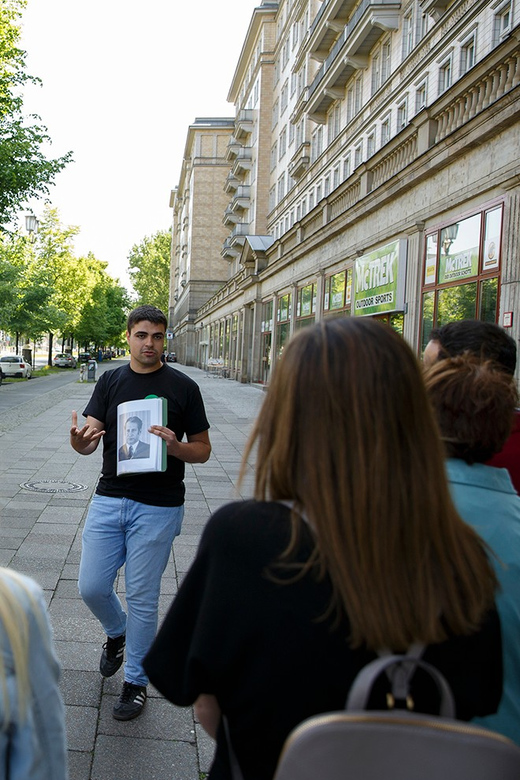
After the wall-focused stops, you shift from the most symbolic sites to the kind of street-level context that helps the whole story click. The tour includes a visit to Frankfurter-Allee Avenue, and that is a smart choice because Berlin during the Cold War was not only wall and memorial. It was also neighborhoods, transport routes, and everyday routines.
What you gain here is a sense of scale. Even if you only see one avenue, it’s easier to picture how the wall and border policies stretched into the city’s breathing spaces. Berlin is a city of districts, and that district-level reality is part of why Cold War Berlin can feel confusing without a guide.
I also like that the tour connects city development to the end of the wall. It is one thing to know the wall fell. It is another to connect that shift to how Berliners lived afterward and how the city has developed since. That forward-looking piece keeps the tour from becoming trapped in grief and guilt. You leave knowing what broke, and what replaced it.
More wartime and Cold War history walks in Berlin:
- Third Reich Berlin: Hitler and WWII Walking Tour
★ 5.0 · 3,301 reviews - Skip-the-Line: Berlin Wall Museum at Checkpoint Charlie
★ 4.1 · 2,041 reviews - Berlin: Third Reich, Hitler, and WWII Walking Tour
★ 4.9 · 1,757 reviews - Cold War, Berlin Wall, Spies and the East Side Gallery
★ 5.0 · 1,024 reviews
Ghost Stations on the Underground: When Even Metro Stops Became Political

One of the most haunting elements of Cold War Berlin is underground transit. This tour explores former ghost stations of the underground lines. You might see areas that show how stations could be used or bypassed depending on political boundaries.
The value of this stop is simple: it proves that the Cold War was not only visible outdoors. It existed underfoot. The metro, which feels like pure convenience today, became a controlled space with different rules depending on where you were and who was watching.
When the guide explains the logic, you start to notice how borders can turn neutral infrastructure into a barrier. Underground, the state could control what moved, how it moved, and who got to benefit from the city’s networks.
Practical tip: wear shoes you can walk in comfortably. Ghost station stops often involve standing, looking, and moving at a measured pace. You do not want sore feet pulling you out of the history.
Inside the Stasi Museum: From Walls to Methods

The tour includes entrance to the Stasi Museum, which is a big part of why this experience is worth your time. The Berlin Wall shows the physical boundary. The Stasi Museum shows the invisible one: the state’s efforts to control people through fear, files, informants, and surveillance tactics.
The tour explains what secret service methods were used to control the population in East Berlin. That framing helps you connect the street story to the system behind it. You see how control did not only happen through patrols and barriers, it also happened through information and intimidation.
This is also where the best guides make a clear difference. In reviews, guides like Constantino are praised as passionate and strongly connected to the anecdotes he shares. Another review highlights Jordi from Barcelona as competent and engaged, with lots of detailed guidance. Even if you cannot meet those exact guides, that theme matters: the tour seems to attract people who can explain a complex subject in a human way.
If you want to understand Cold War Berlin as more than symbols, this museum stop delivers. You will likely come away with a sharper sense of why people behaved differently in East Berlin. Not because they were always punished publicly, but because the system made consequences feel everywhere.
Spanish-Language Guiding That Can Handle a Tough Topic
Because the tour is in Spanish, your biggest decision is whether you’re comfortable following a guided history lesson in that language. If you are, you’ll likely enjoy the added depth of details and explanations.
The review comments give you a useful clue about what to expect from the guides. Several evaluations mention that the subject can be difficult, but the guides are professional, detailed, and able to communicate clearly. One German reviewer specifically said that as a German they learned a lot about their own country’s history, which is a strong signal that the content is more than surface facts.
Also, Spanish guidance can be a real advantage in Berlin. Many visitors rely on English headsets or self-guided scripts. Here, a live guide helps you connect dots on the spot, like why a specific street matters or what you should watch for at a memorial site.
If you prefer history told through museums, parks, and street-level facts rather than long lectures, this tour style tends to work.
Price and Value: Is $41 Worth a 4-Hour Cold War Tour?
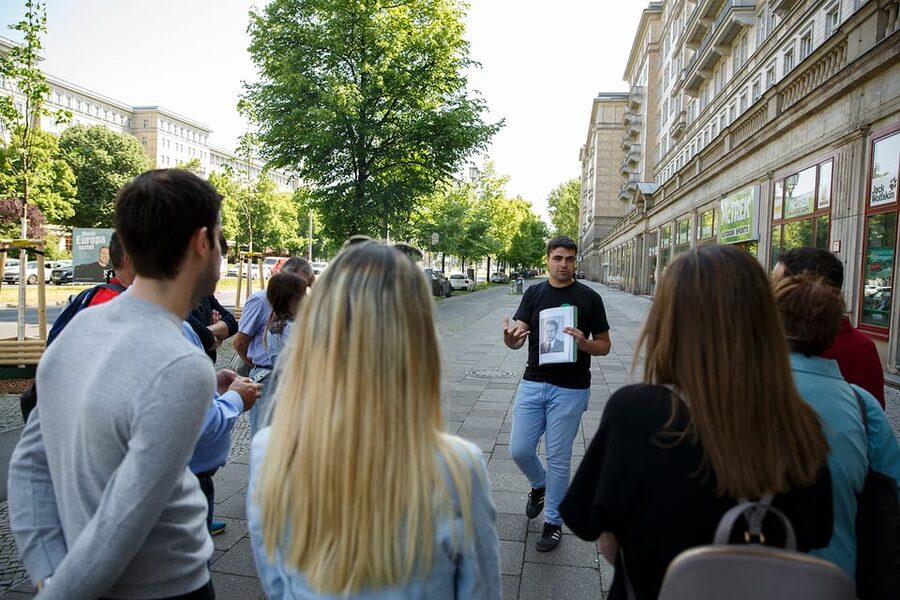
At about $41 per person for a 4-hour experience, this is in the range where you should ask: what’s included, and what costs extra?
Included:
- a Spanish live guide,
- entrance to the Stasi Museum.
Not included:
- food and beverages,
- public transport tickets,
- and most importantly, the Transport Card AB (one day) is necessary for this tour and not included in the price.
So is it good value? For me, the answer is yes if you want an organized path through multiple major sites in a single morning or afternoon. You’re getting guided context for the Wall, the memorial, the underground elements, and then a museum entrance. That combination is hard to replicate on your own without spending time figuring out the route and the “what to look at” questions.
The extra transport card is the main cost you must budget for. If you already plan to use Berlin public transit that day, it may not feel like an added burden. If you are only making one or two short rides, it might.
Either way, the $41 price becomes much more attractive once you factor in the museum entrance and the guided interpretation of several locations you would likely struggle to understand fully on your own.
Who This Tour Suits Best (And Who Might Prefer Another Option)
This tour is a great fit if:
- you want a structured Cold War experience in one 4-hour block,
- you care about both the physical Berlin Wall remnants and the systems behind them,
- you can follow Spanish for several hours.
You might consider skipping it if:
- you do not want to use public transit and prefer fully walkable attractions only,
- you need everything in English or you struggle with Spanish history explanations,
- you want a purely scenic experience rather than a serious, political one.
It also works well for couples and solo travelers. The meeting point is clear, the route is focused, and the length keeps energy up.
If you’re already planning to see Berlin Wall sites like the Bernauer Strasse area and you also want Stasi context, you’ll likely find this tour efficient. It turns multiple highlights into a connected story instead of a checklist.
Should You Book This Berlin Wall, Cold War, and Stasi Tour?
Book it if you want to leave Berlin with a real understanding of how the wall worked, not just what it looked like. The inclusion of the Stasi Museum, plus visits tied to the Wall and even former ghost U-Bahn stations, makes this more than a short sightseeing walk. You get a coherent storyline: physical barrier, surveillance methods, and the city reshaping itself after.
Hold off if you are not ready for the emotional weight of Cold War topics or if Spanish is not your comfortable language. And remember the practical piece: you will need the AB one-day transport card, which is not in the tour price.
If you match those two checks, this tour is one of the most focused ways to understand Cold War Berlin in a single sitting, with guides who seem genuinely committed to explaining the difficult parts clearly.
FAQ
How long is the Berlin: Muro, Guerra Fría y Museo de la Stasi tour?
The tour duration is 4 hours.
What language is the tour guide?
The tour guide speaks Spanish.
Where do I meet the tour?
Meet your guide next to a green flag with the text tours en español, right by the only entrance to the Fernsehturm (TV Tower) in Alexanderplatz, between the TV Tower and Alexanderplatz train station, next to the Espresso House.
Is the Stasi Museum entrance included?
Yes, the tour includes entrance to the Stasi Museum.
Do I need public transport tickets for this tour?
Yes. You need a public transport ticket, specifically Transport Card AB (one day), and it is not included in the tour price.
Are food and beverages included?
No, food and beverages are not included.
Is the tour wheelchair accessible?
Yes, the tour is wheelchair accessible.
What is the cancellation policy?
You can cancel up to 24 hours in advance for a full refund.
Is reserve now and pay later available?
Yes, you can reserve your spot and pay nothing today, according to the tour details.
Newest Berlin reviews on the site
- Jetbike Berlin fun bike beer bike★ 5.0 · 3 reviews
- Karl-Marx-Allee Walking Tour: Berlin’s Socialist History★ 5.0 · 5 reviews
- Homeless on chic streets: city tour in Berlin from personal experience★ 4.6 · 3 reviews
- Berlin: Sachsenhausen Concentration Camp Guided Tour★ 4.9 · 42 reviews
- Historyof the Trans, Queer & Gay communities of Berlin tour★ 4.8 · 17 reviews
- Historic Berlin Pubs & History Tour★ 4.9 · 73 reviews
- Berlin: City Center Walking Tour★ 4.7 · 45 reviews
- Half-Day Berlin Highlights Segway Expedition★ 4.5 · 61 reviews
Third Reich & Cold War Tours, compared.


Berlin’s Best: 2 Hour Walking Tour Third Reich and the Cold War
Read our review →
Third Reich Berlin: Hitler and WWII Walking Tour
Read our review →
Skip-the-Line: Berlin Wall Museum at Checkpoint Charlie
Read our review →
Browse the lists this tour appears in