
Reviewed · WALKING TOURS
Berlin: Guided Walking Tour in English
Berlin can feel like a puzzle. This guided walk turns it into a timeline you can actually follow. I love the chronological storyline and how it threads big turning points through streets you can walk in one morning or afternoon. I also like the mix of famous landmarks and the quieter, telling details, like the view spaces on Museum Island. One thing to consider: it is a 2.5-hour on-foot experience with no food or drinks included, so you will want to plan for cold, wind, and basic needs.
You should expect a hands-on history lesson with good pacing. The tour balances major sights with the darker moments too, including the place where Hitler’s bunker once stood and the Berlin Wall area at Checkpoint Charlie. It is also great that the tour is led in English by local guides, and the overall tone seems to be practical, engaging, and mindful of weather. If you hate walking tours in winter without a pause, you may wish you had more time for a drink or restroom stop.
In This Review
- Quick hits before you set out
- Starting at Rotes Rathaus, then tracing Berlin from Alexanderplatz
- TV Tower area and medieval remnants, Berlin’s early shape in plain sight
- The controversial reconstructed Royal Palace and why it matters
- Museum Island: open space, big views, and a break in the walking
- Humboldt University and the central-streets maze to Gendarmenmarkt
- Checkpoint Charlie and the Berlin Wall, the story you came for
- Walking past the former bunker location, Berlin’s dark chapter in context
- Ending at Brandenburg Gate, unity told through architecture
- Price and value: what $31 buys in 2.5 hours
- Guide style matters, and the reviews show a consistent pattern
- What to wear, and how to plan your comfort
- Who this tour is for, and who should pick something else
- Should you book this Berlin walking tour?
Quick hits before you set out
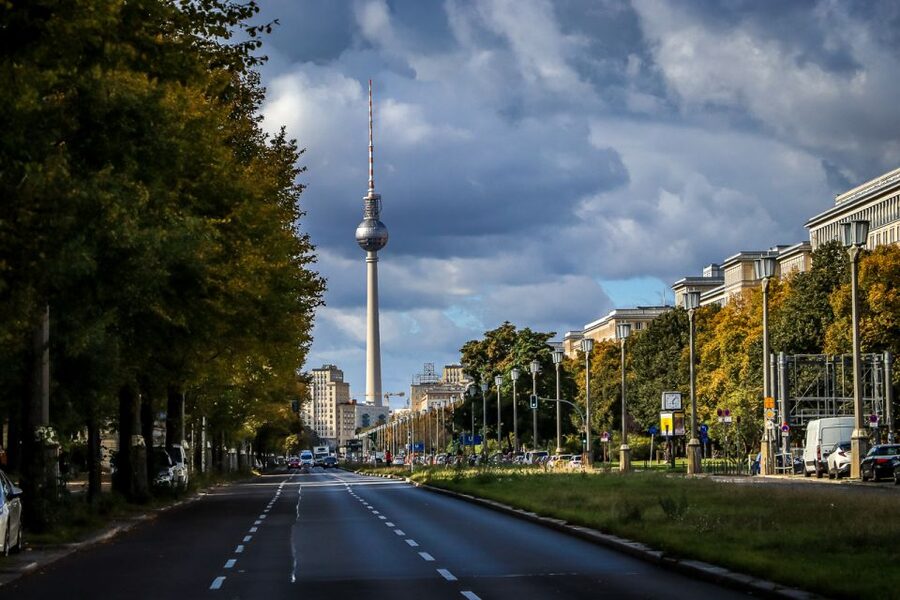
- A true timeline on foot, starting near Alexanderplatz and ending at Brandenburg Gate
- Museum Island open-space moments, including a strong view toward Berlin Cathedral
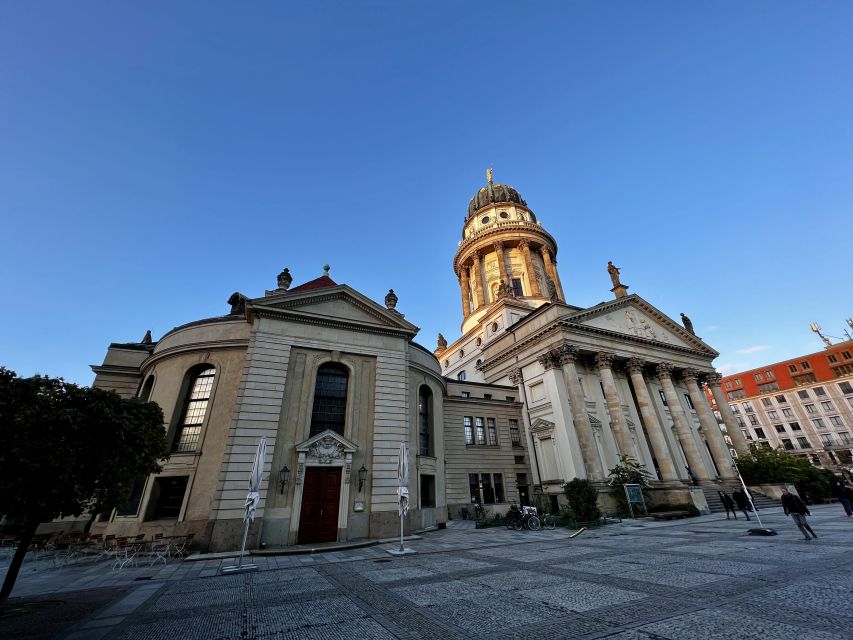
- Iconic squares in context, especially Gendarmenmarkt with its story-built backdrop
- Checkpoint Charlie explained, with what you need to understand the Berlin Wall
- Dark history handled on-site, including the former bunker location
- Local English guides who share practical tips, with guides like J.R., Jule, Ru, and Will showing up in reviews
Starting at Rotes Rathaus, then tracing Berlin from Alexanderplatz
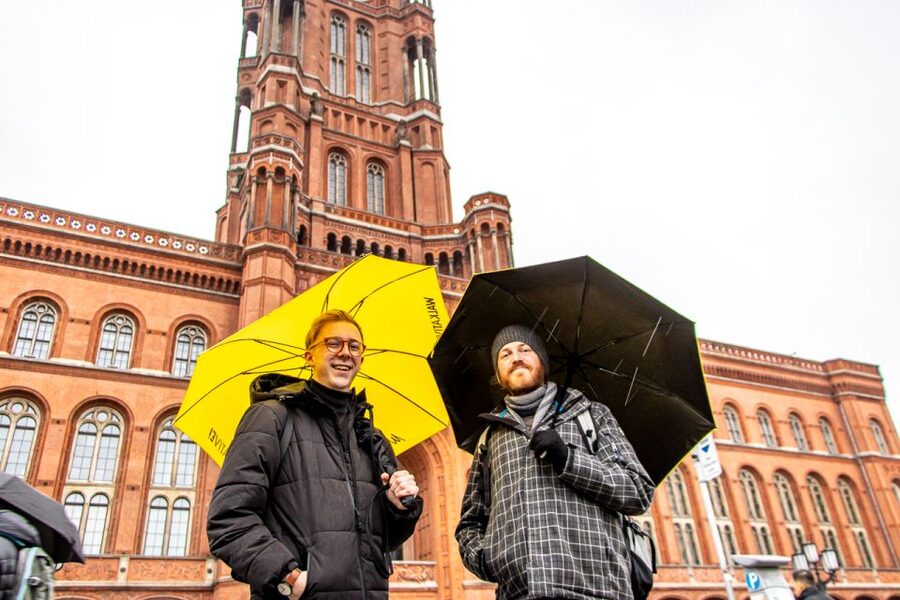
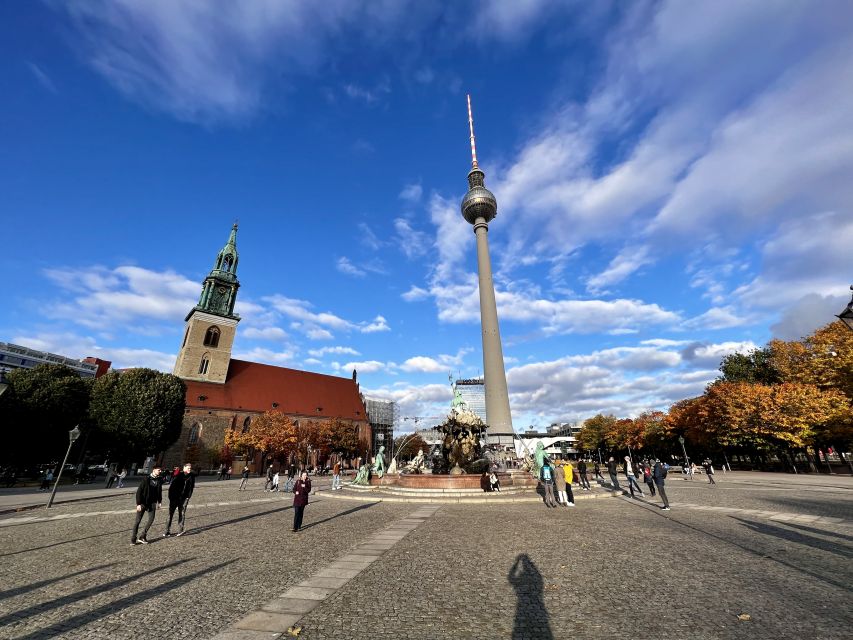
I like tours that help you orient fast, and this one starts at a spot that does just that. You meet in front of the Rotes Rathaus (Red Town Hall), near the TV Tower and Neptune Fountain, which means your first minutes already give you a sense of scale and direction in the city center.
From there, the walk begins with the area around Alexanderplatz, including the TV Tower as a visual anchor. The tour then steps backward in time, showing you what Berlin looked like for much of its earlier history, not just the modern skyline. That approach matters because it prevents the common trap, where you only see monuments, not the growth of the city that created them.
More Walking Tours in Berlin
- Discover Berlin Half-Day Walking Tour
★ 5.0 · 9,624 reviews - Berlin: Third Reich and Cold War 2 Hour Walking Tour
★ 4.9 · 6,830 reviews - Berlin: Discover Berlin Walking Tour
★ 4.9 · 5,998 reviews
TV Tower area and medieval remnants, Berlin’s early shape in plain sight
One of the most useful parts for me is how the tour treats Berlin’s older layers as something you can still spot. After you get that main-center orientation around Alexanderplatz, you see the original, medieval remnants of the small town Berlin was for most of its history.
Even if you are not a “history nerd,” this part helps you read the city like a map. You start to notice how the layout and street patterns can carry older ideas forward, even when the buildings change. It also sets up the rest of the tour, because the guide is building the story in order, not tossing themes at you.
The controversial reconstructed Royal Palace and why it matters
Next comes one of those stops that makes you understand why history is still debated. You pass the reconstructed former Royal Palace of the Hohenzollern, a choice that is explicitly described as controversial.
For your visit, the value is not just the building itself, it is the explanation behind it. Berlin has a habit of reinventing itself, and the guide’s chronological narrative helps you see how reconstruction can be both a reminder and a argument. It gives you a framework for thinking about what you see later, especially when you reach the 20th-century turning points.
Museum Island: open space, big views, and a break in the walking
Then you hit Museum Island, and this is where the tour gives your legs a bit of breathing room. You get an open-space feel in an area famous for museums, and the guide connects it to the broader story of Berlin rather than treating it like a photo stop.
A highlight here is the great view of Berlin Cathedral from the Museum Island ambiance. I like moments like this because they do two things at once. They make the city feel beautiful and they also make the information easier to remember. It is one thing to hear about the evolution of Berlin, and another to stand in a space that visually explains why the city keeps layering culture on top of itself.
Same city, a different way to spend the afternoon:
- Berlin: Reichstag, Dome and Government District Guided Tour
★ 4.7 · 18,288 reviews - Berlin: 1-Hour City Tour by Boat with Guaranteed Seating
★ 4.3 · 16,993 reviews - Berlin: TV Tower Standard Entrance Ticket
★ 4.4 · 15,883 reviews - Berlin: Boat Tour Along the River Spree
★ 4.4 · 11,252 reviews
Humboldt University and the central-streets maze to Gendarmenmarkt
After Museum Island, the walk continues past Humboldt University. Then you move into the maze of central streets, which is where Berlin feels most like a lived-in city instead of a museum district.
You will be guided through those streets to reach the squares, including Gendarmenmarkt. This stop is called out as the prettiest of the German capital’s squares, and the way the tour frames it in context makes it more than just pretty architecture.
Here is what you should take from it. Squares like this often look timeless, but Berlin’s timeline makes it clear they were designed and shaped by the politics and culture of their periods. When the guide connects that to what you already learned in earlier stops, Gendarmenmarkt starts to feel intentional, not random.
Checkpoint Charlie and the Berlin Wall, the story you came for
Eventually, you reach the part most people associate with Berlin’s past: the Berlin Wall at Checkpoint Charlie. The guide explains the wall’s history there, and this is another moment where the chronological format pays off. You are not just hearing facts, you are seeing how the city’s story led to this kind of division.
Checkpoint Charlie also gives you a strong visual and symbolic reference point. Even if you have seen pictures before, the on-the-ground explanation helps you connect the wall to the reality of daily life and politics, not just a single dramatic moment. The tour’s pacing keeps this from feeling like a lecture, and it is handled as a key chapter rather than a quick photo opportunity.
Walking past the former bunker location, Berlin’s dark chapter in context
One of the tour’s most serious stops is the place where Hitler’s bunker formerly stood. This is not described as an emotional performance, it is presented as learning about Germany’s dark past on-site, as the timeline continues forward.
For many visitors, this is the moment where the tour becomes more than sightseeing. You should come ready to take it in, not just snap a few pictures and move on. The guide’s job here is to keep the story grounded and understandable, and the reviews suggest the guides manage this mix of information and engagement well.
If you are traveling with people who want only light history, this part may feel heavy. But if you want the real Berlin story, it is hard to beat doing it on foot with someone explaining the why behind the where.
Ending at Brandenburg Gate, unity told through architecture
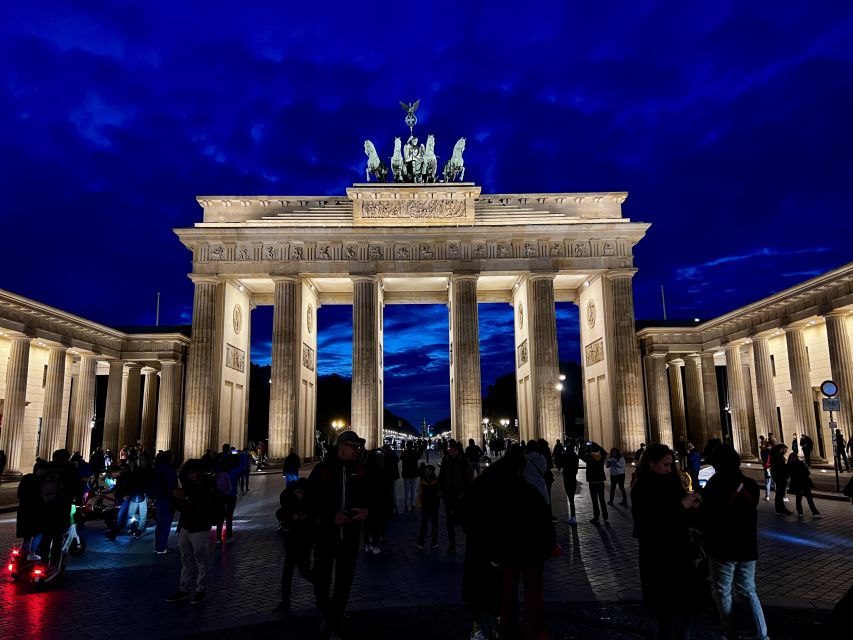
The tour finishes at the Brandenburg Gate, described as a symbol of unity of Germany and Europe. After the darker stops and the wall chapter, this ending hits differently, because the guide has already laid out how the city transformed across eras.
What I like about ending here is that you get a clear visual payoff. The gate’s open, classical archways are impressive on their own, but the tour encourages you to read the symbolism. You are looking at a monument that connects political change to public space, and the walk format makes that connection feel earned.
And you also leave with something practical: your own memory of a route. When your day ends here, you have a mental line you can follow if you want to explore more neighborhoods later.
Price and value: what $31 buys in 2.5 hours
At $31 per person for a 2.5-hour English walking tour, the value mainly comes from three things: time, guide quality, and the focus on a chronological narrative.
First, 2.5 hours is long enough to actually cover multiple major areas, not just one tight loop. Second, the tour is explicitly built around a uniquely designed storyline, so you are not paying for random sightseeing. Third, the reviews point to strong guiding performance, including J.R., Jule, Ru, and Will, with comments about being engaging and sharing useful guidance.
There is also an important note about the setup: booking joins a general pay-as-you-wish model, where the amount you pay covers the reservation fee and the guide’s payment. Translation for you: you are already covering the guide, and you can still reward beyond that if the guide earns it.
One practical drawback: food and drinks are not included. The tour also does not promise dedicated downtime. Plan to bring water if it is hot, and pack a thermos or snack if you like having something ready when you finish.
Guide style matters, and the reviews show a consistent pattern
I noticed a theme in the way guides are described: people call out engagement, clarity, and the ability to handle cold weather thoughtfully. Names that stand out include J.R., Jule, Ru, and Will, and multiple comments mention guides sharing practical hints for future sightseeing.
That matters because Berlin history can get tangled fast. A good guide does two jobs: they make the story make sense, and they help you feel confident walking around the city afterward. If you do this tour early, it can act like a decoder ring for the rest of your trip.
Also, the guidance is in English, and the tour is listed as wheelchair accessible. That is useful if mobility is limited, because you can plan around a route designed to be accessible without needing to switch plans last minute.
What to wear, and how to plan your comfort
This is a weather-dependent outdoor walk, so bring weather-appropriate clothing. Berlin can be windy in open areas like parts of Museum Island and the Brandenburg Gate approach, so layers usually work better than a single heavy coat.
Because food and drinks are not included, treat this as an exercise-style outing. You might find yourself wanting a quick stop during the walk, and at least one review noted that it would have been nice to know there would be time for a drink or restroom. I would plan assuming you will need to manage basics on your own, then use the end of the tour to reset.
Finally, arrive a little early. The tour asks you to be at the meeting point 10 minutes before it starts. It makes for a calmer start, especially if you are navigating to Rotes Rathaus near the TV Tower.
Who this tour is for, and who should pick something else
I think this tour is ideal if you want Berlin history in a logical order and you prefer walking over sitting in a bus. It is especially good for first-time visitors who want the big landmarks connected into one coherent story.
It is also a solid fit if you appreciate a mix of architecture, politics, and real-world street context. You get Museum Island views, Gendarmenmarkt’s beauty in context, and the wall and bunker stops handled as part of the city’s evolution.
If you only want surface-level sightseeing, you might find the darker stops intense. If you want frequent breaks for snacks or restroom time, you may want a tour format that explicitly includes those pauses.
Should you book this Berlin walking tour?
Yes, if you want a tight, structured way to understand Berlin. For the price, you get a guided timeline covering some of the city’s most important spaces, from Museum Island and Gendarmenmarkt to Checkpoint Charlie and Brandenburg Gate, all in a 2.5-hour walking format.
I would book it early in your trip if possible. The way the guide connects eras helps you explore the rest of Berlin with better instincts and fewer head-scratch moments. Just come prepared for outdoor walking, and don’t count on food or drinks being part of the plan.
If you want to understand Berlin fast and walk away with a story you can repeat, this is a smart choice.
Newest Berlin reviews on the site
- Jetbike Berlin fun bike beer bike★ 5.0 · 3 reviews
- Karl-Marx-Allee Walking Tour: Berlin’s Socialist History★ 5.0 · 5 reviews
- Homeless on chic streets: city tour in Berlin from personal experience★ 4.6 · 3 reviews
- Berlin: Sachsenhausen Concentration Camp Guided Tour★ 4.9 · 42 reviews
- Historyof the Trans, Queer & Gay communities of Berlin tour★ 4.8 · 17 reviews
- Historic Berlin Pubs & History Tour★ 4.9 · 73 reviews
- Berlin: City Center Walking Tour★ 4.7 · 45 reviews
- Half-Day Berlin Highlights Segway Expedition★ 4.5 · 61 reviews
Walking Tours, compared.


Berlin’s Best: 2 Hour Walking Tour Third Reich and the Cold War
Read our review →
Third Reich Berlin: Hitler and WWII Walking Tour
Read our review →Browse the lists this tour appears in