
Reviewed · WALKING TOURS
An Introduction to Berlin Walking Tour
Berlin history moves fast on your feet. This 3-hour walking tour tracks the city’s shift from Prussia’s cultural capital to Nazi and Cold War turning points, using major landmarks as signposts for what Berlin became. I like how it ties the big ideas to the actual street corners you stand on, from the Berlin Wall route to the Reichstag dome.
Two things I particularly like: you get a historian guide (not just a storyteller), and the route builds in cause-and-effect, not random sightseeing. You’ll spend real time on the Reichstag story, the Holocaust Memorial, and the symbolism of the 1992 glass dome designed by Norman Foster, so the monuments feel less like photo ops and more like arguments in stone and glass.
One drawback to consider: you cover a lot in a short window, and you do use public transport once or twice because some key sights are too far to walk. If you hate transit steps, or if you prefer long museum time over moving from stop to stop, this might feel brisk.
In This Review
- Key highlights you should know
- Why this tour feels different from a “greatest hits” Berlin walk
- Starting at Potsdamer Platz, where the Wall’s shadow still shapes the map
- Berlin Wall route to Tiergarten, then the Holocaust Memorial and Reichstag
- Following the clues in power, from Brandenburg Gate to Unter den Linden
- Bebelplatz and Museum Island, where ideology shows up in books and institutions
- Hackescher Markt and Alexanderplatz: pre-war pockets versus East Berlin’s showplace
- Ending at Checkpoint Charlie, where the Cold War turns into crowds
- Price and value: is $135 a fair deal for a 3-hour historian walk?
- What the guide quality brings to the experience
- Who should book this Berlin 3-hour story walk
- Should you book it?
- FAQ
- How long is the Berlin walking tour?
- Where does the tour meet?
- How much does the tour cost?
- Is the tour guided, and what language is it in?
- Is public transport used during the tour?
- What public transport ticket prices are provided?
- Are private or small groups available?
- What is included in the price?
- Can I cancel for a refund, and can I reserve without paying right away?
Key highlights you should know
- 300 years of Berlin in one route, from Prussia to modern reunified Germany
- Berlin Wall walking path from Potsdamer Platz area through toward Tiergarten
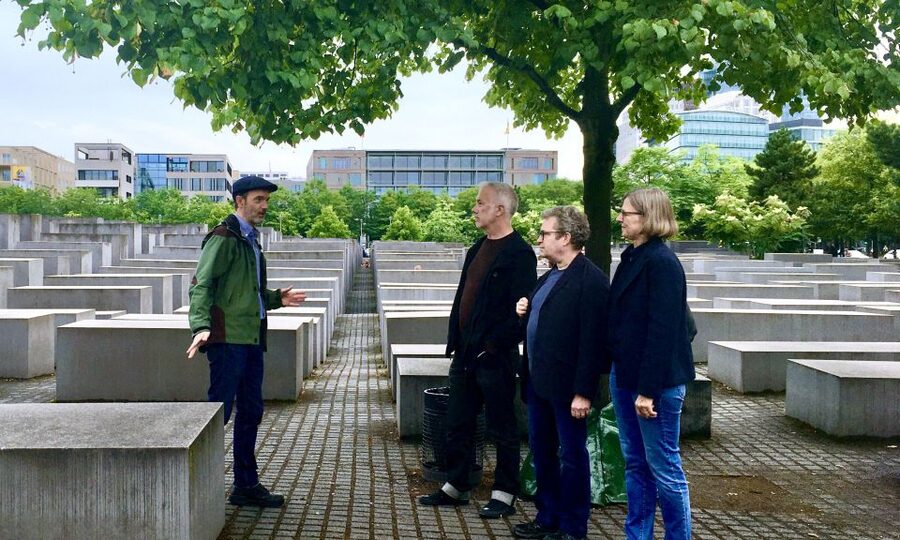
- Holocaust Memorial and the Reichstag, with discussion of Nazi misuse of the 1933 fire and later democratic symbolism
- Napoleon to Brandenburg Gate, connecting the French Revolution to German nationalism
- Prussia’s Frederick the Great and Bebelplatz book burning, turning a statue and a square into a timeline
- East Berlin rebuilt at Alexanderplatz, then finishing at Checkpoint Charlie for the Cold War end
Why this tour feels different from a “greatest hits” Berlin walk
This is the kind of Berlin tour that treats the city like a living classroom. You’re not just learning what happened, you’re learning why the same ideas and power struggles kept resurfacing in new uniforms and new systems.
What makes it work in practice is the structure. The tour starts in the Potsdamer Platz area, then keeps moving east and west across the story of modern Berlin. The stops are famous, but the guide’s job is to explain what the location meant at the time, and how that meaning changed when regimes did.
Also, the guide team is serious. You’re touring with professors, doctoral students, historians, journalists, art critics, and published authors. In a city where history can get turned into a souvenir, that level of background matters. It tends to translate into clearer answers, better context, and fewer awkward gaps when you ask how one period connects to the next.
More Walking Tours in Berlin
- Discover Berlin Half-Day Walking Tour
★ 5.0 · 9,624 reviews - Berlin: Third Reich and Cold War 2 Hour Walking Tour
★ 4.9 · 6,830 reviews - Berlin: Discover Berlin Walking Tour
★ 4.9 · 5,998 reviews
Starting at Potsdamer Platz, where the Wall’s shadow still shapes the map
The walk begins at Cafe Einstein on Unter den Linden, then you head toward Potsdamer Platz. This is a smart first choice because Potsdamer Platz became a kind of symbol of rupture and rebuilding. Before the modern cityscape, the area was tied to East Germany’s harsh border reality, including the infamous Death Strip.
From there, you follow the line where the Berlin Wall once stood, and the city starts to feel “layered.” You’re walking where people once had almost no choices at all, and you can see how quickly architecture can become a political tool.
If you’ve only visited Berlin as a tourist, this stage helps you recalibrate. It makes you look at distance and alignment differently. Streets that look ordinary at first start to feel like borders, corridors, and barriers in hindsight.
Berlin Wall route to Tiergarten, then the Holocaust Memorial and Reichstag
After Potsdamer Platz, the route continues through the area toward Tiergarten Park. This is where the tour’s pacing gets important. You’re moving through the heart of modern Berlin while the guide is placing older meanings back onto the ground you’re covering.
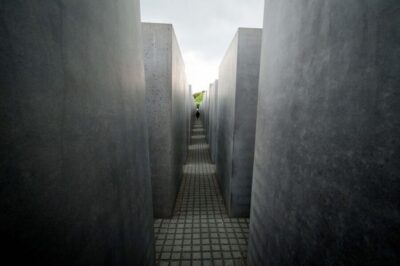
Then comes two of the most emotionally weighty stops in the entire city: the Holocaust Memorial and the Reichstag.
- Holocaust Memorial: you spend time taking in the experience and hearing how Berlin holds memory in a way that is meant to last. Even if you’ve seen pictures, you’ll likely find the scale and layout hit harder in person.
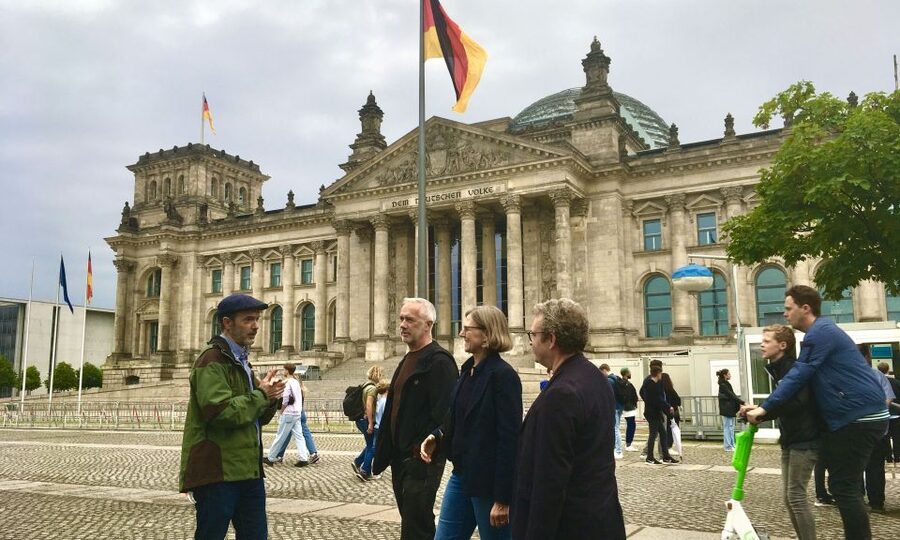
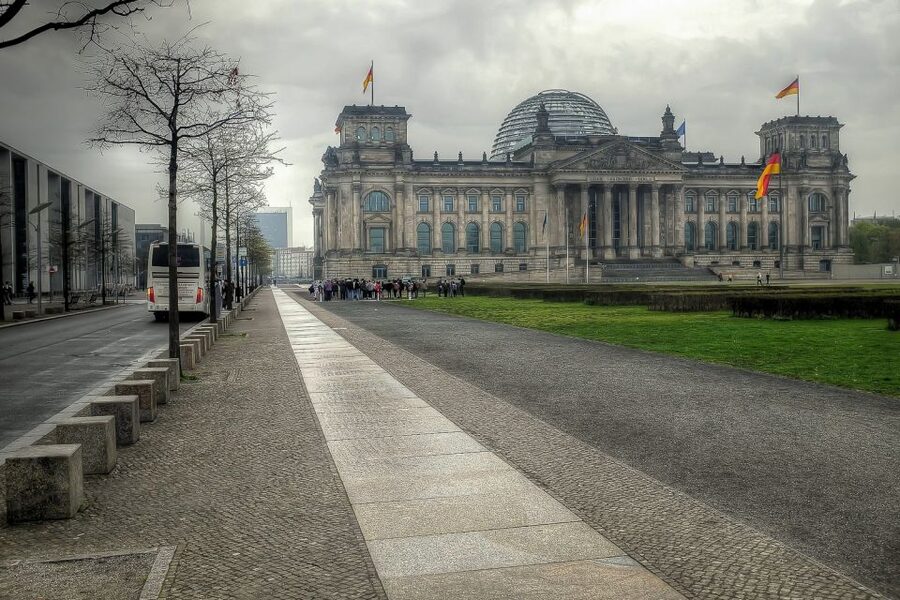
- Reichstag: this is not only about admiring the building. The guide connects the Reichstag fire of 1933 to the Nazi pretext for suspending civil liberties and arresting political opponents. That’s a key idea for understanding how quickly democratic systems can be bent.
A bonus here is the way the tour handles the building’s later transformation. The grand glass dome created for the Reichstag in 1992 by architect Norman Foster, with walkways that look down into Parliament, becomes part of the conversation about Germany’s reunification and commitment to democracy.
I like this approach because it keeps the story from becoming one-track tragedy or one-track triumph. It’s both. Germany rebuilt institutions, and it also chose to make transparency a visible symbol, literally on top of the political center.
Following the clues in power, from Brandenburg Gate to Unter den Linden
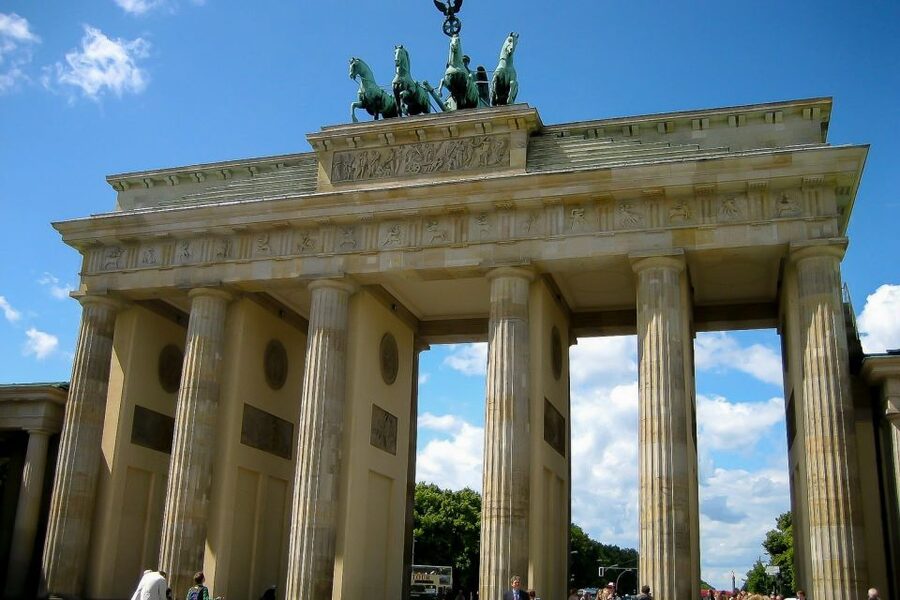
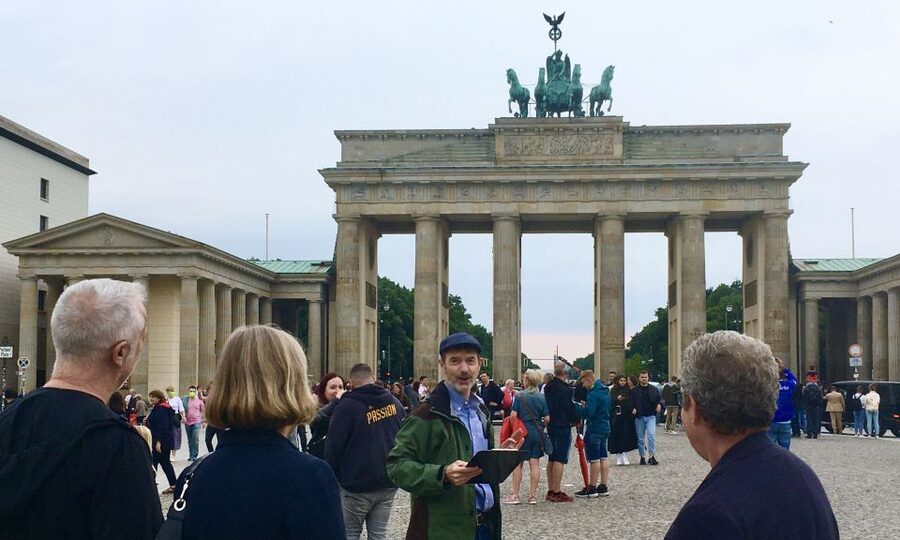
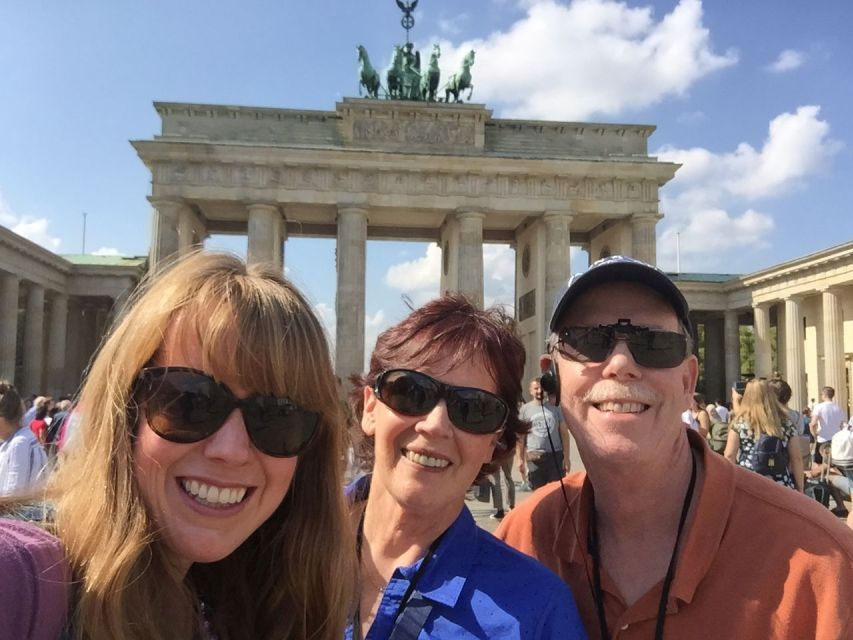
Next, you reach back further, including a stop where the story turns toward the early roots of later nationalism. The guide traces the footsteps of Napoleon through the Brandenburg Gate area, and the message is clear: the French Revolution helped spark political currents that influenced German nationalism later on.
Then you walk Unter den Linden, Berlin’s royal boulevard lined with palaces, museums, and theaters. This boulevard is a perfect “transition street.” On one side you’re seeing the outward style of power, and on the other side the guide is reminding you that ideas and institutions grow from earlier political experiments, not out of nowhere.
There’s also a pause for the equestrian statue of Frederick the Great. You’ll hear about Prussia’s “Poet King” and how his cultural and militaristic directions helped shape what came next for the German Empire.
This section is especially good if you like history that explains the mindset behind the actions. You’re not just learning dates. You’re seeing how rulers used culture and military reputation as tools of legitimacy.
Same city, a different way to spend the afternoon:
- Berlin: Reichstag, Dome and Government District Guided Tour
★ 4.7 · 18,288 reviews - Berlin: 1-Hour City Tour by Boat with Guaranteed Seating
★ 4.3 · 16,993 reviews - Berlin: TV Tower Standard Entrance Ticket
★ 4.4 · 15,883 reviews - Berlin: Boat Tour Along the River Spree
★ 4.4 · 11,252 reviews
Bebelplatz and Museum Island, where ideology shows up in books and institutions
At Bebelplatz, the tour stops at the site of the 1933 Nazi book burning. This is one of those places that feels simple until the guide puts it into full context. The guide links it to Adolf Hitler’s rise to power and the terrible consequences that followed.
If you’re the kind of visitor who cares about propaganda and control, this stop lands hard. It shows how ideology can target knowledge itself, not only people. It also gives you a concrete location to remember when you think about the broader machinery of Nazi power.
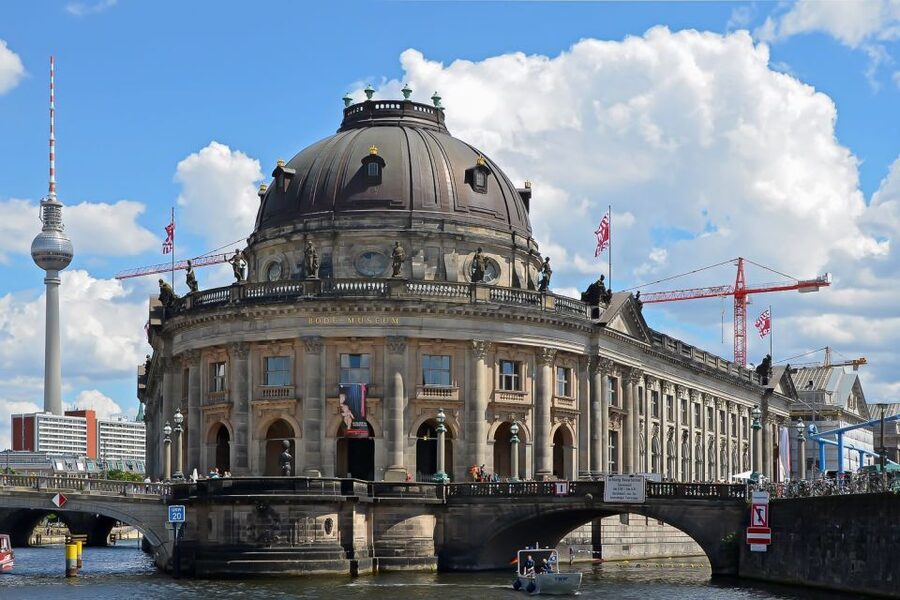
From there you cross Museum Island, often described as Berlin’s cultural center and compared in spirit to the Louvre. The point here is not to treat it like a museum checklist. It’s to show how, in the 19th century, Berlin developed a strong identity through culture and institutions.
I like that the tour uses Museum Island to remind you that cities can build beauty and prestige at the same time they are forming political structures that later get twisted.
Hackescher Markt and Alexanderplatz: pre-war pockets versus East Berlin’s showplace
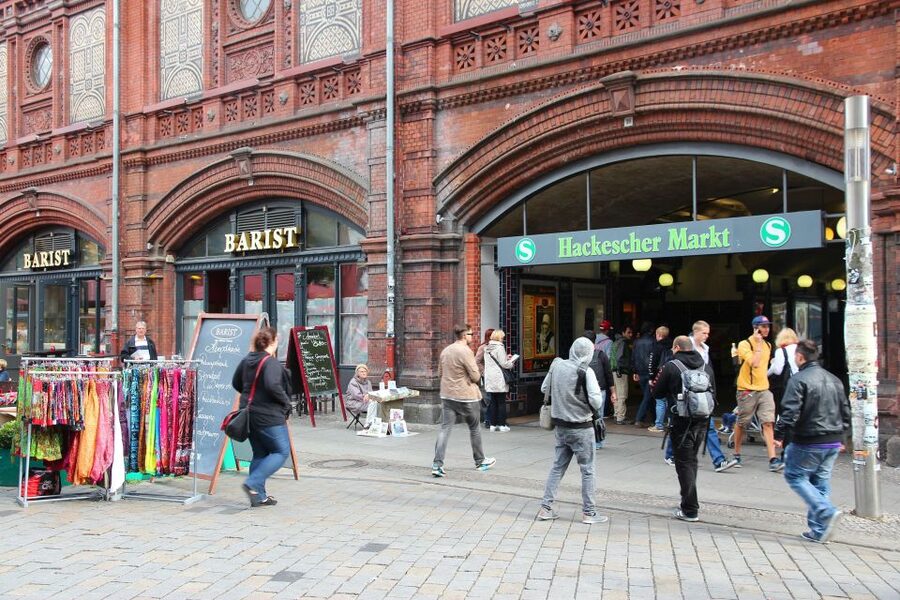
At Hackescher Markt you get a different flavor. The area is known for a network of courtyards, and the tour gives you time to ramble a bit instead of marching straight to the next landmark. This is a real breathing moment and a chance to see how Berlin’s everyday texture survives alongside its political story.
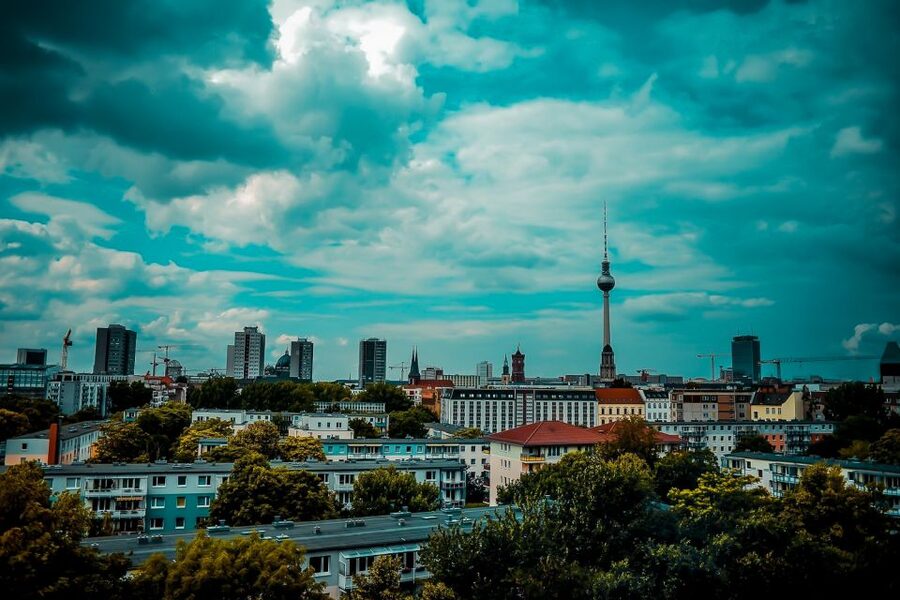
Then the tour makes a sharp contrast move to Alexanderplatz. Here the guide shifts gears into East German planning. You’ll learn how in the 1960s the square was rebuilt as a communist bloc showplace, with futuristic government buildings, apartment blocks, and the iconic TV Tower.
This stop helps you understand a very Berlin-specific idea: the same city can house two totally different visions of modern life. Alexanderplatz is a reminder that even “progress” can be built from ideology. The design looks forward, but it also reflects what the state wanted people to see and believe.
Ending at Checkpoint Charlie, where the Cold War turns into crowds
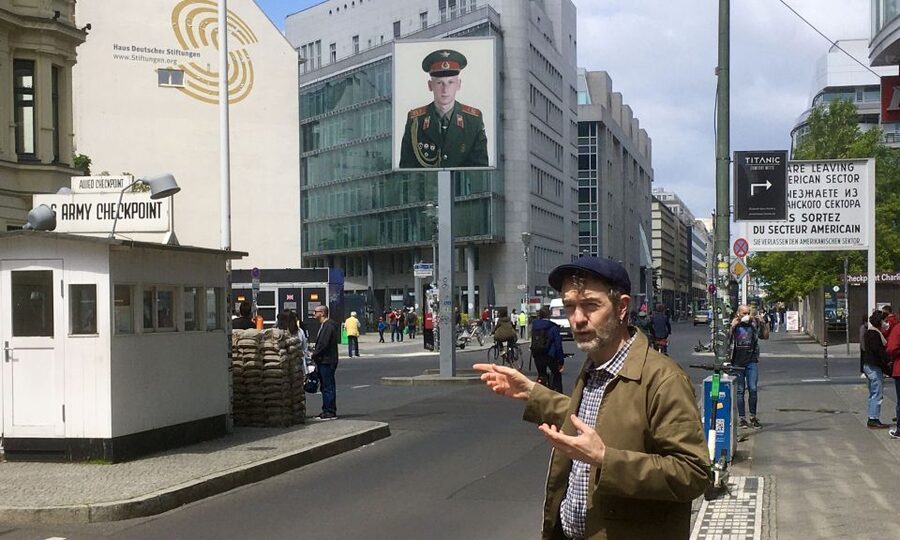
The tour finishes at Checkpoint Charlie, the legendary crossing point from West Berlin to East. The guide explains what 1989 meant here, including how thousands of East Germans poured across the border as the Cold War unraveled.
Finishing at Checkpoint Charlie works because it’s a story climax you can feel immediately. You’re standing in a place that people remember for escape, confrontation, and political change. It’s also a place where history has become visible, almost theatrical, which makes the guide’s role crucial: you get the human meaning behind the postcard reputation.
By the end, you’re not just aware of East versus West. You’ve heard how those divisions continued to impact Berlin even as the city evolves into something more multicultural and creative in recent decades.
Price and value: is $135 a fair deal for a 3-hour historian walk?
At $135 per person for a 3-hour tour, the price is not a bargain-basement city deal. But it also isn’t just you paying to see famous buildings.
You’re paying for a tight route, a guide with deep research skills, and commentary that connects key political moments across centuries. The value is highest if you want an interpretive tour, not a photos-only circuit.
If you are someone who reads plaques but still leaves confused about how events link together, this format can actually save you time later. You’ll come away with a mental timeline you can use while exploring the rest of Berlin on your own.
If your travel style is mostly independent, and you prefer to spend the whole day inside museums, you might decide you’d rather allocate your budget to a museum day. But if you want one strong orientation to the city’s political story, this is a solid use of your time.
What the guide quality brings to the experience
Two review themes really matter here. One is individual attention. In one account, the tour felt very individualized, and the guide managed to shape the experience to the group in real time. Another is expertise and delivery. A guide named Dr. Martin Sauter was specifically praised for his knowledge and the way he taught, which suggests you’ll get clarity, not just facts.
That aligns with the stated guide backgrounds. When the people leading are historians, doctoral students, and published authors, you’re more likely to get answers that are careful and grounded, especially when the tour reaches difficult topics like Nazi repression.
One more practical note: the tour uses public transport one or twice because some distances between key sites are too long for comfortable walking. If you plan ahead and bring your transit-ready mindset, it becomes part of the flow rather than a disruption.
Who should book this Berlin 3-hour story walk
This tour is a great fit if you:
- Want a guided political timeline across major landmarks, not just a classic sightseeing loop
- Prefer walking tours that explain context, including how ideology turns into policy and action
- Enjoy asking questions and hearing the reasoning behind historical change
- Want an anchor route you can use to explore Berlin later with more confidence
It may be less ideal if you:
- Want a quiet, low-intensity day focused only on art and architecture
- Struggle with emotionally heavy subjects without downtime
- Prefer a longer format with more time inside buildings
Should you book it?
I’d book it if you want Berlin to make sense beyond the obvious photos. The route is built around the kind of connections that are hard to assemble on your own: Prussia’s rise, the Nazi period’s mechanisms of power, the Cold War’s border logic, and the symbolic choices in reunified Germany.
Skip it if you’re mainly looking for a relaxed stroll or you want to spend hours in museums. In that case, you might get more value from a museum-focused plan.
If you’re on the fence, here’s a simple decision rule: if you’re willing to walk fast and listen closely for three hours, this tour can give you a strong foundation for the rest of your Berlin days.
FAQ
How long is the Berlin walking tour?
The tour lasts 3 hours.
Where does the tour meet?
You meet at Cafe Einstein, Unter den Linden 42, 10117 Berlin, Germany.
How much does the tour cost?
The price is listed as $135 per person.
Is the tour guided, and what language is it in?
Yes, it is a live tour with an English-speaking guide.
Is public transport used during the tour?
Yes, you will need to use public transport one or twice because some distances between key sites are too far to walk. Your guide will help you buy tickets in the first metro station if you do not have a Berlin metro pass.
What public transport ticket prices are provided?
A Berlin Transit One Way Tarif AB ticket is 2.8 EUR (Senior Discount 1.70 EUR). A Berlin Transit Day Ticket is 7 EUR (Senior Discount 4.70 EUR).
Are private or small groups available?
Yes, private or small groups are available.
What is included in the price?
The price includes a 3-hour tour of Berlin in the company of a historian.
Can I cancel for a refund, and can I reserve without paying right away?
Free cancellation is available up to 24 hours in advance for a full refund, and you can reserve now and pay later.
Newest Berlin reviews on the site
- Jetbike Berlin fun bike beer bike★ 5.0 · 3 reviews
- Karl-Marx-Allee Walking Tour: Berlin’s Socialist History★ 5.0 · 5 reviews
- Homeless on chic streets: city tour in Berlin from personal experience★ 4.6 · 3 reviews
- Berlin: Sachsenhausen Concentration Camp Guided Tour★ 4.9 · 42 reviews
- Historyof the Trans, Queer & Gay communities of Berlin tour★ 4.8 · 17 reviews
- Historic Berlin Pubs & History Tour★ 4.9 · 73 reviews
- Berlin: City Center Walking Tour★ 4.7 · 45 reviews
- Half-Day Berlin Highlights Segway Expedition★ 4.5 · 61 reviews
Walking Tours, compared.

Berlin’s Best: 2 Hour Walking Tour Third Reich and the Cold War
Read our review →
Third Reich Berlin: Hitler and WWII Walking Tour
Read our review →Browse the lists this tour appears in