
Reviewed · WALKING TOURS
An Introduction to Berlin Walking Tour
Berlin hits you fast with power and memory. I like the small-group size (up to 8) because you get real guide attention, and I like how the route stitches three centuries into one clear story rather than a random grab bag. One thing to consider, though, is that it is not only a foot-only walk, you’ll use public transport a few times.
You start at Unter den Linden and end back in the city after visiting major landmarks that define modern Berlin. I also like that the guide lineup can include professors, doctoral students, journalists, and especially thoughtful storytellers, so the architecture and historical context feel connected, not memorized facts.
In This Review
- Key things you’ll notice on this Berlin walking tour
- A 3-hour Berlin route that links Prussia, the 20th century, and memory
- Unter den Linden start point, mobile ticket, and how transit fits in
- Reichstag Building: democracy’s glass dome and why it became iconic
- Brandenburg Gate: the Prussian plan that became a stage for history
- Museum Island on Spreeinsel: Prussian-era ambition in stone
- Potsdamer Platz: where Berlin rebuilt itself after the Wall
- Unter den Linden and Tiergarten: the grand boulevard and the city’s lung
- The Holocaust Memorial: stepping into a somber labyrinth of slabs
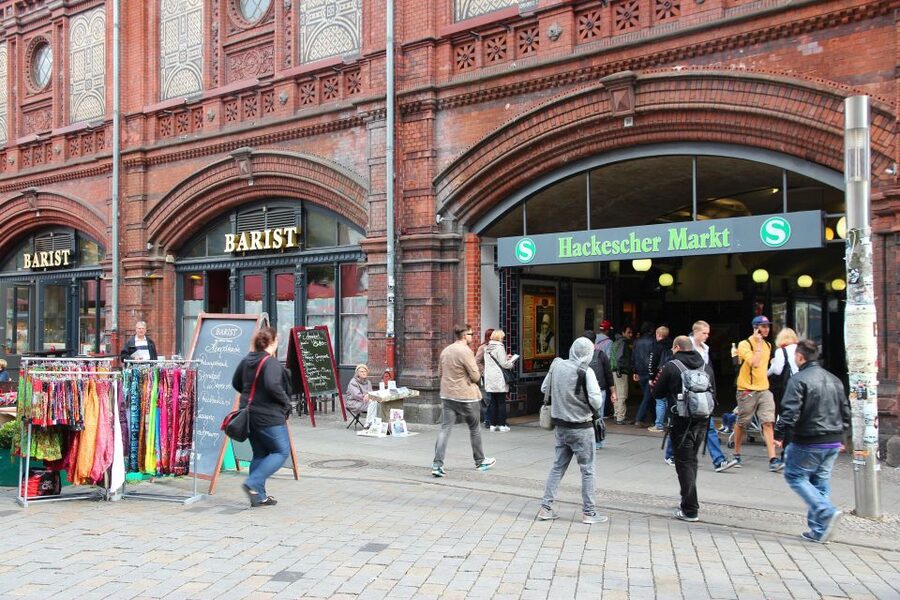
- Hackescher Markt courtyards: pre-war Art Nouveau details in central Berlin
- Price and value: what 156.53 gets you in central Berlin time
- Who should book this Berlin walking tour
- Should you book this tour?
- FAQ
- How long is the Berlin walking tour?
- What language is the tour offered in?
- How much does the tour cost?
- How many people are in the group?
- Where do we meet for the tour?
- Where does the tour end?
- Is the tour mostly walking?
- Are any admissions included?
- What transit ticket do I need?
- What is the cancellation policy?
Key things you’ll notice on this Berlin walking tour
- Up to 8 people, more time for your questions
- Historian-led storytelling that ties early Prussian influence to 20th-century Berlin
- Top Berlin icons in one compact route (Reichstag, Brandenburg Gate, Potsdamer Platz, Wall-era sites)
- Museum Island as a focal stop with major Prussian-era museums on Spreeinsel
- Holocaust Memorial visit designed as a somber space for reflection
- Mobile ticket included, with a guide who can help with metro planning
A 3-hour Berlin route that links Prussia, the 20th century, and memory
This tour is built around one big idea: Berlin did not become what it is by accident. The best moments come when your guide shows the continuity from early Prussian militarism, through the political power centers that shaped the 20th century, and into the places Berlin uses today to remember and redefine itself.
You’ll also notice the difference between “seeing landmarks” and understanding them. With a historian at the front, you don’t just move from photo spot to photo spot. You learn why the Reichstag’s modern glass dome matters, why the Brandenburg Gate became a stage for world-changing speeches, and why the Holocaust Memorial is designed the way it is.
The format helps. A roughly 3-hour pace means you cover a lot of ground without feeling trapped in a single neighborhood. And because the group is small, you can ask follow-up questions when the story gets specific.
More Walking Tours in Berlin
- Discover Berlin Half-Day Walking Tour
★ 5.0 · 9,624 reviews - Berlin: Third Reich and Cold War 2 Hour Walking Tour
★ 4.9 · 6,830 reviews - Berlin: Discover Berlin Walking Tour
★ 4.9 · 5,998 reviews
Unter den Linden start point, mobile ticket, and how transit fits in
You meet at Unter den Linden 42, 10117 Berlin. It is a convenient place to gather, and the tour notes that the meeting point is near public transportation.
You’ll also want your phone ready. This experience includes a mobile ticket, which makes check-in smoother and reduces paper juggling while you’re moving through central Berlin.
One logistics note that actually affects your comfort: transportation is not included, and the tour uses public transport a few times because some key stops are too far to walk. If you do not already have a Berlin visitor transit pass, plan around a day metro pass. The tour suggests:
- Berlin Transit Day Ticket: 7 Euro (Senior discount also listed)
- If needed, your guide can help you buy at the first metro station on the tour
If you are the type who hates last-minute ticket lines, a quick plan ahead is worth it. But the tour does give you a workable backup, and you’ll know early enough in the day what you need.
Reichstag Building: democracy’s glass dome and why it became iconic
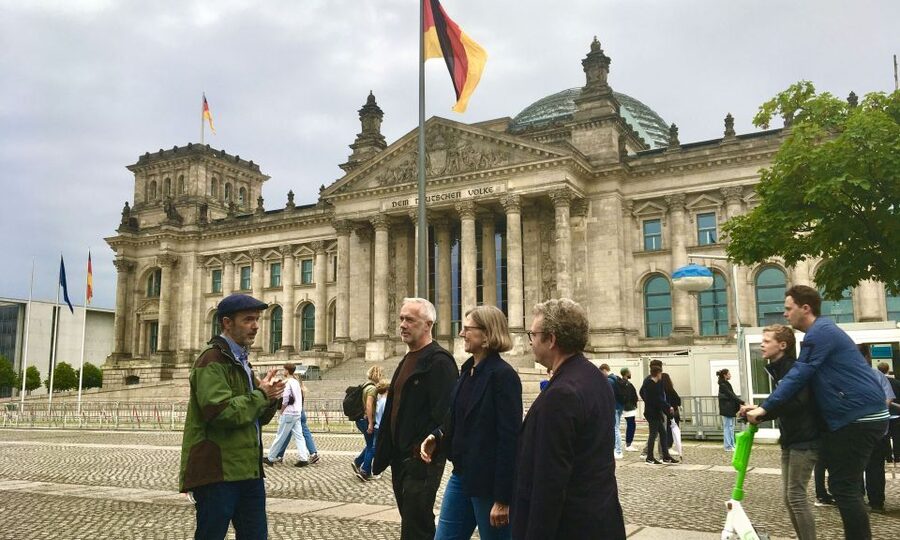
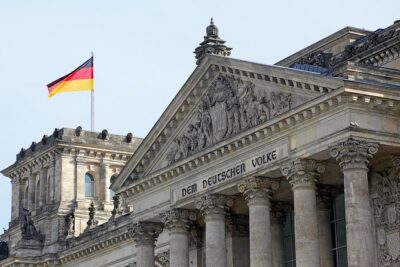
Your first stop is the Reichstag Building. It is the meeting place of the Bundestag, Germany’s national legislature. The most recognizable feature for many visitors is the glass, transparent dome added in the 1990s by Norman Foster, which the tour frames as an iconic image of Germany’s commitment to democratic government.
Even if you only get time to focus on the exterior and the key facts your guide points out, the dome is not just a neat design. It is a visual message: transparency, public access, and a modern political identity built on something different than the old power structures Germany once lived with.
This stop includes free admission ticket on the tour’s info, so you can plan around it without factoring in an entry fee in your budget for this part of the day.
Brandenburg Gate: the Prussian plan that became a stage for history
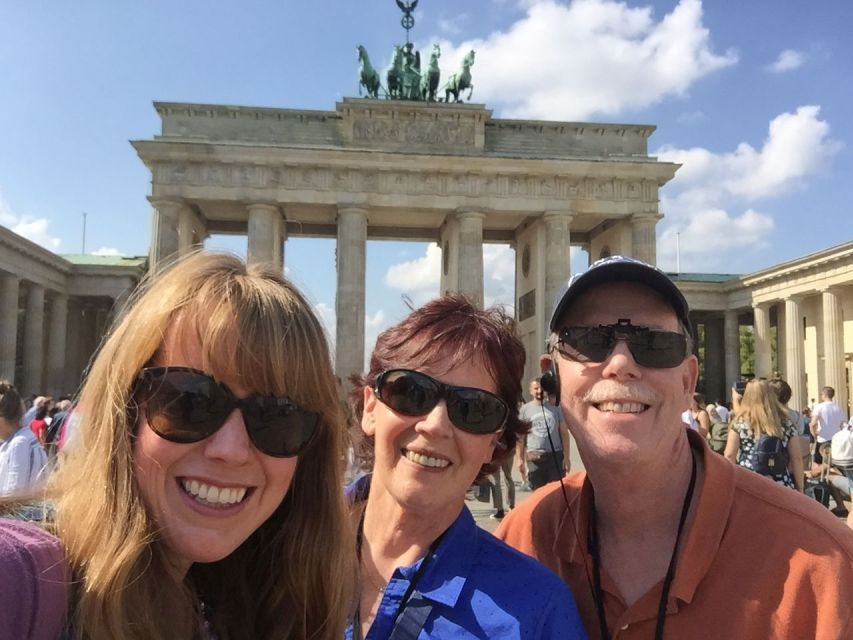
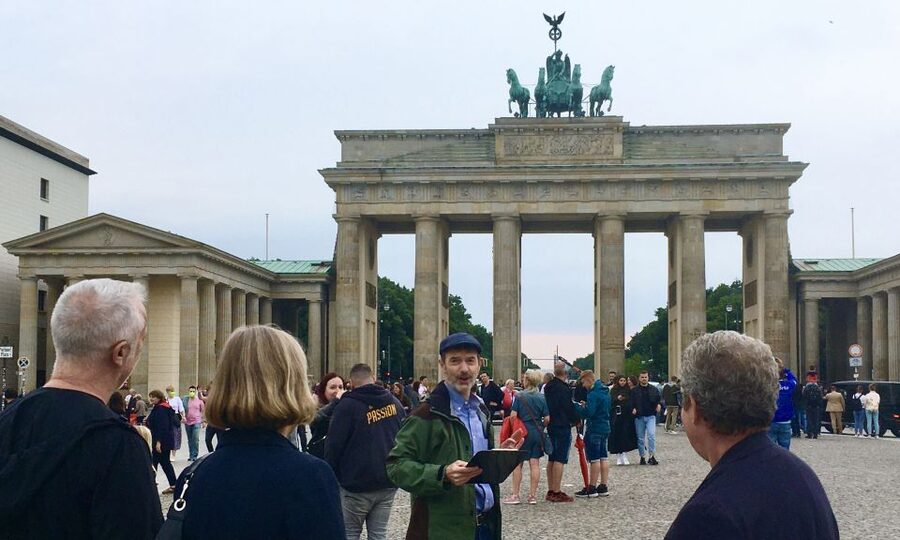
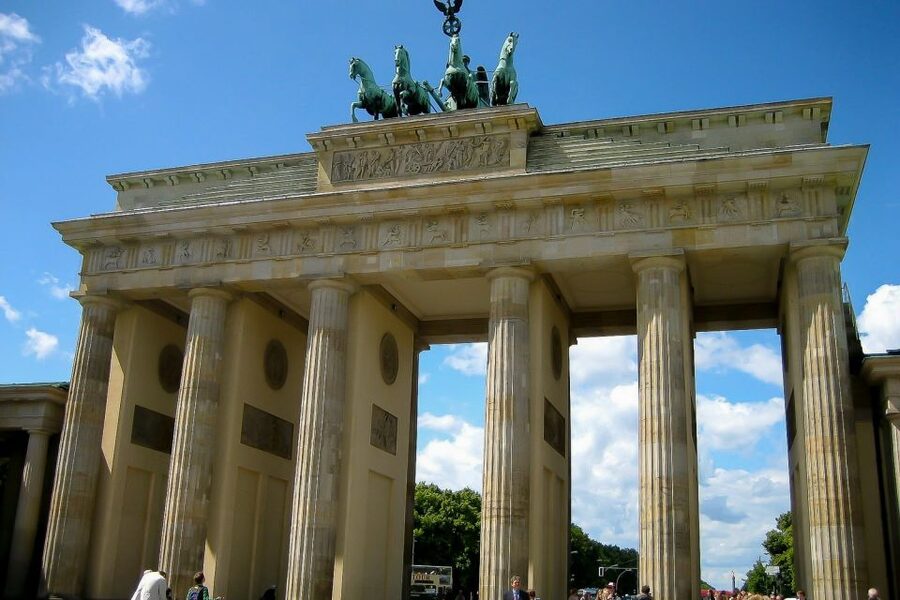
Next up is the Brandenburg Gate, an 18th-century neoclassical monument built on the orders of Prussian king Frederick William II. That detail matters. It reframes the gate from being just a famous photo backdrop into something with a clear origin tied to state power.
Your guide also connects it to major moments that echo through Berlin’s modern identity. The tour points to famous events associated with the gate, from Napoleon’s triumphant entrance to Ronald Reagan’s Cold War-era speech. Standing here with that timeline in mind changes how you see the gate. You can feel how one location can carry different meanings depending on the era.
Like the Reichstag stop, this is listed with free admission, so it fits neatly into a plan that keeps costs controlled for a guided sightseeing day.
Same city, a different way to spend the afternoon:
- Berlin: Reichstag, Dome and Government District Guided Tour
★ 4.7 · 18,288 reviews - Berlin: 1-Hour City Tour by Boat with Guaranteed Seating
★ 4.3 · 16,993 reviews - Berlin: TV Tower Standard Entrance Ticket
★ 4.4 · 15,883 reviews - Berlin: Boat Tour Along the River Spree
★ 4.4 · 11,252 reviews
Museum Island on Spreeinsel: Prussian-era ambition in stone
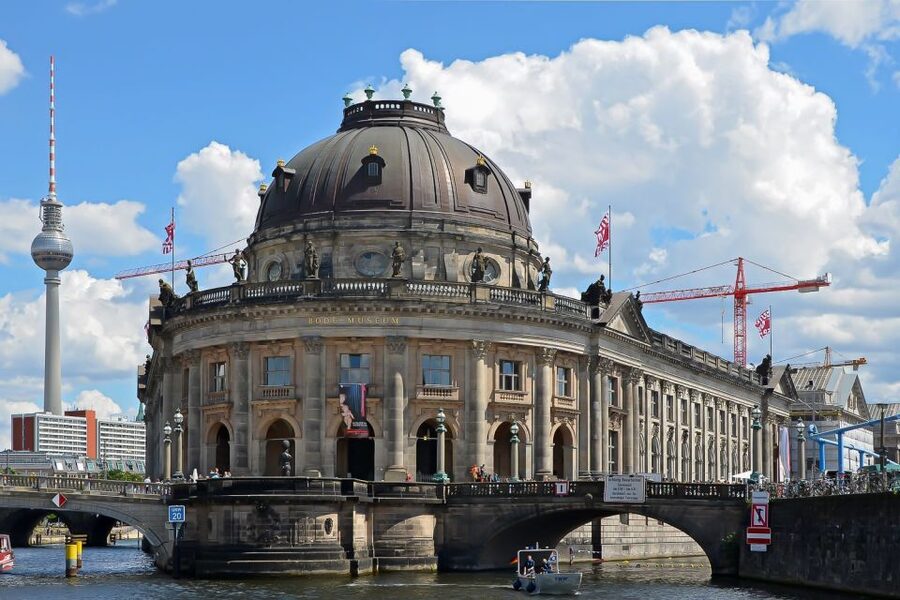
You’ll then head to Museum Island on Spreeinsel (Spree Island). This ensemble of buildings is centered on Prussian rulers and includes several of Berlin’s biggest museum names. The tour highlights five large museums, including:
- Pergamon
- Neues Museum (New Museum)
- Alte Nationalgalerie (Old National Gallery)
Here’s the practical value: Museum Island is a place where you can understand how power expressed itself through culture and collections. The guide’s story helps you see these buildings as planned civic statements, not just “a place to go if you like museums.”
Time at this stop is about 25 minutes. That is perfect for getting oriented, learning what’s where, and understanding the broader setting. It is not set up as a full museum day, so if you want hours inside one building, you’ll likely need a separate plan. But for a 3-hour overview tour, Museum Island works because it gives you the context that makes independent museum visits feel easier later.
Potsdamer Platz: where Berlin rebuilt itself after the Wall
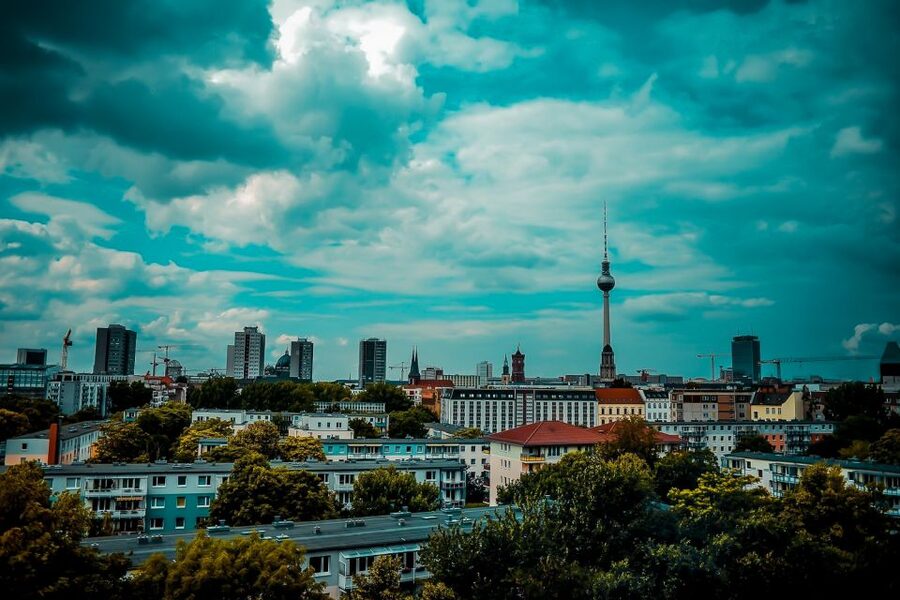
At Potsdamer Platz, the tour shifts from 18th- and early state-history to the drama of 20th-century division and renewal. The tour describes the square as a historic area that has been reborn since the fall of the Berlin Wall, now functioning as a hub for entertainment, restaurants, and shops.
This stop is short, around 15 minutes, but it’s a good reset point. You go from political and memorial space into a place designed for everyday life. That contrast is useful when the theme is Berlin’s changing relationship with power, conflict, and rebuilding.
If you like having time after tours to eat or wander, Potsdamer Platz can be handy. Even if you do not stop for a meal during the tour, it is a strong area to return to later.
Unter den Linden and Tiergarten: the grand boulevard and the city’s lung
A key part of the walk is Unter den Linden, Berlin’s grand boulevard running from the City Palace toward the Brandenburg Gate. The name comes from the lined-up linden trees along the route, and the tour notes it as Berlin’s answer to Paris’s Champs-Élysées.
This is one of those streets where the guide’s story gives you something to look for. With the right context, you stop seeing it as simply a main road. You start noticing how such boulevards express national confidence, public ceremony, and a kind of urban theater.
Time here is about 30 minutes, which gives you enough stretch to actually walk the boulevard rather than just stand at a corner.
Then you get Tiergarten, Berlin’s most famous inner-city park. The tour frames it as a place with graceful gardens and grand statuary. This is the breather in the itinerary. After political buildings, monuments, and museum architecture, Tiergarten gives your brain a chance to reset while you still stay in central Berlin’s core story.
The Holocaust Memorial: stepping into a somber labyrinth of slabs
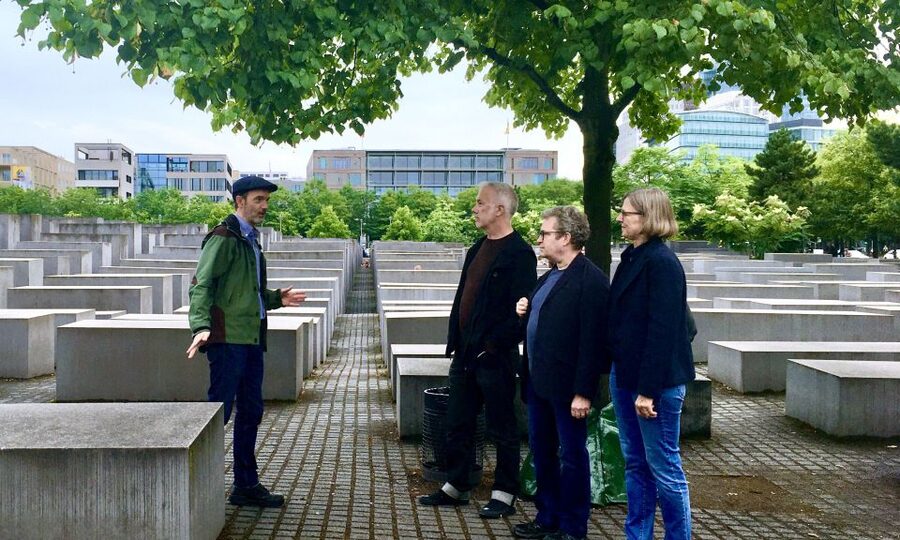
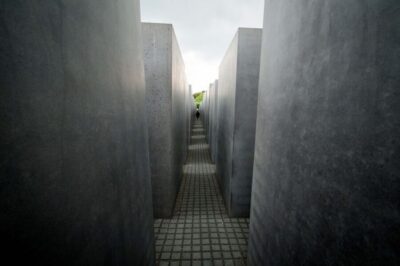
One of the most important stops is the Memorial to the Murdered Jews of Europe. The tour describes it clearly and respectfully: designed by architect Peter Eisenman and opened in 2005.
The site’s design is built from 2711 concrete slabs of different heights. Those slabs create a powerful experience described as a somber labyrinth and a space for reflection.
In practical terms, this is not the stop to rush. The space is the point. I find that your best approach is to walk slowly, keep your senses open, and let the design do the work. Your guide’s framing is useful here because it gives you permission to treat the memorial as a reflective place, not a checklist photo.
Time is listed as about 10 minutes. That’s not a lot, but it is enough to pause, understand what you’re looking at, and move on with the day still carrying weight.
Hackescher Markt courtyards: pre-war Art Nouveau details in central Berlin
To end the tour theme with something textured and human-scale, you visit Hackescher Markt. The tour calls it a lively square where you can see preserved Art Nouveau courtyards from pre-war Berlin.
This is a good match for people who love architectural details. The courtyards can feel like a different Berlin layered behind the modern streets. Even with a relatively short 15 minutes here, you can get the sense of what made old central Berlin feel distinct and livable.
It also gives you options after the tour. Hackescher Markt is the kind of area where you can continue exploring without needing to plan a whole new commute.
Price and value: what 156.53 gets you in central Berlin time
The price is $156.53 per person for an about 3-hour guided experience, offered in English. The tour is also described as averaging 7 days in advance bookings, which often signals that the dates you want can fill up.
What makes the price feel more reasonable than it might at first glance is what’s included:
- A 3-hour tour in the company of a historian
- Small group size (maximum 8)
- A mobile ticket
- Several stops listed as free admission tickets
You are also not paying for the guide time separately from transportation. Transportation costs are not included, but the tour gives concrete guidance: buy a day metro ticket if needed, and you may use public transport a few times.
If you compare this kind of guided route to self-planning, the value is in the threading of meaning. The itinerary is not just a list of famous buildings. It connects the early Prussian context to what shows up in modern Berlin, then lands on remembrance and renewal.
A final note from the quality angle: the guide team can include people like professors, doctoral students, journalists, and hosts who tell stories well. One prior group had an architect lead named Dan, and the pacing landed so well that they were pointed toward lunch right after the tour. That’s a good sign that the guide is not only teaching facts, they are managing your time and flow.
Who should book this Berlin walking tour
Book it if you want:
- A compact, guided overview of Berlin’s major political and memorial sites
- Architecture and urban storytelling, with a guide who can explain why buildings matter
- A small group experience rather than a crowd
- English-language guiding with historian-level context
It is also a solid choice if you like the idea of free admission stops built into the route. The itinerary hits the Reichstag, Brandenburg Gate, Museum Island, Potsdamer Platz, Unter den Linden, Tiergarten, the Holocaust Memorial, and Hackescher Markt without forcing you to plan separate entry days.
You might skip it if you already know Berlin very well and want deep museum time, since this is designed around a walking-and-transit overview, not long, indoor-only visits.
Should you book this tour?
Yes, if you want your first Berlin day to feel guided and coherent. This route gives you major landmarks in a smart order, from Germany’s political center at the Reichstag to the symbol-loaded Brandenburg Gate, out to Museum Island’s Prussian museum presence, across to Potsdamer Platz’s post-Wall life, through the ceremonial boulevard of Unter den Linden, past Tiergarten’s calm, and finally into the Holocaust Memorial’s heavy design.
If your travel style is short on context and heavy on independent wandering, you could feel limited by the fixed time at each stop. But if you like learning while you walk, this is a strong way to get oriented fast in Berlin, with a guide who can connect the dots instead of just pointing them out.
FAQ
How long is the Berlin walking tour?
It runs for about 3 hours.
What language is the tour offered in?
The tour is offered in English.
How much does the tour cost?
The price is $156.53 per person.
How many people are in the group?
The tour has a maximum of 8 travelers.
Where do we meet for the tour?
You meet at Unter den Linden 42, 10117 Berlin, Germany.
Where does the tour end?
The tour ends in Berlin.
Is the tour mostly walking?
It includes walking, but you will also use public transport a few times because some key sites are too far to walk.
Are any admissions included?
The listed stops include free admission ticket for the Reichstag, and free admission for the other major stops mentioned in the itinerary.
What transit ticket do I need?
If you do not already have a Berlin visitor transit pass, the tour suggests buying a day metro pass. If you cannot purchase it in advance, the guide will help you buy it at the first metro station on the tour.
What is the cancellation policy?
You can cancel for a full refund if you cancel at least 24 hours in advance of the experience start time. Free cancellation is available.
Newest Berlin reviews on the site
- Your ticket to The Wall Museum Berlin★ 3.0 · 60 reviews
- Rickshaw Tours Berlin – Groups of up to 16 people with several rickshaws★ 4.0 · 97 reviews
- Love and War in Berlin: Self-Guided Story Puzzle Walk★ 5.0 · 7 reviews
- Warnemuende Shore Excursion: Berlin Private Sightseeing Tour from Rostock★ 5.0 · 4 reviews
- eSIM for Germany and 34 European Countries★ 4.5 · 16 reviews
- Warnemuende Shore Excursion: Private Berlin Tour★ 4.5 · 27 reviews
- Walking on the Wall: 3-Hour Tour in Berlin★ 4.5 · 34 reviews
- Karl-Marx-Allee Tour: Life and Architecture in East Berlin★ 5.0 · 19 reviews
Walking Tours, compared.

Berlin’s Best: 2 Hour Walking Tour Third Reich and the Cold War
Read our review →
Third Reich Berlin: Hitler and WWII Walking Tour
Read our review →Browse the lists this tour appears in