
Reviewed · WALKING TOURS
An Introduction to Berlin Private Walking Tour
Berlin hits you in the face with history. This private 3-hour walk connects the city’s big political turning points, with a historian scholar-guide who helps you read what you see, not just what you’ve been told. I like that the route hits both democratic milestones and the brutal realities of the 20th century, and I especially like the private format, where you can ask questions instead of watching a crowd file past.
One possible drawback: the tour is short, so you will spend limited time at each landmark. You will also use public transport a few times, so plan for a bit of logistics rather than expecting a totally car-free, purely walkable day.
In This Review
- Key points to know before you go
- What makes this Berlin tour worth your time
- How the 3 hours actually play out (and why that timing works)
- Meeting point and pickup: start clean, start calm
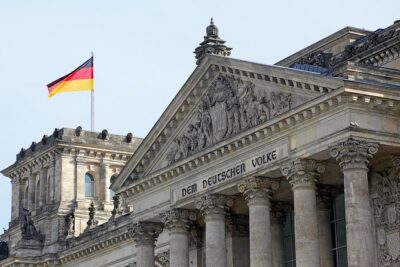
- Reichstag Building: Germany’s democracy in glass and steel
- Brandenburg Gate: one monument, many political chapters
- Museum Island: where Berlin built its museum power
- Potsdamer Platz: rebuilding after collapse
- Unter den Linden: Berlin’s grand boulevard and its cultural mood
- Tiergarten: a pause in the middle of the story
- Holocaust Memorial: a somber space built to slow you down
- Hackescher Markt: back to everyday Berlin and preserved courtyards
- Transit and smart ticket moves (so you do not lose time)
- Price and value: when $520.73 per group makes sense
- Who this tour fits best
- Should you book this private Berlin walking tour?
- FAQ
- What is the duration of the tour?
- Is this a private tour?
- What language is the tour offered in?
- Where does the tour start and where is the meeting point?
- Is hotel pickup available?
- What is included in the price?
- Are food and drinks included?
- Do we need public transport during the tour?
- Is there admission cost at the stops?
- FAQ
- What is the cancellation policy?
- Can I get help with transit tickets if I do not buy one ahead of time?
Key points to know before you go
- A scholar-guide, not a scripted guide, with time for your questions and a history-focused approach
- Private group up to 10, so your pacing can be realistic and personal
- A tight 3-hour route that touches Reichstag, Brandenburg Gate, Museum Island, Potsdamer Platz, Unter den Linden, Tiergarten, the Holocaust Memorial, and Hackescher Markt
- Most main stops are ticket-free based on the included stop notes, so you are not paying entrance fees during the walk
- Public transport is part of the plan, and your guide can help you buy a ticket at the first metro stop if needed
What makes this Berlin tour worth your time
Berlin is not one story. It is several eras stacked on top of each other, with different maps for each decade. This tour works because it treats landmarks like evidence. You do not just look at the Reichstag dome and move on. You learn how the building connects to Germany’s modern democratic system, then you keep moving until the city’s darker chapters start showing up in the conversation.
The private part matters more than you might expect. With a standard walking tour, the guide has to keep momentum for everyone. Here, you can ask direct questions and get answers that fit your interests, like World War II and how Berlin changed under competing political systems. One standout example from a previous tour: the guide Jakob was praised for sharing context shaped by his family history as the grandchild of a Holocaust survivor. That kind of personal historical framing can make the serious parts of Berlin land with real clarity.
More Walking Tours in Berlin
- Discover Berlin Half-Day Walking Tour
★ 5.0 · 9,624 reviews - Berlin: Third Reich and Cold War 2 Hour Walking Tour
★ 4.9 · 6,830 reviews - Berlin: Discover Berlin Walking Tour
★ 4.9 · 5,998 reviews
How the 3 hours actually play out (and why that timing works)
The tour runs about 3 hours. That is long enough to cover a meaningful slice of Berlin’s center, but short enough to stay focused. The itinerary is built with short stops at major sites, typically 10 to 30 minutes each, so you get the key ideas without turning the day into a marathon.
You should also expect a few transitions by public transport. Some of the distances between key sites would be too much for a casual full walk in a single half-day, so the schedule includes metro travel. The good news is that your guide knows the route and can get you moving efficiently.
Timing tip: if you can, arrive early for the start so you do not feel rushed. You are told to meet 15 minutes before start time at Cafe Einstein, Unter den Linden 42 (unless pickup is arranged).
Meeting point and pickup: start clean, start calm
Your default meeting point is Cafe Einstein, Unter den Linden 42, 100117 Berlin. The tour start is near public transportation, which helps if you are coming from a hotel in central areas.
Pickup is offered, but it depends on whether hotel pickup is arranged for your booking. If you do not have pickup, plan on meeting at the cafe exactly as directed and settling in with your group before the historian guide starts.
Also, you get a mobile ticket, and confirmation comes at booking time. That combination usually makes last-minute coordination easier, especially on a city day where you might be juggling other plans.
Reichstag Building: Germany’s democracy in glass and steel
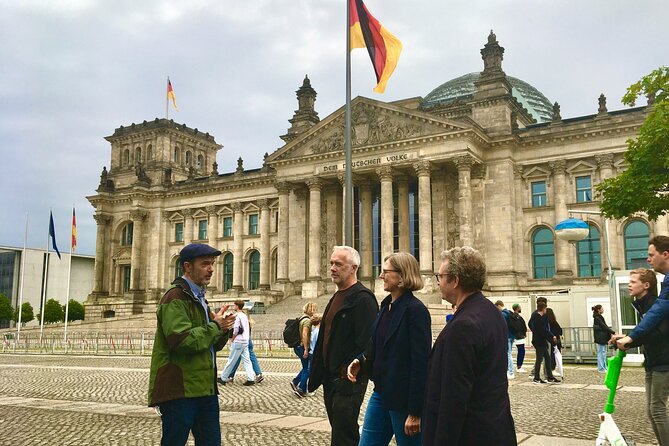
The tour begins at the Reichstag Building, the meeting place of the Bundestag, Germany’s federal assembly. This is not only an architectural stop. It’s an idea stop. You will learn how the Bundestag’s location ties into modern government, and why the building matters in Berlin’s identity.
A key detail to listen for is the glass dome added in the 1990s by architect Norman Foster. The dome has become an iconic view of modern Germany’s commitment to democratic government, and your guide will likely connect the visual symbolism to the political meaning behind it.
Time at the Reichstag is about 20 minutes, and the notes say the admission ticket is free for this stop. Even if you are not focused on architecture, pay attention to how the guide explains the dome. It’s one of those “looks simple, means a lot” Berlin moments.
Same city, a different way to spend the afternoon:
- Berlin: Reichstag, Dome and Government District Guided Tour
★ 4.7 · 18,288 reviews - Berlin: 1-Hour City Tour by Boat with Guaranteed Seating
★ 4.3 · 16,993 reviews - Berlin: TV Tower Standard Entrance Ticket
★ 4.4 · 15,883 reviews - Berlin: Boat Tour Along the River Spree
★ 4.4 · 11,252 reviews
Brandenburg Gate: one monument, many political chapters
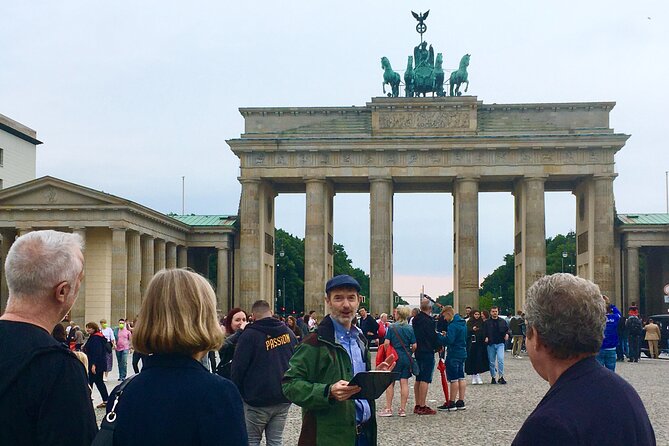
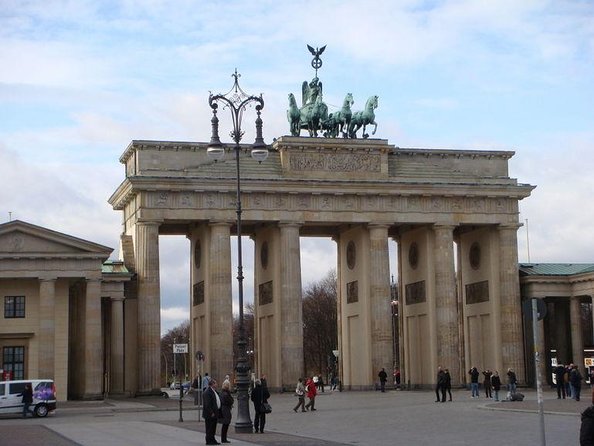
Next up is the Brandenburg Gate, an 18th-century neoclassical monument commissioned by Prussian king Frederick William II. This gate has acted like a stage set for major events, and the guide’s job is to connect the site to the historical moments that played out there.
You will hear how it has figured into different eras, including Napoleon’s entrance into Berlin and Ronald Reagan’s Cold War speech. Even if you already know the gate’s headline stories, a good historian guide will help you understand why this single monument got used again and again as a symbol.
Another 20-minute stop, with free admission noted. The main drawback here is practical: the gate area can feel busy, and your time is limited. Treat this stop as a “context plus a quick look” moment, not a slow stroll.
Museum Island: where Berlin built its museum power
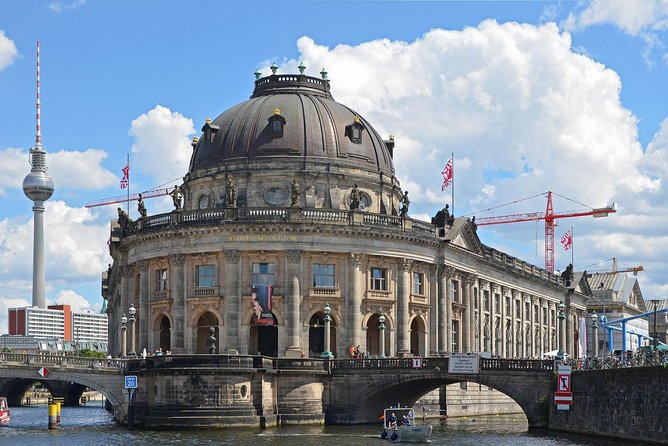
You then reach Museum Island on Spreeinsel (Spree Island). This is one of Berlin’s most concentrated museum areas, centered on a group of major Prussian-era museums.
The key names you should keep in mind: Pergamon, Neues Museum (New Museum), and Alte Nationalgalerie (Old National Gallery). Even if you do not plan to enter any museums today, the island is valuable for understanding how Berlin shaped culture and national identity through institutions.
The stop is about 20 minutes with free admission noted. You will likely get a quick orientation of the building cluster and the significance of its place in Berlin’s story. If you want museums later, this is where you start making mental notes.
Potsdamer Platz: rebuilding after collapse
Next is Potsdamer Platz, a historic square that has been reshaped since the fall of the Berlin Wall. The area today functions as a hub for entertainment, restaurants, and shops, but it also marks the shift into a newer Berlin.
The idea here is contrast. You are moving from monuments of state to a space that became a symbol of rebuilding and new urban life. It’s not a “dark history” stop, but it is still about Berlin’s political and social pivot points.
This stop is about 15 minutes, free admission noted. The practical consideration: Potsdamer Platz can feel modern and commercial, so if you crave only solemn memorials, this may feel like a breather. That said, it’s a useful reminder that history includes what happens after the hard parts.
Unter den Linden: Berlin’s grand boulevard and its cultural mood
Then you walk toward Unter den Linden, the famous boulevard named for the linden trees lined along it. Think of it as Berlin’s grand public axis, running from the City Palace area to the Brandenburg Gate.
The tour frames it as Berlin’s answer to Paris’s Champs-Élysées. That comparison is helpful because it points to how major boulevards get used: not just for walking, but for projecting power, culture, and a city’s self-image.
Expect about 30 minutes here, with free admission noted. This is also a smart stretch of time because it lets you look around, orient yourself, and get a feel for central Berlin’s street structure after a sequence of more “pointed” stops.
Tiergarten: a pause in the middle of the story
After the boulevard energy, you reach Tiergarten, Berlin’s most famous inner-city park. The park offers gardens and statuary, so it works like a reset button in the itinerary.
This stop is short, about 10 minutes, and it’s ticket-free. The value is less about seeing every corner and more about breaking up the day. Berlin can be intense, and a quick green-space moment helps your brain connect what you learned without feeling like you’re just collecting monuments.
If you’re the type who likes atmosphere as much as facts, you will likely enjoy this brief palate cleanser.
Holocaust Memorial: a somber space built to slow you down
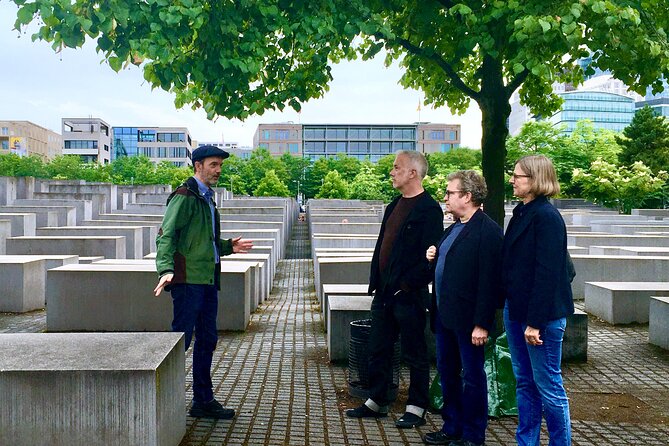
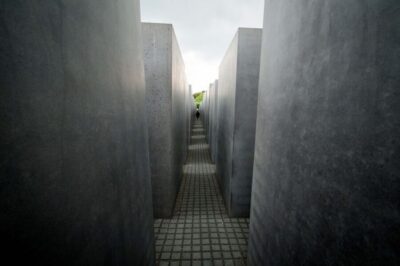
Next is the Memorial to the Murdered Jews of Europe, also called the Holocaust Memorial. It opened in 2005 and was designed by architect Peter Eisenman.
This is one of the tour’s most emotionally serious moments. The memorial is made of 2711 concrete slabs of varying heights, and the layout allows you to enter a powerful labyrinth-like space for reflection. Your guide will likely explain how the design produces that feeling of disorientation and gravity, and how it functions as public remembrance.
Time on this stop is about 15 minutes, ticket-free noted. Practical tip: if you feel overwhelmed, you can step out and pause. The memorial is designed for reflection, not for rushing.
Hackescher Markt: back to everyday Berlin and preserved courtyards
You finish at Hackescher Markt Square, known for its lively atmosphere and preserved Art Nouveau courtyards from pre-war Berlin. This is a useful ending because it brings you back to “lived city” Berlin rather than only state symbols and memorials.
The stop is about 10 minutes, ticket-free noted. It’s not the longest time on the tour, so focus on the courtyard idea. You will likely get enough explanation to understand why this area still feels like a time capsule.
Transit and smart ticket moves (so you do not lose time)
Because the tour includes public transport a few times, you should think about tickets before your start. If you already have a visitor transit pass, you are set.
If you do not, the guide suggests getting a day metro pass. The provided options include:
- One-way AB ticket: 2.8 EUR
- Day ticket (one person): 7 EUR
- Senior discounts also apply, with different prices listed for both one-way and day tickets.
If you cannot purchase in advance, the guide can help you buy the ticket at the first metro station during the tour. That’s a big practical comfort. It means you are not forced to solve transit math while you are trying to learn history.
My practical advice: if you plan to use transit frequently that day, prioritize the day pass over scattered one-way tickets. It usually keeps your head clear and your schedule smoother.
Price and value: when $520.73 per group makes sense
The price is $520.73 per group, up to 10 people, for an approximately 3-hour private tour with a historian scholar-guide. That sounds high if you are traveling solo, but value changes fast based on group size.
Private tours usually become worth it when:
- you have a small group and can share cost, and
- you care about asking questions and getting explanations that match your interests,
- you want a tight plan that still feels personal.
Here, the included “currency” is the guide. A historian-led format matters because Berlin’s landmarks are easy to misunderstand if you treat them like Instagram stops. With the scholar-guide approach, you get context for why each site matters, from political democracy symbols to Holocaust remembrance design.
If you are only two people, it might still be worth it if you strongly prefer private pacing and serious historical framing. If you want a cheaper option, a group tour is often more economical, but you give up the question time and flexibility.
Who this tour fits best
This tour fits you if you:
- want a high-impact overview of central Berlin in a short window
- care about WWII era and its aftermath, not just general city sights
- like guided history that helps you interpret what you are standing in front of
- want a private setup where your group can steer follow-up questions
It might not be the best fit if you:
- want a slow, unhurried walk with lots of free time at each stop
- hate using public transport during a tour
- only want light sightseeing with zero heavy context
Should you book this private Berlin walking tour?
If your goal is a focused, history-forward Berlin introduction, I think this one earns its keep. The routing makes sense: you move from government power and Cold War symbolism, to cultural institutions, to rebuilding, then to remembrance and back to everyday Berlin texture.
The private part is the big reason to book. When your guide can answer your questions and adjust the pace for your group, you leave with more than photos. You leave with a map in your head, and that makes the rest of Berlin easier to explore on your own.
If you are short on time and you want a serious start without spending the whole day sorting through details yourself, book it. Just go in with a realistic expectation: 3 hours means tight stops, and the payoff is meaning, not lingering.
FAQ
What is the duration of the tour?
The tour lasts about 3 hours.
Is this a private tour?
Yes. It is a private tour/activity, and only your group participates.
What language is the tour offered in?
The tour is offered in English.
Where does the tour start and where is the meeting point?
The default meeting point is Cafe Einstein, Unter den Linden 42, 100117 Berlin. You should meet your guide 15 minutes before the start time if hotel pickup is not arranged.
Is hotel pickup available?
Pickup is offered. If hotel pickup has not been arranged, you meet at the default meeting point.
What is included in the price?
The included item is a 3-hour tour of Berlin in the company of a historian.
Are food and drinks included?
No. Food and drinks are not included.
Do we need public transport during the tour?
Yes, you will need to use public transport a few times because some distances between sites are too far to walk. Your guide can also help you purchase the ticket at the first metro station if needed.
Is there admission cost at the stops?
The stop notes indicate admission tickets are free for the listed landmarks.
FAQ
What is the cancellation policy?
You can cancel for free up to 24 hours in advance for a full refund.
Can I get help with transit tickets if I do not buy one ahead of time?
Yes. If you cannot purchase in advance, your guide will help you purchase the ticket at the first metro station on the tour.
Newest Berlin reviews on the site
- Your ticket to The Wall Museum Berlin★ 3.0 · 60 reviews
- Rickshaw Tours Berlin – Groups of up to 16 people with several rickshaws★ 4.0 · 97 reviews
- Love and War in Berlin: Self-Guided Story Puzzle Walk★ 5.0 · 7 reviews
- Warnemuende Shore Excursion: Berlin Private Sightseeing Tour from Rostock★ 5.0 · 4 reviews
- eSIM for Germany and 34 European Countries★ 4.5 · 16 reviews
- Walking on the Wall: 3-Hour Tour in Berlin★ 4.5 · 34 reviews
- Karl-Marx-Allee Tour: Life and Architecture in East Berlin★ 5.0 · 19 reviews
- Warnemuende Shore Excursion: Private Berlin Tour★ 4.5 · 27 reviews
Walking Tours, compared.

Berlin’s Best: 2 Hour Walking Tour Third Reich and the Cold War
Read our review →
Third Reich Berlin: Hitler and WWII Walking Tour
Read our review →Browse the lists this tour appears in