
Reviewed · WALKING TOURS
Weimar Private Guided Walking Tour
A city like Weimar runs on ideas, not just sights. In a tight 2 hour private walk, you connect Goethe, Schiller, Martin Luther, Anna Amalia, and even Bauhaus through real places you can stand on.
I especially like how the tour focuses on friendship and creative collaboration, not memorizing dates. I also enjoy the way it links high culture to political change, from the Weimar Republic to the people who shaped it.
One note: the price is $280 per group up to 15, so it can feel steep if you are traveling solo or as a tiny group.
In This Review
- Key points you will actually care about
- A 2 hour private Weimar walk that moves with the city’s ideas
- Why Weimar pulls you in even if you only know one name
- Goethe and Schiller memorial in front of the National Theater
- Goethe’s House on Frauenplan, and the making of Faust
- Schiller’s House and the invitation that started a new chapter
- Saint Peter and Paul Church: Luther, Herder, and Duchess Anna Amalia
- The House of the Weimar Republic and the shock of 1919
- Walter Gropius and the Bauhaus influence, explained without a museum detour
- Liszt Haus and Weimar’s music culture on the move
- Price and value: is $280 per group worth it?
- What type of traveler should choose this tour?
- Should you book the Weimar Private Guided Walking Tour?
- FAQ
- Where does the Weimar Private Guided Walking Tour meet?
- How long is the tour?
- How much does the tour cost?
- Is this a private tour?
- What languages are the tours offered in?
- Are entrance fees included?
- Can the tour be customized?
- What sites are included on the walking route?
- What topics does the guide cover?
- What booking and cancellation options are offered?
Key points you will actually care about
- Private, local guiding: your group stays together with a professional guide on the spot.
- Big names, real addresses: Goethe on Frauenplan, Schiller’s House, Liszt Haus, plus major church and civic sites.
- The friendship thread: Goethe and Schiller’s relationship is treated as the engine of the story.
- Politics meets culture: you visit the House of the Weimar Republic tied to 1919 decisions.
- Bauhaus context on foot: Walter Gropius and the Bauhaus movement are part of the narrative.
- Strong guide energy: recent feedback highlights historical knowledge and humor, with the two hours flying by.
A 2 hour private Weimar walk that moves with the city’s ideas
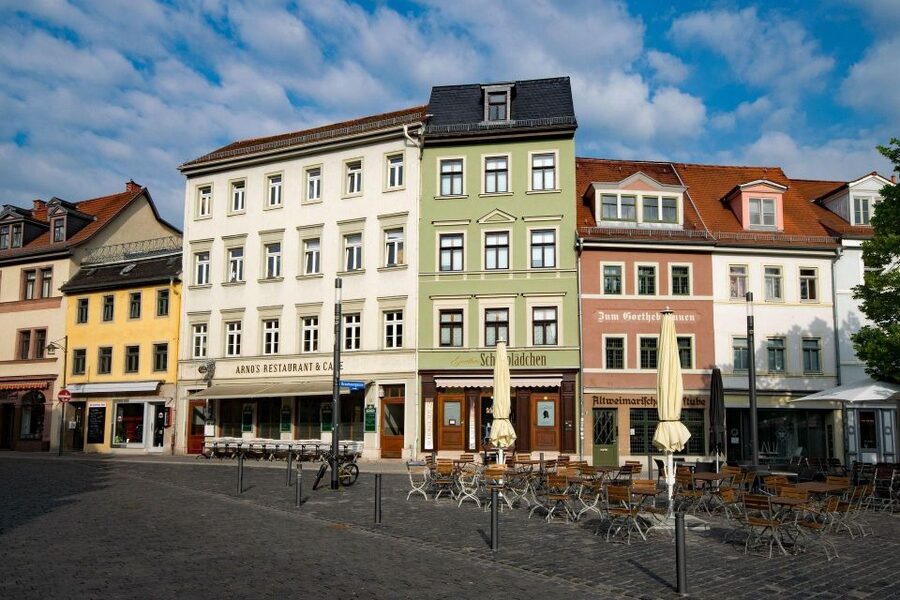
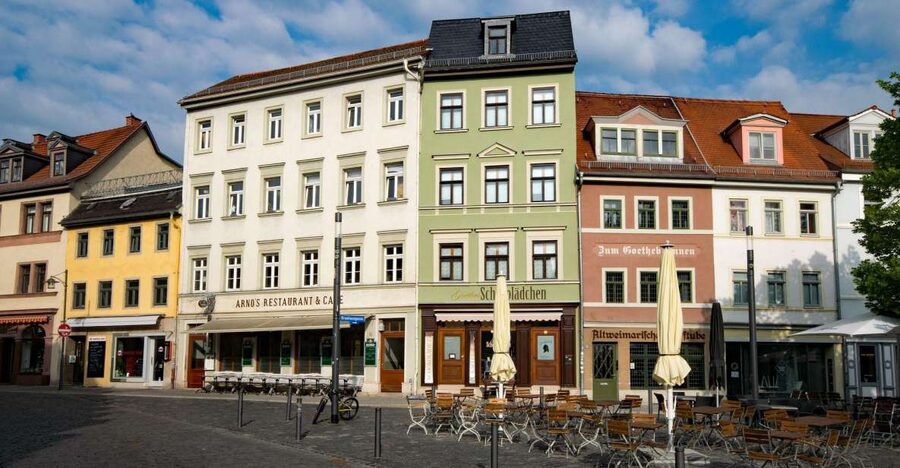
Weimar is one of those places where the street corners feel like footnotes from real history. This tour keeps it practical. You meet at Markt 20, 99423 Weimar, then you walk through the compact center to hit the sites that explain why Weimar mattered for German literature, religion, politics, and design.
The tour is private, so it is built for your pace. That matters here, because the story is dense. Goethe and Schiller alone can fill days, and the tour’s whole trick is choosing what to explain out loud, in the right order, without turning the walk into a lecture marathon.
You are paying $280 per group up to 15, for 2 hours, with a live guide in English or German. If you have a group of friends, this is often good value. If it is just you, it may still be worth it if you love guided history and want someone to connect the dots quickly.
More Walking Tours in Erfurt
- Erfurt: Old Town Guided Walking Tour
★ 4.7 · 1,617 reviews - Weimar: Old Town Guided Walking Tour
★ 4.7 · 1,080 reviews - Erfurt: On the road with the bridge builder. Walking tour with anniversary tasting.
★ 4.7 · 40 reviews
Why Weimar pulls you in even if you only know one name
Even if your German history knowledge starts and ends with Goethe, Weimar will still make sense. The city is known for poets and philosophers, and the tour leans into that identity with a set of places tied to multiple eras.
You also get a bit of grounding beyond the usual “great writer” spotlight. For example, Weimar has roots in art and humanism too. Lucas Cranach lived near the Market Square, and the tour uses that kind of detail to show the city was already producing culture long before the classicists reached their peak.
One fascinating piece of context: about 3.5 million tourists visit Thuringia each year to retrace Goethe’s footsteps. That tells you two things. First, Goethe has staying power in real tourism. Second, the city does not treat this as old dust. It is a living cultural brand, and a walking tour is the best way to understand why.
Goethe and Schiller memorial in front of the National Theater

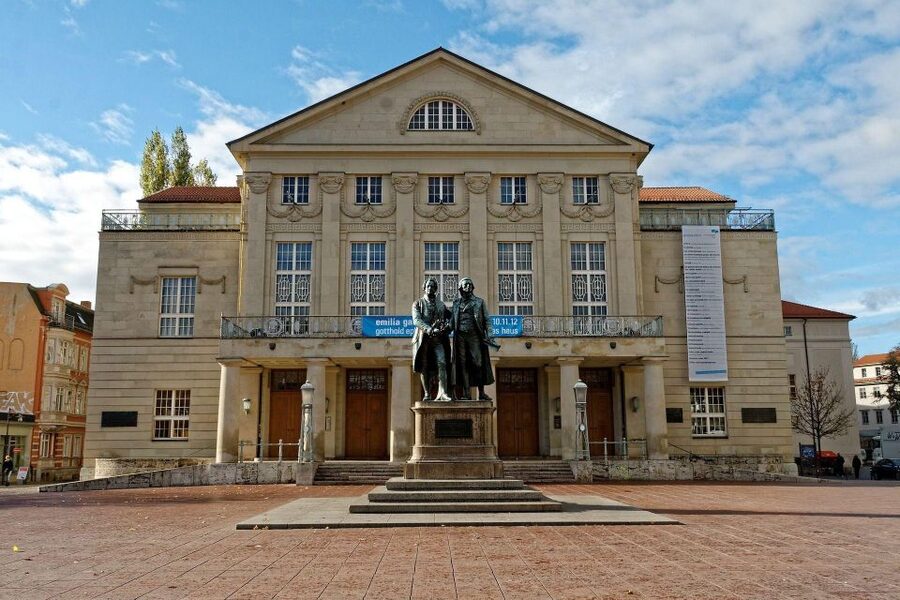
The walk’s emotional core starts at the Goethe and Schiller memorial, positioned in front of the National Theater. This location is not random. It signals that Weimar Classicism is meant to be experienced publicly, not trapped in books.
What I like about this stop is how it sets up the tour’s main theme: the friendship that fueled intense creative collaboration. Goethe and Schiller are often discussed like separate statues. Here, the relationship is treated like a working system, two minds bouncing ideas back and forth, each pushing the other.
Practical tip: pause for a moment and look at how the square connects the theater setting with the memorial. Even on a short walk, your brain starts organizing the story into “culture in public space,” which is what the rest of the sites reinforce.
Goethe’s House on Frauenplan, and the making of Faust
Next you move to Goethe’s House on Frauenplan. This is the stop that most directly turns a name into a place.
The key detail you get here is why the house matters: Goethe worked on his major work _Faust_ there, and he lived there until the end of his life. That is not just trivia. It changes how you think about his writing. Instead of seeing _Faust_ as a distant masterpiece, you understand it as something created in a lived environment, over years.
If you care about literature, this stop is worth leaning into. Ask your guide what themes were forming around the time Goethe was living there, even if you only catch a few points. In two hours, it is the kind of targeted explanation that makes the city feel “readable” rather than just scenic.
Same city, a different way to spend the afternoon:
- Erfurt: Guided Tour of The Petersberg Citadel
★ 4.8 · 674 reviews - Erfurt Tour – City tour with the historic tram
★ 4.8 · 503 reviews - Erfurt: With Night Watchman Schwalbe through the Old Town, including tasting
★ 4.7 · 297 reviews - Erfurt: Private Guided Classic Old Town E-Rickshaw Tour
★ 4.9 · 153 reviews
Schiller’s House and the invitation that started a new chapter
The tour then turns to Friedrich Schiller’s House. The guiding idea here is that Schiller did not simply wander into fame. He came to Weimar under an invitation from his friend Goethe. That single connection explains a lot about why Weimar became a magnet for high culture.
I like how this stop supports the friendship theme without repeating the same talking points. Goethe is one side of the story, Schiller is the other. Put together, they help you see Weimar Classicism as a human project, not a myth of individual genius.
Drawback to consider: because this is a short, 2 hour format, you will cover fewer buildings than in a full-day itinerary. If you want deep time in each specific house, you might need to supplement with a self-guided visit after the tour.
Saint Peter and Paul Church: Luther, Herder, and Duchess Anna Amalia
Now the tour shifts from writers to thinkers and faith. You visit the Saint Peter and Paul Church, described as gothic. The highlights here are big, and they connect several strands of German intellectual life in one place.
The tour brings up that Martin Luther preached here. It also notes that Johann Gottfried Herder is buried there, along with Duchess Anna Amalia. That combination is powerful because it links religion, philosophy, and leadership at ground level.
This stop is a good reminder that Weimar’s influence was not only about art. The people shaping ideas in that era were often moving through religious and philosophical institutions too. Your guide’s job is to connect those threads, so you do not leave thinking the church is just another pretty building on the map.
The House of the Weimar Republic and the shock of 1919
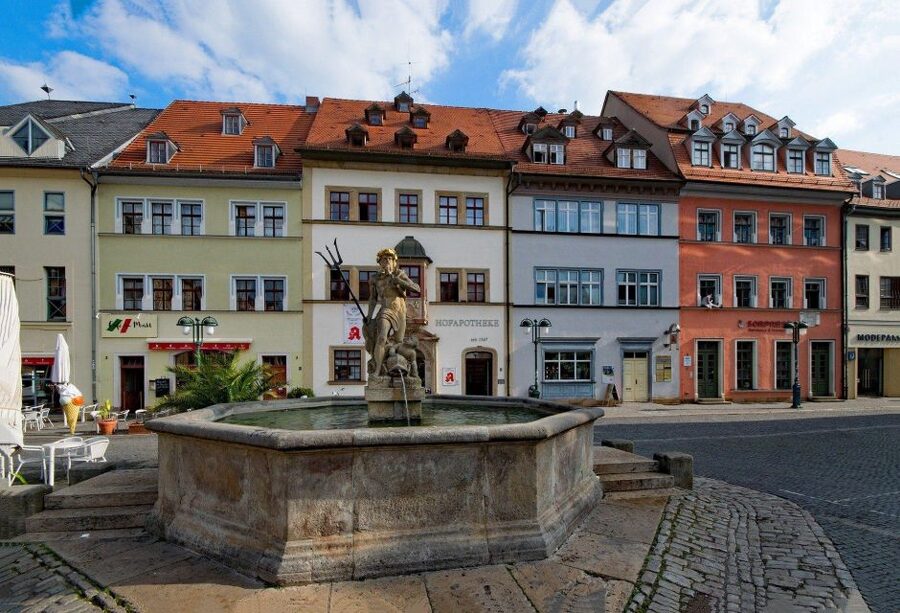
One of the tour’s most important civic stops is the House of the Weimar Republic. It is tied to 1919, when the future of post-World War I Germany was decided.
This is where Weimar stops being just a “culture town” and starts being a political crossroads. The tour’s structure matters here: it has already built your sense of Weimar as an ideas-driven city. Then it reminds you that ideas also get turned into institutions, laws, and decisions with real consequences.
If you are sensitive to political history, be ready for a more serious tone at this point. The value is that you are not reading abstract history. You are standing at a place associated with the decisions that shaped an entire era.
Walter Gropius and the Bauhaus influence, explained without a museum detour
The tour also includes Walter Gropius and the Bauhaus movement. The important thing is not that you will walk into a design showroom. It is that your guide ties the Bauhaus influence into the broader Weimar story.
In plain terms: Weimar helped shape a way of thinking that reached beyond literature into modern design and new forms of creativity. Bauhaus is often treated as a separate “design chapter,” but here you get a thread that connects it back to the city’s culture.
Because the stop details for this part are not tied to a single named building in the information provided, trust your guide to explain it as part of the wider walking narrative. If you want the clearest takeaway, ask your guide to summarize in one or two sentences how Bauhaus energy connects back to what you just learned about classicists and cultural leadership.
Liszt Haus and Weimar’s music culture on the move
No Weimar tour is complete without music, and this one fits it in with Liszt Haus, tied to composer Franz Liszt, who lived and taught there.
I like that this stop gives you a different kind of cultural evidence. Literature and philosophy can feel like “quiet accomplishments.” Music brings sound and teaching into the story. Liszt lived in the city, taught there, and that makes the cultural claim feel practical, not just theoretical.
If you are the type who likes to visualize ideas, ask your guide how Liszt’s teaching culture interacted with the city’s wider creative environment. Even if you only get a short answer, it will help the places connect in your mind.
Price and value: is $280 per group worth it?
Let’s talk numbers without spinning it. $280 per group up to 15 people for 2 hours means the price is not calculated per person the way solo tours often are. So value depends on how you travel.
- If you are a small group of friends or a family unit, this pricing can feel fair fast, because the guide time is shared.
- If you are solo, it can feel expensive because you are basically renting the guide for the time.
Where the price can become easier to justify is the private format plus real-language flexibility: your guide is there only for your group, and the tour is run in English or German. You also get a built-in chance to adjust on the spot, which is rare in scripted tours.
And recent feedback puts a spotlight on the guide experience itself. The strongest comments highlight big historical and cultural knowledge plus a humor-forward speaking style, with the two hours passing quickly. That is not small stuff. If the guide is good at pacing, this kind of tour feels like a conversation with a point of view, not like standing in lines of facts.
What type of traveler should choose this tour?
This is a great match if:
- You love German history and culture and you want a guide to connect names to places.
- You enjoy literature, philosophy, religion, and music, and you like when these are woven into one coherent story.
- You want a high-value short walk instead of a full-day plan.
You might consider a different option if:
- You need lots of time inside specific buildings. This tour is 2 hours, and entrance fees are not included, so some sites may be viewed from outside or through limited time.
- You want a design-heavy itinerary. Bauhaus is included as part of the narrative, but the tour is still anchored in classicists, religion, and Weimar Republic context.
Should you book the Weimar Private Guided Walking Tour?
Yes, if you want a fast, intelligent way to understand why Weimar produced so many idea-makers. The tour’s biggest strength is its story structure: Goethe and Schiller first, then religion and philosophy, then the Weimar Republic, with music and Bauhaus influence filling out the picture.
I would book it when you have limited time in Weimar and want your guide to do the heavy lifting of connecting themes. I would pause before booking it if you are traveling alone on a tight budget, because the $280 group price can feel tough without at least a small group to share it.
If you do book, show up ready to walk, bring comfortable shoes, and consider asking your guide for the one-sentence version of the friendship story and the one-sentence version of the 1919 political shift. In two hours, those two answers are often what make the whole city click.
FAQ
Where does the Weimar Private Guided Walking Tour meet?
You meet at Markt 20, 99423 Weimar.
How long is the tour?
The tour lasts 2 hours.
How much does the tour cost?
It costs $280 per group, up to 15 people.
Is this a private tour?
Yes, it is a private group tour, with your local professional guide staying with your group only.
What languages are the tours offered in?
The guide offers the tour in English and German.
Are entrance fees included?
No. Entrance fees are not included.
Can the tour be customized?
Yes. There is possible customizing on the spot with your local guide.
What sites are included on the walking route?
You visit key Weimar landmarks including the Goethe and Schiller memorial, the House of the Weimar Republic, Saint Peter and Paul Church, Goethe’s House on Frauenplan, Liszt Haus, and Schiller’s House.
What topics does the guide cover?
Expect themes like Weimar Classicism, Goethe and Schiller’s friendship, the influence of Walter Gropius and Bauhaus, the cultural legacy tied to Duchess Anna Amalia, and Weimar’s role in shaping the Weimar Republic.
What booking and cancellation options are offered?
Free cancellation is available up to 24 hours in advance for a full refund. There is also a reserve now and pay later option.
Newest Erfurt reviews on the site
- Weimar: Old Town Tour Classical Weimar★ 4.5 · 33 reviews
- Weimar: “Illuminati”, unique Escape Room, Goethe’s secret★ 4.6 · 17 reviews
- Weimar: DunkelWeimar, true crime citytour and game★ 4.0 · 64 reviews
- Weimar: Die Highlights auf eigene Faust entdecken★ 4.3 · 125 reviews
- weimar card – Abholung in der Tourist Information Weimar★ 4.6 · 31 reviews
- Weimar: Express Walk with a Local in 60 minutes★ 5.0 · 4 reviews
- Mystery Backpack 2p: explore the city with an Erfurt novel★ 4.2 · 12 reviews
- Historical tour of Weimar, Goethe’s city in French★ 4.6 · 3 reviews
Walking Tours, compared.




Berlin’s Best: 2 Hour Walking Tour Third Reich and the Cold War
Read our review →

Third Reich Berlin: Hitler and WWII Walking Tour
Read our review →Browse the lists this tour appears in