
Reviewed · HISTORICAL TOURS
Historical tour of Weimar, Goethe’s city in French
One city can change how you read Europe. This French guided history walk through Weimar connects Goethe and Schiller, the Bauhaus era, the Weimar Republic, and life under the GDR, all in a route that makes the big ideas feel close. I especially like the clear, question-friendly explanations by Aurélien Croenne-Ambroise and the way the tour covers both art and politics, not just famous names.
The one thing to think about is that this is mainly an exterior walk. Entry tickets to Goethe and Schiller houses are not included, so if you want to go inside, you’ll plan that separately.
In This Review
- Key Highlights You Should Care About
- Why Weimar Works So Well for a 2-Hour History Walk
- First Stop: Maison de Goethe and the Theaterplatz Meeting Rhythm
- In Goethe and Schiller’s Footsteps, Without Needing Museum Tickets
- Bauhaus and the Weimar Republic: Design Meets Power
- Nazism and the GDR: What This Tour Does With Heavy History
- Weimar’s Old Town and Weimar Park: Finishing With Place, Not Just Dates
- Price and Value: Why $23 Can Be a Good Deal
- What to Expect in Real Life: Timing, Pace, and How to Prepare
- Who This Tour Is Best For (and Who Should Look Elsewhere)
- Should You Book This Weimar Tour?
- FAQ
- Where is the meeting point?
- What language is the tour in?
- How long is the tour?
- How much does it cost?
- Are entry tickets to museums and houses included?
- What should I bring?
- Is the tour suitable for pregnant women?
Key Highlights You Should Care About
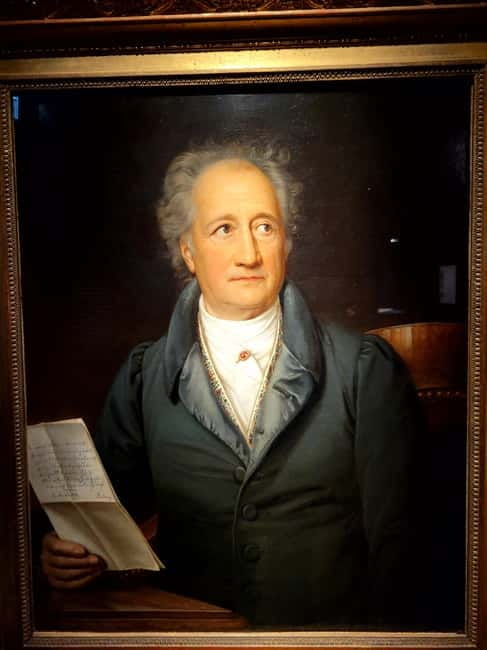
- Goethe and Schiller sites are explained in context, with practical stops like Theaterplatz and the houses’ roles in German culture
- Bauhaus meets modern design ideas, with an architecture-focused look at how Weimar shaped style
- Weimar Republic history is tied to the Constitution, not treated like dry dates
- Nazism and the former GDR are discussed directly, including the presence of Buchenwald
- A French guide who adapts to your pace, with time for answers as you go
- A walk that ends with old town street views and Weimar Park, so you finish with atmosphere, not just facts
Why Weimar Works So Well for a 2-Hour History Walk
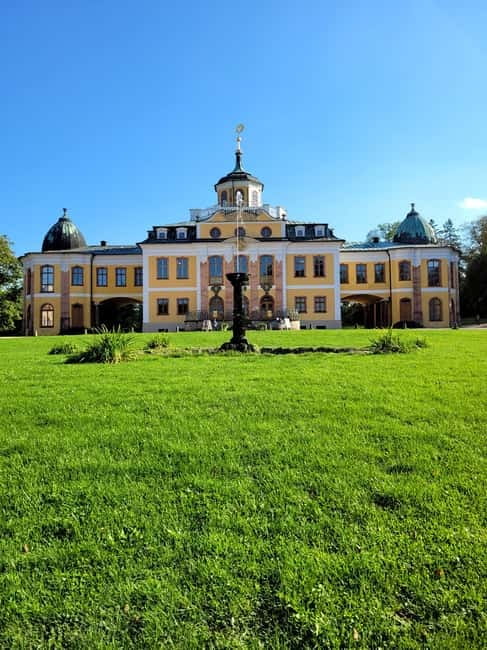
Weimar is one of those German cities where ideas have fingerprints. In a short time, you can see how literature, design, and government shaped each other. You start in the Goethe orbit, then you move into modern design (Bauhaus), then you tackle the twentieth century, including Nazism and the GDR.
I like tours like this because they help you “read” the town. You stop looking at buildings as scenery and start seeing them as evidence. And because the guide lives in Weimar for several years, the explanations tend to feel grounded in real place, not just memorized slides.
The focus is also well chosen: you get a timeline that actually connects. The tour is not one topic for two hours. It’s a chain, with each link helping you understand the next.
A few more Erfurt walks and trips to compare
- Erfurt Tour – City tour with the historic tram
★ 4.8 · 503 reviews - Leipzig: City History Canal Sightseeing Tour on a Motorboat
★ 4.7 · 7,671 reviews - Berlin: Natural History Museum Entrance Ticket
★ 4.6 · 3,382 reviews
First Stop: Maison de Goethe and the Theaterplatz Meeting Rhythm
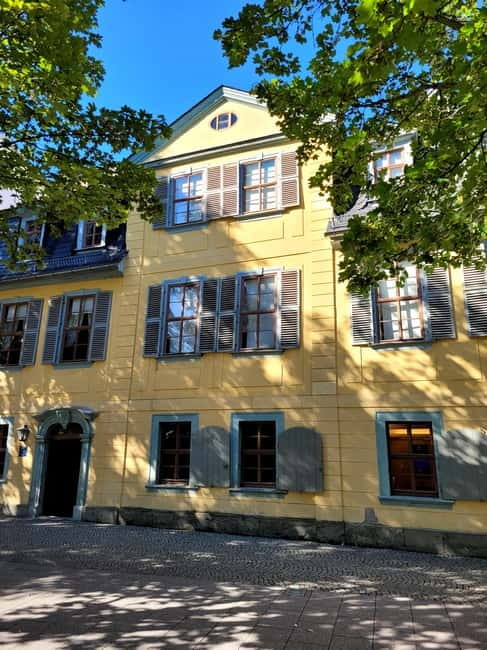
You meet at the small staircase in the middle of the facade of Goethe’s former home, the yellow facade. That matters, because Weimar’s old center can feel compact and easy to get turned around in, especially when you are trying to arrive a few minutes early.
Once you gather, the guide sets expectations fast. You get a brief orientation to Weimar as a city of poets and thinkers, tied to German classicism and later to the Bauhaus. Then the tour moves right into its core promise: history tied to what you can see.
The route is designed for walking, with breaks built into the storytelling. You are not stuck standing in one spot for the full two hours. You’ll move between key places, with the guide explaining what you are looking at and why it mattered.
In Goethe and Schiller’s Footsteps, Without Needing Museum Tickets
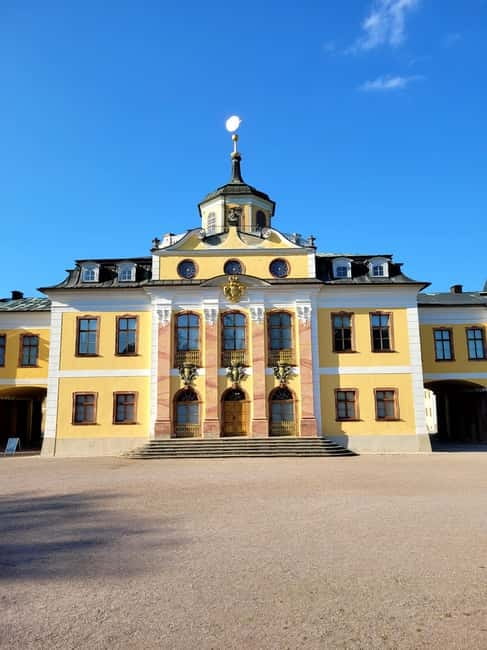
The tour’s first big block focuses on what you can call the Weimar literary engine. You’ll be guided through the Goethe House exterior and the Schiller House role in the city’s cultural story. The emphasis is on place and influence, not museum-style browsing.
You also get Theater Square (Theaterplatz), centered on the Goethe-Schiller statue. This is more than a photo stop. The guide uses it to explain why these two figures became a cultural shorthand for Germany’s literary identity, and how their friendship helped define an era.
A practical note: since entry tickets to the houses are not included, you should expect an exterior tour. That’s not a flaw, it’s a choice. You’ll learn what these buildings meant, but you won’t lose time waiting for entrances or splitting into ticket-holding mini groups.
If you are the type who likes to understand before you enter, you’ll love this setup. It gives you the context you can use later if you decide to return for indoor viewing.
Bauhaus and the Weimar Republic: Design Meets Power
Next comes the shift into twentieth-century ideas, where Weimar becomes a hinge between classic culture and modern design. You’ll spend time with Bauhaus School references, focusing on how the movement influenced architecture and modern art and design thinking.
This is a smart section for first-time visitors. Most people hear “Bauhaus” and stop at the word. Here, you connect the movement to the look and decisions behind it. The guide presents it as a way of thinking about form and function, not just a style that happened in a museum.
Then the tour turns to the signing of the Weimar Constitution and what that meant for the Weimar Republic. You’re not asked to memorize dates. You’re guided through the consequences, which helps you understand why the political era feels inseparable from the cultural one.
The big value here is contrast. You see how people tried to build new systems of life and expression, and you learn how quickly the story changes in the decades that follow. Even if you only remember a few names and concepts, the cause-and-effect thread makes it stick.
Same city, a different way to spend the afternoon:
- Erfurt: Old Town Guided Walking Tour
★ 4.7 · 1,617 reviews - Weimar: Old Town Guided Walking Tour
★ 4.7 · 1,080 reviews - Erfurt: Guided Tour of The Petersberg Citadel
★ 4.8 · 674 reviews - Erfurt: With Night Watchman Schwalbe through the Old Town, including tasting
★ 4.7 · 297 reviews
Nazism and the GDR: What This Tour Does With Heavy History
After the design and political foundation, the tour tackles the most difficult part of the Weimar story: Nazism and the former GDR. This section includes discussion of the rise of Nazism and the presence of Buchenwald concentration camp.
From a reader’s point of view, this matters. If a tour skips over the darkest chapters, you only get half a city. Here, you get the historical framing you need to understand why Weimar looks the way it does and why memory is part of the streets.
Then the guide discusses the impact of the communist regime and daily life in Weimar under the GDR. This is where you start hearing about how history felt on the ground, not just how leaders talked.
One consideration: this is not a light stroll. Wear your history-brain. Have your questions ready, and don’t force yourself to power through if you feel like the topic is too intense that day. The tour includes time for discussion, and the guide is attentive and available to answer questions, which can make the tone feel more respectful and grounded.
Weimar’s Old Town and Weimar Park: Finishing With Place, Not Just Dates
The last stretch is about atmosphere and orientation. You’ll do a walk through the old town and reach Weimar Park, with the tour tying the park back to connections with Goethe and the city’s history.
This part helps you reset after the heavier twentieth-century discussion. You get historic streets, main squares, and notable architecture, all while the guide keeps the explanations tied to what you are actually seeing.
If you’re the kind of traveler who likes to end with something that feels scenic and human, this is the payoff. It’s not just sightseeing. The park and streets are used to reinforce how the city’s cultural identity grew over time.
The tour winds down back around Theaterplatz, which is a good ending point because it keeps your mental map tidy. You finish near one of the most recognizable squares, which makes it easier to plan a post-tour meal or a self-guided walk.
Price and Value: Why $23 Can Be a Good Deal
At $23 per person for 2 hours, this tour is priced like a strong starter option. You’re paying for a live guide, guided city presentation of memorable sites, and practical help for planning your own visits in Weimar and across the Thuringia region.
What’s not included is important: entry tickets to the museums and to the houses of Goethe and Schiller. So you should treat this as a guided route and interpretation, not as a ticket bundle.
Here’s how I think about the value: if you are visiting Weimar for the first time and want a coherent story in a short time, a guided framework can save you hours of guesswork. You learn where to go next and what to look for. Then you can choose which sites you want to pay to enter, based on what resonated during the tour.
Also, with a French live guide and a guide who adjusts to your pace, you’re not just buying facts. You’re buying an experience where you can ask questions and actually get answers.
What to Expect in Real Life: Timing, Pace, and How to Prepare
The tour is 2 hours in total. The structure runs through several themes in sequence, with time built in for explanation and questions. You’ll get the intro, then sections on Goethe and Schiller, then Bauhaus and the Weimar Republic, then Nazism and the GDR, and finally the old town and park portion plus wrap-up.
Pace-wise, the tone is meant to be flexible. One of the best parts, based on real feedback, is that the guide adapts to the group’s rhythm. That’s exactly what you want for a walking tour, because historical detail can be fascinating and also heavy, depending on your day.
Before you go, bring practical weather gear: sun hat, umbrella, and water. This is the kind of tour where stopping for shade or taking a drink can keep the mood comfortable.
And please follow the rules: no bikes, no alcohol or drugs, no party groups, and no bare feet. Nothing dramatic, just the basics to keep everyone safe and respectful.
Also, note the tour is not suitable for pregnant women. If that applies to you, you should look for another option in Weimar.
Who This Tour Is Best For (and Who Should Look Elsewhere)
This tour is ideal if you want:
- A first visit to Weimar and a fast way to connect key periods
- A balance of art, literature, and political history
- A French-language guide and time to ask questions
- A walking route that ends in a central square so you can continue on your own
It’s less ideal if you need mostly indoor stops, since entry to Goethe and Schiller houses is not included. If you also want a very light, entertainment-only experience, the Nazism and Buchenwald part means the tone will be serious.
If you love architecture and design, the Bauhaus section is a strong reason to book. And if you’re a literature fan, the Goethe-Schiller framing makes more sense once you’ve walked the places connected to them.
Should You Book This Weimar Tour?
Yes, you should book it if you want a guided story that covers the big eras without turning into a museum sprint. At $23 for 2 hours, you get a live French guide, an understandable timeline from Goethe and Schiller to Bauhaus to the Weimar Republic, and then to the darker twentieth-century chapters including Buchenwald and daily life under the GDR.
Skip the tour only if:
- you are only interested in museum entries and indoor exhibits, or
- you know you are not up for heavy history topics that touch Nazism and concentration camp memory.
If you fall in the middle, this is a good starting point. You’ll leave knowing what to look for when you wander on your own, and you’ll probably feel more confident choosing which sites deserve paid entry.
FAQ
Where is the meeting point?
The guide meets you at the small staircase in the middle of the facade of Goethe’s former home, the yellow facade.
What language is the tour in?
The live tour guide speaks French.
How long is the tour?
The tour duration is 2 hours.
How much does it cost?
The price is $23 per person.
Are entry tickets to museums and houses included?
No. Entry tickets to the museums and to the houses of Goethe and Schiller are not included.
What should I bring?
Bring a sun hat, an umbrella, and water.
Is the tour suitable for pregnant women?
No, it is not suitable for pregnant women.
Newest Erfurt reviews on the site
- Erfurt: With Night Watchman Schwalbe through the Old Town, including tasting★ 4.7 · 297 reviews
- Erfurt: Romantic evening stroll★ 4.6 · 16 reviews
- Erfurt: Romantic Rickshaw Tour For Two★ 5.0 · 15 reviews
- Erfurt: Schnitzeljagd, selbstgeführte Highlights-Tour★ 4.7 · 148 reviews
- Erfurt: Guided Petersberg Citadel Tour by E-Rickshaw★ 4.9 · 50 reviews
- Erfurt: Private Guided Classic Old Town E-Rickshaw Tour★ 4.9 · 153 reviews
- Erfurt: Egapark garden Entrance Ticket★ 4.6 · 16 reviews
- Erfurt: Express Walk with a Local★ 5.0 · 4 reviews
Historical Tours, compared.

City History Canal Sightseeing Tour on a Motorboat
Read our review →



Browse the lists this tour appears in