
Reviewed · WALKING TOURS
Walking Tour on Resistance to Nazism in Munich
Hitler’s shadow had resistors too. This 2.5-hour walk through Munich connects the Nazi regime to the people who pushed back, stop by stop. You get a clear storyline of resistance across politics, the military, art, and faith, anchored in real places around town.
I especially like how the tour highlights ordinary bravery in specific settings, like how artists and churches responded to Nazi control. Another big plus is the guide experience, with names like Laura showing up in past guidance for being friendly and easy to follow, even when the topics get heavy.
The main drawback is the subject matter is intense. Topics like propaganda control and Law T4 can feel emotionally heavy, and the pace is steady since it covers many locations in about 2.5 hours.
In This Review
- Key things to know before you go
- Resistance in Munich, from palace steps to memorial plaques
- Price and logistics: a 2.5-hour route with a mobile ticket
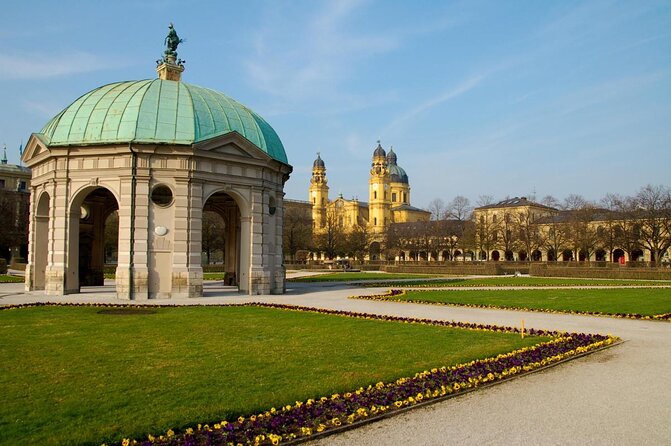
- Stop 1 at Hofgarten: royal life during a Nazi political shift
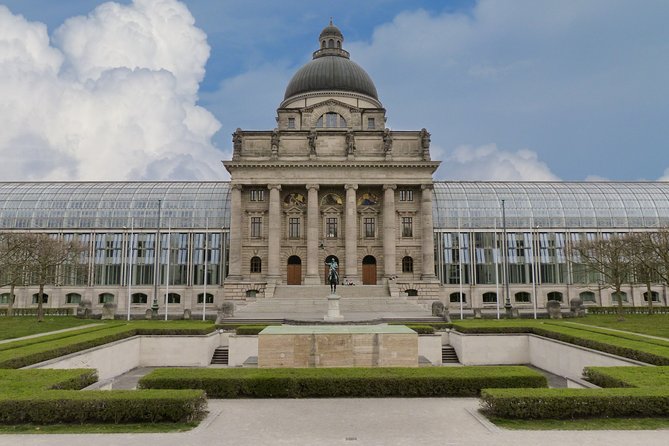
- Stop 2 at Bayerische Staatskanzlei: political resistance and the Sopade thread
- Stop 3 on Prinzregentenstraße: the Luftwaffe command and resistance within
- Stop 4 at the Bavarian National Museum: Valkyrie Operation in real space
- Stop 5 at Haus der Kunst: Degenerate Art, censorship, and the press machine
- Stop 6 at Ludwigskirche: Church pressure, Law T4, and religious resistance
- Stop 7 at DenkStatte Weisse Rose: the White Rose and Munich resistance you should know
- Stop 8 on Türkenstraße: Georg Elser and the danger of one man’s plan
- Guide style, small group feel, and why it keeps working
- Should you book this resistance to Nazism walking tour?
- FAQ
- How long is the walking tour?
- How much does it cost?
- Where do I meet and where does it end?
- What time does the tour start?
- Is a printed ticket required?
- Is the group size limited?
- What is the cancellation policy?
Key things to know before you go
- Small group format (up to 25 people) helps the guide keep a human pace and answer questions
- Free entry at each stop, so you are not adding extra costs once you start
- A full resistance map of Munich, from royal circles to the White Rose and Georg Elser
- Art, media, and politics in one route, not just battles and dates
- Start at Odeonsplatz, then finish at Georg-Elser-Platz for an easy end-point
Resistance in Munich, from palace steps to memorial plaques
This walking tour focuses on a simple idea: the Nazi era was not met with silence everywhere. In Munich, you can still see the places where power was staged, where messages were managed, and where people tried to break through the fear. The route is designed so you move through the story in a logical way, from early signals and institutions to better-known resistance moments later on.
I like that it does not treat resistance like a single event. You learn about different kinds of pushback, from political figures who resisted from the sidelines to groups who risked their lives with leaflets and plans. You also get practical context for why some groups acted when they did, and what made action possible or dangerous.
This is also a tour that asks you to look. The buildings and memorials are not just scenery. They are clues about who had power, who was pressured, and who still found ways to resist. If you want a Munich walk that is more than a photo scavenger hunt, this one fits.
More Walking Tours in Munich
- Munich: Third Reich & WWII Walking Tour
★ 4.6 · 6,181 reviews - Third Reich Walking Tour Munich
★ 4.5 · 4,291 reviews - Munich: Old Town & Viktualienmarkt City Walk in German
★ 4.7 · 2,304 reviews
Price and logistics: a 2.5-hour route with a mobile ticket
The price is $19.49 per person for about 2 hours 30 minutes. That is solid value for a guided walk with multiple themed stops, especially because the tour includes free admission at each location listed. You are paying for interpretation and direction, not for a long museum day with extra entry fees.
You also get a mobile ticket, which makes meeting up simpler. Still, keep an eye on your phone battery, and have it ready at the start time.
The group size is limited to 25 people, which matters for a tour that covers difficult material. A smaller crowd usually means fewer lost details and more chances to ask questions when something does not add up.
One more practical note: the tour is near public transportation, and it runs at 3:00 pm. That is a nice slot for daylight walking, plus you avoid the coldest morning hours if you are traveling in winter.
Stop 1 at Hofgarten: royal life during a Nazi political shift
You begin in the Hofgarten area, and the guide sets the stage with how the royal family lived during the Nazi period. This is where the tour gives you political context, not just facts. You look at a setting tied to status and tradition, then connect it to the reality of a dictatorship taking hold.
The value here is perspective. If you only focus on underground resistance, you miss the bigger question of how institutions around the regime behaved, adjusted, or tried to protect their position. Even when resistance was real, power structures did not always fall neatly into heroes and villains.
A drawback to keep in mind: this opening stop is more about context than a single dramatic moment. If you want nonstop action, you might feel slightly “orientation-heavy” at first. The payoff is that later stops land harder once you understand the environment.
Stop 2 at Bayerische Staatskanzlei: political resistance and the Sopade thread
Next comes the Bayerische Staatskanzlei area, where the tour explains how political parties resisted the Nazi regime, including the story of the Sopade. This is the kind of material that helps you understand resistance as something bigger than street-level protest.
Sopade matters because it points to organized opposition and the reality of how political life was pushed out and reshaped. It also helps you see why some resistance took forms that were less visible, like information networks, opposition efforts, or political pressure that did not happen in front of the public.
If you like political history, this stop can feel like a turning point. You start to connect the Nazi takeover not just to events, but to decisions and changes in how people could safely speak.
The consideration here is timing and attention. Political names and concepts can pile up fast in a group setting. If you are the type who likes to take notes, this is a good moment to do it, so the next stops do not feel like repeats.
Same city, a different way to spend the afternoon:
- From Munich: Neuschwanstein & Linderhof Castle Full-Day Trip
★ 4.6 · 14,646 reviews - Neuschwanstein & Linderhof Castle-Fairytale Day Tour from Munich
★ 4.5 · 7,275 reviews - Dachau Concentration Camp Memorial Site Tour from Munich by Train
★ 4.5 · 5,637 reviews - Neuschwanstein Castle Tour from Munich
★ 4.5 · 5,117 reviews
Stop 3 on Prinzregentenstraße: the Luftwaffe command and resistance within
At Prinzregentenstraße, you shift from party politics to the machinery of war. The tour points to the building of a former Luftwaffe Command Center and discusses resistance inside the militia itself.
This is where Munich’s story stops being abstract. The theme becomes: people did not only resist from outside the system. Sometimes resistance grew inside it, even when the risks were extreme.
What I like about this stop is the way it challenges the easy stereotype that all uniformed institutions were monolithic. You get a better sense of how power, loyalty, and conscience could collide within military structures.
Potential drawback: you may need a bit of patience here if you are less familiar with the internal structures of the era. The guide likely keeps it understandable, but the topic is inherently complex, so it helps to go in with a curious mindset rather than expecting a simple timeline.
Stop 4 at the Bavarian National Museum: Valkyrie Operation in real space
Then the tour heads toward the Bavarian National Museum area to talk about what is known as the Valkyrie Operation. This is one of the best-known resistance-related stories tied to the plot against the Nazi leadership in 1944, and the setting gives you a chance to see how such events connect to later memory in the city.
This stop adds the dramatic arc. Once you have the political and institutional context, the Valkyrie story makes more sense as a culmination of frustration, calculations, and desperation. It also helps you understand that resistance had multiple layers, not just pamphlets and quiet opposition.
The main consideration is that this part can feel like it jumps ahead in time compared to earlier stops. If you want a fully linear timeline, ask the guide a question about how this connects to earlier resistance efforts. Guides often adjust their explanations when someone asks.
Stop 5 at Haus der Kunst: Degenerate Art, censorship, and the press machine
At Haus der Kunst, the tour takes on propaganda and cultural control. You learn how Nazism tried to censor art, including the idea of Degenerate Art, and you also get discussion of how media was managed through a propaganda apparatus.
This stop is valuable because it broadens what resistance can mean. When a regime controls art and press, it is controlling what people think is normal, valuable, or even human. The tour helps you see censorship as a tool of power, not just a policy.
I also like that the stop treats culture as part of political struggle. If you have ever wondered why regimes care so much about museums and artists, this is where you start seeing the logic.
Possible drawback: art and press control can be emotionally frustrating, especially if you are an art lover. The good news is that the guide’s job is to connect the details back to the broader story of how people pushed back, including through what they made, preserved, or refused to accept.
Stop 6 at Ludwigskirche: Church pressure, Law T4, and religious resistance
Next is Ludwigskirche, where you learn about the relationship between the Church and Nazism, the role of Law T4, and how religious communities resisted the regime.
This is one of the heavier segments of the route. Law T4 can be difficult to hear about, and the guide’s tone matters. In a small-group format, you are not just absorbing dates, you are understanding the moral stakes and what resistance looked like in faith spaces.
I appreciate that this stop refuses to treat religion as a side note. Instead, it shows that resistance included institutional choices, public moral arguments, and risk taken by people who believed conscience mattered more than compliance.
Consideration: if you are sensitive to topics involving human suffering and state violence, prepare yourself for this emotional weight. Taking a quick breather outside the church area can help you stay present for the rest of the tour.
Stop 7 at DenkStatte Weisse Rose: the White Rose and Munich resistance you should know
Then you reach DenkStatte Weisse Rose, where the tour introduces one of Munich’s best-known resistance groups: The White Rose. This is the stop many people look forward to, because it ties resistance to identifiable people and clear actions.
This part works well because it is not only about what happened, but why it mattered. You learn how messages and conscience collided with a regime built on fear. The memorial setting also helps you feel the weight of remembrance without turning it into a “performance” of history.
What I like most is that it connects the story to your own sense of ethics. When you hear how young people acted, it forces a question: what would you do if you had real information and real risk?
The only drawback is that this kind of stop can make the rest of the route feel slower, since you are processing what you just learned. Give yourself permission to pause, read what is there, and let it sit before moving on.
Stop 8 on Türkenstraße: Georg Elser and the danger of one man’s plan
The final stop is at Türkenstraße, centered on the Georg Elser Memorial. Here the tour discusses how attentive people were against the life of the Führer himself.
This ending matters because it gives a different angle of resistance. Instead of only leaflets, institutions, or public opposition, you see resistance as a focused attempt tied to timing and action. The story is specific, grounded, and a strong finale after the broader tour themes.
I like this ending because it leaves you with a concrete image. By now you understand the system. Now you see how resistance could also become a single, determined plan.
One consideration for your pace: since the tour ends at Georg-Elser-Platz, plan your next step right away. If you want dinner afterward, decide your direction before the guide finishes, so you are not scrambling when you are mentally tired.
Guide style, small group feel, and why it keeps working
A big reason this tour works is the human side of the storytelling. People consistently point to guides like Laura, Maca, Javier, Jaime, and Julieta as friendly and clear, with explanations that stay understandable even when the material is tough.
In practice, that means you are not just hearing a lecture. You get a narrative that connects each place to the larger resistance picture. And since it is a small group of up to 25, you are more likely to have room for questions when you want clarification.
If you are planning your day in Munich, this is also a good choice because it is long enough to feel substantial but short enough to still do something else afterward. Think of it as a focused history reset, not a full-day commitment.
One small tip: if you want to remember names and concepts, bring a pen or use your phone notes. The route has several distinct themes, like Sopade, Valkyrie, Degenerate Art, Law T4, and White Rose, and a quick note helps them stick.
Should you book this resistance to Nazism walking tour?
You should book if you want a Munich-focused walk that treats resistance as varied and real. It is ideal if you care about more than one kind of history, like politics and propaganda, not just battles. You also get good value at $19.49 for a small group, free entry at stops, and around 2.5 hours of guided context.
Skip it if you are looking for something lighthearted or purely scenic. This is a serious tour with emotionally heavy topics. Also, because it covers multiple locations, you should go in with the expectation that you will learn a lot fast.
If your schedule allows, this is one of the better ways to understand Munich under the Nazi regime through the people who resisted it, not just the people who held power.
FAQ
How long is the walking tour?
It runs for about 2 hours 30 minutes.
How much does it cost?
The price is $19.49 per person.
Where do I meet and where does it end?
It starts at Odeonsplatz (Odeonspl., 80333 München) and ends at Georg-Elser-Platz (80799 München-Maxvorstadt).
What time does the tour start?
The start time is 3:00 pm.
Is a printed ticket required?
No, it uses a mobile ticket.
Is the group size limited?
Yes. The maximum group size is 25 people.
What is the cancellation policy?
Free cancellation is available. You can cancel up to 24 hours in advance for a full refund, based on local time.
Newest Munich reviews on the site
- Wright Europe Vacations – Private Escorted Auto Tours★ 5.0 · 35 reviews
- Best of Munich Electric Bike Tour★ 5.0 · 38 reviews
- Winter Tour to Neuschwanstein Castle from Munich★ 4.5 · 122 reviews
- Viktualienmarkt tasting tour★ 5.0 · 86 reviews
- Munich Walking Quiz: Explore and Discover the City’s Highlights★ 5.0 · 7 reviews
- Private Transfer from Munich to Salzburg with 2 hours for sightseeing★ 4.5 · 13 reviews
- From Munich: Neuschwanstein Castle and Linderhof Private Tour★ 5.0 · 13 reviews
- Munich Viktualienmarkt and Beyond Small-Group Food Tasting Tour★ 5.0 · 247 reviews
Walking Tours, compared.

Berlin’s Best: 2 Hour Walking Tour Third Reich and the Cold War
Read our review →
Third Reich Berlin: Hitler and WWII Walking Tour
Read our review →Browse the lists this tour appears in